Week 1- Mixing Tee
Aim:-Mixing Tee
Objective –
- To clean the geometry and mesh it in pre-processing.
To solve the model with best solver in Ansys solver.
- To generate contour and line plots and analyse it in postprocessor.
Import Model :-
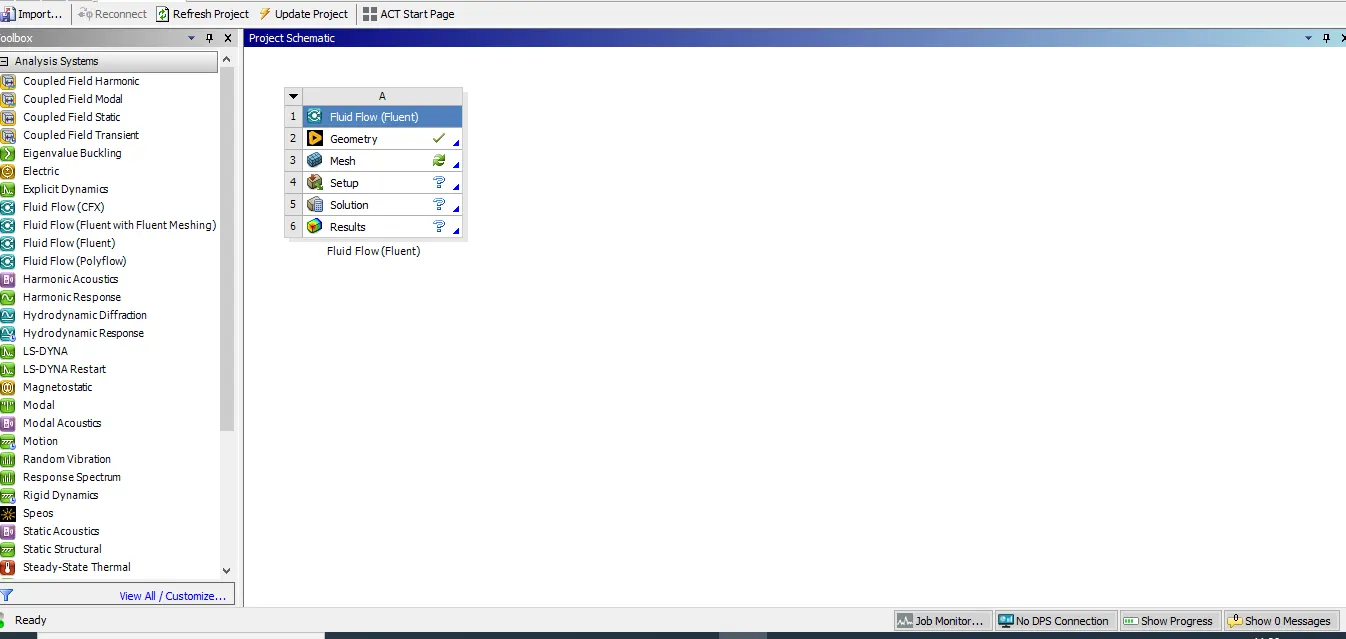
Open ANSYS workbench→Fluid Flow(Fluent)→Drag & Drop →Double Click on the Geometry,
→Go to File →open (import) model.
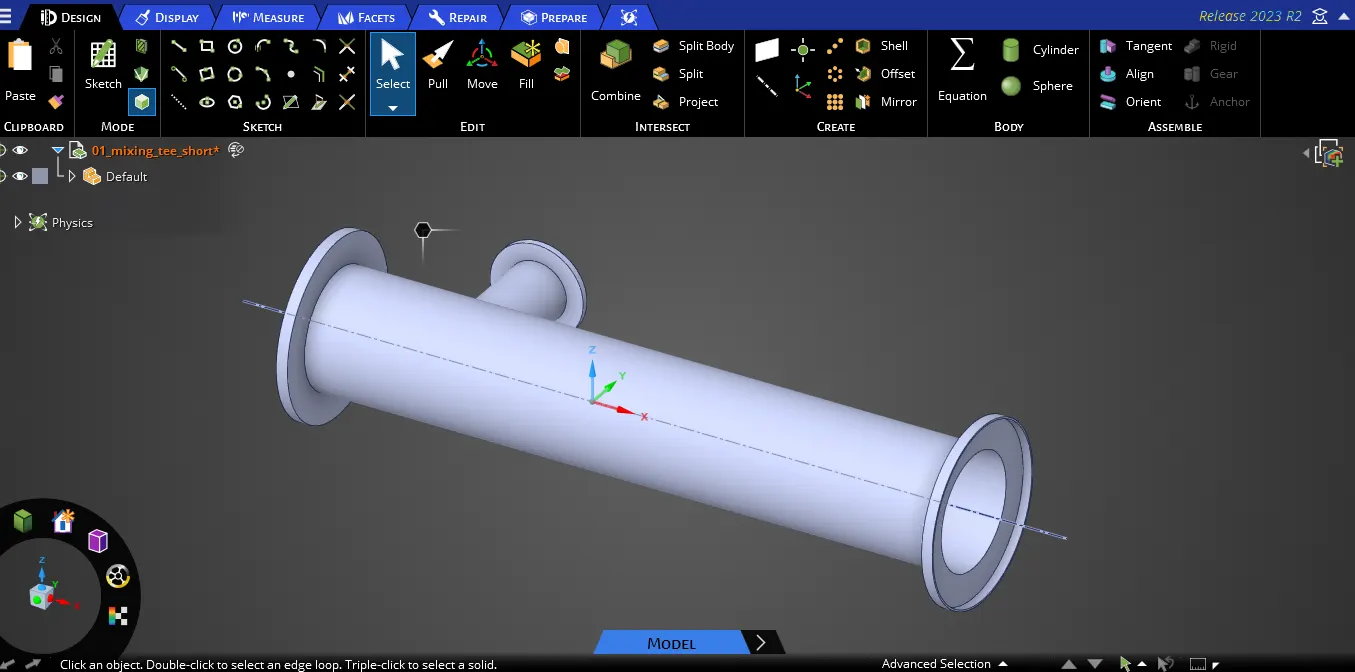
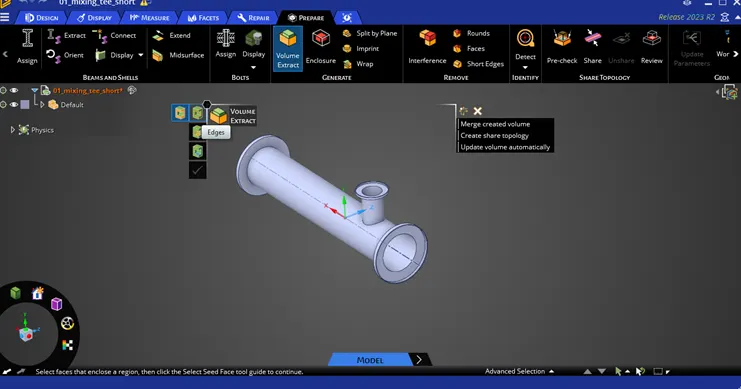
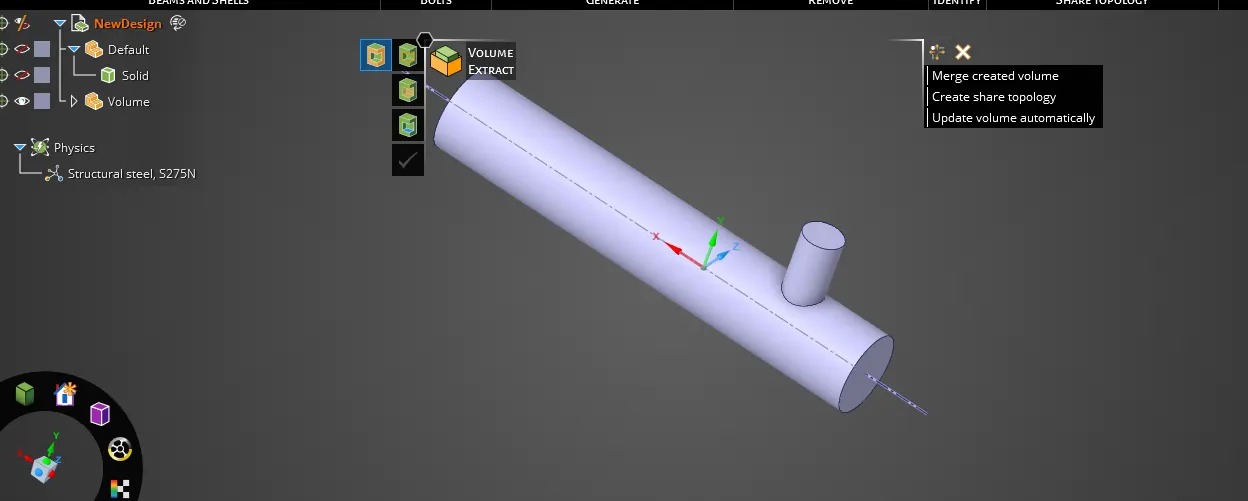
First Do extract the fluid volume → it is fluid contact with the particular geometry.
steps are below
Prepare →Volume Extract →Select Edges →Ctrl +select edges →click on greenncheck box ok
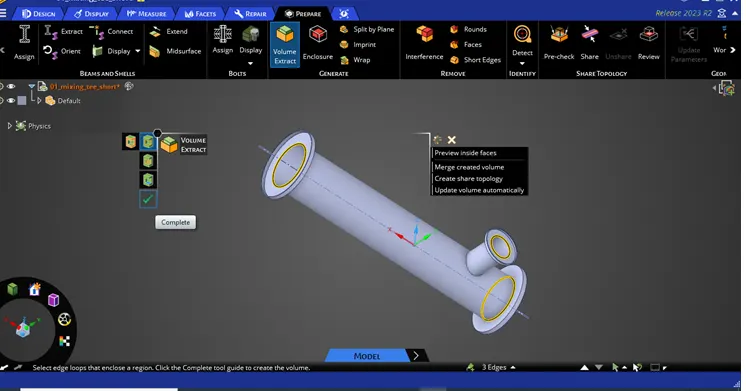
Hide Solid Model
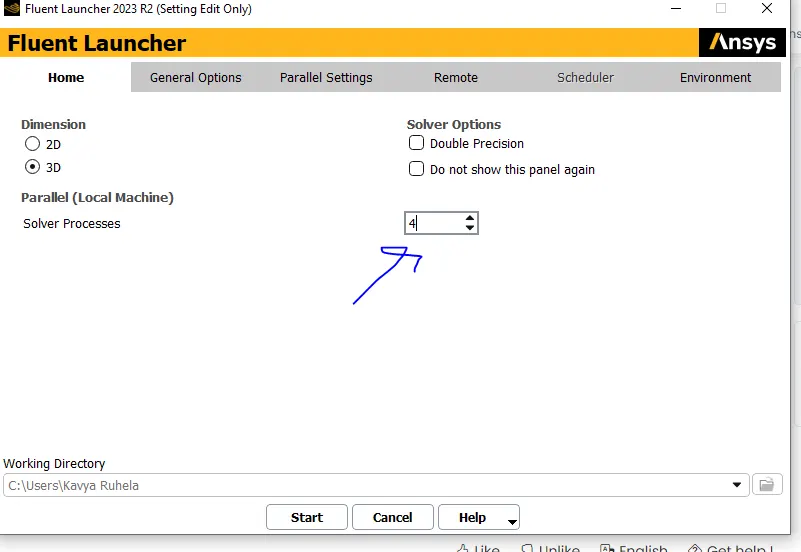
Select the Mesh And click double click in this window select the double precision and solver nos
4 select then start.
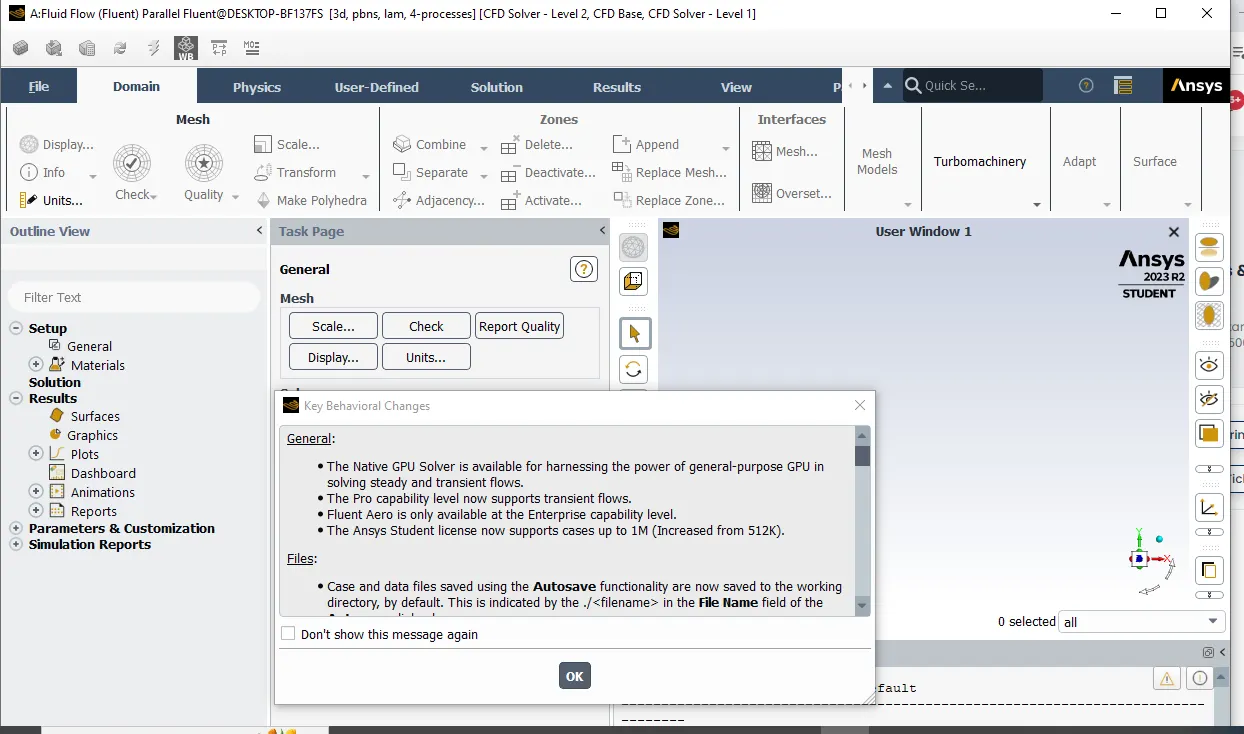
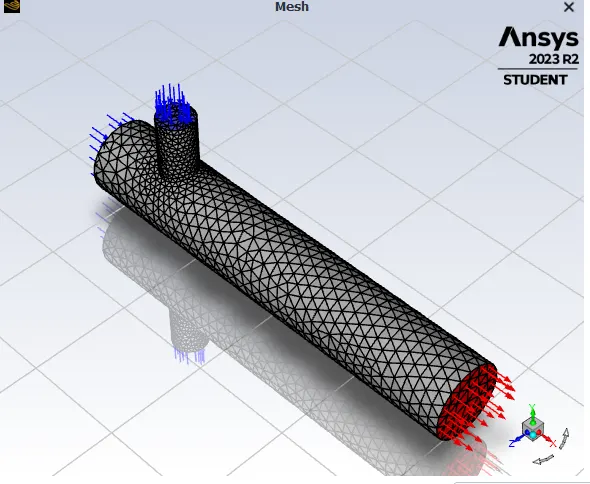
For selcting the Condtions follow the parameters.
IN Physics Domain→Click 3 dots og genral→select Pressure Base→Absolute→ steady and Energy→Viscosity (K-epsilion & Relizable)→ok
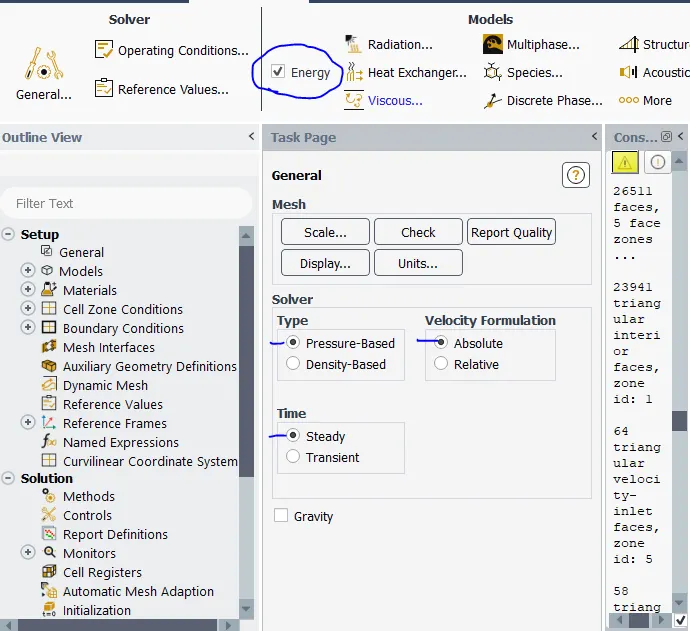
Add the material.in this case we are going to the air.
Assign the Boundary Conditions.window will be popup .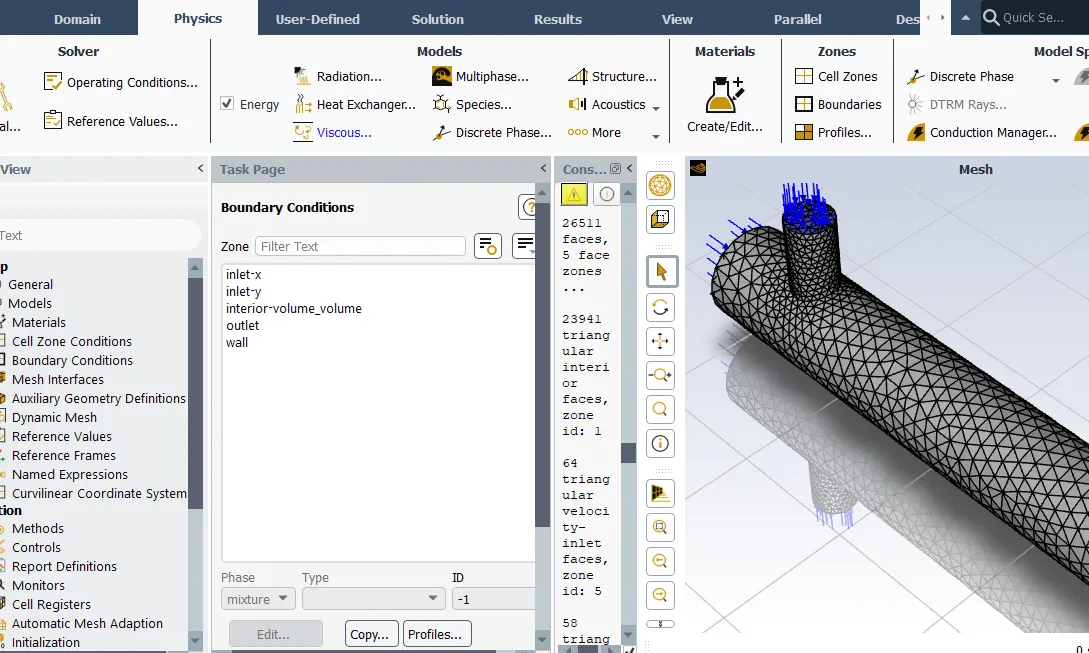
Assing the solving options. steps
Solution→Definitions→New →Surface Report → Area Weighted Avarage.
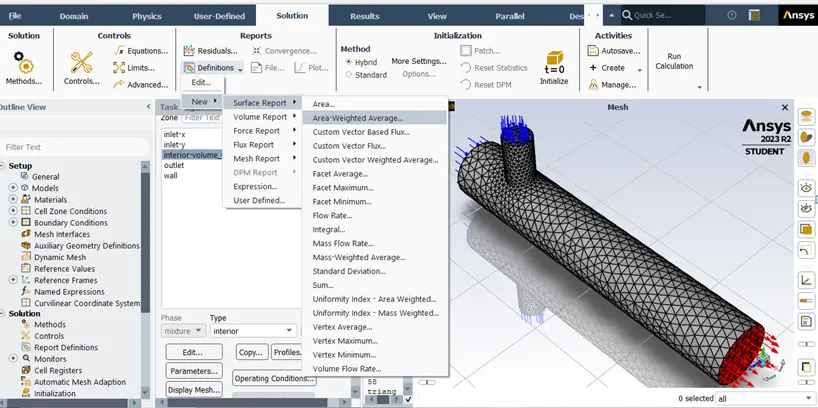
selected that select the parameters.
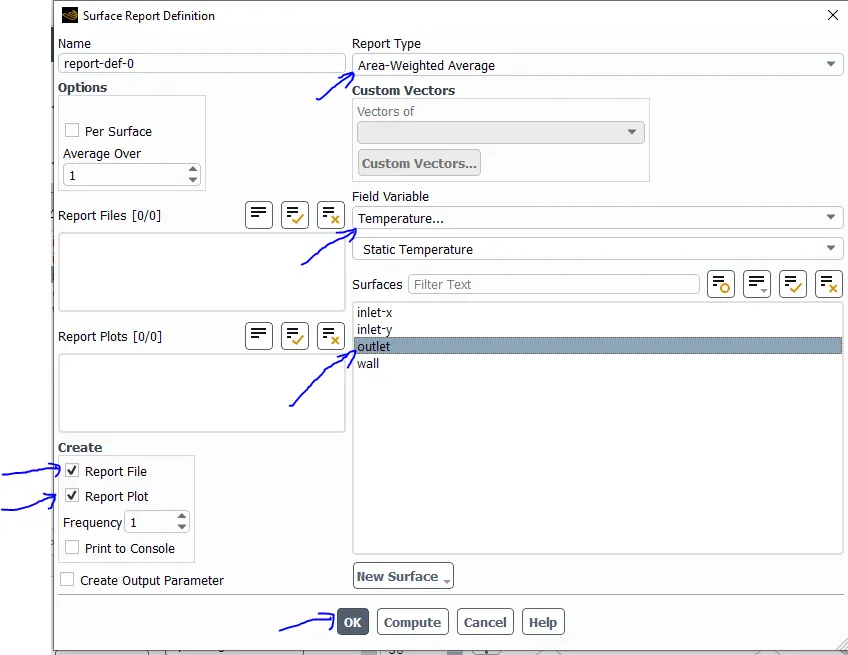
Area Weighted Avarage →Fieled Variable ( Temprature) → Face Varible ( Outlet)
Must be check on report file and report part
Hot inlet Temperature = 36 degrees
Cold inlet Temperature = 19 degrees
Hot inlet velocity = 3 m/s
Momentum ratio = 2
Cold inlet velocity = Momentum ratio*Hot inlet velocity = 6 m/s
No of itration-250
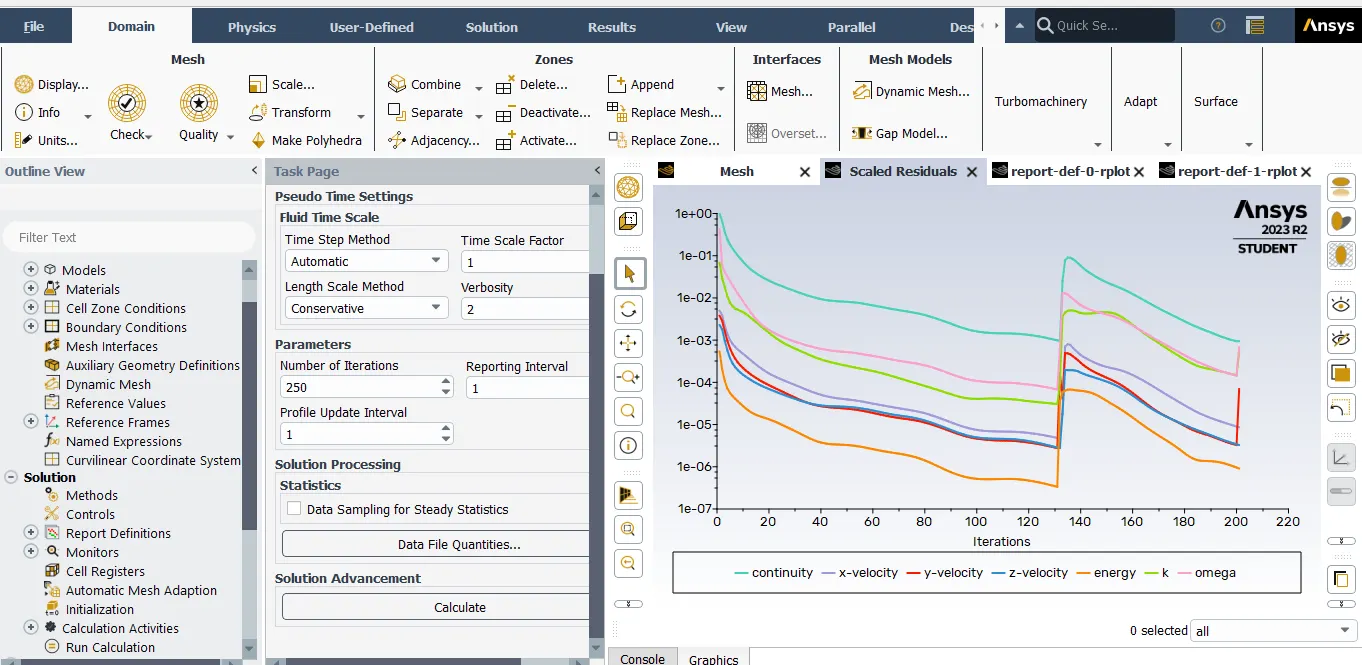
Residuals
standard K-Epsilon
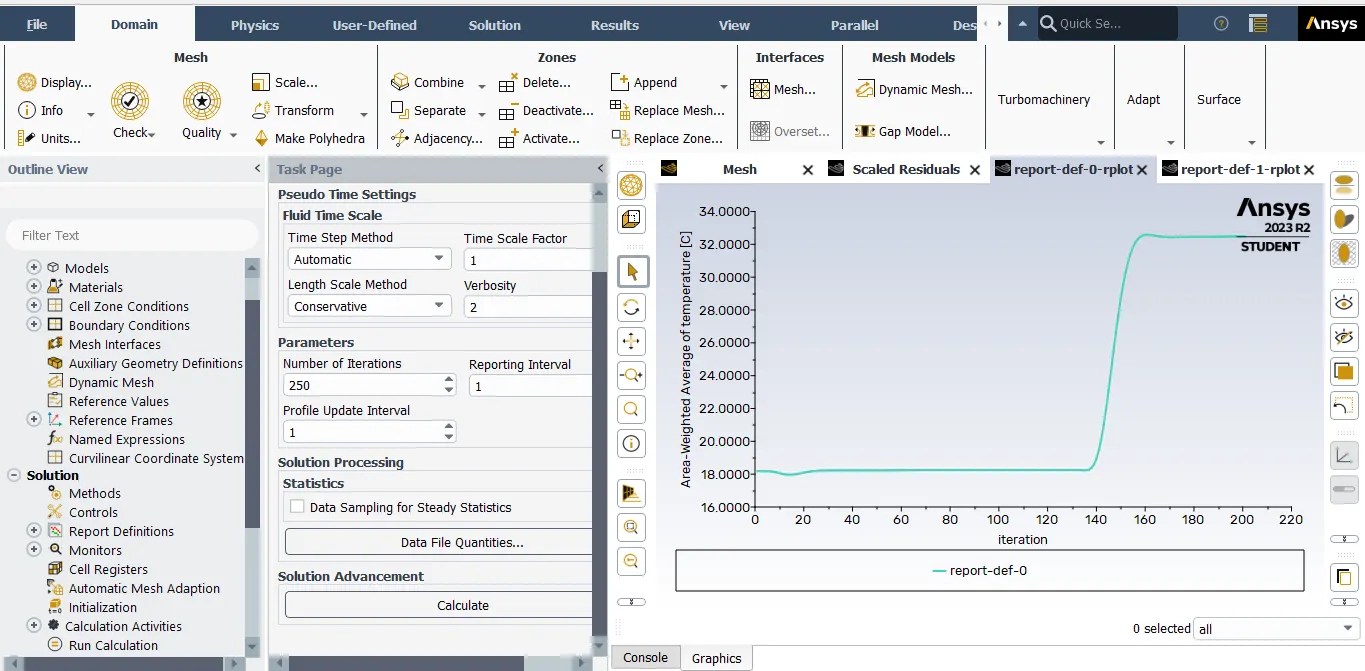
Standard Area Weighted avarage Temprature.
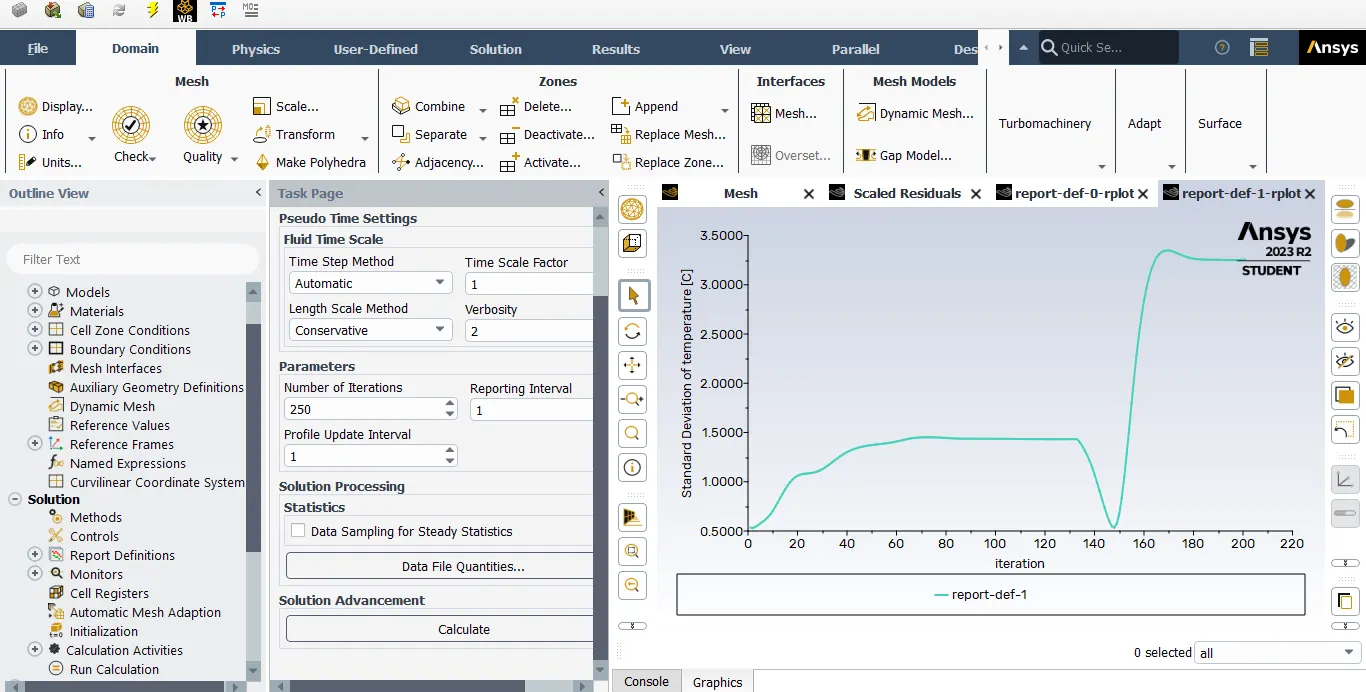
Standard Devation Of Temprature.
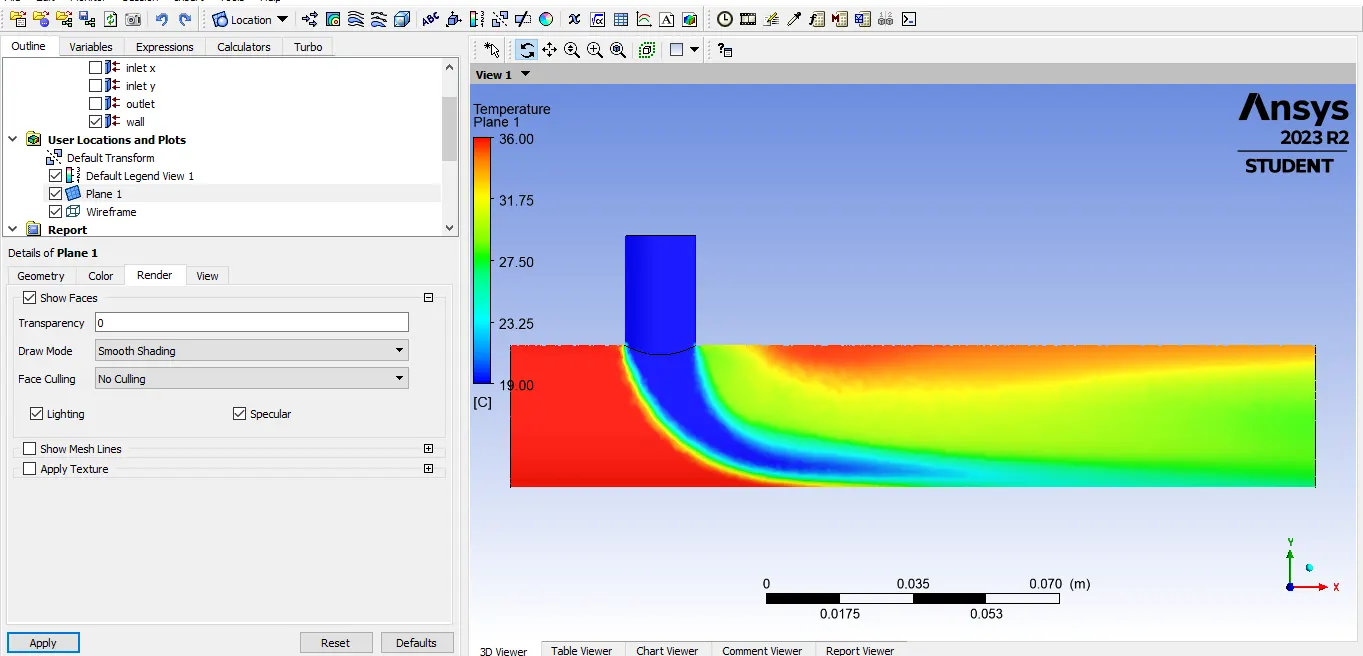
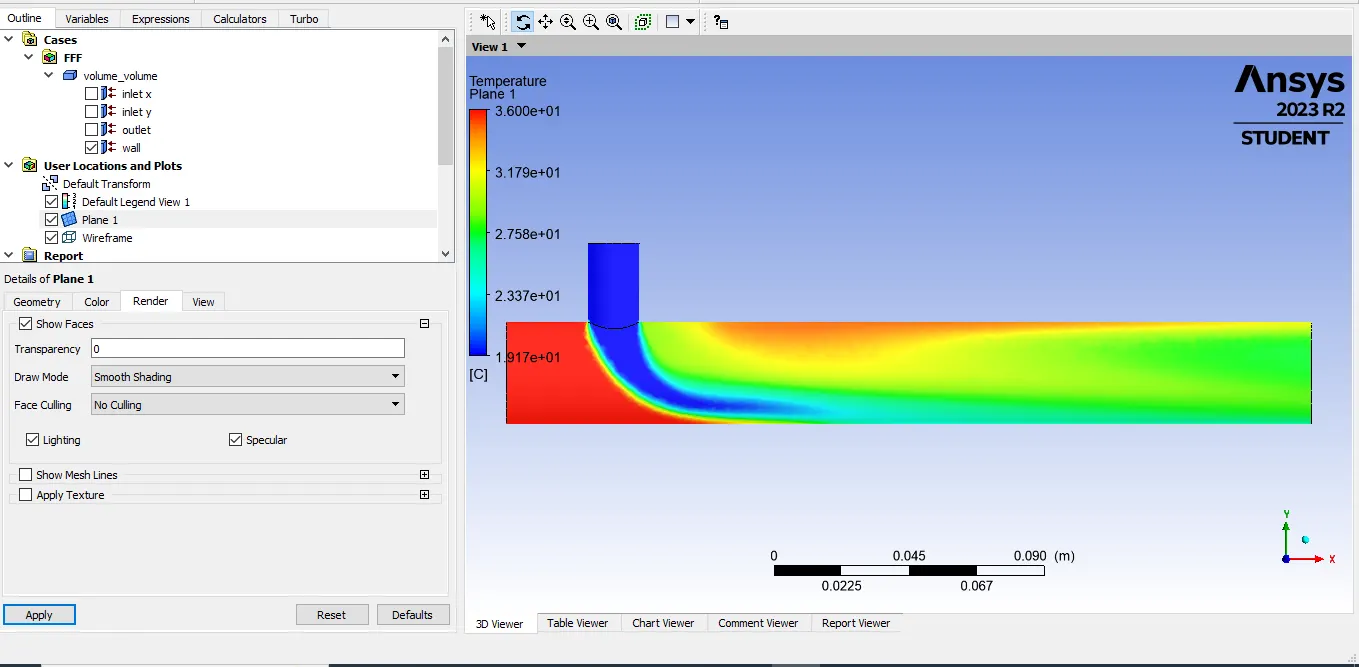
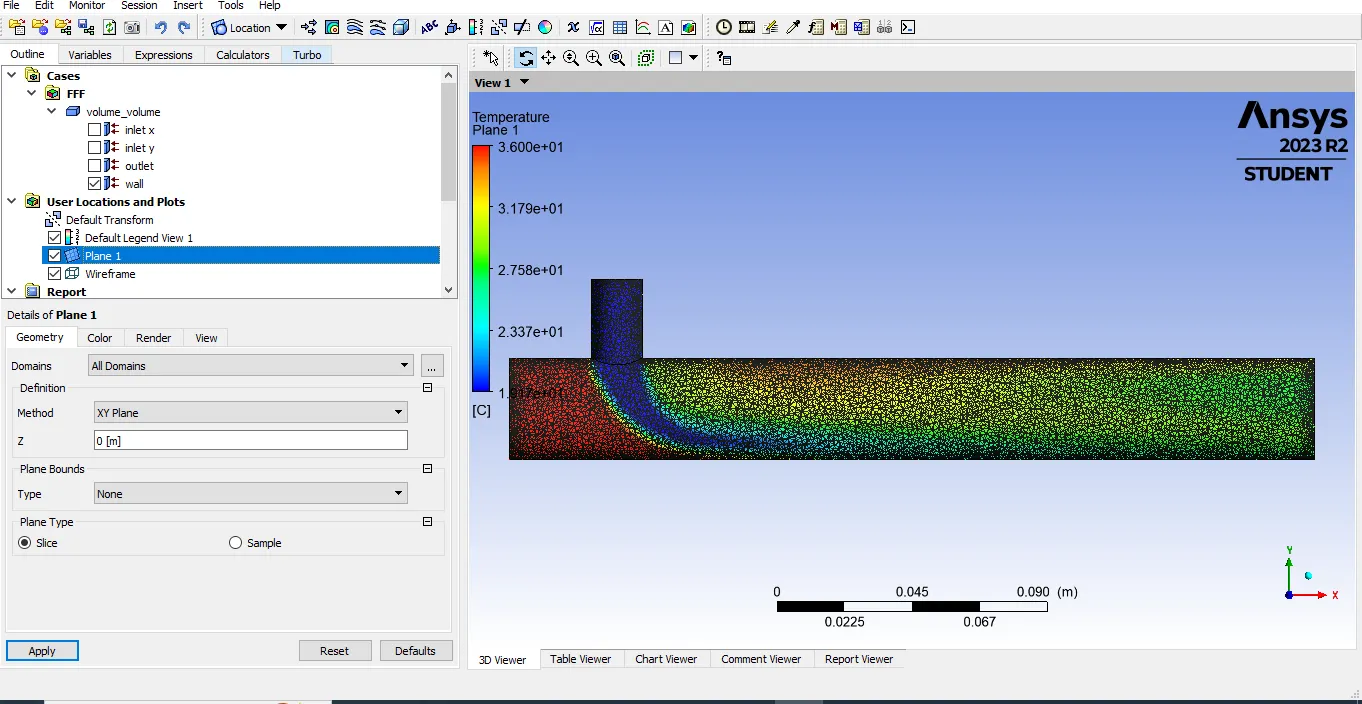
Temprature Distribution of the flow in the Pipe.
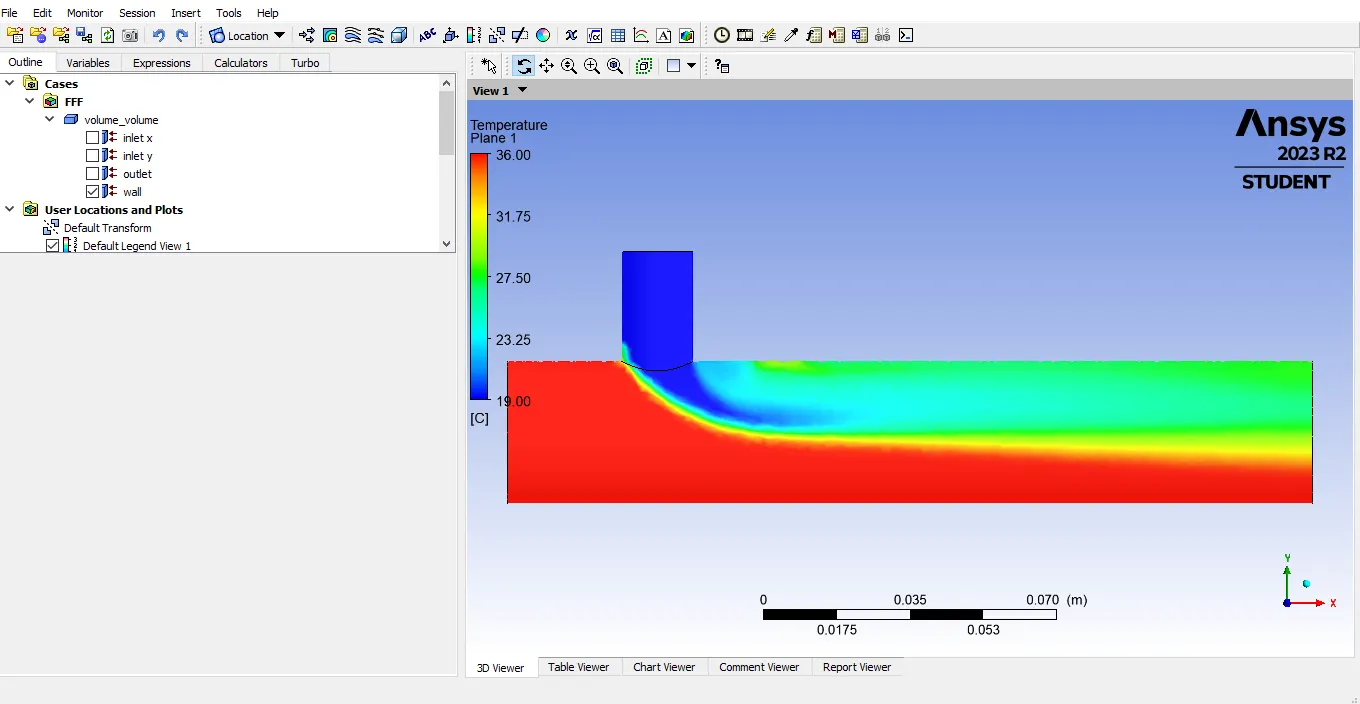
Short Pipe Momentum Ratio-2 Short Pipe Momentum Ratio-2
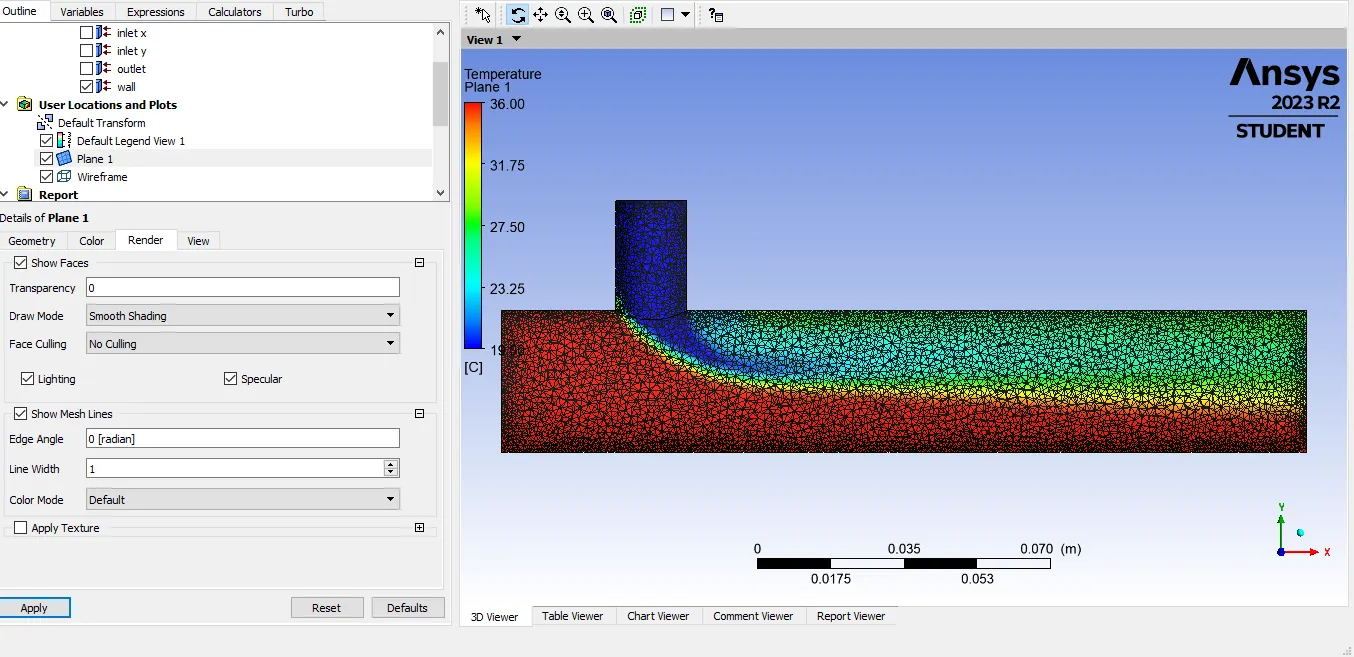
Short Pipe Momentum Ratio-4 Short Pipe Momentum Ratio-4
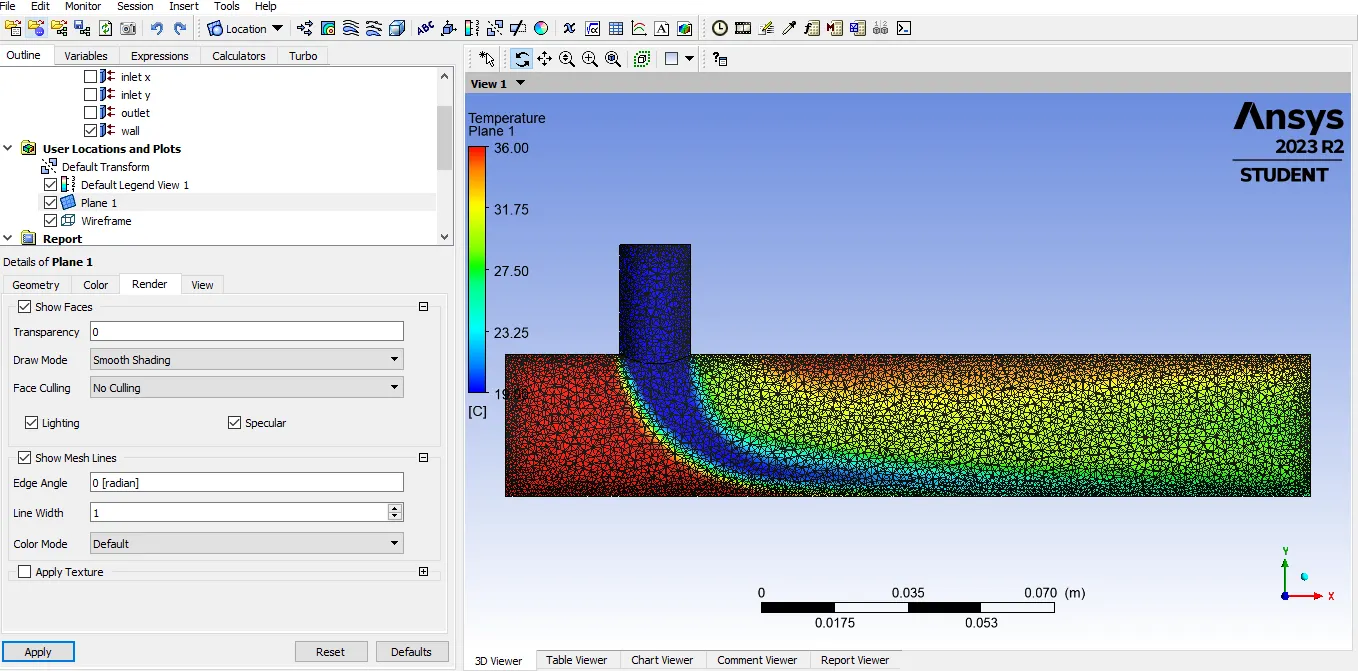
Long Pipe Momentu Ratio is 2.
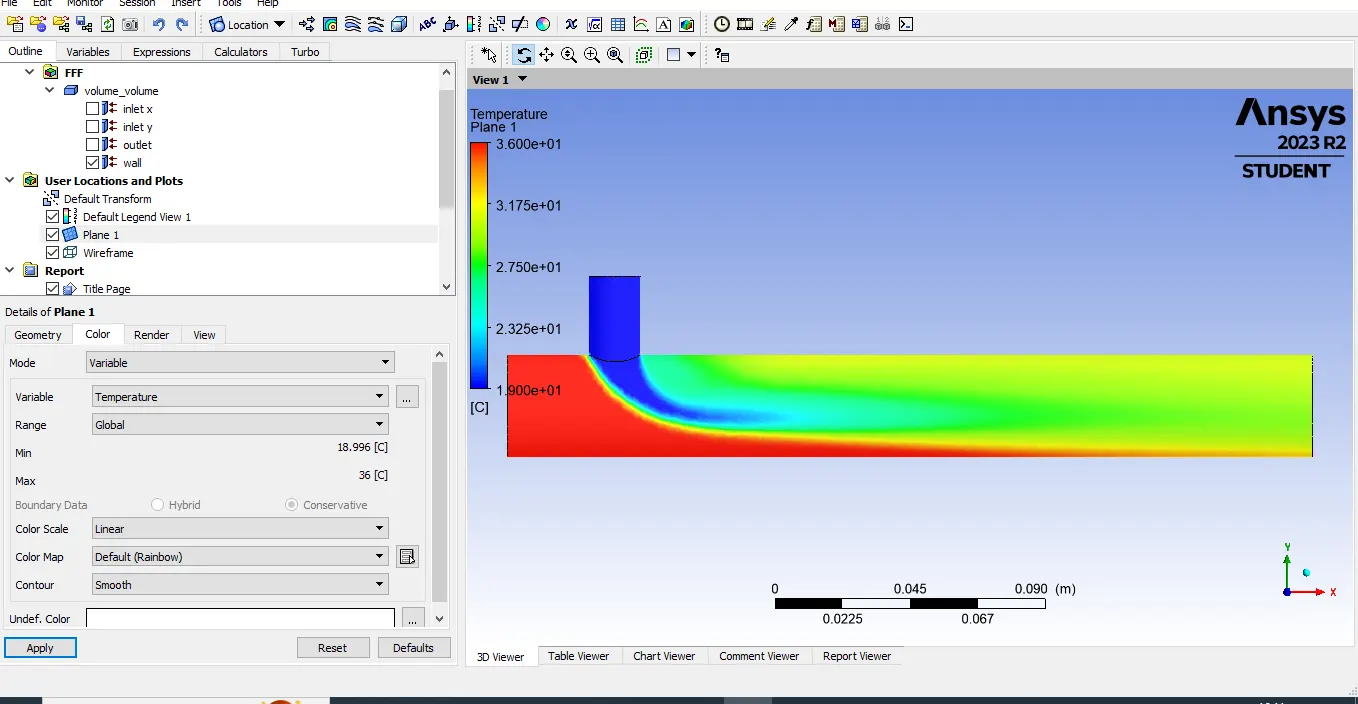
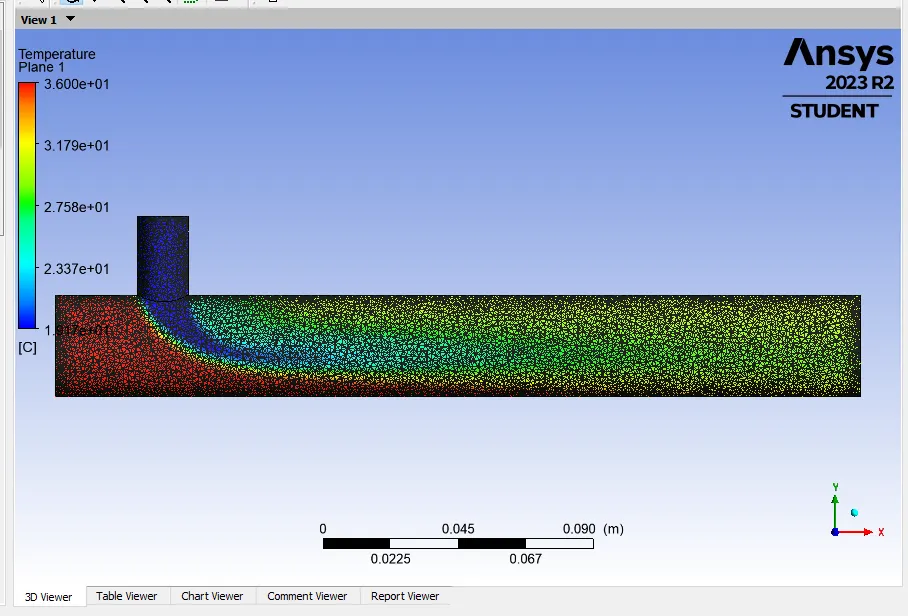
Long Pipe Momentu Ratio is 4.
| Pipe type | Momentum Ratio | Nodes | Cells/ Elements |
Iterations | Temperature |
| Short | 2 | 110591 | 576543 | 250 | 36 c |
| Short | 4 | 110591 | 576543 | 250 | 36 c |
| Long | 2 | 146953 | 765172 | 200 | 31.5 c |
| Long | 4 | 146953 | 765172 | 200 | 31.6 c |
Conclusion:
- K-Epsilon converges faster and thus is also cheaper. But, both converge at some point and give similar results.
- The temperature drop is more when the Momentum ratio is high. A possible cause is turbulent mixing.
- The numerical/computational solutions go hand in hand with Analytical solutions.
- For best results, Longer pipe lengths and higher Momentum ratios can be preferred.