Week 1- Mixing Tee
Objective: To model, the problem of mixing two fluids with different temperatures and velocities in the two t-shaped arrangements in the Ansys fluent using different methods of calculation and analyze the solution, and to conclude which method and model is better for proper mixing of the fluid and cool the hot fluid effectively.
Analytical calculation
MOMENTUM RATIO 2:
- Mass of hot fluid (mh) = rho*a*Vh = 997*0.0009*3 = 2.69 kg/s
- Mass of cold fluid (mc) = rho*a*Vc = 997*0.0009*6 = 1.35 kg/s
- Temperature of mixture (Tmixture) = (mh*Th + mc*Tc)/(mc + mh) = 30.3190c
MOMENTUM RATIO 4:
- Mass of hot fluid (mh) = rho*a*Vh = 997*0.0009*3 = 2.69 kg/s
- Mass of cold fluid (mc) = rho*a*Vc = 997*0.0009*12 = 2.3928 kg/s
- Temperature of mixture (Tmixture) = (mh*Th + mc*Tc)/(mc + mh) = 27.990c
Short-tee:
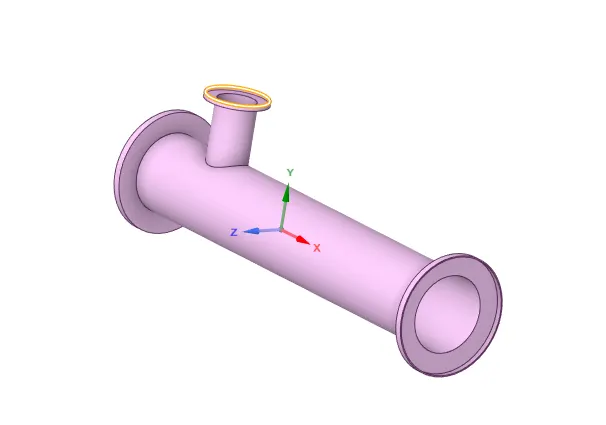
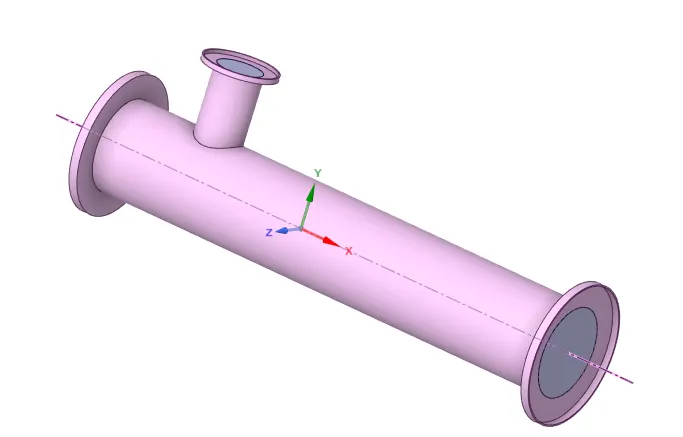
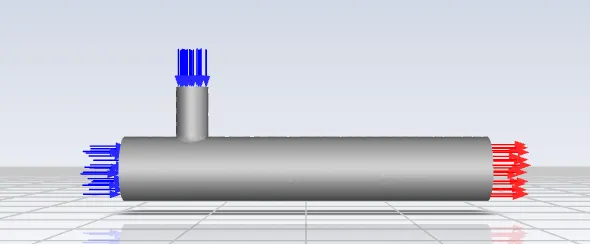
After importing the geometry in the space claim volume of the pipe is extracted as shown in the figure below and then the original model is suppressed for physics calculation as only te properties of the volume is to be analyzed
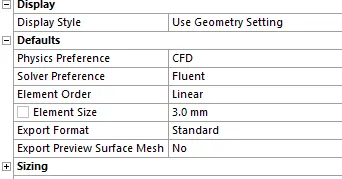
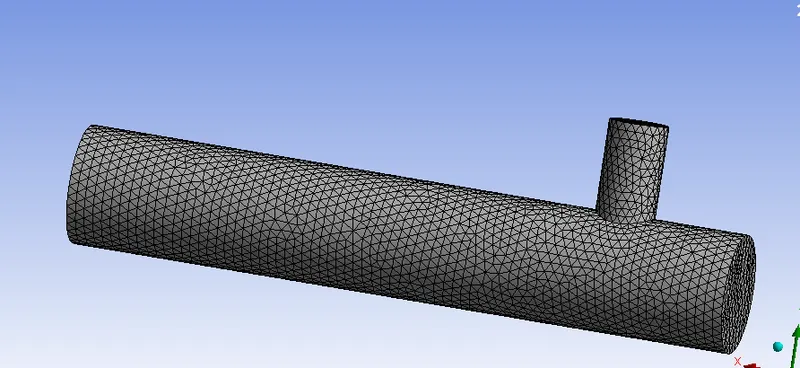
As extracting the volume the mesh of the model is prepared and the mesh element size is kept at 3mm as it is the optimum size which shows satisfactory results and requires less time to obtain the desired solution
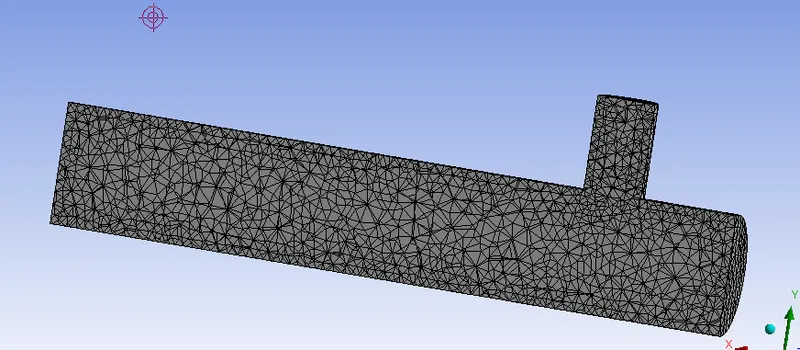
and then the surfaces of the volume are named as per their function as inlet, outlet, and wall
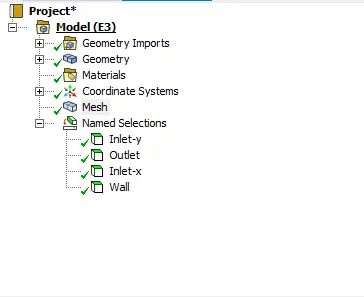
here the small inlet with cold inlet fluid and higher velocity is termed inlet y and the inlet with hot fluid and low velocity is termed inlet x.
quality if the mesh is as shown in the figure below
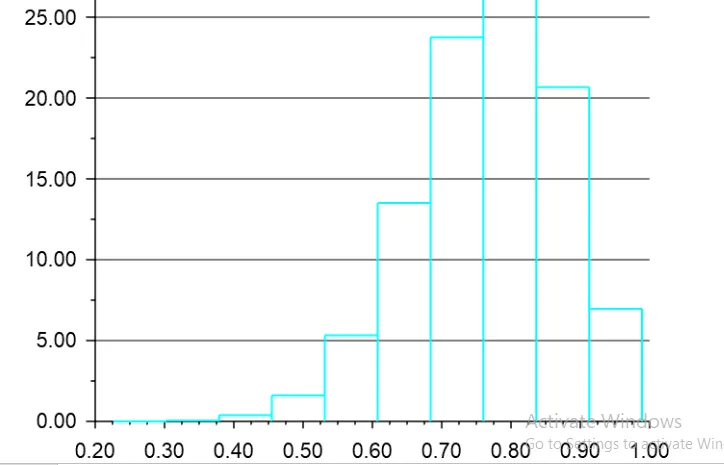
as there are no elements with less than 5% orthogonality it can be considered good for further solution
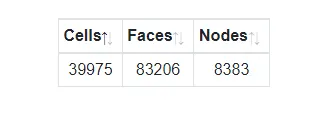
and the number of the faces and nodes are as shown in the figure below:
Comparison between k-epsilon and k-omega state:
Time: Steady-state
Type: Pressure-based
Geometry: Short tee
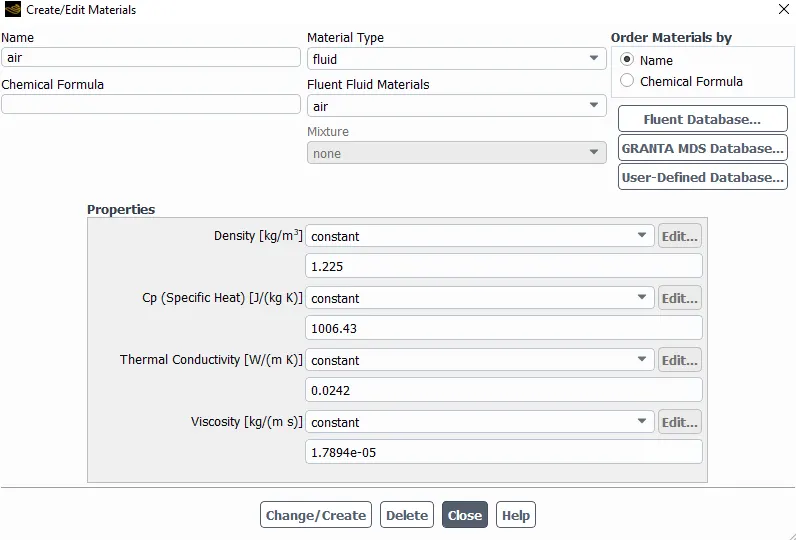
Working fluid: Air
In this model, the working fluid for the cell zones is air with default values of density, viscosity, and thermal conductivity
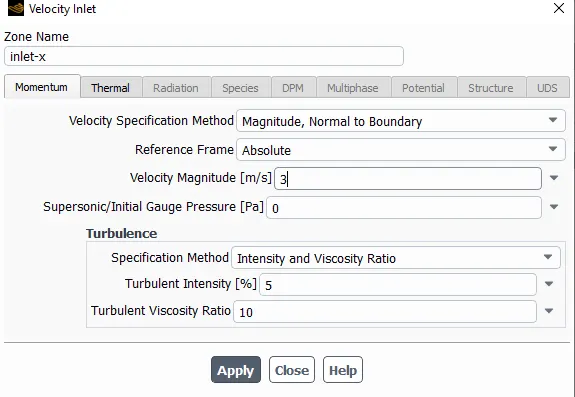
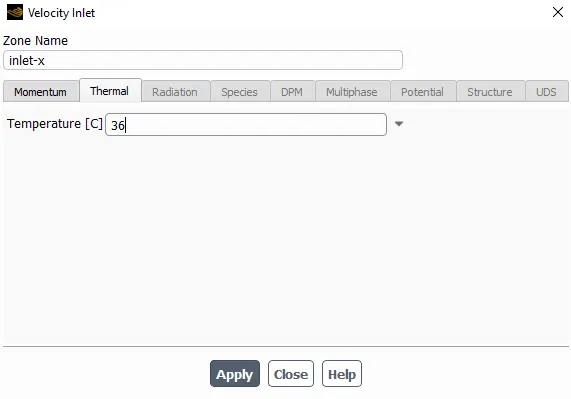
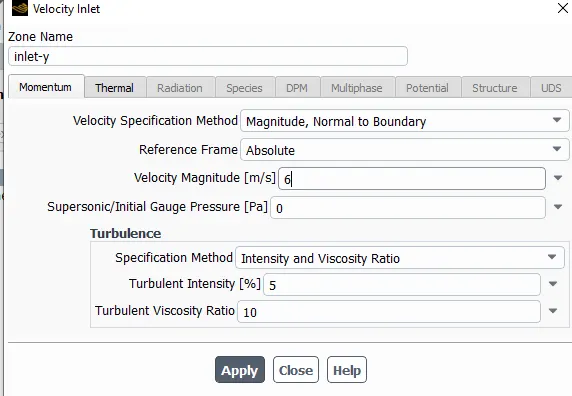
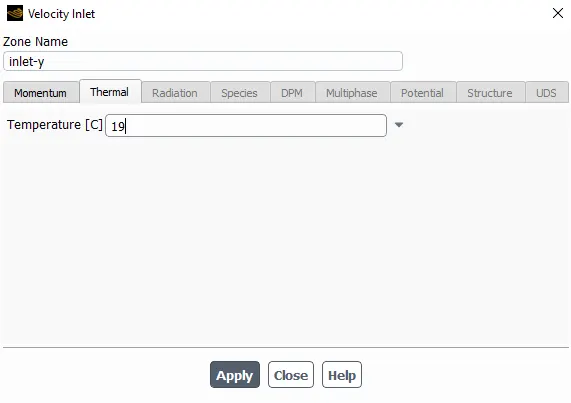
In this model, for the boundary conditions the inlet-x temperature is kept at 3m/s and the temperature at 36 degree-celsius, and inlet-y velocity is kept at 6m/s and the temperature is kept at 19 degree-celsius this comparison is for moment ratio 2
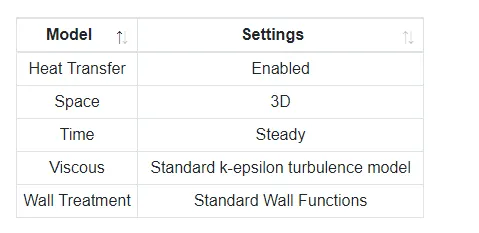
Then in the setup pressure based solver is used with steady-state time and the turbulence model is selected as k-epsilon and the energy-based equations are used in the model as the temperature is taken into the consideration

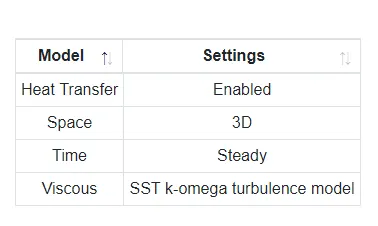
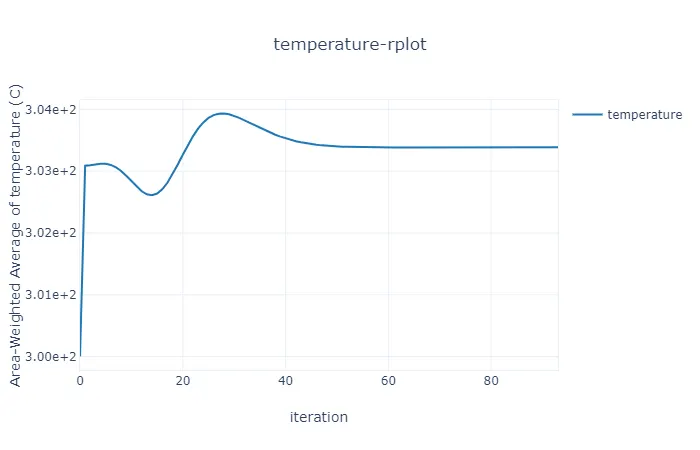
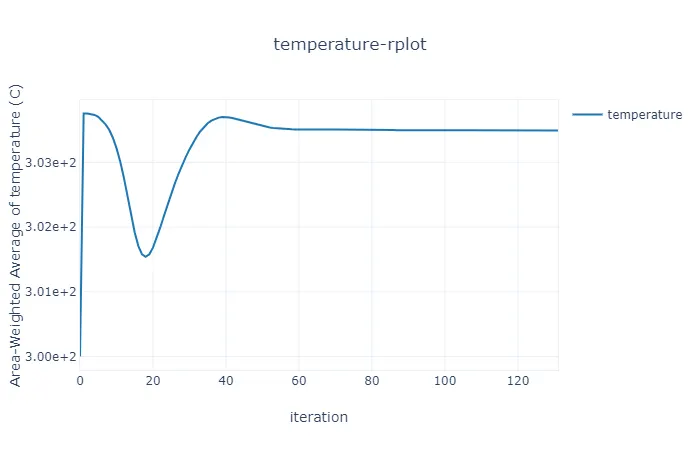
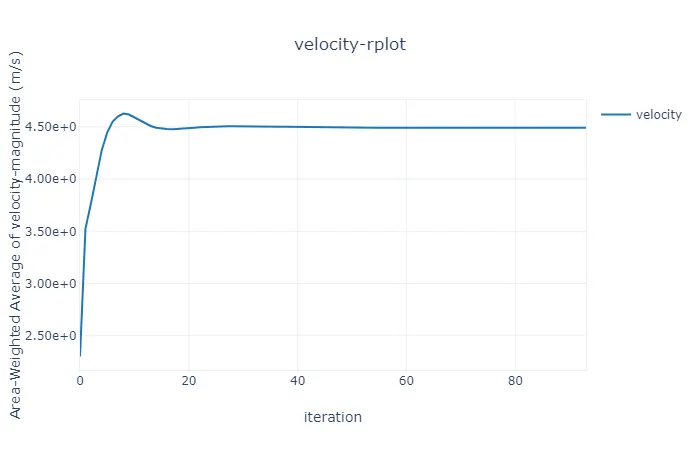
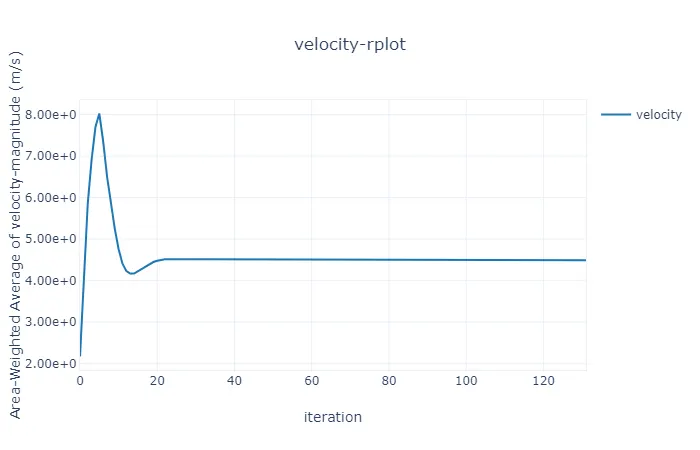
For the calculation of the outlet temperature and diffusivity of the fluid and compare it with the analytical solution definition for weighted average temperature, weighted average velocity, and standard deviation temperature of the outlet surface are created and the obtained results are compared below
k-epsilon k-omega
Temperature
Velocity
Deviation:
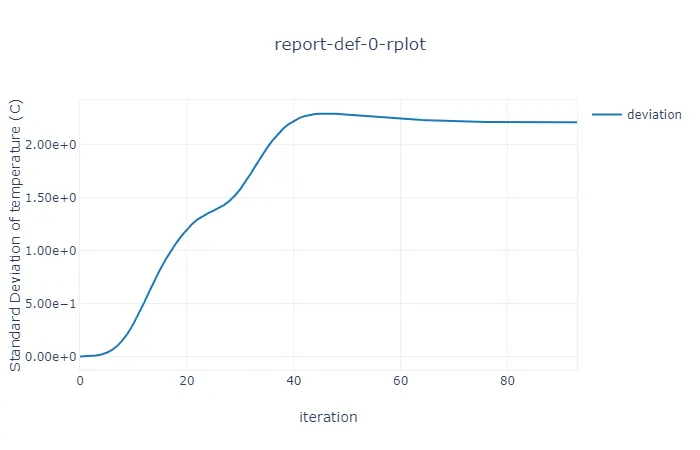
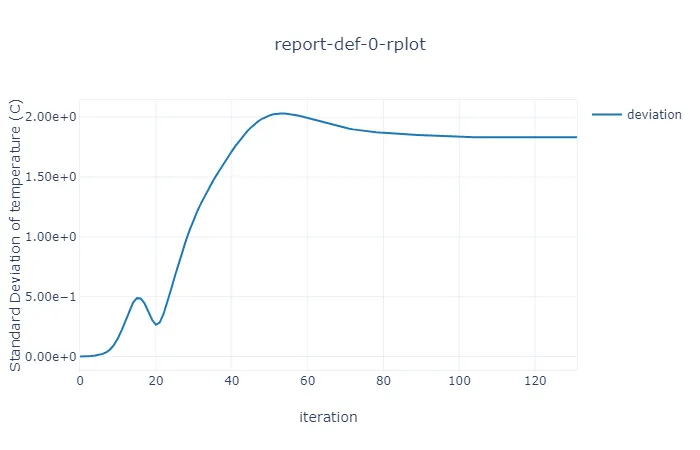
Results:
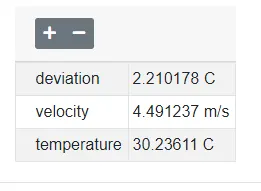
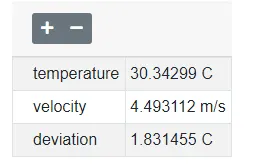
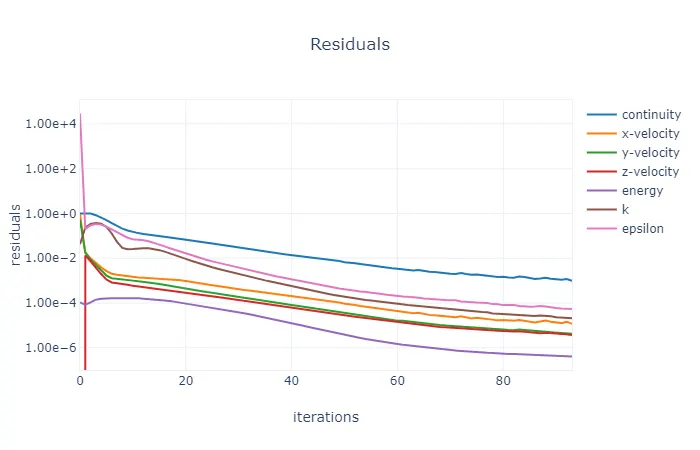
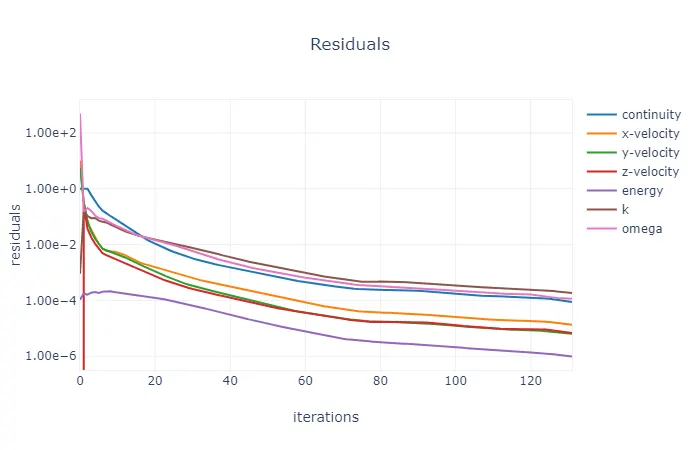
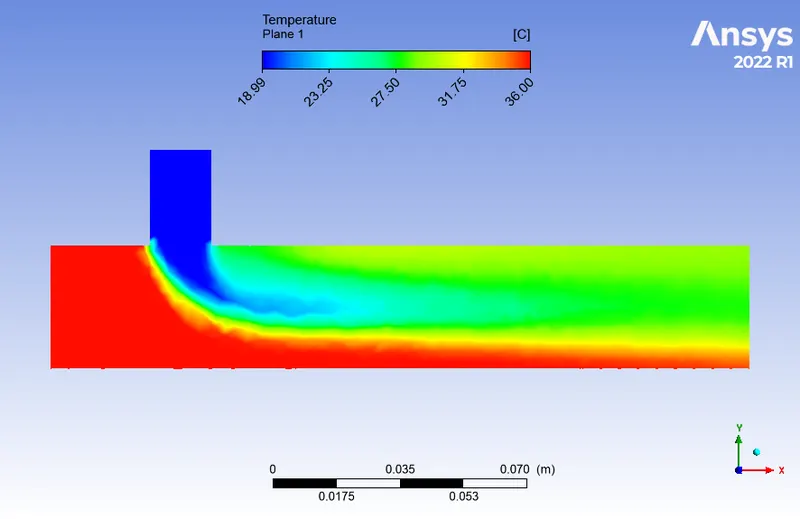
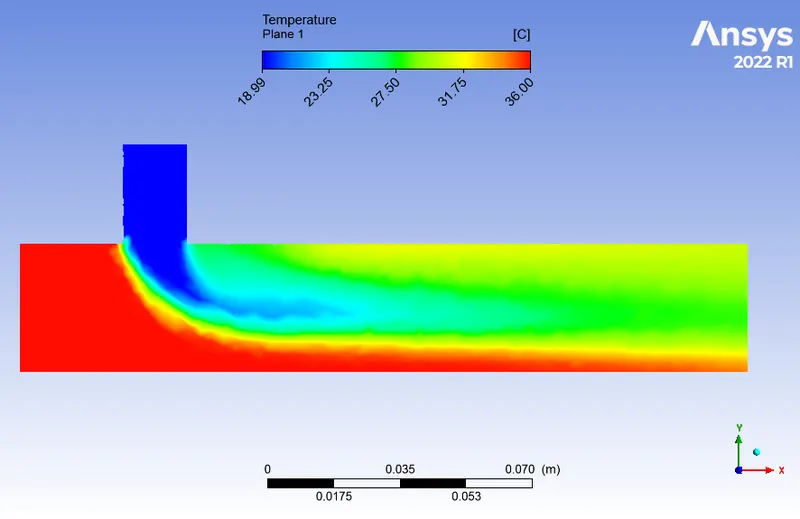
As it can be seen from the results that the results for the k-omega turbulence model agree more with the analytical solution of the problem and the deviation of the outlet temperature is less but the number of the iteration required to converge the solution of the problem is 130 and while the k-epsilon also agrees with the analytical solution but at slightly lesser extent but the number of the iteration required to converge the solution is 90. So to save the time to obtain the desired results k-epsilon model is used for further comparison.
Residual while calculating solution:
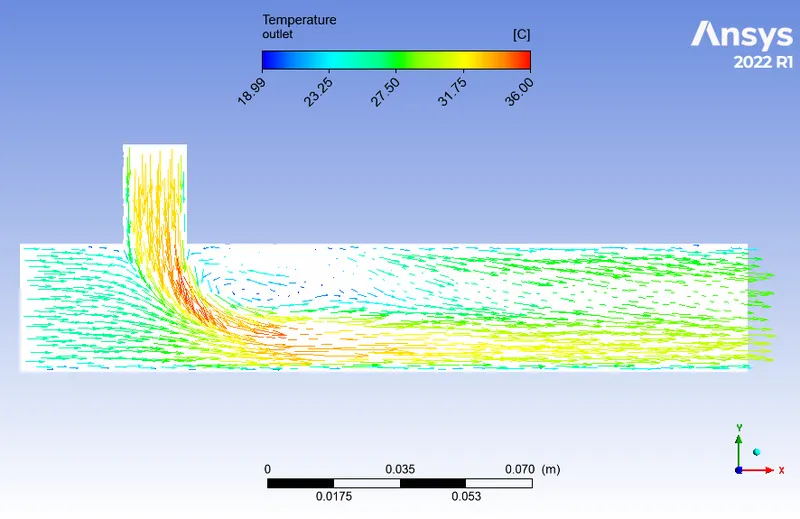
Temperature contours:
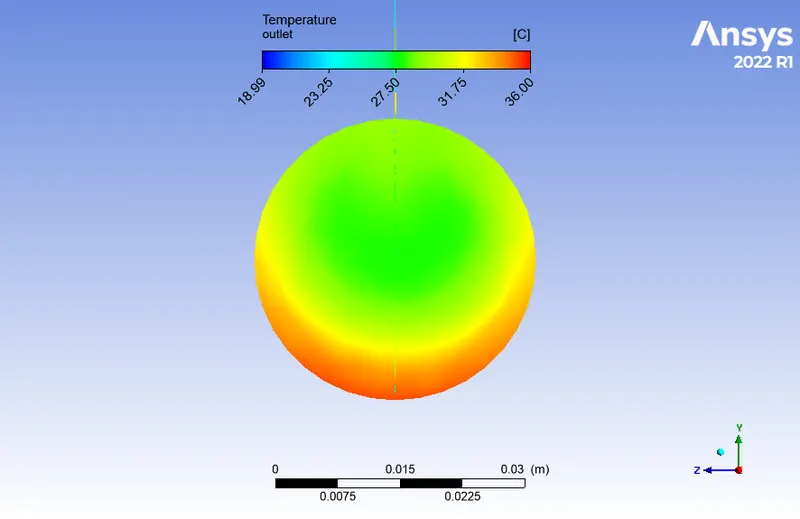
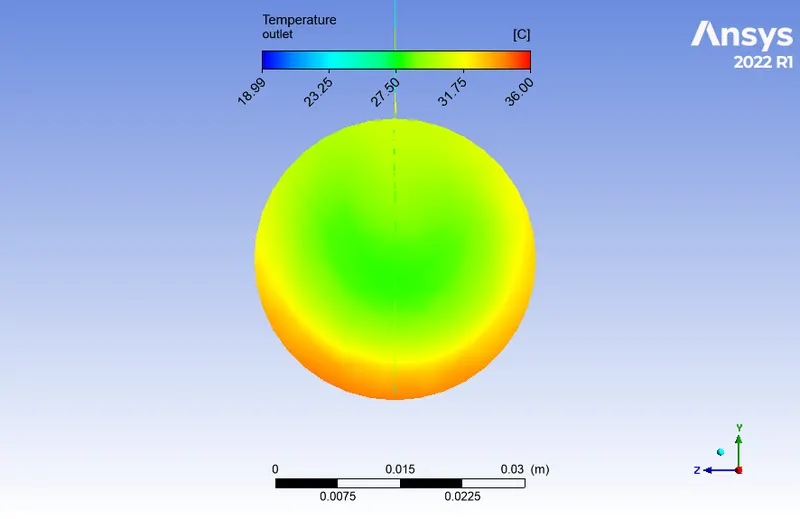
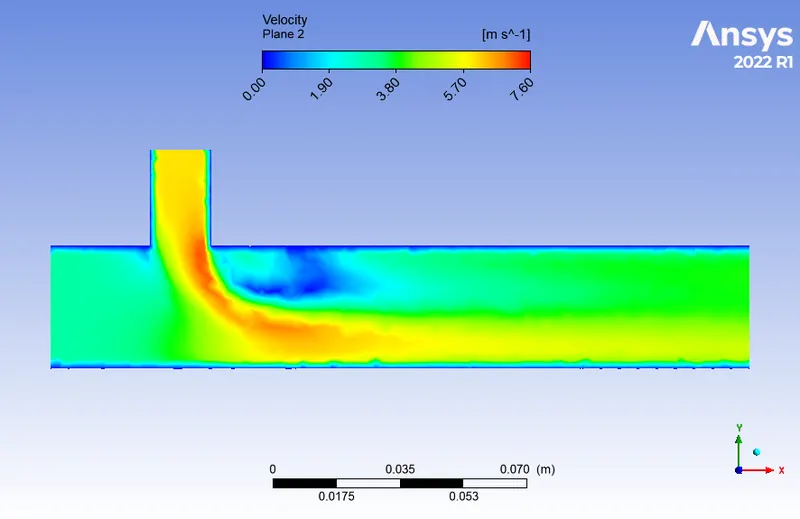
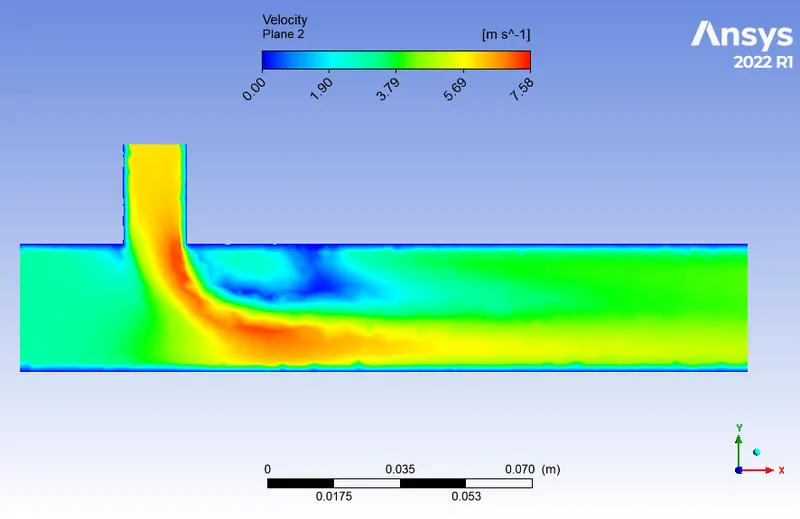
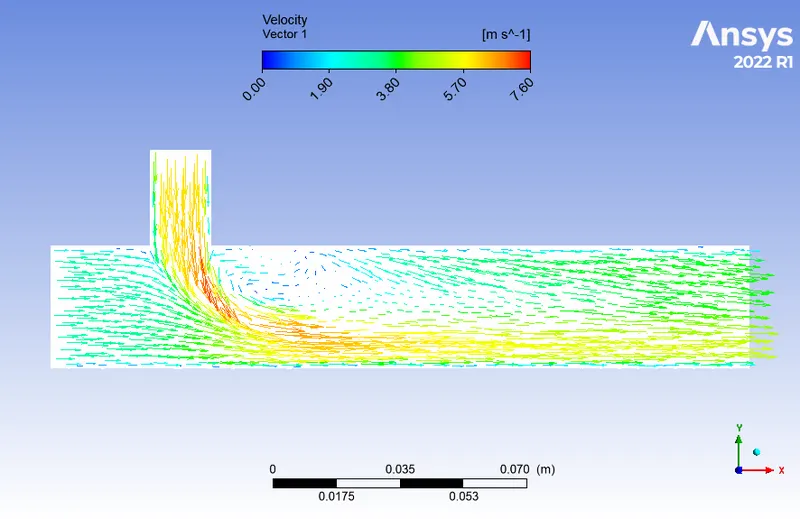
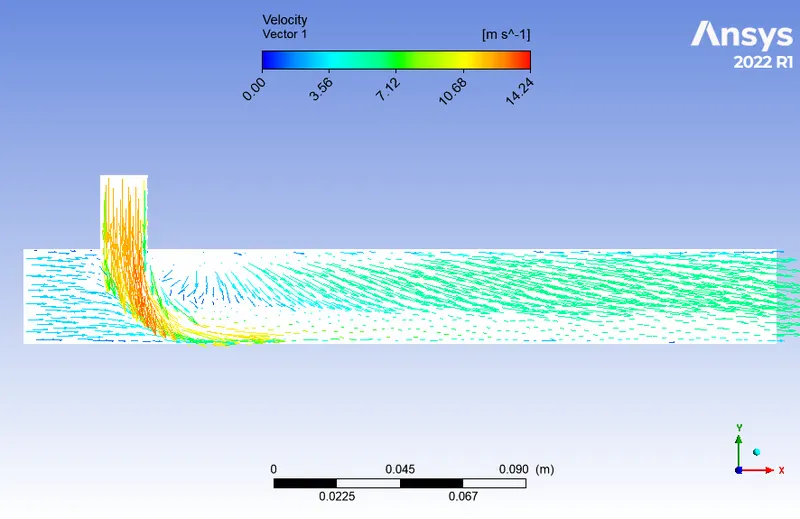
Velocity contour and vector:
Comparison of moment ratios 2 and 4 for short t geometry with k-epsilon model:
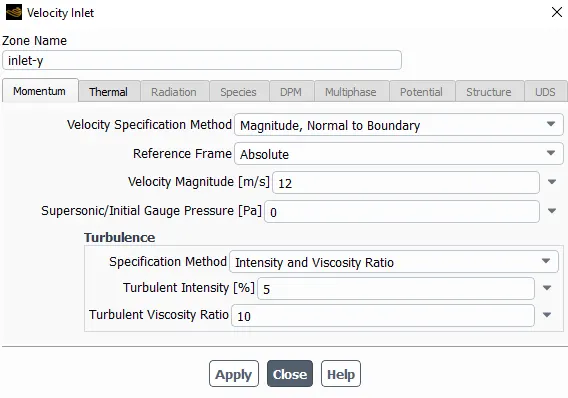
In this comparison the values of the velocity of the fluid supplied from the inlet-y are kept at 6m/s and 12m/s all the other values and geometry are kept as it is:
For the calculation of the outlet temperature and diffusivity of the fluid and compare it with the analytical solution definition for weighted average temperature, weighted average velocity, and standard deviation temperature of the outlet surface are created and the obtained results are compared below
Moment ratio 2 Moment ratio 4
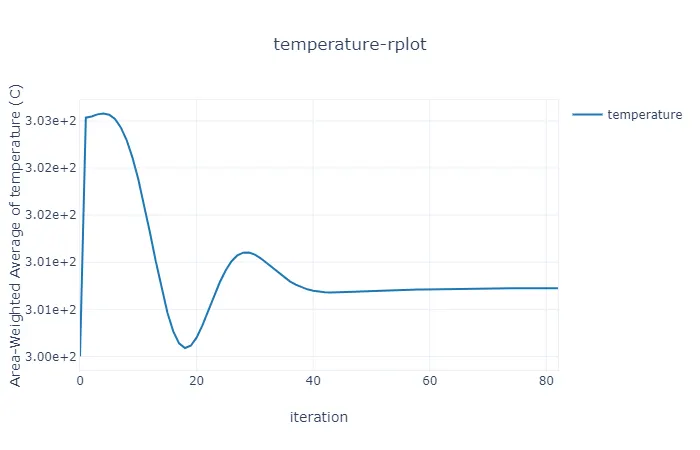
Average outlet temperature:
Velocity:
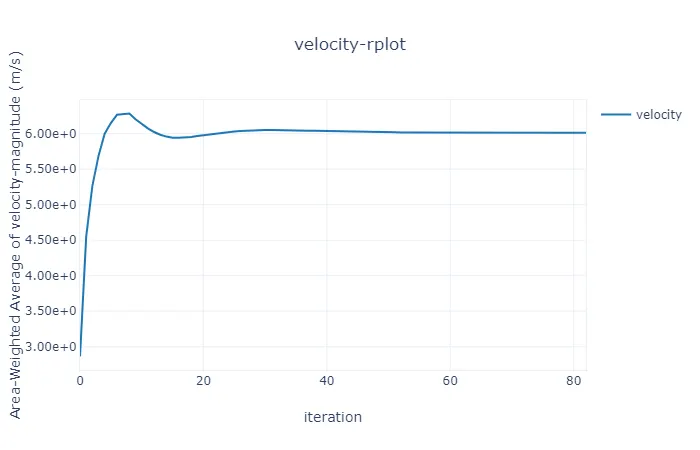
Deviation:
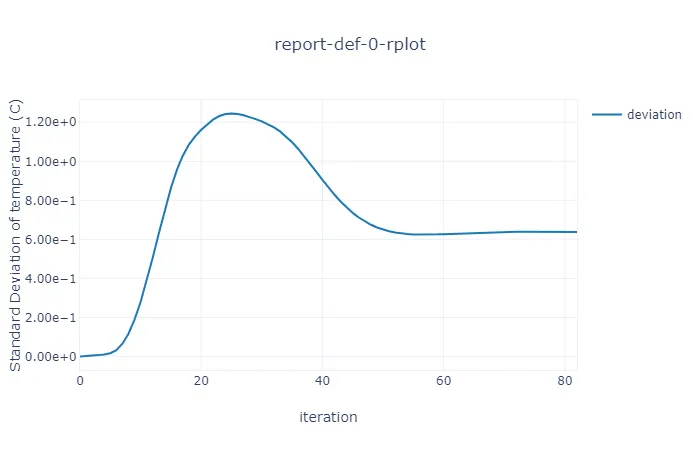
Results:
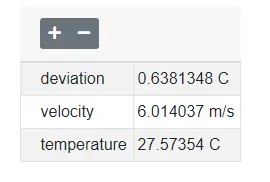
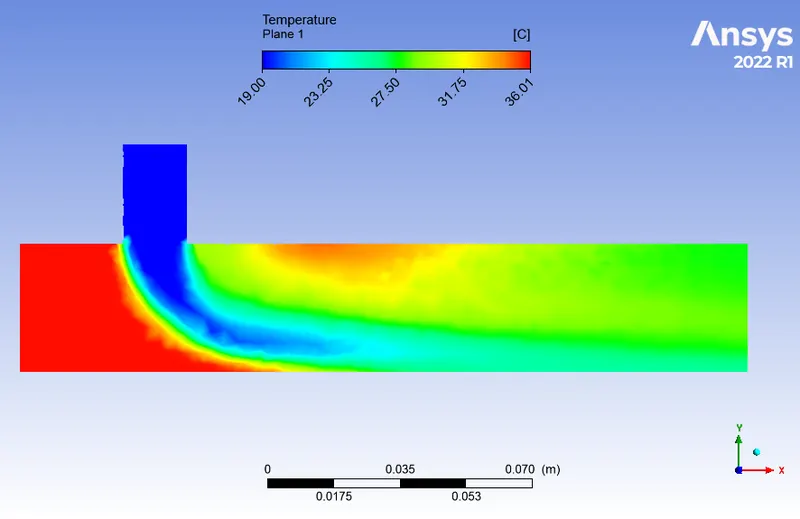
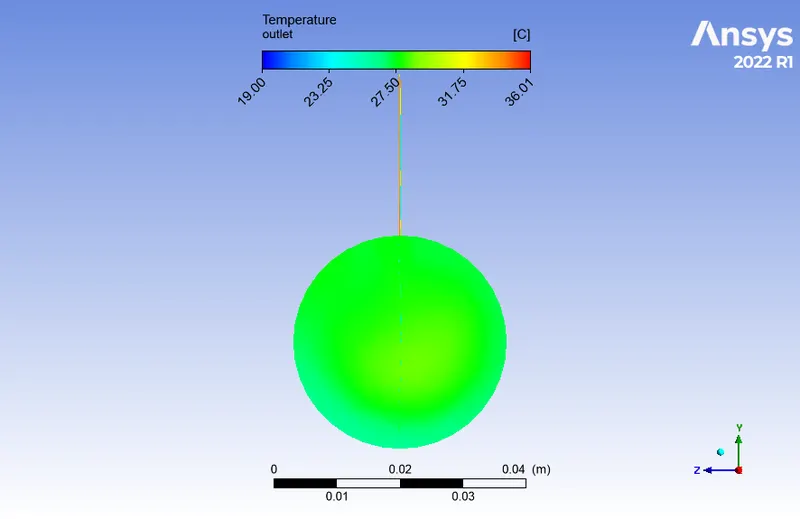
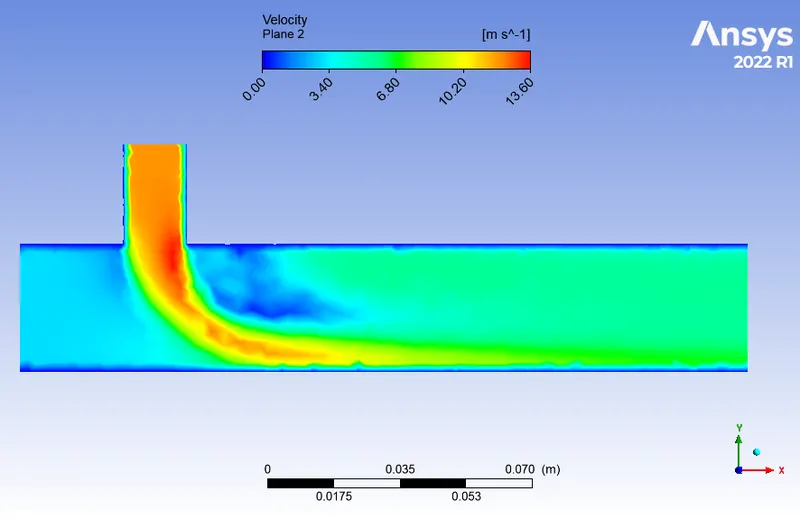
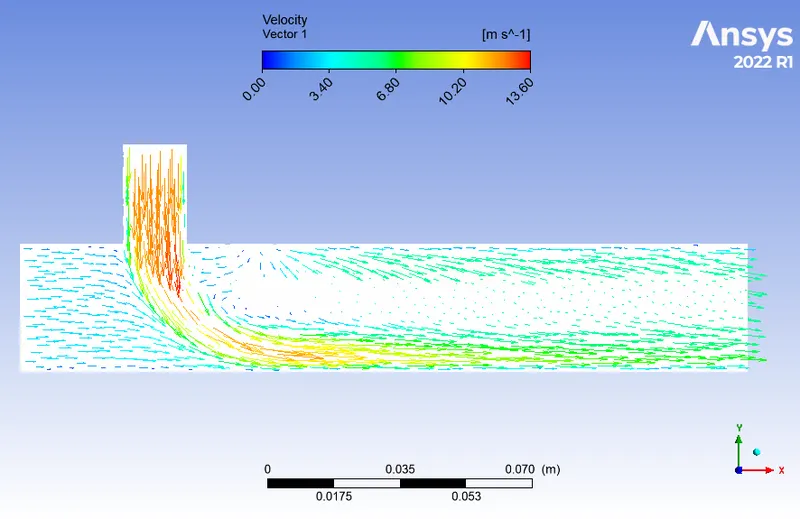
Here it can be seen that the temperatures of both the model agree with the analytical solution but the fluids with a higher moment ratio cool faster than the fluids with a low moment ratio so it can be observed that the high moment ratio would more effectively cool the hot fluid by diffusing the cold fluid with it effectively.
Residual while calculating solution:
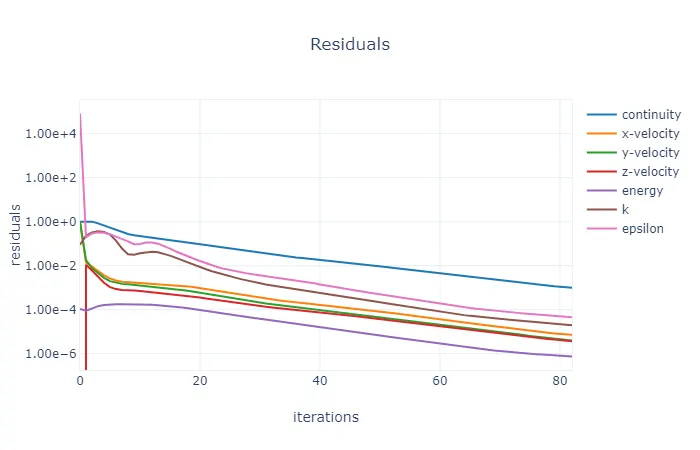
Temperature contour:
Velocity Contour:
Comparison of moment ratios 2 and 4 for long t geometry with k-epsilon model:
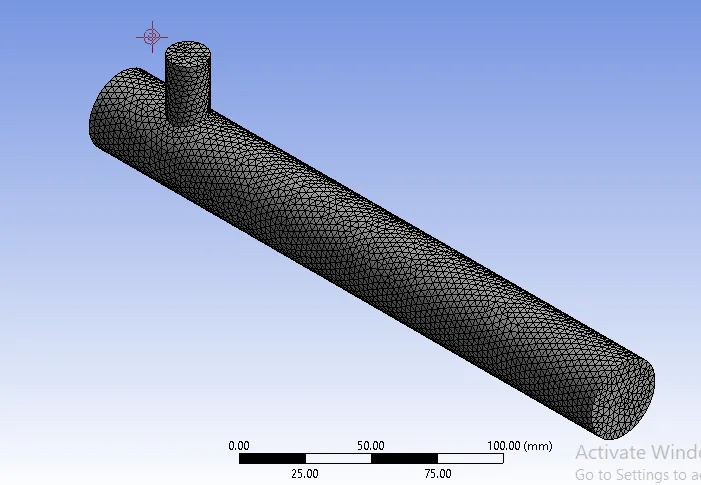
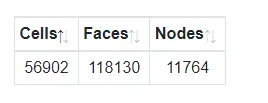
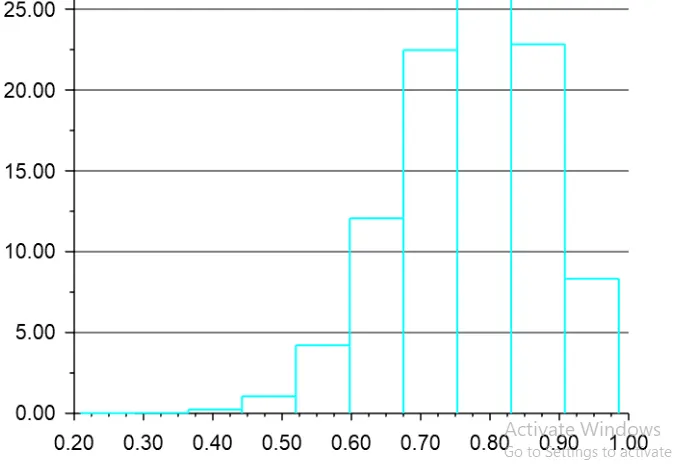
The Mesh element size of this geometry is kept at 3mm as the previous short t geometry and the quality of the mesh is acceptable.
In this comparison the values of the velocity of the fluid supplied from the inlet-y are kept at 6m/s and 12m/s all the other values are kept as it is:
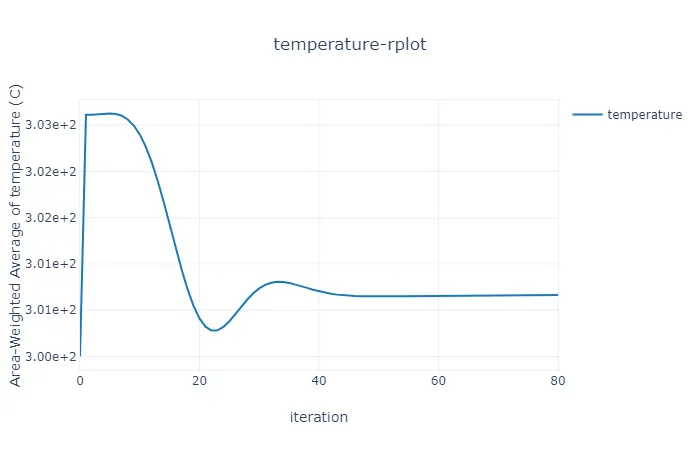
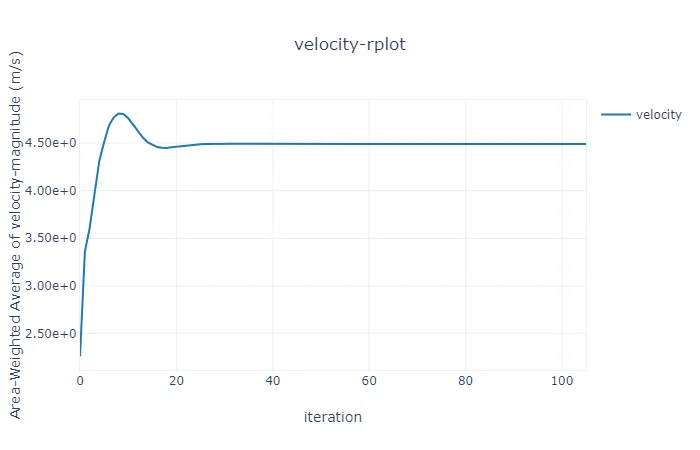
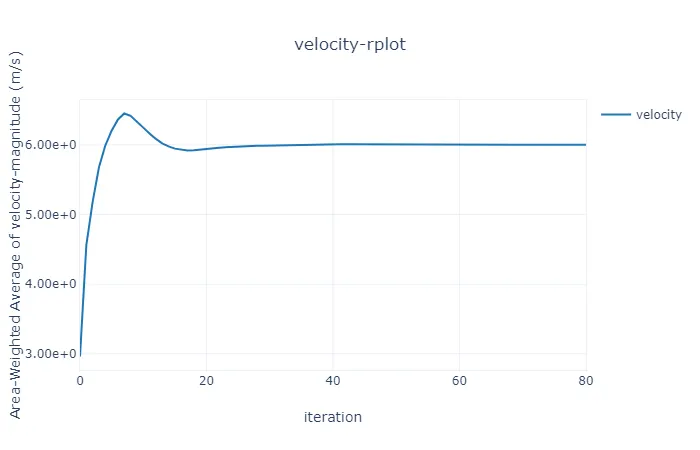
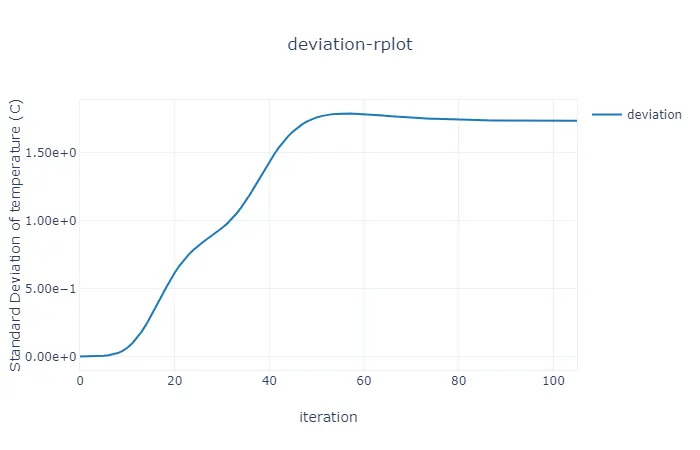
For the calculation of the outlet temperature and diffusivity of the fluid and compare it with the analytical solution definition for weighted average temperature, weighted average velocity, and standard deviation temperature of the outlet surface are created and the obtained results are compared below
Moment ratio 2 Moment ratio 4
Average outlet temperature:
Average outlet velocity:
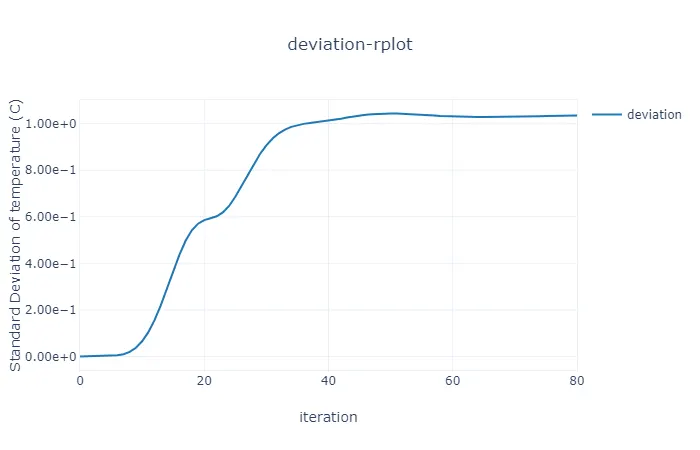
Deviation:
Results:
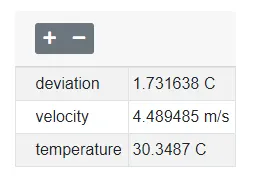
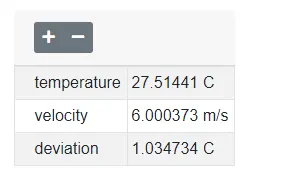
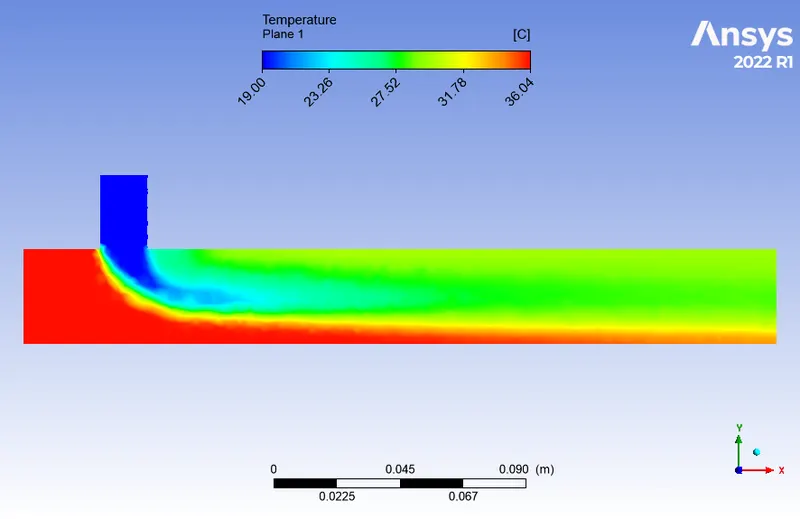
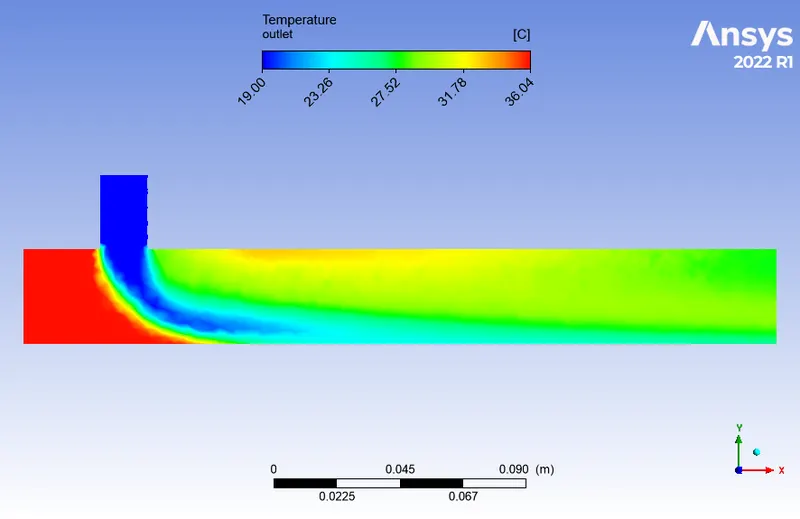
Here it can be seen that the temperatures of both the model agree with the analytical solution but the fluids with a higher moment ratio cool faster than the fluids with a low moment ratio so it can be observed that the high moment ratio would more effectively cool the hot fluid by diffusing the cold fluid with it effectively.
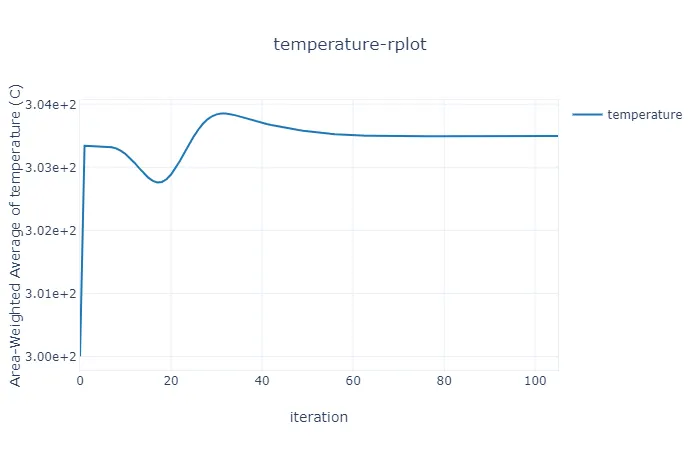
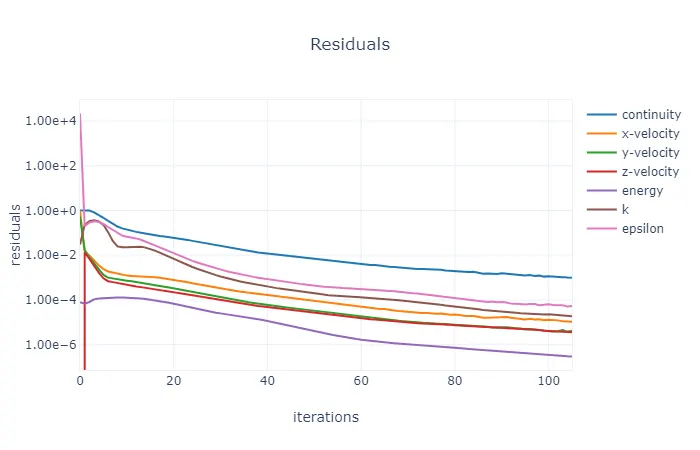
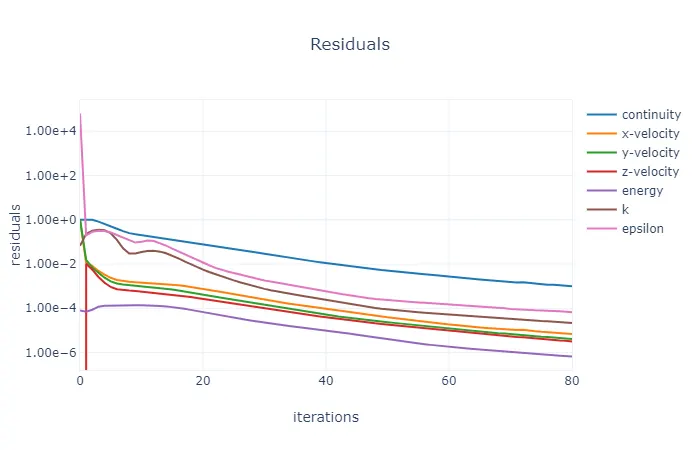
Residual while calculating solution:
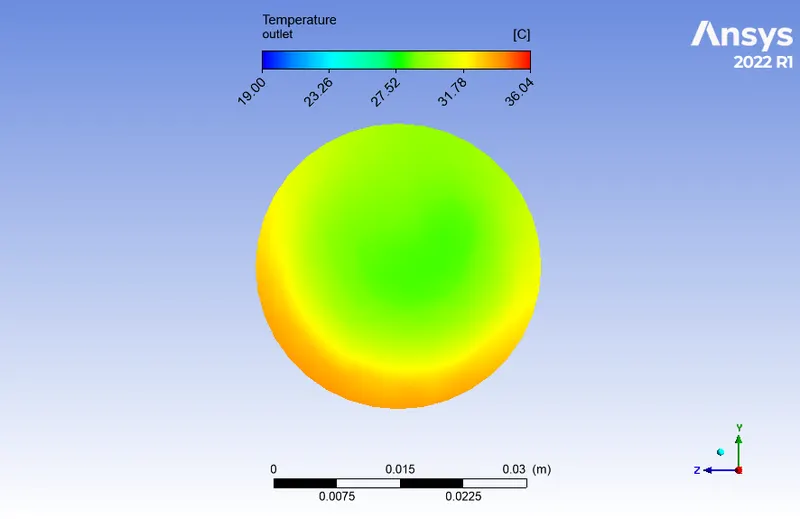
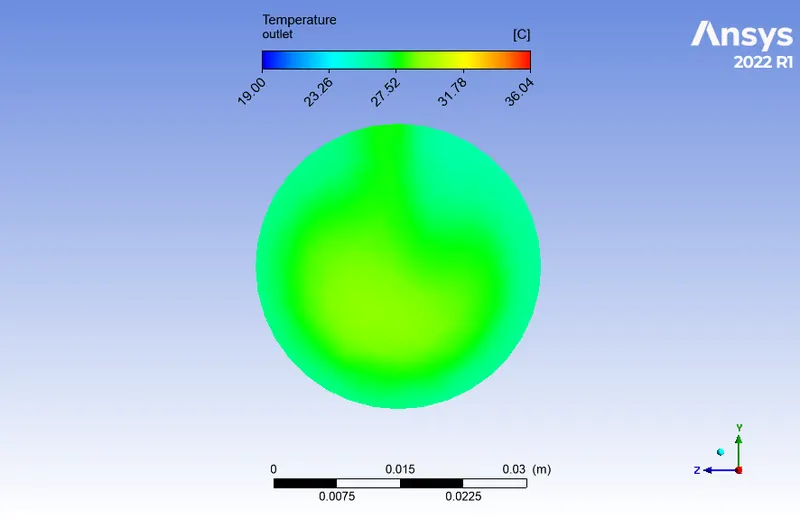
Temperature Contour:
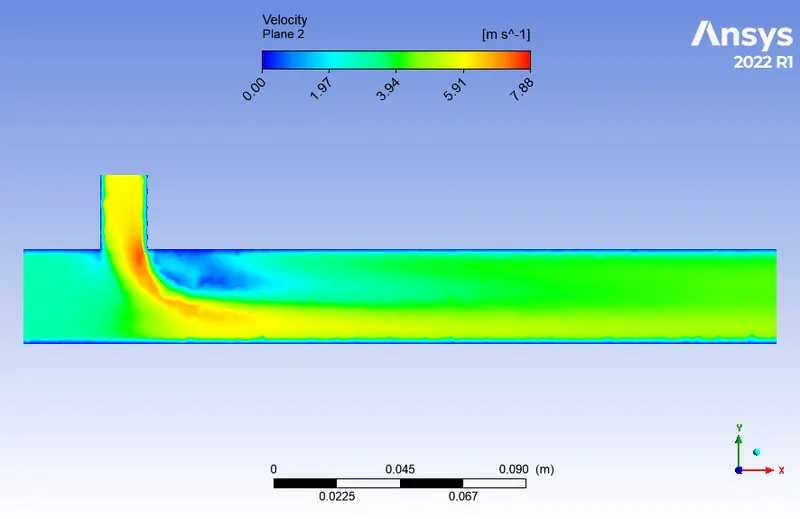
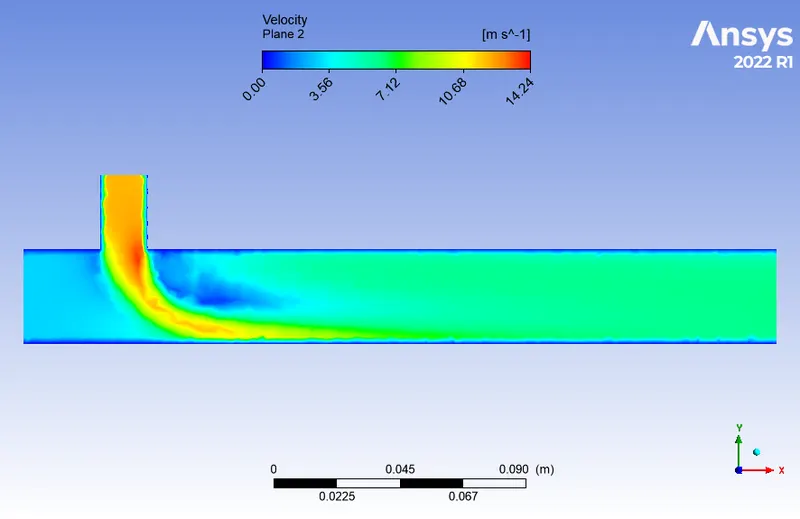
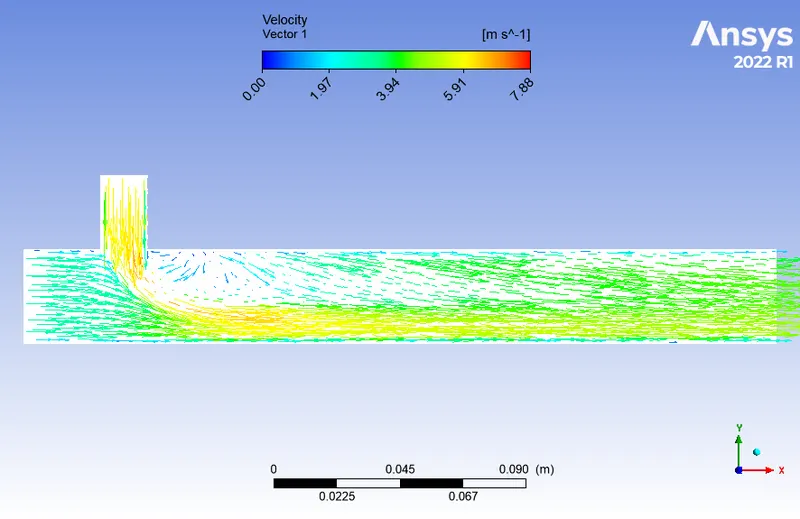
Velocity contour:
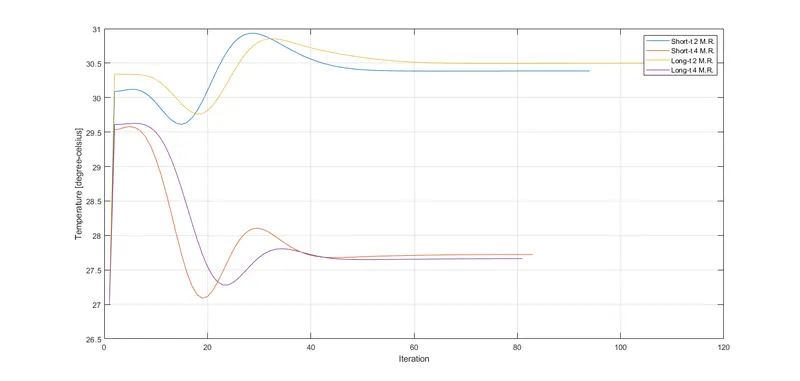
Comparing the average outlet temperature:
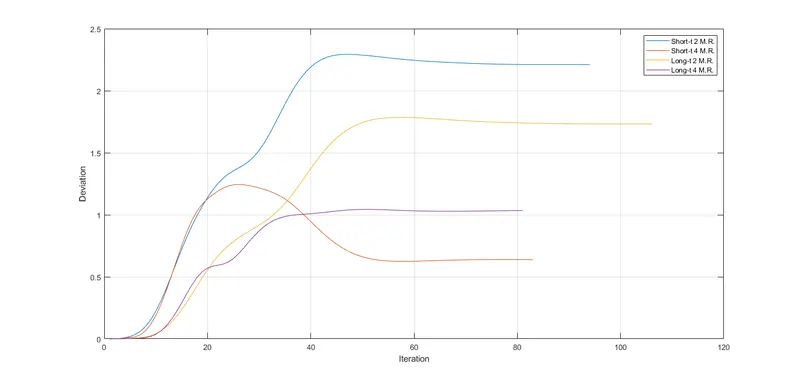
Comparing outlet temperature deviation:
Conclusion:
From the figure provided above it can be concluded that the short-t with moment ratio 4 cools the hot fluid as effectively as the long-t with moment ratio 4 and is better than both the geometry with moment ratio 2 while the temperature deviation in the long-t with moment ratio 4 is more than than the short-t moment ratio 4 so the model with short-t and moment ratio 4 effectively cools the hot fluid.