Week 1:- Introduction to BiW and Fixtures Challenge
- What is BIW & define its parts?
BIW stands for Body in White. It is a term used in the automotive industry to describe the stage of vehicle manufacturing where the body structure of a vehicle is assembled but is not yet painted or trimmed. The body in white refers to the metal framework of the vehicle before any exterior panels, interior components, or final finishes are added.
The body in white typically consists of several major components, including:
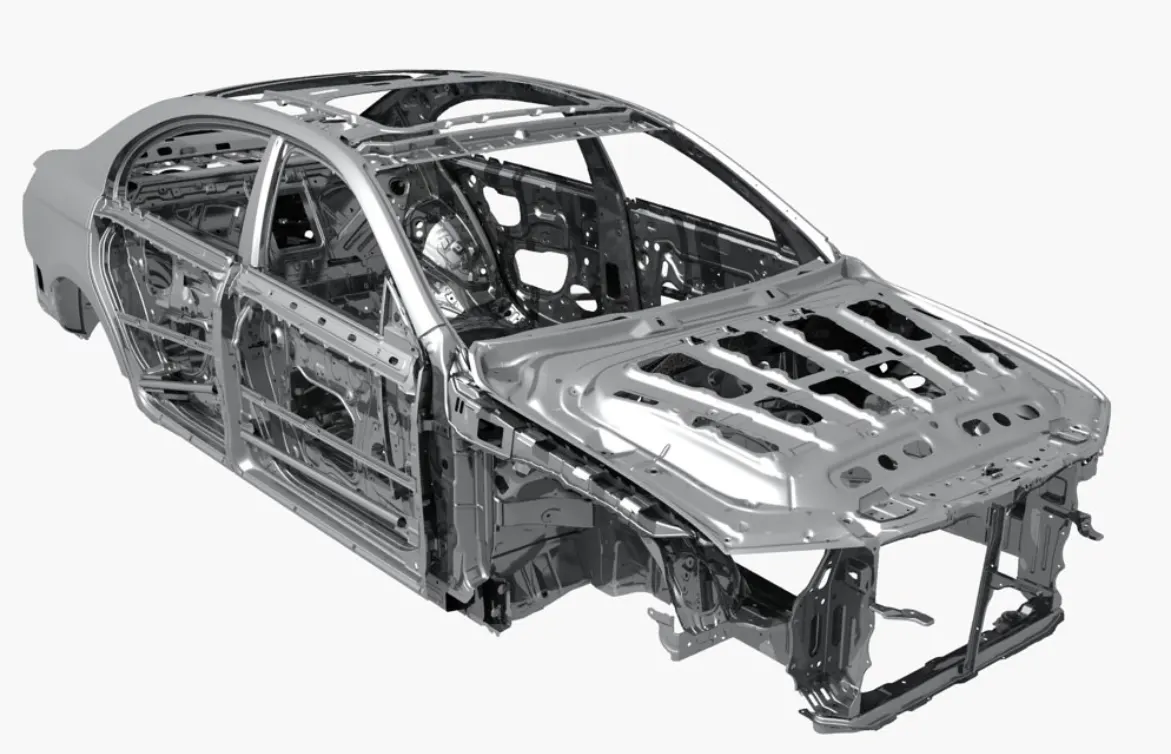
1.Body Frame: The body frame forms the structural foundation of the vehicle. It includes structural members such as the floorpan, side sills, pillars, and roof rails. These components provide rigidity and support for the entire vehicle. The image of the car body frame is attached below .
 2.Panels:
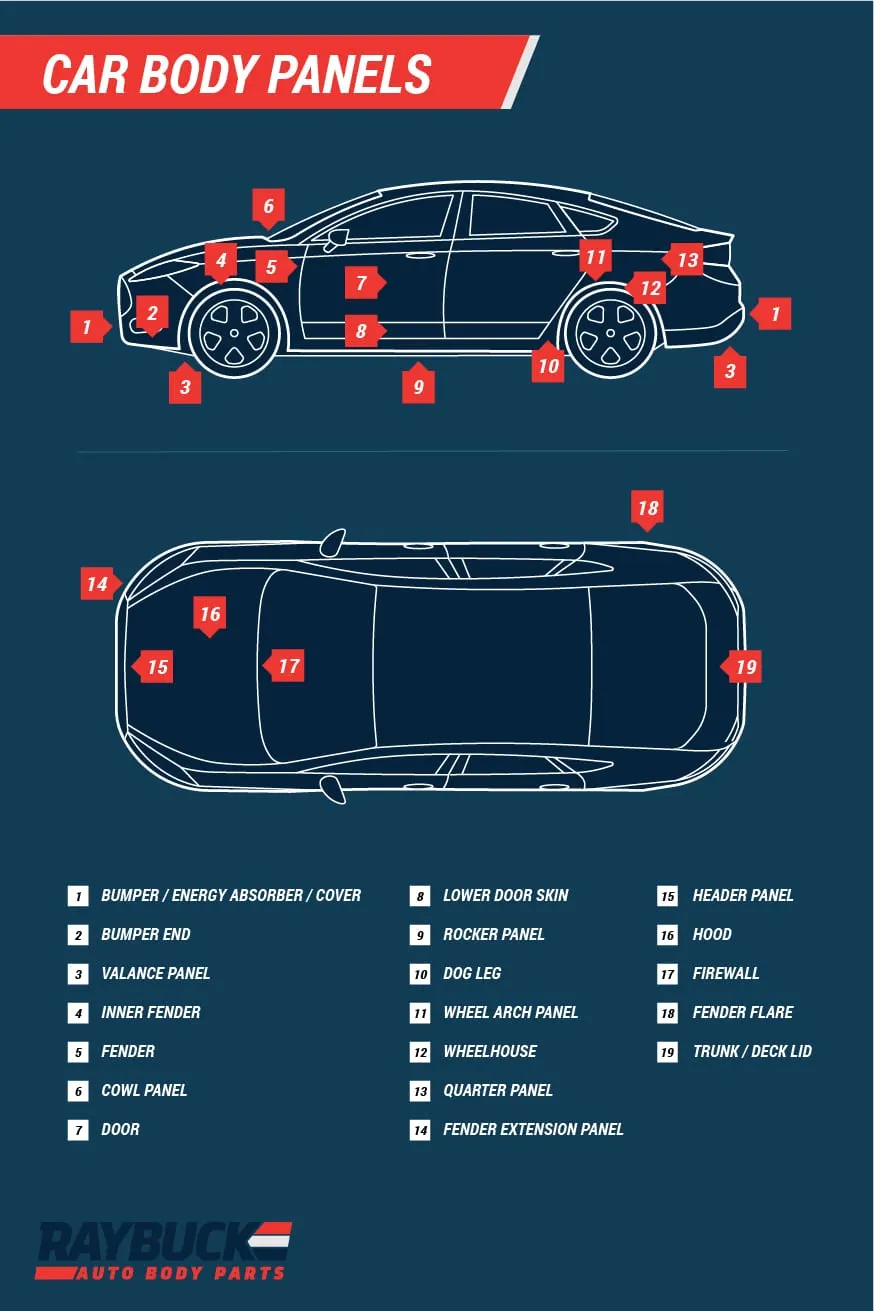
Various panels are attached to the body frame to create the outer shell of the vehicle. These panels include the front and rear fenders, doors, hood, trunk lid, roof panel, and other exterior surfaces. These panels give the vehicle its shape and provide protection and aerodynamic properties.
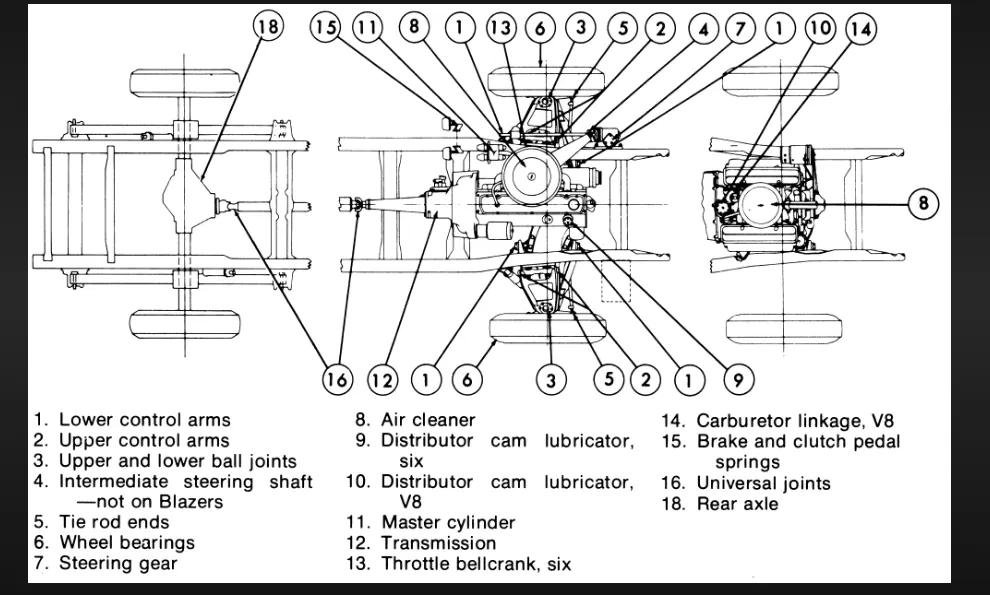
3.Chassis Mounting Points: The body in white also includes mounting points for the chassis components such as the suspension, engine, transmission, and other drivetrain elements. These mounting points are strategically located to ensure proper alignment and integration of these components with the body structure.
4.Doors and Windows: The body in white incorporates openings for doors, windows, and other glass surfaces. These openings are designed to accommodate the installation of door mechanisms, window regulators, glass, and weather sealing.
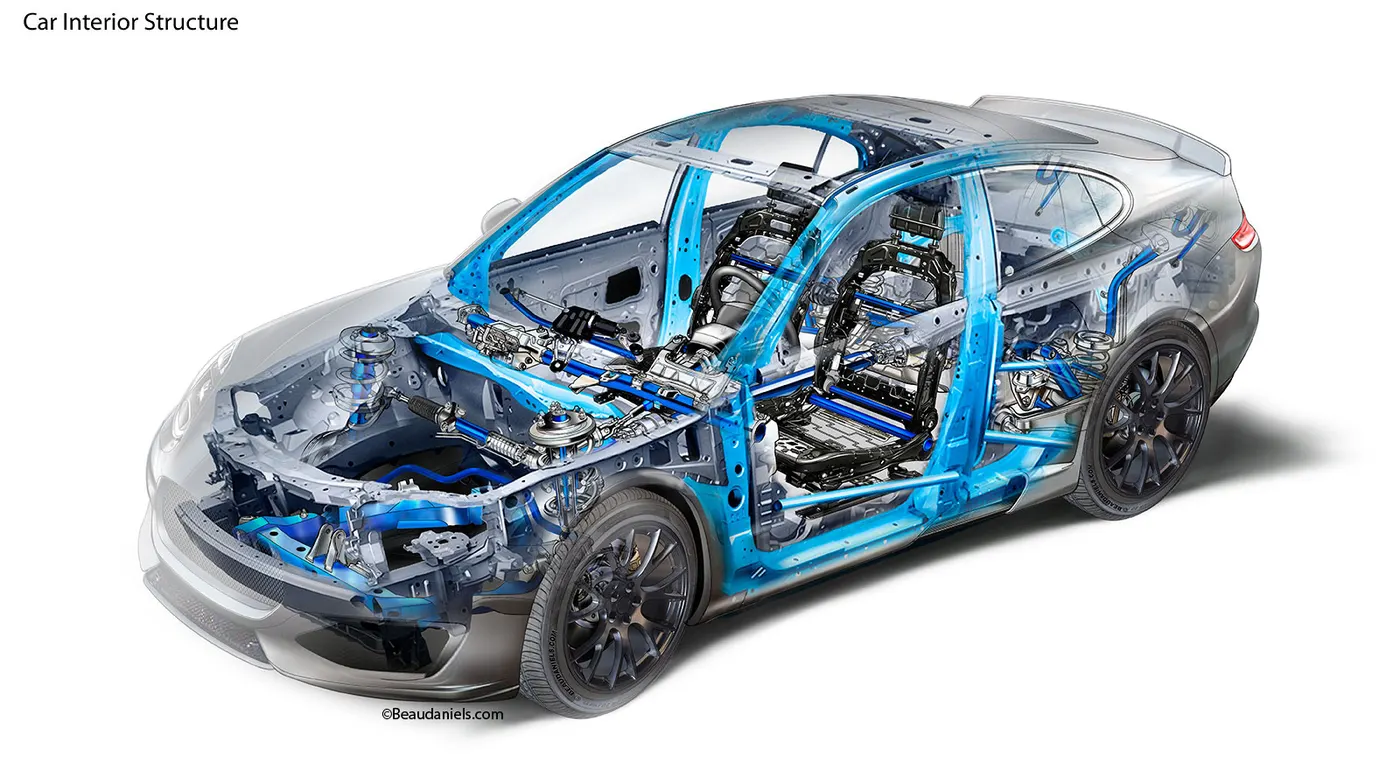
 5.Internal Structure: Inside the body in white, there are structural reinforcements and supports that provide additional strength and safety. These components include the B-pillars, crossmembers, braces, and other reinforcements that enhance the overall structural integrity of the vehicle.
 During the BIW stage, the body structure is typically assembled using various joining techniques such as welding, riveting, bonding, or a combination of these methods. Once the body in white is completed, it undergoes further processes such as painting, sealing, and the installation of interior components to transform it into a finished vehicle.
2.What do you understand by BIW nomenclature?
BIW nomenclature refers to the system of identifying and labeling different components and parts within the Body in White (BIW) assembly of a vehicle. It involves assigning unique codes, names, or symbols to each component to facilitate communication, documentation, and tracking throughout the manufacturing process.
The BIW nomenclature system serves several purposes, including.they are
1.Identification: Each component in the BIW assembly is assigned a unique identifier, such as a part number or code, which helps in accurately identifying and distinguishing it from other components. This identification is crucial for tracking, inventory management, and quality control purposes.
2.Communication: The nomenclature system enables effective communication among different teams, departments, and suppliers involved in the manufacturing process. By using standardized codes or names, everyone can easily refer to specific components during discussions, instructions, and documentation, reducing confusion and errors.
3.Documentation: The BIW nomenclature is used in various manufacturing documents, such as engineering drawings, assembly instructions, specifications, and bill of materials (BOM). By including the component codes or names, these documents provide a clear reference to the specific parts required for assembly.
4.Traceability: The nomenclature system aids in tracking the history and traceability of each component. It allows manufacturers to identify the source of a particular part, its manufacturing date, and any relevant information related to quality control, recalls, or maintenance.
The specific format and structure of the BIW nomenclature system can vary among different automotive manufacturers or suppliers. It may involve a combination of letters, numbers, and symbols to represent different attributes, such as part type, material, variant, or location within the assembly. The nomenclature system is typically established based on industry standards, internal guidelines, or customer requirements to ensure consistency and efficient management of BIW components.
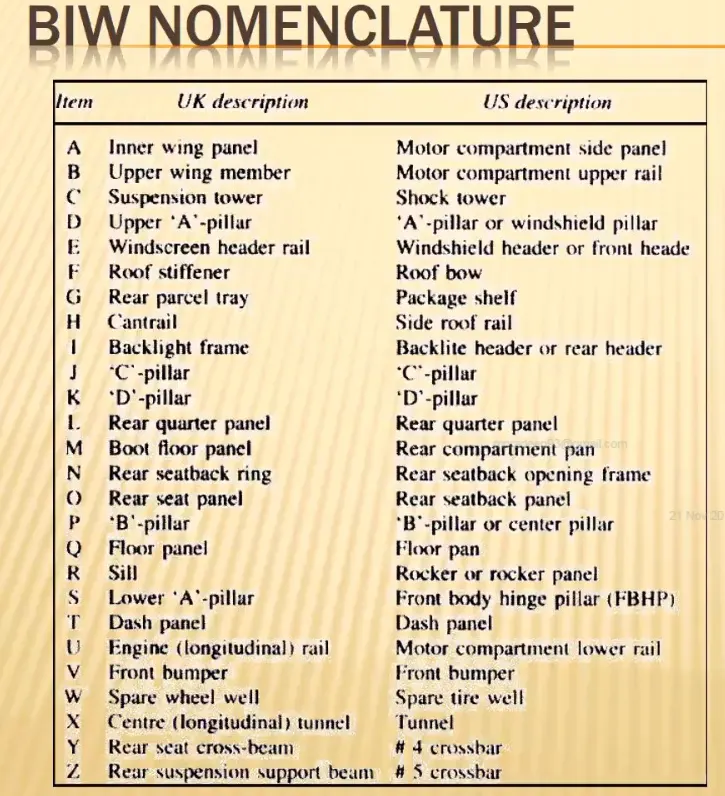
The image of the nomenclature is attached below :
3.What is fixture & its types?
fixture:
Fixture is a holding device which holds the workpiece to be processed. In general fixtures are designed using 3-2-1 principle. Further, fixture should firmly hold the work piece without causing vibrations, distortions, stresses in the workpiece and also fixture should not disturb or interfere the processing of the workpiece.
Types of fixture:
- Production fixture
These fixtures are used for mass production. Since these fixtures are used for mass production, they should be simple, rigid and hard. These fixtures should be periodically maintained in regular intervals to avoid errors and repairs. The design of the fixture should be in such a way that it should be easy to load and unload the workpiece within seconds to increase the productivity of the processing/assembly.
- Pre production operation fixture
These fixtures are basically newly designed fixtures for the new products or parts. These may be complex, manual and heavy based on the application. These can be referred as the protype fixtures. Once the preproduction operation fixture functions properly, then modifications are made to improve and to make it simple and reliable. These fixtures are used in special cases or during initial or trail stages of processing/production
- Checking fixture
These fixtures are used for checking and inspection purpose. No processing is done in these fixtures. These fixtures consist of gauges for checking the dimensions and tolerances and its accuracies. In some checking fixtures, fixtures are fixed and CMM devices check the geometrical accuracies.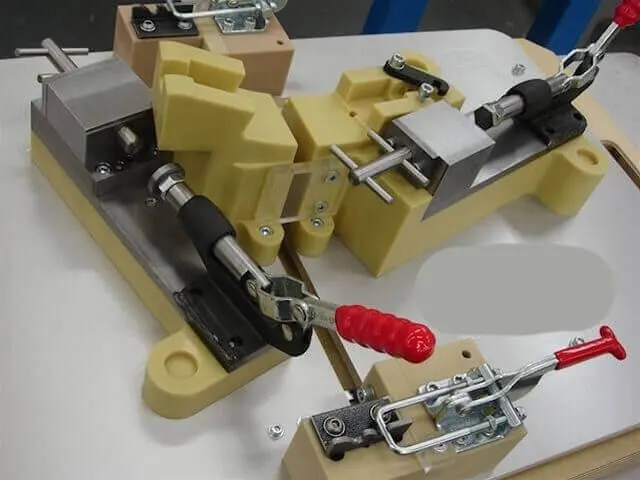
4.What is the basic principle of fixture design?
The basic principle of fixture design is to create a specialized tool or device that securely holds and positions a workpiece during manufacturing or assembly processes.The fixture designed by the basis of 3-2-1
principle .
The key principles in fixture design include:
1.Workpiece Alignment: Fixtures must accurately position and align the workpiece in the desired orientation to ensure consistent and precise machining or assembly. This involves considering the geometric features, dimensions, and tolerances of the workpiece.
2.Stability and Rigidity: Fixtures should provide a stable and rigid support to minimize vibrations, deflections, and movement during machining or assembly. This helps maintain accuracy and surface finish quality.
3.Clamping and Holding: Fixtures employ various clamping mechanisms, such as clamps, screws, pins, or hydraulic/pneumatic systems, to securely hold the workpiece in place. The clamping force should be sufficient to prevent movement or distortion during machining or assembly processes.
4.Accessibility: Fixtures should allow easy access to the workpiece for operators, tools, and equipment. Sufficient clearance and openings should be provided for tooling, cutting tools, and necessary operations like inspection or measurement.
5.Standardization and Modular Design: Standardizing fixture components and using modular designs can improve efficiency, reduce costs, and enable interchangeability. Standardized elements like clamps, locators, and bases can be reused across different fixture designs.
These are basic ffollowing fundamentals to design fixtures .
5.Elaborate types of BIW Stations?
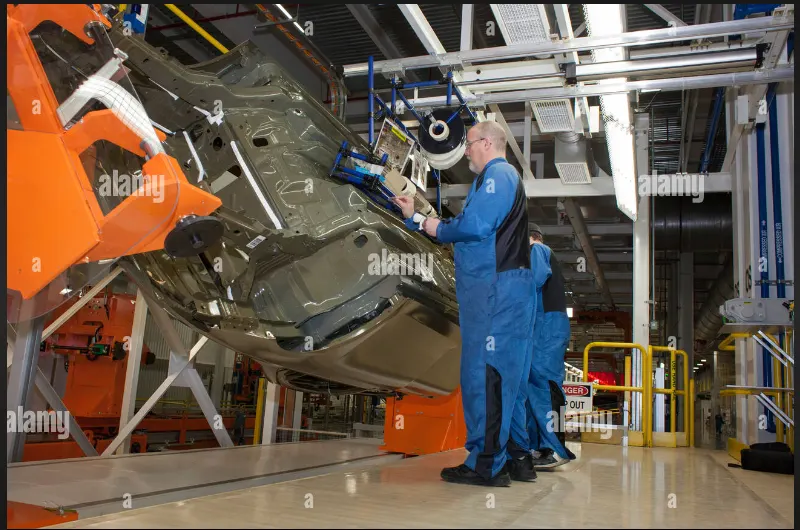
BIW (Body-in-White) stations are specific workstations used in the automotive industry for assembling the structural components of a vehicle's body. These stations are designed to facilitate the precise alignment, joining, and welding of body panels and other structural elements.
Here are some common types of BIW stations:
1.Body Framing Station: This station focuses on the assembly of the vehicle's frame structure, including the main body rails, cross members, and longitudinal members. It involves positioning and joining these components using welding or other joining techniques.
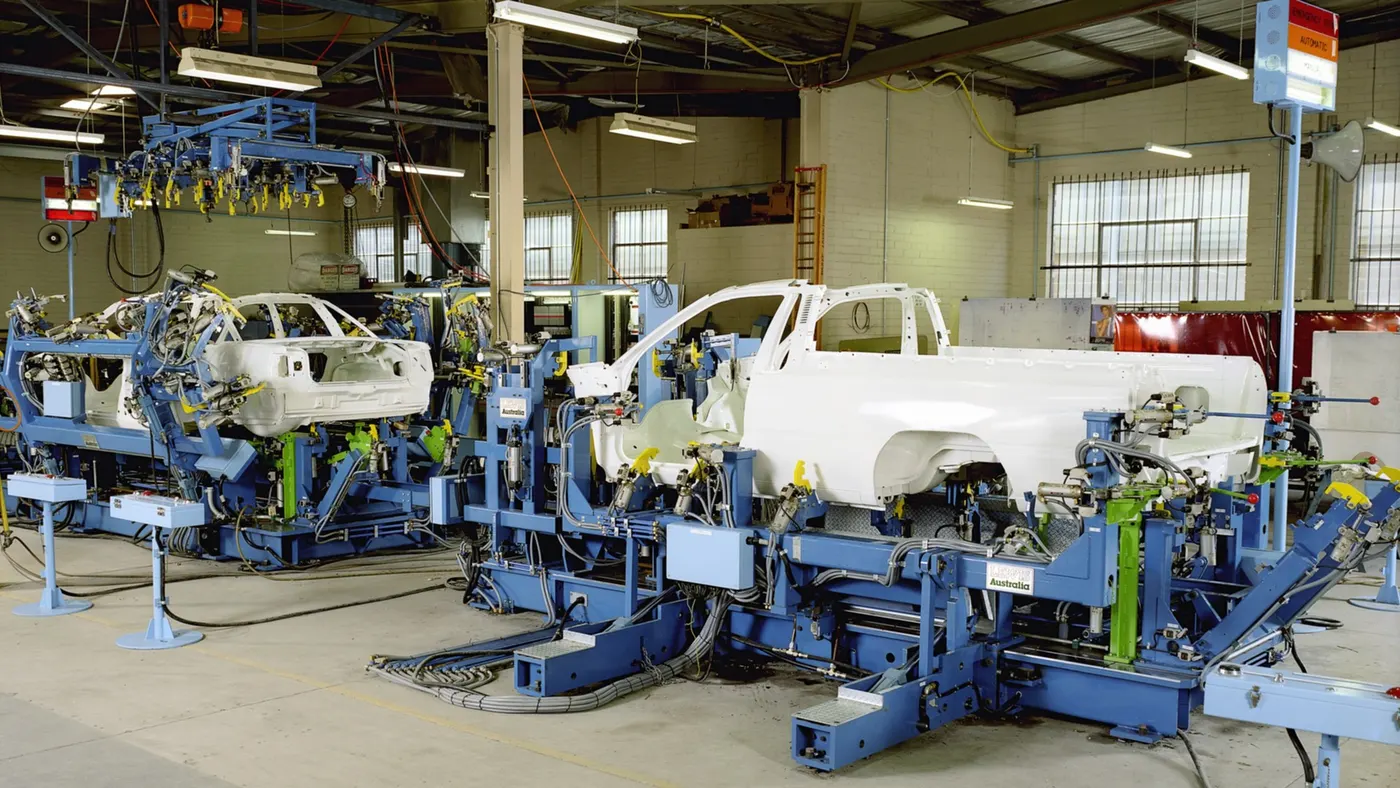
2.Body Side Station: The body side station is responsible for assembling the side panels of the vehicle, including the doors, fenders, quarter panels, and rocker panels. It involves aligning, clamping, and joining these components to the main body structure.

3.Roof Station: In the roof station, the roof panel is aligned, positioned, and welded or bonded to the body structure. This station ensures proper fit and alignment of the roof panel with the side panels and other body components.
4.Floor Pan Station: The floor pan station focuses on the assembly of the vehicle's floor structure. It involves aligning and welding the floor panels, footwells, and reinforcement components to form a strong and rigid floor structure.
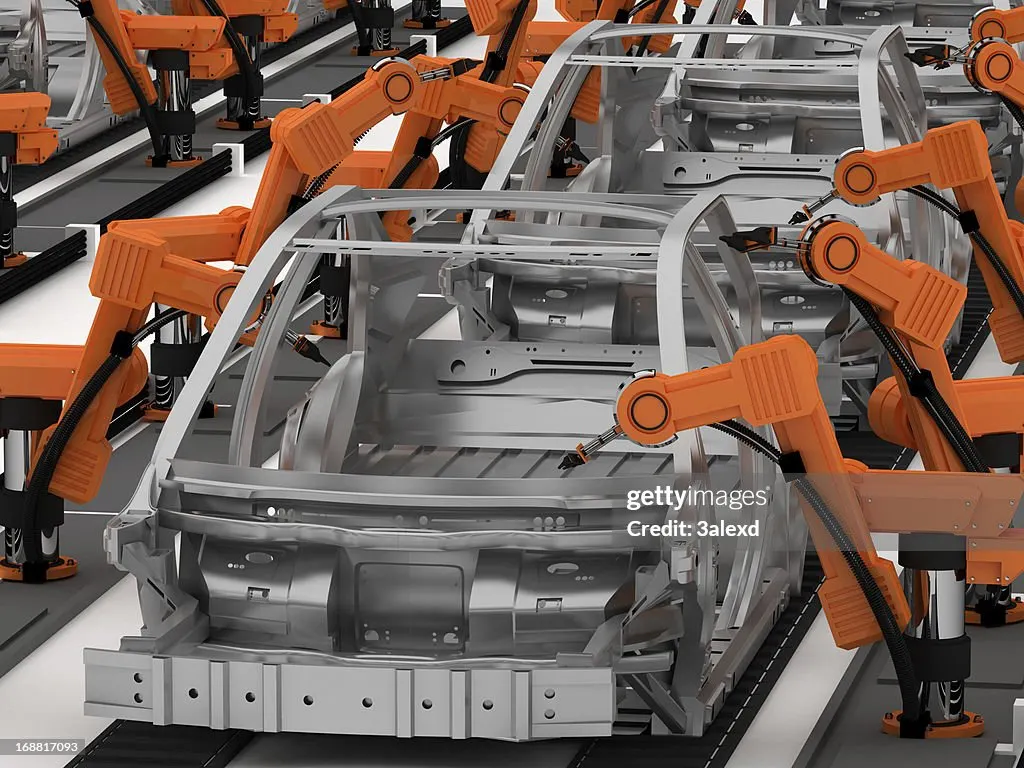
5.Front End Station: The front end station deals with the assembly of the vehicle's front structure, including the hood, front fenders, grille, and bumper. It ensures proper alignment, fit, and attachment of these components to the body structure.

6.Rear End Station: Similar to the front end station, the rear end station is responsible for the assembly of the vehicle's rear structure, including the trunk, rear fenders, bumper, and tailgate (if applicable). It ensures proper alignment, fit, and attachment of these components.
7.Underbody Station: The underbody station focuses on the assembly of the vehicle's underbody components, such as the floor reinforcements, suspension mounting points, and subframe assemblies. It involves aligning, clamping, and welding these components to the main body structure.
6.What are the basic terminologies used in the BIW fixture?
The basics terminologies of the BIW fixtures are ;
1.Locators: Locators are components used to position and align the workpiece or body panels within the fixture. They are designed to ensure precise and repeatable placement of the components in the correct orientation.
2.Clamps: Clamps are devices used to securely hold the workpiece or body panels in place during assembly or welding processes. They provide the necessary clamping force to prevent movement or shifting during operations.
3.Datum Features: Datum features are specific points, edges, or surfaces on a workpiece or body panel that serve as reference points for alignment and measurement. These features are used to establish a coordinate system within the fixture and ensure accurate positioning.
4.Welding Guns: Welding guns are tools or devices used to perform spot welding or other types of welding operations during the assembly of body panels. They are typically mounted on the fixture and are positioned to access the required welding points.
5.DFM (Design for Manufacturing): DFM is a principle that focuses on designing products or components in a way that optimizes the manufacturing process. In the context of BIW fixtures, DFM considerations are taken into account to ensure ease of assembly, efficient welding or joining, and accessibility for operators and tools.
6.Assembly Sequence: The assembly sequence refers to the predetermined order in which the body panels or components are assembled within the fixture. It ensures a logical and efficient workflow during the assembly process.
7.Fixture Jig: A fixture jig is a specialized tool or device used within the BIW fixture to hold or support specific components during assembly or welding. Jigs are designed to provide additional stability and accuracy during the process.
These are the some basic terminologies of biw .