Week 1 Challenge
Q.1 Truss type reasoning
Ans:
Truss A is also said as Pratt Truss.
Pratt trusses are normally utilized for span 10 m to 30 m.
In Pratt truss, diagonal members are in tension for gravity loads.
This truss is utilized where gravity loads are prevalent.
Truss B:
Truss B is also said as Howe Truss.
Howe truss is commonly used in light roofing so that the longer diagonal members are in Compression.
It experiences tension under reversal of stresses due to wind load.
It is just a converse of Pratt truss. They can be used for 10 m to 30 m span.
Hence, Truss A is the most efficient in carrying gravity loads.
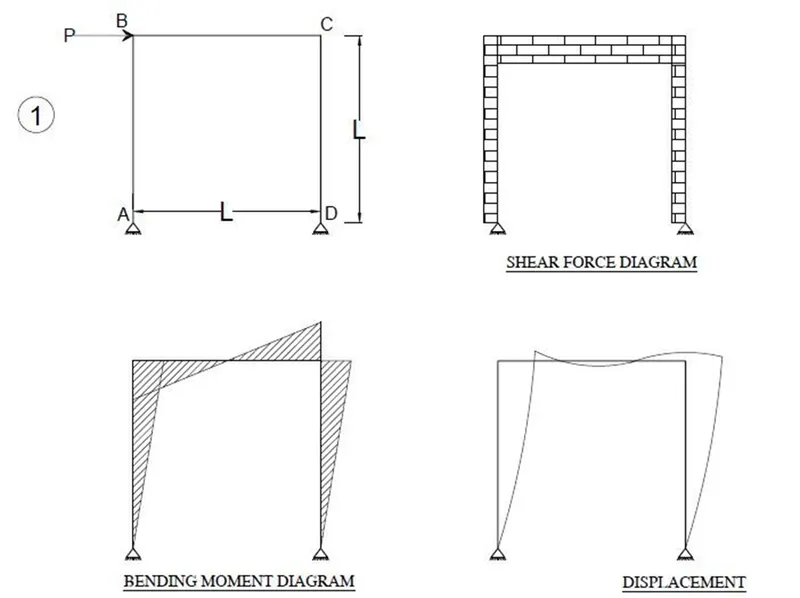
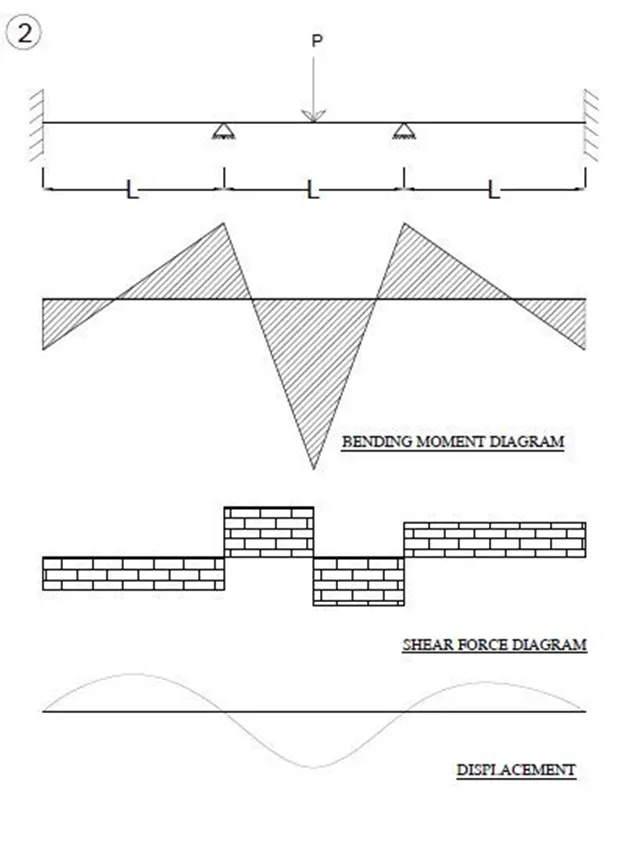
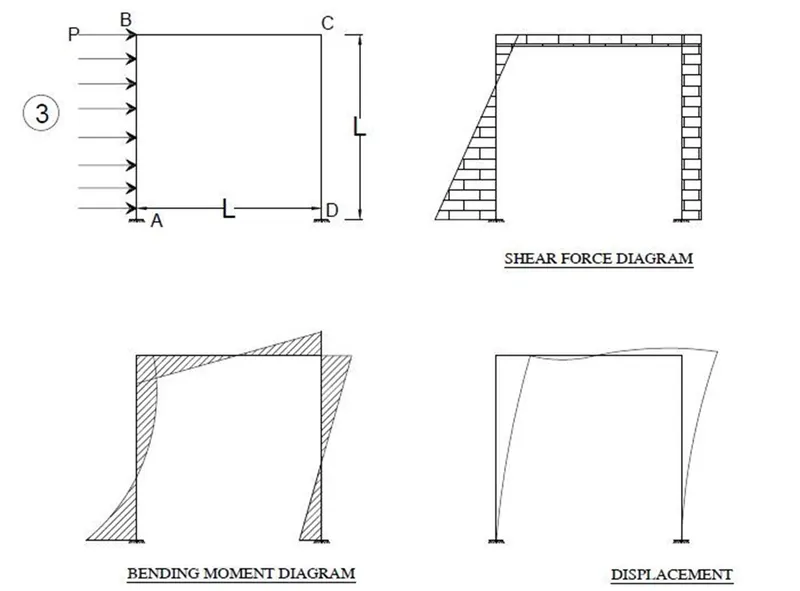
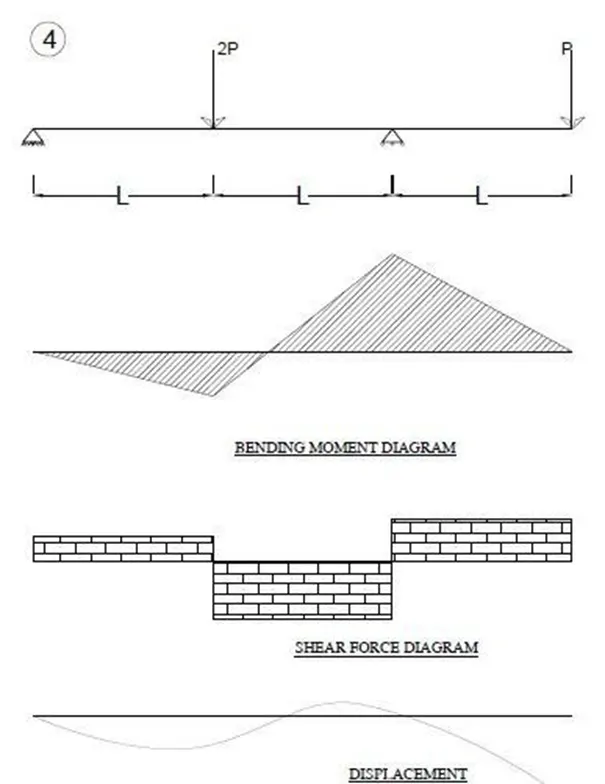
Q.3 Determine MOI, Weight, C/S area of sections below.
Ans: i. Channel Section
MOI Along Y-Axis = 1.843 x 106 mm4
Area of Cross Section = 3040 mm2
MOI Along Y-Axis = 135.04 x 106 mm4
Area of Cross Section = 26000 mm2
Weight of Section per meter = 204.100 kg/m
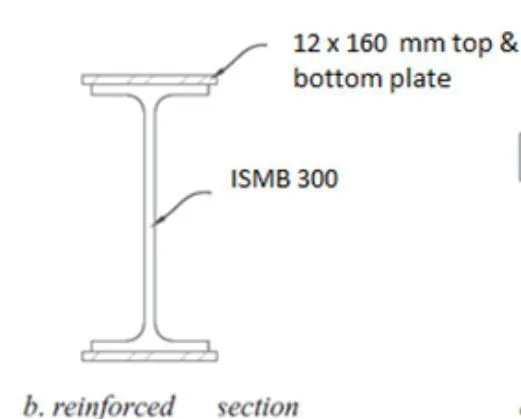
Area of Cross Section = 9562 mm2
Weight of Section per meter = 75.062 kg/m
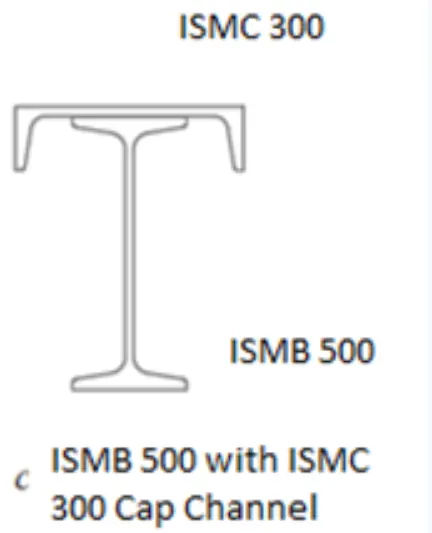
MOI Along X-Axis = 335.44 x 106 mm4
MOI Along Y-Axis = 6.22 x 106 mm4
Area of Cross Section = 15638 mm2
Weight of Section per meter = 122.758 kg/m
Q.4 Load calculation problem
Given Data:
Floor Load - 10kN/m2
Tributary Width of Interior Beam = 1/2 x (2+2) = 2 m.
Tributary Width of Exterior Beam = 1/2 x (0+2) = 1 m.
Tributary Width of Interior Girder = 1/2 x (8+8) = 8 m.
Tributary Width of Exterior Girder = 1/2 x (0+8) = 4 m.
Answer:-
Load on beam = Tributary width x floor load
Load on Interior Beam = 2 x 10 = 20 kN/m.
Load on Exterior Eeam = 1 x 10 = 10 kN/m.
Load on Interior Girder = 8 x 10 = 80 kN/m.
Load on Exterior Girder = 4 x 10 = 40 kN/m
Q.5 Expansion joint size determination for temperature stated problem
Ans:
GIVEN: i. An initial total length of 2000 m at -20°C.
ii. Coefficient of Thermal expansion of steel = 12x10-6/°C
Step 1.
Write down the known parameters of the problem:
L0 = 2000 m
T0 = -20 ºC
Tα = 12x10-6/°C
Step 2.
Calculate the temperature difference
ΔT = T–T0 = 40–(−20)=40+20=60 ºC
Step 3. .
Calculate the length difference
ΔL = α x L0 x ΔT
=12x10-6 x 2000 x 60 = 1.44 m
Step 4.
Calculate the total final length
L = L0 + ΔL
= 2000 + 1.44
L = 2001.44 m