Week 1 Challenge
1. Truss type .
Out of the two through type truss systems shown below, which is the most efficient in carrying gravity load? Reason it out.
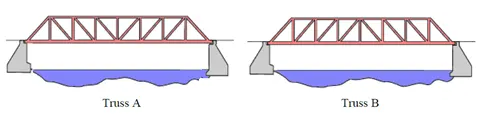
AIM: To determine which of Truss A and Truss B is the most effective at carrying gravity load.
OBSERVATION: It is obvious that Truss A is a Pratt Truss and that Truss B is a Howe Truss.
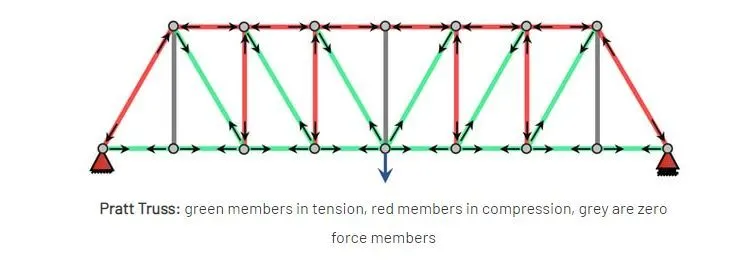
One of the most popular types of trusses is the Pratt truss, which is composed of vertical and diagonal members arranged in a "N" pattern. The diagonal members are positioned so that only tensile forces can be generated by them. As a result, they don't require a compression buckling analysis because they can be built to merely withstand axial tension. In a Pratt truss, the vertical members experience compression forces. This implies that they will normally be stronger and able to withstand buckling.
- It is made up of parts that are alternately vertical and sloping.
- It has diagonal members that lean in the direction of the centre.
- The members for tension and compression are as displayed.
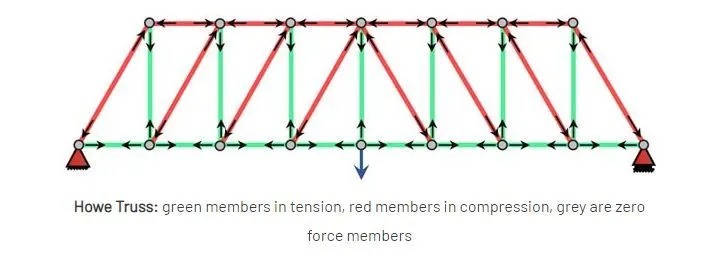
In terms of geometry, Howe trusses are essentially the reverse of Pratt trusses. In fact, a Howe truss-like structure can be imagined by turning a Pratt truss upside down. The overall design is essentially unchanged, but the diagonal braces now occupy the opposing or vacant joints. The diagonal elements' change in position has a significant structural impact.
- It is made up of parts that are alternately vertical and sloping.
- Its diagonal members slope downward and away from the centre.
- The compression and tension members are as displayed.
FINAL OBSERVATION:
- The Pratt truss has no stress on the ends, and the compression members are vertical, which are the key distinctions.
- The tension members of the Howe truss are vertical and do not exert any force on the centre.
CONCLUSION:
In Pratt trusses, when gravity loads are applied at the joints of the upper chord, the vertical members are compressed and the diagonal members are in tension. The opposite is now accurate for Howe trusses since the diagonal members are now under compression while the vertical loads are under tension.
They serve many of the same purposes as Pratt trusses because of their structural resemblance. The truss can be weighted at the joints of the bottom chord to increase its effectiveness.
- More members can be unloaded in Pratt trusses than in Howe trusses
"HENCE Gravity loads can be carried most effectively by "Pratt trusses (Truss A)"."
2. Deflection shape & Bending Moment Drawing (Qualitative approach)
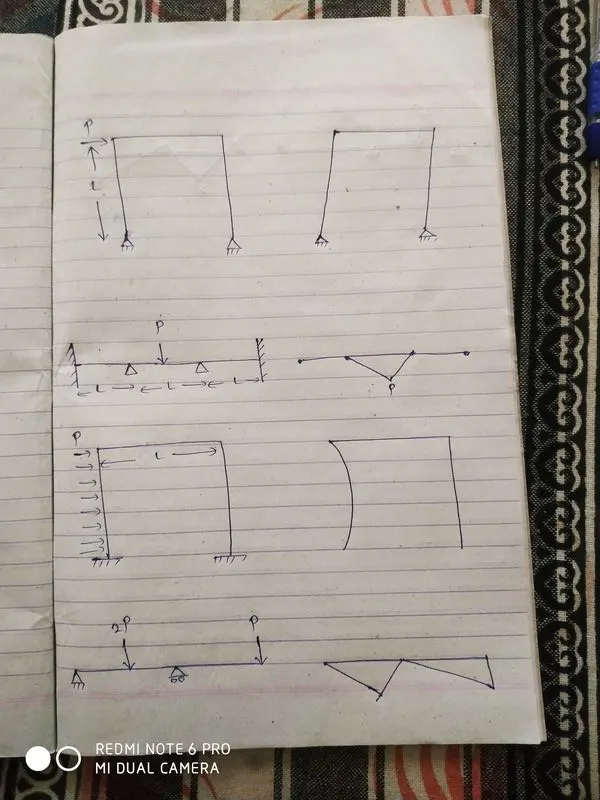
For the beam & Frame below draw deflected shape and bending moment drawing. (Qualitative approach). E & I are constants.
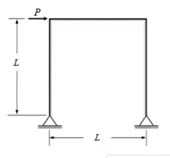
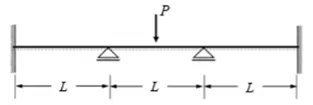
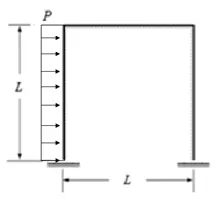
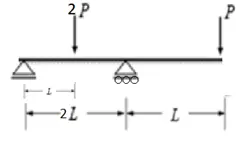
ans)
Bending moment diagrams:
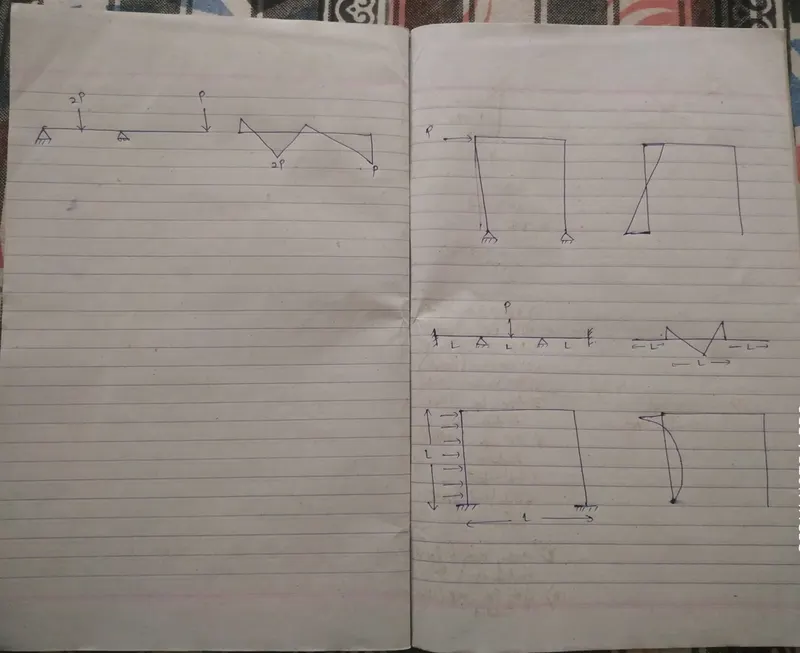
deflected shapes :
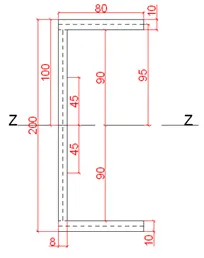
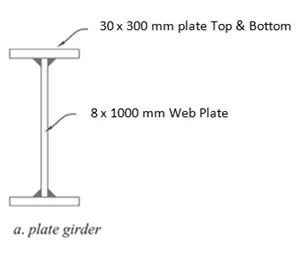
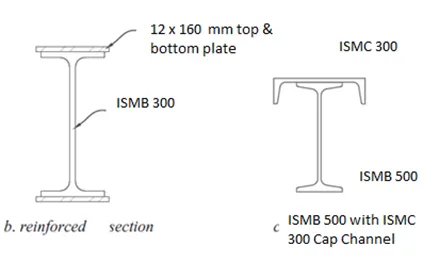
3. Determine MOI, Weight, C/S area of sections below
Sol:
A
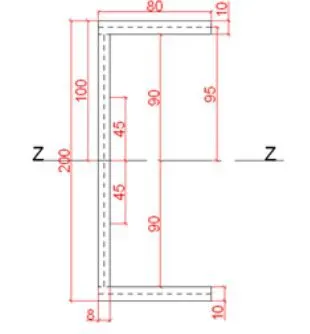
MOI ALONG Iz=18341333.3333 mm4
MOI ALONG Iy=1843244.9123 mm4
Weight per meter= 23.84kg/m
B.
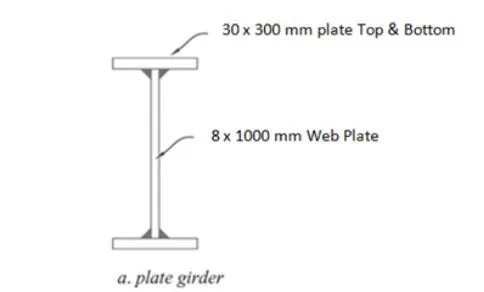
MOI ALONG Iz=5442066666.6667 mm4
MOI ALONG Iy=135042666.6667 mm4
Weight per meter= 204.1 kg/m
C.
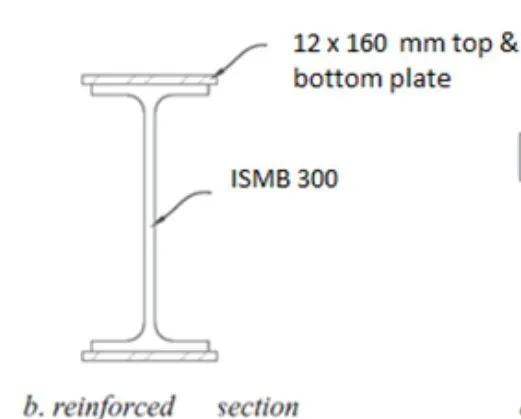
MOI ALONG Iz=18540000 mm4
MOI ALONG Iy=1420000 mm4
Weight per meter= 74.34 kg/m
D.
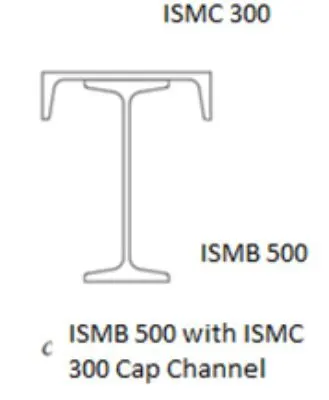
MOI ALONG Iz=64180000 mm4
MOI ALONG Iy=81630000 mm4
Weight per meter= 74.34 kg/m
4. Load calculation problem
For the floor framing below, Calculate the load on interior beam, Exterior beam, Interior Girder and exterior girder having Floor Load of 10kN/m2
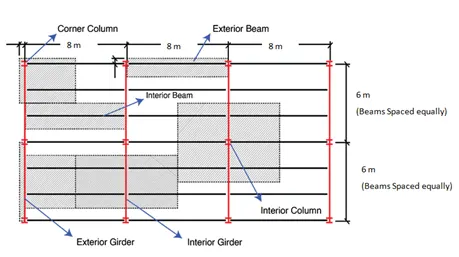
ans)
Floor load = 10kn/m^2
tributary width of exterior girder = 0.5(0+8) = 4m
tributary width of interior girder = 0.5(8+8) = 8m
tributary width of exterior beam = 0.5(0+2) = 1m
tributary width of interior beam = 0.5(2+2) = 2m
Load on beam = tributary width x floor load
load on exterior girder = 4 x 10 = 40Kn/m
Load on beam interior girder = 8 x 10 = 80 Kn/m
Load on beam exterior beam = 1 x 10 = 10Kn/m
Load on beam interior beam = 2 x 10 = 20 Kn/m
5. Expansion joint size determination for temperature stated problem
Assuming a bridge, made of steel, with an initial total length of 2000 m at -20 ºC, calculate the length difference at 40 ºC and its total length.
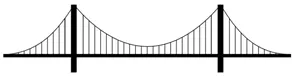
Coefficient of Thermal expansion of steel = 12x10-6/°C
SOL:
Change in length = cofficient of thermal expansion x original length x change in temperature
= 12 x 10^-6 x 2000 x 20
= 0.48m