Unsupervised Learning - Kmeans Week 11 Challenge
Q1.
- Hamming Distance: Simple and effective for binary or nominal categorical data.
- Simple Matching Coefficient (SMC): Good for symmetric data where matching and mismatching attributes are equally important.
- Jaccard/Dice Similarity: Preferable for sparse data (e.g., binary data with many 0's) or when you only care about the "positive" (1) matches.
- Gower's Similarity: Best for mixed datasets (both categorical and numerical features).
- One-Hot Encoding + Euclidean: Useful when you want to treat categorical data similarly to numerical data and combine it with traditional distance measures.
Q2.
Note: Empty rows were there in provided dataset so manually deleted rows in excel
imported libraries and dataset.
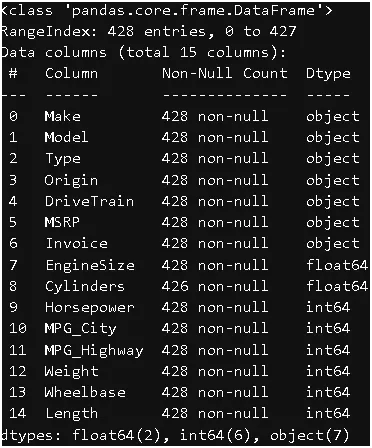
Filled missing values in cylinders
K-Mean is performed to get clusters and with that business insight is given
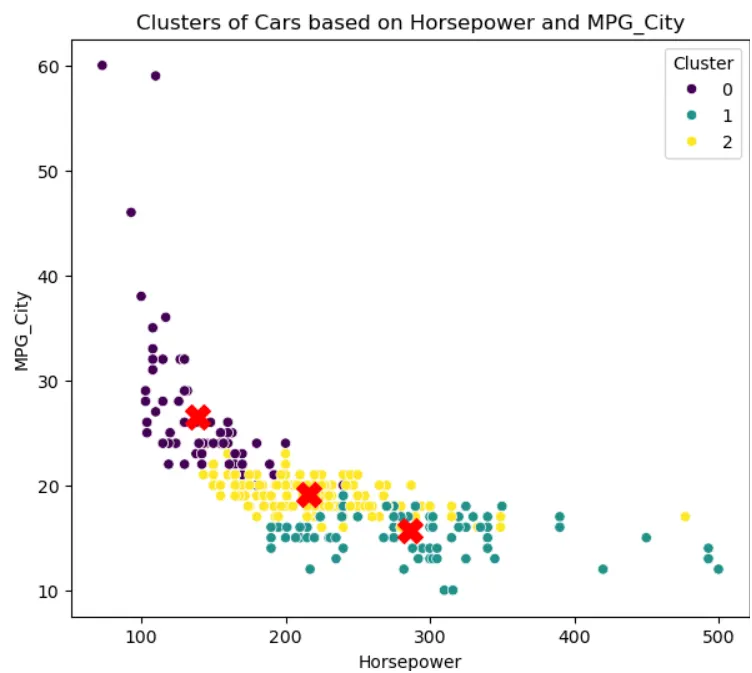
Business Insight
Cluster 0: Fuel-Efficient Compact Cars.
- This cluster likely represents customers interested in fuel-efficient, compact cars ideal for city driving. They prioritize cost-effectiveness, low maintenance, and higher fuel economy.
Cluster 1: Family-Friendly Mid-Range Vehicles
- This cluster represents families or customers who seek a balance between performance, space, and fuel efficiency. Cars in this group might be mid-range sedans, crossovers, or SUVs that offer comfort and versatility
Cluster 2: High-Performance or Luxury Vehicles
- This cluster is characterized by high-performance, luxury cars. These cars have powerful engines and lower fuel economy, appealing to customers who value performance, luxury, and brand prestige.
Product Positioning and Development:
The clusters reveal distinct segments that can guide product positioning. Each cluster represents a different market segment with unique preferences and needs.
Optimizing Inventory Management:
Clusters provide information on which types of cars are likely to be in higher demand in different regions or dealerships.
Tailored Marketing Strategies:
Different clusters allow for tailored marketing campaigns. Each cluster corresponds to a unique consumer profile with specific needs and preferences.
Price Differentiation Strategy:
Understanding the cluster characteristics can help in setting a price strategy. Cars in the high-performance or luxury cluster can be priced at a premium, while cars in the economy cluster can be competitively priced.