Under Body Car Coating on Body-In-White for Improve Properties of Body By Using Advance Coating Technology Process.
Project Objective: In This Project, I am going to work on the Process of Under Body of Car Coating for Body-In-White Outer Body to improve the Strenght, Static Look, Avoid Crosion, and Heat Resistance, and Reduce Effect of UV Light of the Cars Body.
01. About Under Body Coating for BIW:
- The coating is formulated with a compatible combination of liquid and powder coatings and based on partially compatible polymer blends that produce micro-heterogeneous structures. These self-stratifying coatings would enable the basecoat and clearcoat to be applied in a single layer and could streamline the now rather complex automobile painting processes in which one layer at a time is coated and then cured. Of course, it is necessary that these novel coating compositions preserve current automobile coating attributes and characteristics such as appearance and high gloss, and durability to corrosion, abrasion, and UV light exposure. Underbody coating provides long term protection from corrosion to car's underbody. It also protects parts like internal body panels, frame rails, and other inner cavities that are not physically accessible but are prone to corrosion.
- Coatings are the best way to keep a variety of surfaces safe. It can not only stand up to the processing material but also prevent standard corrosion that may occur simply because of the material the machine is made from. They keep surfaces clean.
- Rubberized undercoating is easy to apply, and generally offers the best protective coating for your car's undercarriage. It cushions surfaces against moisture, rust, dings, and dents. Rubberized undercoating is safe to use on quarter panels and wheel wells and dries with a soft rubbery finish.
02. Materials Use for Coating:
- Acrylic and Urethane Resin.
- Urethane Resin.
- Polyvinyl chloride Resin.
- Phthalic Acid Resin.
- Paraffin.
- Polyolien Resin.
2.1. Properties of Coating Materials:
- Improve Physical, Chemical, Mechanical, and Thermal Properties.
- Reduce NVH.
- Reduce the Effect of UV Light.
- Prevent Corrosion and Heat Resistance.
- Prevent the color change features of the car body.
- Reduce the reflectivity of infrared radiation.
03. Purpose of Coating :
- Environmental conditions.
- Impacts.
- Dampens sound and vibration.
- Insulates against cold and heat.
- Protects against Corrosion.
- Seals off seams.
04. Types of Coating Process:
- Pretreatment.
- electrodeposition (ED).
- Poly Vinyl Chloride (PVC).
- adhesion between the surface and the basecoat.
- Basecoat and Clearcoat.
The coatings are used. As can be realized when examining this figure, a significant number of specific coatings and materials are needed in addition to the above-listed steps to manufacture a salable automobile.
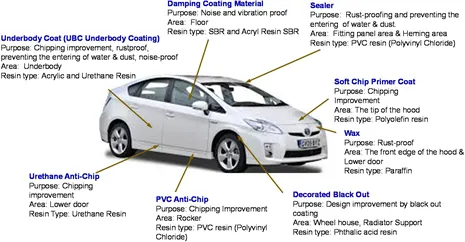
Figure 4.a Underbody coating tasks for specific areas
For the external surfaces of an automobile to be easily visualized, These coatings are applied in a particular order and have different material and protection or finishing functionalities; also, each layer relates to the others and imparts a desired balance of properties.
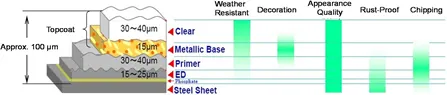
Figure 4.b. Coating layers, their thicknesses, and purposes for an exterior surface.
4.1. Pretreatment:
- The Pretreatment removes and cleans excess metal and forms an appropriate surface structure enabling bonding of a corrosion protection layer.
- When the automobile body sheet metal components are welded together, the resulting structure is referred to as the body-in-white (BIW). The first sequence in preparing the BIW for subsequent coating is pretreatment.
- Pretreatment consists of cleaning the body surface to remove remaining oils from the stamping process and welding residues through three primary liquid dip processes of degreasing, conditioning, and phosphating. An additional pretreatment cleaning that employs ~pH 9 hot water can also be used.
- Pretreatment helps the primer to bond onto the metal. A phosphate treatment applies an inert layer of metal phosphate, providing resistance to corrosion spread. The degreasing solution is composed of alkaline salts and surfactants and can include caustic soda, trisodium phosphate, and sodium carbonate. The surfactants are types of detergents for emulsifying oils and lubricants on the BIW.
- The degreasing zone typically consists of at least two sequences, including a spray stage known as knock-off-degrease (KOD) and a dip sequence. The advantage of using these two is that a significant portion of the oil and dirt will be removed by the high-pressure spray, thereby leaving a relatively lower load for the dip sequence to clean.
- The next sequence is surface conditioning (also called activation), which creates nucleation sites for phosphate crystal growth. It increases the number of crystallization nuclei on the metal surface that enhance bonding mechanisms for the subsequent phosphate sequence.
- In conditioning, an aqueous dispersion of titanium orthophosphate with pH between 8 and 10 is typically used. Finally, the liquid dip phosphate solution is composed of phosphoric acid, phosphate ions, nitrate ions, zinc, and other divalent metal ions, hydrogen ions, and an accelerating compound.
- The free acid etches the steel surface, causing hydrogen to be released while metal phosphate ions are precipitated onto the surface in a crystalline form. The primary objective during phosphating is to deposit a thin, dense and uniform conversion layer on the cleaned and prepared metal surface.
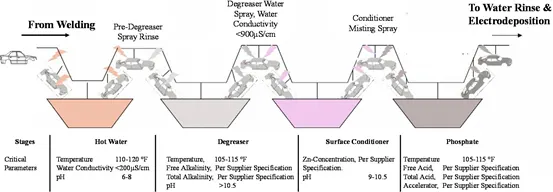
Figure 4.1.a. Pretreatment sequences for the body-in-white.
4.2. Electrodeposition:
- The Electrodeposition (ED)of the anti-corrosion or rust prevention layer.
- The metal underbody and frames of automobiles are coated to prevent corrosion, whereas other areas like the roof are not rust-proofed. When not coated to prevent corrosion, the structural metals (or other materials) are primed before applying additional coatings.
- SCGA electrodeposition solution having a 90% Zn–10% Fe composition (GA material) is the primary coating used in modern automobiles to prevent corrosion. In comparison to the SGC solution, i.e., GI material, with 100% Zn during electrodeposition, the GA material minimizes ED gas pin (paint quality defects) and maximizes spot welding performance. and it did enable the minimization of the ED gas pin. However, its cost was higher than the GA material coating.
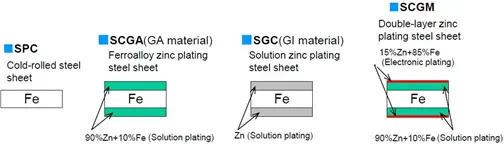
Figure 4.2.a. Various types of steel sheets for the car body.
- Electrodeposition solution having a 90% Zn–10% Fe composition (GA material) is the primary coating used in modern automobiles to prevent corrosion. In comparison to the SGC solution, i.e., GI material, with 100% Zn during electrodeposition, the GA material minimizes ED gas pin (paint quality defects) and maximizes spot welding performance; however, the SGC process is still used in Europe. The SCGM corrosion protection method was used in previous decades, and it did enable the minimization of the ED gas pin. However, its cost was higher than the GA material coating.
- The E-coat solution consists of a mixture of resin, binder, a paste containing the pigments, and a solvent. During anodic electrodeposition, metal parts are positively charged while the paint is negatively charged; because small amounts of metal ions migrate into the paint film, it limits the performance properties of the coating. Hence, anodic coatings are mainly used for interiors and offer excellent color and gloss control.
- In cathodic electrodeposition, the metal part is negatively charged while the paint is positively charged. In contrast to the anodic process, the cathodic process reduces the amount of iron that can enter into the paint film. Hence, cathodic coatings offer high performance and excellent corrosion resistance and have mostly replaced anodic coatings in North America. The E-coat process is considered to be relatively environmentally friendly; it uses only a 0.5% solvent solution.
- E-coating involves dipping automobile bodies into the coating solution and passing an electric current through the body and the liquid ED paint solution. Because of the charged nature of this coating process, the ED paint penetrates into places a spray would not reach. The ED paint is promoted to bond with the metal substrate, and a uniform coating thickness is produced. The result is an insoluble, deposited layer with a very high solids content and firm adherence to the pretreated body.
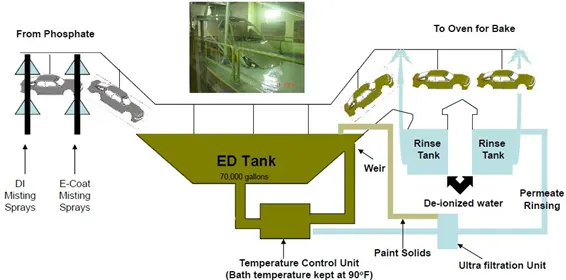
Figure 4.2.b. Electrocoating process.
4.3. Polyvinyl Chloride Coating:
- Poly Vinyl Chloride (PVC) is applied for anti-corrosion, elimination of water leaks, and minimization of chipping and vibrational noise.
- The sealant is applied around and inside the doors, hood, trunk, and front dash, and onto the exterior and interior of metal joints and outer area of the back wheel well; application of the sealant is accomplished either manually or with robots and prevents air and water ingress and inhibits rust formation.
- Recently, PVC and acryl/urethane sealants have also been used in the underbody areas, a process called the Dampening Coat (DC), to impart noise-proofing and vibration-deadening. The noise and vibration are transferred from the engine, drive train, suspension system, road noise of the tires, and flowing air, and the underbody sealants reduce noise transfer into the passenger compartment of the automobile.
- The underbody coating also provides anti-corrosion and chipping protection; typically, it is accomplished using robots equipped with airless sprayers. show in Figure displays the lower door sections and rocker panel locations where PVC or urethanes are applied as anti-chipping protection and shows the cross-section of this layer with respect to the other coatings on the body parts.
- it is also typical to apply a soft tip primer coat that improves the chipping resistance (resistance against chipping by flying stones or debris). This layer is applied to the front edge of the hood, which is an area prone to chipping shock, using a high elastic resin that resides between the ED and primer coats. Also, during the third step, the radiator supports, wheel housing, and under rear areas of the body are coated with a relatively dull black pigment called a blackout coating.
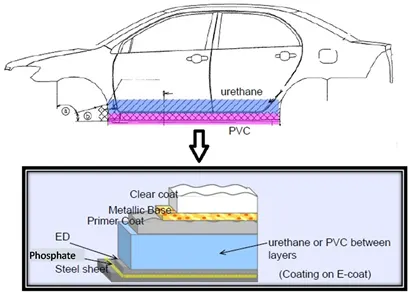
Figure 4.3.a. The anti-chipping material coating on lower doors and rocker panels.
05. Quality of Coating
- Coating qualities can be judged on three main criteria: protection against harsh environments; durability; and appearance quality. A harsh environment refers to damage caused by falling objects (fall out), ultraviolet (UV) rays, hot (above 80 ˝C) or cold (below ´20 ˝C), scratches, rock hits (chipping), and the rust from salt or road deicers. A measure of durability is to have an automobile with rust proofing for over 20 years and a good color/gloss appearance for over a decade. The three parameters for determining appearance quality are smoothness, and gloss, color, paint, and corrosion.
- The components of paints that become the coating films on an automobile include the pigments, resins and additives, and solvents that impart fluidity.
- Pigments mainly give color and luster; they also help to establish thickness to the coatings. Resins, including synthetic and cross-linkers, and hardening agents, form the coating film. Finally, additives, which act as anti-settling agents, stabilize paint and make it easy to use. The factors creating appearance quality are visual quality (aesthetics), determined by the spray coating and involving color and brightness and influenced by the presence or absence of metallic flakes; appearance (smoothness), which is related to film unevenness with wavelengths in the range of 1–5 mm; shine, which is relevant to unevenness with a wavelength of 0.01–0.1mm; and color and flopping performance or the ability of the film to show color-changing properties depending on the angle viewed.
5.1. Gloss and Smoothness of Paint Material:
- Unevenness in the films formed during spraying is mainly related to atomization performance and liquid properties. The better the atomization of a paint material, i.e., producing smaller Sauter mean diameters of the droplets, the less unevenness is formed in the film when spraying. The more a paint wets a surface and with less viscosity, the more the amplitude of unevenness is decreased (Figure lower viscosities facilitate more film leveling and also sagging. During curing of the coatings, any unevenness in the film transfers to the surface when the flow speed of the wet film decreases below the film shrinkage speed. When the flow speed of the wet film falls below the shrinkage speed, minute unevenness and non-uniform distribution of the pigment transfer to the surface and deteriorates the gloss. The suppression of shrinkage in a complete layered system can be achieved by using optimized solvent contents and additional hardening agents, and by increasing the coating thickness to enable the adequate flow.
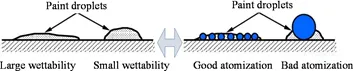
Figure 6.1.a. Effects of wettability and paint particle size on final coating smoothness
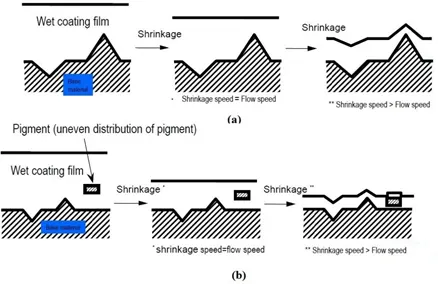
Figure 5.1.a. Formation mechanisms of unevenness with (a) wavelength 1–5 mm and gloss unevenness with (b) wavelength 0.01–0.1mm.
5.2. Color
- Uniform and consistent color are essential to achieve the impression of a high-quality finish and avoid customer complaints. This issue is important not only at the time of purchase but also throughout the lifetime of a vehicle.
- Factors that influence color tone are pigment orientation and concentration. Pigment orientation is impacted by atomization, the viscosity of the paint after coating a surface, the interference of dust, and the spray impact speed onto a surface.
- Pigment concentration on a surface is also affected by the TE of the spray and pigments onto the substrate. An acceptable, good metallic luster surface is achieved if the metallic or mica effect pigments are oriented parallel to the surface.
- if not, the surface will look dull and has a smaller value (i.e., darker in appearance). In practice, coloring pigments act like fine flakes that move within a wet film. Therefore, it is hard to ensure pigments are oriented with their largest particle area parallel to the surface. For this reason, several additives are used to ensure aluminum flakes orient parallel to the surface and are uniformly distributed; generally.
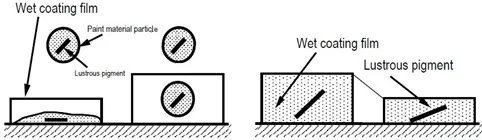
Figure 5.2.a. Affective parameters on the arrangement conditions of lustrous pigment.
5.3. Corrosion Protection:
- Automobile coatings are subjected to a number of different environments and situations during their service life. Degradation of the coating depends on three main factors: coating formula, the intensities of the environment or situation, and their duration.
- Exposure to UV from the sun, heat, and humidity has a long-term deleterious effect with different degrees of intensity depending on the climate and weather conditions. However, these three factors can be simulated in controlled, laboratory weathering tests to assess the lifespan of the coatings. Often, automobile coatings are also subjected to corrosive gasses and microorganisms; these degradation factors are usually only recreated in laboratory tests for special application situations.
- To suppress or eliminate corrosion, it is necessary to gain a solid understanding of it. All metals after production or shaping have a tendency to seek their lower energy, a natural state which originally was that in the ore from which it originated. This tendency is caused by the Law of Entropy, the lower energy state is that of an oxidized, corroded state.
- In automobiles, corrosion usually results from electrochemical reactions in which the steel is immersed in a suitable electrolyte, like water and road salt, and will create some localized anodes and cathodes. As depicted in Figures. anodic oxidation and cathodic reduction are occurring, during which electrons flow from the anodes to cathodes. As a result of the anodic dissolution, a perforation in the metal will happen eventually. Furthermore, corrosion can occur when two different metals are in contact in the presence of an electrolyte. Called bimetallic corrosion or the galvanic effect, the metal with the lower potential will become the anode with the production of electrons and associated metallic ions, and the other metal will act as the cathode.
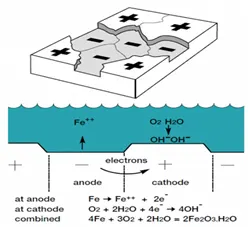
Figure 5.3.a. Corrosion of an automotive body structure.
06. Underbody Coating Performance:
- The performance of an automotive coating can be assessed from different views, e.g., the durability of the exterior and interior paint finishes or the aesthetic features. However, limitations exist on the paint properties, process capabilities, and, most importantly, the amount of money that can be spent to improve the finish. Consequently, each automotive company defines it's color and appearance standards, which are to meet or exceed the levels reached by competitors and customer expectations. Particularly important is the uniformity—or harmony—among all components.
- In the case of the exterior finish, it is necessary that add-on parts such as bumpers, spoilers, mirror housings, and other decorative trim parts match the neighboring body panels. Differences in color and appearance are especially obvious in automobile models with panels having very tight fits to each other.
07. Summary and Conclusions:
- Coating compositions and application processes are inseparable and mutually dependent. As such, the final coating is an elaborate assembly of multiple layers that perform in unison.
- A coating composition, together with application procedures, film formation processes, and coated surface characteristics, determines the appearance of a coating film.
- Automotive coatings confront an almost limitless variety of environments and environmental assaults. Targeting customers’ expectations, together with maximizing efficiencies and meeting environment The appearance (color, gloss, and texture) of the surface significantly affects a customer’s perception of product quality. Additionally, customer expectations for the attributes given by the appearance of coatings continue to increase as manufacturers compete to provide surfaces that offer enhanced surface characteristics.
Thanks & Regards
Rajnish Kumar