Underbody Coating
- UNDERBODY COATING
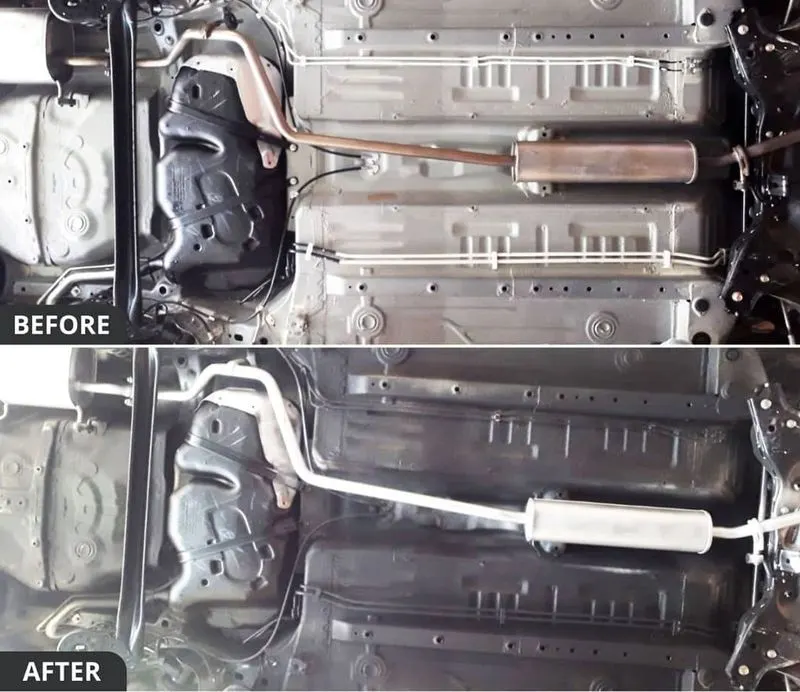
Underbody coating provides long term protection from corrosion to car’s underbody. It also protects parts like internal body panels, frame rails and other inner cavities that are not physically accessible but are prone to corrosion.
Automotive underbody coating protects a vehicle from everything the road can throw at it and more: they provide a layer of protection between a vehicle’s more vulnerable underside and damaging forces such as corrosion and moisture ingress.
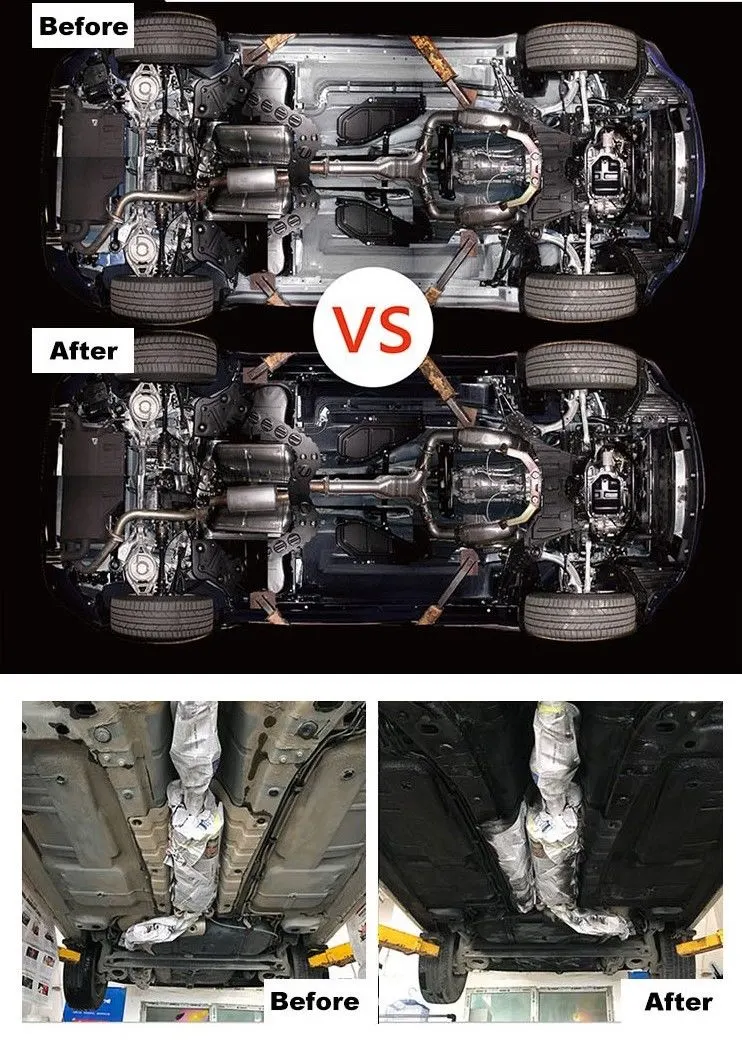
UNDERBODY COATING
1.1 Difference Between Rust Proofing and Car Underbody Coating
We would hear these two terms interchangeably; however, they completely differ in the literal meaning. There is no doubt that the purpose of both treatments is to protect the car from developing rust and corrosion in the end.
§ Underbody Coating
An undercoating is a spraying accessory that protects the vehicle’s body underneath.
§ Rust Proofing
Applying a protective layer of wax or other coatings on corrosion-prone areas outside the vehicle is rustproofing. This layer is mainly applied to fenders, weld points, upper body panels, and tailgates.
§ Rust Protection
Rust protection is often confused with rust proofing. However, when a rust inhibitor is applied during the manufacturing process, it is called rust protection. A rust inhibitor blocks the circulation of electrical current stopping rust from developing in the first place.
1.2 Tyes of Underbody Coating
The Various Types of Underbody Coating are explained as below,
Ø Rubberized Under-coating
Rubberized vehicle undercoating is easy to apply and offers sound-cushioning as well as protection from dust, moisture, and dings or dents.
In addition to undercarriage, rubberized undercoating is also safe to use on wheel wells and quarter panels, and dries to a soft rubbery finish that prevents further rust, damage, or moisture seeps. The coating can be painted over and, if necessary, for bodywork, can be easily removed with an undercoating removal spray.
Overall, rubberized coating is generally the best option for protecting your vehicle's undercarriage, as it provides the simplest and best protective measures against rust and moisture.
Ø Polyurethane Under-coating
The other option for undercoating the vehicle is to use a polyurethane-based sealant. This type of vehicle undercoating is a little bit quicker and easier to apply.
Oftentimes, polyurethane undercoating will come in canisters ready to preload into an application gun. This type of sealant works by seeping into all cracks and seams, displacing salt and moisture and oozing around rusty areas to bond with and protect unoxidized metal.
On the flipside, this type of car undercoating generally requires a little bit more surface prep work before applying - sanding and applying an etching primer to bare metals before using are generally recommended.
Ø Wax or Paraffin-Based Under-coatings
A paraffin-based undercoating will be the cheapest and quickest option available with which to protect the undercarriage of your vehicle.
However, we have to keep in mind that it will wear off quicker than other types of undercoating and will need to be stripped and re-applied at least once every year.
Wax-based under-coatings never truly harden. During application, they drip or flow into seams and cracks to provide protective properties. They are usually available in a spray gun canister or in an aerosol can and offer at least a base protection in moderately humid climates.
Ø Asphalt-Based Undercoating
For standard vehicles, any of the aforementioned types of undercoating will provide sufficient protection. For large trucks and heavy machinery, asphalt-based undercoating provides a bit of extra durability against rocks, chips, and moisture.
Asphalt-based undercoating generally contains a little bit of rubberized material that sets up firmly and also helps soften noise. Generally sold in five-gallon containers, this type of undercoating also needs more cure time than the other three, and is NOT paintable, making it best to use only for undercarriages.
1.3 Procedure for Underbody Coating
The Various types of underbody coating procedures are shown as below,
· Spray
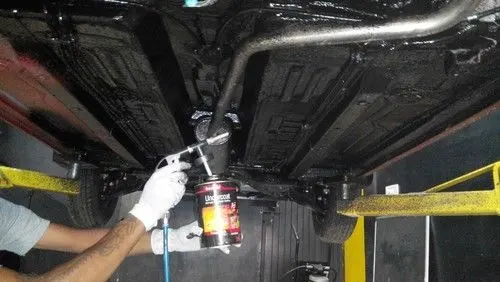
The spray is the most common method used by dealers. The spray consists of a tar-like substance that is applied to the undercarriage. It functions as a barrier for salt, moisture, and oxygen, which causes corrosion.
· Electronic
Removing the electrical current capacity of items underneath the vehicles is another method for applying to undercoat. A weak electric current circulates through the material, reducing the chances of rusting.
· Drip Oil Spray
Drip Oil Spray method can be messy but incredibly effective at protecting the undercarriage. It covers every nook and corner of the chassis, forming a robust layer of protection.
Time is the factor where you have to show patience in this method. It takes a long time to dry. In some cases, it drips around 48 hours to a week.
· Dripless Oil Spray
Coming to the last option, the dripless oil spray. This waxy substance is applied to the body and undercarriage, forming a strong protective layer. It doesn’t take much time to dry; however, the layer can easily wear and tear than the other counter methods.
- Purpose of Under-Body Coating
The Purpose of Under-Body coating are as follows,
- Prevents stone chip damage– A car underbody coating provides a durable elastic over the underbody and wheel arches which protects the substrate from stones, gravel, salt, and other debris which is thrown up by the road.
- Protects from corrosion– The automotive coating process consists of at least five layers of protective and decorative paint. However, the underbody only receives the first two layers – the layers that provide the corrosion protection. The initial two layers provide corrosion protection, but are not very durable. Stone chip damage may expose the metal itself, leading inevitably to corrosion.
- Prevents water ingress– By covering cracks in the paintwork or joints in the undercarriage of a vehicle, moisture or water from humid or wet environments is prevented from creeping into the underbody and causing corrosion.
- Minimizes sound– The noise of debris hitting a vehicle, or vibrations from the road can be dampened by the application of a car underbody coating. They prevent vibrations and because they are elastic, they make far less noise when struck than the metal underneath.
- Is easy to maintain– Giving the undercarriage of a vehicle a uniform appearance means cleaning it down is simpler and so is identifying possible problems.