Underbody Coating
UNDERCOATING
INTRODUCTION:
In Indian road conditions, a car's underbody is most prone to corrosion. Underbody coating provides long-term protection from corrosion to the car’s underbody. It also protects parts like internal body panels, frame rails, and other inner cavities that are not physically accessible but are prone to corrosion.
WHAT IS UNDERCOATING?
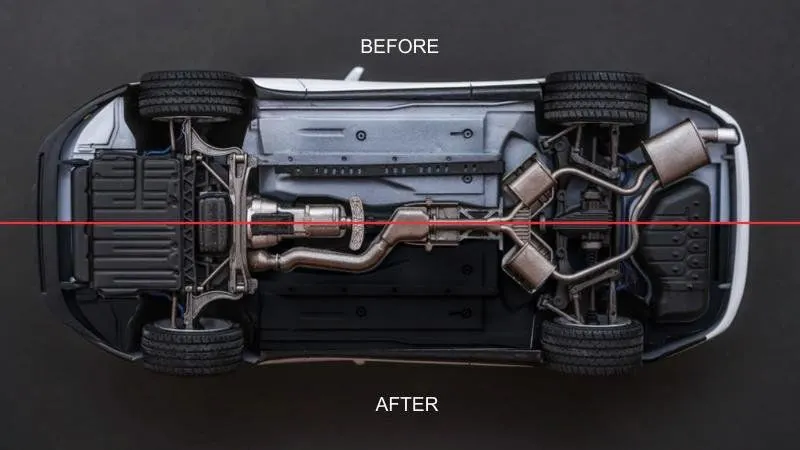
Undercoating is a thick resilient coating applied to the underbody or chassis of an automobile to protect against impact damage from small stones, which would rapidly chip ordinary paint, allowing rusting to begin.
Historically, a bitumen-based compound was used, but after approximately a decade, this becomes brittle and water can become trapped between the underseal and body metal, counterproductively creating a more favorable environment for rust than if no underseal was applied at all. Wax-based underseals do not have this disadvantage but can be eroded and eventually washed off by the enthusiastic use of a hot pressure washer. Rubber-based underseals are also sometimes used.
Vehicles for sale in some territories are not undersealed, because the climate is not sufficiently aggressive to warrant it. If such a vehicle is subsequently imported into a country with high rainfall, cold winters, and where salting of the roads is common, application of underseal is strongly recommended to ensure the vehicle has a long life.
When concrete on streets, parking lots, or warehouse floors begins to degrade, there are a few methods of repair available. Concrete undersealing is a process by which hot asphalt is pumped underneath the concrete slab so it flows into patches that were hollow and eroded. After concrete undersealing, the concrete is more stable and can be overlaid with a thin layer of asphalt to repair cracks, saving the expense and time of replacing the entire surface.
On a fairly new car, covering the underbody with a sealing compound will discourage corrosion. It can be sprayed on under pressure or brushed on.
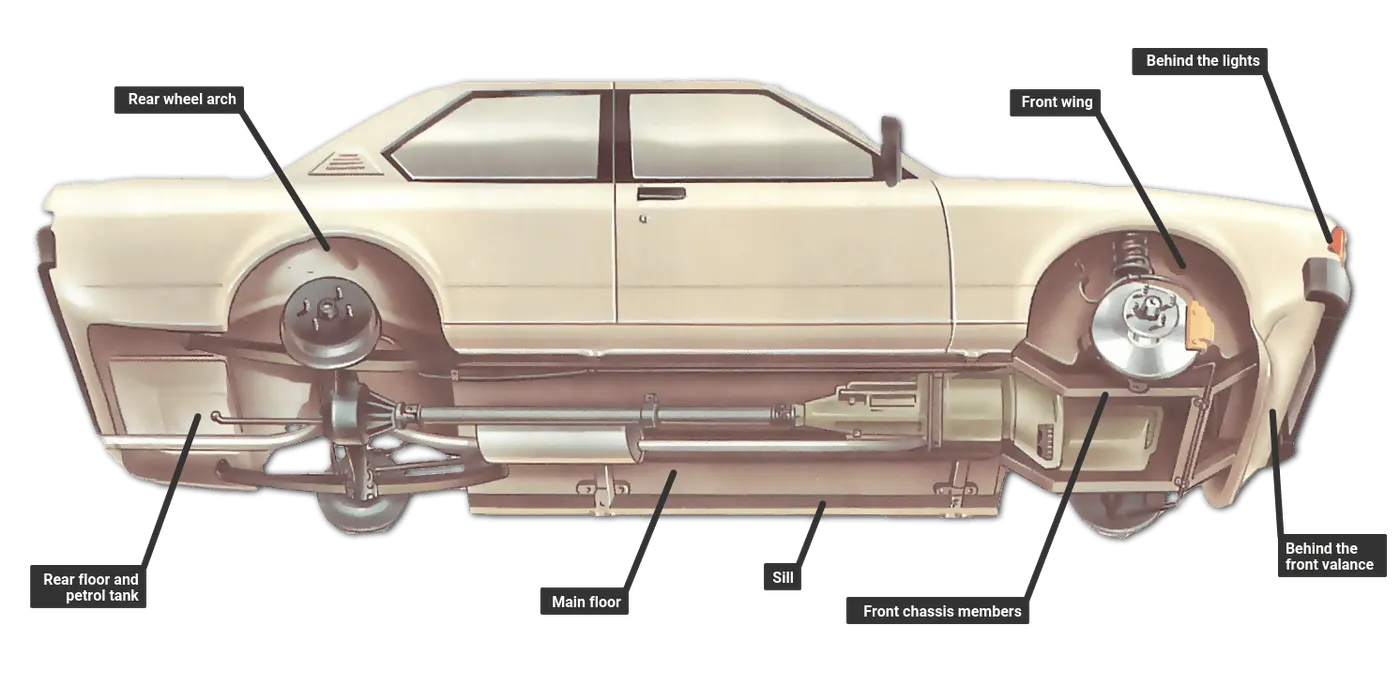
But if there is already considerable rust, applying a sealant will accelerate corrosion rather than protect the underbody against it, because the corrosion will spread unseen and unchecked beneath the covering layer.
Raise the car securely on ramps or axle stands, and check the underside. If the floor and the insides of the front and rear wings are already rusty, do not attempt to seal.
A sealant will be effective only if the underside of the car is completely clean. Wash it thoroughly with hot water containing a small amount of detergent, and when it is dry apply a proprietary engine-cleaning solvent with a stiff brush. Use a hose to remove the residue.
When the underbody is dry, clean off any remaining film of dirt, oil, or grease with a clean cloth moistened with white spirit.
After cleaning, treat any small areas of rust with a proprietary rust remover. When it is dry, apply a coat of pure zinc primer or a rust inhibitor.
Parts of systems attached to or passing beneath the underbody, such as the exhaust system, hydraulic pipes, and the moving parts of the braking and suspension systems, need to be masked before the sealant is applied.
Professionals apply underbody sealant with a spray gun. The best way to do the job at home is with an old 2in. (50mm) paintbrush.
Sealants are sticky to use and difficult to remove from your skin. Wear old clothes that can be thrown away afterward, a head covering, protective goggles, and rubber gloves.
Cover your working area, such as a concrete drive, with old newspapers, an old dust sheet, or plastic sheeting to catch the drips.
Applying the sealant
Prepare the sealant as directed on its container. Following the maker's instructions, start applying the sealant under the floor area starting at one end of the car and working methodically to the other.
Apply generously, painting all unmasked parts. Work in sections, and check each section with a torch to make sure it is completely covered before you move on.
When coating the wings, start at the front with the difficult areas - the top front and top rear corners. Check with a torch that these areas are completely sealed.
Coat the rest of the underwing areas, making sure the wheel-arch edge is well covered. Front wings with a built-in plastic underwing do not need treating.
On completion, remove all the masking when the sealant is set, not forgetting the tape covering the drain holes.
If you have accidentally applied sealant to the paintwork, clean it off with white spirit while it is still soft.
Patching uncoated areas
New, unsealed parts fitted to a sealed underbody should be treated with sealant as soon as possible. If an existing sealing coat has begun to lift, the damaged areas should also be retreated at once.
If possible, use the same type of sealant as that already applied. Mastic-based sealants are not always compatible with factory-applied underbody sealants.
If you patch the sealing coat with a product that is not approved by the car manufacturer, the corrosion warranty may be invalidated.
Peel off damaged or lifting sealant with a knife blade. Workaround the area until you reach a sound part. Remove any dirt on the metal with a stiff brush, and use a neutralizer on any rust patches.
Clean the area with a cloth moistened with white spirit, and wipe dry. Mask any moving parts nearby, or parts that heat up, before applying the sealant.
For small patches, sealant in an aerosol can is easy to apply.
Types of Undercoating
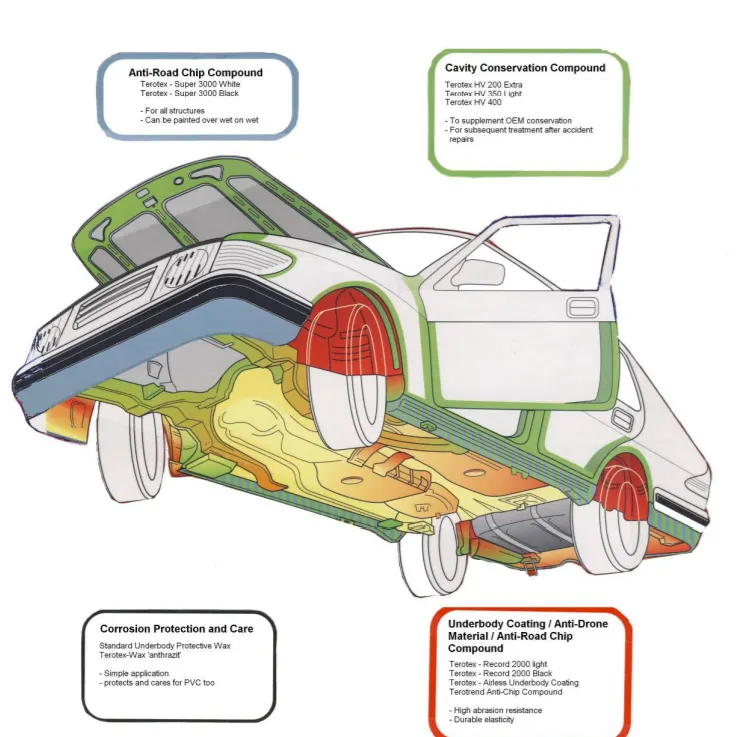
Now let us look at the various kinds of automotive underbody coating you can go for, for your vehicle.
-
Rubberized Underbody Coating
This is generally thought of as the best underbody coating for your car. It preserves the underbody well, protecting it from scratches. Applying this to the undercarriage is not much of a hassle either.
-
Wax Based Underbody Coating
This – more or less – ephemeral undercoating will wear away in a few months’ time. On the upside, wax-based undercoating puts up a big fight against moisture. It is also the most affordable option out there.
-
Asphalt Based Automotive Undercoating
Best suited for lorries, trucks and large vehicles this provides a greater degree of protection compared to rubber-based coatings. However, asphalt-based coatings contain little amount of rubber for sound-insulation purposes. The process of applying this coating is a bit time-consuming though.
-
Polyurethane Underbody Coating
This coating closes up splits and fractures on the underbody of the vehicle. It offers up good protection against corrosion and also bonds with the metal. Unlike in the case of asphalt-based coating, you can paint over the polyurethane coating.
Purpose of Undercoating
Now we will tell you why you should consider investing in a vehicle underbody coating.
-
Fights Rust
It plays an important role in keeping corrosion at bay. Underbody coating can come in handy especially if you live near the sea, where there is too much humidity, and rusting is just one of those everyday things. You should also seriously consider undercoating if you reside in a place where it snows in winter.
-
Absorbs Noise
Believe it or not, very thick undercoating can soften the noises that reach the cabin. Since the undercoating is often made up of rubber it absorbs some of the rackets. The occupants of the car could spare themselves of the road noises – at least up to a certain extend.
-
Reinforcement
If your car comes with stock underbody coating, using another coating on top of it, is not going to hurt. It will offer additional reinforcement, protecting the underbody from water, road debris, gravel, and small pebbles. There would also be a lesser chance for the factory coat to flake away.
-
Prolong Car’s Life
Good undercoating not only defends the underbody from corrosion but also protects the engine and transmission as well! Less rusting coupled with slower wear and tear can surely add years to the lifespan of your vehicle. There would be fewer dents, dings, and scratches on the undercarriage for you to fret about.
- Warranty and Other Perks
You can get a warranty on many undercoatings. For instance, GoMechanic offers a 3-month warranty. Underbody coatings can also make it easier for you to clean the car. Besides these, the coating provides a bit of thermal insulation making traveling by road easier even during summers.