Underbody Coating
INTRODUCTION
Under-body coating is a protective layer applied to the underside of a vehicle to protect it from environmental elements and increase its durability. This one-pager discusses the purpose of under-body coating, its various types, and the associated benefits and drawbacks.
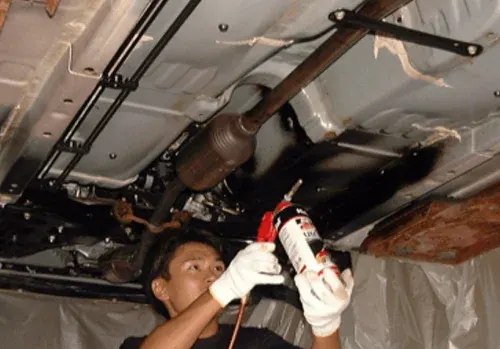
Purpose of Under-Body Coating
Under-body coating's primary goal is to protect the vehicle's undercarriage from damage caused by factors such as corrosion, rust, moisture, gravel, road debris, and harsh weather conditions. It acts as a barrier, preventing these elements from coming into direct contact with the metal chassis components and other critical parts of the vehicle.
Types of Under-Body Coating
-
Rubberized Under-Body Coating: This type of coating utilizes a thick, rubber-like material that adheres to the undercarriage. It offers excellent protection against corrosion, rust, and abrasions. Rubberized coatings are typically durable and resilient, providing a robust shield for the vehicle's under-body.
-
Bitumen-Based Under-Body Coating: Bitumen coatings consist of a mixture of bitumen, solvents, and additives. They are known for their superior resistance to moisture, chemicals, and impact. Bitumen-based coatings provide a robust waterproof layer, protecting against rust and corrosion.
-
Wax-Based Under-Body Coating: Wax coatings are applied as a liquid, which dries to form a solid protective layer. They are primarily used for their ability to repel water and resist corrosion. Wax-based coatings are often self-healing, capable of resealing small scratches or abrasions on their own.
Polyurethane Under-Body Coating: Polyurethane coatings are formulated with a combination of synthetic resins and additives. They offer excellent abrasion resistance, durability, and flexibility. Polyurethane coatings can withstand impacts and provide a protective barrier against moisture and corrosion.
Benefits of Under-Body Coating:
- Under-body coating acts as a barrier, protecting the vehicle's undercarriage from corrosion and rust caused by moisture, salt, and road chemicals.
- Under-body coating provides a protective layer that helps extend the lifespan of critical components such as the chassis, suspension, and fuel lines by minimising wear and tear.
- Noise Reduction: Certain underbody coatings have sound-dampening properties, which reduce road noise and improve the driving experience overall.
- Impact Resistance: Impact resistance is provided by coatings such as rubberized and polyurethane coatings, which protect the undercarriage from damage caused by road debris, stones, and gravel.
Cons of Under-Body Coating:
- Application Complexity: Applying under-body coating requires proper surface preparation and meticulous application to ensure full coverage and effectiveness. Improper application may lead to uneven or insufficient protection.
- Maintenance and Repair: Over time, the coating may wear off or sustain damage, necessitating periodic maintenance and potential reapplication to maintain its protective properties.
- Cost Consideration: Under-body coating can add to the overall cost of vehicle ownership, including the initial application cost and potential future maintenance or reapplication expenses.