Underbody Coating
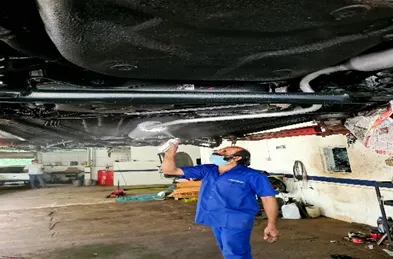
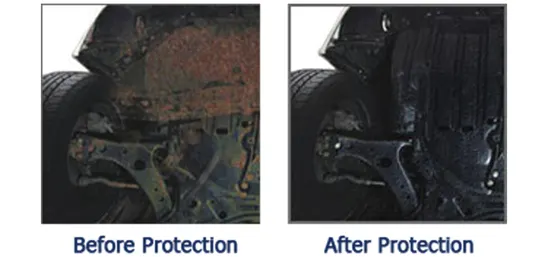
- Over time, rust causes corrosion and can lead to component failure and a host of other problems. Rust is not only unsightly but can cause several different system failures, such as leaks that can lead to gradual fuel wastage, and even large components such as engine and transmission failure.
- An undercoating is usually a black and thick liquid that is sprayed on the underside or chassis of a car and is used to protect the metal from such rust and corrosion, thus extending the life of the vehicle.
- Most commonly used on vehicles that are used in wet or salty environments, as it absorbs most of the moisture, dirt, salt, and other chemicals your motor vehicle comes into contact with on the road.
- Undercoating can be applied as a liquid, usually sprayed or brushed on, and then allowed to dry. It helps protect the axle, engine, braking system, transmission, exhaust, and fuel systems, suspension parts, fuel tank, and floorboards.
- After undercoating, many drivers notice that the sound volume inside their vehicles is noticeably lower as it helps reduce interior noise and creates a sound barrier, creating a noticeably quieter interior.
The type you choose to use is often determined by the level of damage to your car and/or how much you want to protect the underside of it. There are mainly 4 types but I have divided them into 6 types which are as follows:
- Undercoating based on wax or paraffin
It is the preferred chassis paint for cars frequently driven on highways and normal roads. It flows easily into the seams to guarantee the protection of all exposed and vulnerable surfaces. It is also the cheapest of all undercoating, but it also wears quickly and needs to be removed first and then reapplied once a year.
- Rubberized Undercoating
This chassis coating involves applying a rubber compound to the underbelly to protect and cushion it against dents, dust, and moisture. It is also considered the best off-road option. It is easy to apply and the soft rubberized finish prevents further corrosion, damage, or moisture seepage
- Polyurethane Undercoating
The polyurethane used in this product is a high-quality and durable material that is ideal for all weather conditions. It has a long service life and is resistant to wear. It seeps into cracks and rust spots already present on your car's underbelly and fills them in, protecting the underlying metal. Requires chassis preparation before application.
- Asphalt Undercoating
This type is made of asphalt and generally also contains some rubberized material that sits firmly and helps dampen engine noise. It is said to have the most damage-resistant properties, ideal for trucks and off-road vehicles. It lasts a long time and is best for endurance vehicles that have to undergo heavy road traffic. It is the strongest and densest primer available
- Water-based Undercoating
Water-based undercoating is a protective layer that helps protect your car from adverse weather conditions. It is made of an advanced polymer that is non-toxic and environmentally friendly. It can be applied to any surface such as metal, plastic, rubber, and glass. It requires frequent reapplying as it is not very durable and only lasts a year depending on the conditions.
- Petroleum-based Undercoating
This type of undercoating is a heavy, viscous, oil-based liquid product that provides an effective barrier against moisture and corrosion. The liquid dries and hardens to provide firm, durable, and long-lasting protection against moisture and corrosion. It has greater flexibility for road salt and dirt. It repels water thanks to its petroleum base
Advantages of Undercoating
The obvious advantage of undercoating is the protection it provides when your vehicle is being transported. Undercoating gives you an extra layer of protection against rust and corrosion and protects your car. The undercoat will wear out eventually, but you can get years of protection from it. Even vehicles in warmer climates gain protection as debris is repelled and kept away from the vehicle.
Disadvantages of Undercoating
Undercoating works best on new vehicles that have never been exposed to road conditions. A used vehicle may already have residue on the undercarriage or even have spots of rust and corrosion. Primer will not help you if the corrosion is already there and needs to be removed first before application, which can be expensive.