Underbody Coating
UNDERBODY COATING :-
A car’s underbody is exposed to the most wear and tear caused by muddy water, potholes present on the roads, stones and other obstacles on the road. Since it’s not in plain sight, we often do not see the damage and tend to neglect it.
Generally under-body protective coating is used to protect the vehicle chassis from external environment, i;e air, dust, water, rust, etc to ensure the integrity and safety of car. The use of underbody coating acts an essential role in the service life of the vehicle. In general, it is required to spray a protective coating in the manufacturing of the new car. Due to the highly competitiveness of new car sales, car producers have pressure to reduce the manufacturing cost, so that they reduce or even completely eliminate the use of under body coating where it is not to be easily seem by car owners. As a consequence, our car service life will be greatly reduced and the safety is been compromised.
An example of Under-body coating is:-
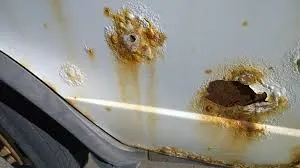
such rusting, paint can be serioulsy effected if the under-body coating is not done properly.
PURPOSES OF UNDER-BODY COATING:-
- Prevents Paint Chipping
Going on the highway or while moving through a city road, we will often encounter sharp gravel or any other unattended object hitting the bottom of the car with high momentum. This scrapes and chips off the metal from down below. A thick layer of Underbody Coating definitely comes to aid and minimises the effects of such contacts on the body and hence us in un-necessary repair costs.
- Protects Against Rust & Corrosion
The main objective of getting underbody coating done is preventing metal components that are exposed on the bottom side of the car to prevent damage from corrosion. We can shut out the Adverse effects of corrosion on your car by simply applying a rubberised anti-rust coating all over the bottom of the car.
- External influence
In summer we see due to extreme heat from the atmospher even the roads heat a lot which in turn heats up the vehicles the road’s anti-frozen gent in winter, raining water and the salty water in the atmosphere, will attach the under body of a car. Mainly in coastal areas, the wind from the sea will bring more salt to the air, which will accelerate the corrosion and reduce the overall life of the car. While the under body is covered by the thick and tight layers, it would act as a strong barrier to prevent these external substances attaching the metal sheet.
- Protects Vital Components
Underneath a car is somewhere a lot of indispensable parts of a car are left exposed like the Engine, silencer, etc. One simply can’t afford to let these parts go bad due to rusting and hence in order to save ourself from a huge repair bill, a considerably less expensive Anti-Rust Coating is very important now-a-days and mostly all cars are provided with good under-body coating. If proper coating is not provided some major components might be influenced and might damage the components which leads to replacement of the components which are very expensive.
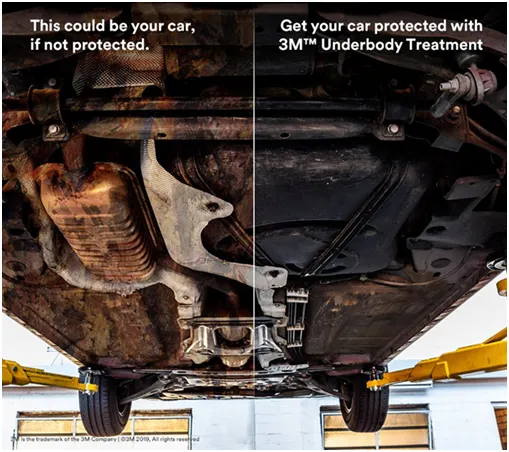
An example of coated body and non coated body is provided below for reference:-
TYPES OF UNDERBODY COATING:-
- Electronic method
Using a weak electric current, this small device can stop the corroding effects of rust. You can have these electronic devices installed at the dealership, or save some money and buy them from a source outside of the dealership.
- Undercoating
This method involves spraying a tar-based substance on the exposed parts of a vehicle's underbody. The tar-like undercoating acts as a barrier once it hardens, keeping out moisture, salt, and other substances. This undercoating works best when applied to the undercarriage of a new vehicle. It also requires expert application, or it can crack, letting in moisture.
- Dripless oil spray
A wax-like substance is applied to the entire body of the vehicle, it hardens once it has dried. One of the disadvantages of dripless oil sprays is that you need to have holes drilled into the body of the car at specific points to make it effective. The spray also has a high viscosity, meaning that it does not always get into all of the nooks and crannies of your vehicle, making it less used method.
- Drip oil spray
Its the most commonly recommended type for rust protection. Drip oil sprays tend to continue to drip once applied until they dry. This dripping can last anywhere up to 48 hours after application. Unlike the dripless varieties, the more watery nature of drip oil sprays means it gets into more areas on your vehicle, though you still need to have holes drilled in your vehicle's fenders, doors, and other areas to make sure that it gets to all the areas it needs to.
ADVANTAGES
- It provides a layer of protection against corrosion.
- Helps in the extension of vehicle life.
- It can be easily applied to damaged areas.
- May help in reducing interior noise.
DISADVANTAGES
- Corrosion which is already present on the car can not be resolved when underbody coat is applied
- Works best on new cars.
- Genrally the coating adds a few kilos of weight to vehicle body.
- It must be reapplied every 3-5 years based on the environment you're staying at.
NEED OF UNDERBODY COATING ON A CAR
- A must-have if you live in coastal areas
Vehicles in the coastal areas are much more prone to corrosion than in any other region. The content of salt in the water floating around during the monsoon season is way too high. Adding to this is the humidity in such areas and these elements further speed up the process of corrosion. Hence getting your car done right with a nice underbody coat job is of utmost importance for people living that beach life.
- If the area we live is a muddy road or a very dusty road it is a must thing to do a undercoating to the car
If you live in areas having large sections of unpaved roads, then monsoon is just going to make things worse. The sand is going to mix with the water and all that muck will get stuck to your car’s belly while you tread over such a course. This makes your car’s underbody more vulnerable to damage and a nice and thick coating will surely help.
- It can also affects your car resale value
All that damage due to corrosion, if left unattended could lead to some permanent damage, which will cost you in terms of rapid depreciation in your car’s resale value. This will make it almost impossible for your car to pass a strict inspection when you put it up for sale. Hence, regular checks of your car’s underbody condition is the key to maintaining its value.