Underbody Coating
UNDERBODYCOATING:
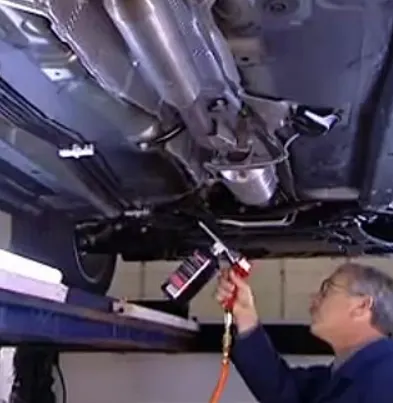
Underbodycoating is the process of coating the vechicle's body to prevent it from rust and corrosion. It provides long term protection from corrosion to car's underbody. It also protects parts like internal body panels, frame rails and other inner cavities that are not physically accessible but are prone to corrosion and rust. When the automobile is fresh off the lot and spotless, it is usually sprayed or painted on. But it’s acceptable if you apply the undercoating after a couple of years. This is because it might protect the undercarriage from additional harm.
UNDERBODY COATING PROCESS:
1.PRETREATMENT:
The first sequence in preparing the BIW for subsequent coating is pretreatment. It moves & clean excess metal & forms an appropriate surface structure enabling bonding of a corrosion protection layer. It consists of cleaning the body surface to remove remaining oils from the staming process & welding residues through three primary liquid dipprocesses of degreasing,conditioning, & phosphating.
2. ELECTRODEPOSITION:
E-coating involves dipping automobile bodies into the coating solution & passing an electric current through the
body & the liquid ED paint solution. Because of the charged nature of this coating process, the ED paint penetrates into
places a spray would not reach.During operation, a mixture of resin, binder, & a paste containing the pigments is fed into the ED tank. The automobile body is lowered into the tank, & an electric current applied, the solution in the tank consists of 80-90% deionised water & 10-20% paint solids.The resin is the backbone of the final paint film & provides corrosion
protection, durability, & toughness. Pigments are used to provide color and gloss.
3. RUST-PROOF MATERIALS: SEALER/PVC:
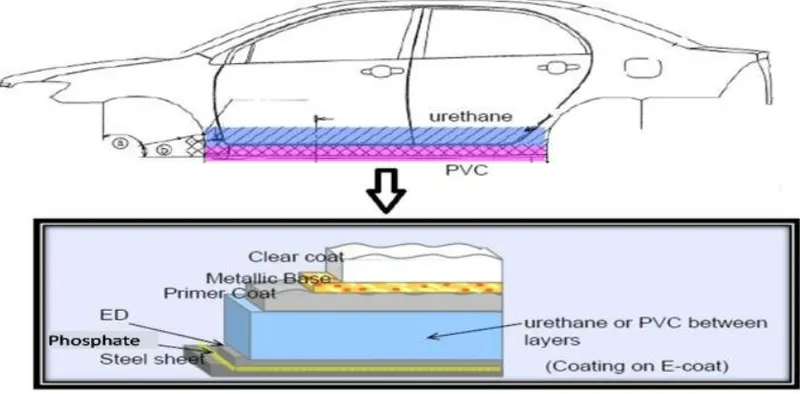
The third step is underbody coating & seam sealing using PVC. The above diagram displays the lower door sections &
rocker panel locations where PVC or urethanes are applied as an anti-chipping protection, shows the cross section of this layer with respect to the other coatings on the body parts.
4.PRIMER:
The fourth coating step is the primer. It can be water-borne, solvent-borne, or a powder. The primer fills & smoothes minor imperfections & scratches that may be created during prior steps & by the intermediate sanding or grinding used to remove small imperfections. It also provides additional protection against corrosion & maximizes adhesion between it & the E-coat & basecoat. Thereby, the primer incrases paint durability.
PURPOSE OF UNDERCOATING:
- The main purpose of undercoating is to check rust especially in the body components like frame rails along with other exposed metal parts.
- Underbody coating can also reduce wear and tear
TYPES OF UNDERBODY COATING:
There are four types of underbody coating they are:
- Rubberized Underbody Coating.
- Wax Based Underbody Coating.
- Asphalt Based Underbody coating.
- Polyurethane Underbody Coating.
RUBBERIZED UNDERBODY COATING:
Rubberized underbody coating is easy to apply and offers comfortness as well as protection from dust, moisture, and dings or dents. In addition to your undercarriage, rubberized undercoating is also safe to use on wheel wells and quarter panels, and dries to a soft rubbery finish that prevents further rust, damage, or moisture seeps. The coating can be painted over and, if necessary for bodywork, can be easily removed with an undercoating removal. Overall, rubberized coating is generally the best option for protecting your vehicle's undercarriage, as it provides the simplest and best protective measures against rust and moisture.
WAX BASED UNDERBODY COATING:
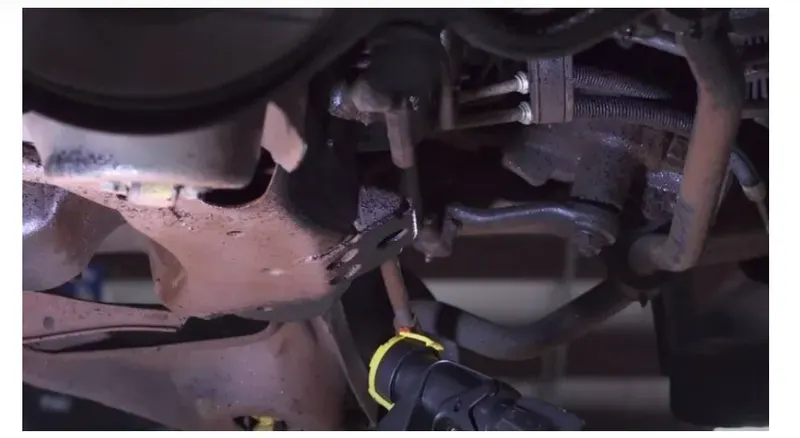
Wax-based undercoatings are the type which uses wax for coating. During application, they drip or flow into seams and cracks to provide protective properties. They are usually available in a spray gun canister or in an aerosol cane and offer at least a base protection in moderately humid climates.
ASPHALT BASED UNDERBODY COATING:
This type of underbody coating is best suited for lorries, trucks and large vehicles this provides a greater degree of protection compared to rubber-based coatings. However, asphalt-based coatings contain little amounts of rubber for sound-insulation purposes. The process of applying this coating is a bit time-consuming process.
POLYURETHANE UNDERBODY COATING:
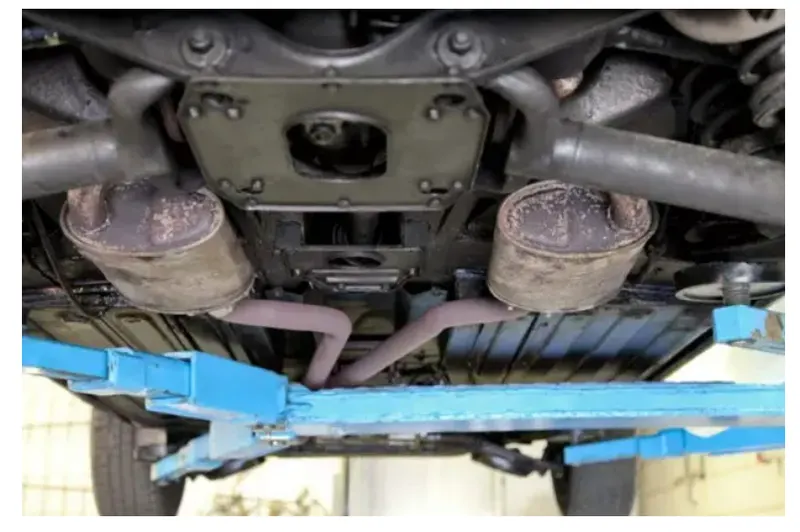
This coating closes up splits and fractures on the underbody of the vehicle. It offers up good protection against corrosion and also bonds with the metal. Unlike in the case of asphalt-based coating, we can paint over the polyurethane coating.
PROS IN UNDERBODY COATING:
-
Fights Rust
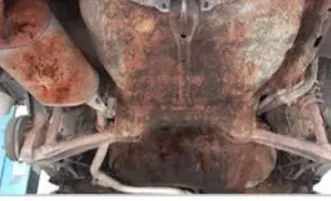
It plays an important role in keeping corrosion at the underbody. where there is too much humidity, and rusting is just one of those everyday things. It should also be seriously consider undercoating if reside in a place where it snows in winter. -
Noise absorption:
Very thick undercoating can soften the noises that reach the cabin. Since the undercoating is often made up of rubber it absorbs some of the rackets. The occupants of the car could spare themselves of the road noises at least up to a certain extend.
-
Reinforcement
If the car comes with stock underbody coating, using another coating on top of it, is not going to make problems. It will offer additional reinforcement, protecting the underbody from water, road debris, gravel and small pebbles. There would also be a lesser chance for the factory coat to flake awat.
-
Prolong Car’s Life

Good undercoating not only defends the underbody from corrosion but also protects the engine and transmission as well. Less rusting coupled with slower wear and tear can surely add years to the lifespan of your vehicle. There would be fewer dents, dings and scratches on the undercarriage.
- It is less helpful if corrosion is already present.
- It works best on new cars.
- Most vehicles make it five years before corrosion, begins to show.
- A third-party undercoating service might void the vehicle’s warranty.
- It adds weight to the vehicle.
- It must be reapplied every 3 to 5 years for the best results.