Underbody Coating
an in-depth review of coatings used in automobiles.
UNDERBODY COATING
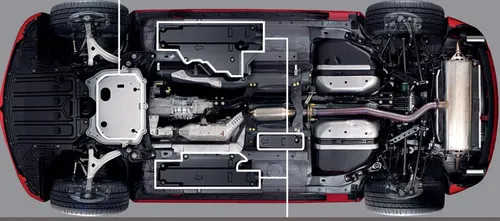
A car’s underbody is exposed to different road conditions and terrains consisting of stones, potholes, saltwater, and various elements of nature that may result in corrosion and chipping of the car's underbody.
to prevent the extensive damage caused by these elements an automobile is often coated with a combination of different anti-corrosive paints and coatings these prevent the vehicle from long term damage and also extends the life of the painted components.
A GLANCE AT THE HISTORY OF CAR COATINGS
At the beginning of the automotive industry about 100 years ago, cars were painted with a varnish-like product that was brushed onto the vehicle surfaces; this coating was sanded and smoothed, and then the varnish was reapplied and refinished to establish several layers of the coating.
Between the 1920s and 1940s, automotive coating technologies transitioned to using spray equipment and “stoving enamels” that were based on alkyd resins these two advancements decreased application and drying times to a week or less. Because of the newly developed spray coating technologies, the surface finishes were more even and less sanding was needed
To further improve coatings’ appearance and durability, a new type of wet-on-wet finish was developed and introduced in the late 1970s, consisting of a thin basecoat and a thicker clear coat. The topcoat painting process was split into a pigmented enamel basecoat, followed by a clear enamel finish. A key to the success of this new technology was the development of a clearcoat material with superior durability in all climates.
Today, automobile painting processes are more standardized than they have ever been because of the benefits of inorganic pretreatments, cathodic electrodeposition, liquid or powder primer surfaces, liquid base coats, and one or two-component solvent-borne clear coats. For example, the development of new and highly reliable powder coatings has attained a point where many car manufacturers have decided to use them; as an added advantage, powder coatings introduce the capacity to aggressively meet environmental regulations.
Modern Automotive Coating Processes
Modern automotive coating methods consist of five main steps. They include the following:
- Pretreatment: removes and cleans excess metal and forms an appropriate surface structure enabling bonding of a corrosion protection layer.
- The next step is electrodeposition (ED) of the anti-corrosion or rust prevention layer.
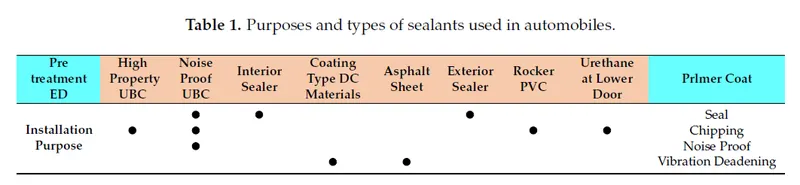
- A sealer like Poly Vinyl Chloride (PVC) is applied for anti-corrosion, elimination of water leaks, and minimization of chipping and vibrational noise.
- A primer is then applied to promote adhesion between the surface and the basecoat it also imparts a smoother surface for subsequent layers and has anti-chipping properties.
- Finally, the topcoats that include a basecoat and clearcoat are applied; they provide surface properties that are sought after, including color, appearance, gloss, smoothness, and weather resistance.
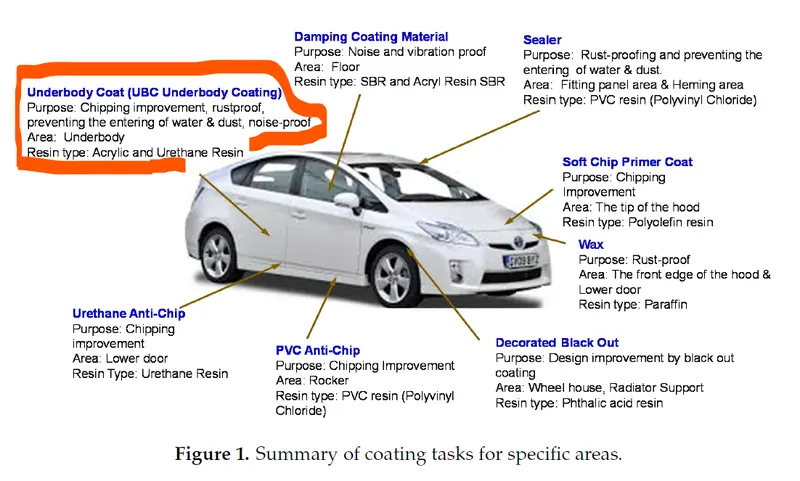
These coatings are applied in a particular order and thickness and have different material and protection or finishing functionalities; also, each layer relates to the others and imparts a desired balance of properties
pretreatment :
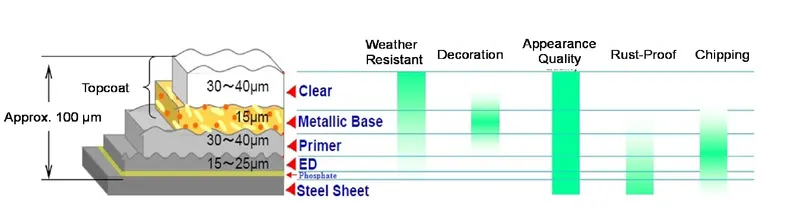
pretreatment is referred to as the body‐in‐white (BIW). The first sequence in preparing the BIW for subsequent coating is pretreatment. Pretreatment consists of cleaning the body surface to remove
remaining oils from the stamping process and welding residues through three primary liquid dip processes of degreasing, conditioning, and phosphating . An additional pretreatment cleaning that employs ~pH 9 hot water can also be used. Pretreatment helps the primer to bond onto the metal.A phosphate treatment applies an inert layer of metal phosphate, providing resistance to corrosion spread .
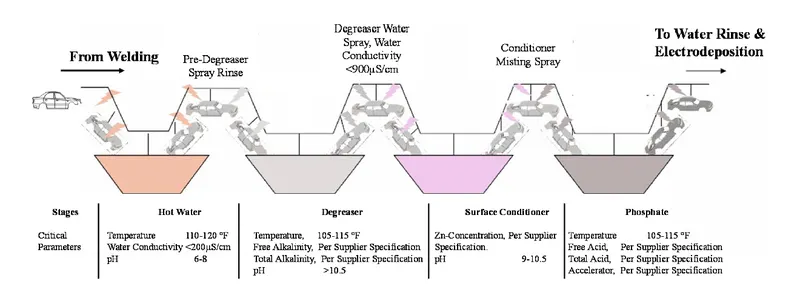
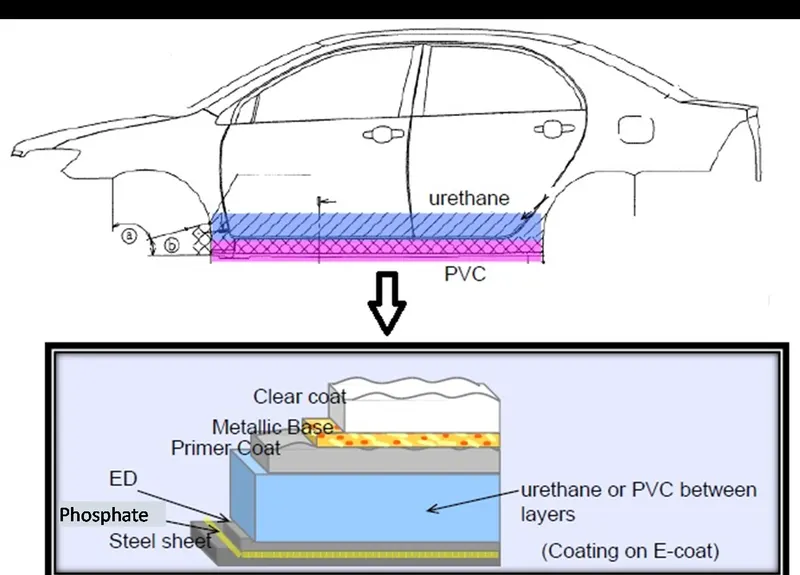
PVC and acryl/urethane sealants have also been used in the underbody areas, a process called the Dampening Coat (DC), to impart noise‐proofing and vibration‐deadening. The noise and vibration are transferred from the engine, drive train, suspension system, road noise of the tires, and flowing air, and the underbody sealants reduce noise transfer into the passenger compartment of the automobile [29]. The underbody coating also provides anti‐corrosion and chipping protection; typically, it is accomplished using robots equipped with airless sprayers. Figure displays the lower door sections and rocker panel locations where PVC or urethanes are applied as an anti‐chipping protection, and shows the cross section of this layer with respect to the other coatings on the body parts.
TYPES OF UNDERBODY COATINGS:
Electrodeposition (ED)
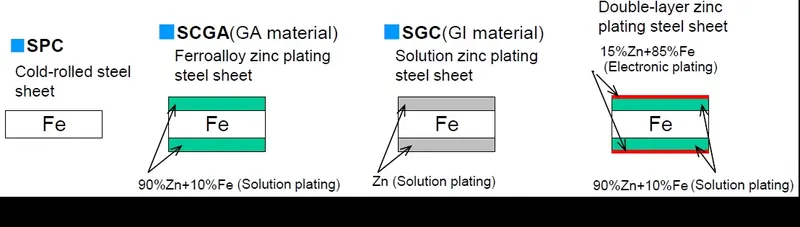
The metal underbody and frames of automobiles are coated to prevent corrosion, whereas other areas like the roof are not rust‐proofed. When not coated to prevent corrosion, the structural metals (or other materials) are primed before applying additional coatings. displays types of corrosion protection coatings for cold rolled steel.
Undercoating:
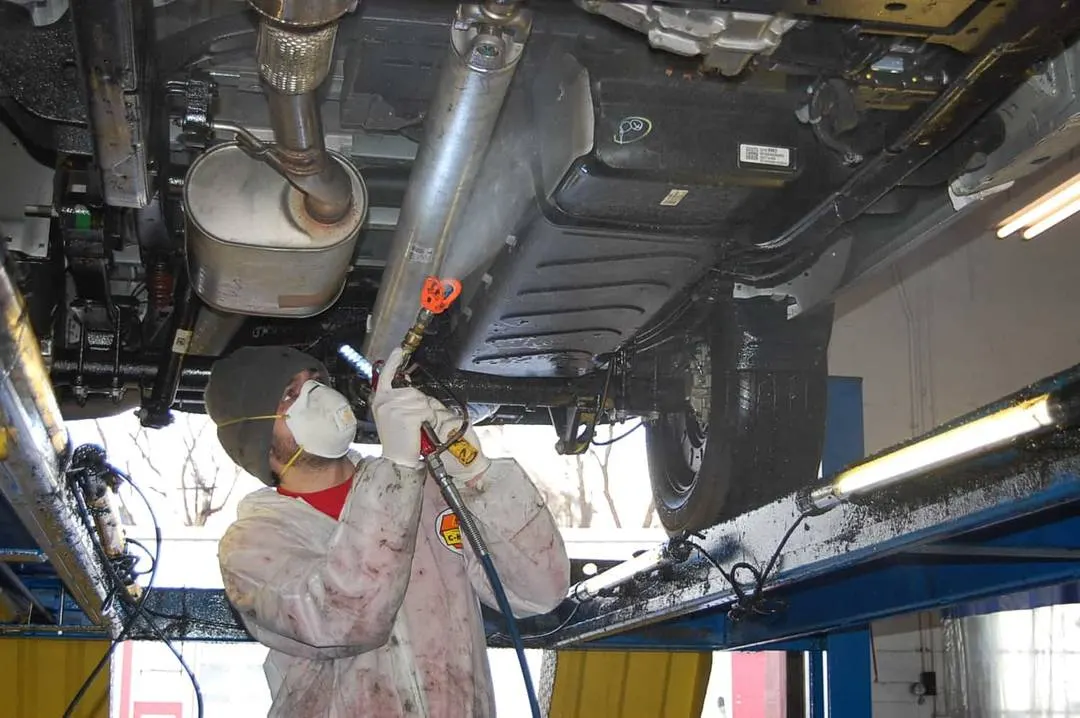
This method involves spraying a tar-based substance on the exposed parts of a vehicle's underbody.
The tar-like undercoating acts as a barrier once it hardens, keeping out moisture, salt, and other substances.
This undercoating works best when applied to the undercarriage of a new vehicle. It also requires expert application, or it can crack, letting in moisture
Dripless oil spray
A wax-like substance applied to the entire body of the vehicle, it hardens once it has dried.
One of the downsides of dripless oil sprays is that you need to have holes drilled into the body of the car at specific points to make it effective.
The spray also has a high viscosity, meaning that it does not always get into all of the nooks and crannies of your vehicle.
TYPES OF UNDERBODY PAINT
A car underbody coating can be factory-applied or aftermarket. Most commonly these coatings are one of the three types:
1. Resin-based
Polyurethanes and rubber coating are popular because their elastomeric properties provide long-term stone chip damage and corrosion protection as well as
sound deadening effects. These also have the benefit of being suitable for a wide range of substrates and they can be painted over. Can be spray-applied, high
build, and particularly good for areas of possible salt exposure.
2. Wax-based
An excellent anti rust coating suitable for all substrates. The wax is applied soft and cures hard, either by brush or spray, and can be layered thickly. It cannot be
top coated.
3. Bitumen-based
These underbody paint systems provide hard-wearing protection against stone chip damage and corrosion. They also have sound-deadening properties.
Suitable across many substrates, but cannot be painted over.
ADVANTAGES
It provides a layer of protection against corrosion.
When an undercoating is properly applied to a vehicle, then you’ll be providing the underbelly with a layer of protection against rust and corrosion. Instead of
contacting the metal components of the vehicle, the debris encounters the undercoating, which then proactively repels the dangerous items away. Although an
undercoating will eventually wear out, it can provide years of protection against premature corrosion.
It will extend the life of your vehicle.
A proper undercoating extends the life of your vehicle because of its rust-stopping power. Corrosion does more than affect the integrity of the metals in your
vehicle. It can get into your metal wires and cables, affecting any component which is comprised of steel or aluminium. Even your transmission and engine have
exposure to rust when there isn’t a vehicle undercoating applied.
It can be applied to damaged areas.
Over time, the underbelly of your vehicle is going to develop nicks, chips, and scratches because of the debris you encounter while driving. Unlike older forms of
undercoating, which included the use of asphalt and animal fat, modern products provide a real layer of protection because it can morph into the various areas
of small damage.A modern undercoating is usually wax-based, which creates a living barrier that your vehicle can use to promote a self-healing experience.
NEED OF UNDERBODY COATING ON A CAR
1. A must-have if you live in coastal areas
Vehicles in the coastal areas are much more prone to corrosion than in any other region. The content of salt in the water oating around during the monsoon
season is way too high. Adding to this is the humidity in such areas and these elements further speed up the process of corrosion. Hence getting your car done
right with a nice underbody coat job is of utmost importance for people living that beach life.
2. Or if you live near un-paved/muddy roads
If you live in areas having large sections of unpaved roads, then monsoon is just going to make things worse. The sand is going to mix with the water and all that
muck will get stuck to your car’s belly while you tread over such a course. This makes your car’s underbody more vulnerable to damage and a nice and thick
coating will surely help.
3. It also affects your car resale value
All that damage due to corrosion, if left unattended could lead to some permanent damage, which will cost you in terms of rapid depreciation in your car’s resale
value. This will make it almost impossible for your car to pass a strict inspection when you put it up for sale. Hence, regular checks of your car’s underbody
condition is the key to maintaining its value.
The above theory concludes the in-depth analysis of underbody coatings used in automobiles.