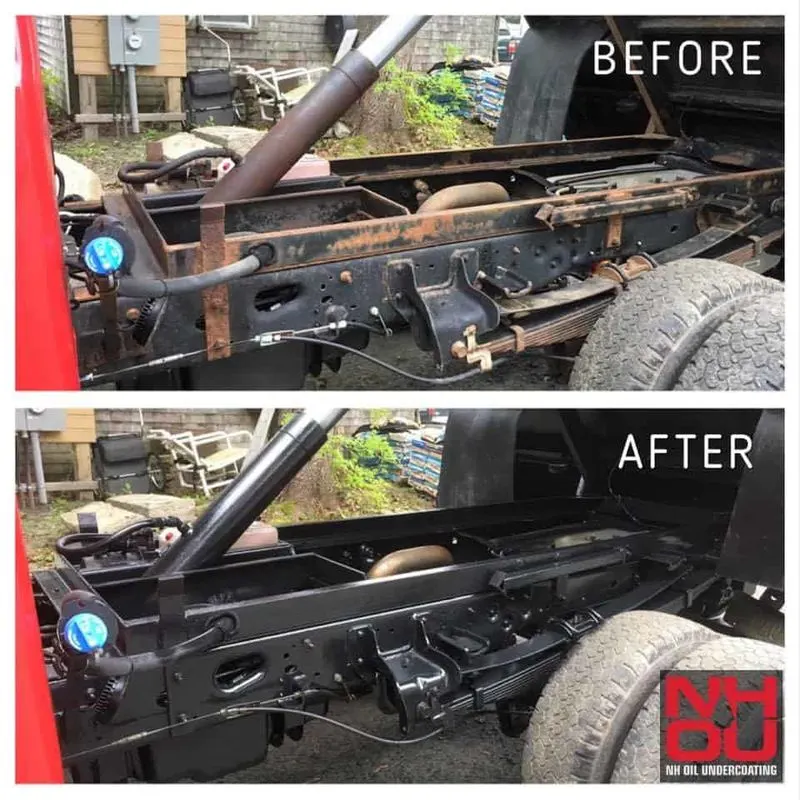
Underbody Coating
INTRODUCTION
You might know car underbody coating as undercoating, and that’s easier to say. This add-on is applied during the manufacturing or at your local car dealer center, as you must have understood while reading up till here that it is applied as a protective layer for the undercarriage.
The coating is the formulation of spray that is applied to the chassis protecting it from rusting. You must have come across such advertisements that endorse these products, which reduces the road noise.
Applying to undercoat, as soon as you get your new car, is the best way to keep the chassis intact. This covers the undersurface saving it from road grime and other stuff.
Is There a Difference Between Rust Proofing and Car Underbody Coating?
You would hear these two terms interchangeably; however, they completely differ in the literal meaning. There is no doubt that the purpose of both treatments is to protect your car from developing rust and corrosion in the end.
Underbody Coating
An undercoating is a spraying accessory that protects the vehicle’s body underneath.
Rust Proofing
Applying a protective layer of wax or other coatings on corrosion-prone areas outside the vehicle is rustproofing. This layer is mainly applied to fenders, weld points, upper body panels, and tailgates.
Rust Protection
Rust protection is often confused with rust proofing. However, when a rust inhibitor is applied during the manufacturing process, it is called rust protection. A rust inhibitor blocks the circulation of electrical current stopping rust from developing in the first place.
Such ingredients are applied to almost every vehicle, car, truck, and SUV by mixing into its materials during the manufacturing process. On the other hand, rust-resistant material is also used for manufacturing cars these days.
How to Undercoat Your Car?
You have a few options to select from while considering an undercoating for your vehicle. Obviously, if you are getting it done through an authorized dealer, then you would have no choice as they have their own preferences.
1. Spray
The spray is the most common method used by dealers. The spray consists of a tar-like substance that is applied to the undercarriage. It functions as a barrier for salt, moisture, and oxygen, which causes corrosion.
You can also purchase it as a DIY product, but the whole magic lies behind the method of application, so it’s better to do the job with a dealer, especially if you have a new vehicle.
2. Electronic
Removing the electrical current capacity of items underneath the vehicles is another method for applying to undercoat. A weak electric current circulates through the material, reducing the chances of rusting.
For using this method, a DIY solution wouldn’t work; you would need an expert.
3. Drip Oil Spray
If you want to do it yourself, then drip oil spray is the best option. This can be messy but incredibly effective at protecting the undercarriage. It covers every nook and corner of the chassis, forming a robust layer of protection.
Time is the factor where you have to show patience in this method. It takes a long time to dry. In some cases, it drips around 48 hours to a week.
4. Dripless Oil Spray
Coming to the last option, the dripless oil spray. This waxy substance is applied to the body and undercarriage, forming a strong protective layer. It doesn’t take much time to dry; however, the layer can easily wear and tear than the other counter methods.
How Does Undercoating Protect Your Vehicle From Rust?
To understand the science behind how undercoating protects the vehicle from rusting, you should know about rusting first.
Rusting occurs when the current passes through anode (a piece of metal that gives up electrons like a dude making it rain at a strip club) to the cathode (metal piece that accepts electrons – like that aforementioned stripper on the pole) through the electrolyte (a liquid supporting the movement of electrons).
The electrolyte provides the fuel, which is oxygen in this case, to the anode. Oxygen reacts with the anode, releasing some electrons free. The electrons move from the electrolyte to cathode. The metal at anode starts disappearing and depositing as rust. This rusting of iron or steel results in corrosion.
The undercoating is applied to stop a few contributing factors leading to rusting and corrosion.
Coating Solution:
The coating solution stops electrolyte from penetrating inside the metallic surface. Road salt, saltwater, and typical wastewater play the role of the electrolyte most of the time. Such undercoating products last for years. You might also get a lifetime warranty with some of them.
Electrical Method:
The electrical way blocks the anode from releasing electrons to circulate freely in the electrolyte. The anode will be exposed to saltwater or other electrolytes, however, being charged negatively at the same time. This way, electrons cannot move to the cathode, causing rusting or corrosion.
This is the ultimate solution that is going to save your vehicle from corrosion for a lifetime; however, you have to bear the price as it is expensive.
What Are The Benefits of Undercoating Your Car?
Most of the vehicles manufactured these days are rust proofed, especially in rainy and cold regions. When your car is exposed to saltwater and other common electrolytes, investing in an undercoating from an authorized dealer is a smart investment. It does cost a few hundred dollars, but it’s worth it. It will keep your ride in good condition for five years.
1. It extends the lifespan of your car
The protection against rusting gives you the biggest advantage, which is the long-life of the vehicle. If undercoating is done the right way, then it will provide protection for up to 10 years. In some cases, the time span is more than ten years, which extends the lifespan of your vehicle.
2. No more loud road noise
The undercoating serves as an extra layer of insulation, reducing the noise from penetrating inside components. Thus padding acts as a barrier between you and the source of the noise. If the road noise bothers you while driving your car, truck, or SUV, then applying to undercoat can help you.
What Are The Disadvantages of Undercoating?
Nothing comes for free in this world. The same goes for undercoating. The undercoating or rustproofing spray is heavy in pockets. However, it is nothing when you compare it with the cost of replacing a vehicle after corrosion.
How to Apply a DIY Undercoating with a Rust Proofing Spray?
You can apply undercoating on your own without a problem. Several DIY products are available in the market to apply on the undercarriage. This can be messy as you have to leave your vehicle untouched for some days while it stops dripping. This takes a lot of time as compared to the amount of money you can give it to pro to take care of it.
Here is the tip. Each underbody spray is unique, so you need to follow specific steps required to complete it. For this, check with the manufacture to know about the method before starting.
Your list of undercoating supplies:
- Degreasing products
- A disc grinder and pads
- Air hose
- Eye protection
- Protective gloves
- Sandpaper ( od 200 grit)
- Scraper
- The Undercoating & reliable application products
- A hydraulic lift (for removal and spraying)
TYPES OF UNDERBODY COATING:
The underbody coating is classified based on type of material used for coating.
- Rubberized underbody coating: This is generally thought of as the best underbody coating for your car. It preserves the underbody well, protecting it from scratches. Applying this to the undercarriage is not much of a hassle either.
- Wax based underbody coating: This – more or less – ephemeral undercoating will wear away in a few months’ time. On the upside, wax-based undercoating puts up a big fight against moisture. It is also the most affordable option out there.
- Asphalt based underbody coating: Best suited for lorries, trucks and large vehicles this provides a greater degree of protection compared to rubber-based coatings. However, asphalt-based coatings contain little amounts of rubber for sound-insulation purposes. The process of applying this coating is a bit time-consuming though.
- Polyurethane underbody coating: This coating closes up splits and fractures on the underbody of the vehicle. It offers up good protection against corrosion and also bonds with the metal. Unlike in the case of asphalt-based coating, you can paint over the polyurethane coating.
UNDERBODY COATING PROCESS:
Step 1: Remove all debris and contaminants from the chassis to start with the undercoating process.Cleaning the underbody using,
- Degreaser
- Grinding
- Sanding
Step 2: Applying priming,Primers serve as a basecoat.The recommended primers usually contain a high level of zinc. Zinc helps in reducing rusting, even if the protective layer is penetrated.
Step 3: Applying undercoating,The undercoating sprays are similar to bed liners. Most products are applied in two steps as dual layers. The first layer should be thin, covering the entire surface.After this layer has been dried, you can apply the second coat generously
ADVANTAGES OF UNDERBODY COATING:
- Prevents rust formation.
- prolonged life's car
- It acts as a sound insulator.
DISADVANTAGES OF UNDERBODY COATING:
- It costs high.
- Care must be taken while applying the coating or else it will damage the car parts.
IMAGES OF UNDERBODY COATING:
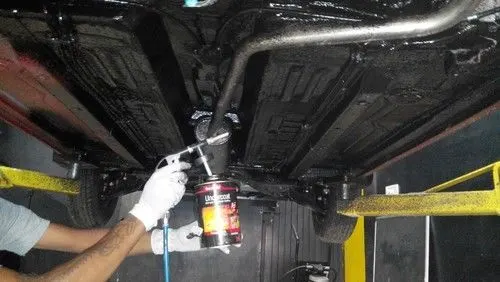
The underbody coating is sprayed as shown in the below image.
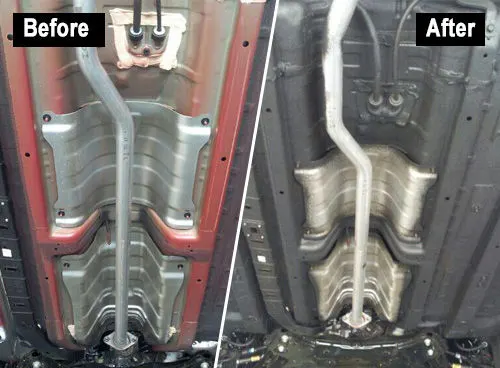
The below image shows the comparision between non coated and coated underbody in a car.
The below image shows the comparision between non coated and coated underbody in a truck.