Underbody Coating
UNDERBODY COATING
WHAT IS UNDERBODY COATING?
Underbody coating is usually a dense cladding (often based on rubber) applied uniformly to the undercarriage of the automobile. It is normally sprayed or painted on when the car is just out of the dealership and is clean. But even if you are getting the undercoating applied after a couple of years, it’s fine too. This is because it can prevent further damage to the undercarriage.The underbody coating that is most commonly used on cars in India and supplied by companies such as 3M is a thick, rubberized paint that forms a 2-3 mm thick coating all along the underside of the car when sprayed on. You also get a thinner clear coat underbody coating which is like a lacquer that coats the entire underside of the car. Some even inject rust-preventive coating material into crevices such as the bottom of doors and door sills, to protect them from rust.
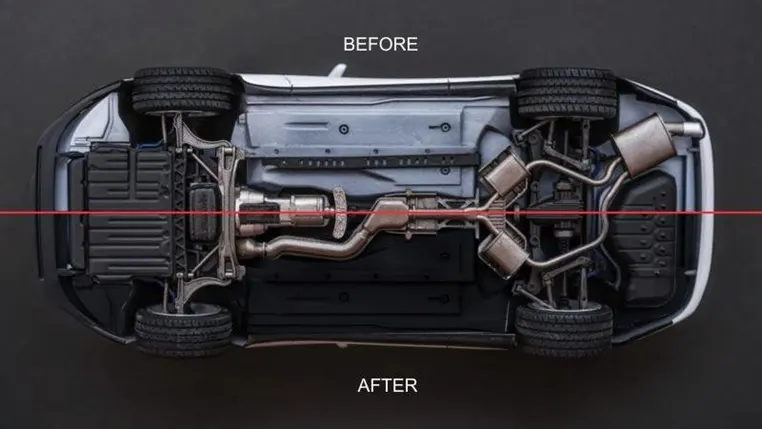
The main purpose of undercoating is to check rust especially in the body components like frame rails along with other exposed metal parts. Underbody coating can also reduce wear and tear
The Difference Between Rust Protection and Undercoating:
Undercoating and rust protection often go hand-in-hand, but they are actually two different things. Rust protection generally goes inside your vehicle, while undercoating is used for protection outside of the vehicle, and there are a variety of coatings available. Depending on the level of damage and how much protection you want for your vehicle will determine which type of automotive undercoating you choose.
BENEFITS OF UNDERBODY COATING
1.Protects Against Rust & Corrosion
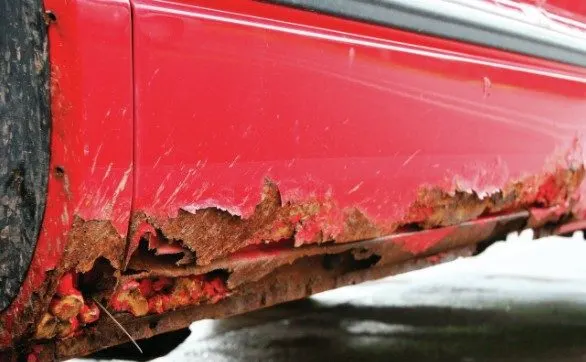
The primary objective of getting underbody coating done is preventing metal components that are exposed on the bottom side of the car to damage from corrosion. You can shut out the Adverse effects of corrosion on your car by simply applying a rubberised anti-rust coating all over the belly of your car. Underbody coating can come in handy especially if you live near the sea, where there is too much humidity, and rusting is just one of those everyday things. You should also seriously consider undercoating if you reside in a place where it snows in winter.
2.Reduces NVH (Noise Vibrations Harshness) Levels
Our country is filled with roads having uneven patches and potholes and while we manoeuvre our cars through such sections, the unpaved crumbs, and pebbles hit the car from underneath or get stuck in the wheel wells. The underbody coating’s consistency is so thick that the layer it creates absorbs all the unpleasant noises and vibrations and marginally improves the driving experience.
3.Prevents Paint Chipping
Running on the highway or while pacing through a city road, you will often encounter sharp gravel or any other unattended object hitting the belly of your car with high momentum. This scrapes and chips off the metal from down below. A thick layer of Underbody Coating definitely comes to aid and minimises the effects of such contacts on the body.
4.Protects Vital Components
Underneath a car is somewhere a lot of indispensable parts of a car are left exposed like the Engine, silencer, etc. One simply can’t afford to let these parts go bad due to rusting and hence in order to save yourself from a hefty repair bill, a considerably less expensive Anti-Rust Coating is a must.
5.Prolong Car’s Life
Good undercoating not only defends the underbody from corrosion but also protects the engine and transmission as well! Less rusting coupled with slower wear and tear can surely add years to the lifespan of your vehicle. There would be fewer dents, dings and scratches on the undercarriage for you to fret about.
6.Risk of damage during application
Care must be taken while applying underbody coating. This thick rubberized paint if not applied properly, can get into moving mechanical parts and cause premature failure – such as into the U-joint or CV joints in a cars propeller shaft or drive shafts. They can also hinder smooth movement of suspension components, if applied incorrectly. And there’s also the risk of overspray on to the car’s paint finish on the lower edges of the car.
Types of Vehicle Undercoating
Now let us look at the various kinds of automotive underbody coating .
- Rubberized Underbody Coating
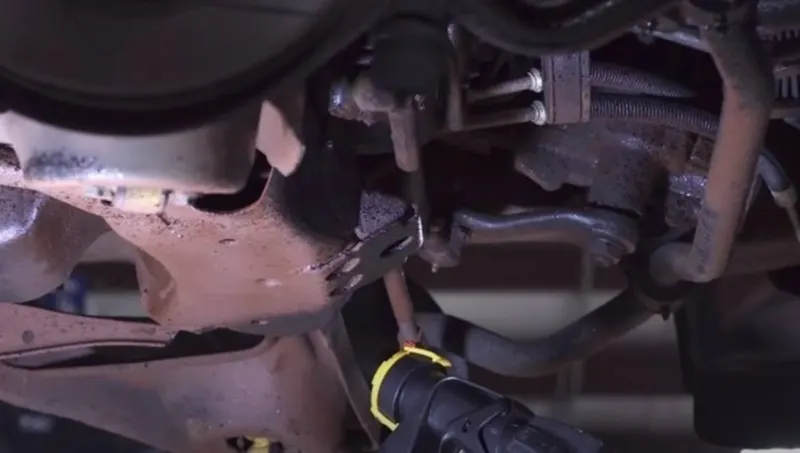
This is generally thought of as the best underbody coating for your car. It preserves the underbody well, protecting it from scratches. Applying this to the undercarriage is not much of a hassle either.In addition to your undercarriage, rubberized undercoating is also safe to use on wheel wells and quarter panels, and dries to a soft rubbery finish that prevents further rust, damage, or moisture seeps. The coating can be painted over and, if necessary for bodywork, can be easily removed with an undercoating removal spray.
- Wax Based Underbody Coating
This – more or less – ephemeral undercoating will wear away in a few months’ time. On the upside, wax-based undercoating puts up a big fight against moisture. It is also the most affordable option out there.Wax-based undercoatings never truly harden. During application, they drip or flow into seams and cracks to provide protective properties. They are usually available in a spray gun canister or in an aerosol can and offer at least a base protection in moderately humid climates.
- Asphalt Based Automotive Undercoating
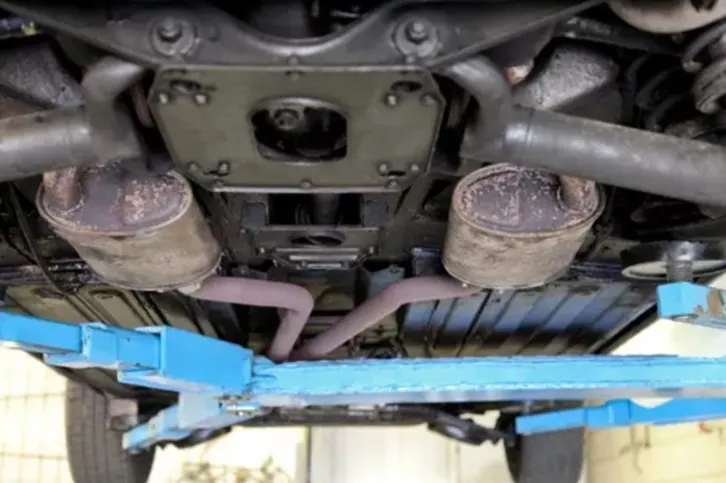
For standard vehicles, any of the aforementioned types of undercoating will provide sufficient protection. For large trucks and heavy machinery, asphalt-based undercoating provides a bit of extra durability against rocks, chips, and moisture.
Asphalt-based undercoating generally contains a little bit of rubberized material that sets up firmly and also helps soften noise. Generally sold in five gallon containers, this type of undercoating also needs more cure time than the other three, and is NOT paintable, making it best to use only for undercarriages.
Best suited for lorries, trucks and large vehicles this provides a greater degree of protection compared to rubber-based coatings. However, asphalt-based coatings contain little amounts of rubber for sound-insulation purposes. The process of applying this coating is a bit time-consuming though.
- Polyurethane Underbody Coating
This coating closes up splits and fractures on the underbody of the vehicle. It offers up good protection against corrosion and also bonds with the metal. Unlike in the case of asphalt-based coating, you can paint over the polyurethane coating.
Oftentimes, polyurethane undercoating will come in canister ready to preload into an application gun. This type of sealant works by seeping into all cracks and seams, displacing salt and moisture and oozing around rusty areas to bond with and protect unoxidized metal. It also sands quickly in case you'll need to perform bodywork and can be painted over.
TYPES OF UNDERBODY PAINT
A car underbody coating can be factory-applied or aftermarket. Most commonly these coatings are one of the three types:
- Resin-based
Polyurethanes and rubber coating are popular because their elastomeric properties provide long-term stone chip damage and corrosion protection as well as sound deadening effects. These also have the benefit of being suitable for a wide range of substrates and they can be painted over. Can be spray-applied, high build, and particularly good for areas of possible salt exposure.
- Wax-based
An excellent anti rust coating suitable for all substrates. The wax is applied soft and cures hard, either by brush or spray, and can be layered thickly. It cannot be top coated.
- Bitumen-based
These underbody paint systems provide hard-wearing protection against stone chip damage and corrosion. They also have sound-deadening properties. Suitable across many substrates, but cannot be painted over.
Modern automotive coating process:
The modern automotive coating consists of five steps:
- Pre-treatment: removes and cleans excess metal and forms an appropriate surface structure enabling bonding of a corrosion protection layer.
- The next step is electrodeposition (ED) of the anti-corrosion or rust prevention layer.
- A sealer like Poly Vinyl Chloride (PVC) is applied for anti-corrosion, elimination of water leaks, and minimization of chipping and vibrational noise.
- A primer is then applied to promote adhesion between the surface and the basecoat; it also imparts a smoother surface for subsequent layers and has anti-chipping properties.
- Finally, the topcoats that include a basecoat and clear coat are applied; they provide surface properties that are sought after, including colour, appearance, gloss, smoothness, and weather resistance.
Pre-treatment:
The first step in preparing BIW for subsequent coating is the pre-treatment process. Pre-treatment consists of cleaning the body surface to remove remaining oils from the stamping process and welding residues through three primary liquid dip processes of degreasing, conditioning and phosphating. The degreasing solution is composed of alkaline salts and surfactants and can include caustic soda, tri-sodium phosphate, and sodium carbonate. The surfactants are types of detergents for emulsifying oils and lubricants on the BIW.
Electrodeposition (ED):
The metal underbody and frames of automobiles are coated to prevent corrosion, whereas other areas like the roof are not rust-proofed. When not coated to prevent corrosion, the structural metals (or other materials) are primed before applying additional coatings. The ED processes are modified as per the BIW material property. This ED coating provides rust and corrosion protection.
Rust-proof materials: Sealer/PVC
The third step is underbody coating (UBC) and seam sealing using PVC and urethane. The sealant is applied around and inside the doors, hood, trunk, and front dash and onto the exterior and interior of metal joints and outer area of the back wheel well.
Primer:
The fourth coating step is the application of a primer surface or simply primer. It can be water-borne, solvent-borne or a powder. These primers are used to improve adhesion between the E-coat and topcoat, provide chipping protection, enhance paint appearance and also be environmentally compatible with emission regulations.
Top-coat:
The final step in the body coating process is to apply the topcoat, which consists of two layers—the basecoat and clear coat. The basecoat contains the primary colouring pigment and the clear coat provides a protective coating against environmental effects, corrosion, and UV light degradation promotes unmatched colour retention and provides a smooth unblemished even finish.
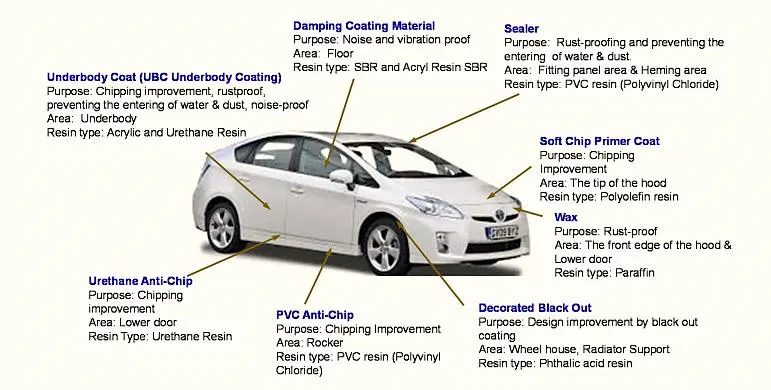
Significance:
- Undercoating helps to provide an additional layer of insulation and protection to the undercarriage of your vehicle.
- Manufacturers may apply car undercoating at the factory.
- The undercoating covers most of the car’s underside, including floor boards, frame, gas tank, pans, wheel wells and mufflers, suspension parts and exhaust pipes. This effect can be likened to black coating parking lot or a road.
- Undercoating materials adhere to metal, even if it is painted. Most of them come in pressurized cans for easy spray-on application, while an even spread may be tough to achieve without professional applicators.
- Ingredients used in the manufacturing of undercoating include fiberglass, ceramics, rubber, asphalt and silicone. Each has different properties in terms of heat resistance and retention, but all gives protection against the elements and damage.
- Auto undercoating protects the undercarriage, a vehicle’s most vulnerable area. Unlike the visible portions of your vehicle, the undercarriage doesn’t get washed frequently but it absorbs most of the moisture, grime, salt and other substances when you come in contact with those, as you drive.
- In addition to protecting your vehicle from elemental damage, good undercoating can also reduce engine noise, leaving you quieter than ever before.
- Even though if you buy a new car with undercoating from the dealer, remember that undercoating wears off typically within a short period of 1 year. Worn, patchy car undercoating can get damaged when water and other elements then get trapped under the coat, further eroding metal.
Disadvantages of Undercoating:
Nothing comes for free in this world. The same goes for undercoating. The undercoating or rustproofing spray is heavy in pockets. However, it is nothing when you compare it with the cost of replacing a vehicle after corrosion.
How to apply underbody coating:
While you could pay someone to apply an undercoating to your vehicle, you can also save money by doing it yourself. Before beginning, make sure you have the right equipment to successfully complete the task and enough space to complete the task safely.
Clean the under-body: Start by cleaning the under-body of the vehicle.
This requires you to put the vehicle up on a hoist.
Using a de-greaser, clean the underside of the vehicle.
Next, remove all rust from the undercarriage using a grinder. Make sure to wear eye protection when doing so.
Sand any remaining rust using sandpaper designed for metal. You need a sandpaper with a grit of at least 220 or larger.
Wipe away all of the dust created from grinding and sanding.
Paint and prime the under-body: After removing any rust, it is time to prime and paint the underside of the vehicle.
Start by priming all of the areas you cleaned of rust. One of the best primer types to use is a high zinc primer. Allow the primer to dry.
Your next step is to paint over the primer with black automotive paint. Allow the paint to dry.
Undercoat the under-body: The last step in the process requires you to apply an undercoating to the under-body of your vehicle.
Apply the undercoating liberally to the underbody of your vehicle. Make sure to apply it to every part that you expect to be exposed to the road. Allow this coat to dry for at least an hour, or longer if the instructions call for it.
Apply a second coat of undercoating to the bottom of your vehicle. Allow this coat to dry overnight before driving on the road.
Tip: Use a rubberized undercoating for best results. A rubberized undercoating is more durable and seals better, protecting the metal from exposure to water. Other types of material are Polyurethane, Asphalt and Wax/paraffin-based undercoating.