Supervised Learning - Prediction Week 3 Challenge
2. Difference between L1 & L2 Gradient descent method
* L1-Mean absolute error
* L2-Mean square error
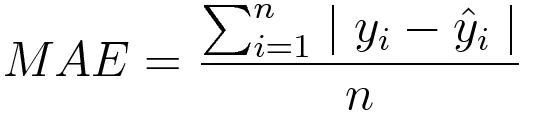
The advantage of the MAE is that its advantage directly covers the MSE disadvantage. In MAE all the errors will be
weighted on the same linear scale. The disadvantage of MAE is large errors coming from outliers end up being
weighted the exact same as lower errors.
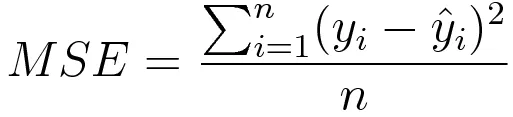
The advantage of MSE is great ensuring that our trained model has no outlier predictions with huge errors since
MSE puts a larger weight on these errors due to squaring part of the function. The disadvantage with MSE is the
squaring part of the function magnifies the error.
3. What are the different loss functions for regression
* Mean square error/L2 loss
* Mean absolute error/L2 loss
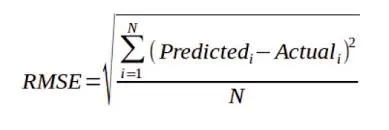
* Root mean square error
4. What is the importance of the learning rate
In the process of finding the best linear fit. As we find Y(predicted)[error] from one of the loss functions,
differentiation of error gives tangent, but we want tangent to move slowly then learning rate comes into the picture. The
importance of linear rate is it allows the tangents to move slowly. In most cases, the learning rate is 0.001.
5. How to evaluate linear regression
Coefficient of determination (R^2). If the RA2 is close to one then our prediction of what we are making is with
good accuracy.R^2 value going down means the prediction is wrong completely. make sure R^2 is close to one. RA2 is
a measure of evaluating the best fit curve.
6. What is the difference between multiple and adjusted coefficients of determination
The adjusted coefficient of determination is a modified version of the coefficient of determination(R^2). An adjusted
coefficient of determination will increase only if a new data point improves the regression more than you expected.
the adjusted coefficient of determination does not include all data points it is always lower than the coefficient of
determination(R^2).
The multiple coefficients of determination measure the portion of the variation in the dependent variable that can be
predicted from independent variables
Multiple coefficients of determination= the sum of squares of determination/total sum of squares