Supervised Learning - Classification Week 9 Challenge
1. What is a Neural Network?
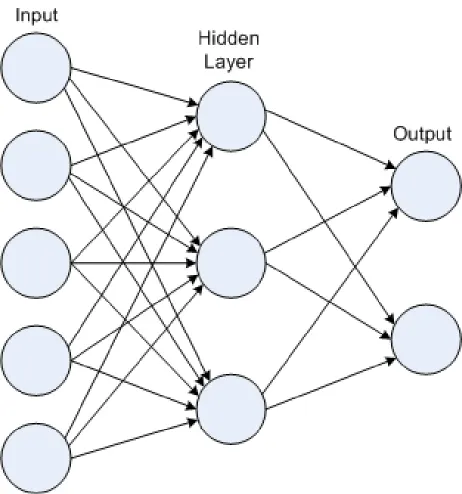
Ans:- A neural network is a type of machine learning that emulates the human brain and solves common problems in AI. It consists of a node layers, each with an input, output, weight, and threshold. They use training data to learn and improve their accuracy over time. Neural networks are at the heart of deep learning algorithms and are also known as artificial neural networks (ANNs)
2. What is deep learning?
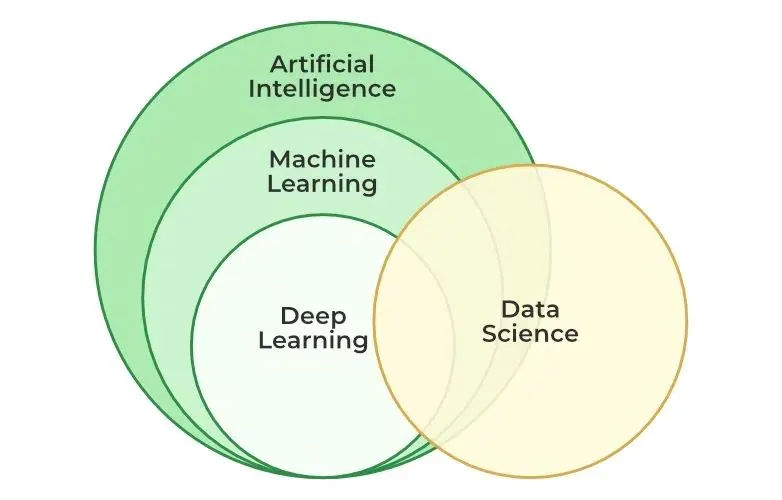
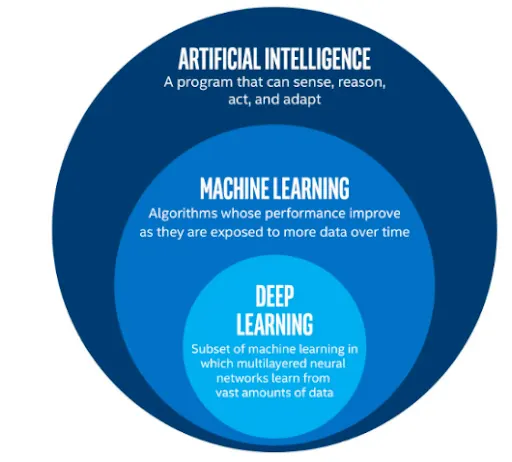
Ans:- Deep learning is the branch of machine learning which is based on artificial neural network architecture. An artificial neural network or ANN uses layers of interconnected nodes called neurons that work together to process and learn from the input data.
In a fully connected Deep neural network, there is an input layer and one or more hidden layers connected one after the other. Each neuron receives input from the previous layer neurons or the input layer. The output of one neuron becomes the input to other neurons in the next layer of the network, and this process continues until the final layer produces the output of the network. The layers of the neural network transform the input data through a series of nonlinear transformations, allowing the network to learn complex representations of the input data.
3. What is the role of the activation function?
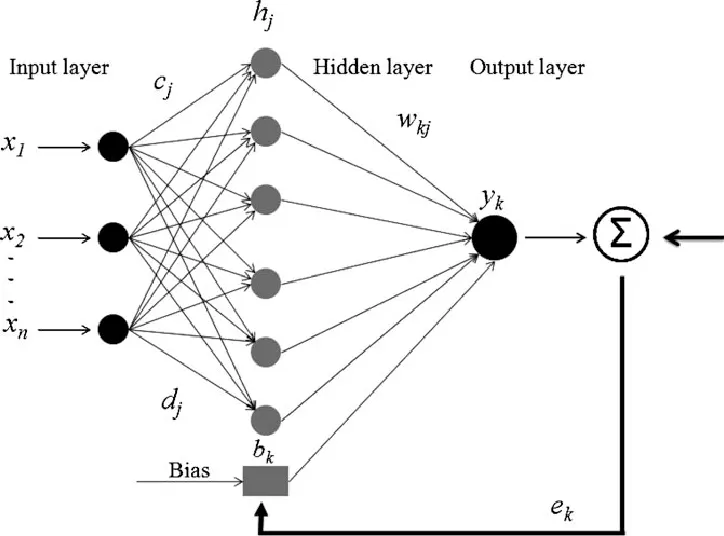
Ans:- The activation function decides whether a neuron should be activated or not by calculating the weighted sum and further adding bias to it. The purpose of the activation function is to introduce non-linearity into the output of a neuron.
We know, the neural network has neurons that work in correspondence with weight, bias, and their respective activation function. In a neural network, we would update the weights and biases of the neurons on the basis of the error at the output. This process is known as back-propagation. Activation functions make the back-propagation possible since the gradients are supplied along with the error to update the weights and biases.
4. What are the different types of activation functions?
Ans- There are different types of activation functions, some are as
-> Identity Function [ Yout = f(x)=x,∀x ]
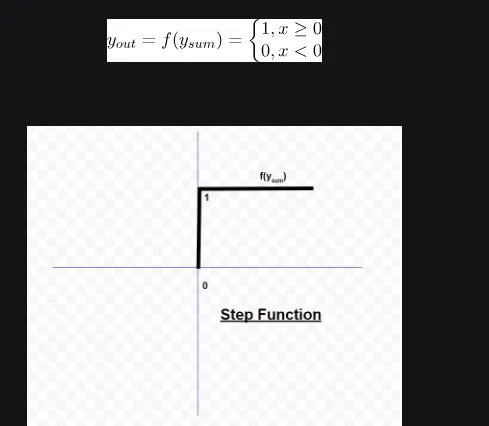
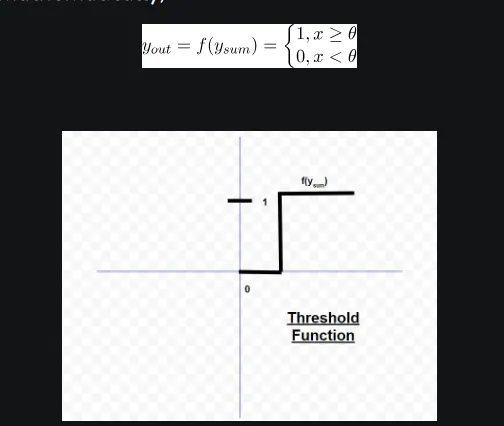
-> Threshold/step Function
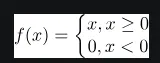
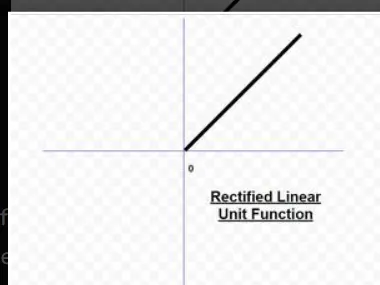
-> ReLU (Rectified Linear Unit) Function
It is the most popularly used activation function in the areas of convolutional neural networks and deep learning. It is of the form
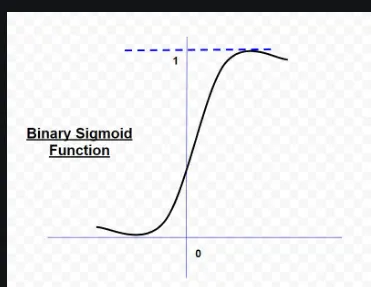
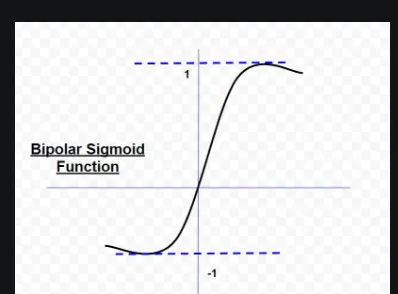
-> Sigmoid Function - It is most commonly used activation function in NN. It is of two types
* Binary Sigmoid Function

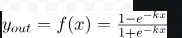
* Bipolar Sigmoid Function
->Hyperbolic Tangent Function
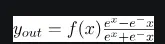
It is bipolar in nature. It is a widely adopted activation function for a special type of neural network known as Backpropagation Network. The hyperbolic tangent function is of the form
5. What do you understand by backpropagation?
Ans:- Backpropagation is a widely used algorithm for training feedforward neural networks. It computes the gradient of the loss function with respect to the network weights. It is very efficient, rather than naively directly computing the gradient concerning each weight. This efficiency makes it possible to use gradient methods to train multi-layer networks and update weights to minimize loss; variants such as gradient descent or stochastic gradient descent are often used.
It uses in the vast applications of neural networks in data mining like Character recognition, Signature verification, etc.