Sketch a G+1 residential plan according to Vaastu Shastra and Calculation of Loads as per IS code
Sketch a G+1 floor residential plan, according to Vaastu Shastra, and list down the names of the structural drawings required to be provided to the site for construction.
Sketch a G+1 floor residential plan, according to Vastu shastra, and list down the names of the structural drawings required to be provided to the site for construction.
Also, assume the sizes of the structural elements (Column, Beam, Slab, etc.,) and accordingly calculate the individual corresponding loads from the members as per IS code.
Aim of the project-
To sketch a G+1 floor residential plan according to vastu Shastra and to list down the names of structural drawings required to be provided to the site for construction.
To assume the size of structural elements (Column, Beam, slab etc) and to calculate the loads from the members as per IS code.
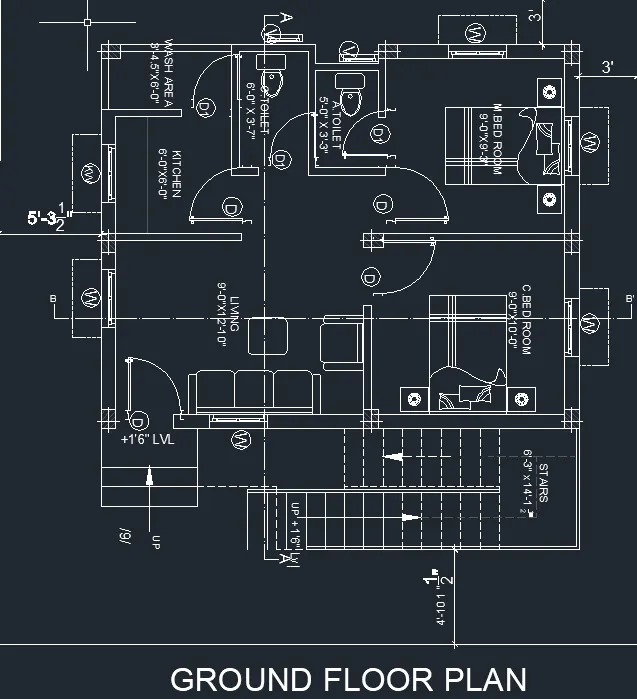
Ground Floor plan-
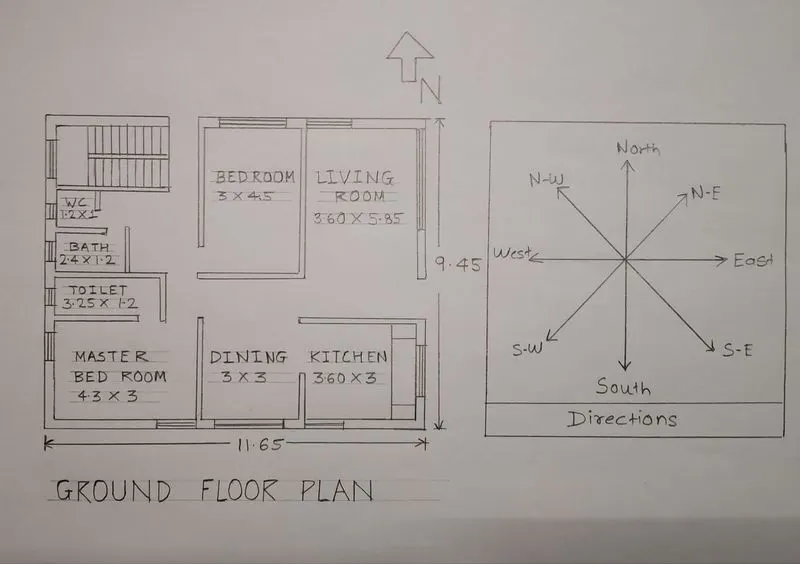
(Dimensions are in Meters)
Dimensions of Ground Floor plan-
Living room- 3.60m X 5.85m
Kitchen room- 3.60m X 3m
Dining room- 3m X 3m
Master bedroom- 4.3m X 3m
Bedroom- 3m X 4.5m
Toilet- 3.25m X 1.2m
Bath- 2.4m X 1.2m
WC- 1.2m X 1m
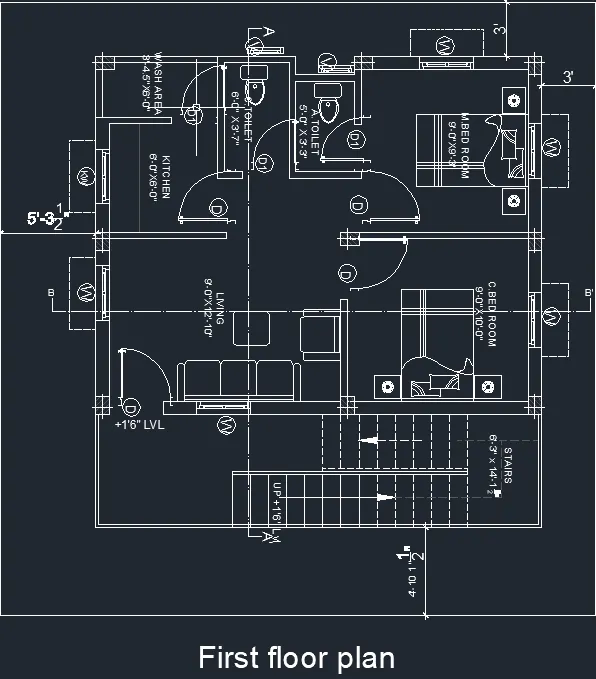
First Floor plan-
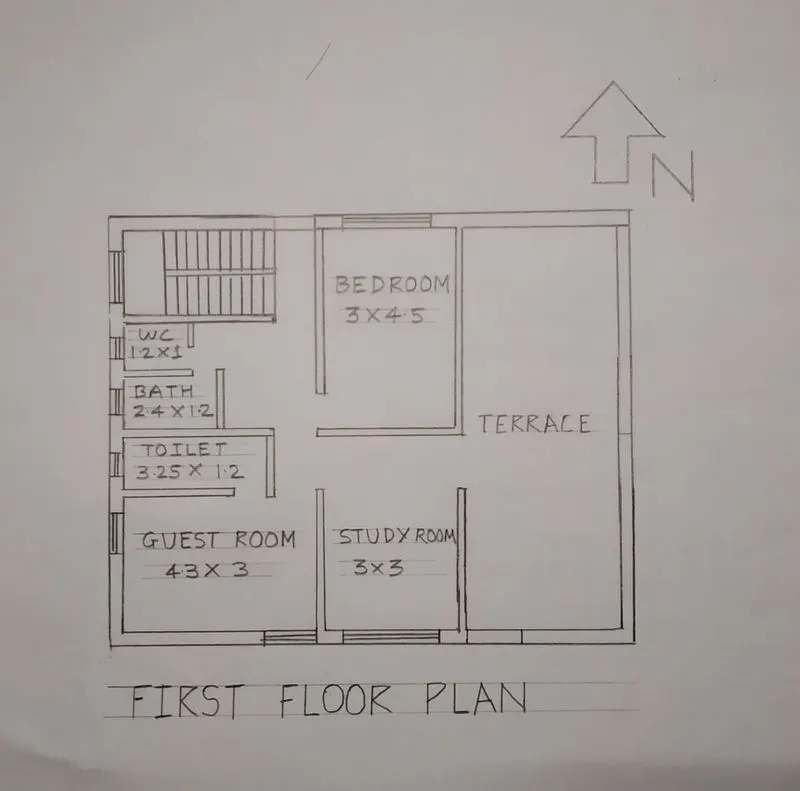
(Dimensions are in Meters)
Dimensions of First Floor Plan-
Guest room- 4.3m X 3m
Study room- 3m X 3m
Bedroom- 3m X 4.5m
Toilet- 3.25m X 1.2m
Bath- 2.4m X 1.2m
WC- 1.2m X 1m
Other dimensions
-Thickness of internal wall- 0.15m (150mm)
-Thickness of external wall- 0.23m (230mm)
-Thickness of slab- 0.25m (250mm)
-Dimensions of column – 0.3m X 0.3m
-Dimensions of beam-0.3m X 0.45m
-Height of the wall of each floor- 3m
Vastu Shastra followed during planning is-
- Entrance of the house is provided in the east direction which is the symbol of progress in life.
- Living room is placed in north east direction.
- Master bedroom is placed in south west position this direction brings good health and prosperity.
- Kitchen is placed in south east direction.
- Study room is placed in east direction.
- Staircase is placed at Northwest corner.
- Bathroom, WC and toilet is placed in West direction.
Concept of Vaastu-
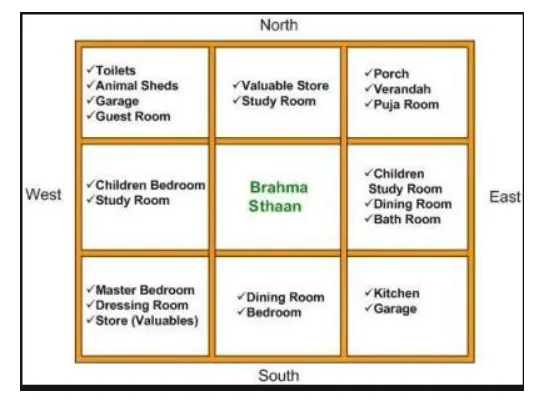
List of drawings provided at the construction project
-Centre line drawing.
-Footing and column layout with reinforcement details.
-Column schedule with reinforcement details.
-Plinth beam layout with reinforcement details.
-First floor beam layout with reinforcement details.
-Lift pit and head room reinforcement details.
-Centre line drawing.
-Floor plans.
-Foundation plan.
-Design drawings.
-Block plan.
-Roof slab layout.
-Column layout.
-Site plans.
-Column sections.
-Septic tank design.
-Overhead water tank design.
-Plinth beam sections
-Flooring plan.
-Furniture plan.
-Road drainage plan.
-Setting out plan.
-Section drawings of buildings.
-Plumbing details.
-Electrification details.
Calculation of loads-
(A). Dead load Calculations
- Dead load of columns-
Dimension of column= 0.3m X 0.3m (300mm X 300mm)
Height of column= (Slab thickness X 2) + (Height of wall for each floor X 2)
= (0.25 X 2) + (3 X 2) = 6.5m
Total volume of concrete = 0.3 X 0.3 X 6.5 = 0.585m3.
Unit weight of RCC= 25KN/m3.
Unit Weight of Building Materials used in construction works as per IS 875 (Part-1)
Dead load of column= 25 X 0.585=14.62KN.
- Dead load of beams-
Dimension of beam= 0.3m X 0.45m (300mm X 450mm)
Total volume of concrete = 0.3 X 0.45 X 1 = 0.135m3.
Unit weight of RCC= 25KN/m3.
Unit Weight of Building Materials used in construction works as per IS 875 (Part-1)
Dead load of beam= 25 X 0.135=3.375KN
- Dead load of slab-
Slab is always designed for the span of 1m.
Hence assume size of slab as 1m X 1m.
Thickness of slab= 0.25m
Density of RCC= 25KN/m3.
Self-weight of slab= 1 X 1 X 0.25 X 25= 6.25KN.
- Dead load of walls
-Dead load of external wall
Thickness of External wall = 0.23m. (230mm)
Unit weight of brick wall= 20KN/m3
Unit Weight of Building Materials used in construction works as per IS 875 (Part-1)
Height of wall = 3m.
Load of wall on beam= 3 X 0.23 X 20= 13.8KN.
-Dead load of internal wall
Thickness of Internal wall = 0.15m. (150mm)
Unit weight of brick wall= 20KN/m3
Unit Weight of Building Materials used in construction works as per IS 875 (Part-1)
Height of wall = 3m.
Load of wall on beam= 3 X 0.15 X 20= 9KN.
(B). Live load calculations-
(According to IS 875 Part 2)
Bed room= 2KN/m2
Living room= 2KN/m2
Bath=2KN/m2
Terrace = 3KN/m2
Toilet= 2KN/m2
Staircase= 3KN/m2
Study room= 2KN/m2
Kitchen= 2KN/m2
(C). Wind load calculation-
Wind load is designed only when the height of the building exceeds 10m.
The height of designed building is 6.5m which is less than 10m.
So, the calculation of wind load is not required.
References and IS codes used for the design-
IS 875:1987, Part 1 for Dead load
IS 875:1987, Part 2 for Live load
IS 875:1987, Part 3 for Wind load
IS 456:2000, for Reinforced Concrete.
Results-
-The plan is prepared by the Vaastu shastra concept considering all the principles and considerations of Vaastu shastra
-The load calculations are done as per the IS code considerations.
Also, assume the sizes of the structural elements (Column, Beam, Slab, etc.,) and accordingly calculate the individual corresponding loads from the members as per IS code.
Aim:
- Sketch a G+1 floor residential plan, according to Vastu shastra.
- List down the names of the structural drawings required to be provided to the site for construction.
- Assume the sizes of the structural elements (Column, Beam, Slab, etc.,) and accordingly calculate the individual corresponding loads from the members as per IS code.
Procedure:
A. Sketch a G+1 floor residential plan, according to Vastu shastra:
Now we should know the directions for every room as per the vasthu shastra.
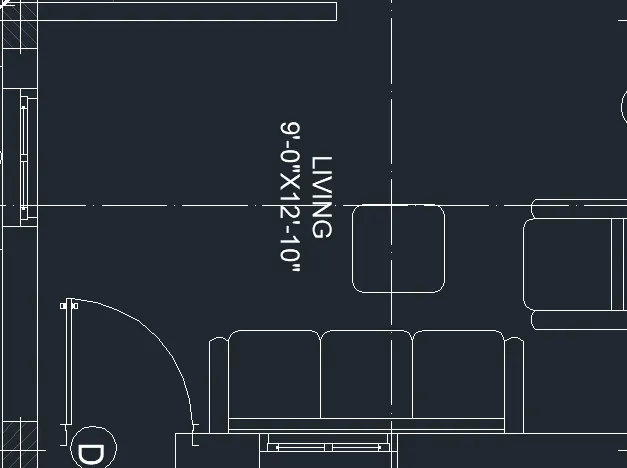
1. Living room:
- It will be faced to the north direction.
- It was drawn in the direction of the north
- By placing the living room to the north direction, This will ensure the sunshine in the home, throughout the day.
- By placing the living towards the north, it will gives the good health and good career for children who are living in this house.
- In the north direction energy levels are very high, this direction also brings in large amounts of furtune to the residents of the building.
- All electrical applicances are south east section of living room.
2. Children Bed room:
- The Chidren bed room will be placed at North west corner of the building, It is best place to place children bed room in the nort west.
- We should avoid the mirrors in front of the bed. And also we should avoid the TV in front of bed room.
- Here we should know that, Never sleep the dirction towards the south and south west, It gives us negative enery. Place a head towards the north and east while sleeping.
- And any other else in the directions we have to consult to the astrologer for best performance of vasthu to the building.
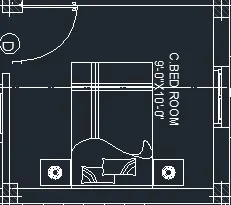
3. Master bed room:
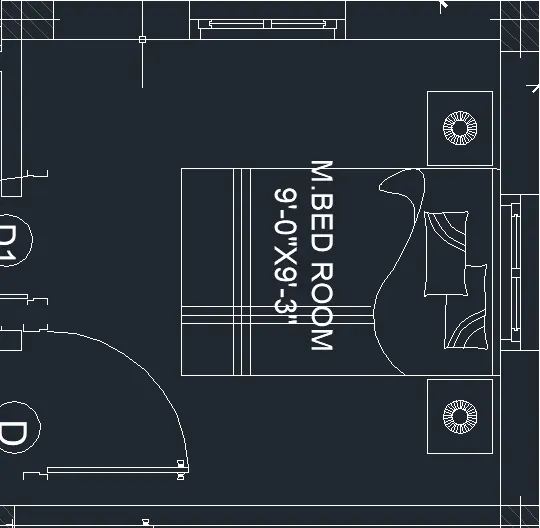
- The South-west is the best direction for placing the master bed room.
- Master Bedroom bedroom should be in the square or rectangular shape.
- Master bedroom should be as large as possible than the other room.
- This bedroom should ideally be located in the south-west corner of the house. This will help master of the house to have a harmony in the house.
- Sleep with solid behind the bed-headboard.
- Paint wall with a beautiful color that is restful, soothing and comforting. Avoid using vibrant and energetic colours. These are less relexing colours.
- Make sure that the artwork in the master bedroom is inspiring.
- Avoid painting with sad mood or loneliness.
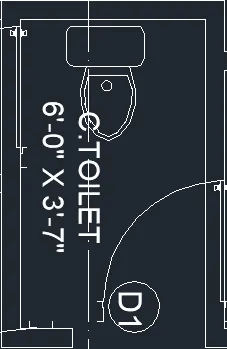
4. Toilets:
- Placing a toilets in the south west of the building, does not faces to the south west.
- According to Vastu toilets should never be built in the North East direction. If built it may cause severe health problems and sorrows in the family. Male members and children may be affected more.
- Similarly, toilets should not be constructed in the North direction as well. If constructed it will cause severe money problems, conflicts in the married lives of the female members(daughter’s family) and also nervous problems and eye problems.
- A toilet in the East North East may cause infertility problems in men in the family. It might also cause them to lose their moral values and become wayward, untruthful and spendthrifts. They often join the bad company and suffer from income loss.
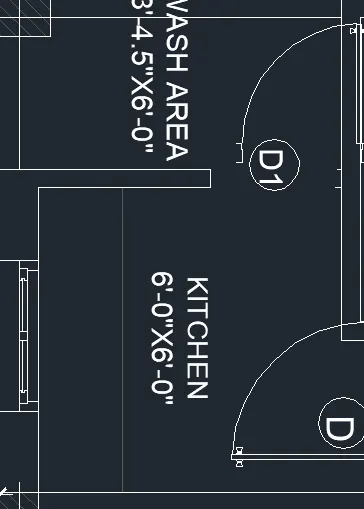
5. Kitchen and wash area:
- The ideal place for the location of kitchen is the southeast corner. An alternative choice can be the northwest corner of the house.
- As per the Vastu remedies for kitchen, certain directions that are a total no-no for the construction of the kitchen are: northeast, mid-north, mid-west, southwest, mid-south and the center of the house.
- Make sure that the cooking platform does not touch eastern or northern wall.
- The best direction for cooking is facing east, as this direction is considered to be auspicious.
- Keep in mind that the stove in your kitchen should never be visible from the outside. It can lead to digestion problems for the family members.
- Remember that taps and sinks should not be very close to the cooking range. Fire and water repel against each other.
- It is best to have the kitchen sink in the northeast direction.
- If there is a dishwasher in the kitchen, place it in the northwest side of the kitchen. The other water elements like drinking water should be placed in the northeast.
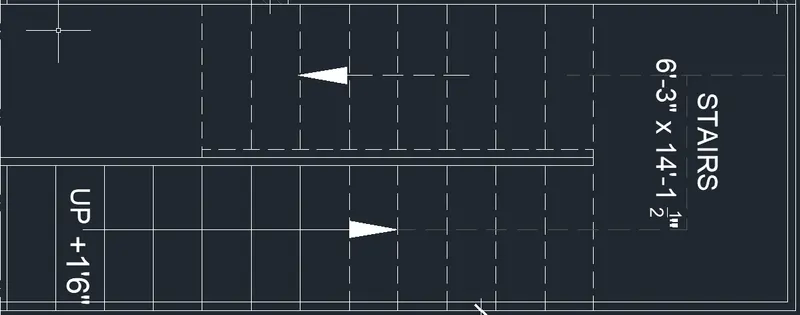
6. Staircase:
- The staircase is placed in the south direction.
- An staircase can be built in the southeast direction facing east, southwest direction facing west, northwest direction facing north, and southwest direction facing south.
- Always begin your stairs from north to south or east to west. A turn can also be taken to other sides, in case there is a lack of space.
- Try constructing staircases in such a way that stairs are not openly visible to the visitors.
- Directly visible stairs are thought to be inauspicious.
- Rooms such as bathroom, kitchen, or pooja room should never be built under a staircase. This area can only be used for creating a storage room.
Result: Above we discussed about all the rooms as per the vastu shastra. And the G+1 residential plan also drawn successfully.
B. List down the names of the structural drawings required to be provided to the site for construction.
Structural drawings required for a project:
- Centre line drawing
- Footing and column layout with reinforcement details.
- Column schedule with reinforcement details.
- Plinth beam layout with reinforcement details.
- First floor beam layout with reinforcement details.
- Ground floor slab layout with reinforcement details.
- First floor slab layout with reinforcement details.
- Staircase layout with reinforcement details.
- Lift pit and head room reinforcement details.
C. Assume the sizes of the structural elementsand accordingly calculate the individual corresponding loads from the members as per IS code.
Indian codes used are:
- IS 456:2000, Revised 2016 for reinforced concrete structures.
- IS 875:1987, Revised 2018 (part-1) for dead load.
- IS 875:1987, Revised 2015 (part-2) for live load.
- IS 875:1987, Revised 2015 (part-3) for wind load.
Dimentions to be assumed for Beam, Column, Slab, and walls.
- Assume Column size as 300mm x 300mm x 4.5m, provided for the columns.
- Assuming the all beams sizes are same that is, 300mm x 450mm
- Slab thickness of 125mm
- Height of the wall is 4.5m
- Assuming wall thickness as 230mm.
Now we calculate the load calculations;
Load calculations:
-
Dead load of column:
Formula for the Dead load of column is {Dead load of column =Total volume of concrete x Unit weight of concrete}
Given column size = 0.300m x 0.300m
column height = Slab thickness + height of wall
= 0.125 + 4.5
= 4.625m
Then the total volume of concrete = Column size x column height
= 0.300 x 0.300 x 4.625
= 0.416 `m^3`
Unit weight of concrete = 25 `(kN)/m^3`
Dead load of column =Total volume of concrete x Unit weight of concrete
= 25 x 0.416
= 10.4 kN.
- Dead load of beams:
Given Beam size = 0.300m x 0.450m
Then the volume of Beam = 0.300x0.450
= 0.135
Unit weight of concrete = 25 `(kN)/m^3`
Dead load of column = (volume of beam x Unit weight of concrete)
= 0.135 x 25
= 3.375 `(kN)/m`
- Dead load of slab:
Thickness of slab = 125mm =0.125m
Unit weight of concrete = 25 `(kN)/m^3`
Dead load of slab = Thickness of slab x Unit weight of concrete.
= 0.125 x 25
= 3.125 `(kN)/m^2`
- Dead load of wall:
Height of the wall = 4.5 m
Assuming thickness of wall = 230 mm = 0.23m
Unit weight of brick wall = 20 `(kN)/m^3`
Dead load of wall = Unit weight of brick wall x Thickness of wall x Height of wall.
= 20 x 4.5 x 0.23
= 20.7 `(kN)/m`
- Dead load of parapet wall:
Assuming the wall height = 800mm
Assuming wall thickness = 230mm
Unit weight of brick wall = 20 `(kN)/m^3`
Dead load of parapet wall = Height of wall x Wall thickness x unit weight of brick wall
= 0.80 x 0.23 x 20
= 3.68 `(kN)/m`
Live loads:
-
Children bed room = 2 `(kN)/m^2` Master bed room = 2 `(kN)/m^2` Living room = 2 `(kN)/m^2` Toilets = 2 `(kN)/m^2` Staircase = 3 `(kN)/m^2` Kitchen = 2 `(kN)/m^2`
Wind loads:
- Wind loads are calculated when the height of the building exceeds 10m and the wind speed is constant if the height of building is less than 10m.
- That is the reason, we should not calculate the wind load if the height of the building is not exceeds 10m.
- In this plan we consider the height of the building is less than 10m.
- Then we doesn't require the wind load for this building.
Result:
- G+1 floor residential plan has been drawn according to Vastu shastra.
- The names of the structural drawings required to be provided to the site for construction are listed in detailed manner.
- Individual corresponding loads are calculated.