Shock tube simulation in CONVERGE
Aim:
To setup Transient simulation of shock tube in CONVERGE.
Objective:
1.To seup Transient shock tube simulation.
2.Plot the pressure and temperature.
3.Plot the cell count as a function of time
Introduction:
Shock tube:
A simple shock tube is a tube, rectangular or circular in cross-section, usually constructed of metal, in which a gas at low pressure and a gas at high pressure are separated using some form of diaphragm. The diaphragm suddenly bursts open under predetermined conditions to produce a wave propagating through the low pressure section. The shock that eventually forms increases the temperature and pressure of the test gas and induces a flow in the direction of the shock wave. Observations can be made in the flow behind the incident front or take advantage of the longer testing times and vastly enhanced pressures and temperatures behind the reflected wave.
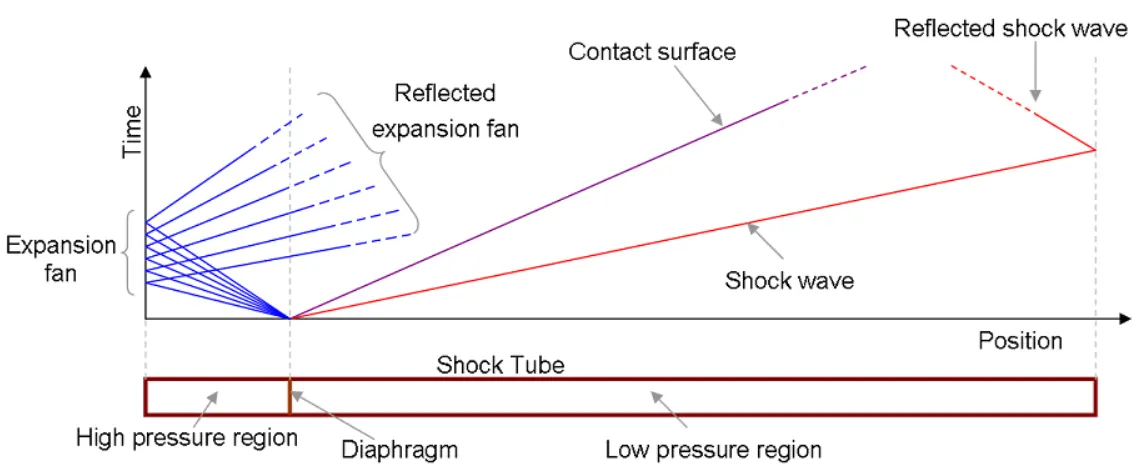
Fig: Schematic diagram of shock tube simulation
The low-pressure gas, referred to as the driven gas, is subjected to the shock wave. The high pressure gas is known as the driver gas. The corresponding sections of the tube are likewise called the driver and driven sections. The driver gas is usually chosen to have a low molecular weight, for safety reasons, with high speed of sound, but may be slightly diluted to tailor interface conditions across the shock. To obtain the strongest shocks the pressure of the driven gas is well below atmospheric pressure.
Problem Discription:
Geometry:
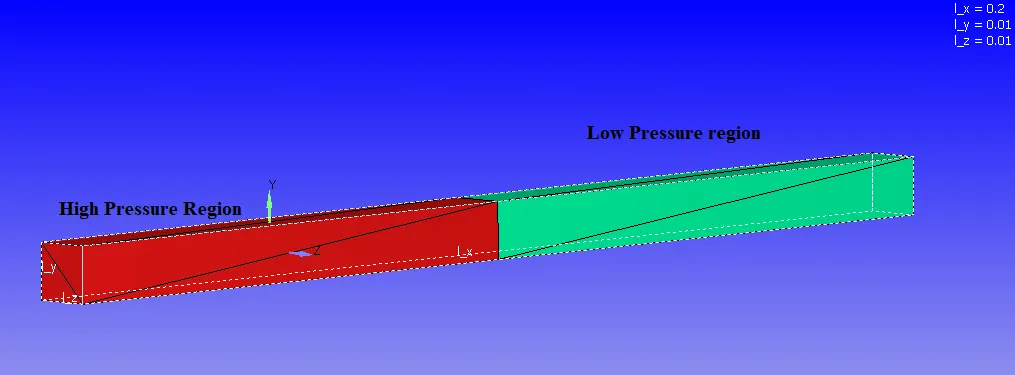
Geomtry is created in Solidworks and imported to CONVERGE.
Case Setup:
Material: Air
Run Parameters: Solver: Transient
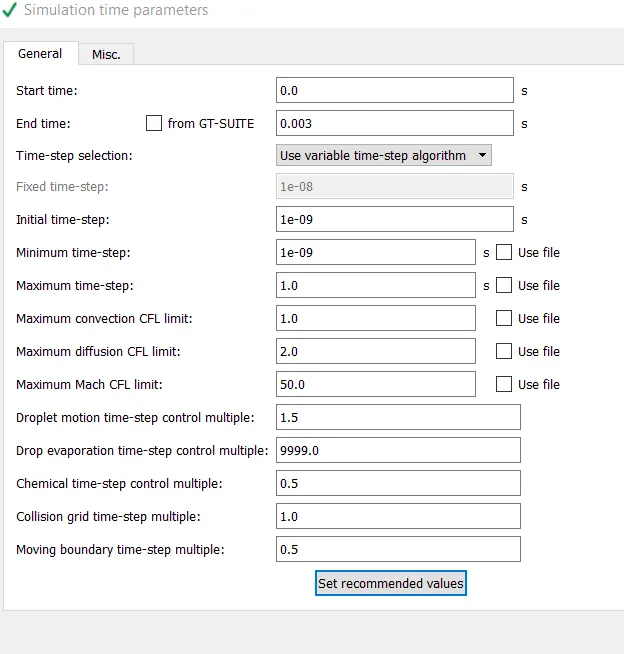
Simulation Time Parameter:
Simulation time parameters are as follow
Boundary:
There are two boundaries High Pressure and Low Pressure and Law of Wall Boundary condition is set for Velocity and temperature.
Region and initialisation:
Region ID:0 High pressure
Temperature : 300 K
Pressure : 6 bar
Species : N2
Region ID:1 Low pressure
Temperature : 300 K
Pressure : 1.01325 bar
Species : O2
Events:
Whenever we have two or more regions we can connect or disconnect them using Events.
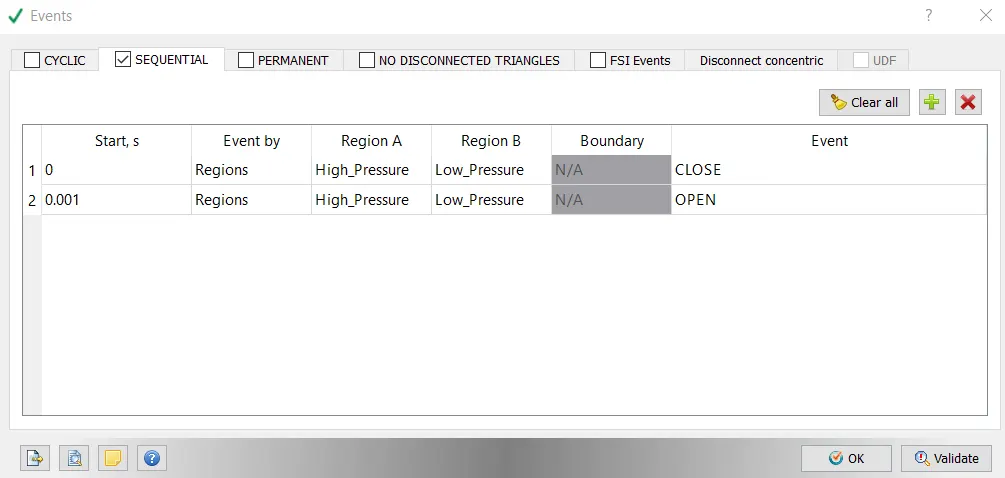
Here we have set that for 0th s the event will remain close and from 0.001th s event will be open.Here close means the Disconnected triangles are activated and open means the Disconnected triangles are deactivated.
Base Grid:
Grid size is set to 2 mm in all x,y,and z directions.
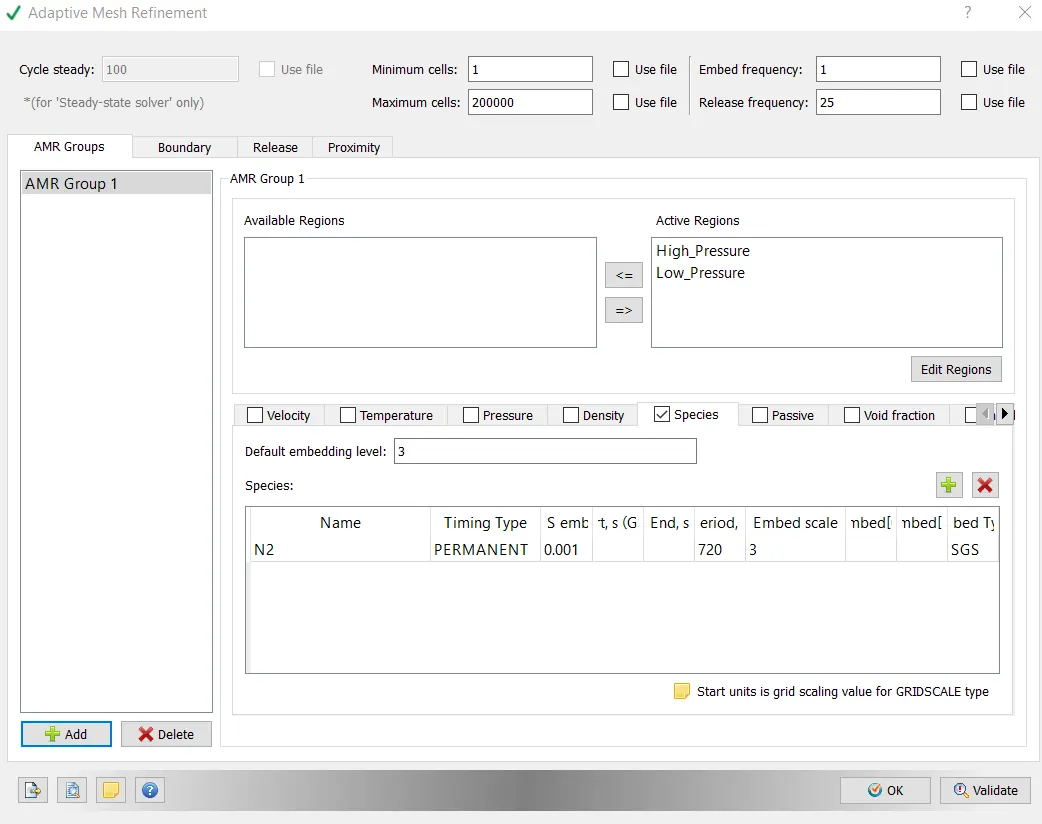
Aaptive Mesh Refinement(AMR):
CONVERGE use AMR technique to automatically refine the mesh size.Her we have set AMR to refining mesh according to N2 concentration.
Result:
Mesh:
As we enabled th AMR mesh is getting refined automatically.
Temperature Plot:
Temperature cuve remains steady till 0.001 s and at 0.001 s diaphragm burst and driver gas from High Pressure region flows into the Low Pressure region and hence Final temperature of driver gas is found to be decrease and that of driven gas is increased.
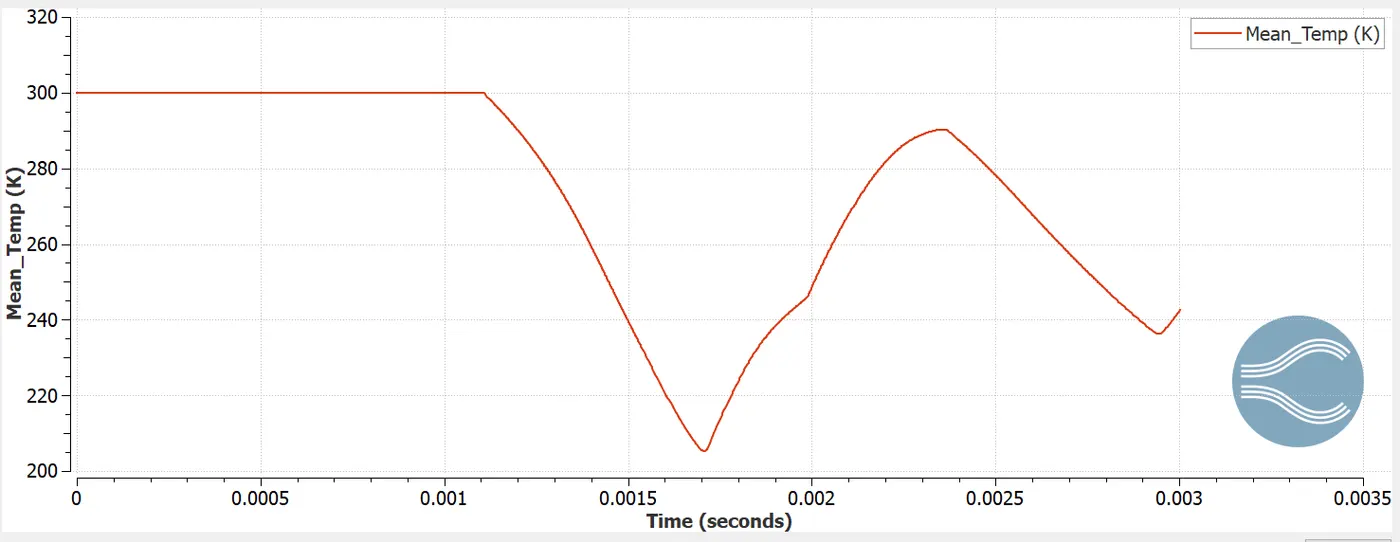
Fig: Mean temperature plot for High pressure region
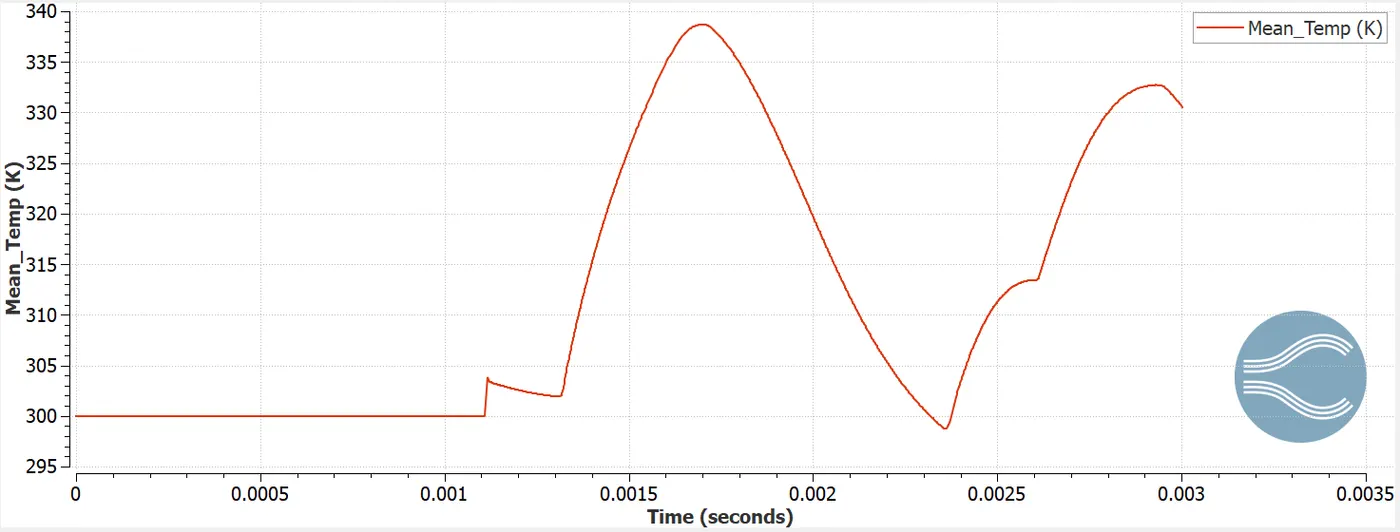
Fig: Mean temperature plot for Low pressure region
Pressure plot:
At 0.001 s the diphragm burst and to equalize the pressure in the tube the driver gas tend to flow in Low pressure region through an expansion wave in this this process the pressure driver gas decreases and pressure of the driven gas suddenly increases ans it tends compress the driven gas causing preassure diffrennce and hence the driven gas tends to reflect back through reflected wave (Shock wave).Hence, sudden rise in the pressure is seen in Low pressure region plot.
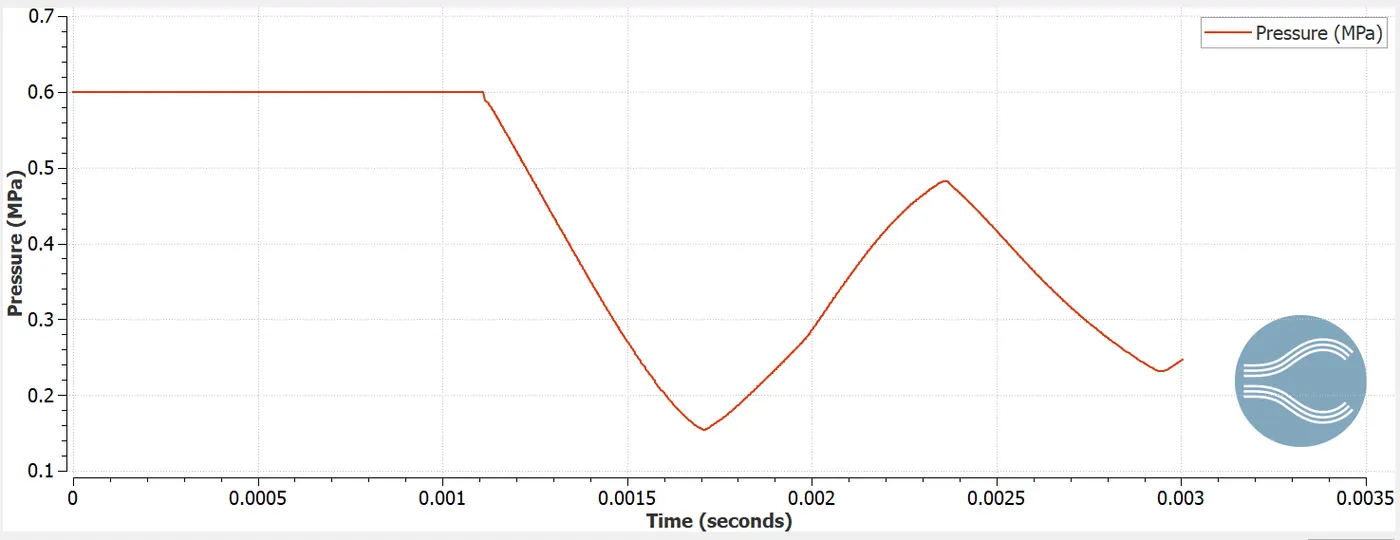
Fig: Mean temperature plot for High pressure region.
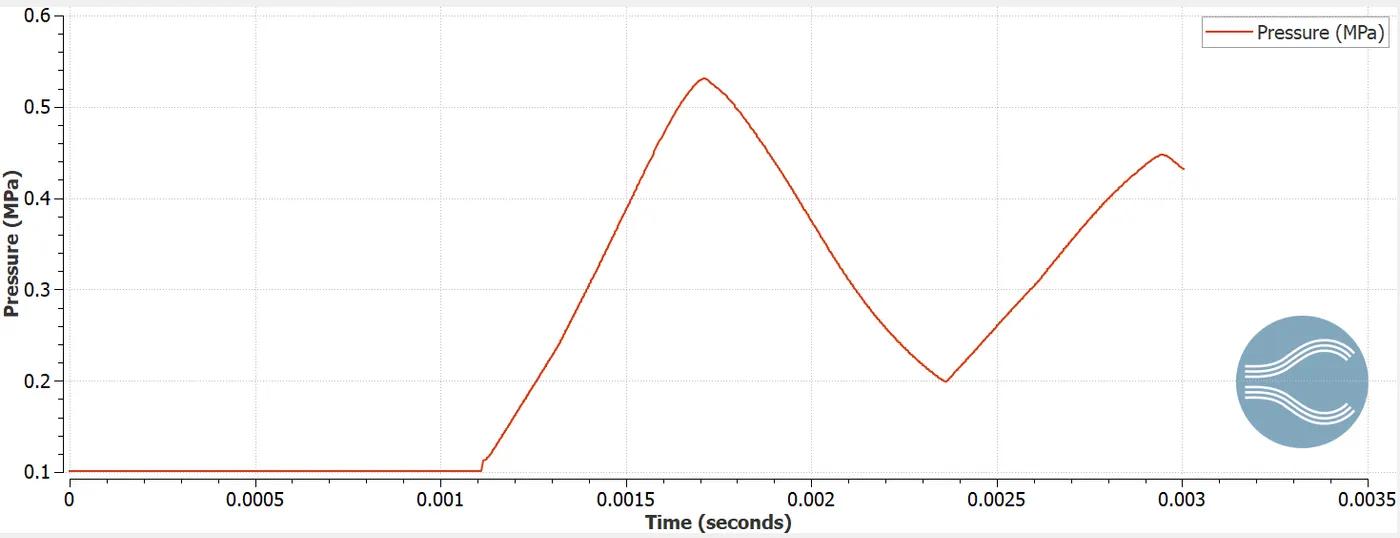
Fig: Mean temperature plot for low pressure region.
Total Cell count:
As soon as diaphragm bursts,driver and driven gas intermixed and to capture the process there is mesh refinement takes place hence rise in cell count is seen in Low pressure region
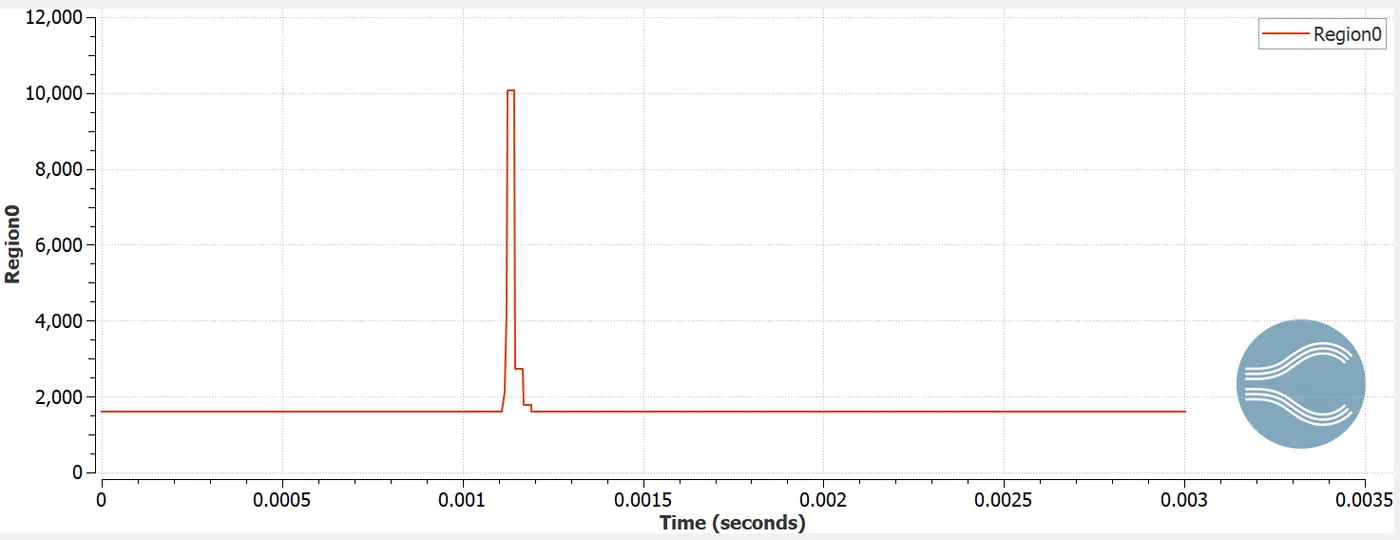
Fig: Total cell count for High pressure region.
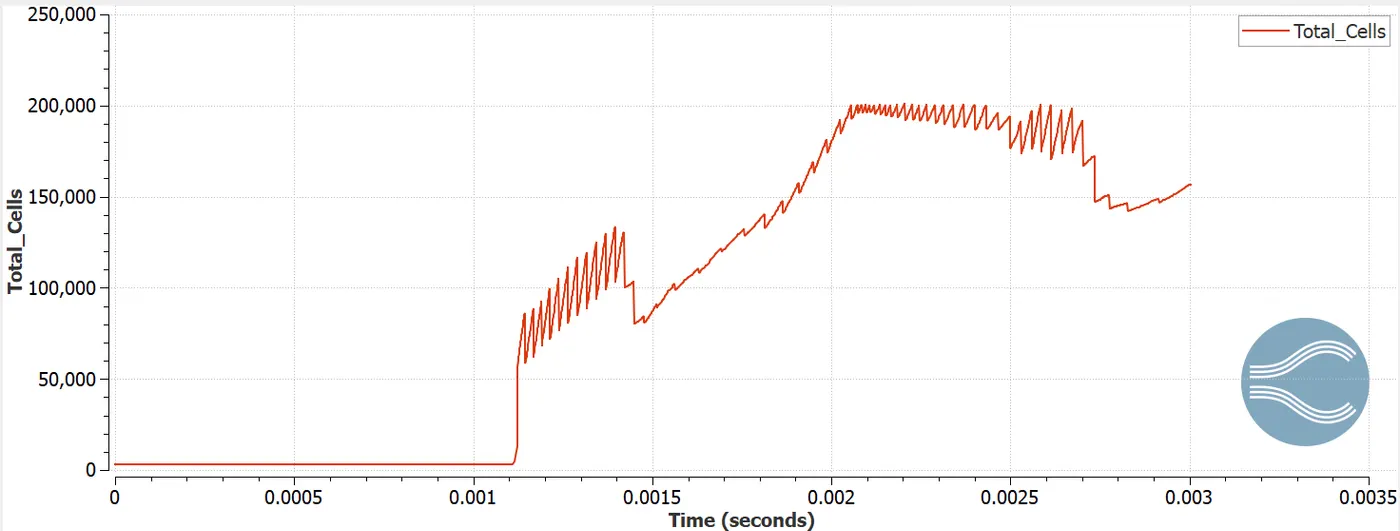
Fig: Total cell count for Low pressure region.
Velocity Contour: