Section Modulus calculation and optimization
SECTION MODULUS ANALYSIS
Section modulus is a geometric property for a given cross-section used in the design of beams or flexural members, it is also referred to as the polar modulus or the torsional section modulus. Other geometric properties used in design include area for tension and shear, radius gyration for compression and moment of inertia and polar moment of inertia for stiffness. Any relation between these properties is highly depend on the shape in question.
s/z=I/Y
Where,
s or z(mm3) = section modulus
I (mm4)= moment of inertia
y (mm)= distance from the neutral axis to the extreme end.
Moment of inertia (I)
moment of inertia of geometric section is a measure of its resistance to bending and rotation about a specific axis.
IMPORTANCE OF SECTION MODULUS ANALYSIS
1) It is significant for beam and flexural member design
2) More the section modulus, the more the member is resistant to the bending of the beam.
3) It is easier to calculate the stress in the beam and exact measure of the strength of the steel.
4) If two beams are same mode of the material and comparing the section modulus of two beams, the beam with higher section modulus have a capability to with stand higher bending stress.
Case-1
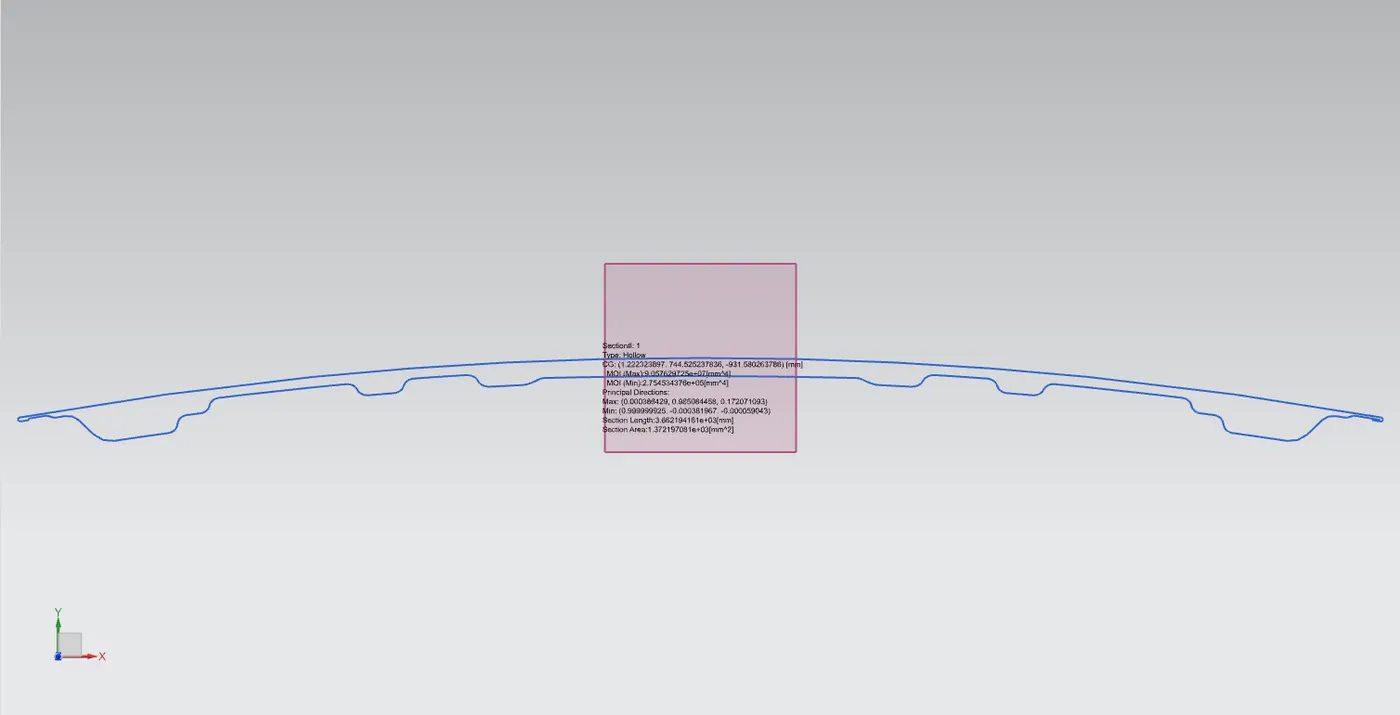
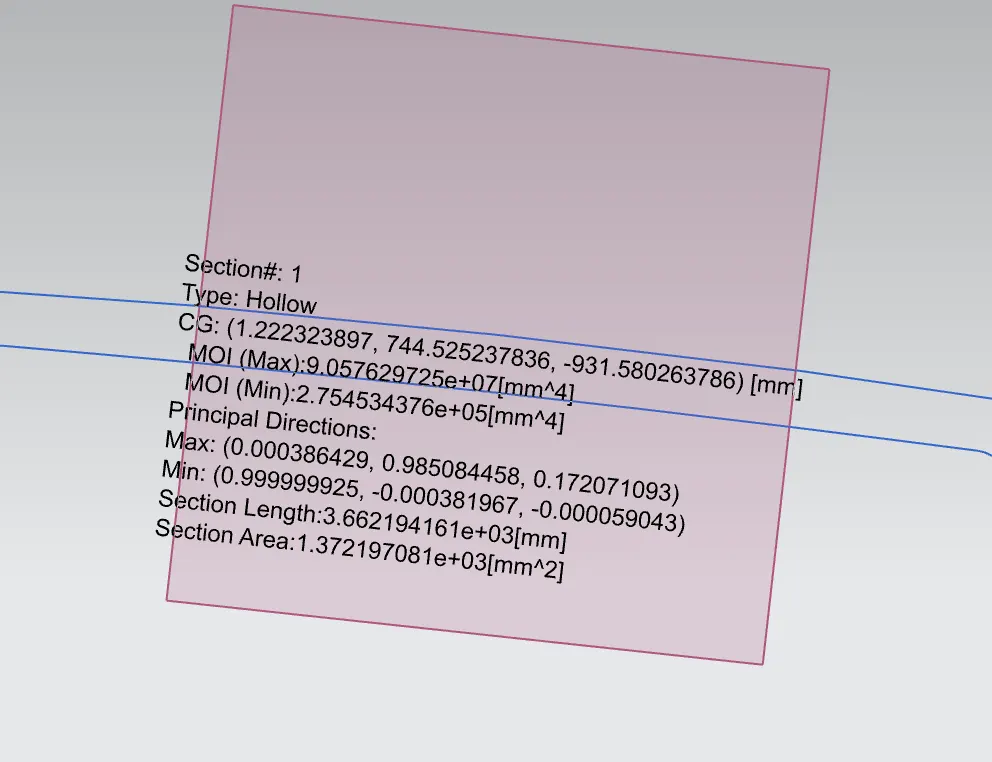
Moment of inertia (Min)= 2.7545*10^5 mm^4
Moment of inertia (Max)= 9.05762*10^7 mm^4
Y= 879.5/2= 439.75 mm
Z(max)= I(max)/Y
= 205.972029*10^3 mm^3
Z(min)= I(min)/Y
= 0.62637*10^3 mm^3
Case- 2
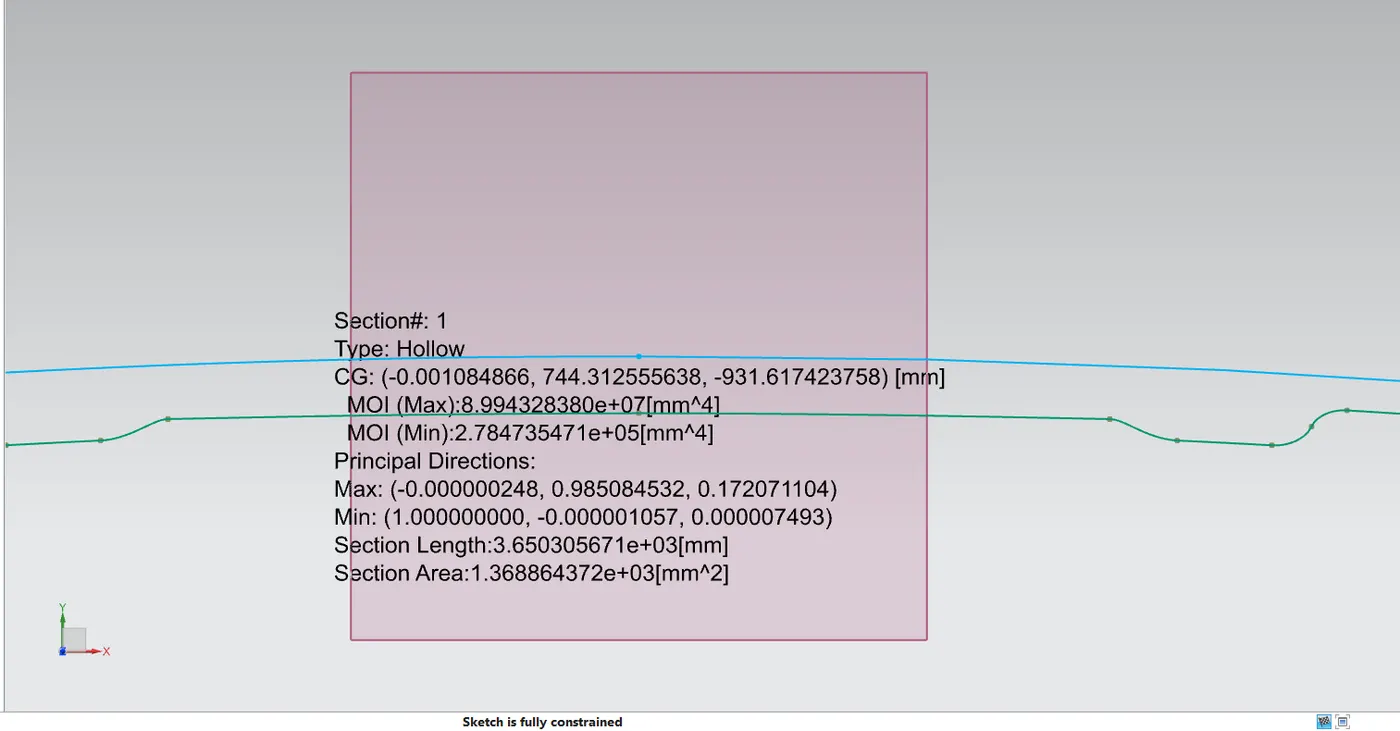
Moment of inertia (Min)= 2.78473*10^5 mm^4
Moment of inertia (Max)= 8.99432*10^7 mm^4
Y= 879.5/2= 439.75 mm
Z(max)= I(max)/Y
= 204.532*10^3 mm^3
Z(min)= I(min)/Y
= 0.63325*10^3 mm^3