Significance Section Modulus calculation & optimization
SECTION MODULUS OPTIMIZATION
The objective of this report is to understand section modulus of the model and analyze its effect on BIW structures by optimizing it under different conditions.
Section properties are vital in structural analysis and design which is efficient to increase the load bearing capacity by optimzing the shape of the section. One such property is Section Modulus and is explained below
SECTION MODULUS
Section Modulus is the ratio of the moment of inertia about neutral axis upon the extreme point of the section from the neutral axis.
S= I/y __________ (1)
S= Section Modulus
I = Moment of Interia
y= extreme point from neutral axis
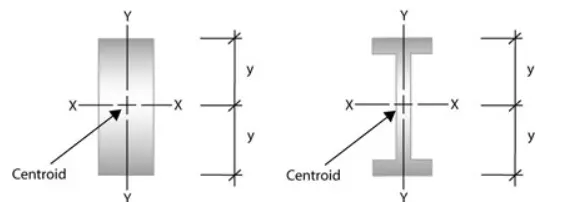
The bending stress equation is defined as
σ = M y/I
where M is the Bending Moment
y is the distance between extreme point and neutral fiber
I is the Moment of Inertia
Thus the equation is simpilfied as
σ = M/S
It is the direct measure of strength in the beam, larger the section modulus greater the load bearing capacity and higher the resistance to bending.
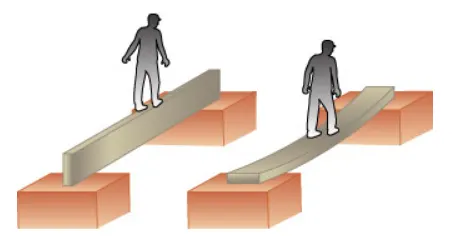
Second Moment of Area, a measure of shape's resistance to change
INPUT
The Hood Panel BIW is taken as the input and the Section Modulus is calculated based on three conditions
Hence Hood is not symmetrical section minimum and maxmum Section modulus value are found
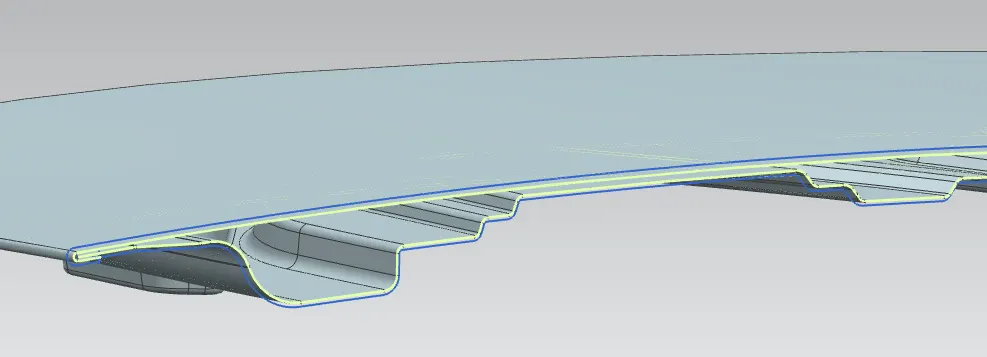
CONDITION 1
The Hood Inner and Outer Panel have a thickness of 0.75mm and the sectional area has emboss along the cross section
From the above condition the section modulus is calculated by obtaining the Moment of Inertia in NX using Section Inertia Analysis.
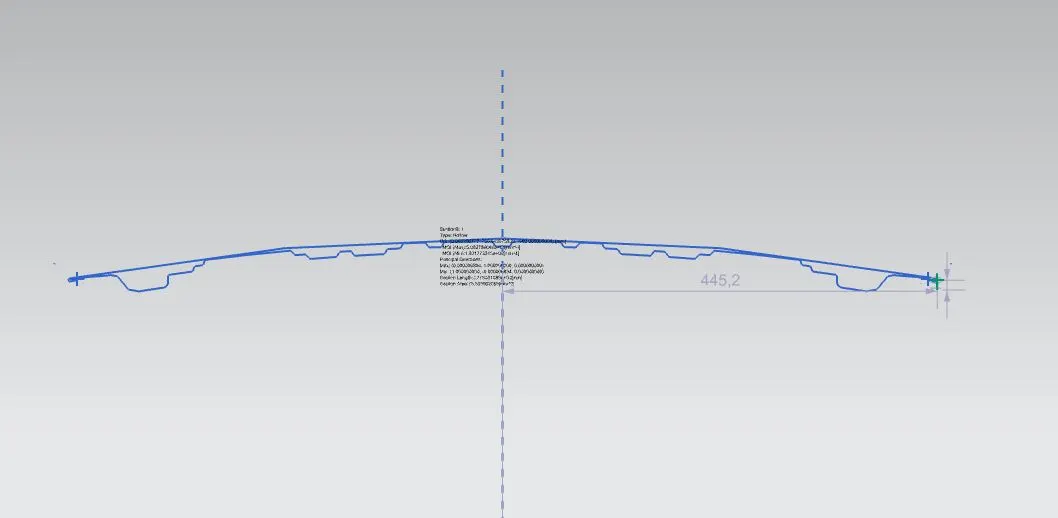
Section View of Hood
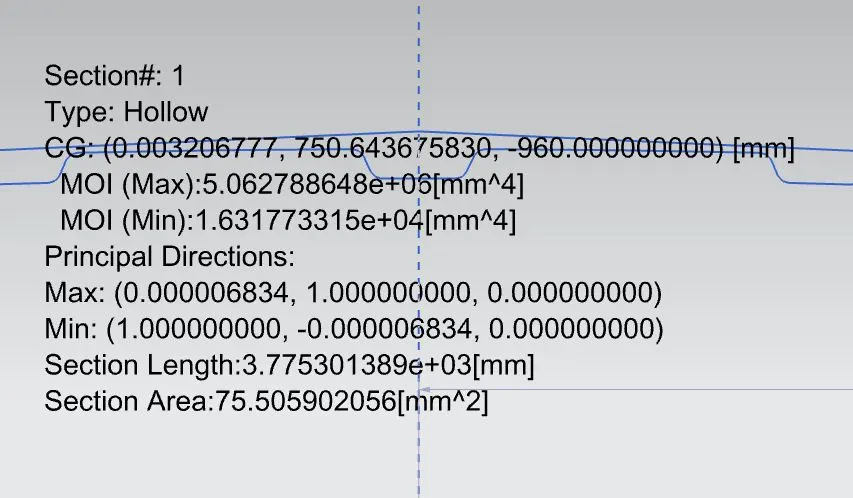
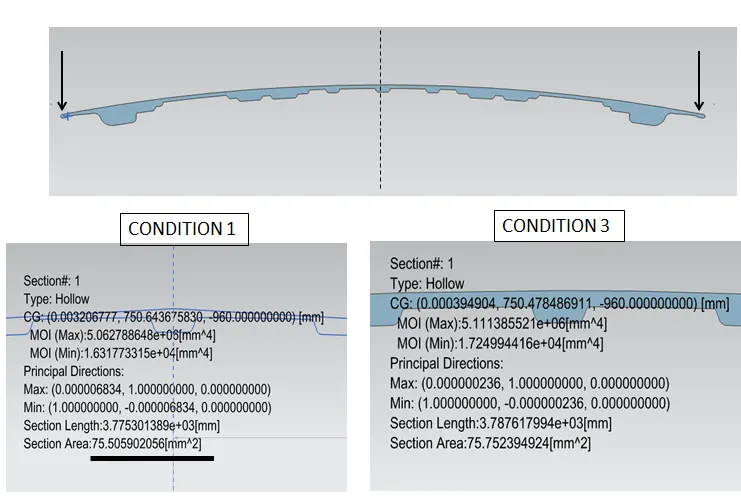
Section Interia Analysis Report
The Maximum and minimum moment of inertia obtained are
Imax = 5.0627 x 10*6 mm4
Imin = 1.6317 x 10*4 mm4
y= 445 mm
The Section modulus is calculated using (1)
Smax = 11.377 x 10*3 mm3
Smin = 36.6674 mm3
CONDITION 2
The Emboss defined in the inner panel are removed which reduces the sectional area and the values are obtained below
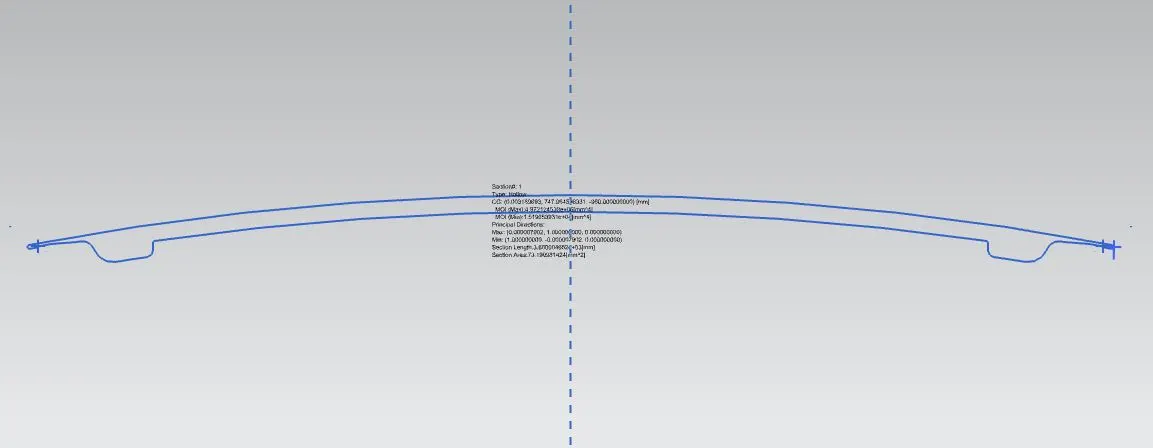
Section view of Hood Panel without emboss
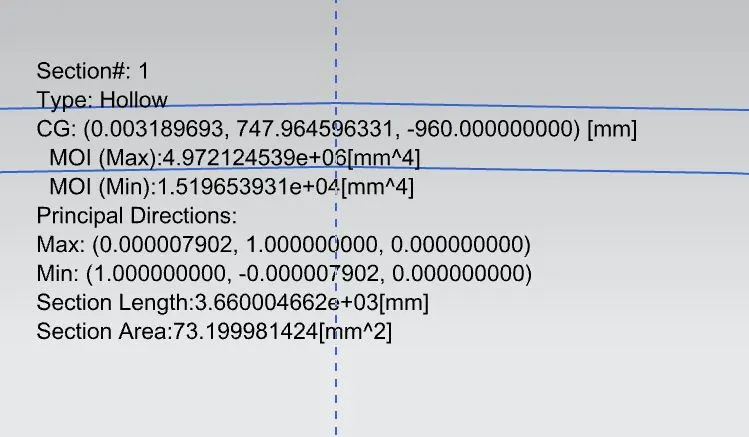
Section inetria Analysis report for condition 2
Imax = 4.9812 x 10*6 mm4
Imin = 1.4953 x 10*4 mm4
y= 445 mm
The Section modulus is calculated using (1)
Smax = 11.193 x 10*3 mm3
Smin = 33.502 mm3
Condition 3
In this iteration the thickness of the Inner panel and Outer panel is optimized to 1mm thickness each to increase the Sectional Area because Section modulus is a property of the cross sectional shape of a load-carrying element in a structure. SM is increased by moving material away from the "center" of the cross sectional shape. Eg: I beam structure the mass concentration is farther from centroid and has larger S value
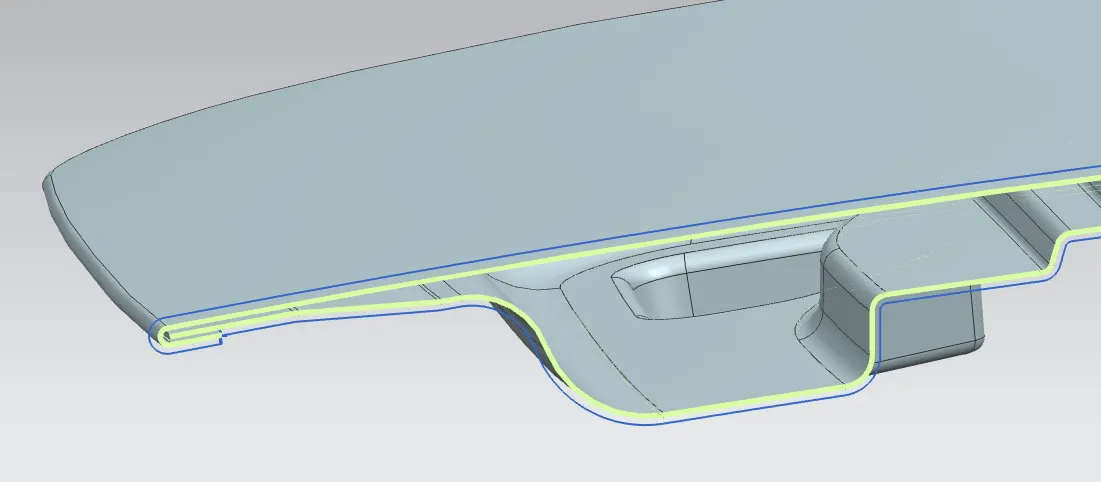
1mm Offset curve of the Section Curves
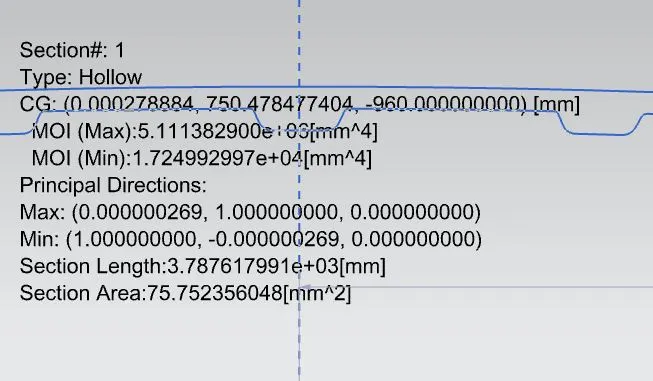
Section Inertia Analysis of condition 3
The Maximum and Minimum Moment of Inertia obtained are
Imax = 5.1113 x 10*6 mm4
Imin = 1.7249 x 10*4 mm4
y= 446 mm
The Section modulus is calculated using (1)
Smax = 11.460 x 10*3 mm3
Smin = 38.6702 mm3
RESULTS
It can be noted that increasing the Sectional Area of the cross section increases the Moment of Inertia thereby increasing the Section Modulus
Optimized SM value is minimum compared to the initial condition 1 and also comes with expense of increase in the thickness of the Sheet panel thereby increasing the cost and weight of the component.
The Section modulus optimization reveals that the Emboss defined in the hood panels provide better Moment of Inertia hence the strength of the sheet metal is significantly improved.
CONCLUSION
Thus Section Modulus carried out on BIW Structures provide better undertanding of the Load bearing capcity , bending resitance and forces and stress exerted in the beam and has wider significance of reducing the weight and cost for Automotive OEM's.