Section Modulus calculation and optimization
what is section modulus:
Section modulus is the measure of the strength of any section with respect to neutral axis.
Section modulus is the property of the cross-section that is used while the design of beams.
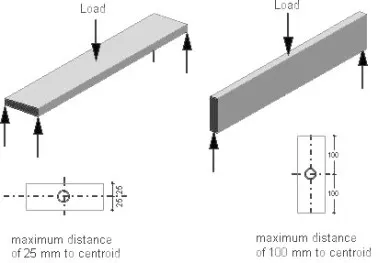
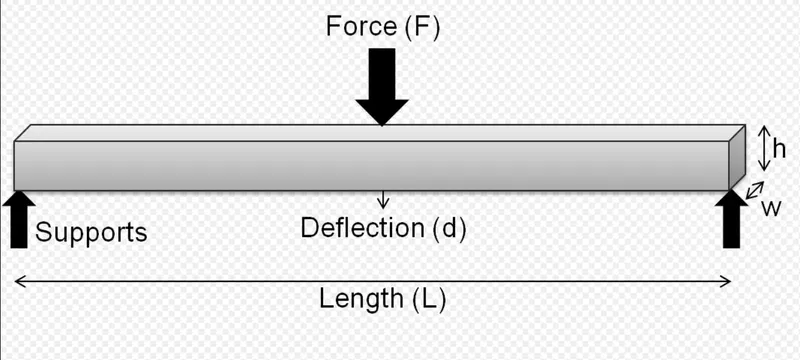
The section modulus is classified into two types:-
1, Elastic section modulus:- The elastic section modulus is applicable up to the yield point of material. It is used in most engineering applications.
2, Plastic section modulus:- The plastic section modulus is generally used for material in which plastic behavior is observed.
Let’s know about each of them in detail.
Elastic section modulus is the ratio of moment of inertia about a neutral axis(
The formula of elastic section modulus is given by,
Where,
I = Moment of inertia (
Y = Distance between neutral axes and outermost fiber (m)
Briefly Explain the Section Modulus :
it is the ratio of the moment of inertia of a section about the neutral axis to the distance of the outermost layer from the neutral axis
The elastic section modulus is defined as S = I / y, where I is the second moment of area (or moment of inertia) and y is the distance from the neutral axis to any given fiber. It is often reported using y = c, where c is the distance from the neutral axis to the most extreme fiber, as seen in the table below.
is denoted by S:
Formula: S=I/Y
where,
S = Section modulus
I= Moment of Inertia (Unit mm 4)
Y= Distance from the Neutral axis to the extreme end (unit mm)
The Unit of a “section modulus” is (mm3)
Steps to calculate elastic section modulus:-
- Step 1:- Find the location of the centroid of the given cross-section.
- Step 2:- Find the moment of inertia about a neutral axis (
I N A - Step 3:- Find
Y max - Step 4:- Find elastic section modulus using the formula provided above.
Elastic section modulus of different sections:-
1, Elastic section modulus of the circle:-
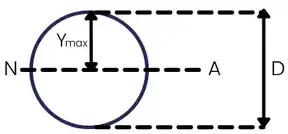
The moment of inertia about neutral axis for circular section is,
The
The elastic section modulus for the circular section is,
S =
2, Elastic section modulus of rectangular section:-
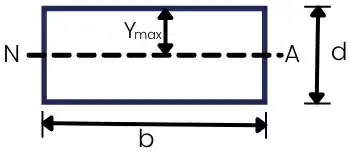
The moment of inertia about N.A. is given by,
The
The elastic section modulus for the rectangular section is given by,
S =
S =
3, Elastic section modulus of hollow rectangle:-
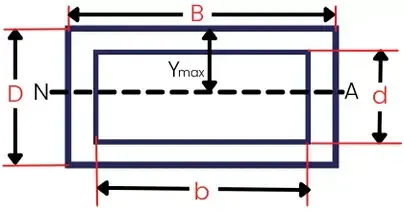
The Moment of inertia about a neutral axis is given by,
The
The elastic section modulus for a hollow rectangle is given by,
S =
S =
4, Elastic section modulus of square tube:-
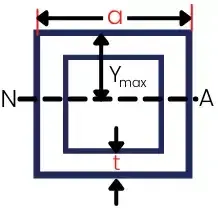
The moment of inertia about the neutral axis is given by,
Now the section modulus for the square tube is given by,
S =
Use the Section from your Hood design and calculate the Section Modulus using the formula
SECTION #1
- I have taken my design hood, for the calculation.
- To calculate the moment of inertia, I have taken the hood section along the length of the hood & find the inertia using the 'section inertia analysis' tool in NX CAD.
- Then, the section modulus is calculated using the given formula i.e.
S = I/y
The strength is measured by the section modulus formula.
S=I/Y
Were
S: section modulus
I: moment of inertia
resistnce offered to any load creating moment , bending or twisting.
Y : distance Between neutral axis to any extreme end
so as the moment of inertia increses strength of the material also increases and hence higher the section modulus .the strength of the material can be calculated by the calculation of section modulus.
but the value of Y will change the section modulus value irrespectivly.
ie if we change the neutral axis towards positive or negative side the overall strength of the body will decrease , because when nuetral axis line lies on the middle of the section only have higher strength at particular point.
so we are now going to calculate the value of section modulus of our hood panel.
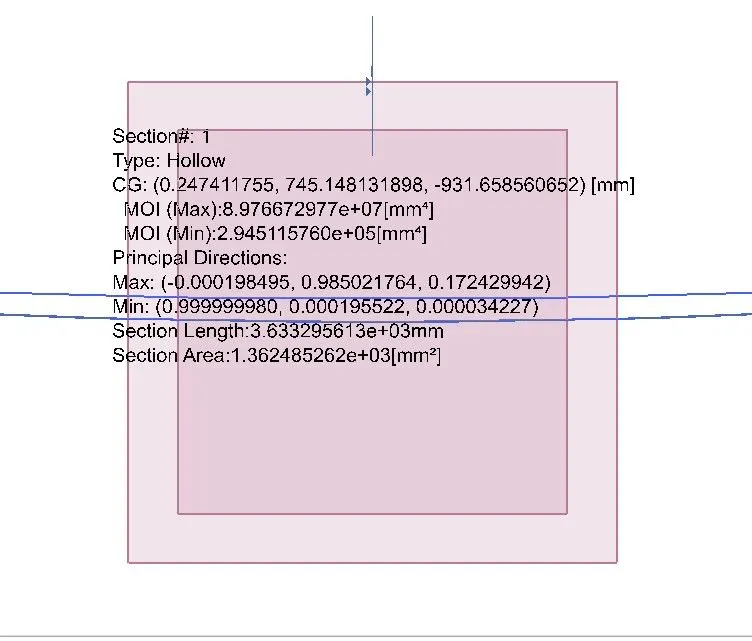
this is the section of our hood
this details can be obtained in NX cad by the section inertian analysis.
From this its given that.
IMAX:8.976672977 x 10^7 mm4
Imin:2.945115760 x 10^5 mm4
the distance is measured between the extreme end is 878.56 mm
so we can take the value ashalf of this
ie Y=439.28
then as per the formula
S max=I max / Y
= 8.976672977 x 10^7/439.28
=20.4350 x 10^4 mm3(Maximum strength).
similarly
S min =I min / Y
=2.945115760 x 10^5/439.28
=0.0670441 x 10^4 mm3(minimum strength).
So the strength of an hood varies from 0.0670441 x 10^4 to 20.4350 x 10^4 mm3
Now we are going to increas the section area by some increase in the offset value 0.5mm.
let the new section be
SECTION : 2
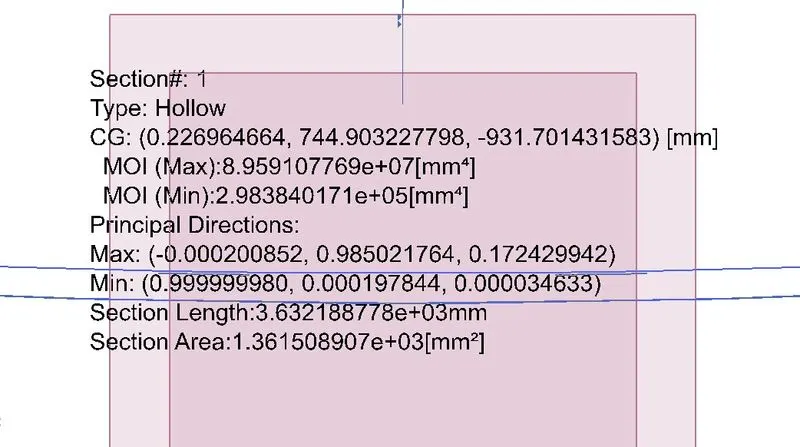
here
IMAX:8.959107769 X 10^7 mm4
Imin:2.983840171 x 10^5 mm4
now S =8.959107769 X 10^7 / 439.28
=20.3963751144 x 10^4 mm3 (Maximum strength).
and
S =2.983840171 x 10^5 / 439.28
=0.0679257004872 x 10^4 mm3 (minimum strength).
So the strength of an hood varies from 0.0679257004872 x 10^4 mm3 to 20.3963751144 x 10^4 mm3.
for section 1
strength varies from
0.0670441 x 10^4 to 20.4350 x 10^4 mm3
for section 2
strength varies from
0.0679257004872 x 10^4 mm3 to 20.3963751144 x 10^4 mm3.
from this the mininum strength and maximum strength is increased by increase in the area.
we know,if higher the mass , the force required to move the object is also high due to offering more resistance ias per the Newtons law .This resistance is called MOMENT OF INERTIA.
CONCLUSION:
Increase in the cross sectional area will increase the strength of the hood by increasing the moment of inertia and mass of material.