Section Modulus calculation and optimization
Aim
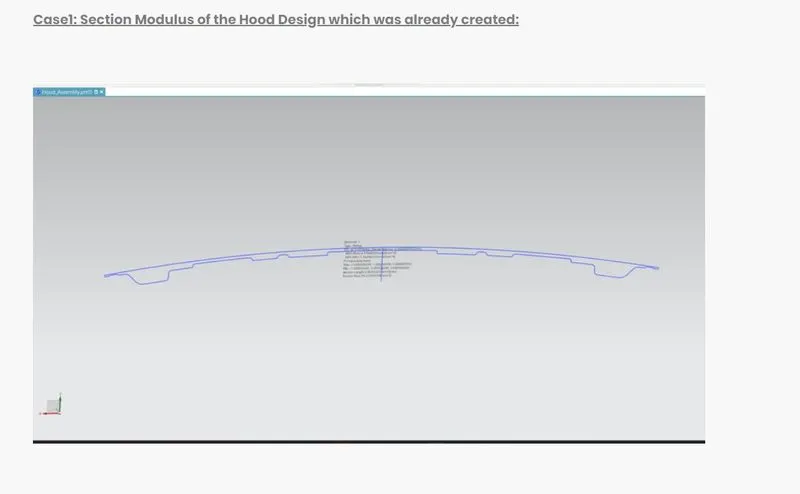
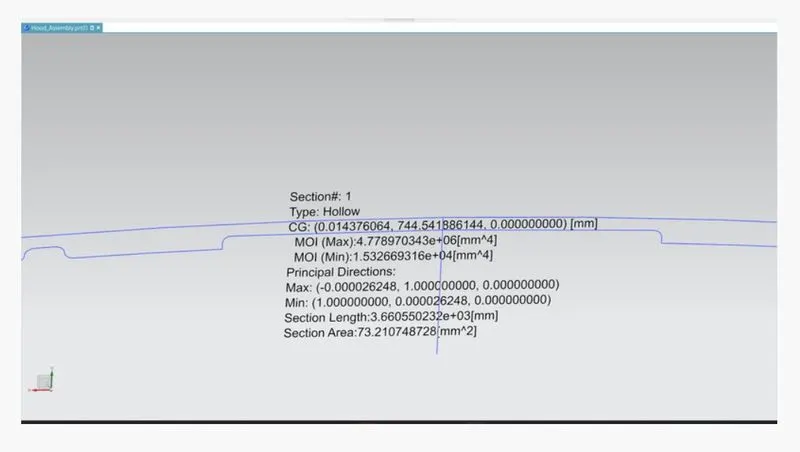
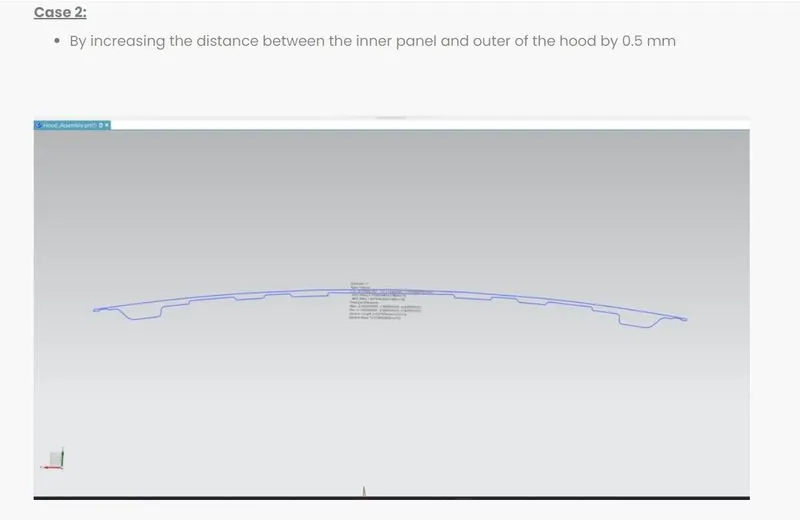
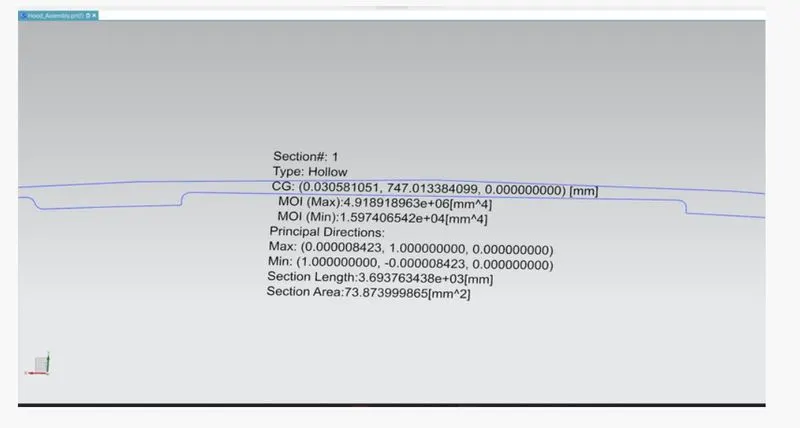
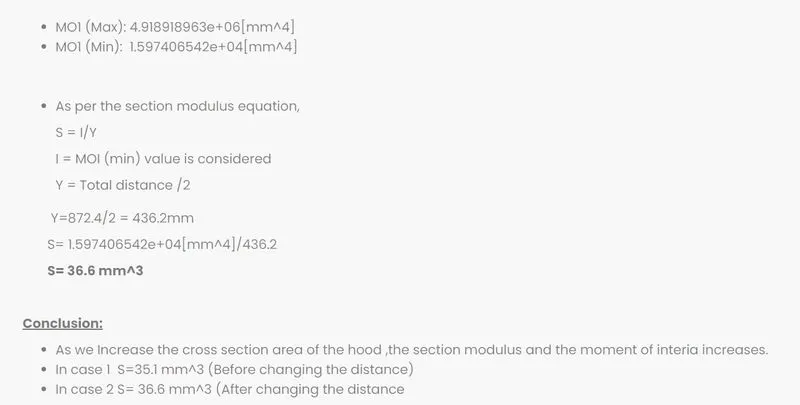
To calculate the section modulus of the previously designed hood for analyzing its strength and also optimizing the design to see the difference in the bending strength of the hood. Higher the section modulus of a structure, the more the resistive it becomes to bending.
Section modulus is a measure of the strength of a cross-sectional shape of an object. It represents the amount of bending stress a material can withstand without experiencing permanent deformation or failure. The formula for section modulus is:
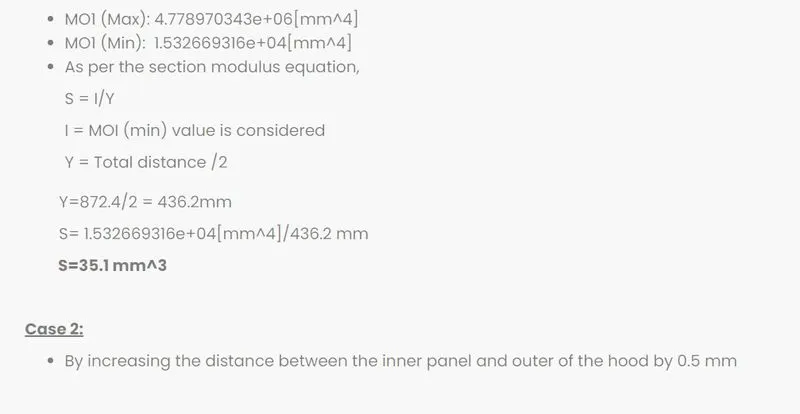
S = I/y
Where:
S = Section modulus (in^3 or mm^3) I = Moment of inertia (in^4 or mm^4) y = Distance between the neutral axis and the extreme end of the object (in or mm)
The moment of inertia represents the resistance of an object to rotational motion around an axis. It is calculated by summing the products of the areas and the squares of their distances from the neutral axis.
The distance "y" is the distance between the neutral axis and the outermost fiber of the object. This is important because the outermost fiber experiences the greatest bending stress.
To calculate the section modulus for a given object, you need to know its moment of inertia and the distance "y". Once you have these values, you can simply plug them into the formula and calculate the section modulus.
I hope this explanation helps you understand the concept of section modulus and how to calculate it.
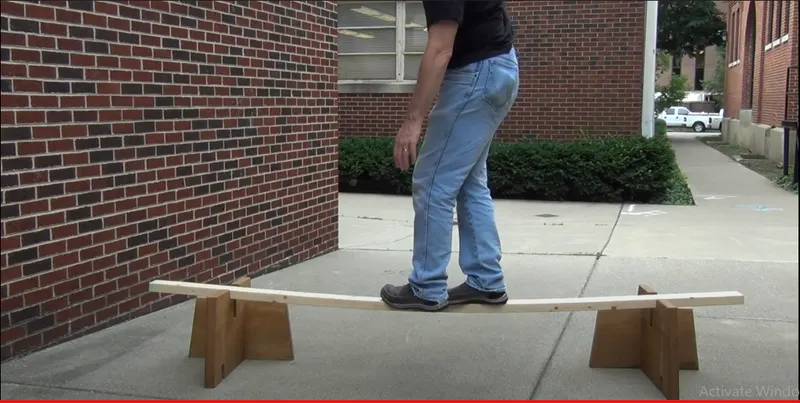
Changing the position can show the difference in bending which is because of the centroid distance from extreme fiber end.
Elastic section modulus
For general design, the elastic section modulus is used, applying up to the yield point for most metals and other common materials.
The elastic section modulus is defined as S = I / y, where I is the second moment of area (or area moment of inertia, not to be confused with moment of inertia) and y is the distance from the neutral axis to any given fibre. It is often reported using y = c, where c is the distance from the neutral axis to the most extreme fibre, as seen in the table below. It is also often used to determine the yield moment (My) such that My = S × σy, where σy is the yield strength of the material.
| Cross-sectional shape | Figure | Equation | Comment |
|---|---|---|---|
| Rectangle |  |
Solid arrow represents neutral axis | |
| doubly symmetric I-section (major axis) | 
|
NA indicates neutral axis | |
| doubly symmetric I-section (minor axis) |  |
NA indicates neutral axis | |
| Circle |  |
Solid arrow represents neutral axis | |
| Circular hollow section |  |
Solid arrow represents neutral axis | |
| Rectangular hollow section |  |
NA indicates neutral axis | |
| Diamond |  |
NA indicates neutral axis | |
| C-channel | |
NA indicates neutral axis |
 ,
,
The plastic section modulus is used to calculate the plastic moment, Mp, or full capacity of a cross-section. The two terms are related by the yield strength of the material in question, Fy, by Mp=Fy*Z. Plastic section modulus and elastic section modulus are related by a shape factor which can be denoted by 'k', used for an indication of capacity beyond elastic limit of material. This could be shown mathematically with the formula :-

shape factor for a rectangular section is 1.5.
So here we are Calculating Elastic section Modulus