Section Modulus calculation and optimization
SECTION MODULUS
Section modulus is a geometric property for a given cross-section used in the design of beams or flexural members. This property is highly dependent on the shape of the body for which we want to calculate the modulus for. There are two types of section modulus:
- Plastic section modulus
- Elastic section modulus
Codes for section modulus:

Here we are finding elastic section modulus. It is given by the formula:
S = I/y
S = Section Modulus
I = Moment of Inertia
y = distance between the neutral axis and the extreme end of the object
- So, section modulus is the ratio of total moment resisted by the section to the stress in the extreme fiber.
- It gives us an idea about how much of load the given structure can take.
- If the section modulus increases, the moment of resistance increases and hence its load bearing capacity.
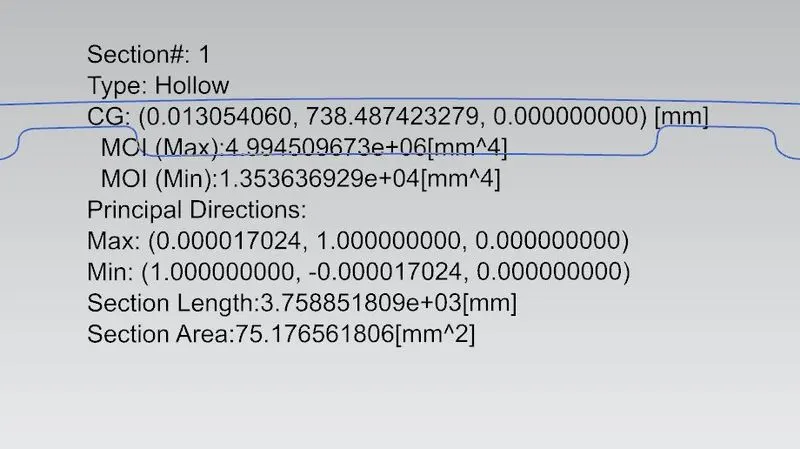
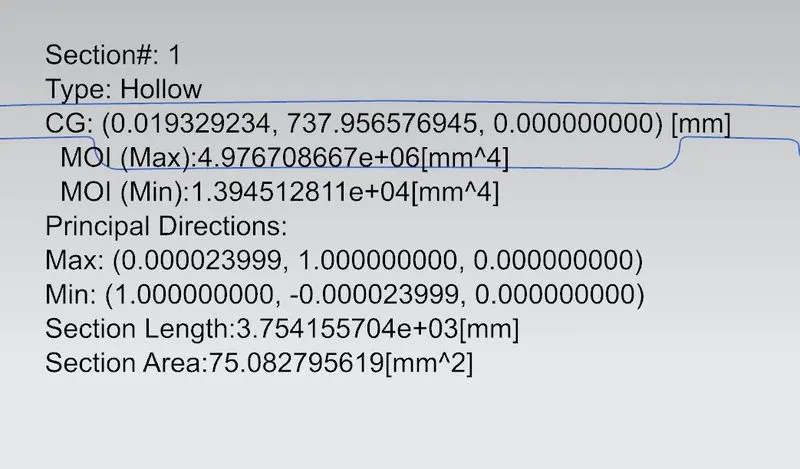
For previously designed hood, I took a section and took a section inertia analysis on that section to calculate the section modulus. Later, to improve the section modulus I modified the shape of the hood. The results for both the cases are given in below table.
INITIAL SECTION
MODIFIED SECTION
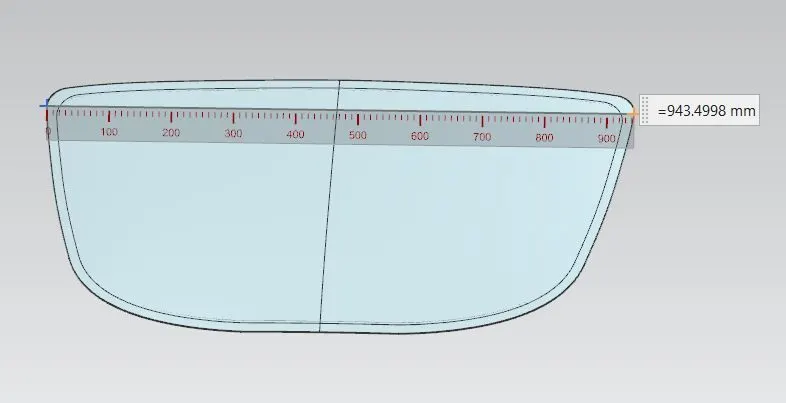
DISTANCE
Y will be this distance divided by 2 and same for both the cases.
CALCULATIONS:
| I | Y | S |
| 13536.369 | 471.75 | 28.69395 |
| 13945.128 | 471.75 | 29.56042 |
CHANGES MADE IN INITIAL SECTION: I increased the distance between the inner and the outer panel of the hood.
CONCLUSION: The modified section has more section modulus. Thus it is better at withstanding load than initial design.