Section Modulus calculation and optimization
SECTION MODULUS CALCULATION AND OPTIMIZATION
Objective:
To find the section modulus of the hood and optimisation to improve the overall section modulus.
Definition:
The section modulus is a geometric property of the cross section used for designing beams and flexural members i.e. subject to both tension and compression within its depth.It is a measure of the strength of sectional area with its neutral axis.The strength is the ability of the material to resist the load subjected.The strength of a body can be measured using section modulus which is denoted as (S).
The formula is,
S=I/Y
where, S - section modulus
I - moment of inertia of the section about the bending axis
Y - distance between the neutral axis and extreme end of the object.
Section modulus of Hood:
* The hood design with the inner panel and outer panel cross section is taken as the reference without thickness of the panels.
* To find section modulus we need to make a cross section of hood where we use intersection curve command.
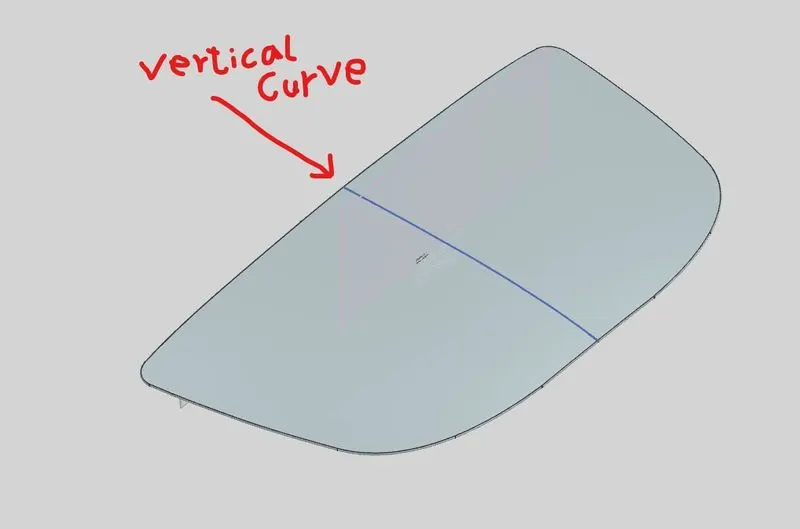
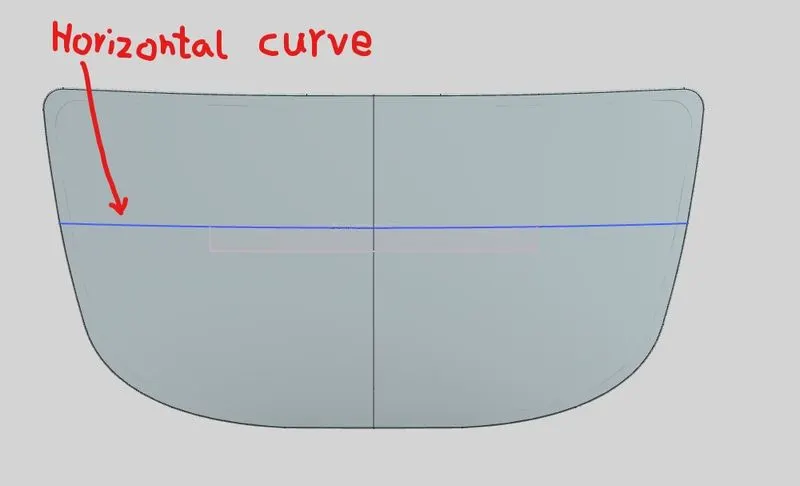
* Select the intersection curves by changing selection filter to entire assembly.
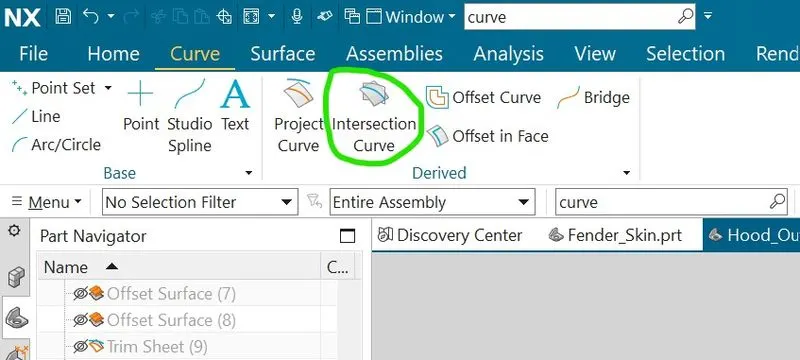
* Create a datum plane and sketch if there are any incomplete curves.
* Find the moment of inertia using section inertia analysis tool.
* Y is the distance between the neutral axis & the end of cross sectional area which the total length divided is by 2.
* Therefore, the result of moment of inertia is
CASE 1: vertical cross section
Before optimization
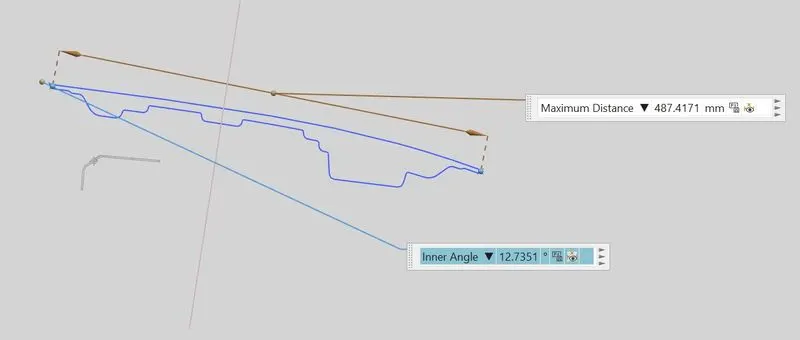
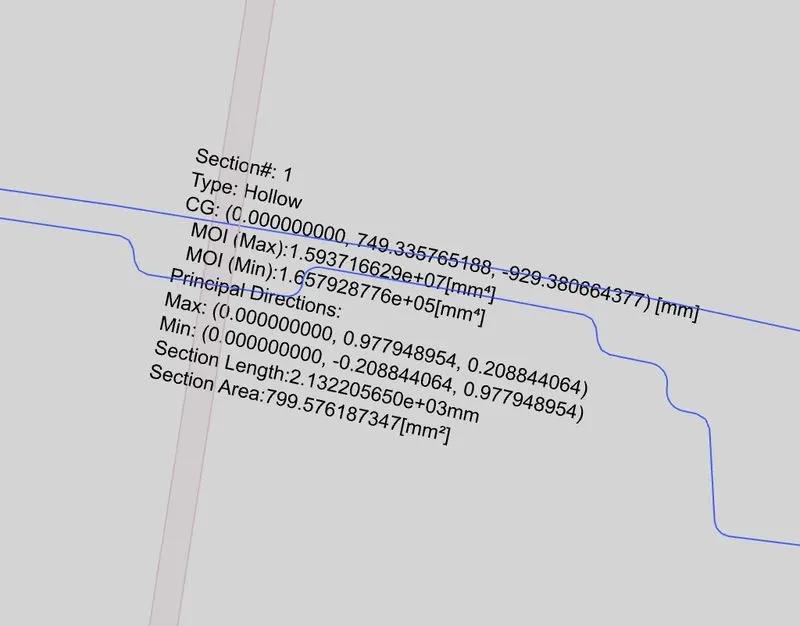
The hood's inner panel outer face and outer panel outer face of cross section curve is created without the thickness of the sheet metal.
Moment of inertia (max) = 1.594*10^7 (mm^4)
Moment of inertia (min) = 1.658*10^5 (mm^4)
Y = 487.4/2 = 243.7 (mm)
S=I/Y, here the minimum value of moment of inertia is considered for the calculation.
S = 1.658*10^5/243.7
S = 680.34 (mm^3)
After optimization
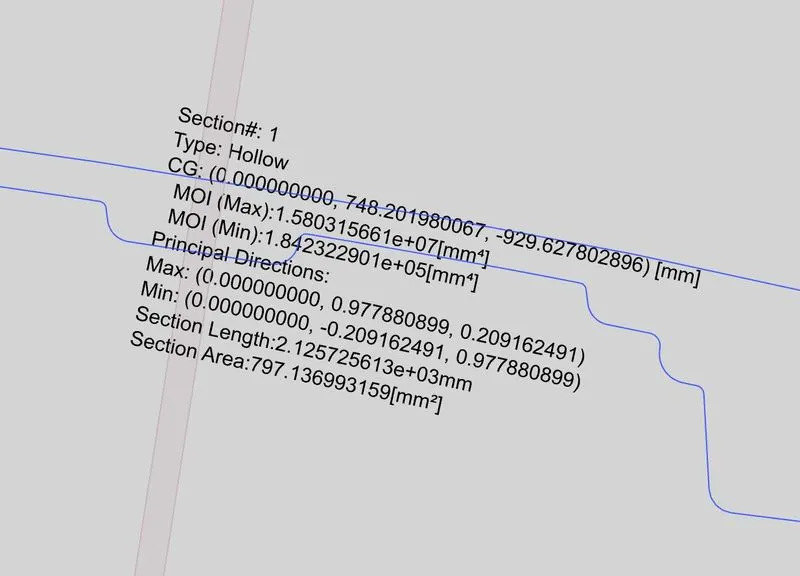
The hood inner panel curve is offset by 2 mm outward and section inertia analysis is done for a closed curve.In this, we are going to analyse whether the offset curve's moment of inertia and section modulus is greater than the normal curve.
Moment of inertia (max) = 1.580*10^7 (mm^4)
Moment of inertia (min) = 1.842*10^5 (mm^4)
Y = 243.7 (mm)
S = 1.842*10^5/243.7
S = 755.84 (mm^3)
Hence, the vertical cross section of offset curve's moment of inertia increases, the section modulus also increases.
CASE 2: Horizontal cross section
Before optimization
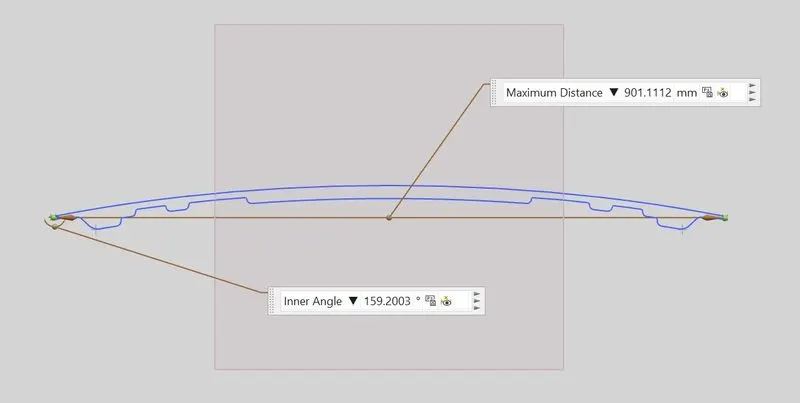
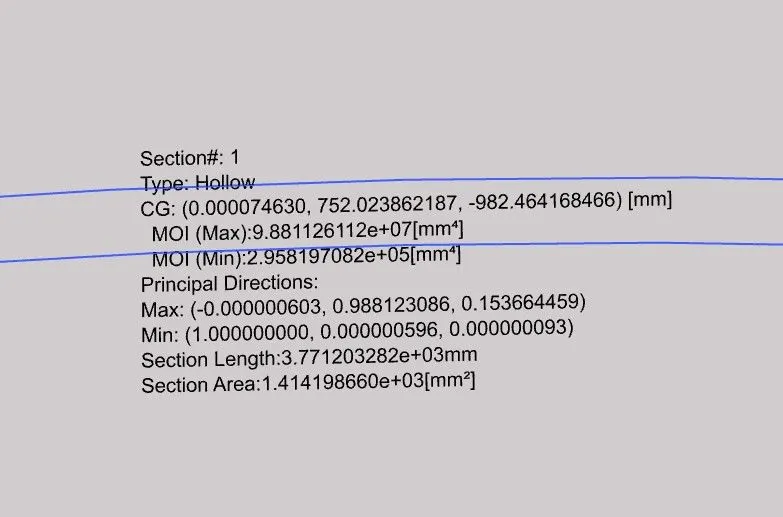
The cross section of the hood is created in horizontal direction to calculate the section modulus.
Moment of inertia (max) = 9.881*10^7 (mm^4)
Moment of inertia (min) = 2.958*10^5 (mm^4)
Y = 901.1/2 = 450.5 (mm)
S = 2.958*10^5/450.5
S = 656.66 (mm^3)
After optimization
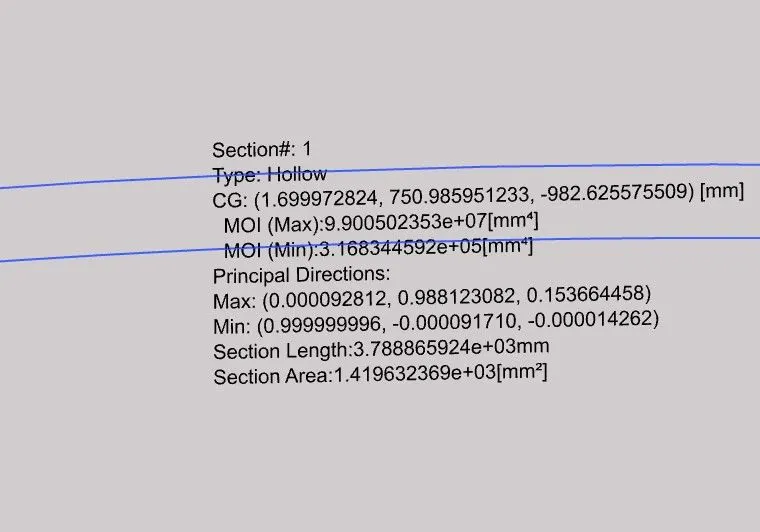
The hood's inner panel curve of outer surface is offset by 2 mm outward and section inertia analysis is done for closed curve.
Moment of inertia (max) = 9.90*10^7 (mm^4)
Moment of inertia (min) = 3.168*10^5 (mm^4)
Y = 450.5 (mm)
S = 3.168*10^5/450.5
S = 703.22 (mm^3)
Hence, the horizontal cross section of offset curve's moment of inertia increases,then section modulus also increases.
Conclusion:
Therefore, the increase in section modulus in from the observations which refers as increase in strength.So, we can conclude that increase in cross sectional area adds strength to the body.