Section Modulus calculation and optimization
INTRODUCTION OF SECTION MODULUS:
Section modulus is a geometric property for a given cross-section used in the design of beams or flexural members. Other geometric properties used in design include area for tension and shear, radius of gyration for compression, and moment of inertia and polar moment of inertia for stiffness. Any relationship between these properties is highly dependent on the shape in question. Equations for the section moduli of common shapes are given below.
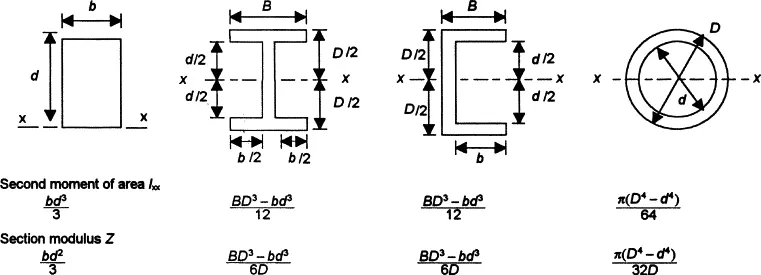
There are two types of section modulus
- Elastic section modulus
- Plastic section modulus
Types of Inertia
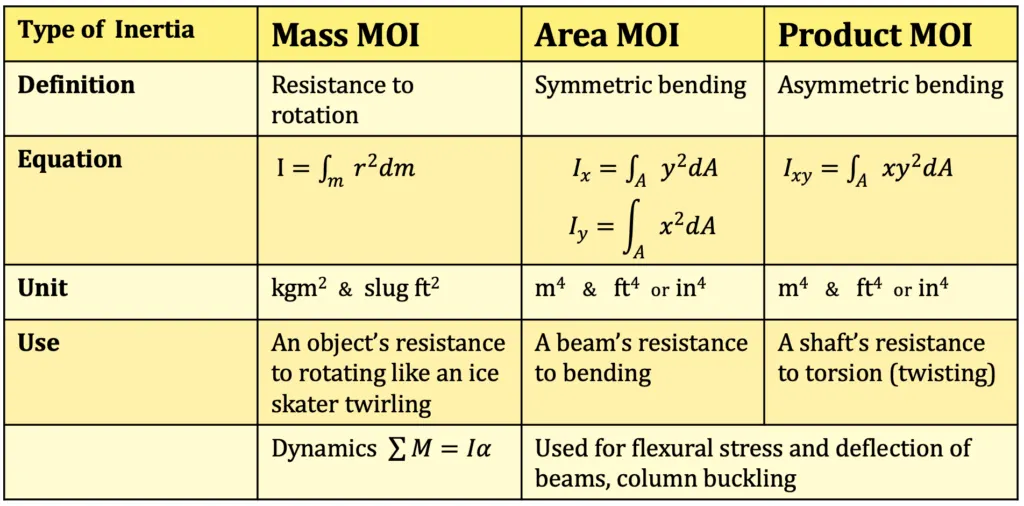
There are multiple kinds of inertia. For this course, we need to know the names of three types of moment of inertia (MOI), when to use each, and the units for each.
Area moment of inertia is used in structures to determine how stiff a beam is, or how much it will deflect. The unit is m4 or ft4.
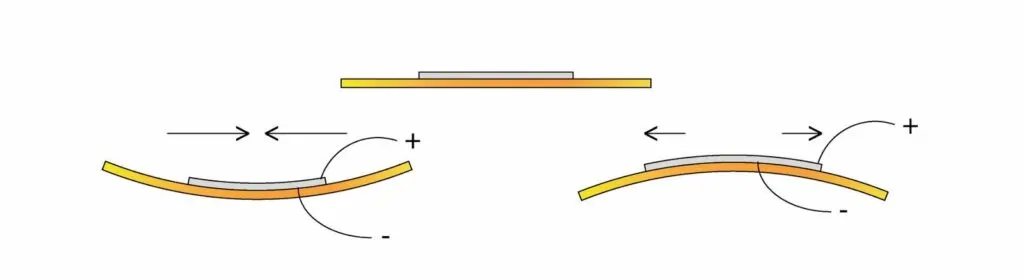
Product moment of inertia is a shaft’s resistance to torsion (or twisting). The unit is m4 or ft4.
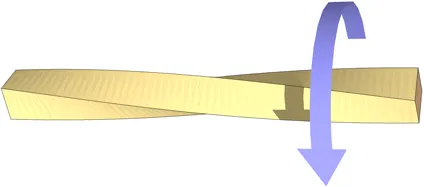
Mass moment of inertia is the rotational equivalent to mass. A really heavy object is hard to move, hence it resists motion. An object with a really big inertia is hard to rotate, hence it resists rotation. An inertia is a quantity of how mass is distributed around a body, The unit is kgm2 or slugft2.

Here is a table summarizing the three types of inertia:
In this case we do the section modulus calculation in car hood design
In hood- the moment of inertia is area moment of inertia by this calculation we find out strength of material
Area MOI is calculated by the cross section of the product
Section modulus can be calculated using a formula
S = I/y
where,
S - Section modulus
I - Moment of Inertia
y - Distance from the neutral axis to the most extreme end of the object
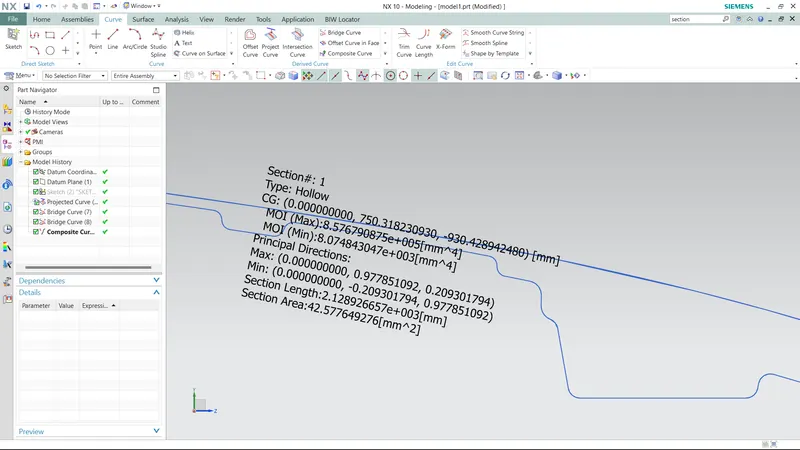
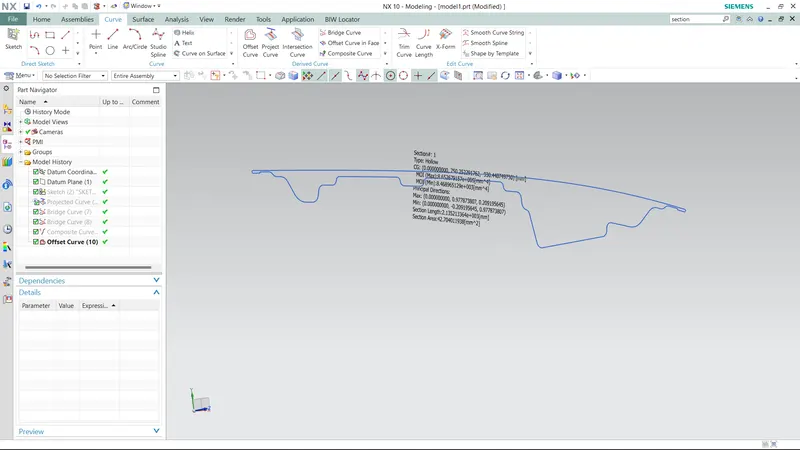
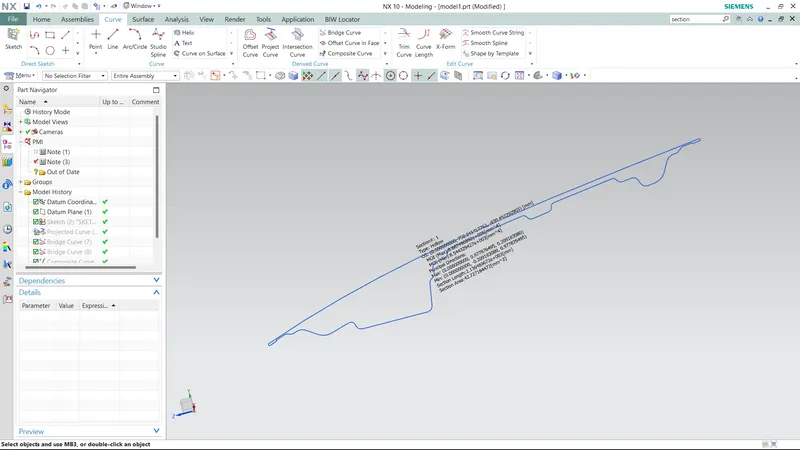
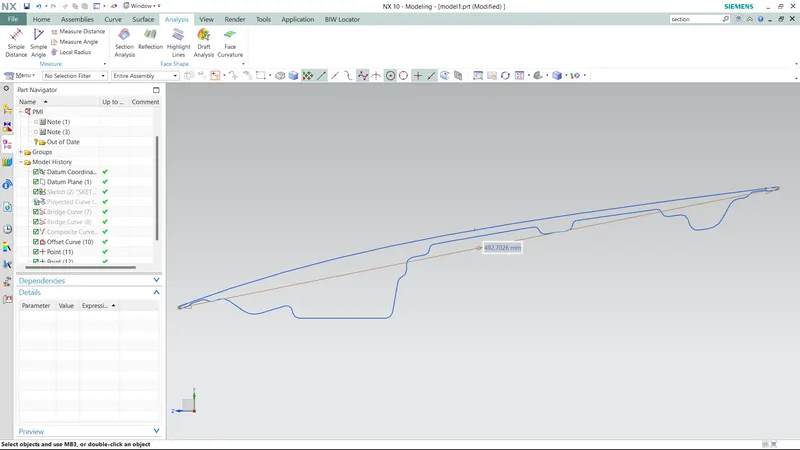
1 section modulus calculation in intial hood cross section
s= I/y
MOI (MAX)- 8.576790875e+005mm^4
MOI (MIN)- 8.074843047e+003mm^4
so I= (taking min MOI) 8.07484mm^4
y= neutral axis to end of the object
so overall length 492.70/2=246.35
s= 8.07484*10^3/246.35
= 32.277mm^3
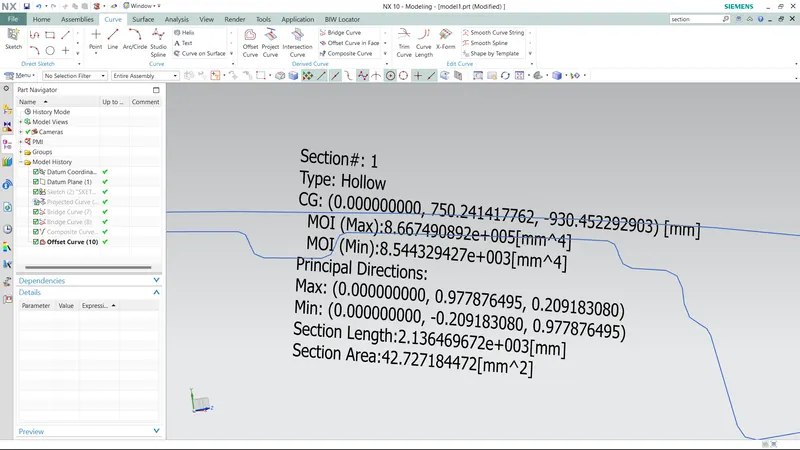
by offsetting the inner & outer panel to 0.6mm
MOI (MAX)- 8.667490892e+005(mm^4)
MOI (MIN)- 8.544329427e+003(mm^4)
so I= (taking min MOI) 8.5443mm^4
y= neutral axis to end of the object
so overall length 492.70/2=246.35
s= 8.54432*10^3/246.35
= 34.683mm^3
By comparing the value of section 1&2 second section modulus is greater than first value, so it has more MOI and strength of material like stiffness and bending moments