Roof Design
OBJECTIVE:
For the Given Roof styling, create an ASSEMBLY by developing the essential flanges for the outer roof and creating the reinforcements.
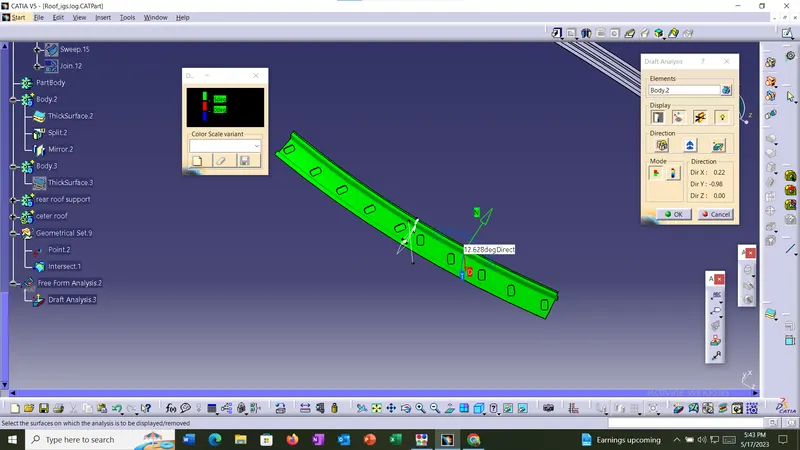
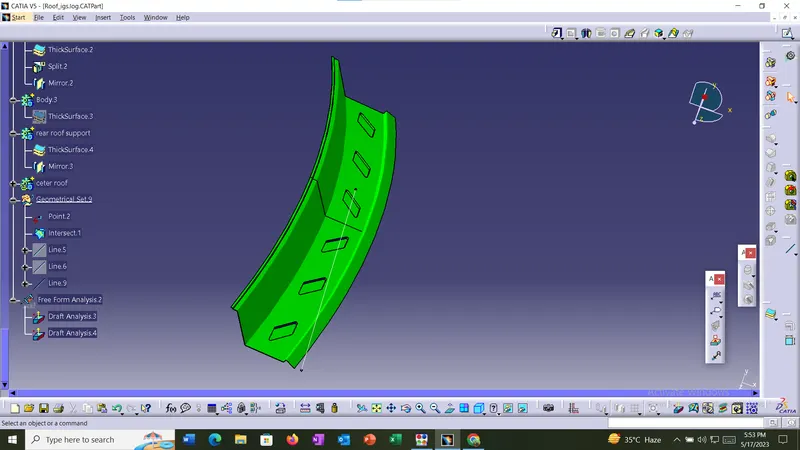
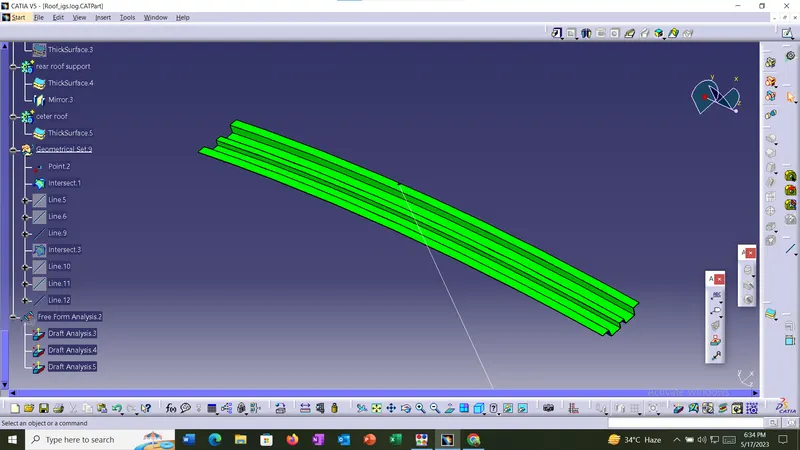
Provide appropriate dimensions and check for Draft analysis.
Do a curvature study on the roof and perform calculations to determine the position of the Bow-roofs.
INTRODUCTION:
The portion of an automobile that sits above the passenger compartment and protects the occupants from the sun, wind, rain, and other external elements is known as the roof or car top. When viewed from outside the car, it only closes the top portion. However, from the standpoint of design, it is difficult to create the design. Because you must construct a sufficient number of support rails to withstand the load. Bow roofs are typically installed in flatter areas to increase strength.Spot welding is used to secure the front and rear roof rails to the ditch area. However, the front, back, and centre roof rails are attached to the roof with mastic sealants. We don't want such a large gap between the roof rails and the bow roof area. As a result, we are reducing the NVH issues.
DESIGN CONSIDERATION OF ROOF:
- Visibility criteria
- Head room clearance
- Bow roof position
- Heat distortion and Snow load criteria
- Draft analysis
OVERVIEW OF THE TEST:
Roof strength evaluations consist of a quasi-static test conducted on a vehicle’s roof in a manner similar to tests used to judge compliance with Federal Motor Vehicle Safety Standard 216 (Office of the Federal Register, 2009). The main differences between the procedure specified by the Insurance Institute for Highway Safety (IIHS) and that specified by the U.S. federal government are that the IIHS procedure are,
- Specifies testing one side of a vehicle’s roof
- Does not include a headroom criterion
- Specifies testing to a given displacement instead of a given force level
- Specifies setting the vehicle’s pitch angle during testing based on the measured on-road pitch angle.
An overall rating is assigned based on the peak strength-to-weight ratio (SWR) measured within 127 mm of plate displacement.
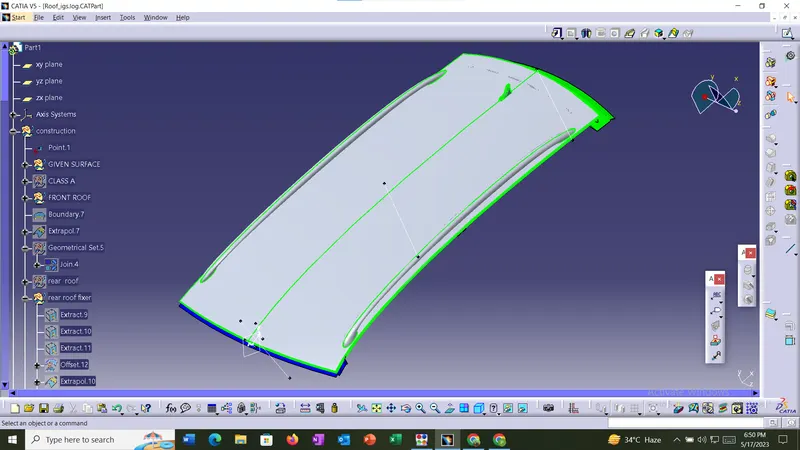
STYLING SURFACE FOR ROOF:
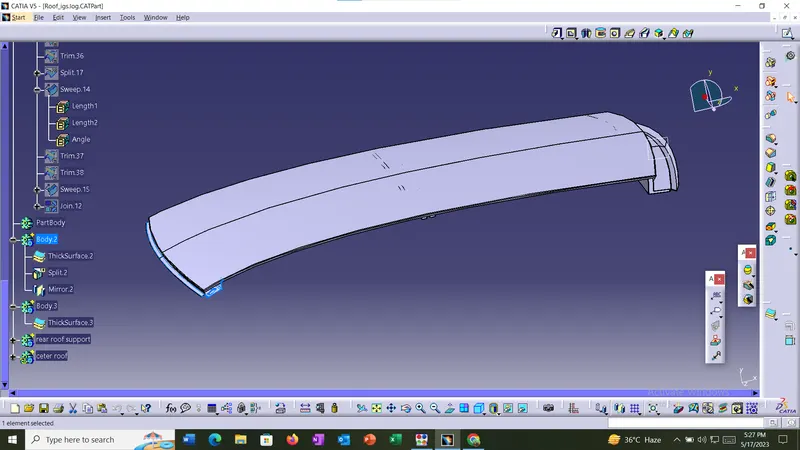
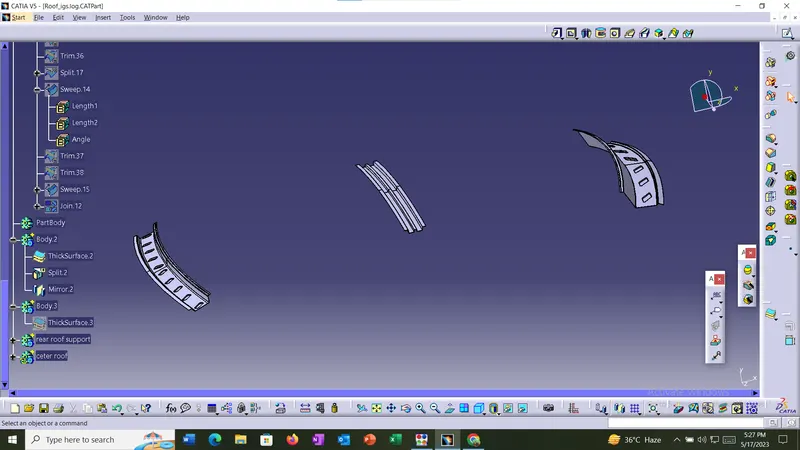
Draft analysis