Roof Design
ROOD DESIGN AND ANALYSIS
Objective
To design the Front and Rear Roof Rails, along with the Centre and bow Roof Rails according to the master section drawings provided and performing the analysis of the rail designs.
Introduction
Roof
An automobile roof or car top is a BIW portion of an automobile that sits above the passenger compartment, protecting the vehicle occupants from sun, wind, rain, and other external elements.
The roof is a styling surface part which is fixed with the BIW body through the rails and panels inside the upper roof to provide it strength and stiffness.
Ditch area plays an important role here to fix the reinforcement on the component.
The rails and reinforcements are joined to the ditch area with a spot weld where it's not the styling part.
The required tool opening angle is minimum 3 Degrees.
Factors which is considered before creating Ditch area,
- Headroom clearance
- Visibility criteria
- Back door assembly
- Windshield assembly
Types of Roofs
1. Hardtops: These are common rigid automobile roofs normally seen in most of the cars which are either made of metal or plastics. The different type of these roofs that are used in Convertibles are mentioned below
- Detachable Hardtops: This type of hardtop is manually removed from the roof and then stored usually in the trunk. They are also made from metal or plastic.
- Retraceable Hardtops: Made from metal or plastic and is retracted automatically.
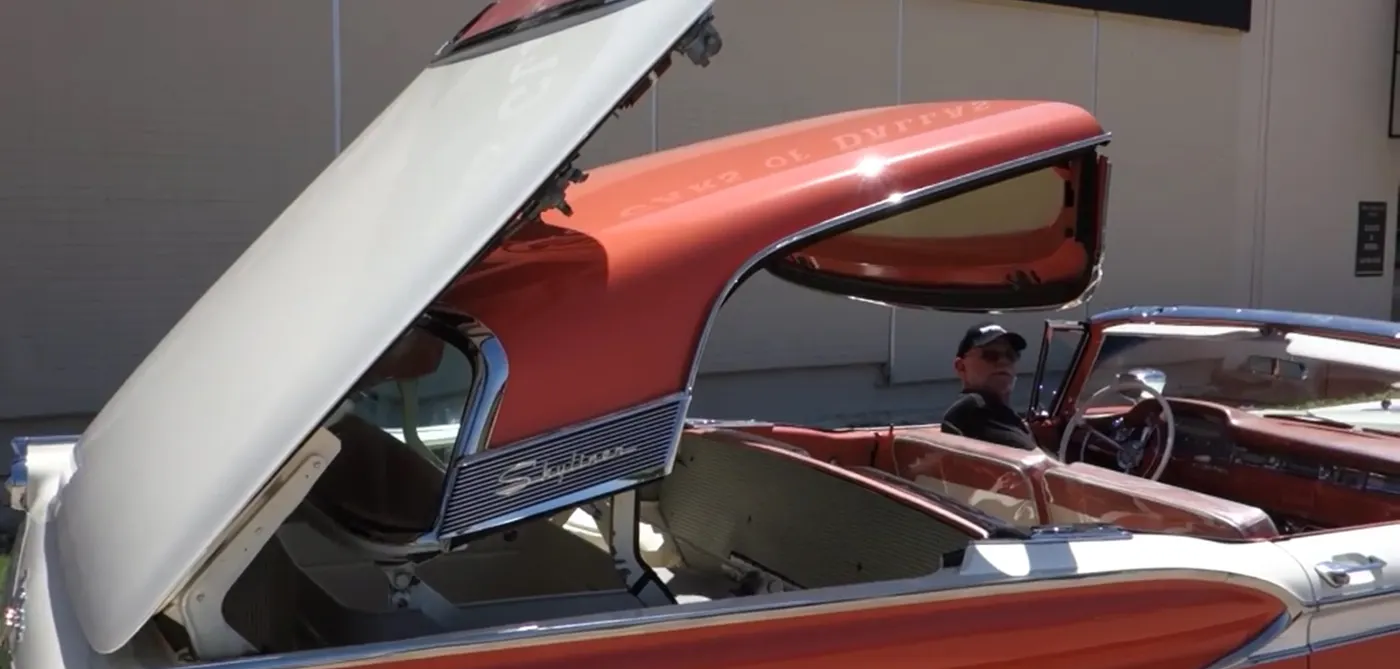
- Soft tops: This type of convertibles has roofs that are not made from metal or plastic. They are made of textile. The earliest versions of the convertible used canvas for the roofs. More recent models use cloth materials instead. Other materials used now include latex, vinyl, polyvinyl chloride. When the roof is folded, it is called a stack.
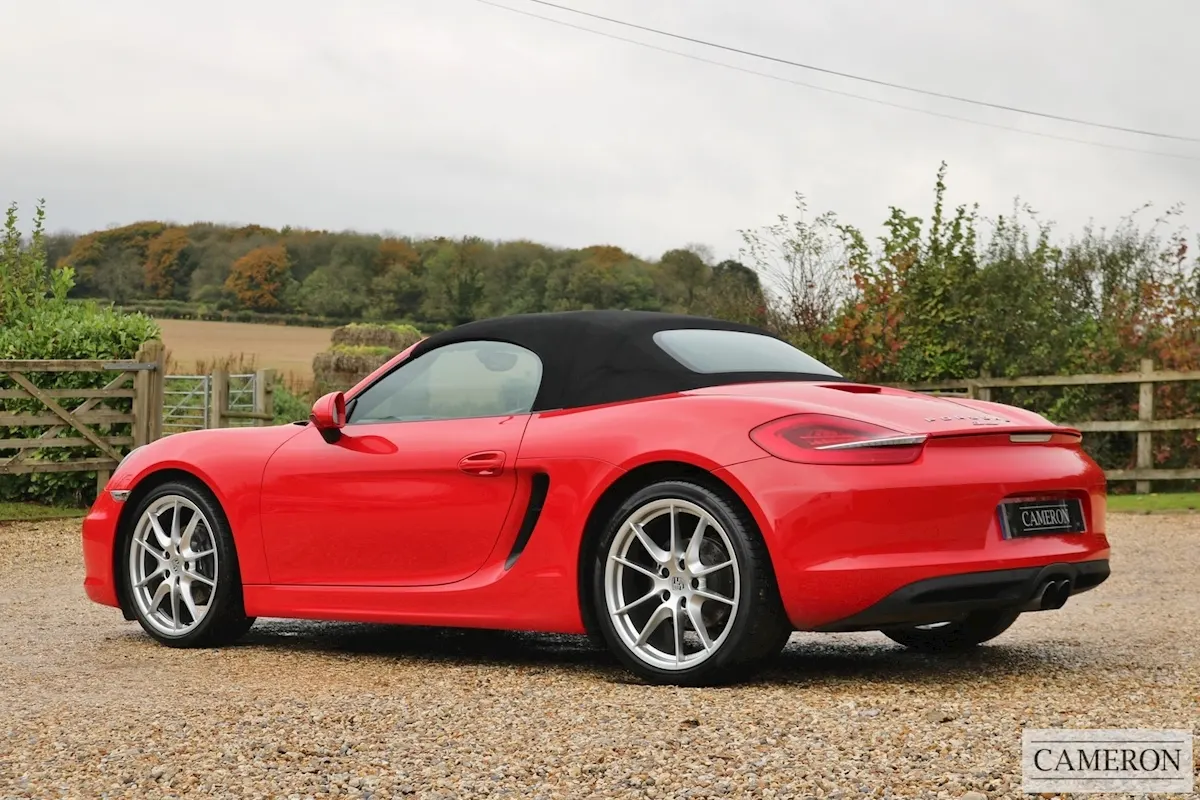
2. Sunroof: A sunroof is an operable type of roof that allows for an opening in the roof of an automobile. It can allow either light or air or both to enter the vehicle. They are either operated manually or automatically. The different types of such roof is mentioned below.
- Pop-up: The pop-up sunroof usually tilts when you open it. It is the most basic and relatively cheaper type of sunroof. Some can even be removed so that they are kept properly
- Spoiler: The spoiler is a pop-up that would slide, instead of tilting upwards. The advantage of this is that it can easily be restored to its original position by sliding.
- Panoramic: While other sunroofs basically allow air and light or both into the front seats, the panoramic sunroof would allow for both the front and rear.
Design of Roof and its Reinforcements
For this project an A-surface along with the roof rails will be provided and the Roof ditch area along with the Front, Rear Centre and Bow Roof Rails are to be designed
Certain critters are to be followed in order to design the above parts
Design criteria’s to be followed:
- Material Selection
Material selection plays an important part in designing any part. The material for a part is selected keeping in mind the tensile strength, bending, static and dynamic loading that the part would be subjected to. Materials used for the roof and its different reinforcements are mentioned below.
- Roof: SP121AQ T0.7
- Front Roof Rail: SP783AJQ
- Rear Roof Rail: SP783AJQ
- Bow Roofs: SP121BQ
- Centre Roof: SP153-98OPQ
- Visibility Criteria
The visibility criteria of a driver is one of the most important factors when designing the roof. The roof should be designed such that it does not hinder the visibility range of the driver. The ditch area of the roof is design keeping this criterion in mind.
- Head Clearance
This factor is considered when designing the reinforcements of the roof. The reinforcements should be designed in a way that it provides ample headroom clearance for the occupants in the car and does not collide with the head in case the car moves over a bump It should not act as a hindrance for the driver’s rear visibility.
- Position of the reinforcements
The position of the reinforcements are governed by the below to criteria’s.
- Heat distortion
This determines the temperature the roof structure can withstand. The value obtained from the heat distortion prediction formula should be less than 2.7 to be deemed fit for use.
- Snow load criteria
This factor is taken into consideration for area with high snowfall which then sets on the car roof. This criterion measures the elasticity of the roof wherein the roof should come back to its original shape and from on the removal of the snow, which in this case acts as the load. The value Qr obtained for the snow load prediction formula should be greater than 3.1 for the design to quality for being used.
- Drawibility
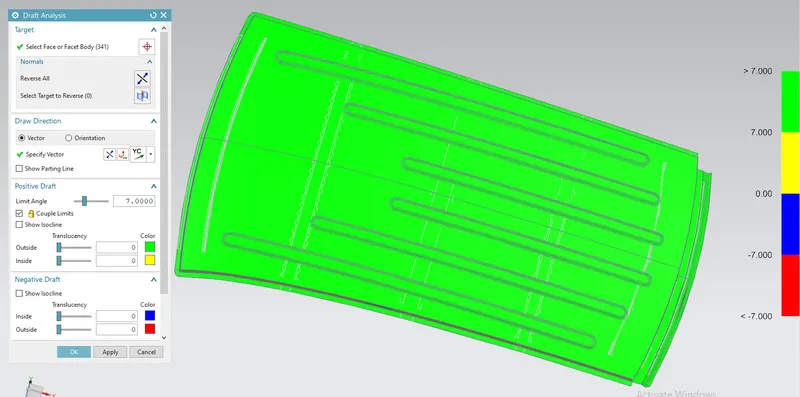
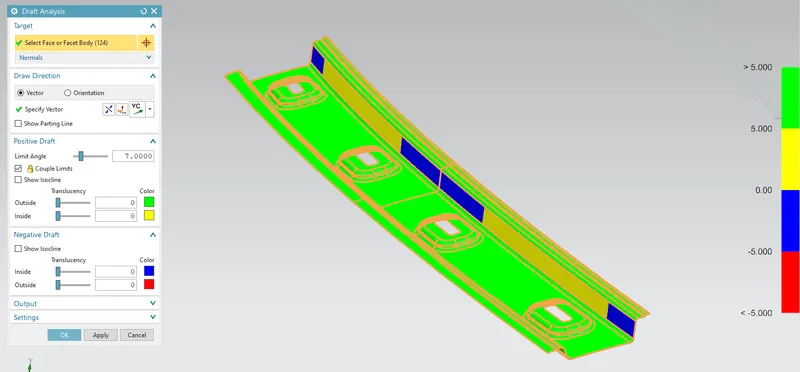
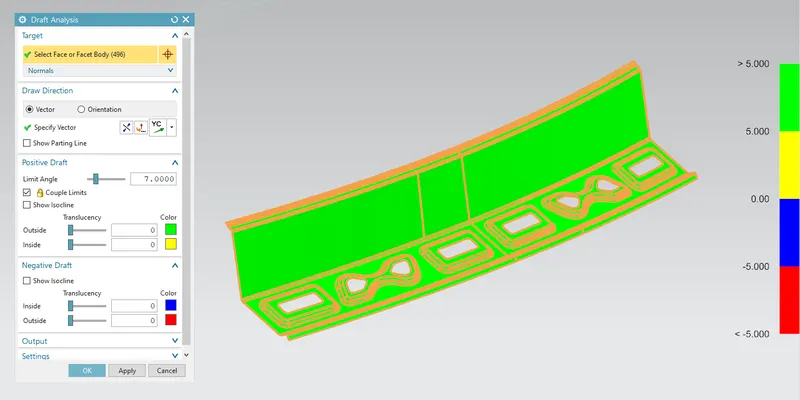
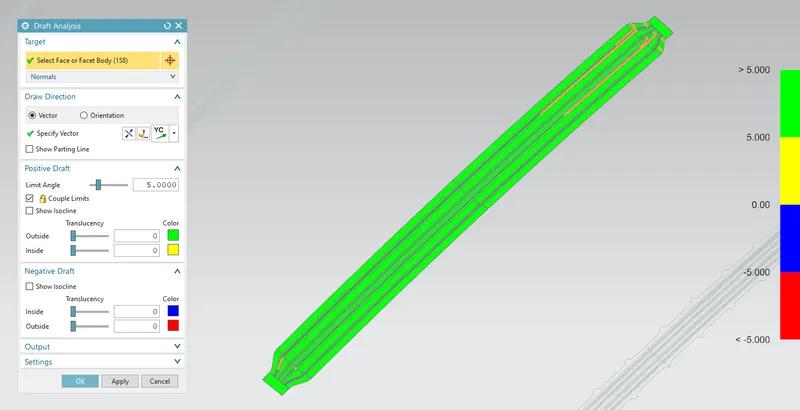
The roof and its parts are manufactured using deep drawing process. For this reason, the designs should be manufactural and the design should have a positive draft angle for smooth surface build and also reduced induced stresses in various parts of the reinforcements.
Design of the Roof and Reinforcements
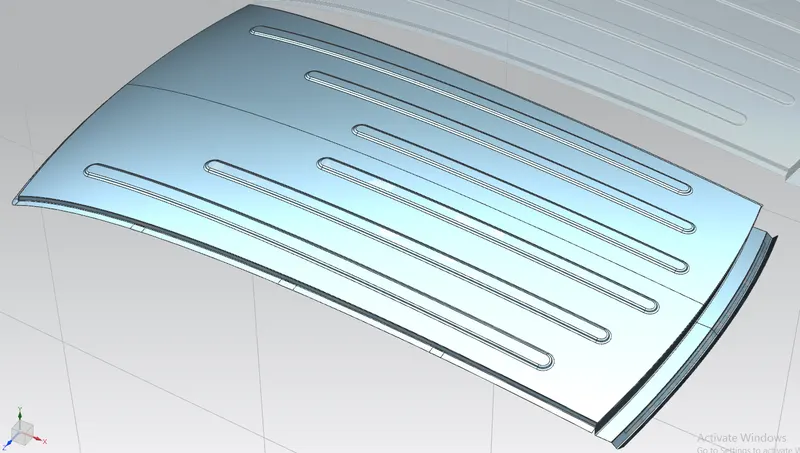
- Roof
The ditch area of the roof is designed using the master sections provided
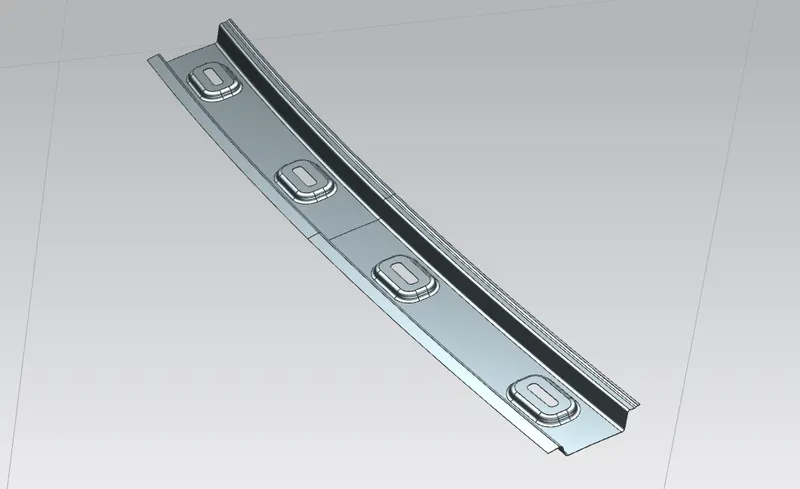
- Front Roof Rail
The Front rail is created according to the master section and keeping the visibility criteria in mind
- Rear Roof Rail
The Rear rail is designed keeping in mind the rear visibility criteria, and using the master section provided
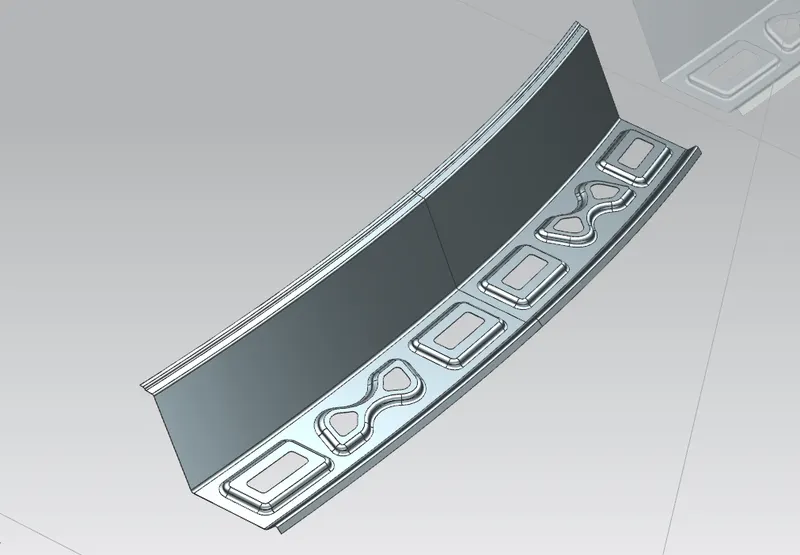
- Centre Roof Rail
The Centre Roof Rail provides the roof with additional strength in an adverse case of a roll over thus avoiding injury of the occupants of the vehicle. The reinforcement of the rail is attached with the roof by Mastics and attached to the rail by spot welds. For the Mastics the reinforcement has a clearance of 5mm from the roof.
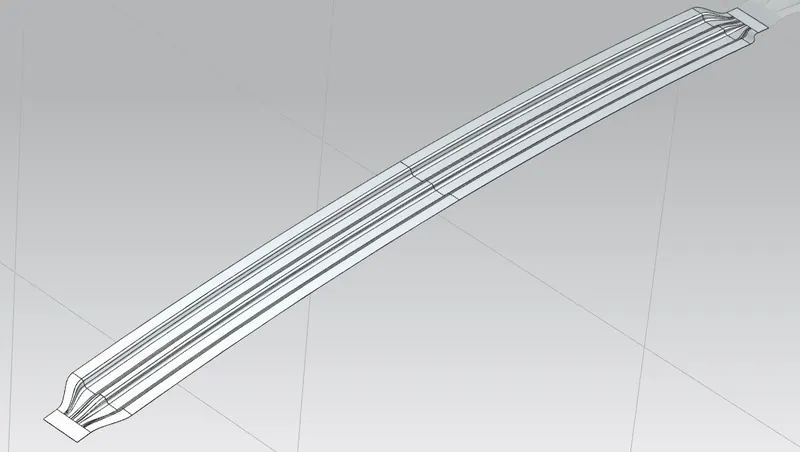
- Bow Roof Rail 1 and 2
The bow roof rails also provide the roof with structural strength and their position have to be justified by the Heat Distortion and Snow Load criteria. Both the Bow Rails are attached to the roof by means of Mastics thus a clearance of 5mm from the roof is provided for that purpose.
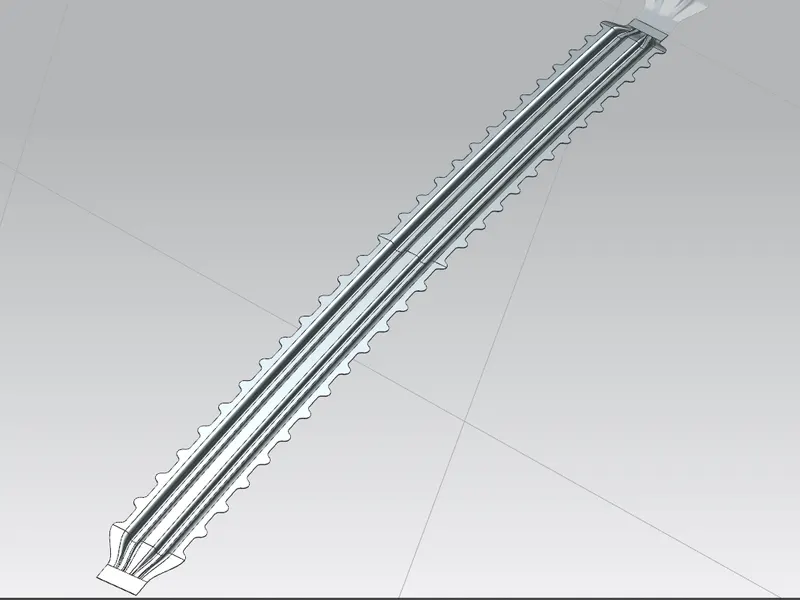
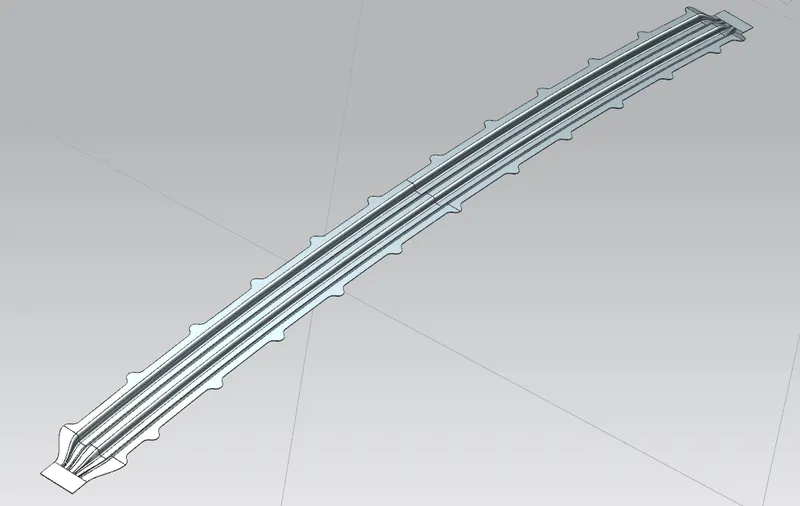
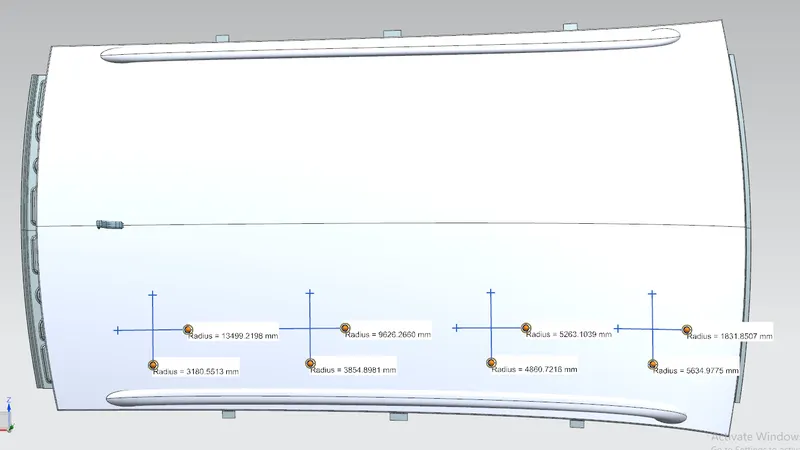
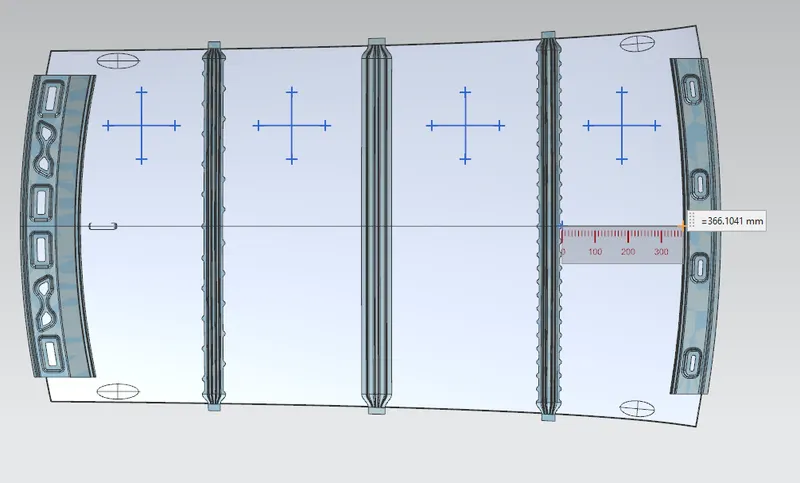
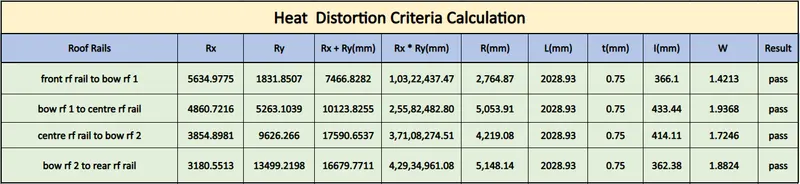
HEAT DISTORTION CRITERA CALCULATION
Bow–roof prediction Formula
W = [1.73 x 10^(-3) x L] + [1.85 x 10^(-8) x (R^2)/t] + [ 1.10x10^(-3) x l] - 2.68
Judgement Condition : OK< 2.7> 3.1
Where
L = Roof Length in X-Direction[mm](Roof dimension in 0-Y)
R = Roof curvature
R = 2(Rx*Ry)/(Rx+Ry)
Rx = X curvature
Ry = Y curvature
t = Roof plate thickness [mm]
l = Bow Roof Span [mm]
SNOW LOAD CRITERIA CALCULATION
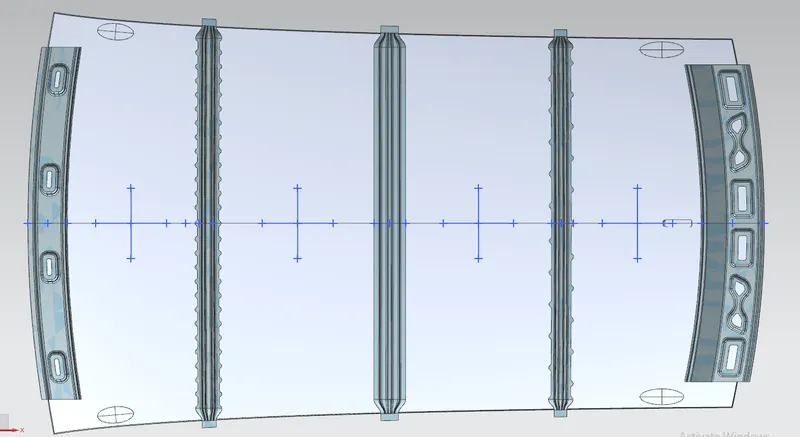
Snow load Prediction formula
Qr = [Iy x t2] / [α x s x [(Rx + Ry)/2]2 x 10-8]
Note: The Qr value given over here is correct. There was a typo error in the formula given in the video.
Where
α = My x Lx2 x 10-12 , My = Y(Ly-Y)
Judgement condition = Qr ≥ 3.1
250 ≤ s ≤ 380
t = Roof plate thickness [mm]
Ly = Distance between the front and rear roof Rails on the Vehicle along with 0Y[mm]
Length of Roof panel with the center point between Roof rail Front /Rear as the front and rear reference point.
Lx = Distance between the Left and Right end of the roof on the Roof BOW [mm]
Width of the roof panel exposed on the surface.
Y = Distance front Front Roof Rail to Roof BOW[mm]
s = Distance for which Roof BOW bears divided load [mm]
s = L1/2 + L2/2
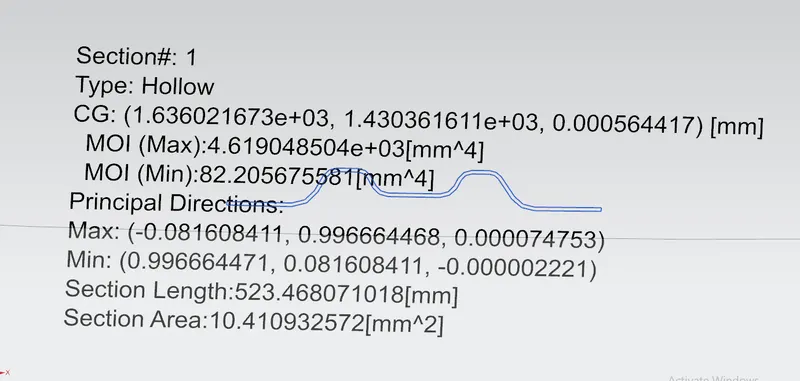
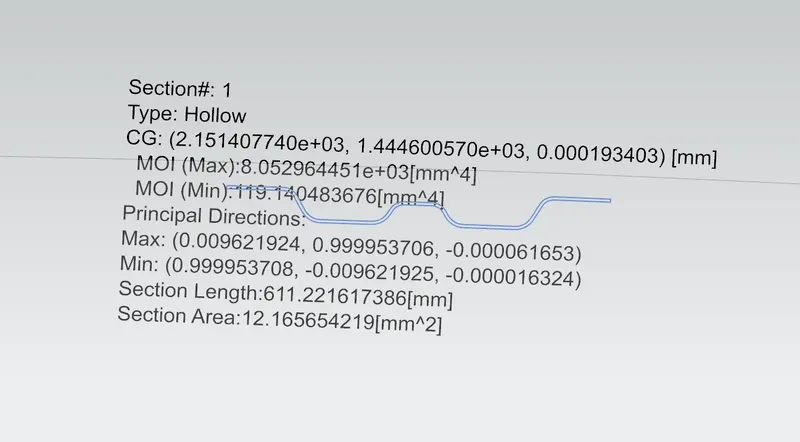
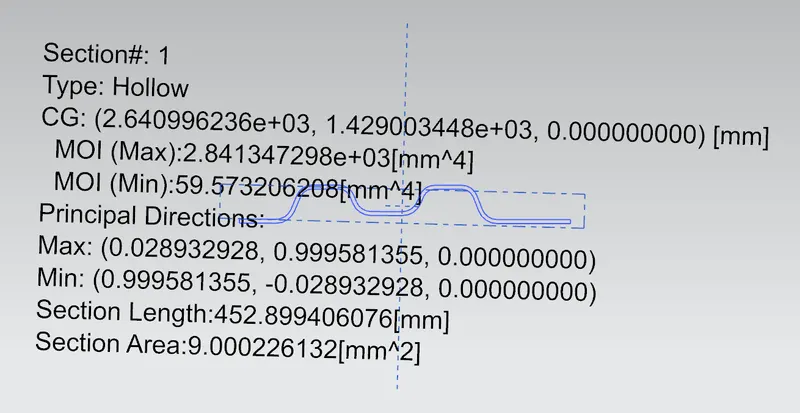
Iy = Geometrical moment of inertia of Roof BOW (Y cross-section )[mm4]
Rx = Lateral direction curvature radius of roof panel Y cross-section on Roof BOW [mm]
Roof panel curvature Radius of the Length Lx in Front view
Ry = Longitudinal Direction curvature radius of the Roof panel X cross-section on Roof BOW [mm]
Roof panel X curvature radius of length s in Side view
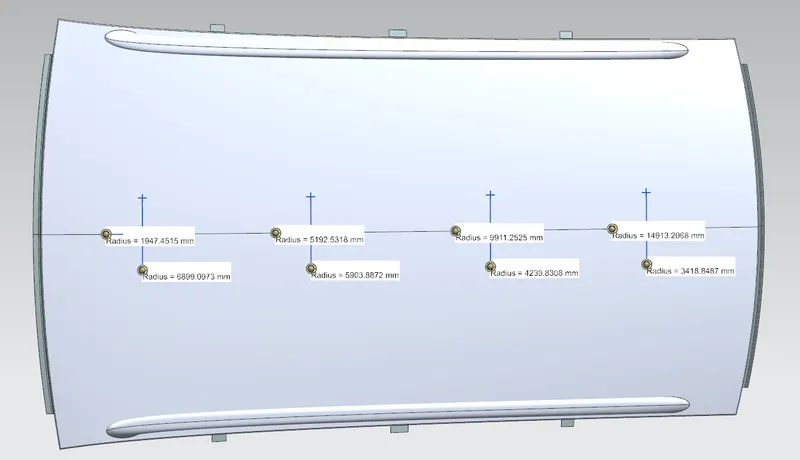

Section Inertia Analysis
Bow Roof Rail 1
Centre Roof Rail
Bow Roof Rail 2
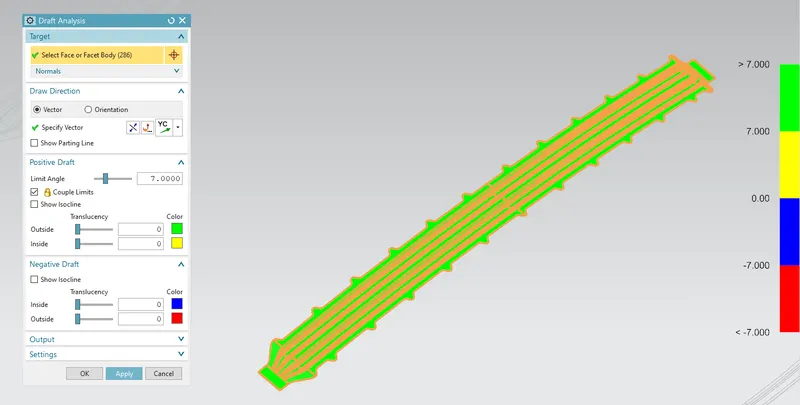
DRAFT ANALYSIS
1. Roof
2. Front Roof Rail
3. Rear Roof Rail
4. Centre Roof Rail
5. Bow Roof Rail 1
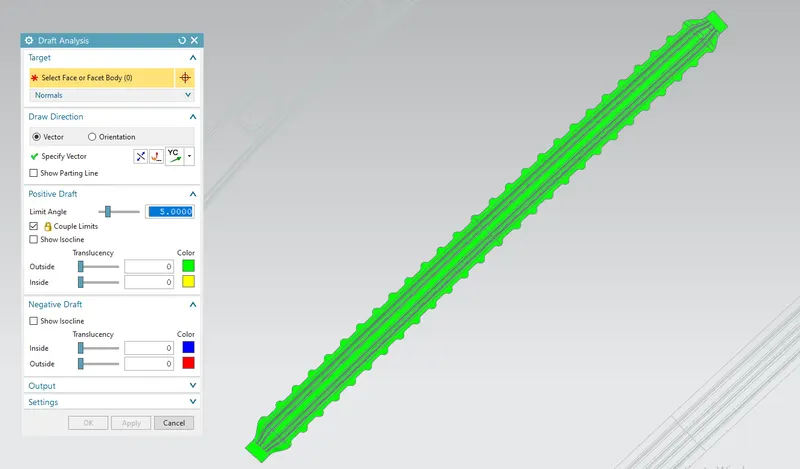
6. Bow Roof Rail 2
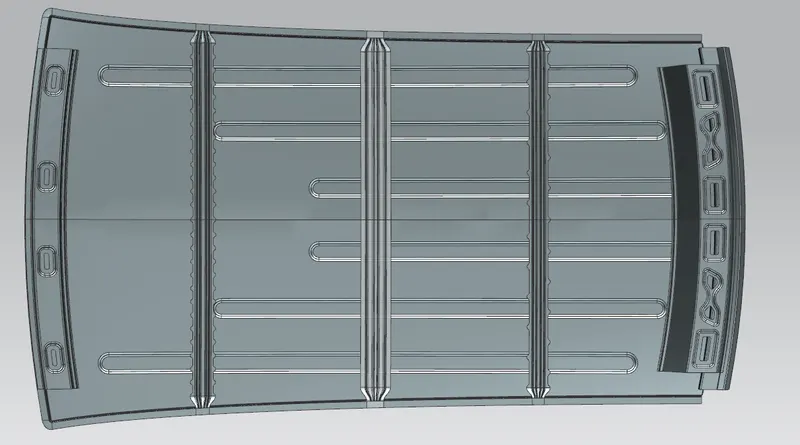
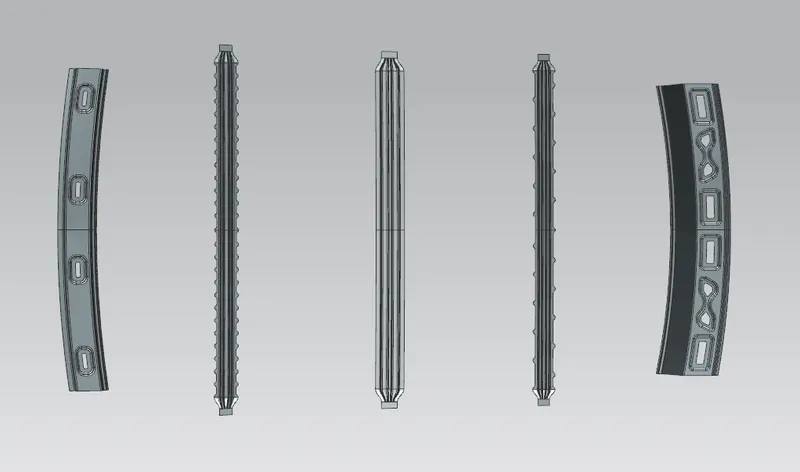
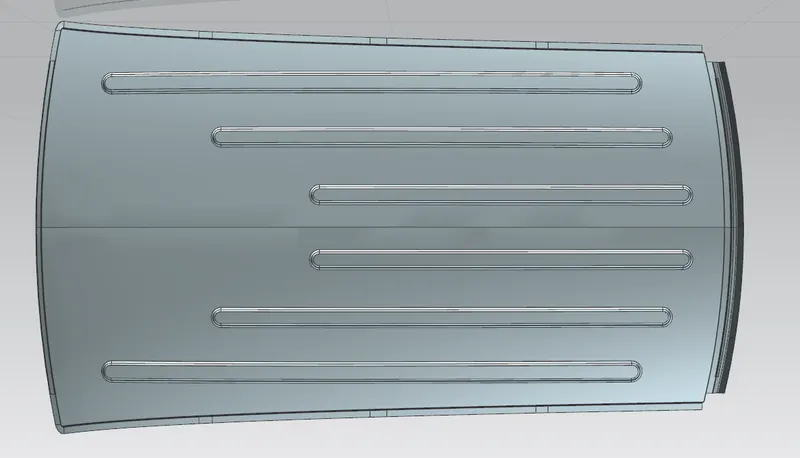
Clips of the finished roof design
CONCLUSION
- The Roof and its reinforcements were designed successfully according to their master sections and criteria’s
- The Heat Distortion Criteria was fulfilled
- The Snow Load Criterial was not fulfilled, thus the design needs to be improved or the roof styling portion can be given embosses as shown in the design done.
- The Draft analysis was also performed and the parts are found to be manufacturable.