Roof Design
ROOF DESIGN
AIM:
To design a roof with all the components like front roof rail,rear roof rail and bow roof by following the given master section and the high quality surface, considering all the design requirements as per the OEM standard.
ROOF:
An automobile roof or car top is the portion of an automobile is an integral part of BIW (Body in white) design.A car roof is responsible for protecting the passenger from rain,wind,sunlight,accidents etc.It also offers aerodynamic support to the car when it is in motion.A roof panel assembly includes a roof outer panel/ditch area and inverted hatch like reinforcement.Roof rails are provided to give strength to the outer panel and also provide to support other commodities present in the car.
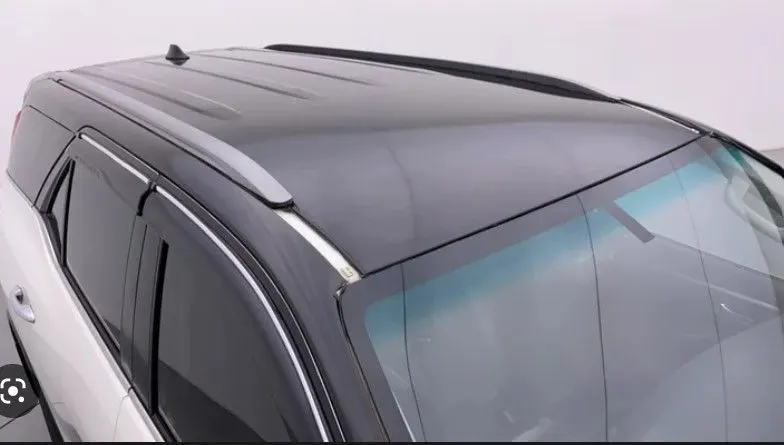
Typical sections:
1.Front roof rail
2.Rear roof rail
3.Centre roof rail
4.Bow roof
the above mentioned roof rails are designed with reference to master section.
Ditch area:
The ditch area is the extended portion of the main roof which is concealed by other BIW components followed by the other aesthetic surface.It also serves the joining purpose for the reinforcement which is joined using the spot welding.Visibility,clearance for the windshield and backdoor mountings are some of the factors needed to be considered while designing the ditch area.
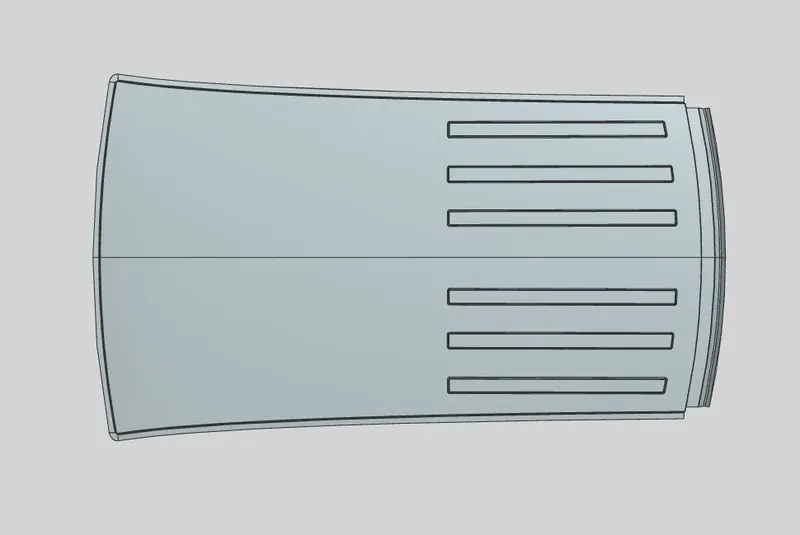
1.Front roof rail:
Front roof rail is the rainforcement that features to the back of the bracket lamp and room lamp and it also serves the purpose of attaching the windshield.The development of FRR is on the master section and also references from the given styling and the front ditch area are taken into consideration. Embosses and darts are incorporated for strengthening the part.
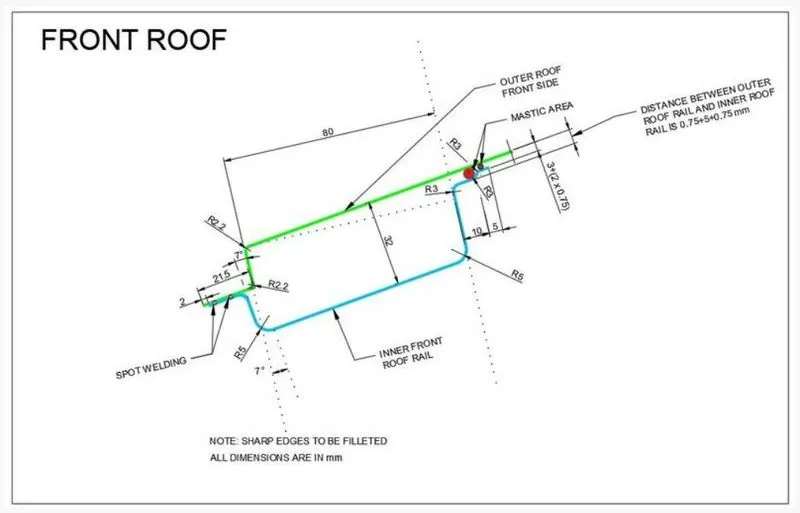
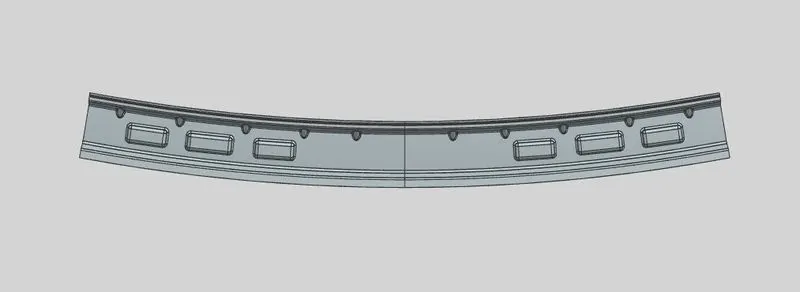
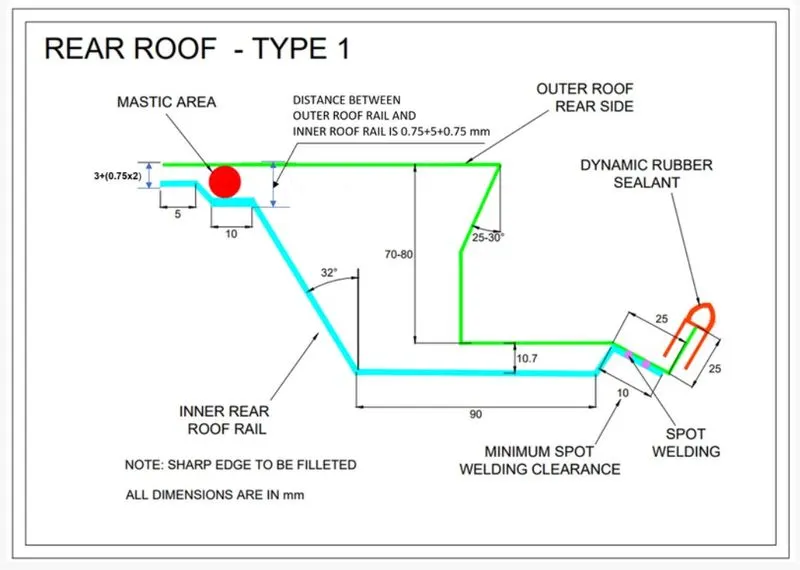
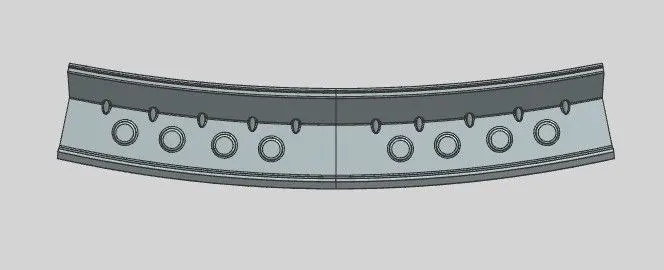
2.Rear roof rail:
It is a reinforcement provided to the rear portion of the roof and it is also features the tailgate mountings.The development of RRR is dependent upon the rear headroom clearance and rear visibility criteria.The minimum clearance from the headliner to the roof is should be 80mm which will vary from variant and region to region.
3.Centre roof rail:
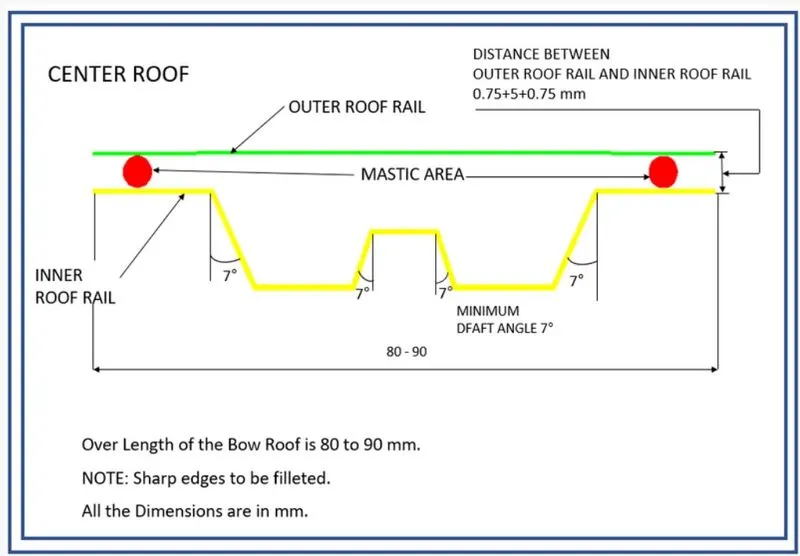
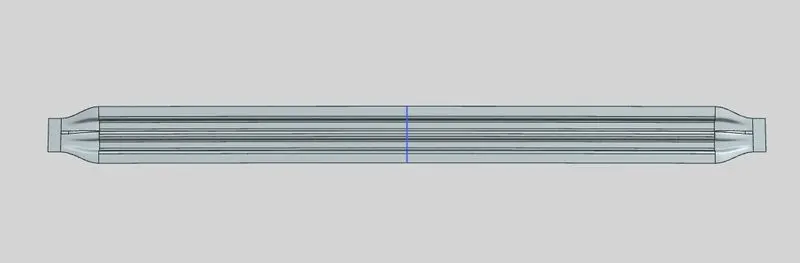
These roof rails are positioned mostly on the center portion of the roof are at the B pillar of the vehicle i.e, the most flatter region of the car which is susceptible to failure under the action of load.
4.Bow roof:
These are the reinforcements provided on the most flatter regions of the roof which are more susceptable to failure.The number of bow roofs depends upon the length of the roof i.e, longer roofs like vans.For the development of the bow roofs, the styling surface and side ditch area are taken as reference.
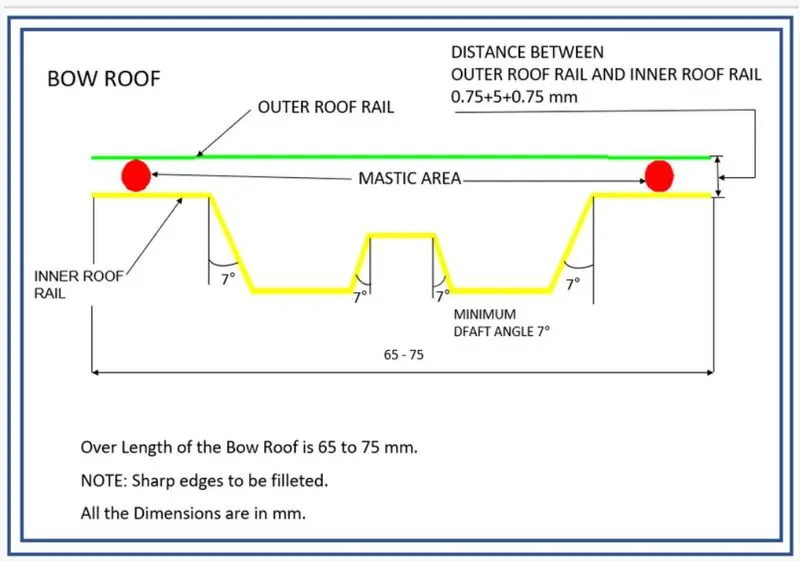
Bow roof 1
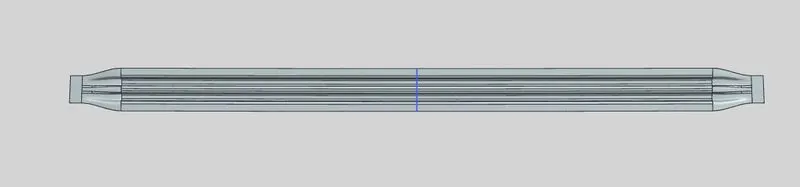
Bow roof 2
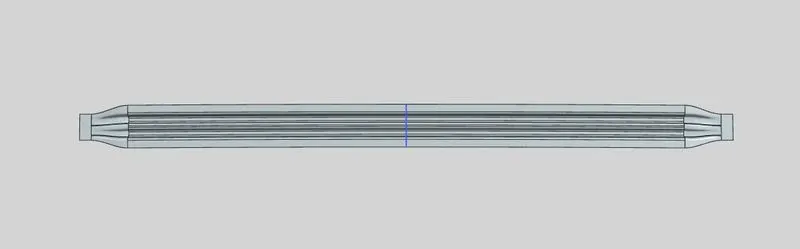
Joining process:
The flanges of front roof, rear roof, center roof, bow roof 1, bow roof 2 are joined using the spot welding, whereas mastic sealants are provided along the roof rails to improve the strength and also provides to provide bad marks on the aesthetic surfaces.
Final assembly:
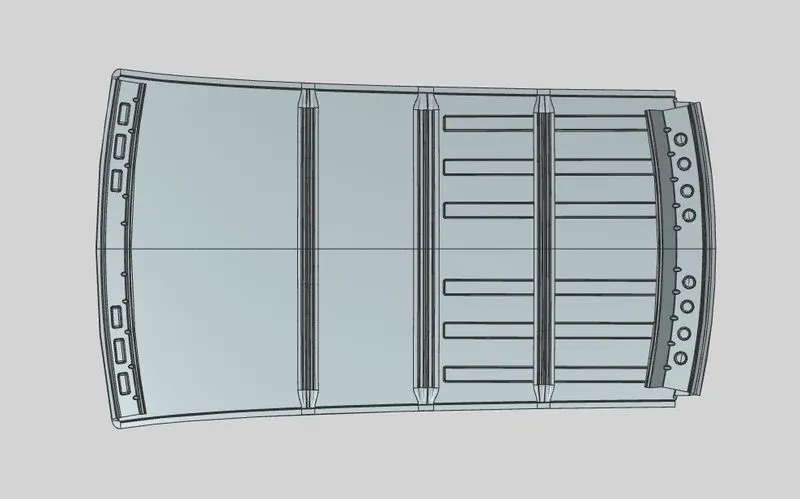
Curvature study:
1. Heat distorsion study:
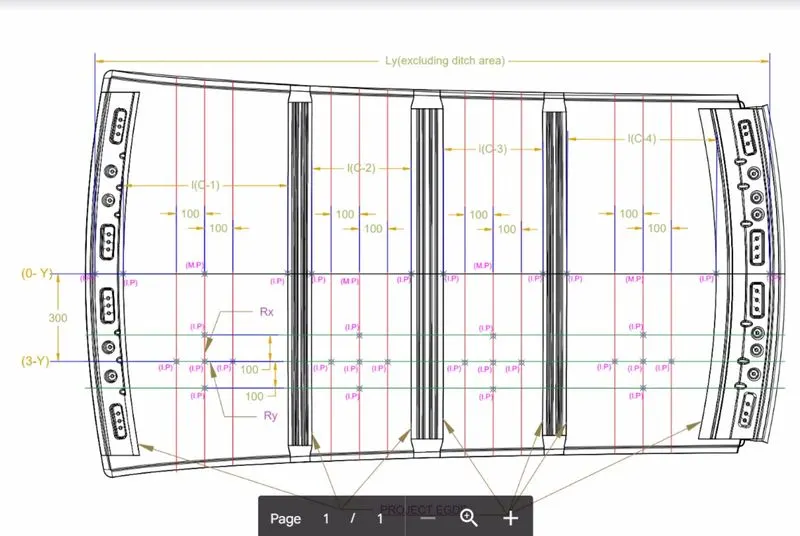
Heat distorsion temperature is the temperature at which the metal softens and deforms under a specific load.This study is done to check the ability of the roof to withstand high temperatures concerning the positioning of the reinforcements which contribute to increased strength.
Procedure:
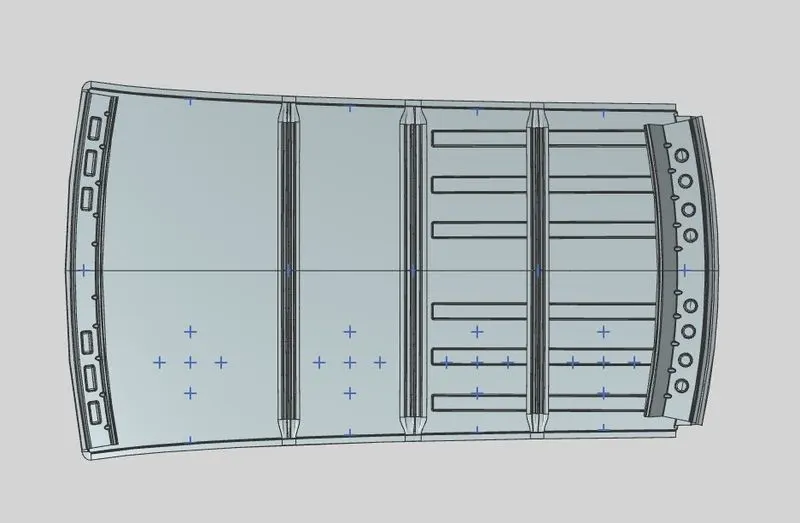
- Create a center line at the O-Y region of the roof and then offset the same to -3Y.
- Create a symmetric line from the -3Y region at a distance of 100mm.
- Draw a vertical line at the midpoint of the line drawn from the center point of the FRR and BR1 and followed the same till the rear roof rail.
- Offset the vertical line to a distance of 100mm on each side.
- Create intersection points and project them on the roof.
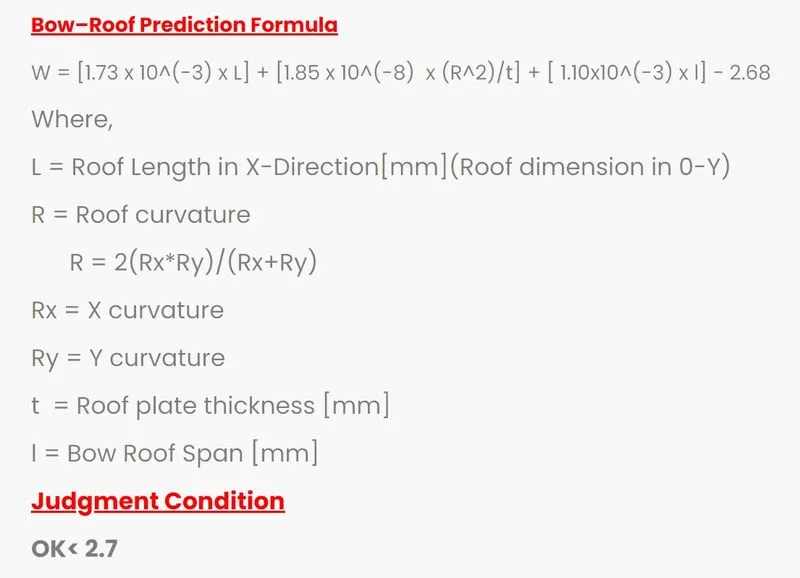
- From these projected points,make a 3-point arc and the Rx and Ry values.
Heat distortion formula:
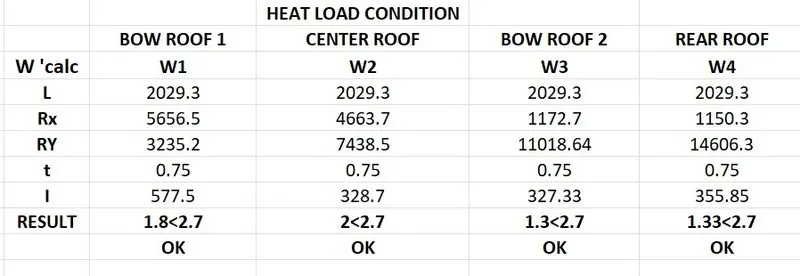
From the above result,the positioning of Bow roof and Center roof rail satisfies the condition for Heat distortion criteria.
Snow load criteria:
A snow load study is done to check the ability of the roof to withstand snowfall and bounce back to its original position without undergoing permanent deformation upon the removal of the load.
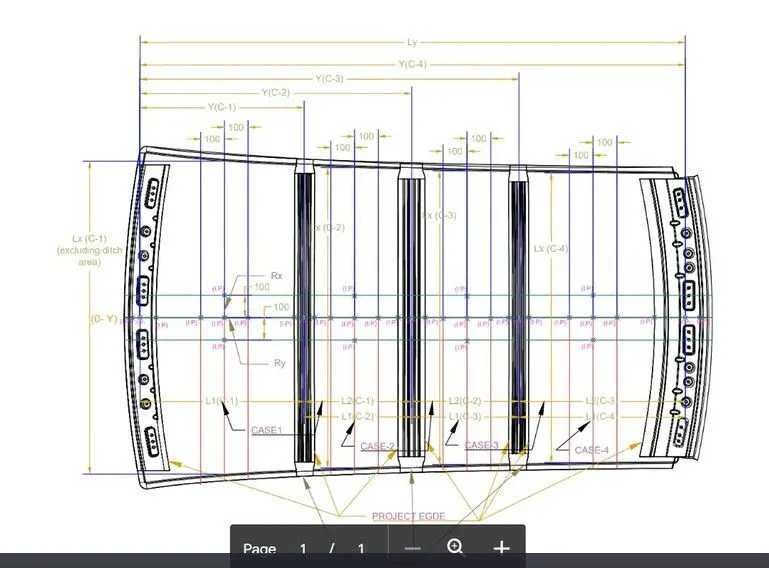
Procedure:
- Create a center line at the O-Y region of the roof and then offset the same to 100mm on each side.
- Draw a vertical line at the midpoint of the line drawn from the center points of the FRR and BR1 and followed the same till the rear roof rail.
- Offset a vertical line to a distance of 100mm on each side.
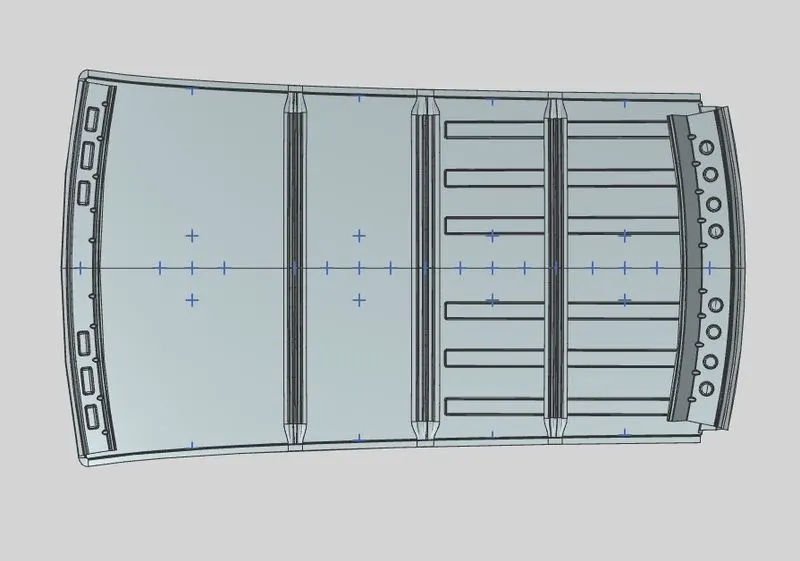
- Create the intersection points and project them on the roof.
- From these projected points, make a 3-point arc and the Rx and Ry values.
- Project the extreme edjes of the styling surface for measuring the width at the respected sections.
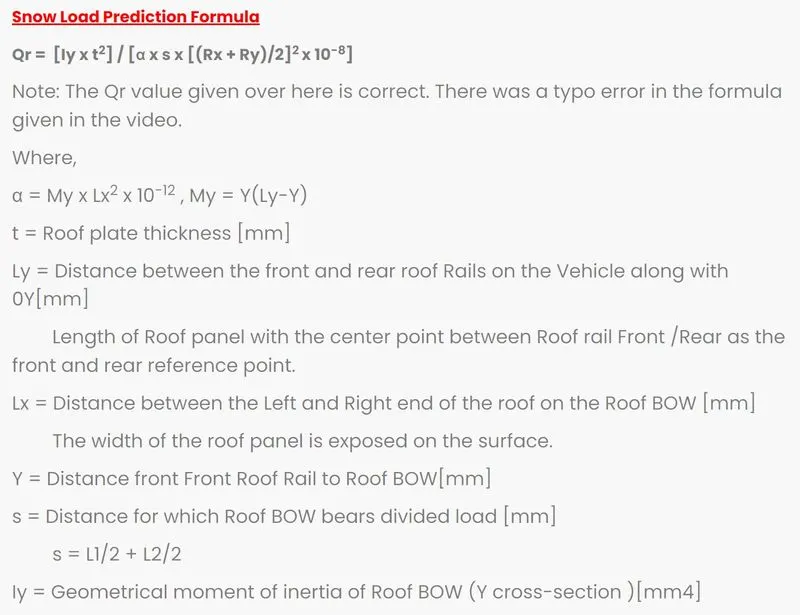
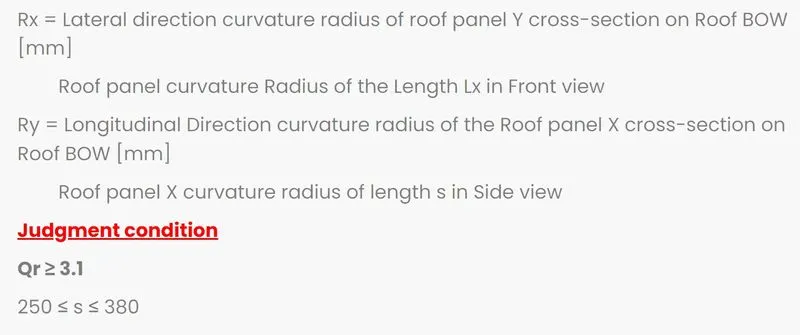
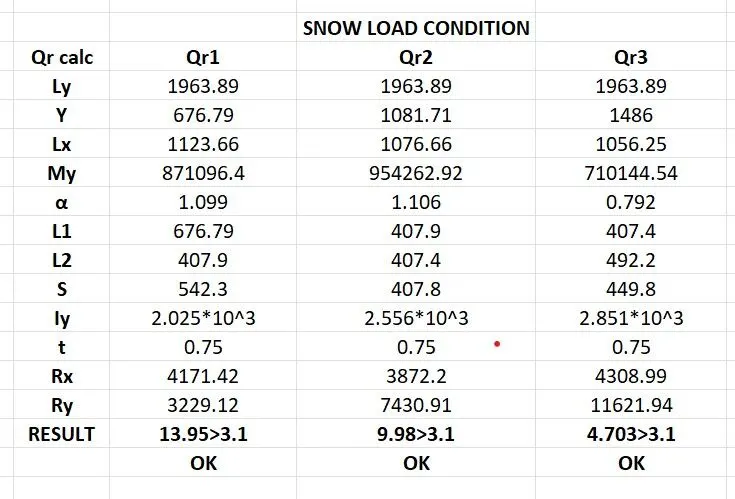
From the above result, the positioning of the Bow roof and center roof satisfies the condition for snow load criteria.
Draft analysis:
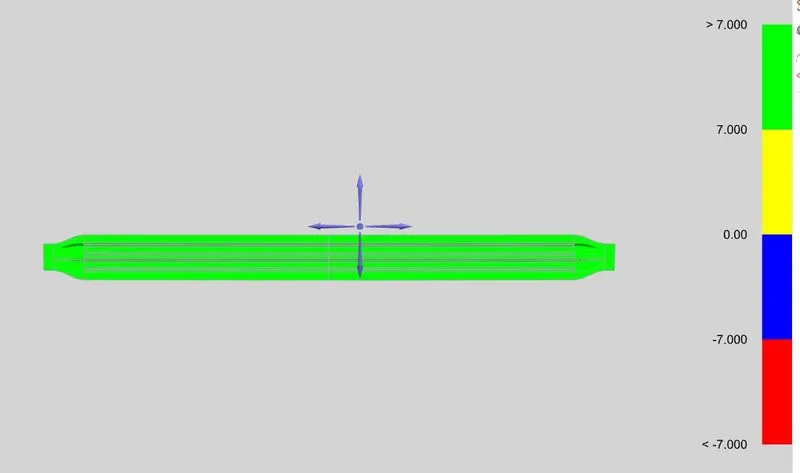
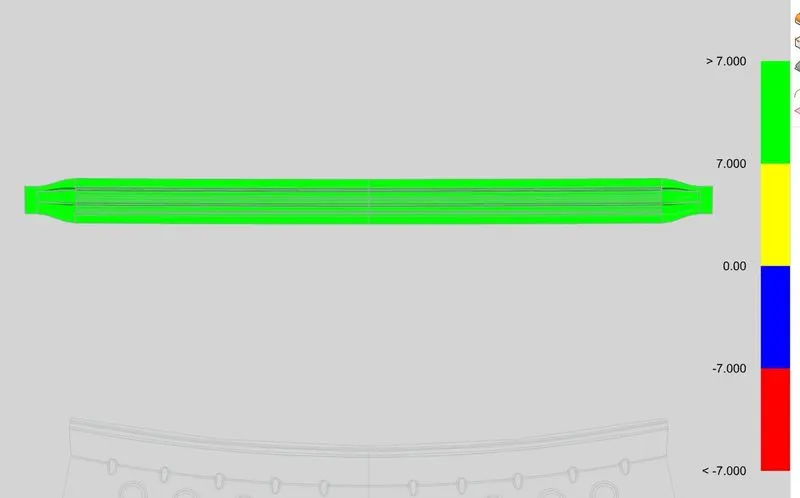
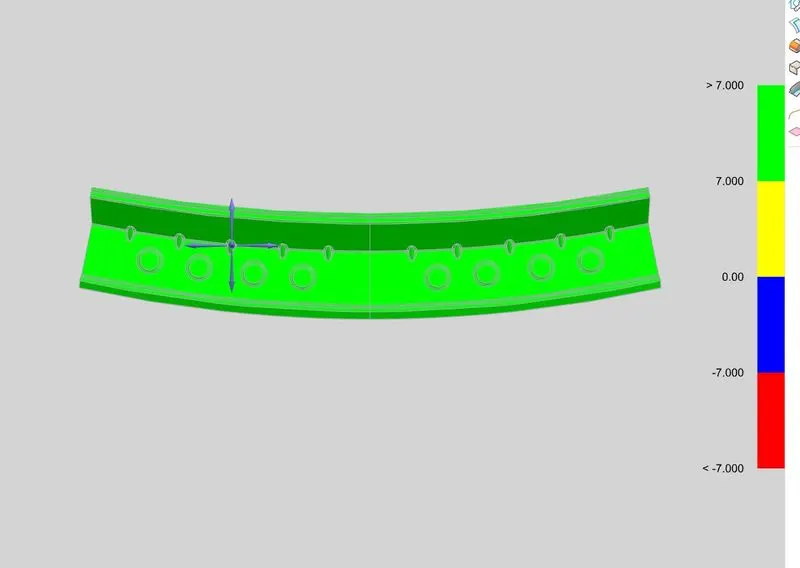
Draft analysis is carried out to check the manufacturing feasibility of the roof and all the reinforcements rails.All components should be designed by considering atleast minimum draft angle of 7 degree.
ROOF OUTER PANEL:
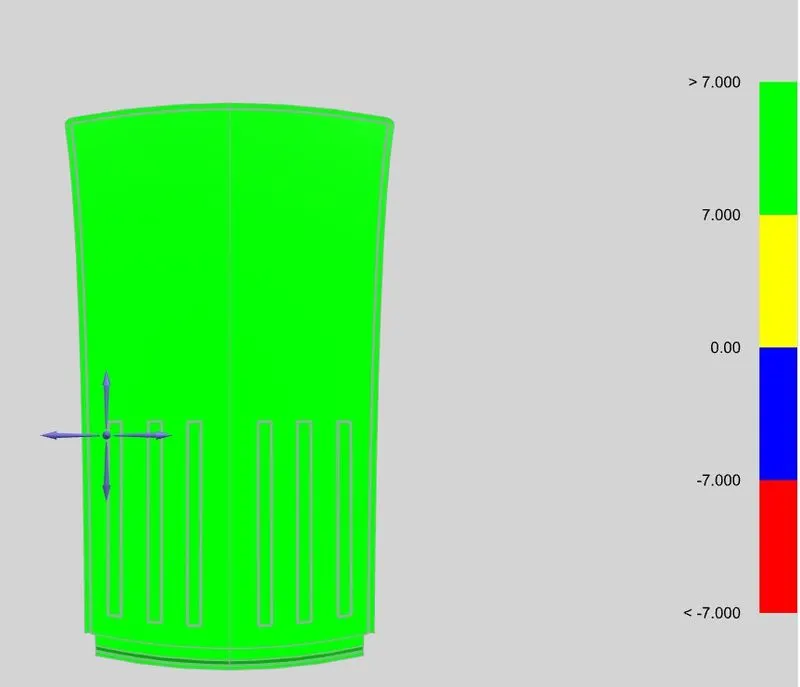
FRONT ROOF :
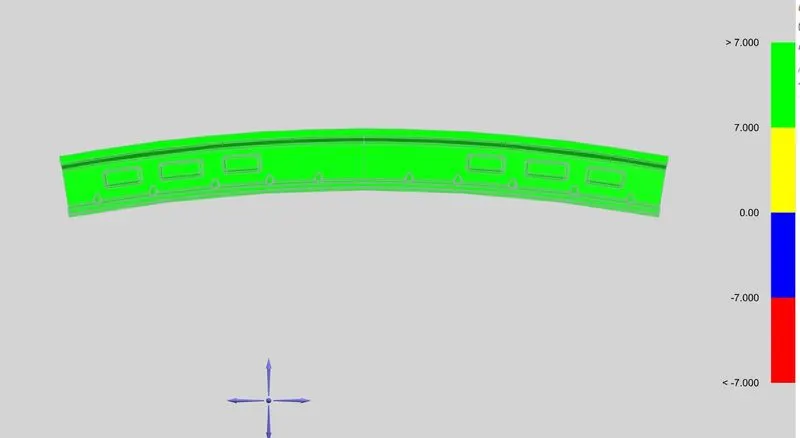
BOW ROOF 1
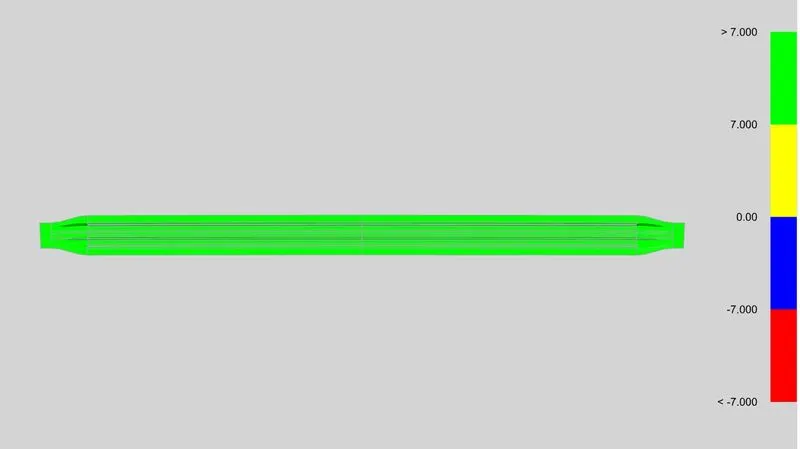
CENTER ROOF:
BOW ROOF 2:
REAR ROOF:
Conclusion:
Thus the roof is designed with all the necessary reinforcements and roof rails according to the given master section and the styling surface, by considering all the design parameters.Also, the curvature study is done by taking the heat distortion and snow load criteria for determining the strength of the roof.