Roof Design
AUTOMOBILE ROOF
Introduction
An automobile roof or car top is the portion of an automobile that sits above the passenger compartment, protecting the vehicle occupants from sun, wind, rain, and other external elements.
The car ceilings are typically coated with headliners that provide insulation against heat and noise, and also hide wires and hardware for electrical components, antennas, and other accessories.
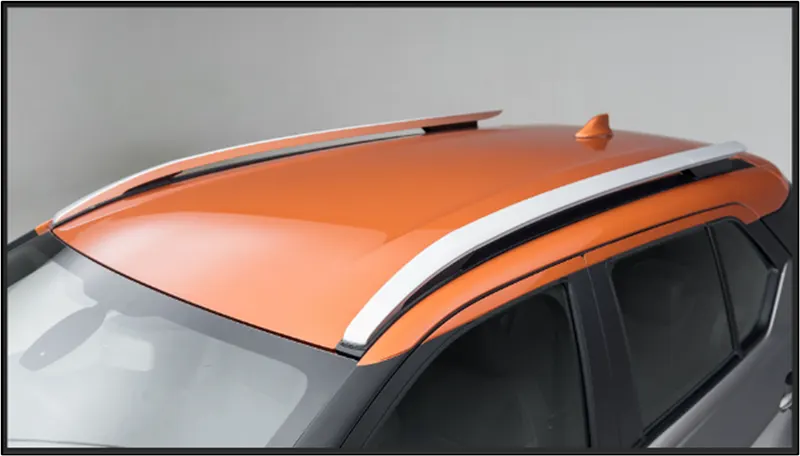
Roof Rails –
The roof rails are common components mounted to a car roof. However, you may realize that not all cars have equipped with roof rails. They appear in the form of two sturdy crosswise metals on the roof of the car, often be seen on SUV or MPV cars.
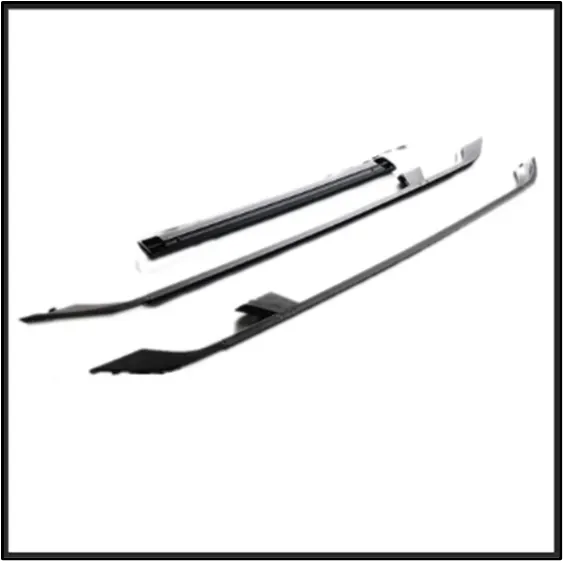
Roof Rail types –
There are at least two common types of roof rails. The first one resembles an inverted “C” letter. The rails’ legs are attached to the roof of the car while the rail itself forms an arc. This type typically has a few inches of distance between the car’s roof and the rail. The second type, on the other hand, is the flush-mounted roof rail, in which there is no gap between the roof and the rail, hence making them look attached.
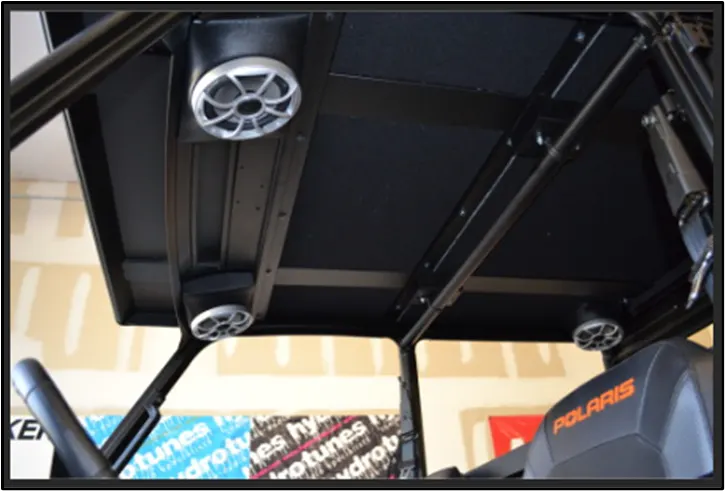
Use of Roof Rails –
Roof rails are not mere decoration because they actually do serve a purpose. Roof function as a buffer fence and can also be useful in securing your equipment or luggage that placed on the roof of the car. Have this installed lets you do not worry about overloading your car’s trunk.
DESIGN OF ROOF & ROOF RAILS
1. Roof Outer Panel –
Skin Data –
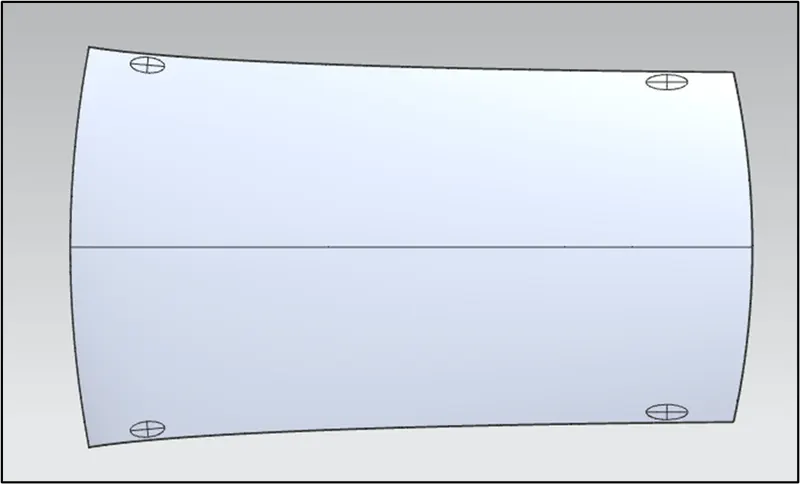
Roof Surface Body –
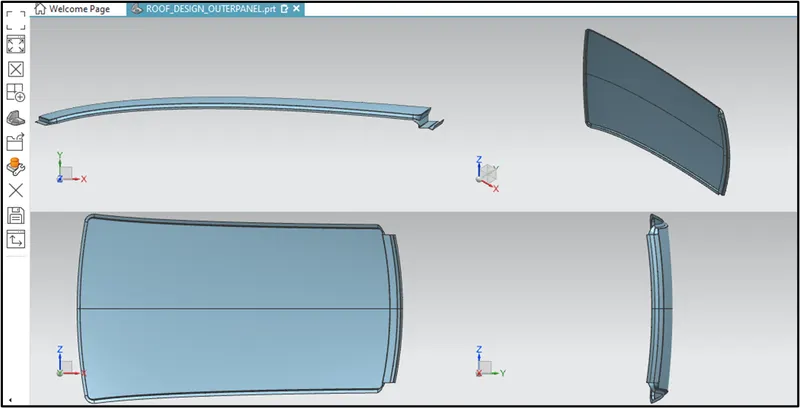
Roof Thicken Body –
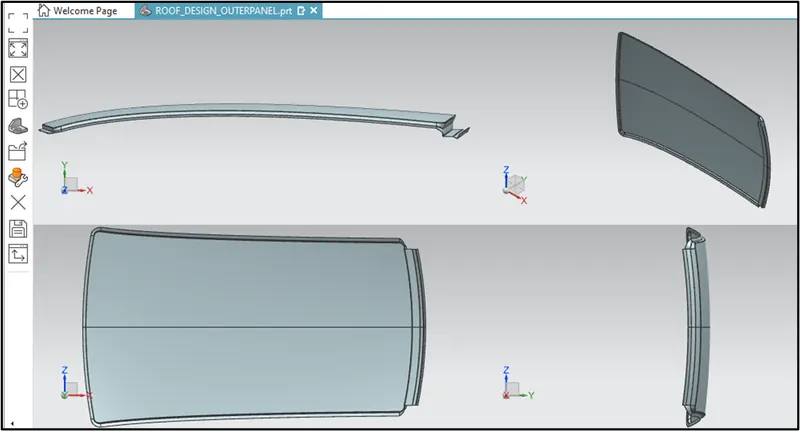
2. Roof Rails –
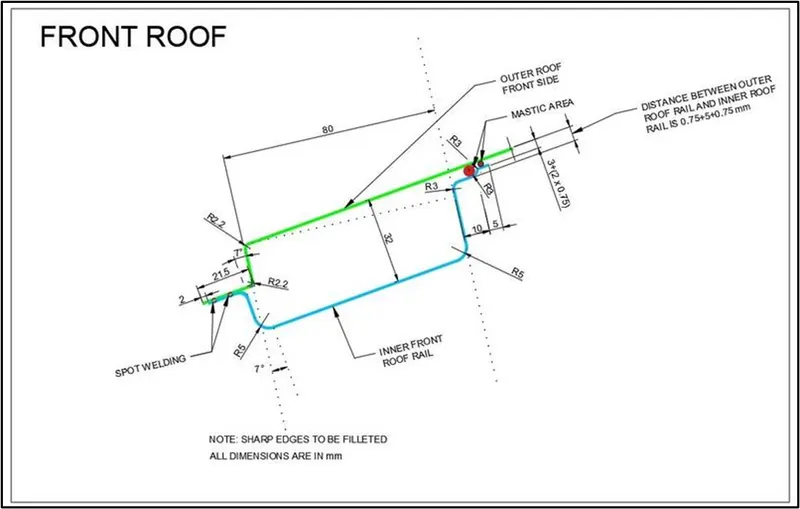
a. Front Roof Rail
Master Section –
Thicken Body –
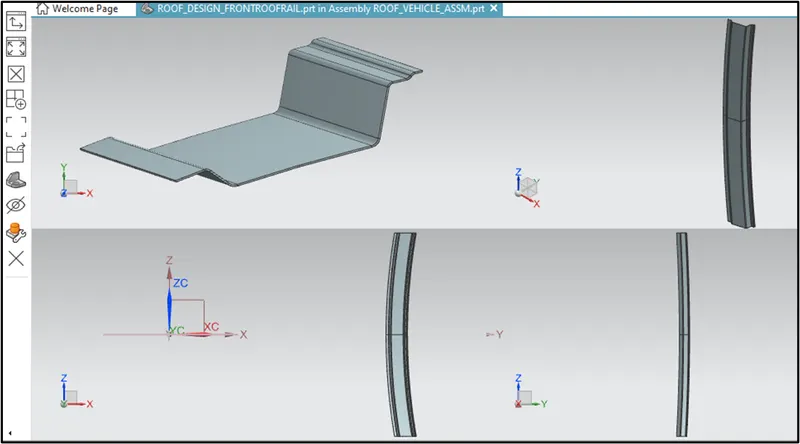
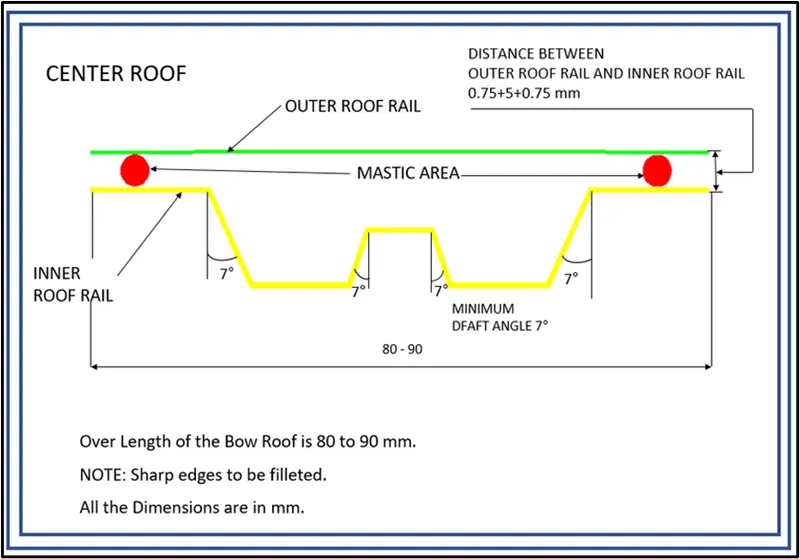
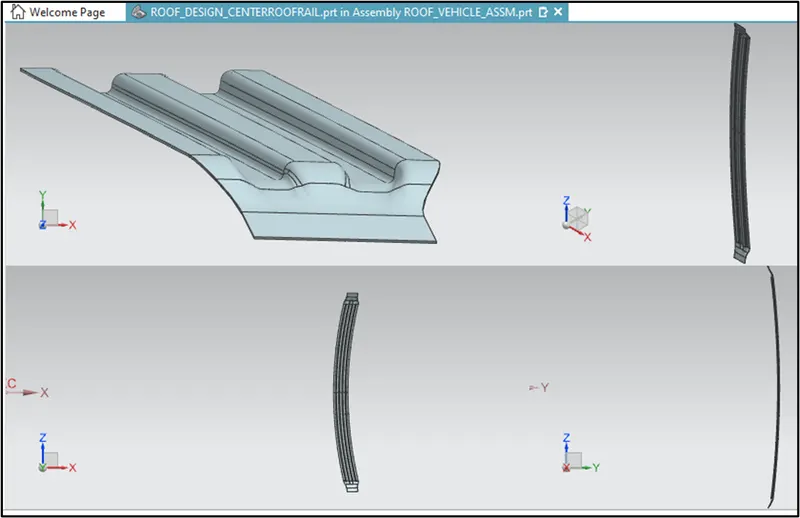
b. Center Roof Rail –
Master Section –
Thicken Body –
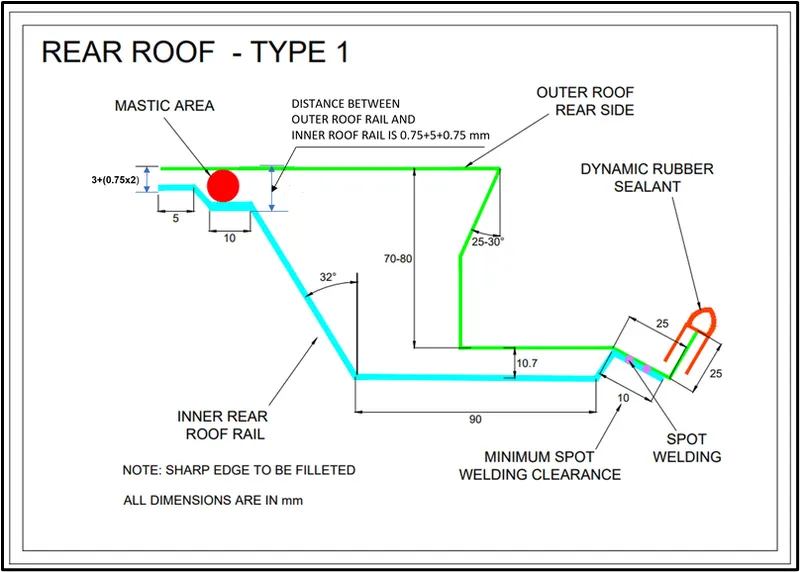
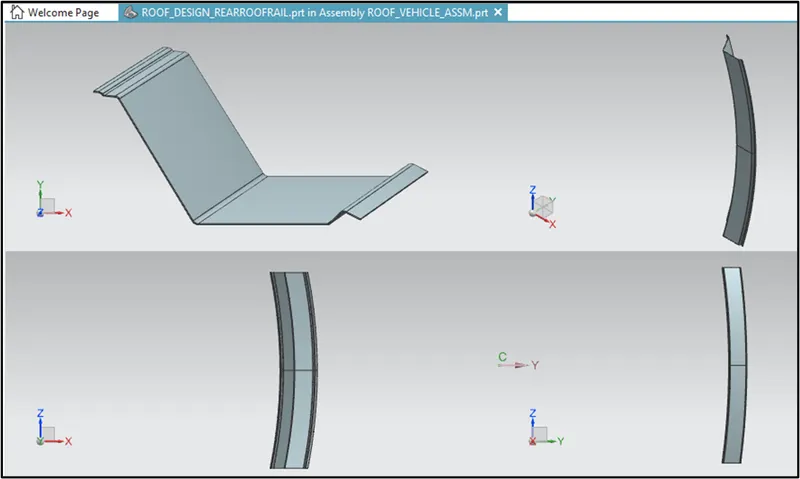
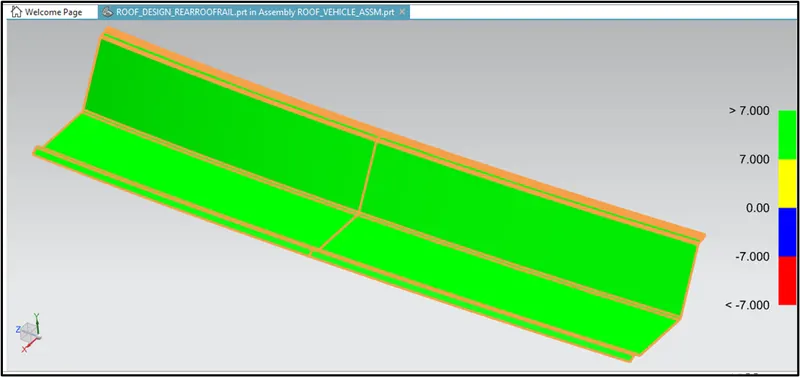
c. Rear Roof Rail –
Master Section –
Thicken Body –
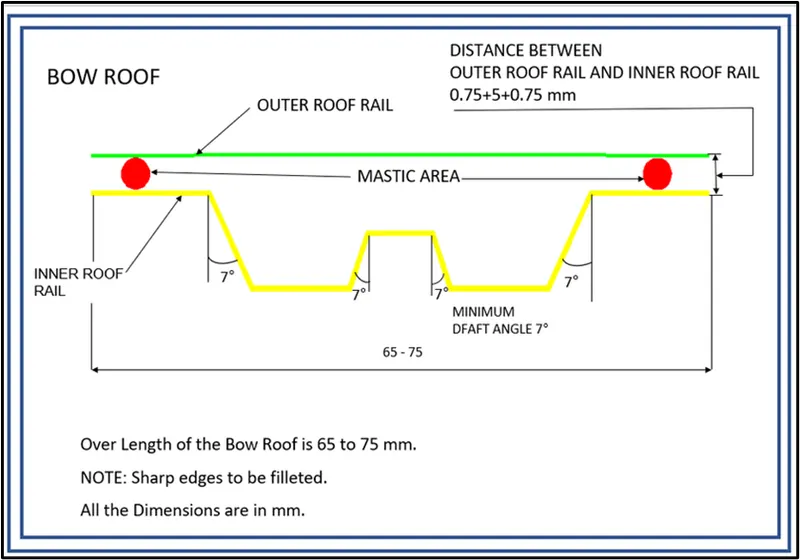
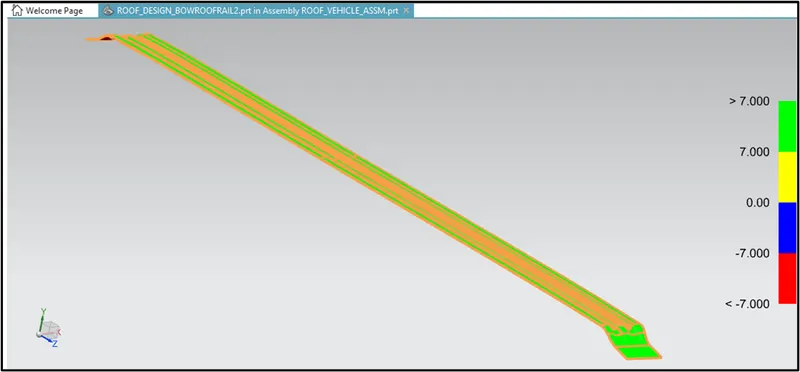
d. Bow Roof Rails –
Master Section –
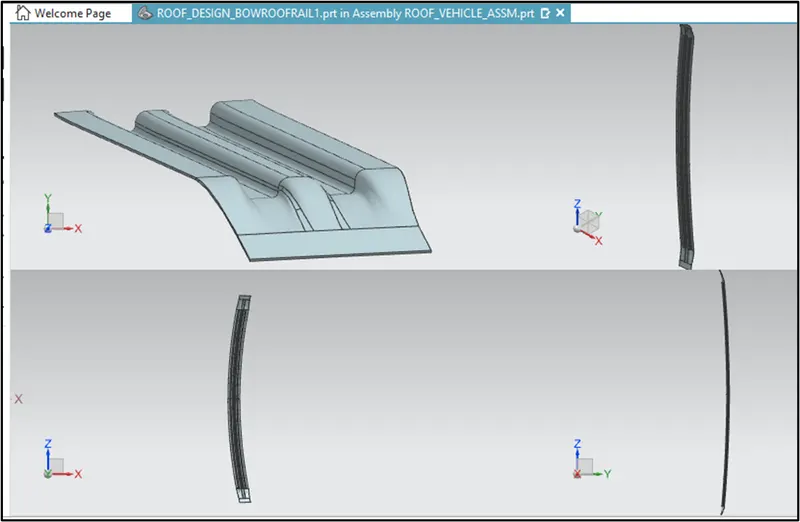
Thicken Body –
Rail_1 – Between Front roof rail & Center roof rail
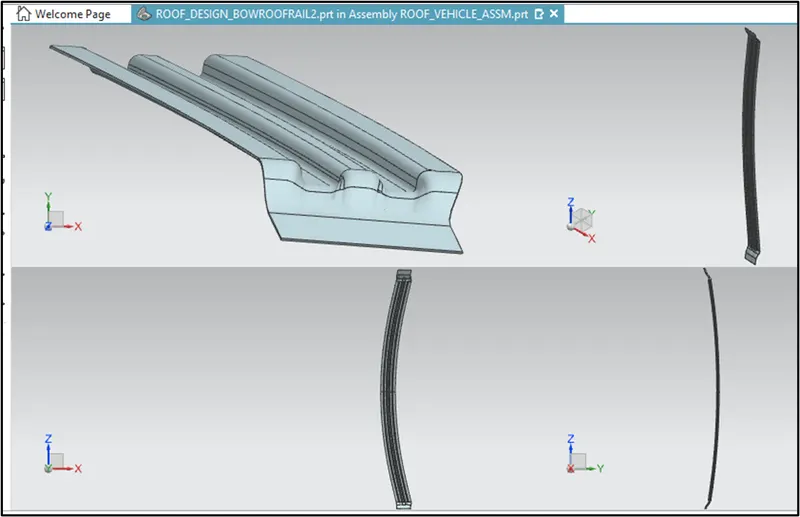
Rail_2 – Between Center roof rail & Rear roof rail
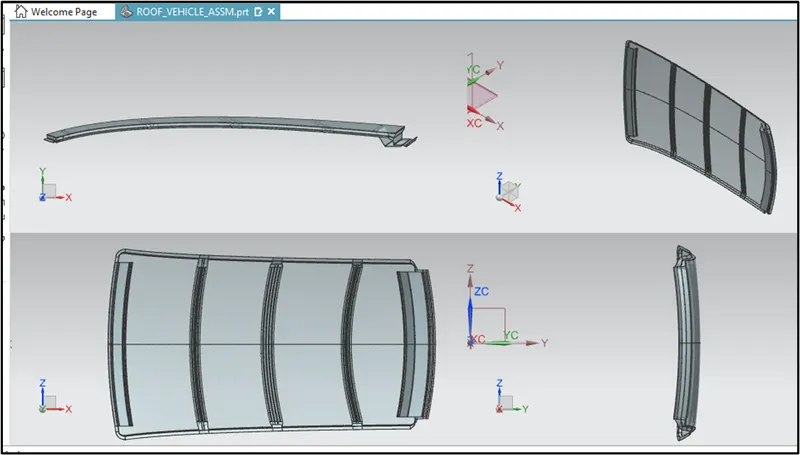
3. Assembled Model –
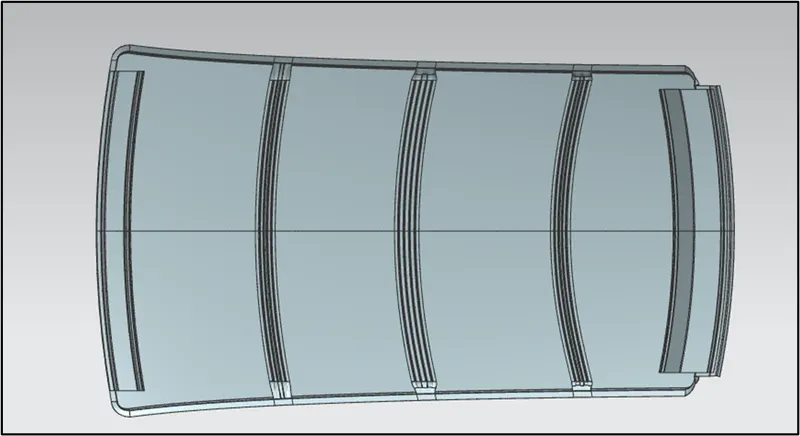
CALCULATIONS FOR THE POSITION OF ROOF RAILS
1. Heat Distortion Criteria Calculation
Formula & Condition –
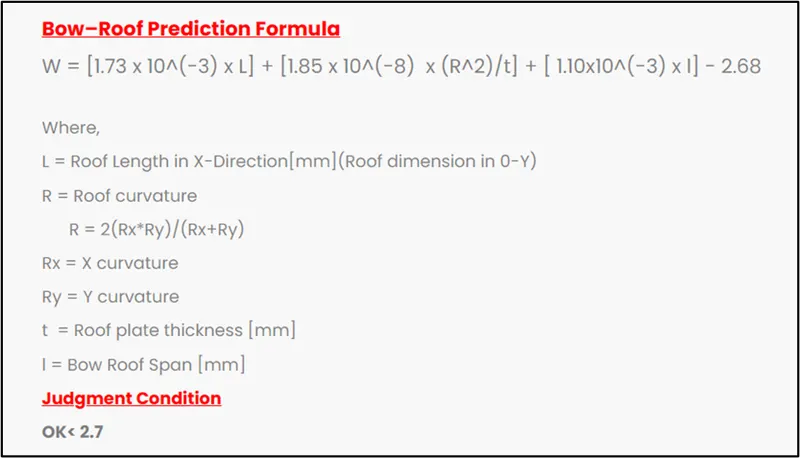
Tabulated Results –

2. Snow Load Criteria Calculation
Formula & Condition –
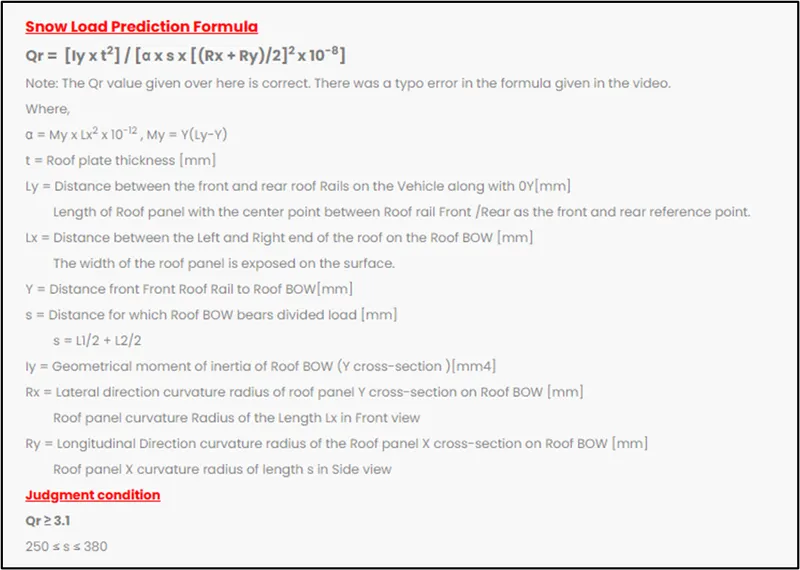
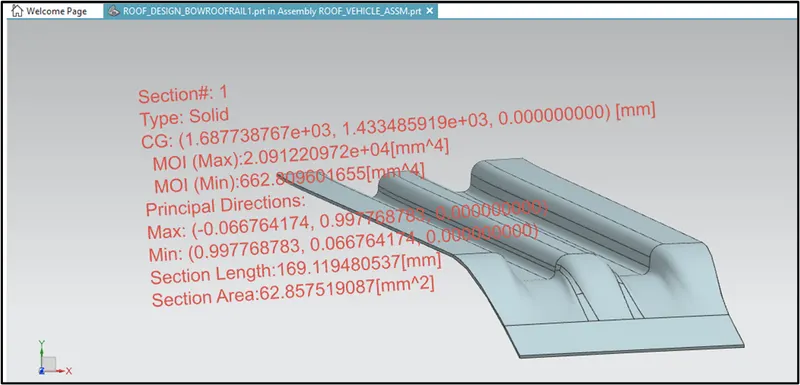
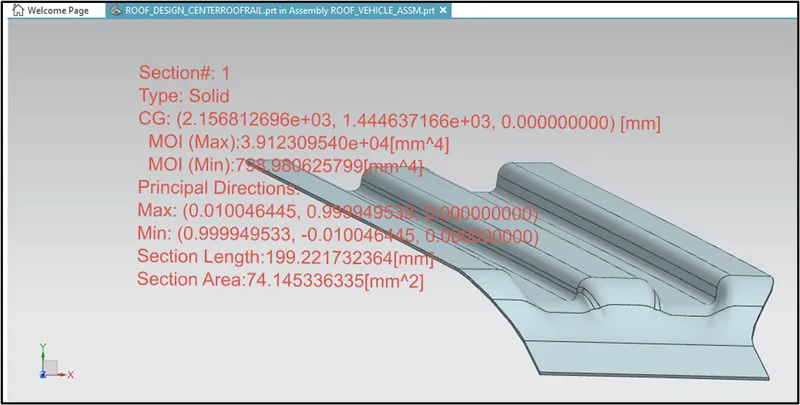
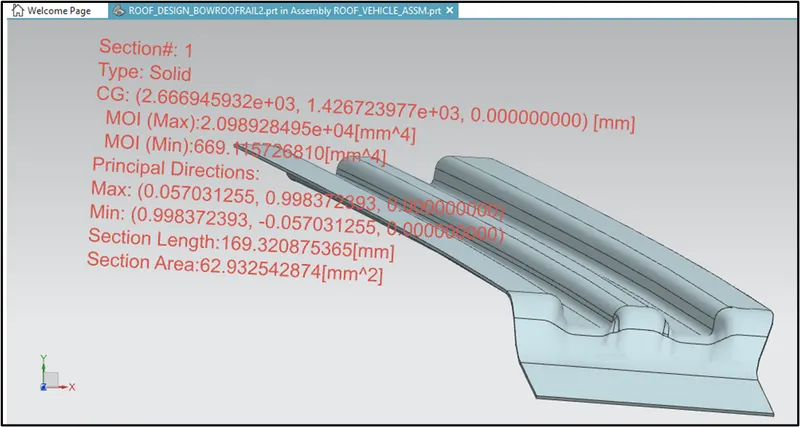
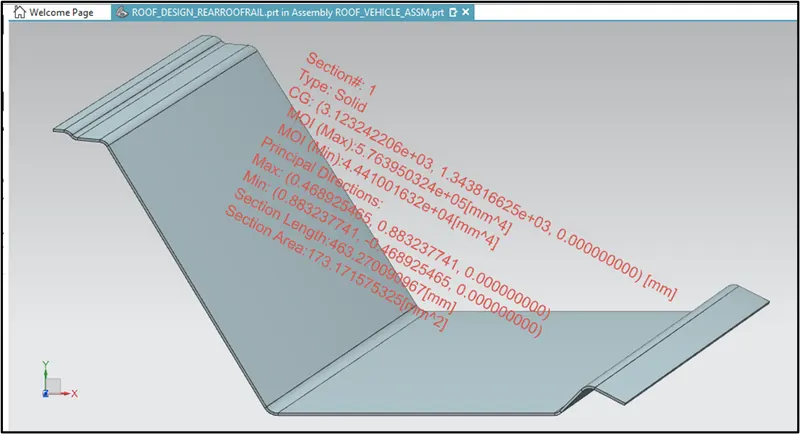
Section Inertia Analysis – For obtaining value of Geometrical Moment of Inertia of Row Boof (Iy)
a. Front Roof Rail
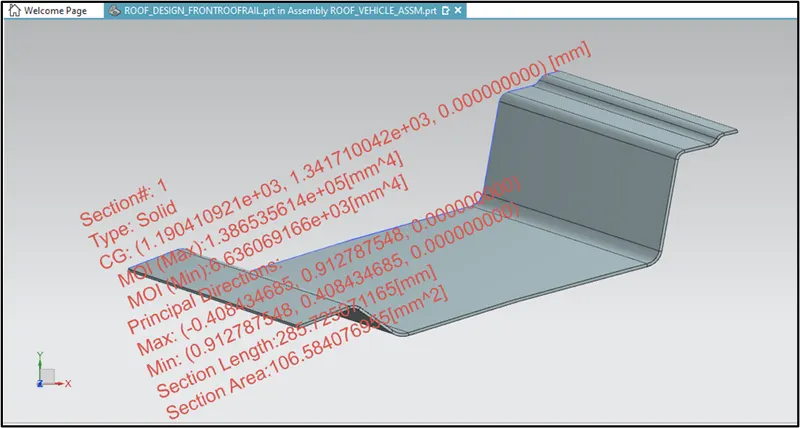
b. Bow Roof Rail_1 – Iy = 662.8096 mm4
c. Center Roof Rail – Iy = 798.9806 mm4
d. Bow Roof Rail_2 – Iy = 669.1157 mm4
e. Rear Roof Rail
Tabulated Results –

DRAFT ANALYSIS
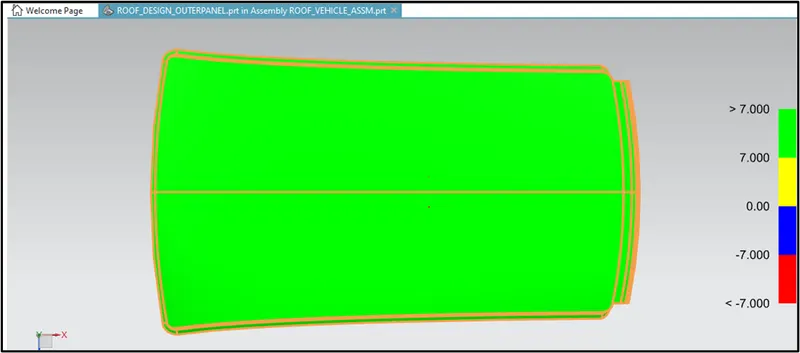
1. Roof Outer Panel –
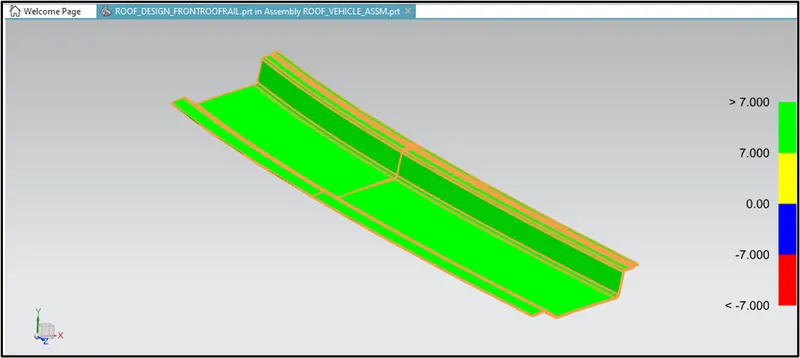
2. Front Roof Rail –
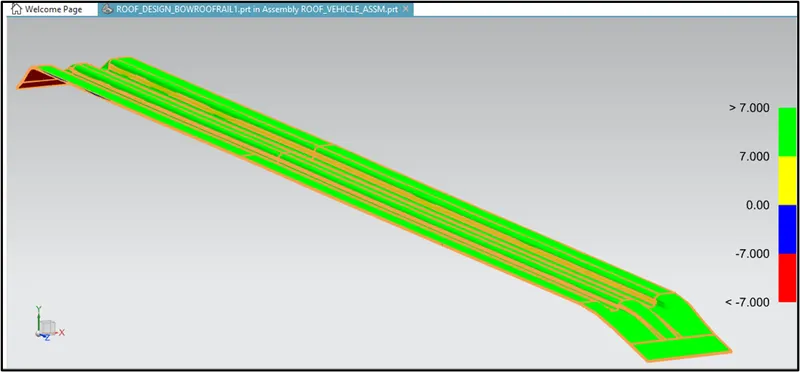
3. Bow Roof Rail_1 –
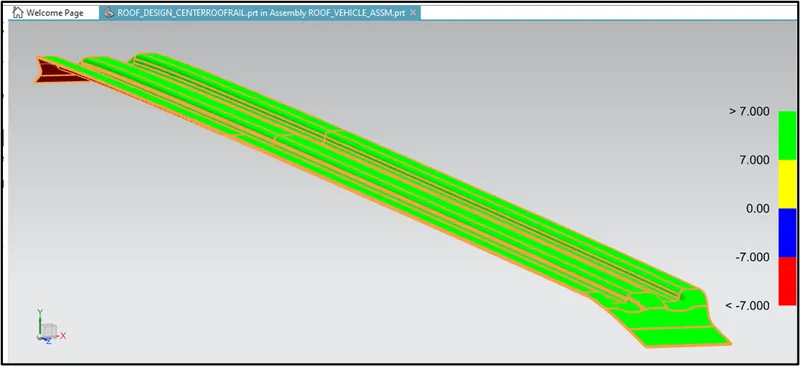
4. Center Roof Rail –
5. Bow Roof Rail_2 –
6. Rear Roof Rail –
CONCLUSION
- Roof outer panel and roof rails are designed according to their master-sections successfully.
- The Heat distortion criteria is justified.
- The snow load criteria is not completely justified; thus, the designed components need some improvements.
- The draft analysis is performed with 7⁰ draft angle.
=====================================