Roof Design
CAR ROOF-
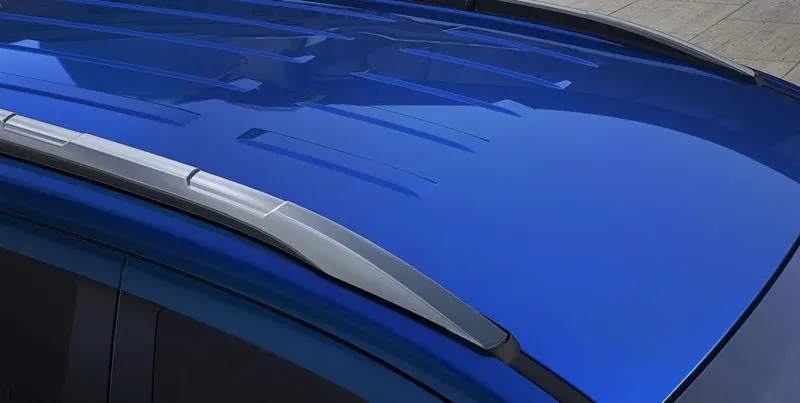
1.The goal of this project is to design a car roof with basic flanges and braces such as a trench, front roof rail, nose roofs, middle roof rail and rear roof rail for a given styling finish.
2.Perform a roof curvature study and perform calculations for thermal deformation and snow load criteria to determine if the bow roofs are in the correct position.
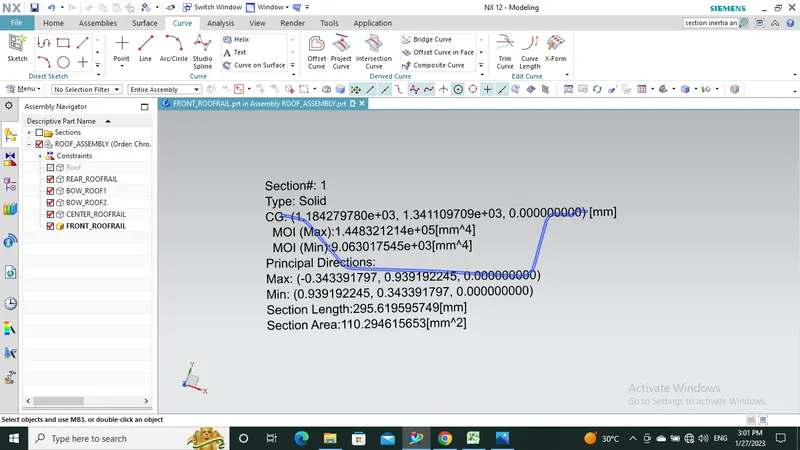
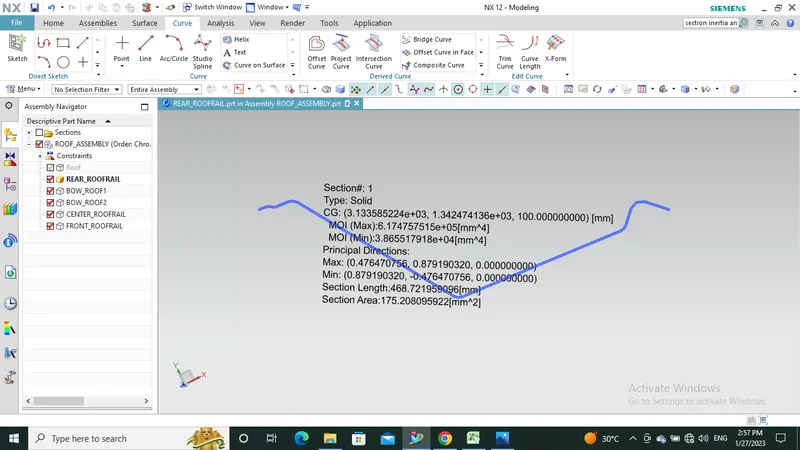
3.Determination of moment of inertia and section modulus for arched roofs, central roof batten. front roof rail and rear roof rail.
4.Perform a slope analysis for each reinforcement
INTRODUCTION-
The design of any product starts from a requirement. The designer sketches the product based on the requirement. Then the 2D sketch with the correct dimensions is converted into a 3D model using advanced CAD software. Another important thing in design is that any product that is designed should be able to be manufactured. so the designer's role is to design a product that is easy to manufacture and less cost-effective. This is where Design for Manufacturing [DFM] and Design for Assembly [DFA] come into play in the development of any product. The design development process continues until the design meets the customer's needs.
SCREENSHOTS OF PARTS:-
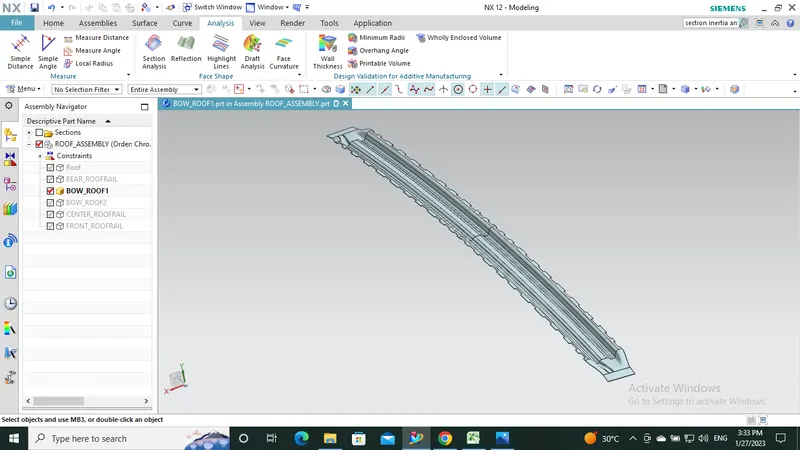
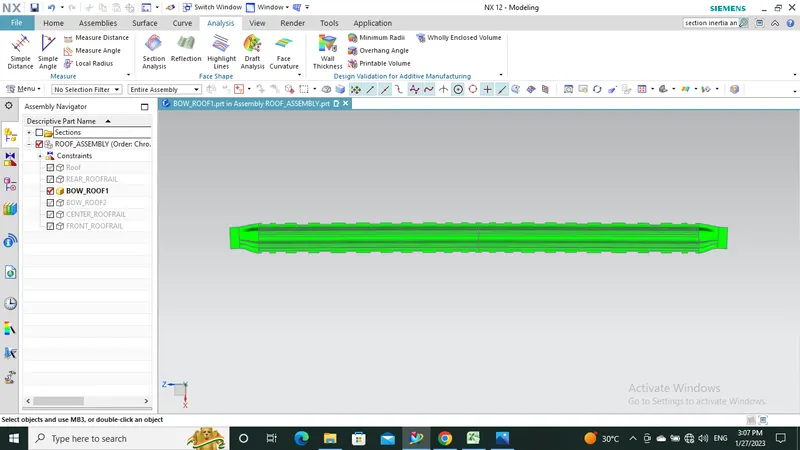
1. BOW ROOF 1
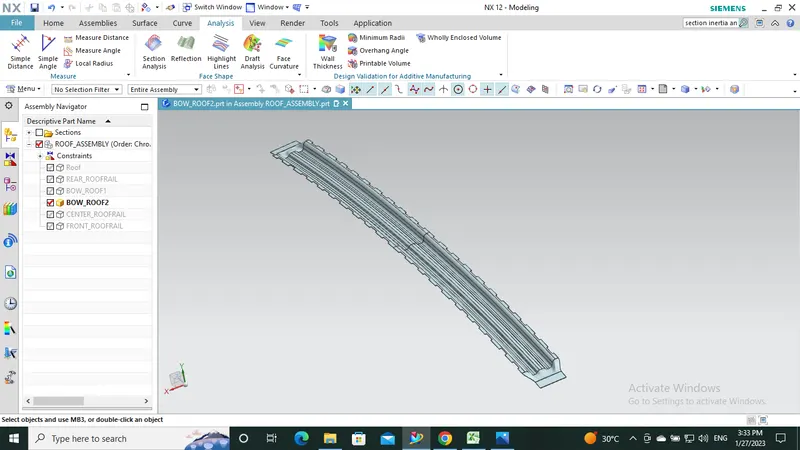
2. BOW ROOF 2
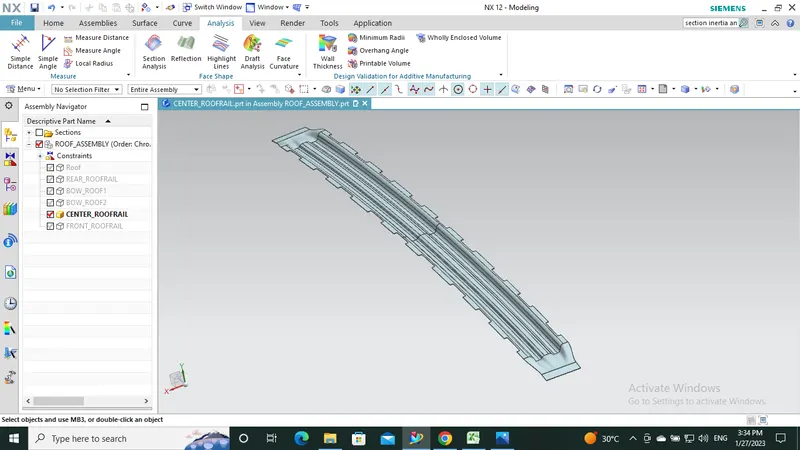
3. CENTER ROOF RAIL
4.FRONT ROOFRAIL
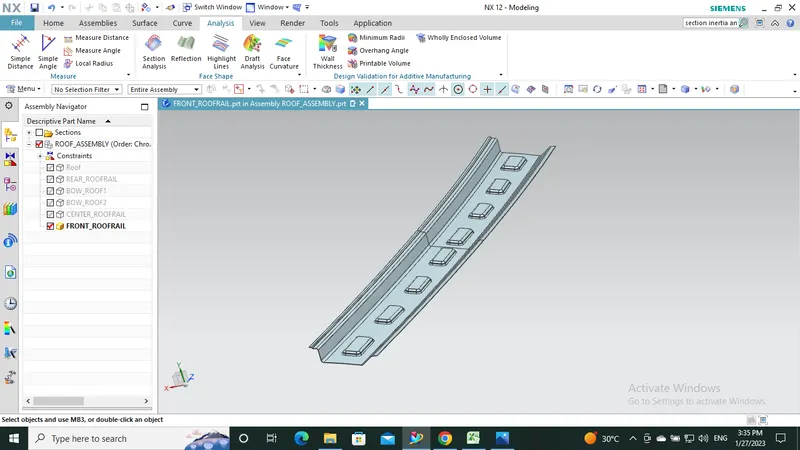
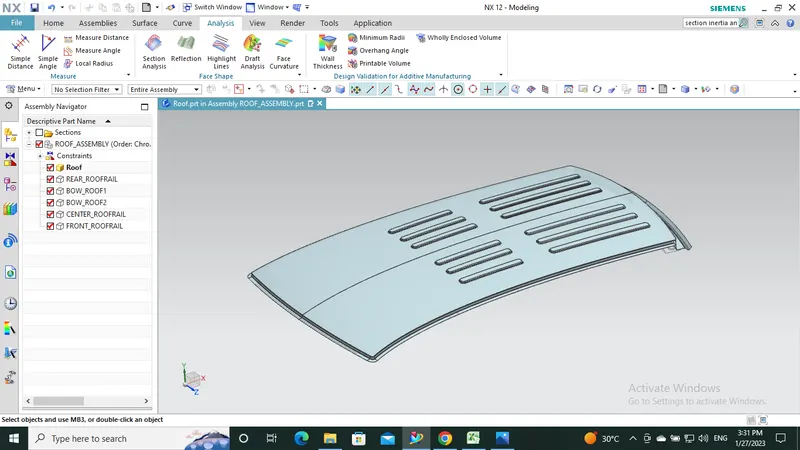
5.ROOF
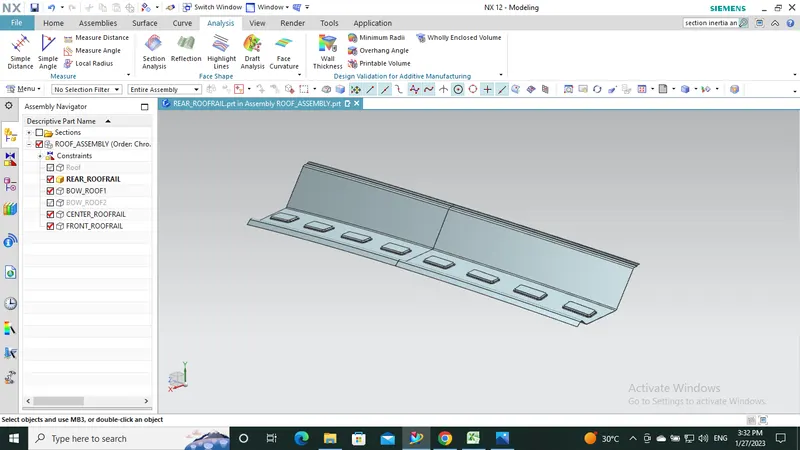
6.REAR ROOF RAIL
2. SCREENSHOTS OF DRAFT ANALYSIS
1. BOW ROOF 1
2.BOW ROOF 2
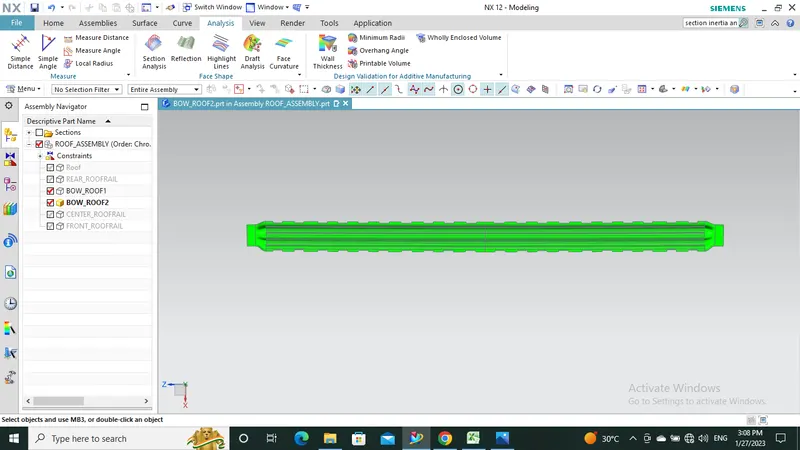
3.CENTER ROOFRAIL
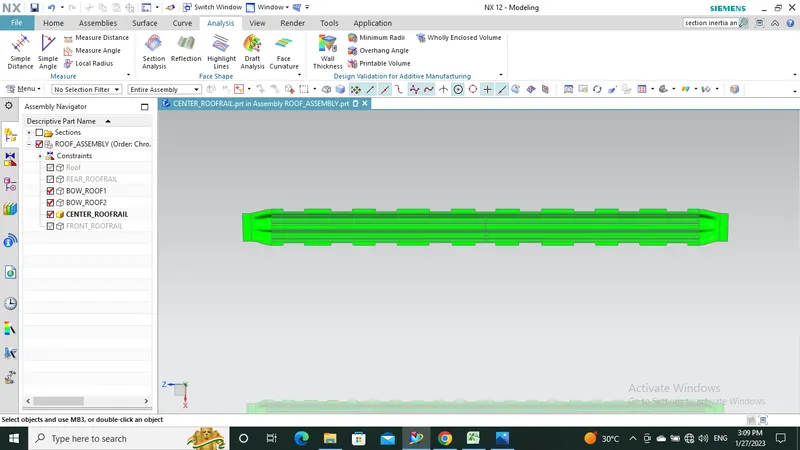
4. FRONT ROOFRAIL
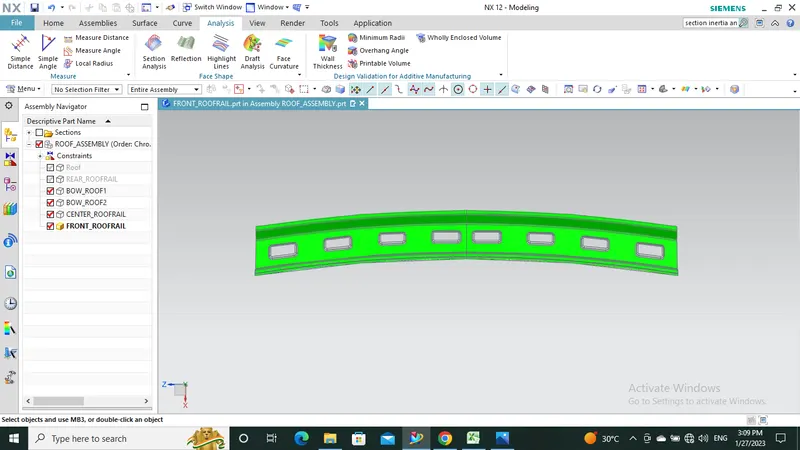
5.ROOF
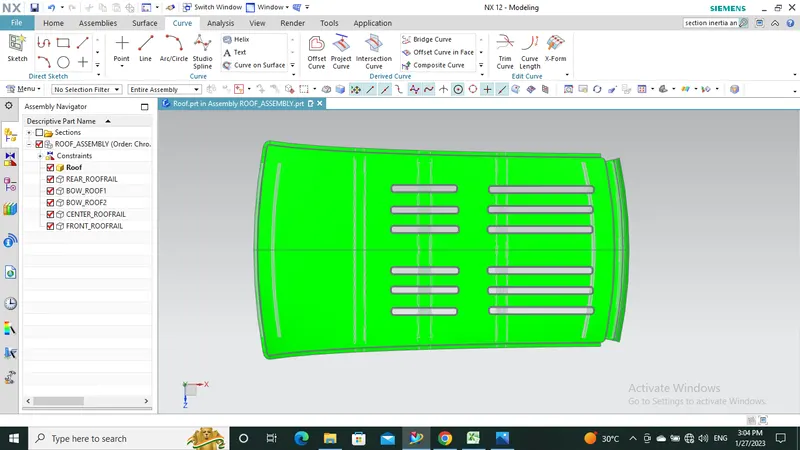
6. REAR ROOFRAIL
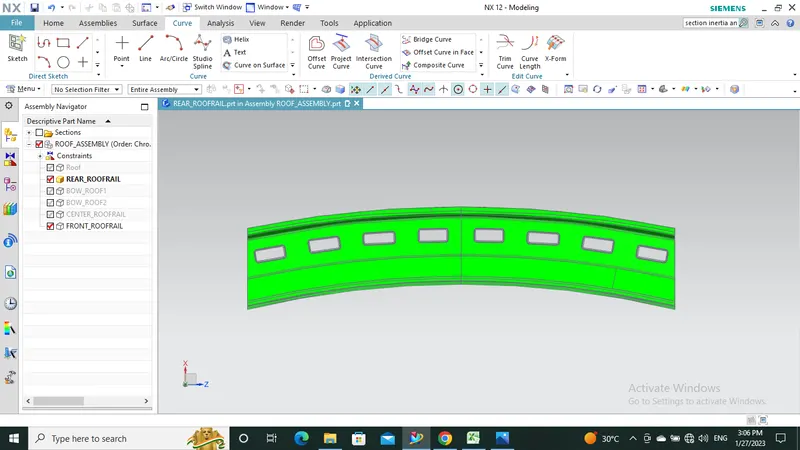
3.SCREENSHOTS OF SECTION ANALYSIS
1. BOW ROOF1
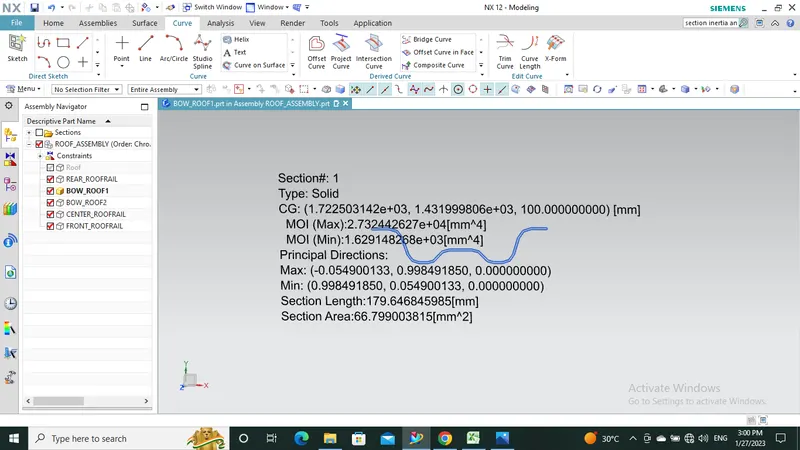
2. BOW ROOF2
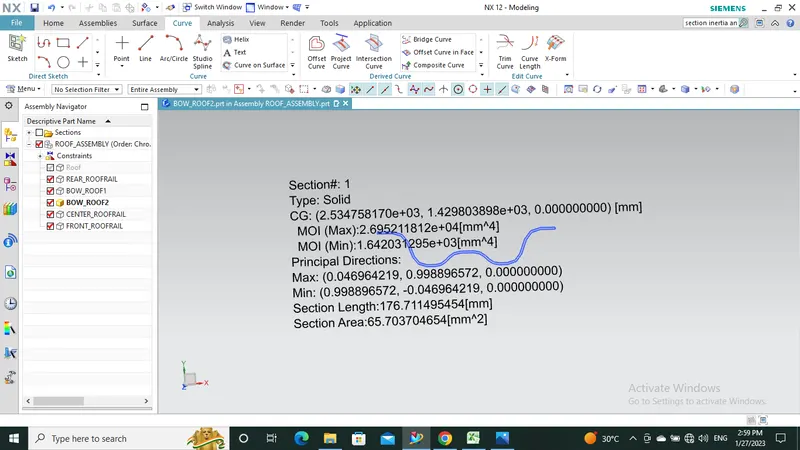
3. CETNER ROOF
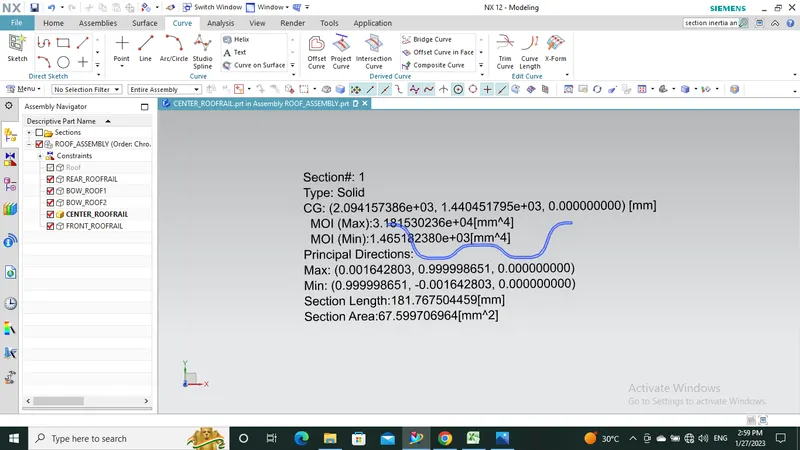
4.FRONT ROOF
5. REAE ROOF
HEAT DISTORTION STUDY ON THE ROOF :
The study of thermal deformation plays a major role in the use of sheet metal. the heat distortion temperature is the temperature limit above which the material cannot be used for structural applications. This study is used to predict the thermal deformation temperature at which a material begins to soften when subjected to constant loading at an elevated temperature. To prevent bending or damage to the roof, based on the thermal distortion temperature, this study predicts the position of the bow roof, which helps to strengthen the roof.
Bow–Roof Prediction Formula
W = [1.73 x 10^(-3) x L] + [1.85 x 10^(-8) x (R^2)/t] + [ 1.10x10^(-3) x l] - 2.68
Where,
L = Roof Length in X-Direction[mm](Roof dimension in 0-Y)
R = Roof curvature
R = 2(Rx*Ry)/(Rx+Ry)
Rx = X curvature
Ry = Y curvature
t = Roof plate thickness [mm]
l = Bow Roof Span [mm]
Judgment Condition
OK< 2.7
APPLY THE VALUES IN THE FORMULA :
In order to find the heat distortion apply all the necessary values from the roof to the give formula
CALCULATIONS:

From the above table it can be concluded that all values of w<2.7 and also not w>3.1 so thus infers that current positioning of bow row are good in state as per design and found ok.
Snow Load Prediction Formula
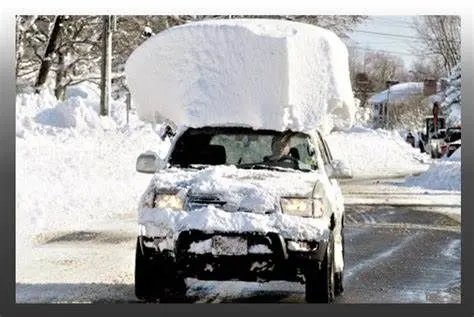
This test is done to find out how the roof behaves when there is snow on it. usually due to the weight of the snow there will be a dent. However, the roof should be designed to return to its original position when the snow is removed. These are the basic requirements for snow load criteria.
Qr = [Iy x t2] / [α x s x [(Rx + Ry)/2]2 x 10-8]
Note: The Qr value given over here is correct. There was a typo error in the formula given in the video.
Where,
α = My x Lx2 x 10-12 , My = Y(Ly-Y)
t = Roof plate thickness [mm]
Ly = Distance between the front and rear roof Rails on the Vehicle along with 0Y[mm]
Length of Roof panel with the center point between Roof rail Front /Rear as the front and rear reference point.
Lx = Distance between the Left and Right end of the roof on the Roof BOW [mm]
The width of the roof panel is exposed on the surface.
Y = Distance front Front Roof Rail to Roof BOW[mm]
s = Distance for which Roof BOW bears divided load [mm]
s = L1/2 + L2/2
Iy = Geometrical moment of inertia of Roof BOW (Y cross-section )[mm4]
Rx = Lateral direction curvature radius of roof panel Y cross-section on Roof BOW [mm]
Roof panel curvature Radius of the Length Lx in Front view
Ry = Longitudinal Direction curvature radius of the Roof panel X cross-section on Roof BOW [mm]
Roof panel X curvature radius of length s in Side view
Judgment condition
Qr ≥ 3.1
250 ≤ s ≤ 380
APPLY THE VALUES IN THE FORMULA :
In order to find the snow load criteria apply all the necessary values from the roof to the give formula
CALCULATIONS:

It is observed from the values that obtained values of QR > 3.1
ROOF CRUSH TEST:-
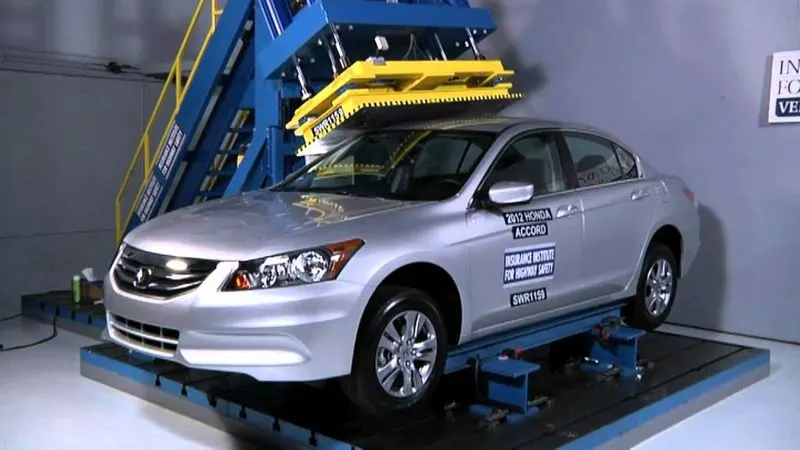
1.The roof pressure test is a proposal given by the IIHS (Insurance Institute for Highway Traffic Safety). After analyzing many accidents, the IIHS has established some rules on how to perform pressure tests.
2.The IIHS awards a rating based on this test. They get two points in the evaluation for this
3.How quickly can a car reform into its original shape after a rollover a
4.How deep is the protrusion after rolling
GOAL OF ROOF CRUSH TEST-
To minimize protrusion into the passenger compartment so that the seat belts and airbags can fulfill their function in protecting the passenger
METHOD OF APPLYING THE FORCE :
The load is applied so that it tilts 50 from the front end to the rear and the load will be 1800 mm long and 750 mm wide. The load acts in a position 250 from the flatness of the roof. The load is applied to the roof for nearly 120 seconds and the crushing speed at which the applied load is 13 mm/s or less
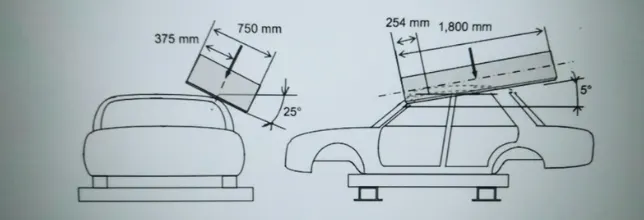
RESULTS-
If the displacements exceed the required level, we need to increase the thickness of the nose roof or add more points of sealant to increase the strength. the stronger the roof, the better it can protect occupants in rollover accidents.
CONCLUSION-
Hence the roof , front roof rail, bow roof rails , central roof rail and the rear roof rail is designed by following the master sections and the moment of inertia , section modulus and draft analysis are carried out to check feasibility manufacturing.