Roof Design
ROOF DESIGN
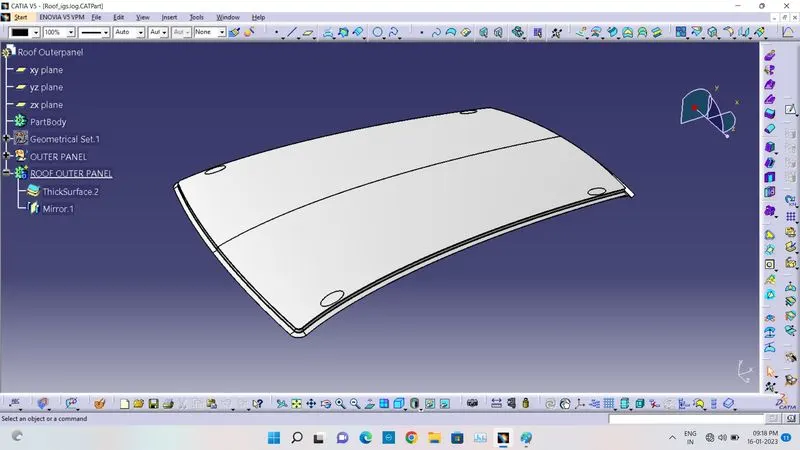
The external sheet metal part of any car which sits above passenger compartment is called roof panel which is mounted on and supported by roof bows. It act as a shielding part which safeguards the occupants from outside environment.
Roof Components are as follows:
1.Front Roof Rail(FRR)
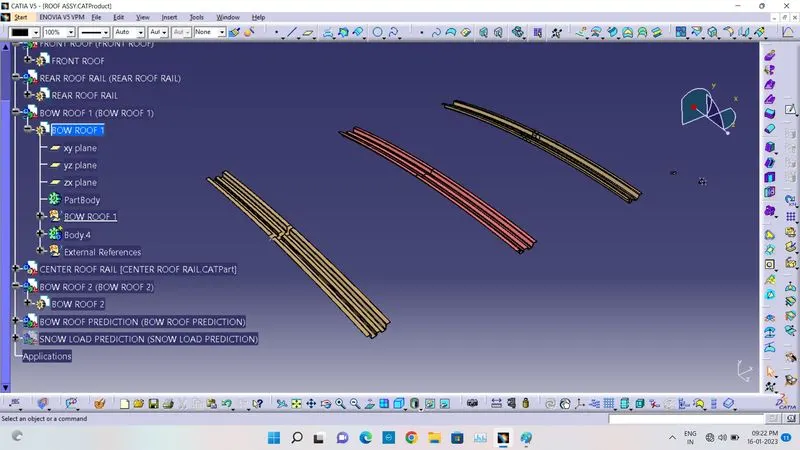
2.Bow roofs(BR)
3.Reinforcement Roof Center (RRC)
4.Rear Roof Rail(RRR)
Main purpose of the reinforcements mentioned above is to provide support to different region of the roof which avoids the external sheet metal to buckle or to reduce the impact from external force applied into it.
5.Ditch Area
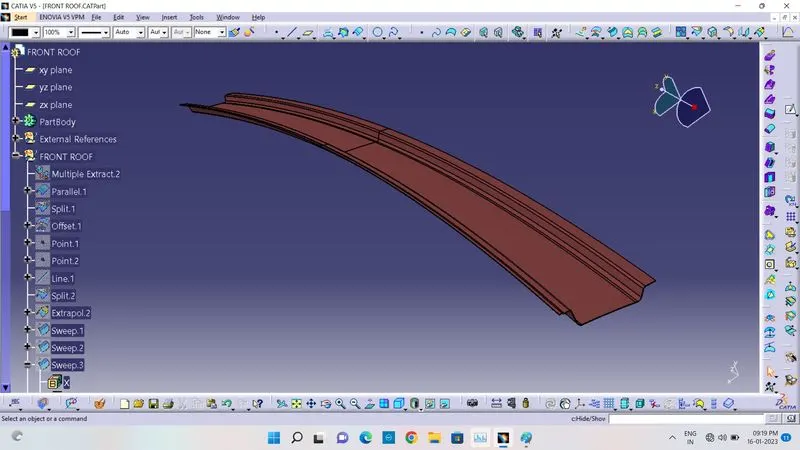
FRONT ROOF RAIL:
Front roof rail is designed based on the master section of the front roof rail shown below considering the dimension windshield which is accommodated in front of front roof rail measuring 3.70 mm as shown in the figure. Adjacent to windshield, mastic rubber seals are also considered measuring 8 mm thick, which avoids breakage of windshields. Dimensions shown 32mm and 80mm in the above image is based on the factors such as head room clearance and visibility criteria
BOW ROOFS:
REAR ROOF RAIL:
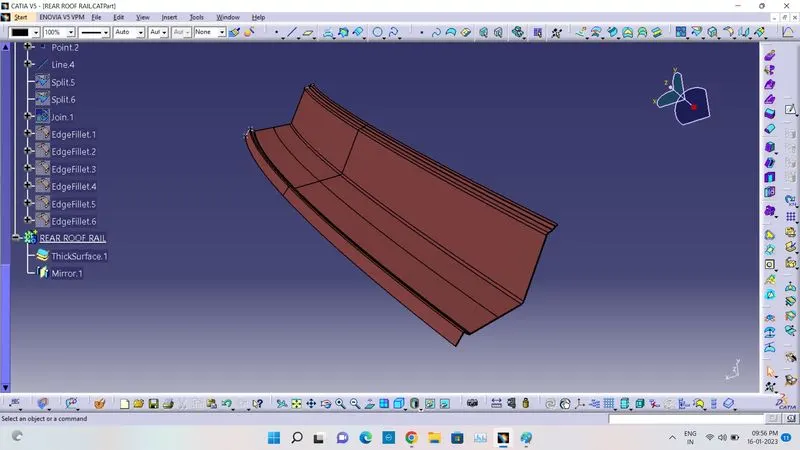
It is the support which is joined to the Back Door and the Body Side Outer and the inner panels. It is also usually made from Body Side Outer scrap and therefore the thickness of the rail is 0.75 mm. Similar to the Front Roof Rail design, we have to take into consideration the rear Headroom Clearance and the rear visibility criteria while designing the Rear Roof Rail. Inputs from the backdoor design is also taken to accommodate the required clearance. Spot Welds are applied at the Back doorend of the rail and the other end is joined with the roof using Mastic Sealants.
CENTER ROOF RAIL:
Similar to other Rails design, we have to take into consideration the Headroom Clearance and the visibility criteria while designing the Centre Roof Rail and Bow Roofs. But unlike the Front and Rear Roof Rails, Spot Welds are not applied for joining these rails to the roof. Instead Mastic sealants are introduced at both the ends since Centre Roof Rail and Bow Roofs are fully positioned under the Styling surface of the Roof. For increasing the strength of the rails, embossing is done. To reduce the weight of the material used, a different styling has been followed with a thickness of 0.75 mm.
OUTER ROOF PANEL:
HEAT DISTORTION:
Heat distortion temperature is the temperature at which the metal softens and deforms under a specific load. This study is done to check the ability of the roof to withstand high temperature with respect to the positioning of the reinforcements which contribute to increased strength.
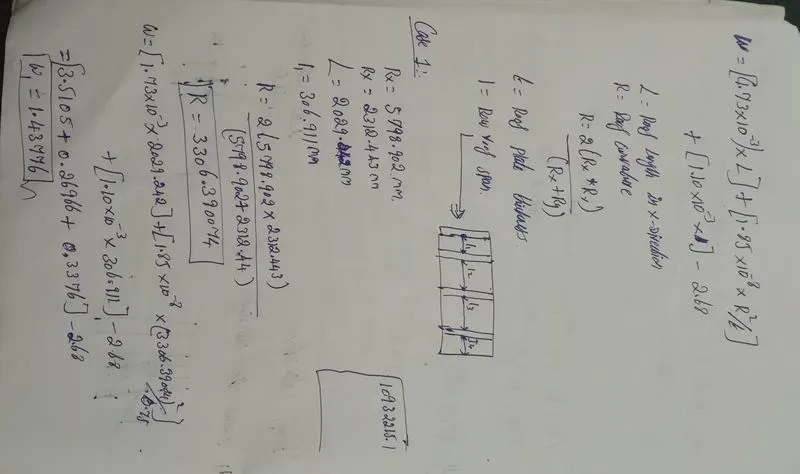
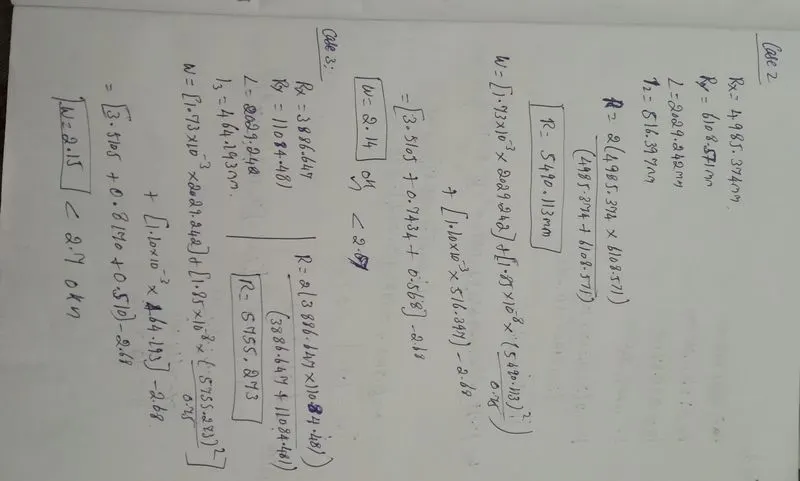
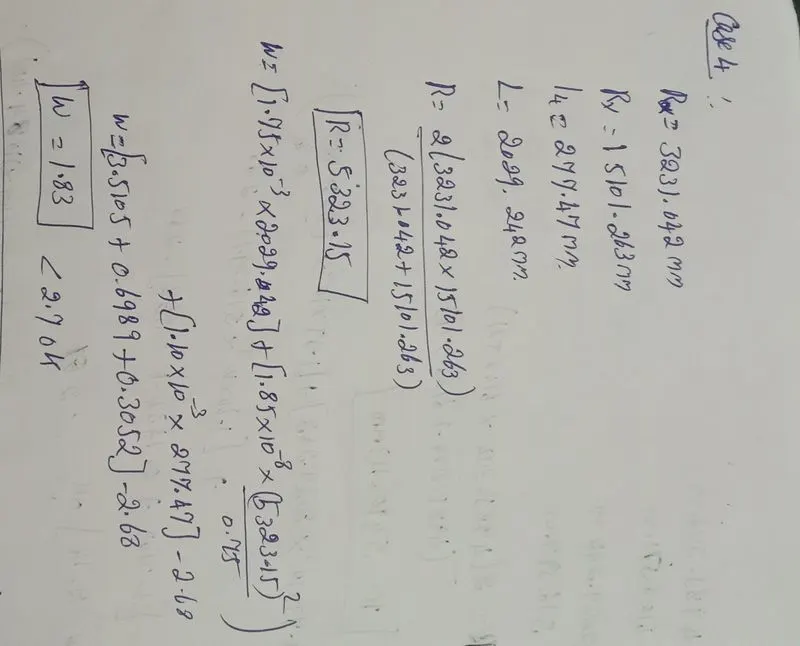
Prediction Formula : W=1.73×10⁻³×L+1.85×10⁻⁸×R2t+1.10×10⁻³×l-2.68\">W=1.73×10⁻³×L+1.85×10⁻⁸×R2t+1.10×10⁻³×l−2.68
W=1.73×10⁻³×L+1.85×10⁻⁸×R2t+1.10×10⁻³×l-2.68\">Judgement Condition: OK < 2.7mm ≤ NG
Where,
L = Roof Length in X-Direction [mm] (Roof dimension in 0-Y)
R = Roof curvature= 2(Rx*Ry) / (Rx+Ry)
Rx = X curvature
Ry = Y curvature
t = Roof plate thickness (mm)
l = Bow Roof Span (mm)
When applying the corresponding measurements into the formula, the criterion is met for all the reinforcements.
HEAR DISTORTION SKETCHES:
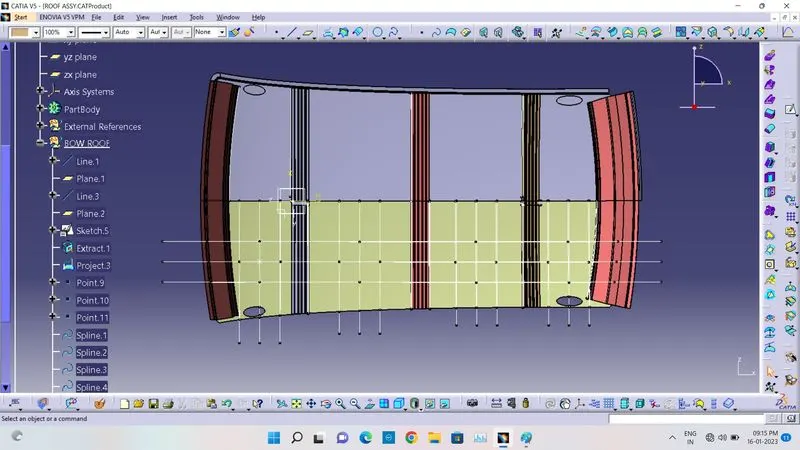
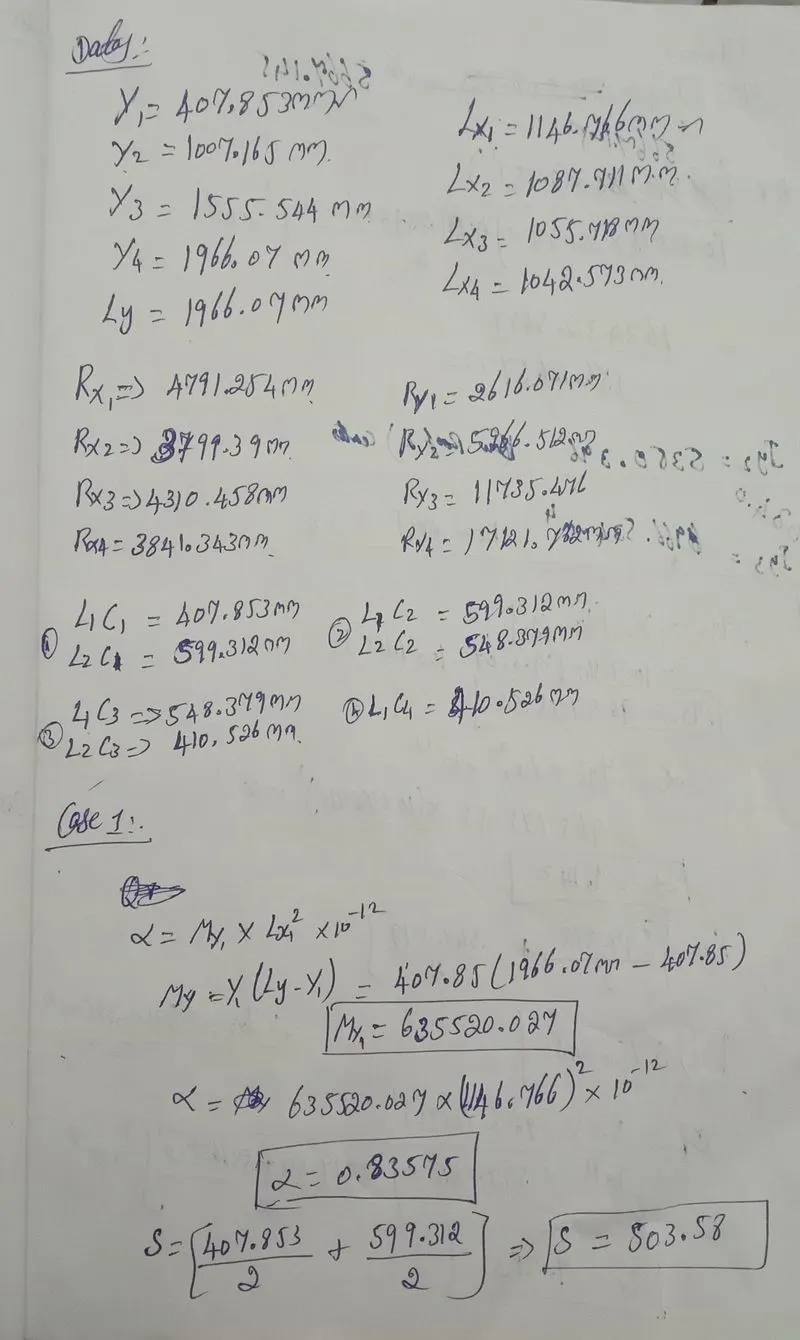
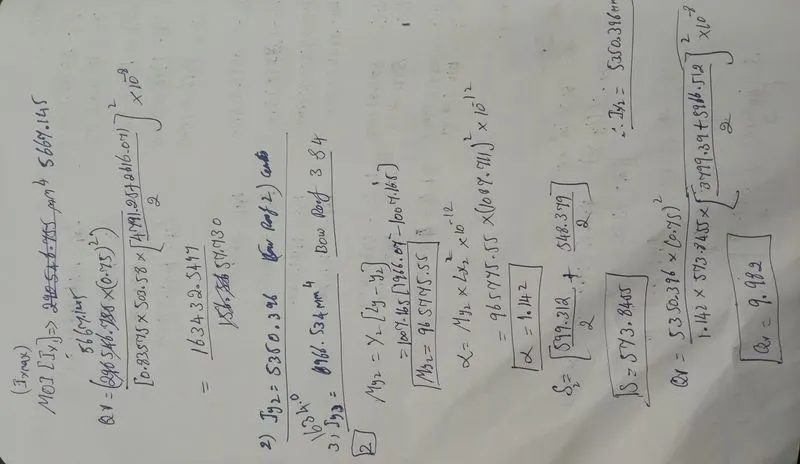
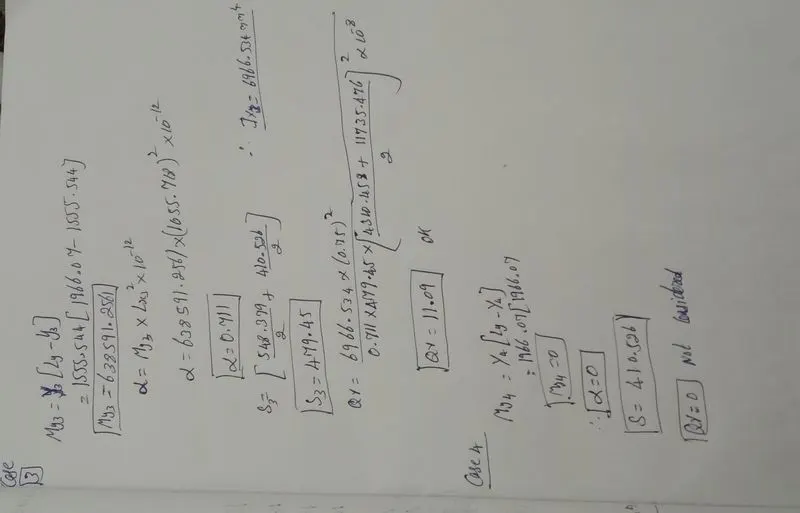
HEAT DISTORTION RESULTS & HAND CALCULATIONS:

SNOW LOAD:
Snow load criteria study is done to check the ability of the roof to withstand snowfall and bounce back to its original shape without any permanent deformation once the load is removed.
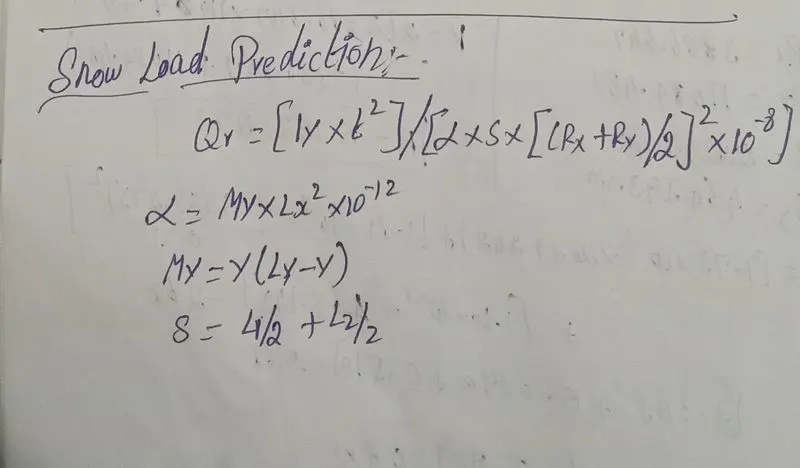
Prediction Formula: Qr=Iy×t2α×s×(Rx+Ry2)2×10⁻⁸\">Qr=Iy×t2α×s×(Rx+Ry2)2×10⁻⁸
Judgment condition: Qr ≥ 3.1
Where,
α=My×Lx2×10−12,My=Y(Ly−Y)
t = Roof plate thickness (mm)
Ly = Distance between front and rear roof rails on vehicle 0-Y (mm) i.e. Length of Roof panel with the centre point between Roof rail FR/RR as the reference point of the front/rear.
Lx = Distance between the left and right end of roof on the roof BOW (mm) i.e. Width of the Roof panel exposed on surface
Y = Distance from Front roof rail centre to Bow roof (mm)
s = Distance for which Bow roof bears divided load (mm) = L1/L2 + L2/2
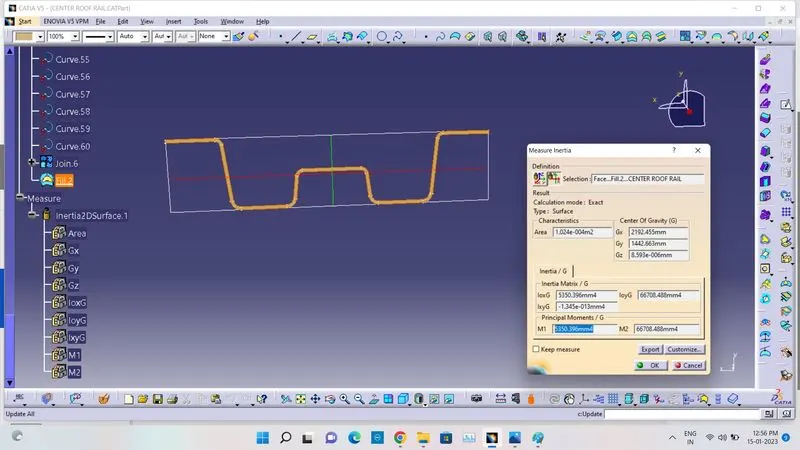
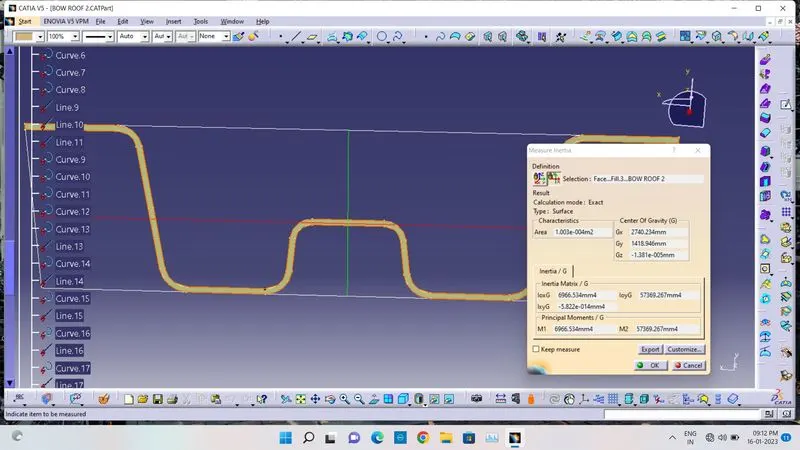
Iy = Geometrical moment of inertia of Bow roof (Y cross section) (mm4)
Rx = Lateral direction curvature radius of roof panel Y cross section on Bow roof (mm) i.e. Roof panel curvature radius of the length Lx in front view
Ry = Longitudinal direction of curvature radius of roof panel X cross section on Bow roof (mm) i.e. Roof panel X curvature radius of the length s in side view
When applying the corresponding measurements into the formula, the criterion is met for all the reinforcements.
SNOW LOAD SKETCHES: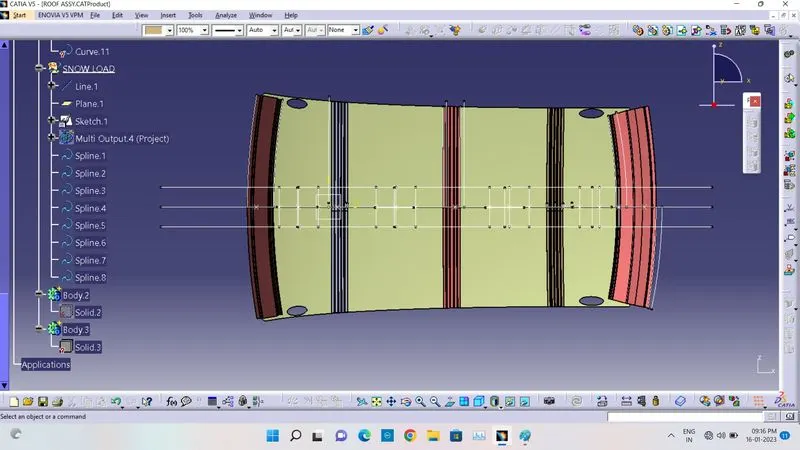
MOMENT OF INERTIAS OF BOW ROOFS:
SNOW LOAD RESULT & HAND CALCULTATIONS:

Conclusion:Heat load calculation and snow load critera calulation completly satisfies the curvature study and the bow roof placements are acceptable.