Roof Design
CAR ROOF
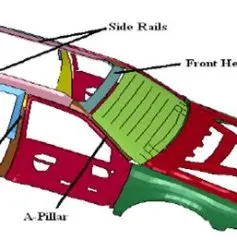
An automobile roof or car top is the portion of an automobile that sits above the passenger compartment, protecting the vehicle occupants from sun, wind, rain, and other external elements.
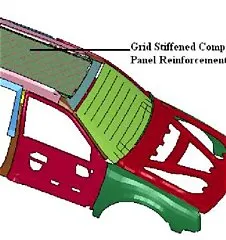
Types of roofs in cars
1. Hardtops
about hardtops, we are referring to the common rigid forms of automobile roofs which we see around. In modern-day cars, this type of roof is made from metal or plastic.
So, the common Toyota Corolla, Camry, and many of the cars in Nigeria are all Hardtops. However, we should say that there are different types. The one we just described is the fixed hardtop. Other types include:
- The detachable hardtops
- The retractable hardtops
Both the Toyota Corolla and the Audi are fixed hardtops!
These two types are designed as convertibles and would be discussed extensively when we get there.
The fixed hardtop is your traditional car roof and is suitable for all climes and weather. It protects car occupants from the sun and wind when driving. It also offers more sense of privacy and noise-free driving. Many cars designed this way also tend to be more stable and solid than other types of roofs.
2. Sunroof:
This type of roof is also quite popular. You might have been seeing it around. A sunroof is an operable type of roof that allows for an opening in the roof of an automobile; say a window in a roof. It can allow either light or air or both to enter the vehicle. They are either operated manually or automatically.
The keyword here is Opening in the roof. It is not the entire roof that is removed – that is a different type of roof.
There are 3 popular types of sunroofs. They include:
a. Pop-up:
The pop-up sunroof usually tilts when you open it. It is the most basic and relatively cheaper type of sunroof. Some can even be removed so that they are kept properly, maybe in the trunk whenever you want to go ‘sunroof mode.’
b. Spoiler:
this is not spoiling anything o. It just means that it can slide. So, the spoiler is a pop-up that would slide, instead of tilting upwards. The advantage of this is that it can easily be restored to its original position by sliding.
c. Panoramic sunroof:
Panoramic sunroofs are distinct. While other sunroofs basically allow air and light or both into the front seats, the panoramic sunroof would allow for both the front and rear. Of course, this means the aperture would be larger than the spoiler or pop-up, bit hey, what is the purpose of the window in the roof if it is not big enough?
Exterior view of the moonroof
The sunroof allows car users to enjoy light and air without having to remove the entire roof. It also adds to the sleek design of the car and the automatically operated types just add to the awesome features of the car.
3. Convertibles:
convertibles are passenger cars that can be driven with or without the entire roof in place. They were first introduced as open-air vehicles; no roofs, no sides.
But by the end of the 19th century and the early 20th century, car engineers built more powerful engines that could power a folding roof. These were the forerunners of the convertibles that we have today.
There are different types of convertibles based on the method of conversion and the materials used.
a. Retractable hardtops:
Made from metal or plastic and is retracted automatically.
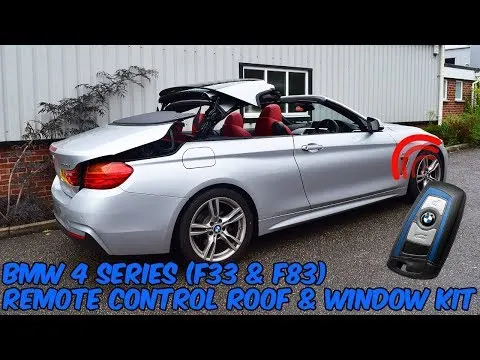
b. Detachable hardtops:
This type of hardtop is manually removed from the roof and then stored usually in the trunk. They are also made from metal or plastic.
c. Soft tops:
This type of convertibles have roofs that are not made from metal or plastic. They are made of textile. The earliest versions of the convertible used canvas for the roofs. More recent models use cloth materials instead. Other materials used now include latex, vinyl, polyvinyl chloride.
When the roof is folded, it is called a stack.
Soft tops are made from textile
Convertibles allow an open-air driving experience.
Many of them are also built for speed and so you would have a nice time driving really fast, but if and only if the roads are very good.
But apart from all of that, there are many drawbacks.
One of them is noise. You would be exposed to the wind and you might not be able to hear anything else. Others are dust and dirt. You can have your face and even the interior of the car dirty if there are a lot of dirt particles in the air.
Also, convertibles are not as sturdy or solid as their covered counterparts. Although, we know most convertibles are built to be fast, sporty cars.
Plus, no privacy o. Everyone go dey look you as you dey drive.
One other type of roof includes:
- The T-Top roof: An ‘almost convertible’ car. Actually it was built this way because the car manufacturers were not sure the government of the day would approve convertibles. So they made a ‘T-shaped bar’ from front to rear and made the roof on either side detachable. Of course, this type of roof is no longer in production.
DESIGN DETAILS ABOUT CAR ROOF
- material selection
- size and weight of roof
- strength of roof
- type of roof
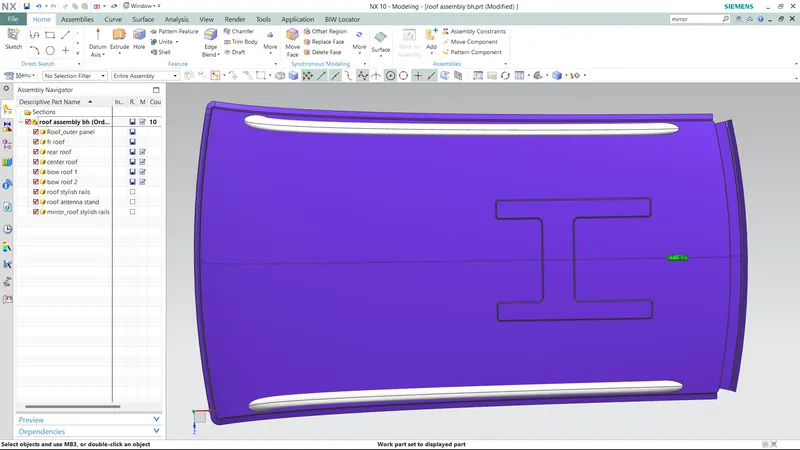
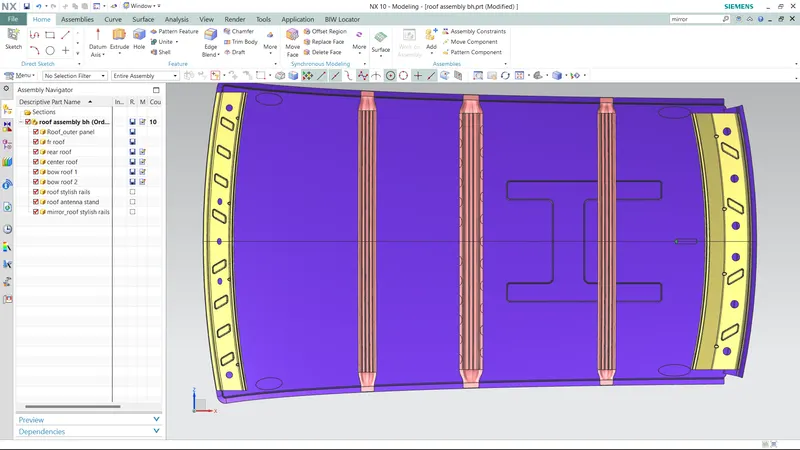
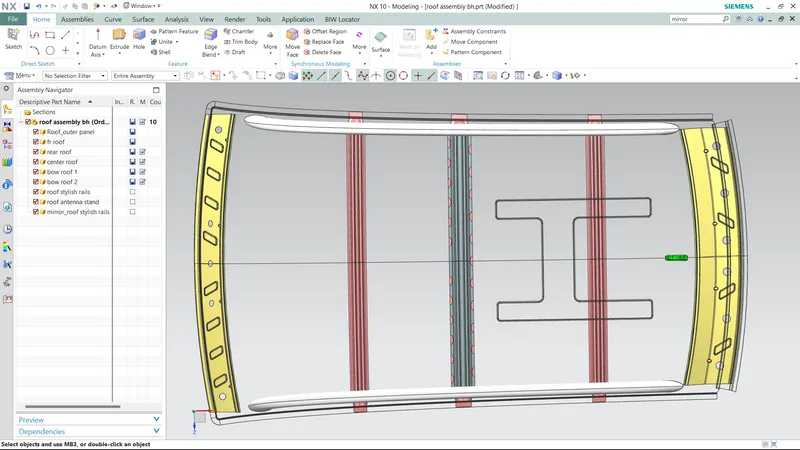
ROOFS outer panel strengthen by adding of roof rails
- front roof rail
- rear roof rail
- bow roofs
- reienforcements etc...
FRONT ROOF
- it is placed in the front end of the car
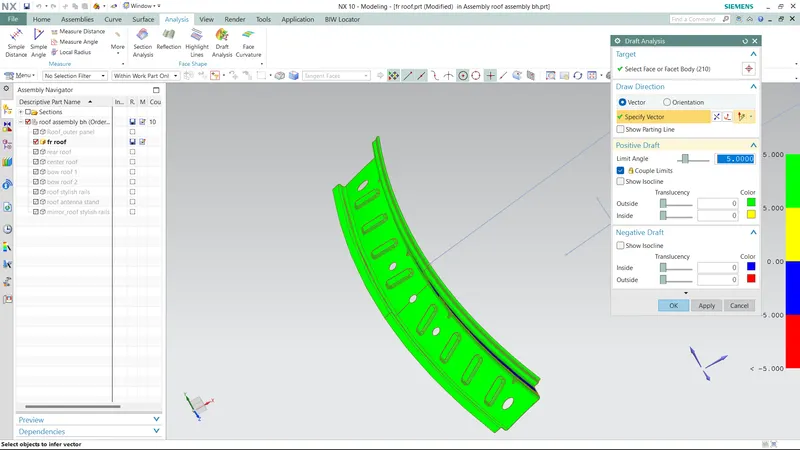
- fr roof designed by the given master sections
- these master sectins have some important dimensions which are fixed that cannot be changed
- those dimensions are taken by previous standards and bench marking
- the important thing of fr roof design considering is Head room clearance and visibility of driver via wind shield glass
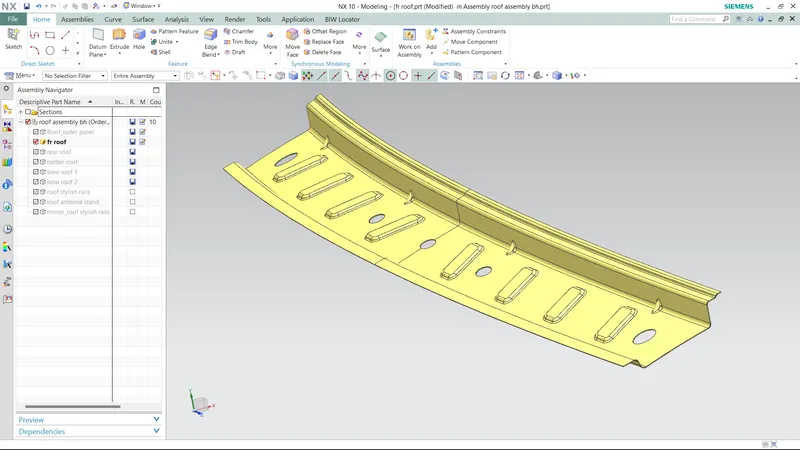
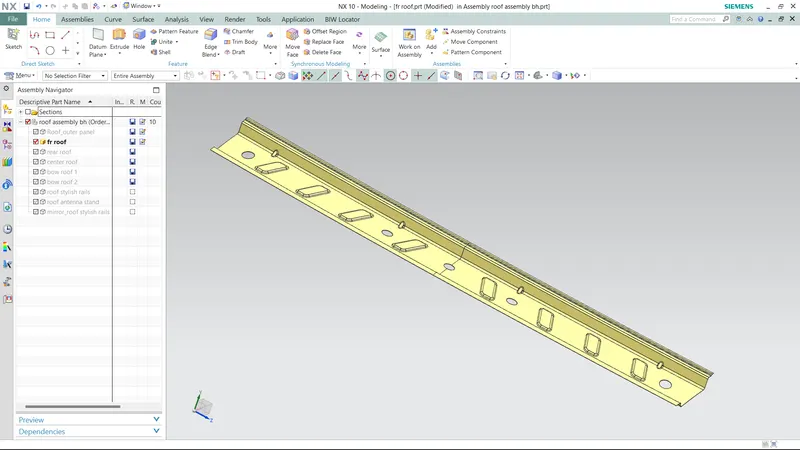
DRAFT ANALYSIS of FRONT ROOF
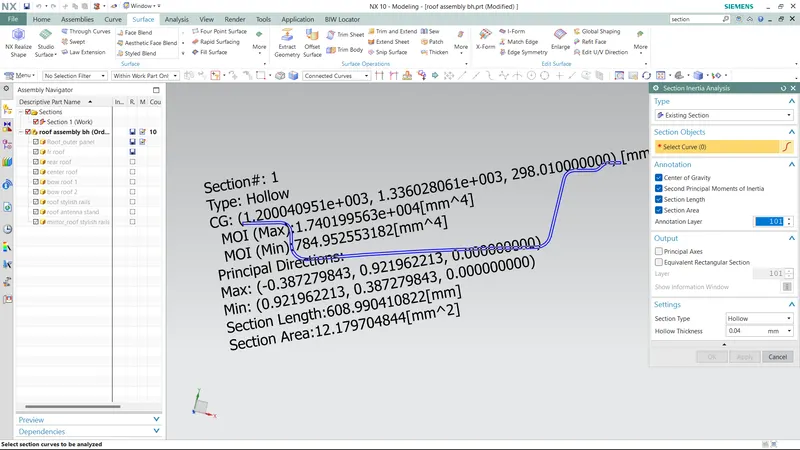
SECTION MODULUS OF FRONT ROOF
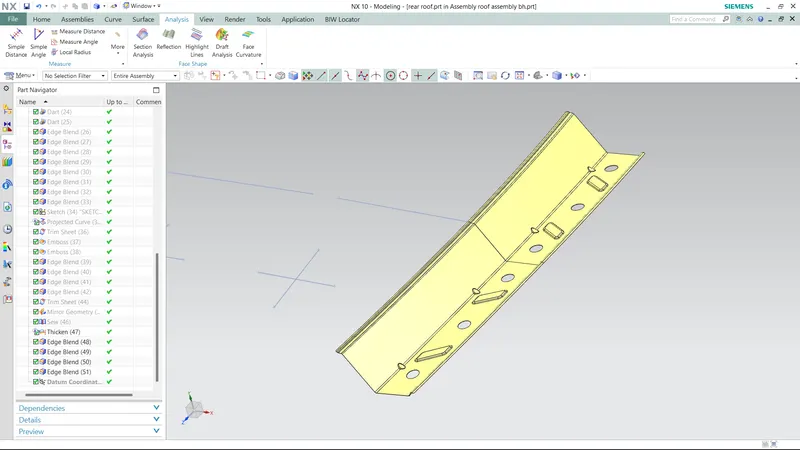
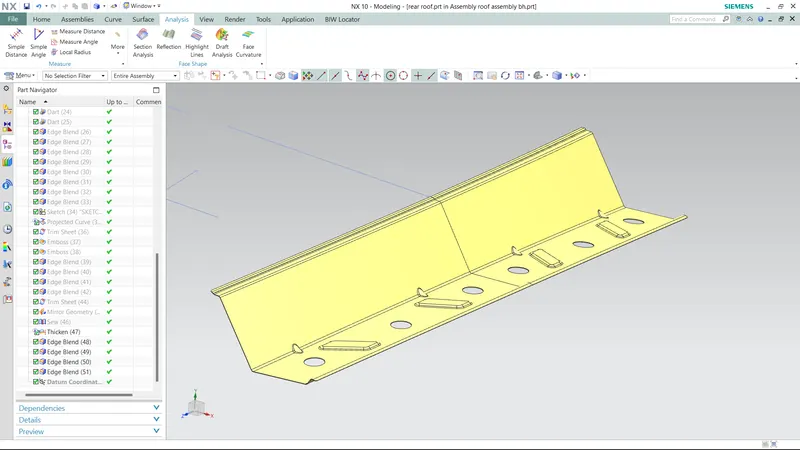
REAR ROOF RAIL
- Rear roof is positioned in the back side of the car
- It is also same as the front roof rail
- the main design considreation of rear rail is back door assembly clearance, head room clearance, visibility criteria
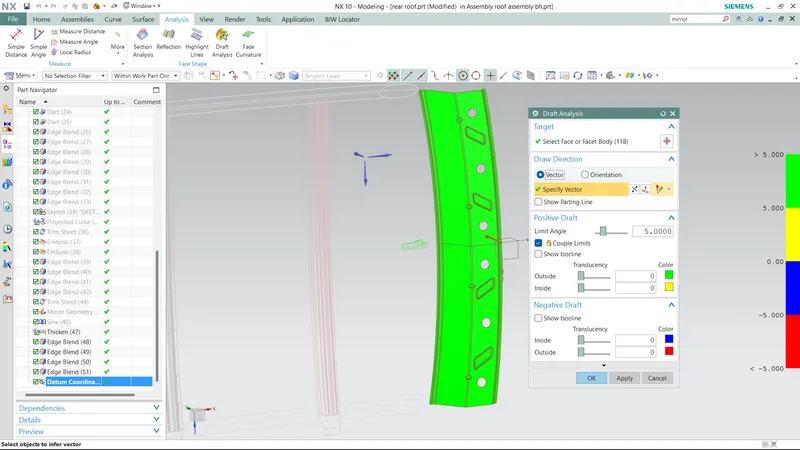
DRAFT ANALYSIS OF REAR RAIL
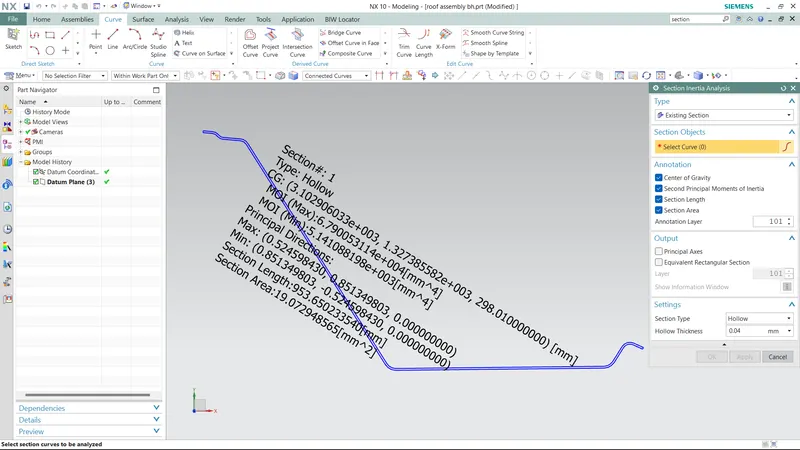
SECTION MODULUS OF REAR RAIL
BOW ROOF RAILS
- the bow roof rails were placed between the front and rear roof rails.
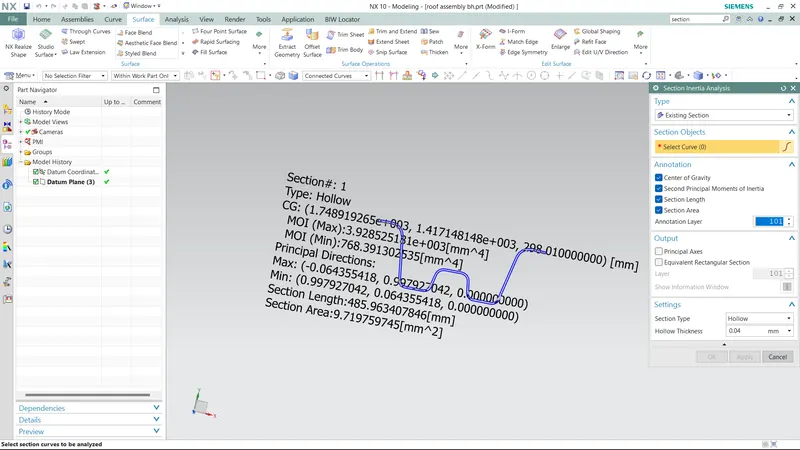
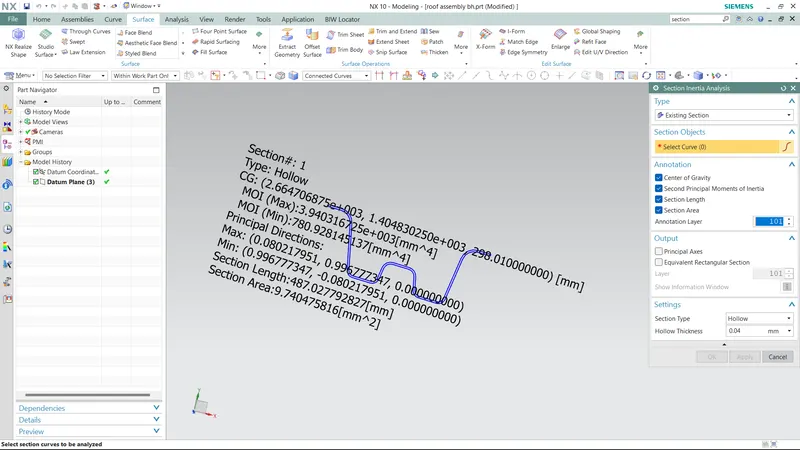
- Bow roof rails were added to increase the stiffness of the roof since it has the large flat surface.
- To increase the curvature result of the roof it needs to withstand the heat distortion and snow load criteria the bow roofs were positioned as per the standards.
- The bow roofs were provided with mastic points since the joining process will be done using the mastic sealants.
- Embosses also provided all over the bow roofs to increase the stiffness
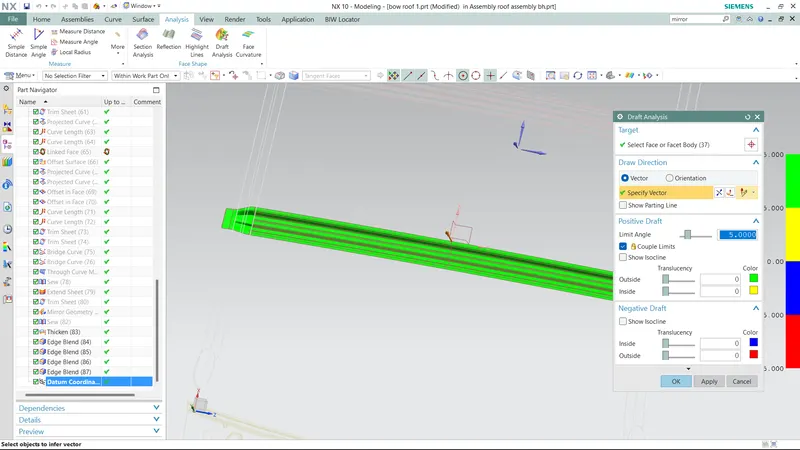
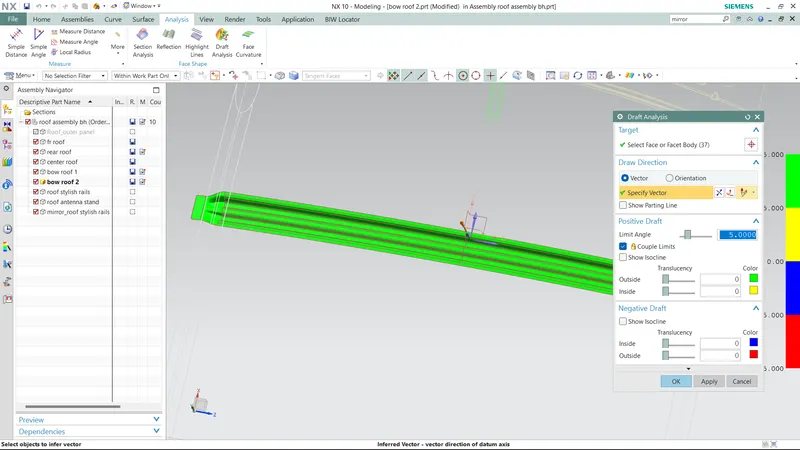
- The bow roof position needs to satisfy the head room clearance and draft analysis for Deep Drawing.
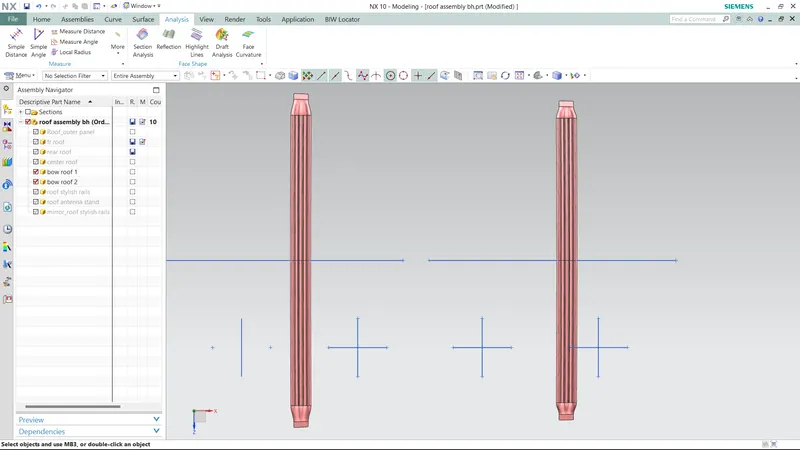
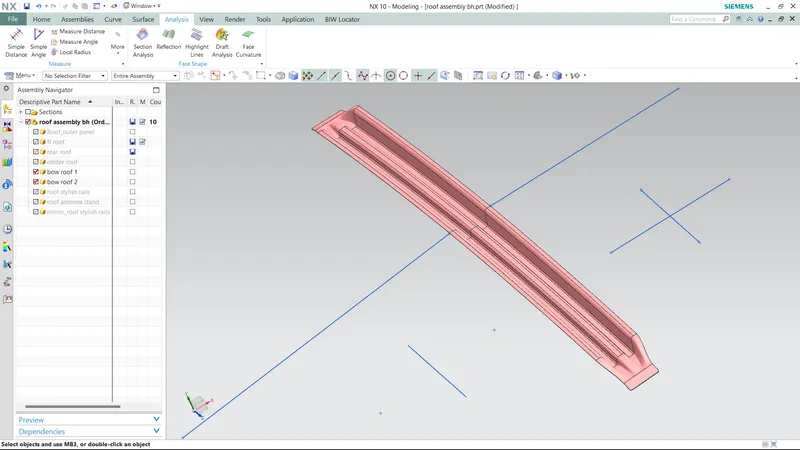
DRAFT ANALYSIS OF BOW ROOF RAILS
SECTION MODULUS OF BOW ROOF RAILS
CENTRE ROOF RAIL WITH REINFORCEMENT
- Center roof rail was place after the Bow Roof 1 in my model but it can also be swapped between the Bow Roofs but it should be positioned as center of the roof
- The center roof rail was designed to have a reinforcement roof rail which helps the roof of a car to increase the efficiency in curvature study.
- For creating the Mastic Points and Embosses on the Center Roof Rail again the Head room clearance must be taken
- The reinforcement provided will increase the Geometric MOI of the part
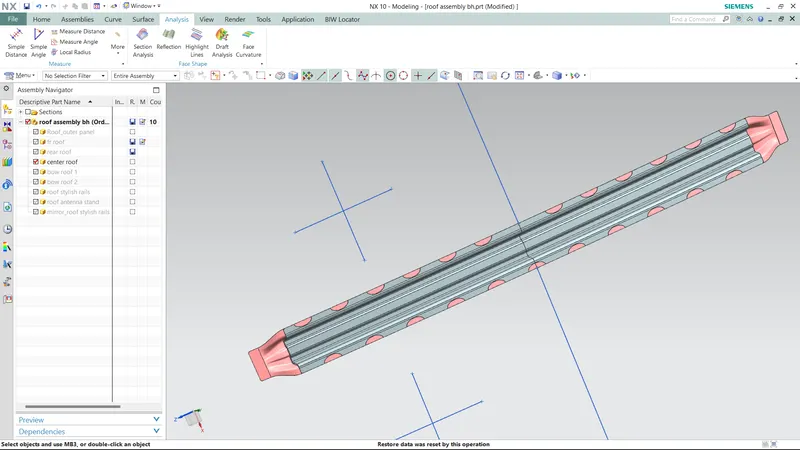
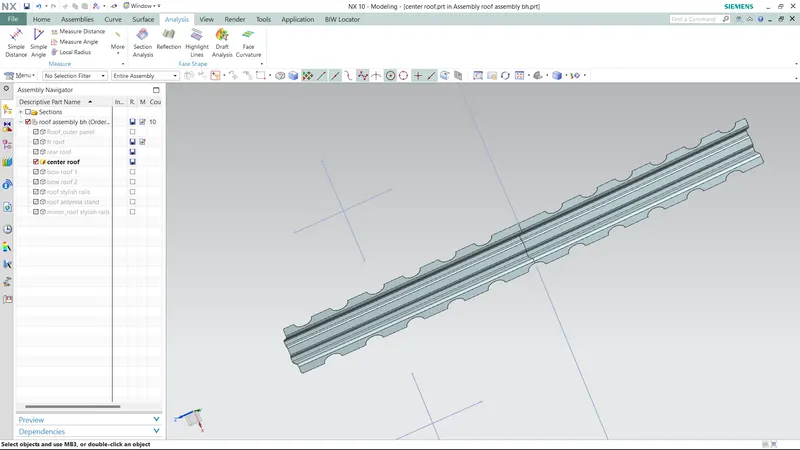
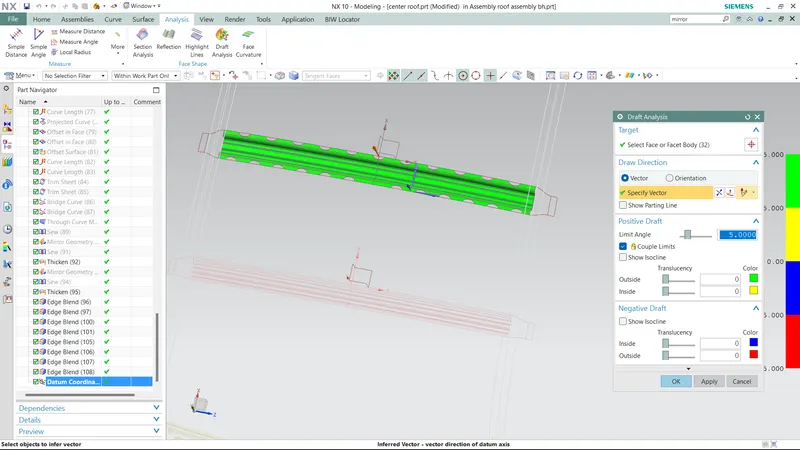
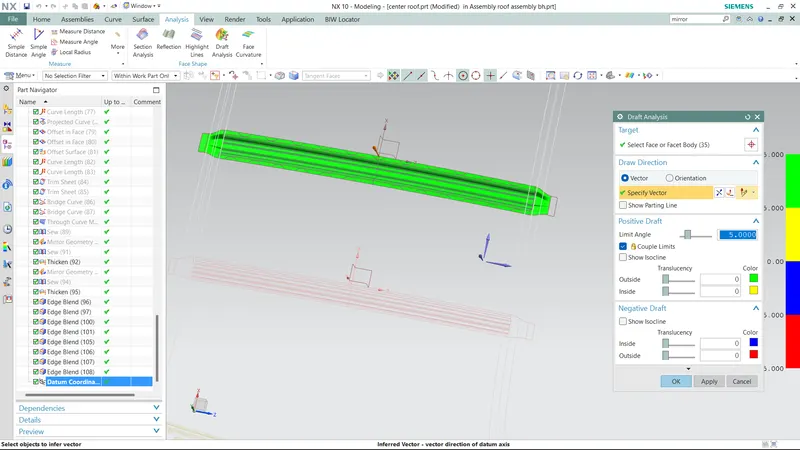
DRAFT ANALYSIS OF CENTRE RAILS
SECTION MODULUS OF CENTRE RAILS
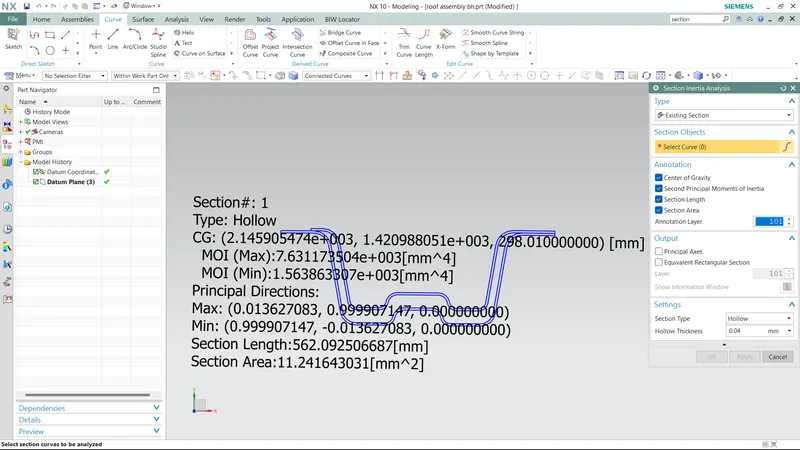
ROOF TESTING ANALYSIS
- ROOF CRUSH TESTING
- CURVATURE ANALYSIS
ROOF CRUSH TESTING
Roof crush is the failure and displacement of an automobile roof into the passenger compartment during a rollover accident.
Roof crush has also been identified as a cause of both full and partial ejection in rollover accidents because of ejection portals created by the collapsing roof structure. These chiefly involve broken windows but occasionally also involve the body structure. The current Federal regulation involving roof strength - 49 CFR 571.216 (FMVSS 216) - has been found to offer little benefit and is currently being reviewed. Many European manufacturers provide stronger roofs than do U.S. or Asian manufacturers despite the fact that there is no European (EEC) roof strength regulation for light vehicles
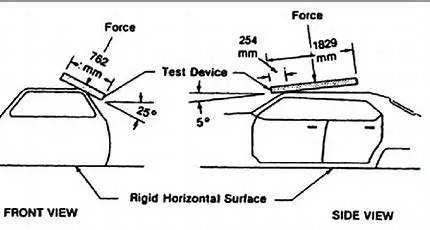
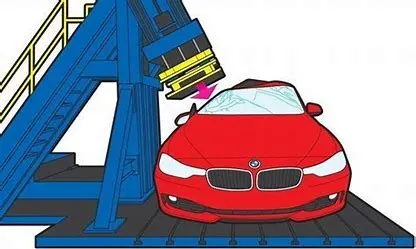
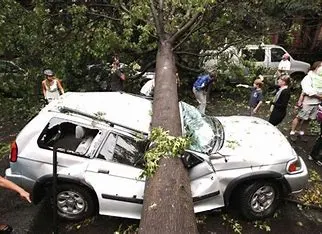
This is the test during after the roof are assembled in car and it is a practical test
- But curvature analysis study is to predict the roof strength and increasing the roofs strength by bow roofs and embossing
- this curvature analysis going to be decide the bow roofs posistion
curvature analysis
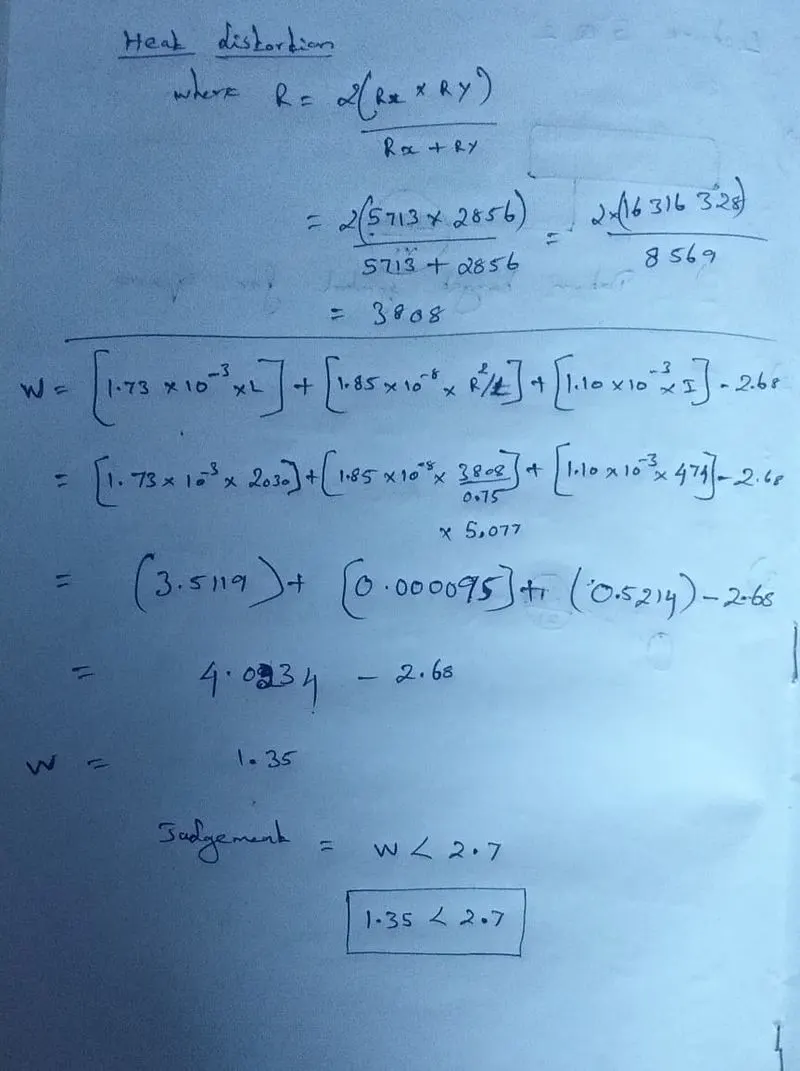
Heat distortion test
snow load test
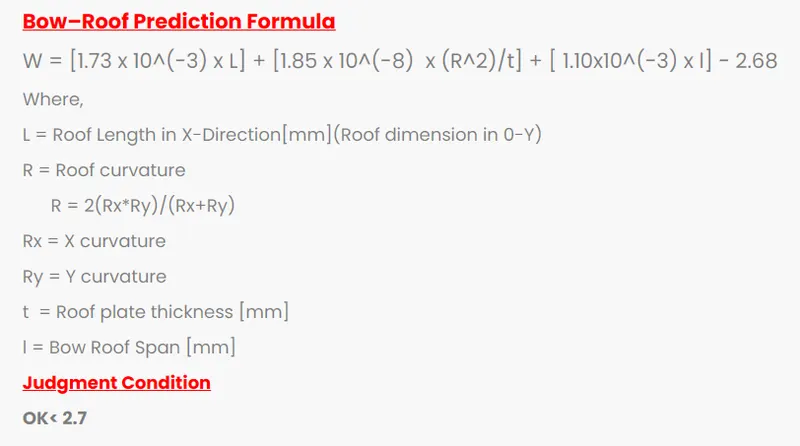
bow roof posistion prediction formula
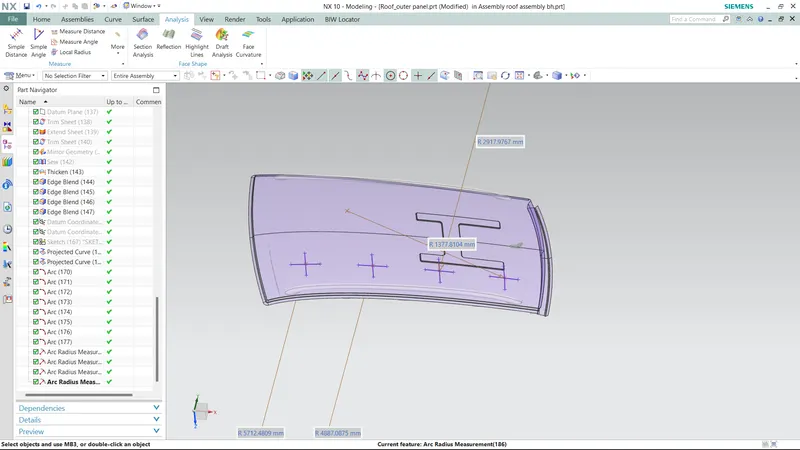
RY value
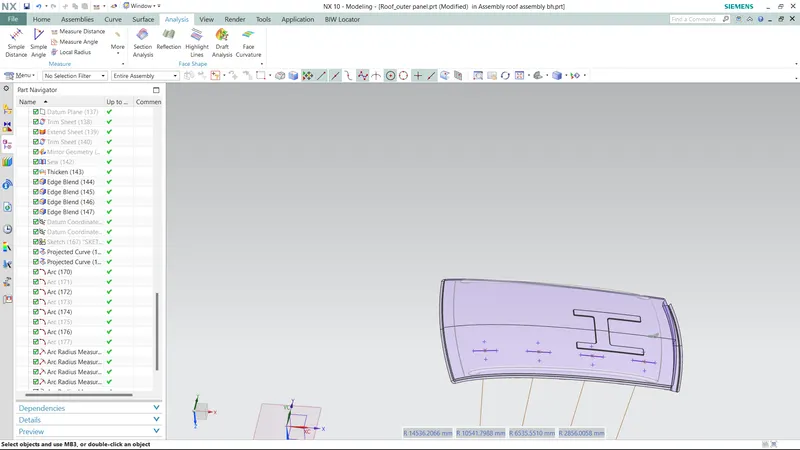
RX value
BOW roof test
| ROOF RAILS | RX | RY | RX*RY | RX+RY | R | L | t | I | W | RESULT |
| FR to BR 1 | 5712.4 | 2856.0 | 16313472 | 8568 | 3808 | 2030 | 0.75 | 474.8 | 1.35 | ok |
|
BR1 to CR |
4887.0 | 6535.5 | 31936545 | 11422 | 5592 | 2030 | 0.75 | 317.8 | 1.17 | ok |
| CR to BR2 | 2917.9 | 10541.7 | 30748097 | 13458 | 4569 | 2030 | 0.75 | 439.5 | 1.31 | ok |
| BR2 to RR | 1377.8 | 14536.2 | 20016072 | 15913 | 2515 | 2030 | 0.75 | 340.2 | 1.20 | ok |
hence all the W values are smaller than 2.7 so, bow roof rails are in correct positions
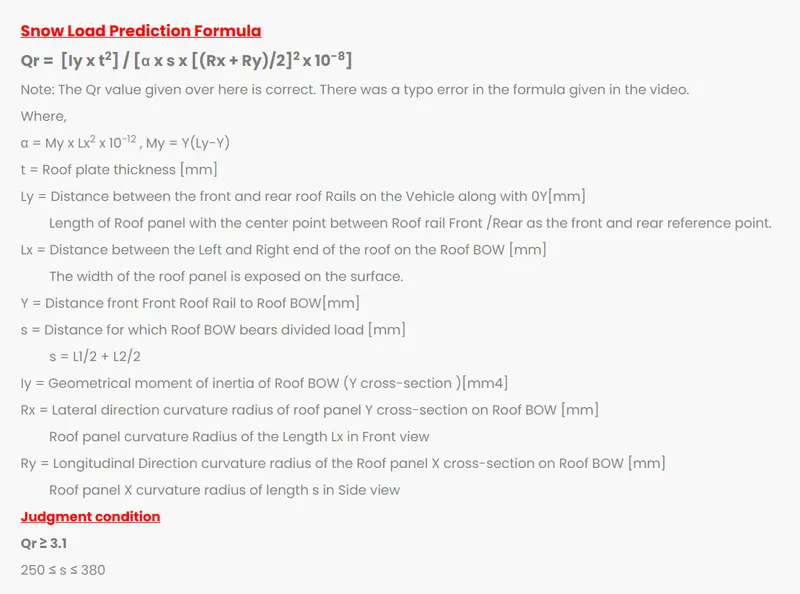
| ROOF RAILS | RX | RY | Lx | LY | Y | S | IY | t | α | Qr | result |
| FR to BR1 | 4348 | 2884 | 1137 | 2030 | 520 | 501 | 1149 | 0.75 | 0.995 | 11.0263 | ok |
| BR1 to CR | 3783 | 6459 | 1084 | 2030 | 511 | 470 | 2045 | 0.75 | 0.954 | 12.5546 | ok |
| CR to BR2 | 4270 | 1963 | 1057 | 2030 | 502 | 522 | 1118 | 0.75 | 0.993 | 16.1562 | ok |
| BR2 to RR | 4020 | 16309 | 1065 | 2030 | 508 | 502 | 2225 | 0.75 | 0.982 | 10.2556 | ok |
hence all the Qr values are greater than 3.1 so its passed the test
ROOF DESIGNS