Roof Design
Roof Design
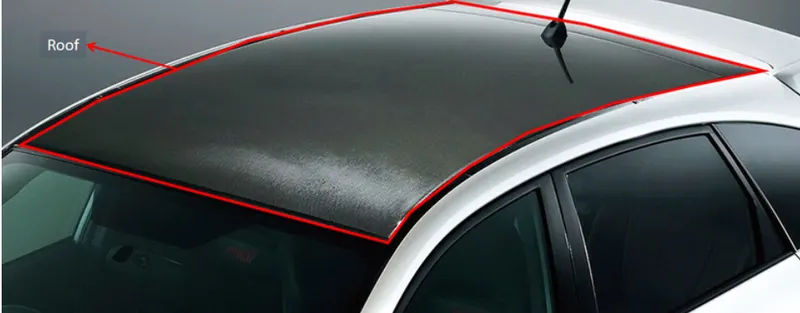
A roof is the portion of a car that paced above the passenger cabin, protecting the passenger from sun, wind, rain, and other external particles. Though it just looks like a styling surface various conditions are considered for designing of the roof. Roof should be provided with good reinforcement for strengthening. roof can be subjected to high heat or load conditions. To make sure that the design of roof should withstand the above conditions, various calculations are done. This ensures the safety of the passengers in the vehicle.
aim:
The main aim is to design roof and roof reinforcements that are received from the styling surface engineer. After the design is completed, heat load and snow load calculations must do on the 0Y section of the roof.
Design and calculations:
Sheet thickness is considered 0.75 mm for all parts. Two bow roofs are provided for the increase the strength of the roof.
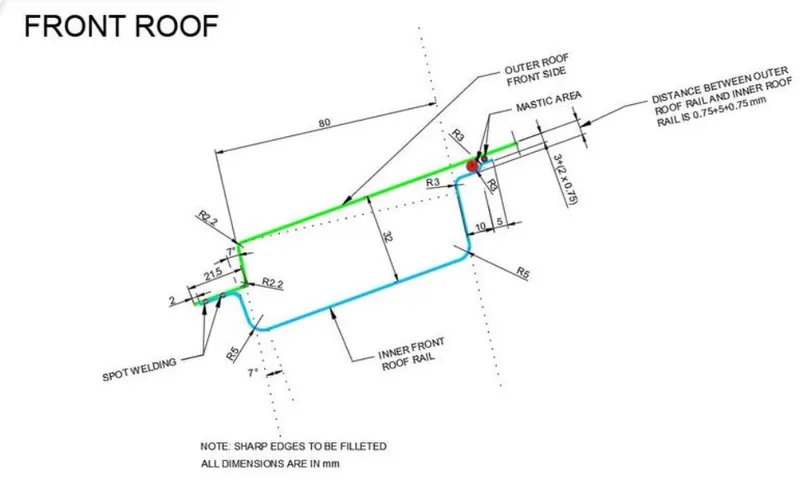
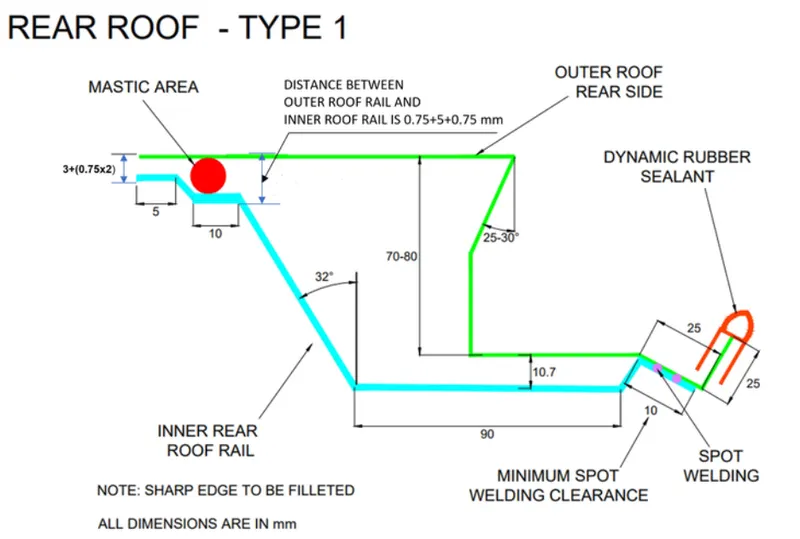
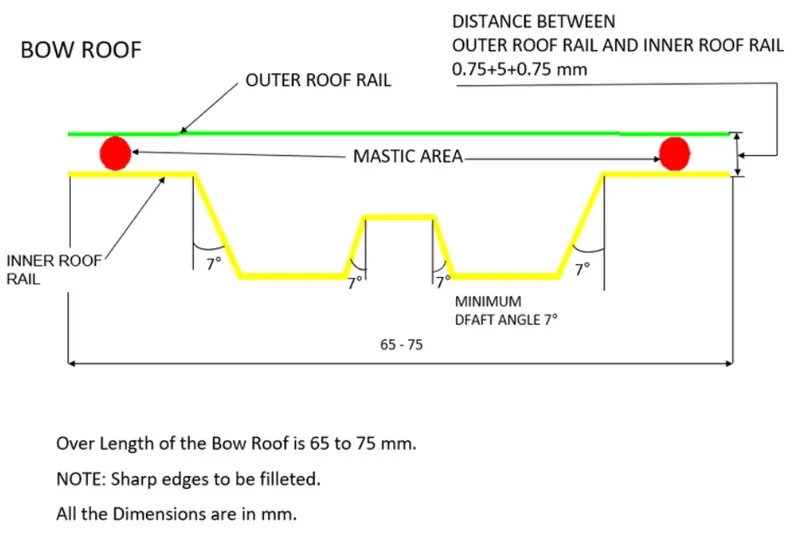
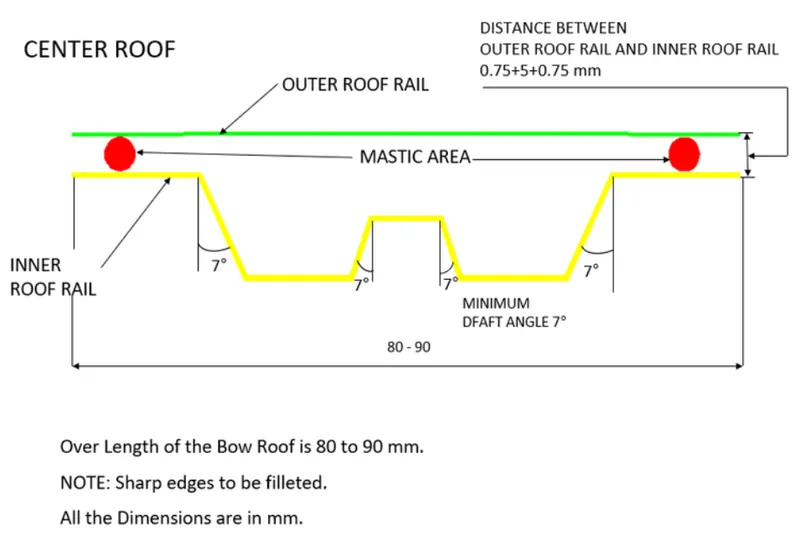
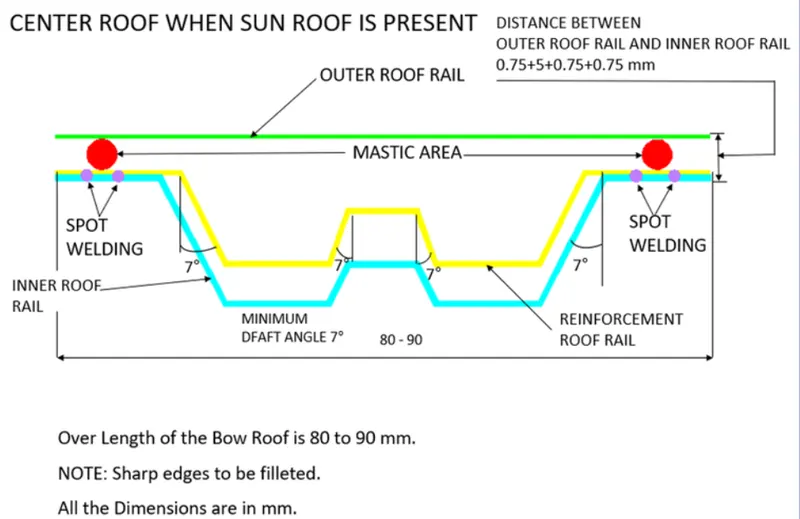
Front Roof rail:
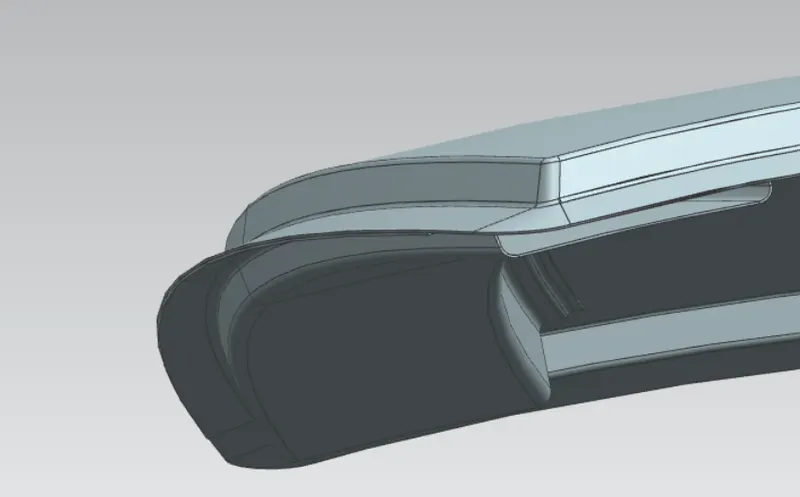
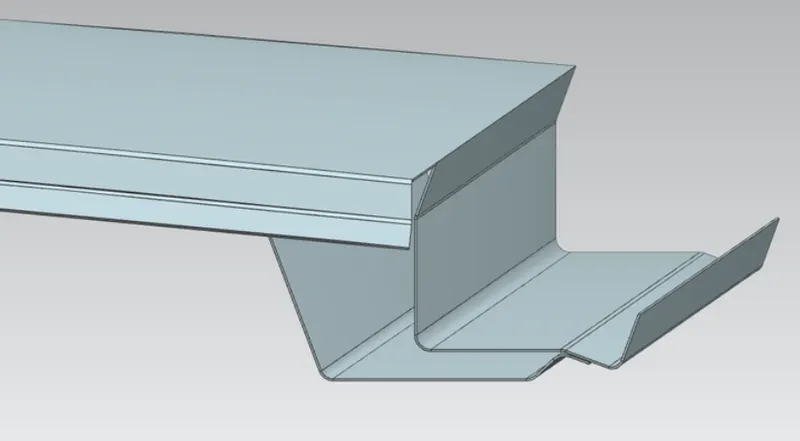
Front roof rail reinforcement provided at the front. Front roof rail reinforcement part is joined to the frame and windshield glass. Visibility criteria are considered for joining it with the windshield glass. Front roof rail reinforcement fixed to BIW with spot welds and the roof surface is attached with the help of mastic sealants. A draft angle is provided for the deep drawing. Draft analysis is also done on the section to check whether this manufacturing or not.
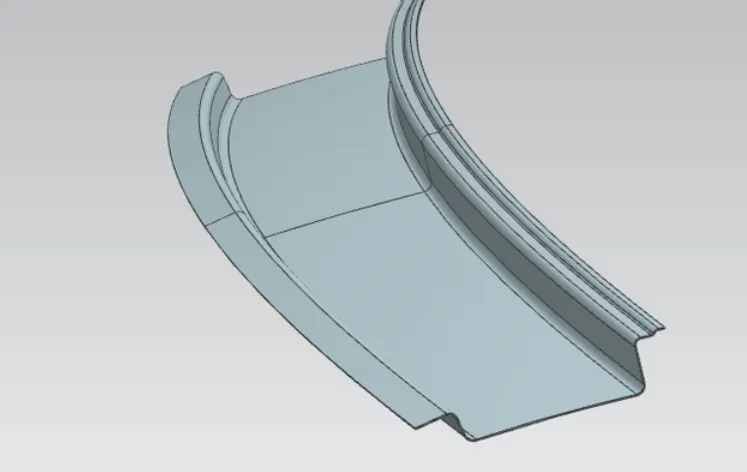
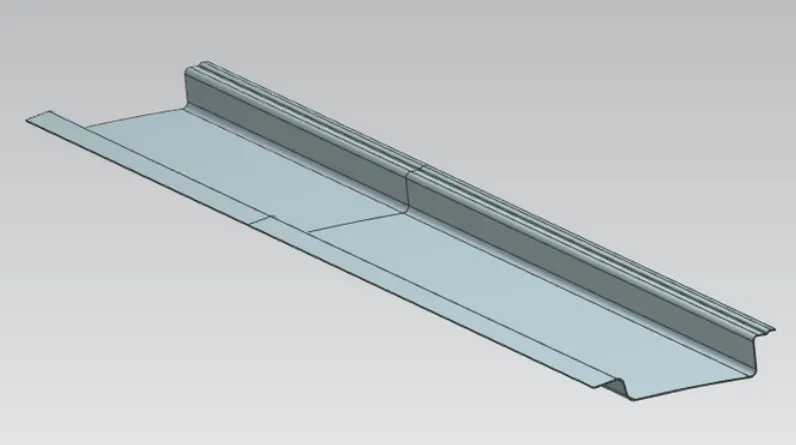
Bow roof 1:
Bow roof 1 is an additional reinforcement is to increase the strength of the roof. It is fixed with a roof body with mastic sealants. 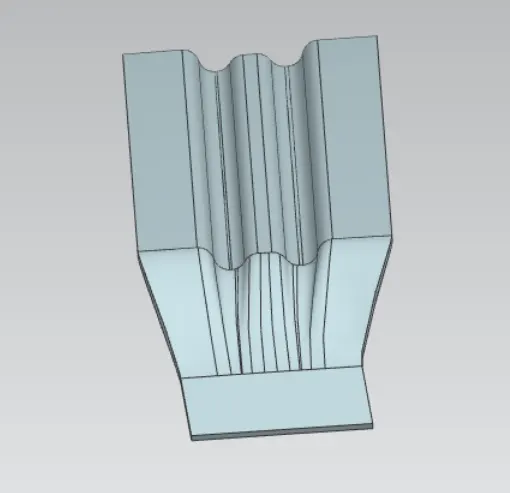
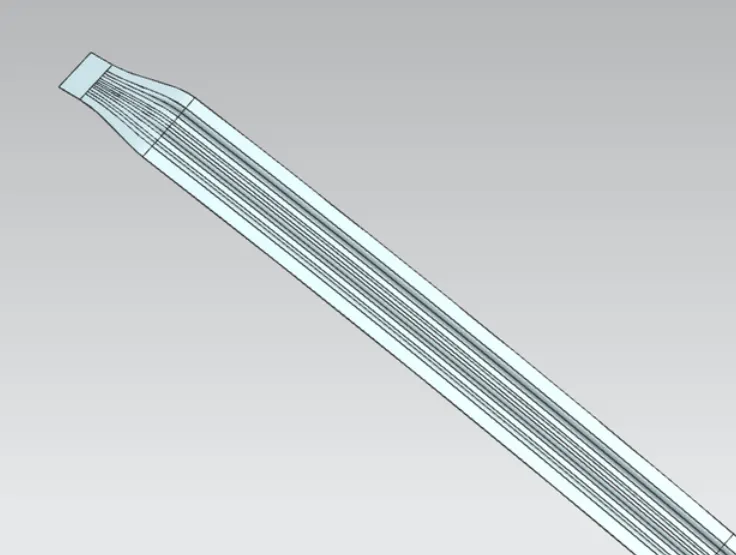
Centre rail roof:
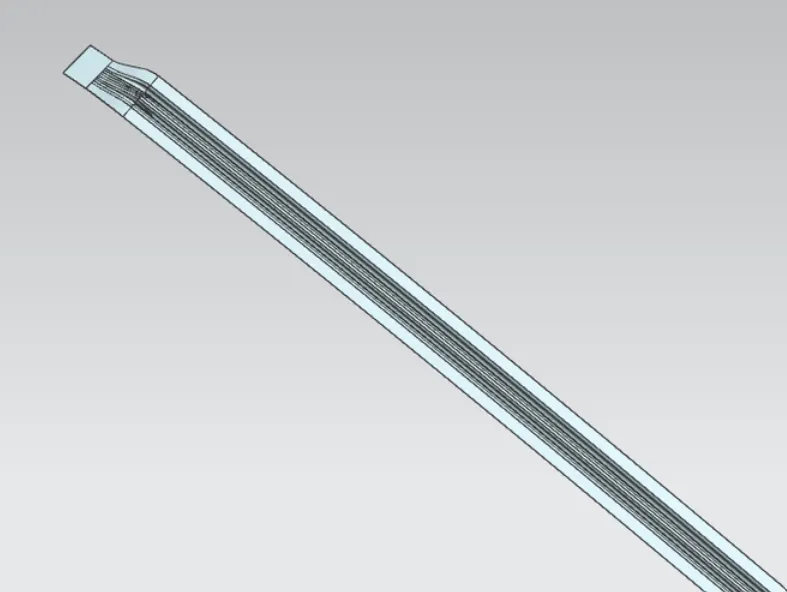
The Centre rail roof can be considered as reinforcement and also used to joining the left and right parts of the roof. It is fixed to the roof by mastic sealants and spot welds to BIW component.
Bow roof 2:
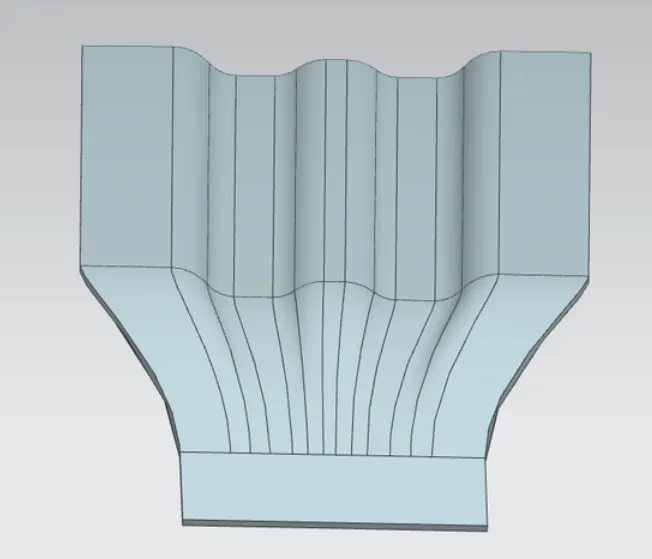
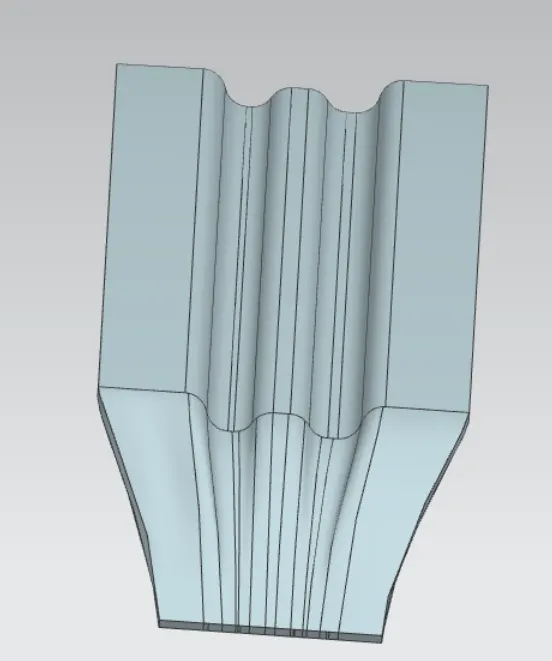
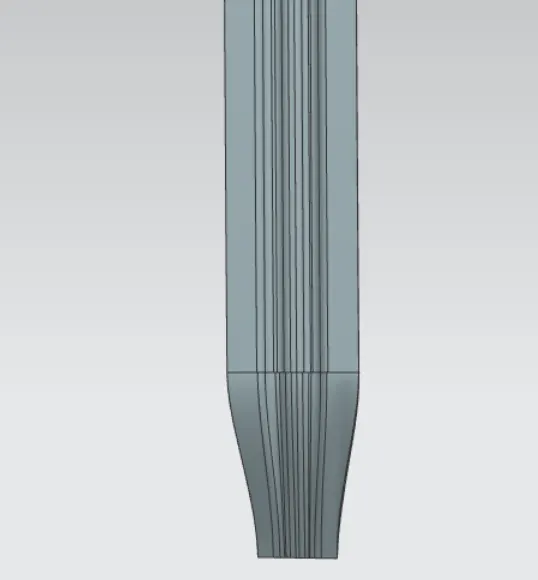
It is similar to the bow roof 1 provided is to increase the strength of the roof.
Rear Roof rail:
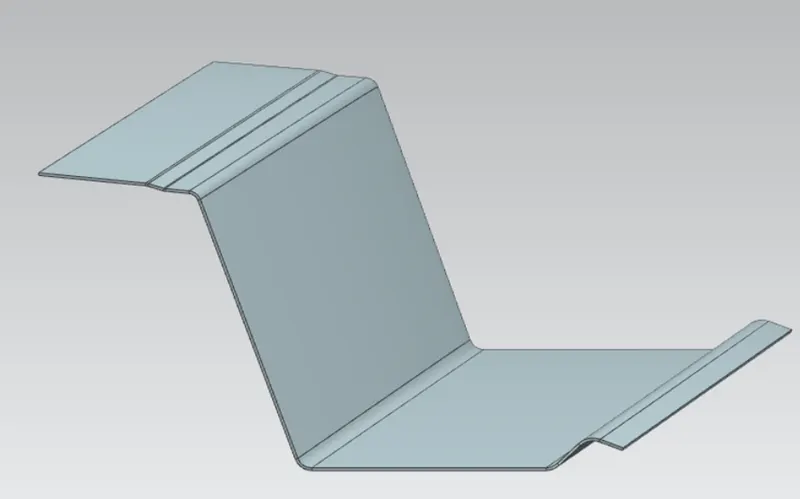
Rear roof rail reinforcement provided at the rear side of the roof. the backdoor and bodyside panels are attached with rear roof rail reinforcement. It is fixed to the roof with mastic sealants and spot welds.
Heat distortion study:
Heat distortion study is to check how much of heat withstands the sheet metal components perform in extreme heat conditions. Sheet metals are changing its shape with high temperatures. To avoid this failure of sheet metal components this study is necessary to determine its capacity heat withstands.
Bow roof prediction Formula
W = [1.73 x 10^ (-3) x L] + [1.85 x 10^(-8) x (R^2)/t] + [ 1.10x10^(-3) x l] - 2.68
Judgement Condition: OK< 2.7> 3.1
Where
L = Roof Length in X-Direction [mm] (Roof dimension in 0-Y)
R = Roof curvature
R = 2(Rx*Ry)/(Rx+Ry)
Rx = X curvature
Ry = Y curvature
t = Roof plate thickness [mm]
l = Bow Roof Span [mm]
Result table:

The above table shows the design is safe in heat distortion criteria.
Snow load Prediction formula
Qr = [Iy x t2] / [α x s x [(Rx + Ry)/2]2 x 10-8]
Where
α = My x Lx^2 x 10^-12, My = Y(Ly-Y)
Judgement condition = Qr ≥ 3.1 or
250 ≤ s ≤ 380
t = Roof thickness [mm]
Ly = Distance between the front and rear roof rails along with 0Y [mm]
Length of roof panel with the Center point between Roof rail Front /Rear as the reference point of the front and the rear.
Lx = Distance between the Left and Right end of the roof on the bow roof [mm]
The width of the roof panel is exposed on the surface.
Y = Distance front roof rail to bow Roof [mm]
s = Distance for which roof bow bears divided load [mm]
s = L1/2 + L2/2
Iy = Geometrical moment of inertia of roof bow (Y cross-section) [mm^4]
Rx = Lateral direction curvature radius of roof panel Y cross-section on roof bow [mm]
Roof panel curvature Radius of the Length Lx in Front view
Ry = Longitudinal Direction curvature radius of the Roof panel X cross-section on roof bow [mm]
X=Roof panel curvature radius of length “s” in the side view
Result Table:
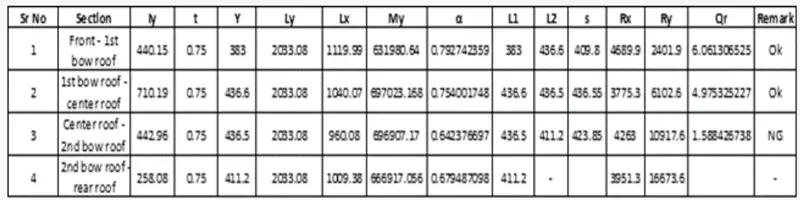
From the above third section, the design does not fulfil snow load criteria.
Hence, to increase the strength of the roof, embosses are provided on the roof surface.
Conclusion:
For the design roof is verified heat load and snow load criteria. Design is passed the heat load criteria but failed at some sections in snow load criteria. To overcome this embosses are provided on the surface of the roof.