Roof Design
ROOF :-
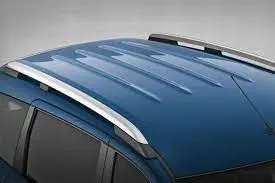
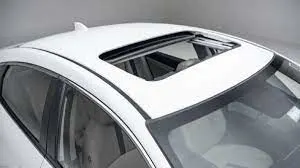
=> An automobile roof or car top is the portion of an automobile that sits above the passenger compartment, protecting the vehicle occupants from sun, wind, rain, and other external elements. An automobile roof consists of the following parts,
=>Outer roof panel
=>Front roof rail
=>Bow roofs
=>Reinforcements
=>Rear roof rail
=> It also acts as a cross member between body sides of the car body and provide provisions for front windshields, backdoor (in case of hatchback vehicles). Under the styling surface that is seen from the outside, there are many other structures under the roof which contribute to its strength and stability.In the past roof was introduced as cover for passenger compartment but later on, it also used as luggage carrier, sunroof and in recent past years with the introduction of the solar panel electric vehicle got a major boost in the automotive industry.
=>Roofs are generally made up of Aluminium.Aluminium based roof panel may reduce the overall weight of the assembly.
DESIGN CONSIDERATION:-
=>Visibility criteria
=>Head clearance
=>Heat distortion condition
=>Snow load condition
=>Roof curvature study
=>Draft analysis
Front roof rail:-
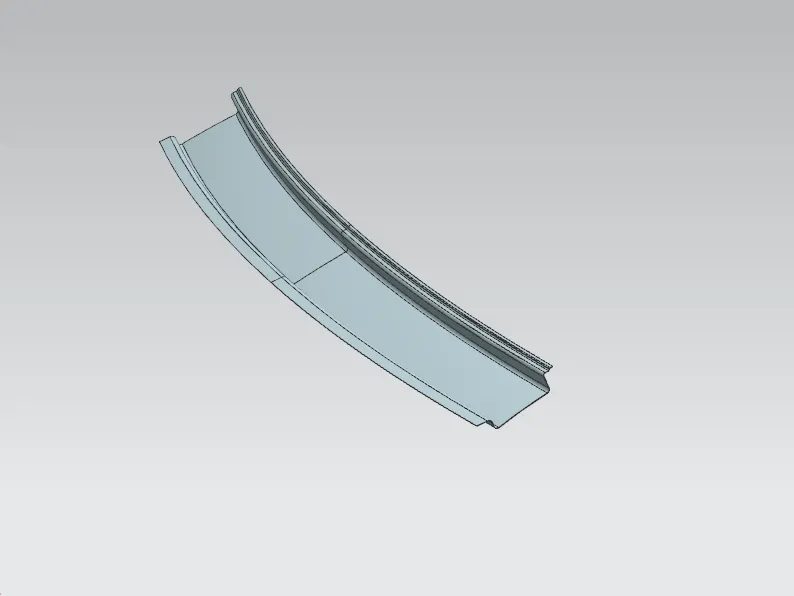
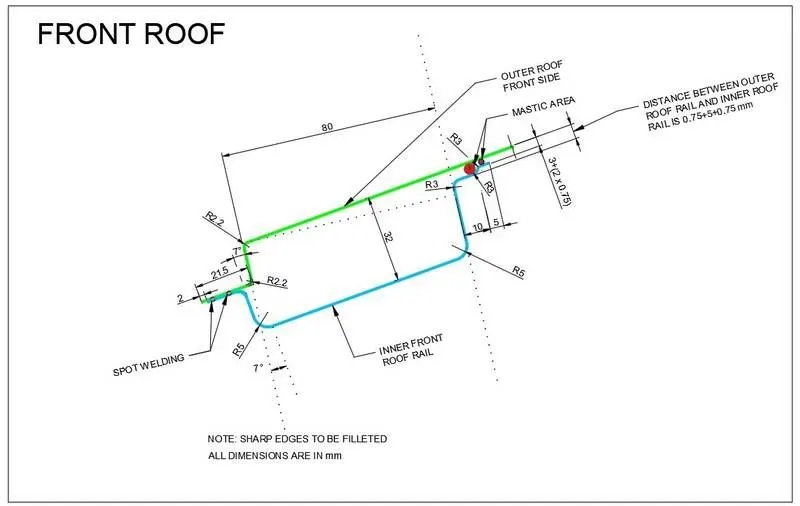
Front roof rail is located at the front of the outer roof panel that joins the wind shield glass. The front end of the rail is spot welded with the ditch area of the outer roof panel and the rear end of the rail is attached with outer roof panel through mastic joints.
Rear roof rail:-
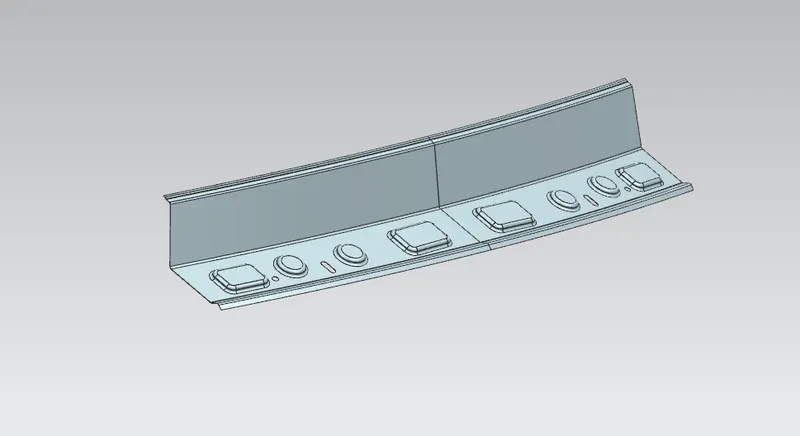
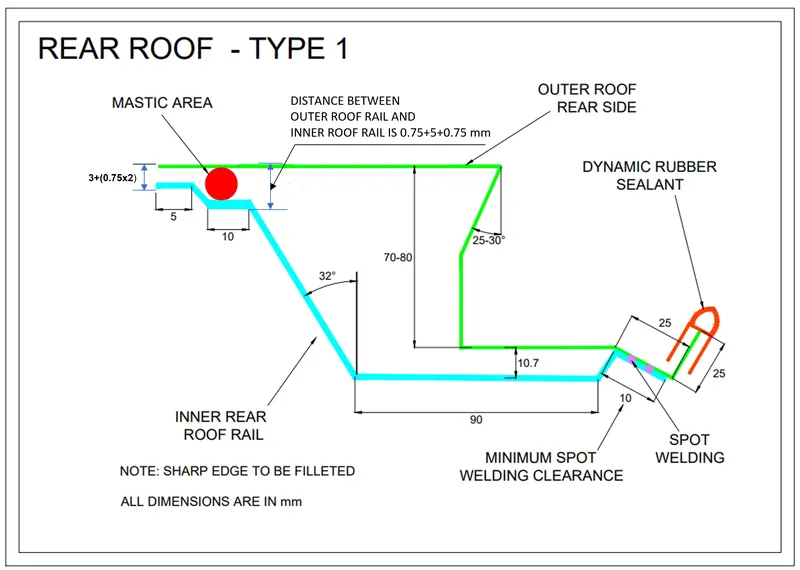
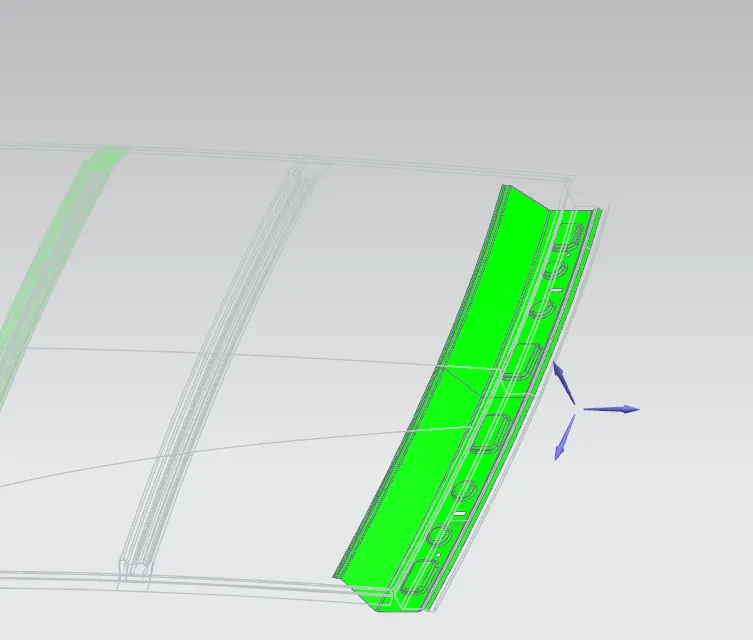
It is the support which is joined to the back door and the body side outer and the inner panels. It is also usually made from body side outer scrap and therefore thickness of the rail is 0.75 mm. similar to the front roof design, we have to take into consideration the rear headroom clearance and the rear visibility criteria while designing the rear roof rail. Spot welds are applied at the backdoor end of the rail and the other end is joined with the roof using mastic sealants.
Bow roofs:-
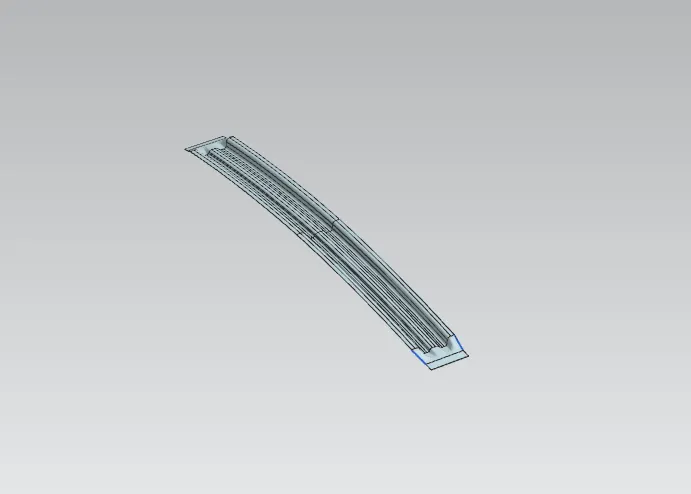
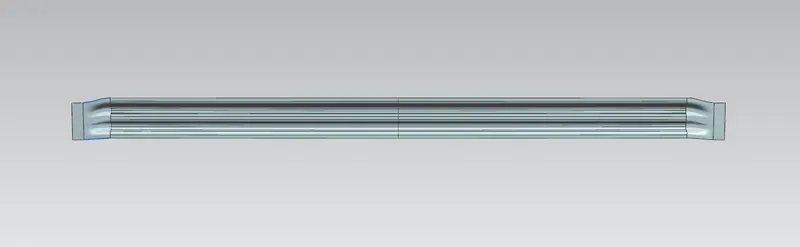
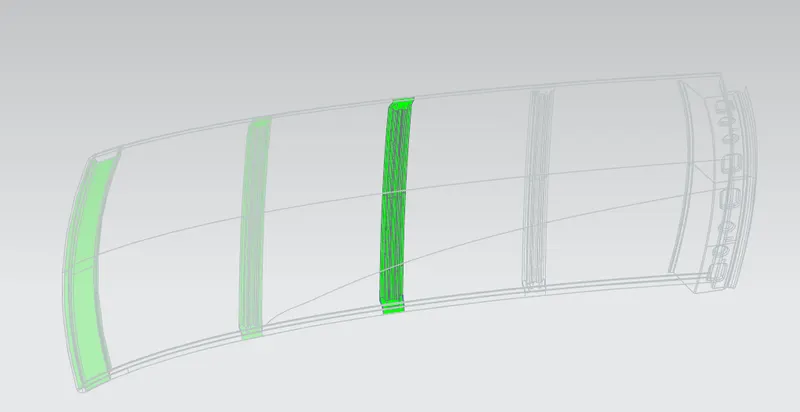
The bow roofs are provided to improve the torsional stiffness and to withstand the load bearing capacity of the outer roof. The bow roof counts depend on the length of the roof outer panel. In this case two bow roofs are provided one in between the front rail and central reinforcement and other in between the reinforcement and rear roof rail, considering overall length.
b 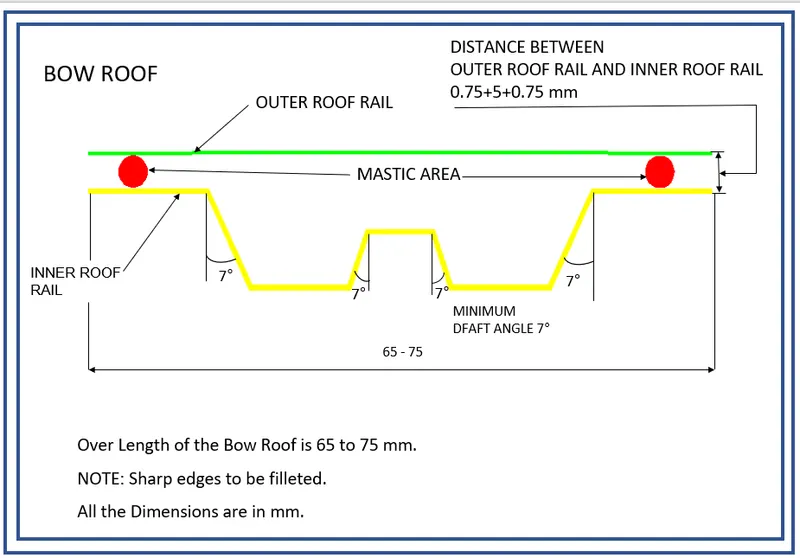
Center roof rail:-
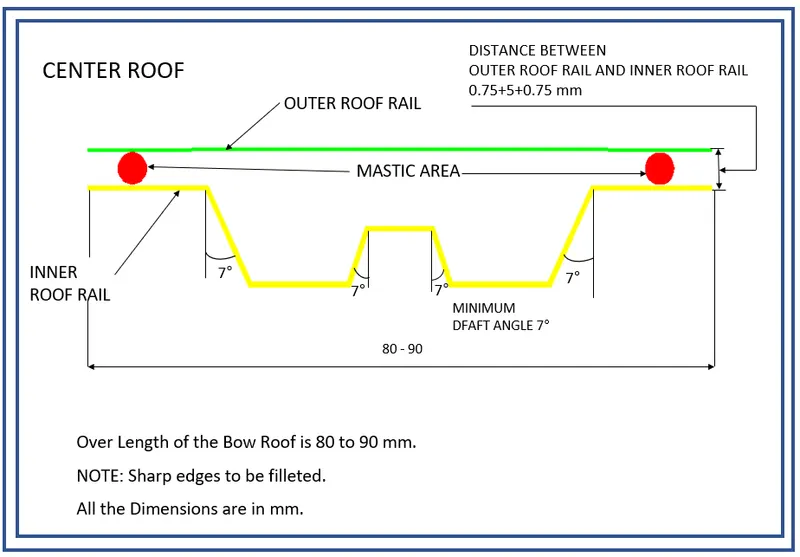
Centre roof rail is provided to effectively support the flat area of the roof as it is more susceptible to failure under the action of the load. usually, the center reinforcement roof rail will be placed at the center of the roof connecting the B pillar support structure which result in added support in the roll over test.
Draft analysis:
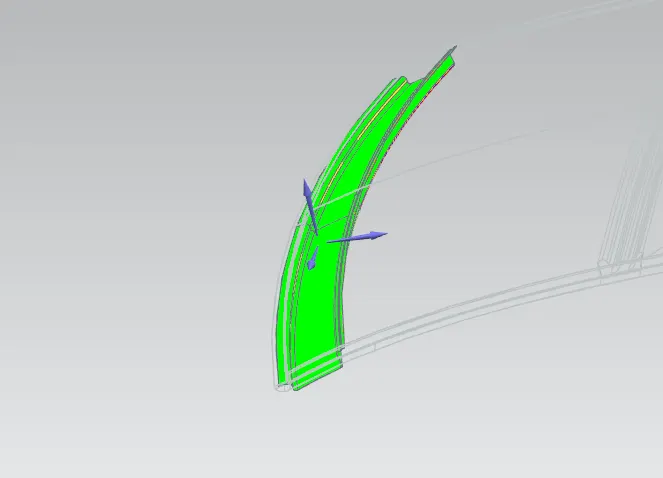
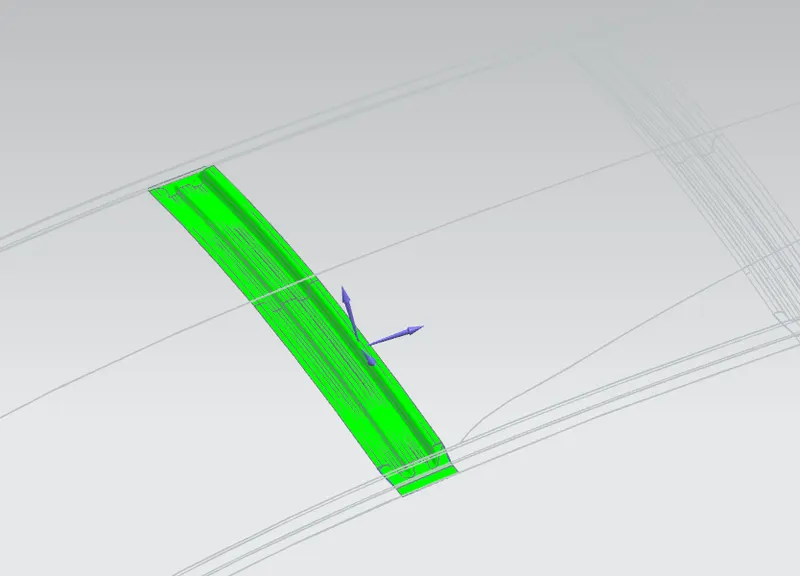
Sheet metals are manufactured by deep drawing process. If the designed parts have negative drafts it may results in tool wear or failure of the press tools. In order to overcome this issues draft analysis are performed in software.
Heat distortion calculation:-
The heat distortion study plays a major role in sheet metal usage. Heat distortion temperature is a temperature limit above which the material cannot be used for the structural applications. This study is used to predict the heat distortion temperature at where the material starts to soften when exposed to a fixed load at elevated temperature. In order to avoid bending or damages on the roof, based on the heat distortion temperature, this study will predict the bow roof position which helps to strengthen the roof.
Bow roof prediction formula
W = [1.73 x 10^(-3) x L] + [1.85 x 10^(-8) x (R^2)/t] + [ 1.10x10^(-3) x l] - 2.68
Where,
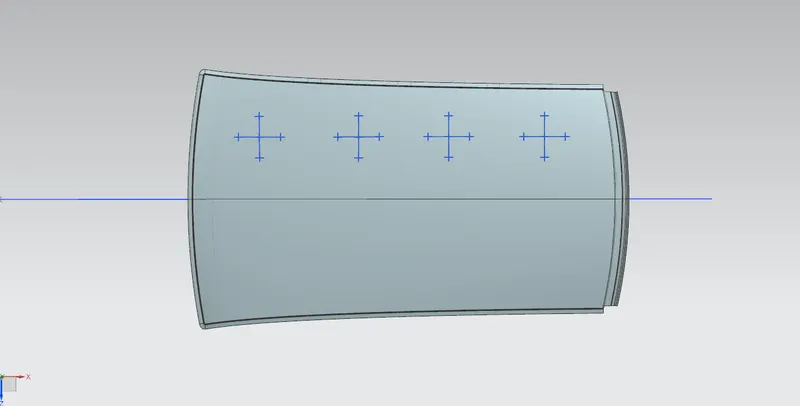
L = Roof Length in X-Direction[mm](Roof dimension in 0-Y)
R = Roof curvature
R = 2(Rx*Ry)/(Rx+Ry)
Rx = X curvature
Ry = Y curvature
t = Roof plate thickness [mm]
l = Bow Roof Span [mm]
judgement condition ok<2.7>3.1
| SNO | ROOF RAILS | Rx | Ry | R | I | L | t | W | OK/NG |
| 1 | FR-BOW ROOF 1 | 2739 | 5711 | 3702 | 450 | 2031 | 0.75 | 1.6 | ok |
| 2 | BOW ROOF 1- CR | 6492 | 4898 | 5584 | 363 | 2031 | 0.75 | 2.0 | ok |
| 3 | CR-BOW ROOF 2 | 10189 | 4055 | 5801 | 364 | 2031 | 0.75 | 2.0 | ok |
| 4 | BOWROOF 2 - RR | 14199 | 3339 | 5407 | 420 | 2031 | 0.75 | 2.0 | ok |
It is clearly observed that the values obtained are below 2.7 thus the roof passes the heat distortion criteria.
Snow Load Calculation:-
In the winter season, in some countries there will be a huge load of snow on the roof top of the car. Snow load criteria study is done to check the ability of the roof to withstand snowfall and bounce back to its original shape without a permanent deformation once the load is removed.
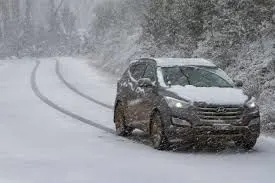
formula for snow load condition
Qr = [Iy x t2] / [α x s x [(Rx + Ry)/2]2 x 10-8]
in vid of roof calculation some typing mistaken of formula, here is correct formula for calculation
Where,
α = My x Lx2 x 10-12 , My = Y(Ly-Y)
t = Roof plate thickness [mm]
Ly = Distance between the front and rear roof Rails on the Vehicle along with 0Y[mm]
Length of Roof panel with the center point between Roof rail Front /Rear as the front and rear reference point.
Lx = Distance between the Left and Right end of the roof on the Roof BOW [mm]
Y = Distance front Front Roof Rail to Roof BOW[mm]
s = Distance for which Roof BOW bears divided load [mm]
s = L1/2 + L2/2
Iy = Geometrical moment of inertia of Roof BOW (Y cross-section )[mm4]
Rx = Lateral direction curvature radius of roof panel Y cross-section on Roof BOW [mm]
Ry = Longitudinal Direction curvature radius of the Roof panel X cross-section on Roof BOW [mm]
judgment condition Qr>3.1
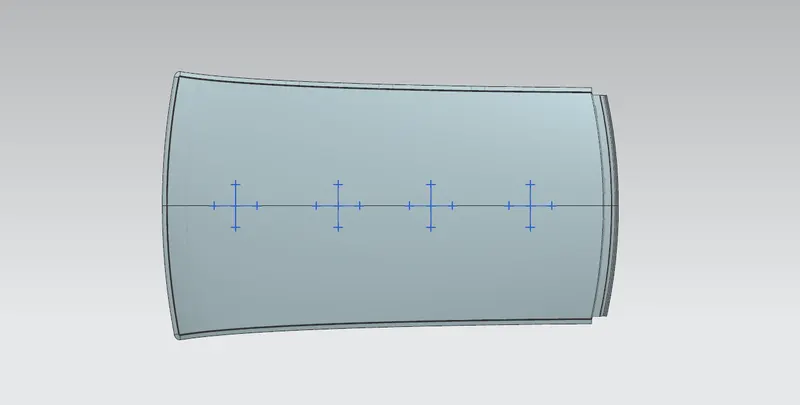
| SNO | ROOF RAILS | Iy | Lx | Ly | L1(MM) | L2(MM) | Rx(mm) | Ry(mm) | t | y(mm) | Qr | ok/NG |
| 1 | FR-BOW ROOF RAIL1 | 1.666 | 1051 | 2031 | 540 | 433 | 2778 | 3309 | 0.75 | 450 | 4.1 | NG |
| 2 | BOW ROOF RAIL1-CRR |
2.55 |
1096 | 2031 | 433 | 434 | 6414 | 2946 | 0.75 | 363 | 0.86 | NG |
| 3 | CRR-BRR2 | 1.664 | 1074 | 2031 | 434 | 544 | 1060 | 3216 | 0.75 | 364 | 0.92 | NG |
| 4 | BRR2-RRR | 2.19 | 1060 | 2031 | 544 | - | 1585 | 3131 | 0.75 | 420 |
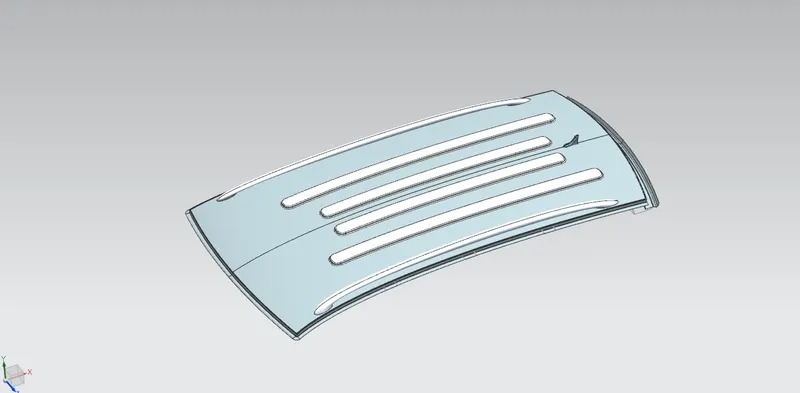
Here the values are not satisfying the snow load criteria, so embosses on the outer roof panel are designed to withstand the external load.
ROOF EMBOSS:-
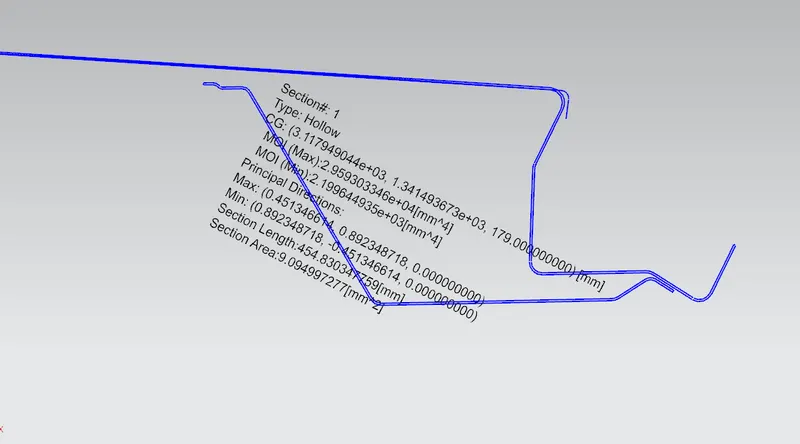
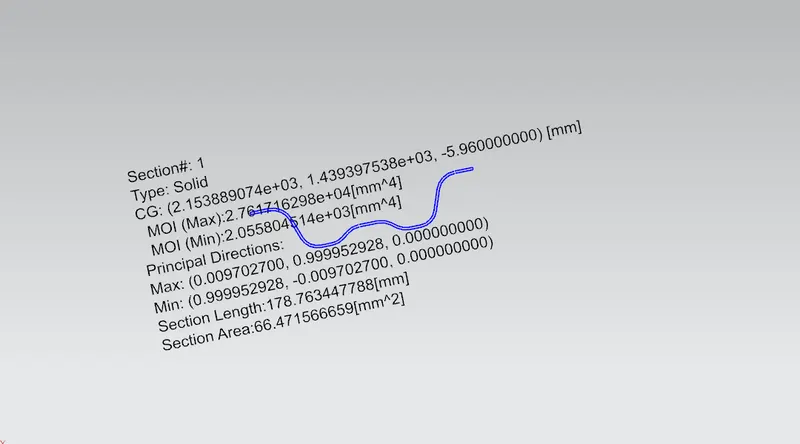
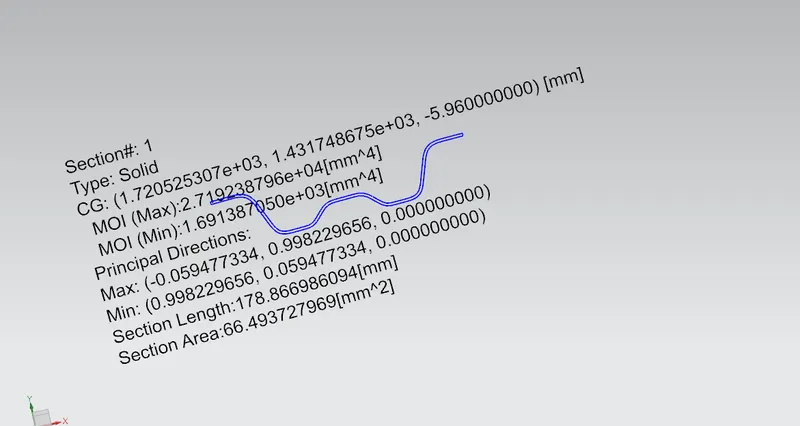
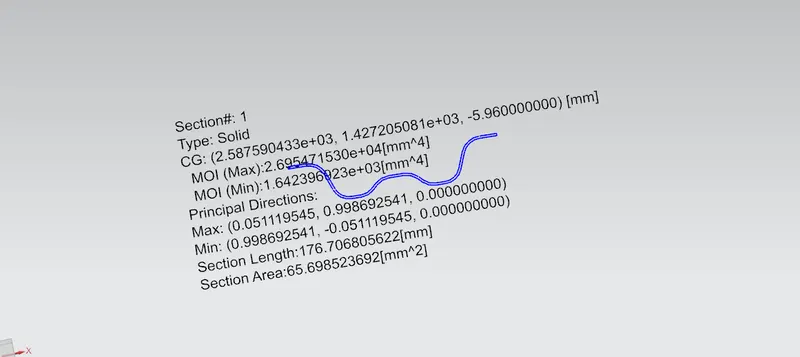
Section Modulus:-
Section modulus is a direct measure of strength of any sectional area of an object about an referance axis(neutral axis). Strength is nothing but,capable of supporting greater loads,so higher the strength it has a high capable of supporting greater loads.
Section modulus represented with a symbol of ‘S’
ROOF CRUSH TEST:-
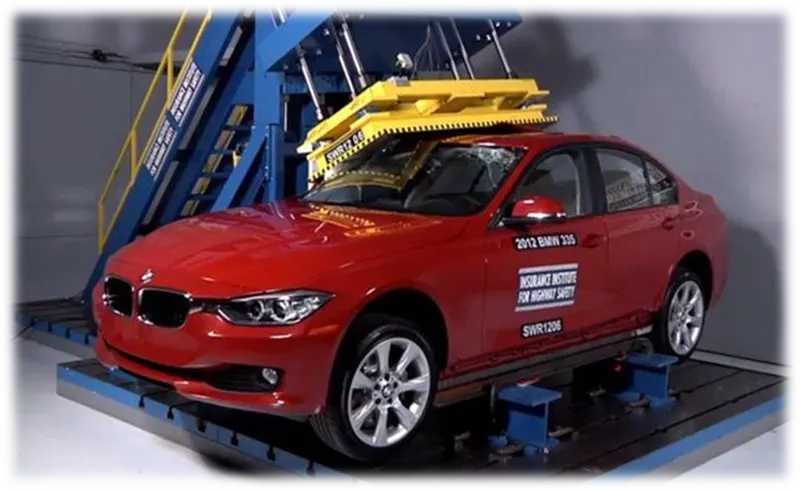
Roof crush test is the methodology given by the IIHS (Insurance Institute of Highway Safety). After analysing many accidents IIHS has fixed some regulations, to perform the crush test.
The IIHS ratings are based upon the following considerations
=>How fast the car can reform to its original shape after the roll over.
=>How deep is the protrusion after the roll over.
CONDITIONS FOR ROOF CRUSH TEST:-
BASIC condition:-
=>Close and lock all the doors
=>Close all the windows
Second condition:-
Fix the body sill or chassis frame on a hard lever surface horizontally.
Conclusion:-
=>Roof assembly has been made successfully by following engineering standard, master section and styling surface given by styling team.
=>roof assembly heat distortion criteria has been successfully passed and snow load criteria has failed to overcome this embosses are added to the roof outer panel for more strength.