Roof challenge
VEHICLE ROOF
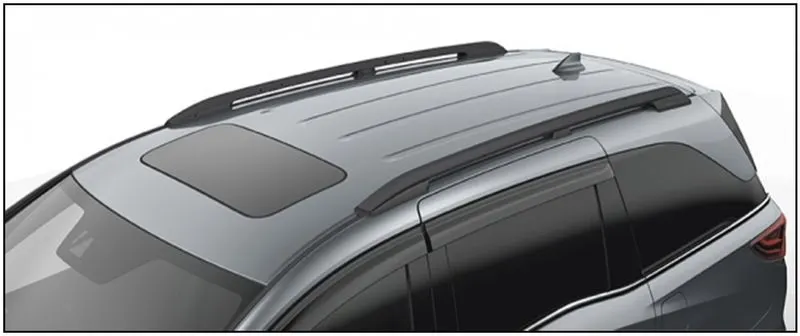
Roof is the top portion present in the automobile, below the driver and passenger head.
Roof protects the passengers present inside the automobile from sun-rays, rain, wind and falling of light to medium weight debris.
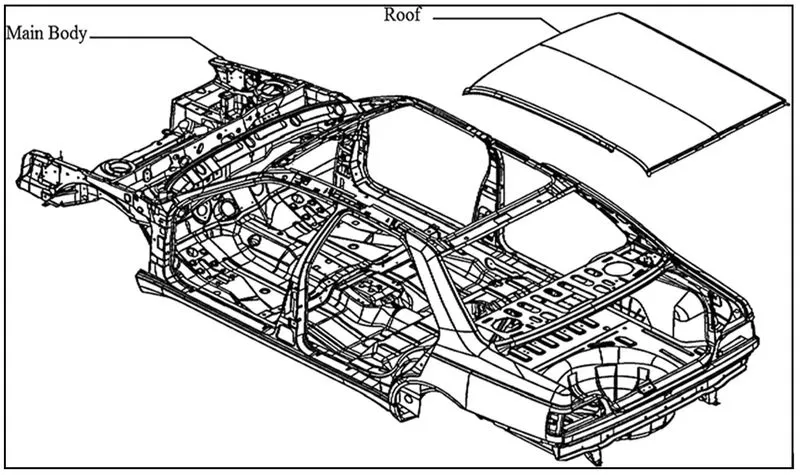
- PARTS OF VEHICLE ROOF
The Vehicle Roof consists of following parts shown below,
- Roof Outer Panel.
- Front Roof Rail.
- Bow Roof Rail.
- Centre Roof Rail.
- Rear Roof Rail.
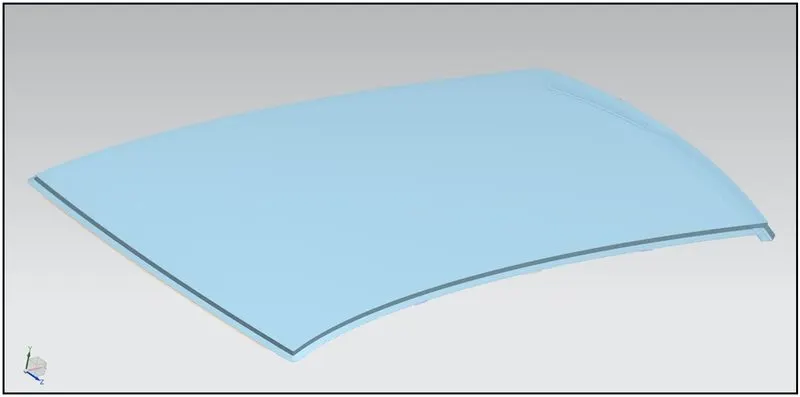
- ROOF OUTER PANEL
The Roof Outer Panel is present at a clearance above passenger head, for providing protection against sun rays, rain, wind and external elements.
The Roof Outer Panel supports the internal structural members like, front roof rail, bow roof rail, centre roof rail and rear roof rail, thus providing the strength to the outer panel structure.
- FRONT ROOF RAIL
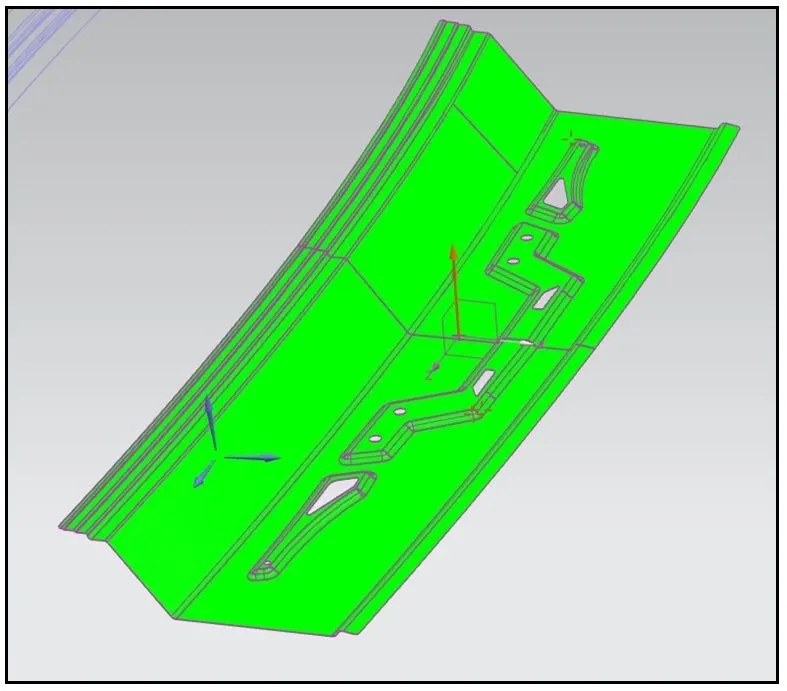
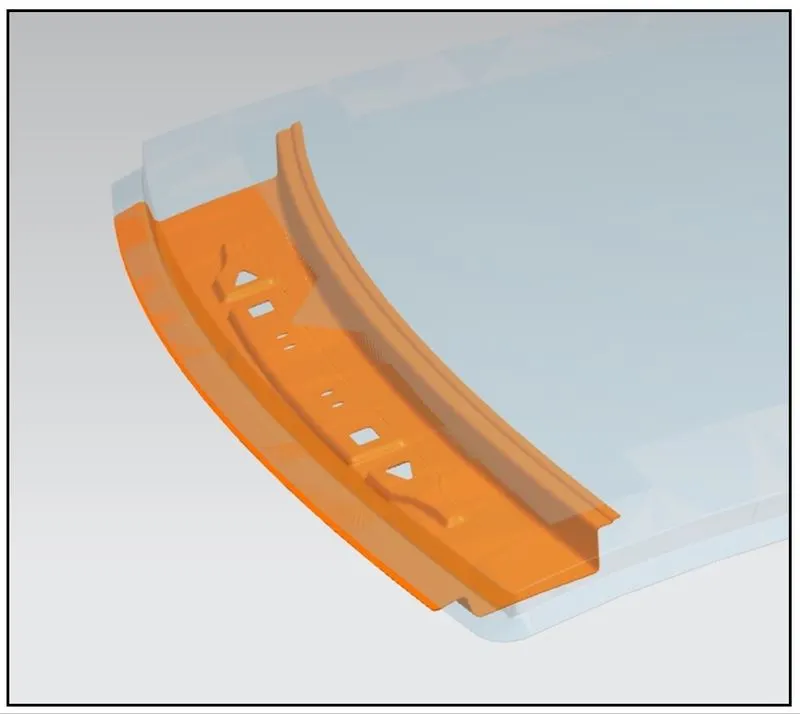
The Front Roof Rail is the first segment of internal structure for roof. The Front roof rail is mainly designed based on Headroom clearance and Driver visibility for viewing the front road.
The Front roof rail is created by the help of flanges, followed by development of emboss parts on front roof rail for providing the strength.
There is a clearance of 5mm provided in between the outer roof panel and the front roof rail, for joining through mastic sealant.
- BOW ROOF RAIL
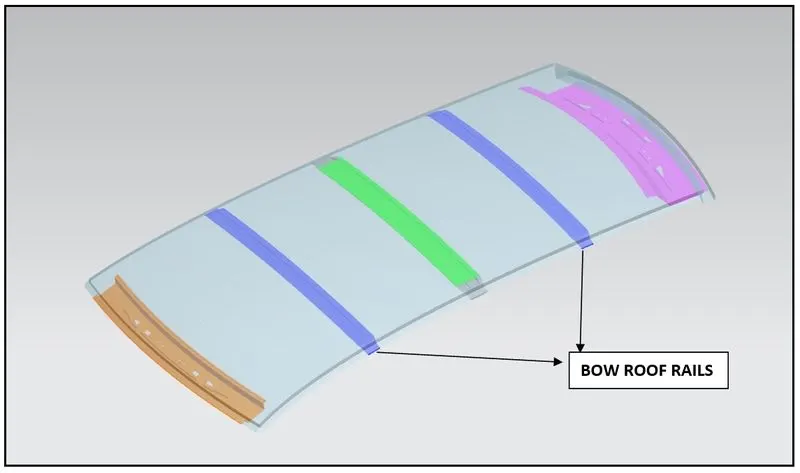
Bow Roof Rail is the second segment of internal structure for outer roof panel, followed by Front Roof Rail.
There are totally two Bow Roof Rails are developed, based on the length of outer roof panel.
The Two Bow roof rails are placed in between the centre roof rail to provide the distributed strength for outer roof structure.
There is a clearance of 5mm provided in between the outer roof panel and the bow roof rail, for joining through mastic sealant.
- CENTER ROOF RAIL
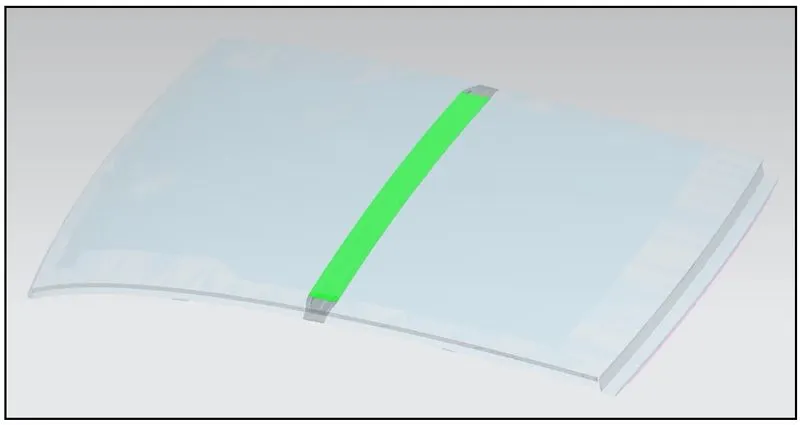
Centre Roof Rail is the third segment of internal structure for outer roof panel, in between two Bow Roof Rails.
The Centre roof rail comes with an additional reinforcement to provide high strength for roof, as the centre roof rail is present at the middle/centre part of the vehicle roof.
There is a clearance of 5mm provided in between the outer roof panel and the centre roof rail, for joining through mastic sealant.
- REAR ROOF RAIL
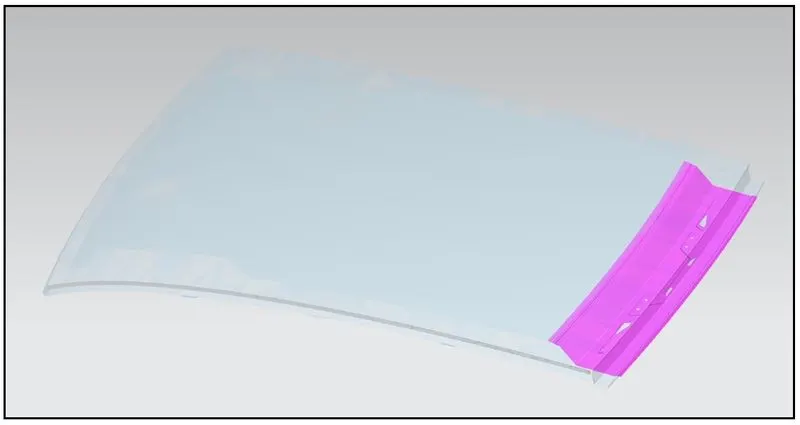
Rear Roof Rail is the final segment for internal structure of roof. Rear Roof Rail is designed with a view to support the Back Door Structure and provide the strength for both outer roof panel and Back door to facilitate the load of backdoor hinge support on outer roof panel.
There are embossed parts made in the rear roof rail to increase the strength.
There is a clearance of 5mm provided in between the outer roof panel and the rear roof rail, for joining through mastic sealant.
- DESIGN CALCULATION OF ROOF
The Roof is designed using UG-NX tool. The parts of roof like – outer roof panel, front roof rail, bow roof rails, centre roof rail and rear roof rail are created by developing flanges and reinforcements.
The Embosses are created on the certain roof parts, to strengthen the roof of the vehicle.
The criteria for judging the right design for roof is based on the following two judgement conditions,
- Heat Distortion Criteria.
- Snow Load Criteria.
- HEAT DISTORTION CRITERIA.
The Heat Distortion prediction is done for the parts of roof, for judging the strength of bow roof position in terms of external heat.
The heat produced from sun-rays, tends to create deformation on the outer-roof, thus leading to deformation and bending of internal parts of roof, due to metal expansion.
The Bow roof prediction formula to determine heat distortion is shown below: -
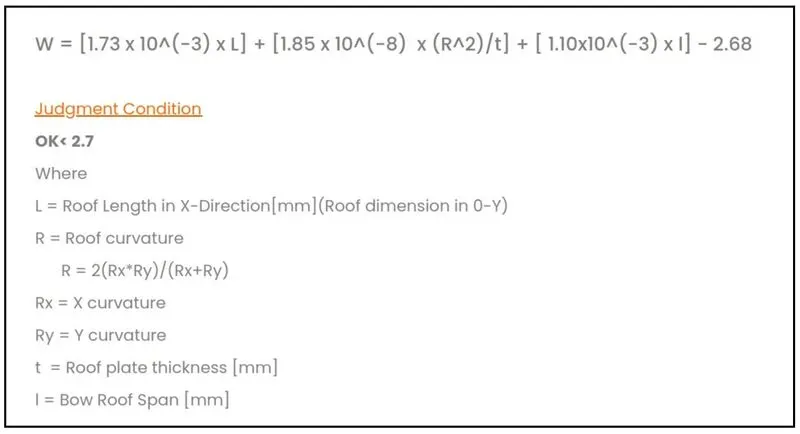
The results obtained for the designed roof after incorporating the values of design parameters in bow prediction formula is shown in below table,

Conclusion of Heat Distortion Criteria: -The Designed Roof satisfies the Bow roof prediction formula for the considered Bow positions.
- SNOW LOAD CRITERIA.
The Snow Load Criteria is concerned with the determination of allowable load for roof to withstand from deformation, when the weight of snow gradually increases on it.
The Snow Load Prediction formula is shown below: -
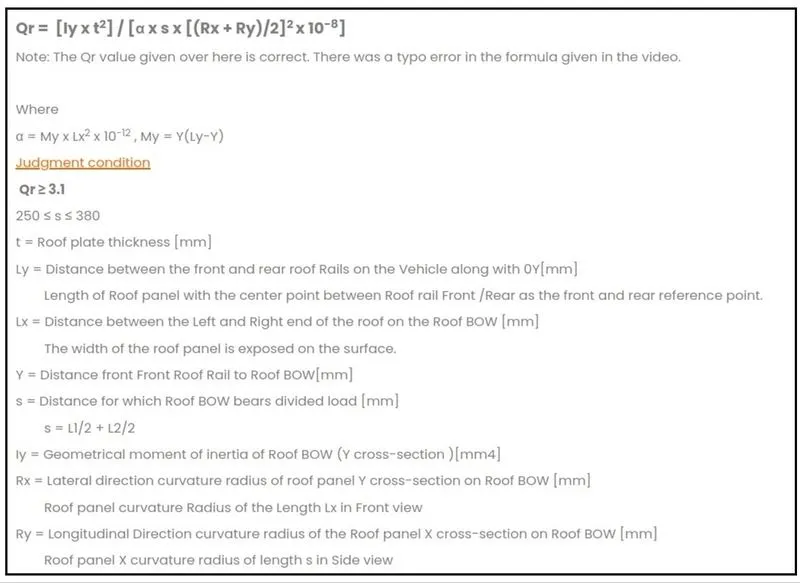
The results obtained for the designed roof after incorporating the values of design parameters in snow load prediction formula is shown in below table,
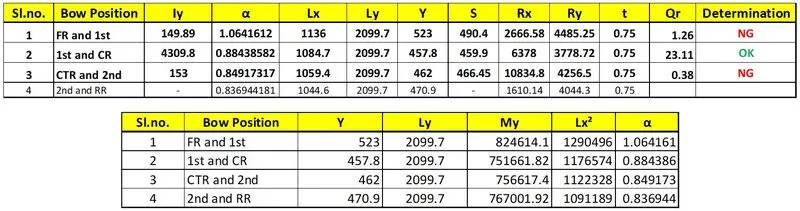
Conclusion of Snow Load Criteria: -The Designed Roof satisfies the Snow Load criteria only for Bow position of 1st bow roof rail and Centre roof rail as shown in sl. No. 2.
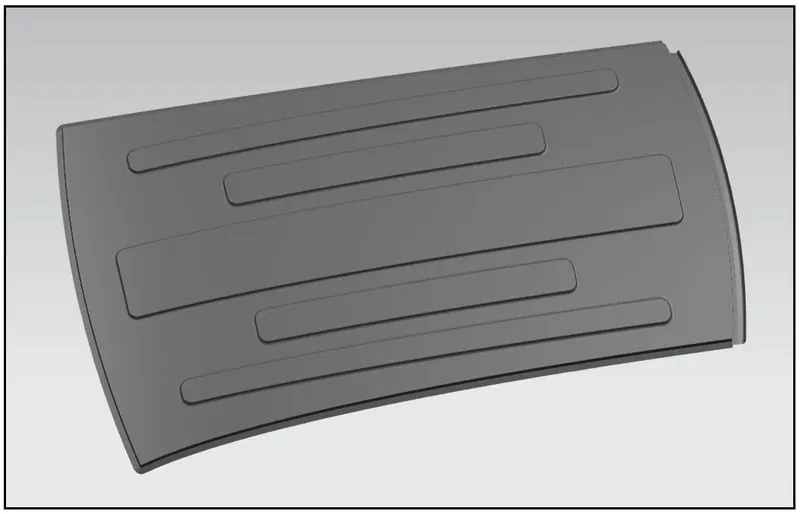
Henceforth, to increase the strength of the roof in terms of snow load criteria, necessary embosses are to be created on outer roof panel.
- SECTION MODULUS ANALYSIS FOR ROOF PARTS
Section Modulus is also referred to as the Polar Modulus or the Torsional Sectional Modulus. It is denoted by S.
Section Modulus is the geometric property of the given cross-section of any beam structures. It is the direct measure of the strength of the beam section. Higher the section modulus of a structure, the more the resistive it becomes to bending.
Section modulus is defined as the ratio of polar moment of inertia to the distance from the neutral axis to the outer fibres.
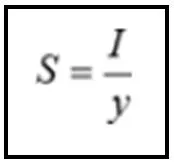
Were,
S = Section Modulus.
I = Moment of Inertia.
y = Distance Between the Neutral Axis and the Extreme end of the object.
The above formula depicts that – Section Modulus is directly proportional to the Moment of Inertia and Inversely Proportional to the Section Modulus.
RESULTS
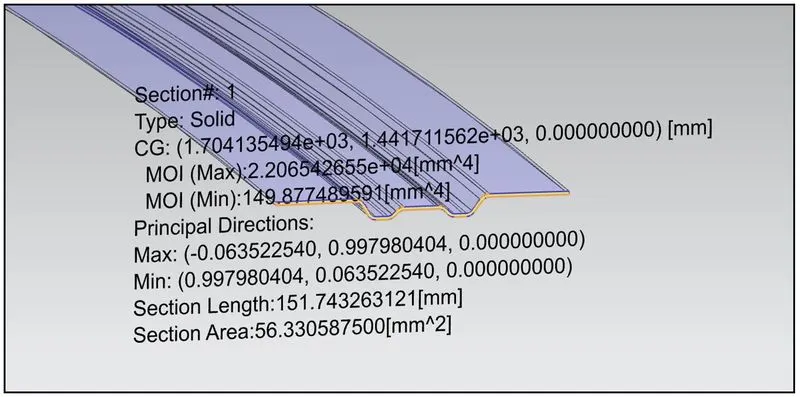
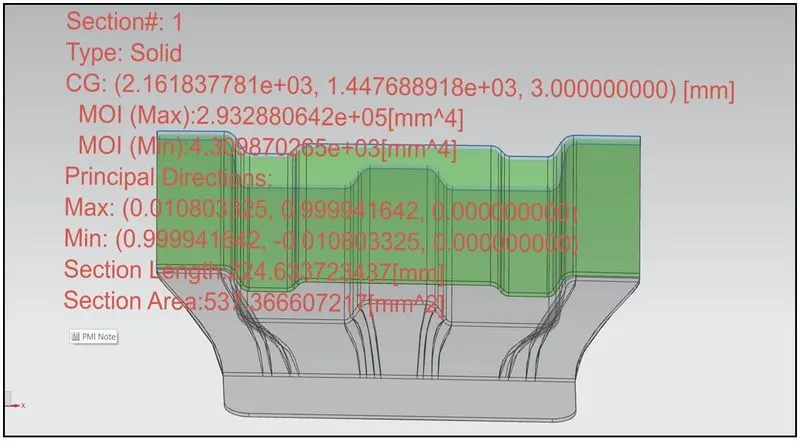
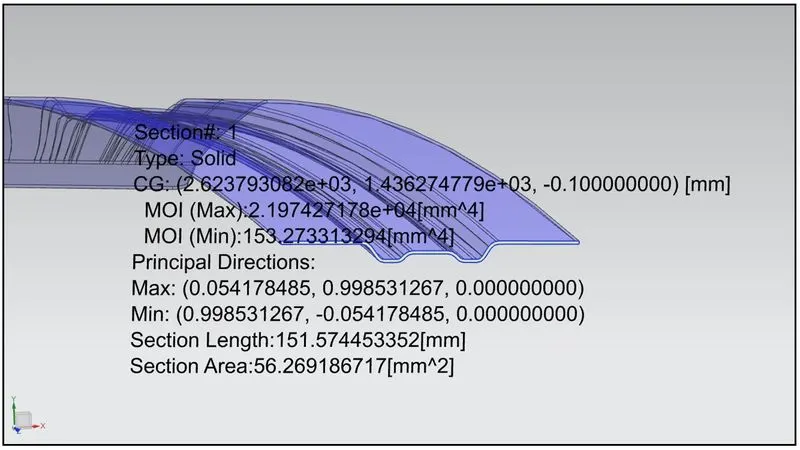
The Section Modulus analysis performed on Bow roof rails and centre roof rail for calculation of snow load criteria are shown below in sequential manner,
- Section Modulus analysis on Bow roof rail – 1 (Position - after the front roof rail).
- Section Modulus analysis on Centre Roof Rail (Position - after the Bow roof rail – 1).
- Section Modulus analysis on Bow roof rail – 2 (Position - after Centre Roof Rail).
- Section Modulus analysis on Bow roof rail – 1 (Position - after the front roof rail).
- Section Modulus analysis on Centre Roof Rail (Position - after the Bow roof rail – 1).
- Section Modulus analysis on Bow roof rail – 2 (Position - after Centre Roof Rail).
- DRAFT ANALYSIS FOR ROOF PARTS
The sheet metal deep drawn technology is one of the most challenging processes in manufacturing. Drawing operation is the process forming a flat piece of material into a hollow shape by means of punch which causes the blank to flow into the die cavity.
The depth of the draw may be shallow, moderate or deep, various geometries and sizes are made by drawing operation, especially automobile panels.
Typical defects that occur due to incorrect flow of material into the die during the stamping process are wrinkling caused by excessive compression, tearing or splitting caused by excessive tension, and spring back caused by elastic recovery of the material.
During development stage initially one simple design is made. After studying the component data decision is made to make the forming tool for the component.
But, if the side walls of the designed components are having the straight walls having 90 deg. angle with the horizontal plane, then the side walls will rub to the die walls and may lead to adverse effect on die as well as on final product.
As far as sheet metal forming is concerned it is not possible to press such component without any draft angle for good effect. So, tool designer has requested to product designer to change the design on the basis of analysis results received and incorporate draft angle with a standard limit.
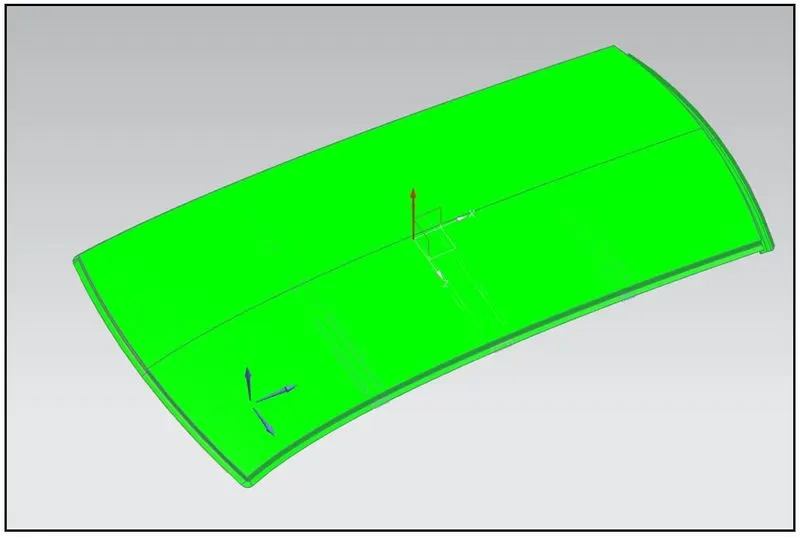
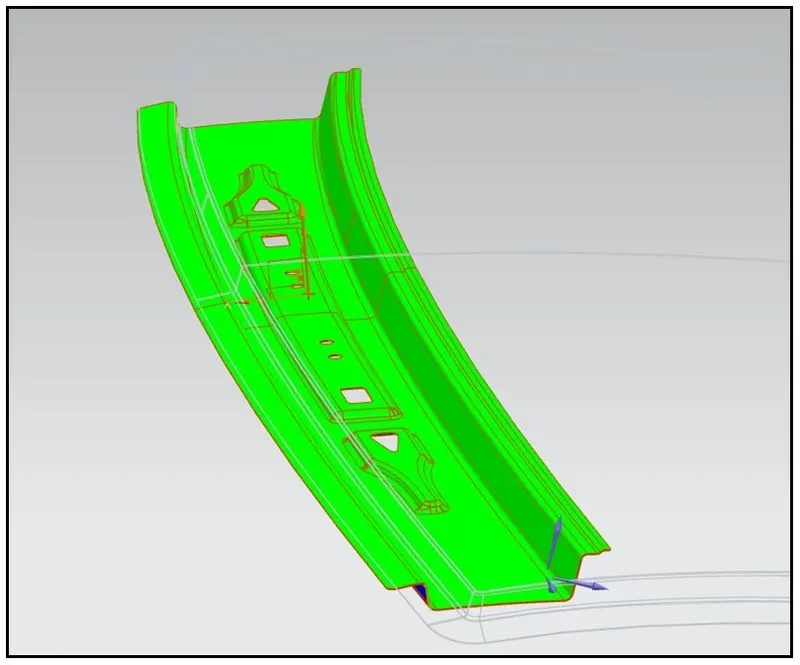
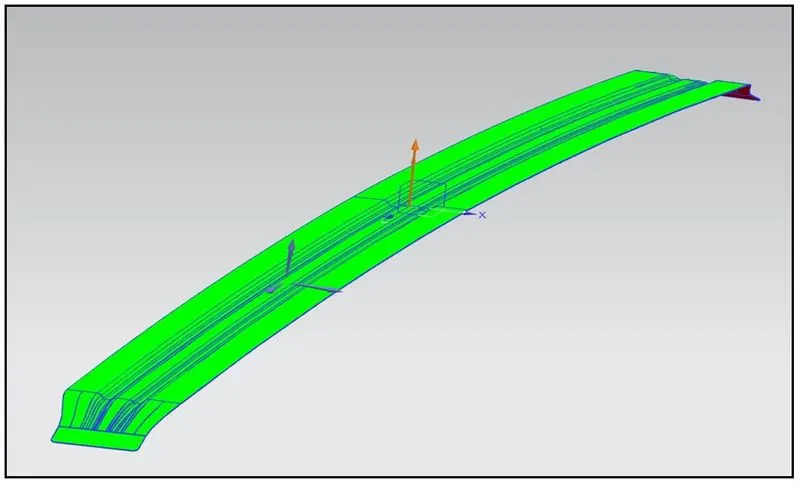
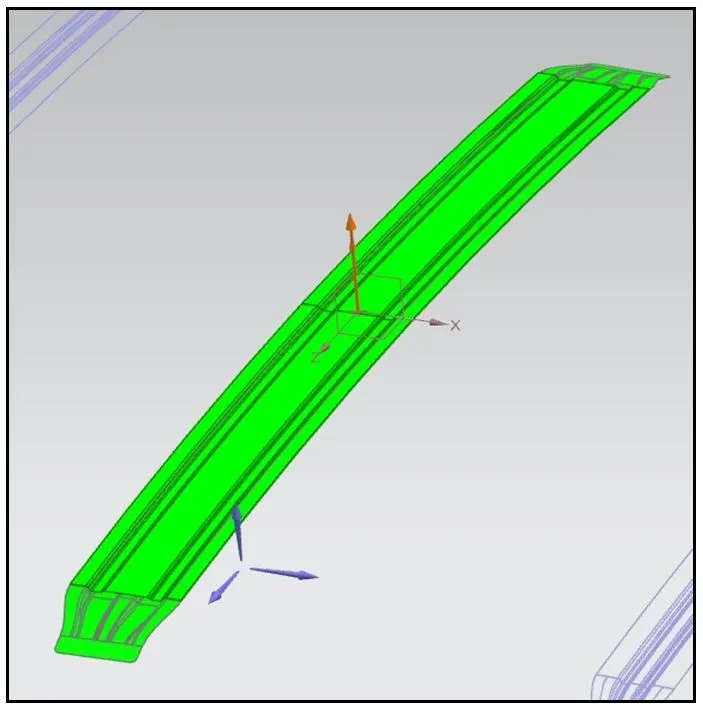
The Draft analysis performed on the parts of roof are shown below,
- Outer roof panel.
- Front Roof Rail.
- Bow roof-1.
- Centre roof rail.
- Bow roof-2.
- Rear roof Rail.
- Outer roof panel.
- Front Roof Rail.
- Bow roof-1.
- Centre roof rail.
- Bow roof-2.
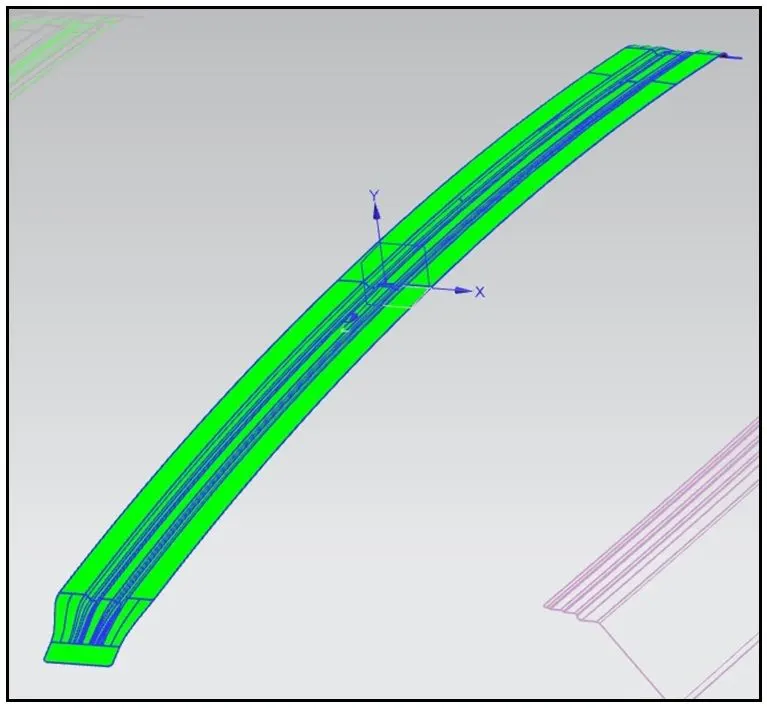
- Rear roof Rail.