Radar Mast & Final Assembly of Yacht
YACTH
A yacht is a sailing or power vessel used for pleasure, cruising, or racing.There is no standard definition, though the term generally applies to vessels with a cabin intended for overnight use. To be termed a yacht, as opposed to a boat, such a pleasure vessel is likely to be at least 33 feet (10 m) in length and may have been judged to have good aesthetic qualities. The Commercial Yacht Code classifies yachts 79 ft (24 m) and over as large. Such yachts typically require a hired crew and have higher construction standards.Further classifications for large yachts are: commercial—carrying no more than 12 passengers, private—solely for the pleasure of the owner and guests, or by flag, the country under which it is registered. A superyacth (sometimes megayacht) generally refers to any yacht (sail or power) longer than 131 ft (40 m). Racing yachts are designed to emphasize performance over comfort. Charter yachts are run as a business for profit. As of 2020 there were more than 15,000 yachts of sufficient size to require a professional crew.
OBJECTIVES
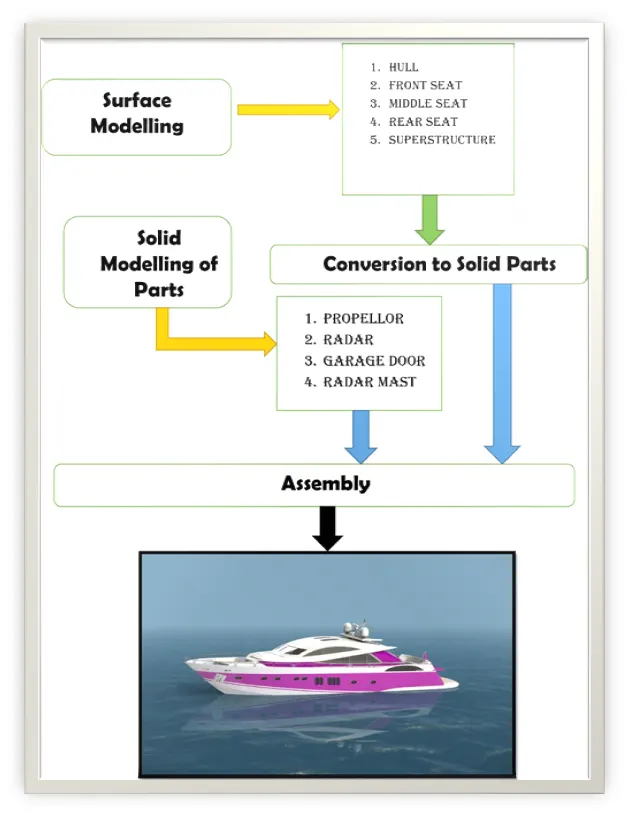
It is to design the each components of yacht using SOLIDWORKS in Part model and do the assembling of yacht in SOLIDWORKS Assembly page.After the assembly, we need to perform the rendering of the yacht using SOLIDWORKS Photoview 360.
INTRODUCTION
Yacht, a sail- or power-driven vessel, usually light and comparatively small, used for racing or for recreation. In recreation, the term applies to very large craft, originally powered by sail and later by steam or internal-combustion engines. It is in this sense that the generality of nonyachting (nonsailing) people usually think of the term. Technically, the word yacht excludes boats propelled by paddles, oars, or outboard motors. Also, recreational powered craft below the largest size are usually called cabin cruisers (see motorboat). The English word yacht and the equivalent word in many European languages comes from the Dutch use in the 16th and 17th centuries of the word jaght, later jacht, which, with the word schip added, meant “ship for chasing.” As the Dutch rose to preeminence in sea power during the 17th century, the early yacht became a pleasure craft used first by royalty and later by the burghers on the canals and the protected and unprotected waters of the Low Contries. Racing was incidental, arising as private matches. English yachting began with King Charles II of England during his exile in the Low Countries. On his restoration to the English throne in 1660, the city of Amsterdam presented him with a 20-metre (66-foot) pleasure boat with a beam (maximum width) of 5.6 m (18 feet), which he named Mary. Charles and his brother James, the duke of York (James II, reigned 1685–88), built other yachts and in 1662 raced two of them for a £100 wager on the Thames from Greenwich to Gravesend and back. Yachting became fashionable among the wealthy and nobility, but at that time the fashion did not last. The first yacht club in the British Isles, the Water Club, was formed about 1720 at Cork, Ireland, as a cruising and unofficial coast guard organization, with much naval panoply and formality. The closest thing to a race was the “chase,” when the “fleet” pursued an imaginary enemy. The club persisted, largely as a social club, until 1765 and in 1828 became, after merging with other groups, the Cork Yacht Club (later the Royal Cork Yacht Club). Yacht racing began in some organized fashion on the Thames about the mid-18th century. The duke of Cumberland founded the Cumberland Fleet for Thames racing in 1775. When George IV came to the throne in 1820, it came to be called the Fleet to His Majesty’s Coronation Sailing Society. The Thames Yacht Club seceded after a racing dispute to become the Royal Thames Yacht Club in 1830. The first English yacht club had been formed at Cowes on the Isle of Wight in 1815, and royal patronage made the Solent, the strait between the mainland and the Isle of Wight, the continuing site of British yachting. The club at Cowes became the Royal Yachting Club, again at the accession of George IV. All members were required to own boats of at least 20 tons (20,321 kg). Sailing matches for large stakes were held, and the social life was splendid. Ultimately, Royal Yachting Club boats increased in size to more than 350 tons. In North America yachting began with the Dutch in New York in the 17th century and continued when the English gained control. Sailing was mostly for pleasure and reached its apogee in George Crowinshield’s Cleopatra’s Barge (1815), which cruised on the Medditerrnean Sea and set a standard of luxury and elegance for the later yachts in those waters from the late 19th century. The first continuing American yacht club, the Detroit Boat Club, was formed in 1839. In 1844 John C. Stevens founded the New York Yacht Club aboard his schooner Gimcrack.
DESIGN METHOLOGY
BLUEPRINT
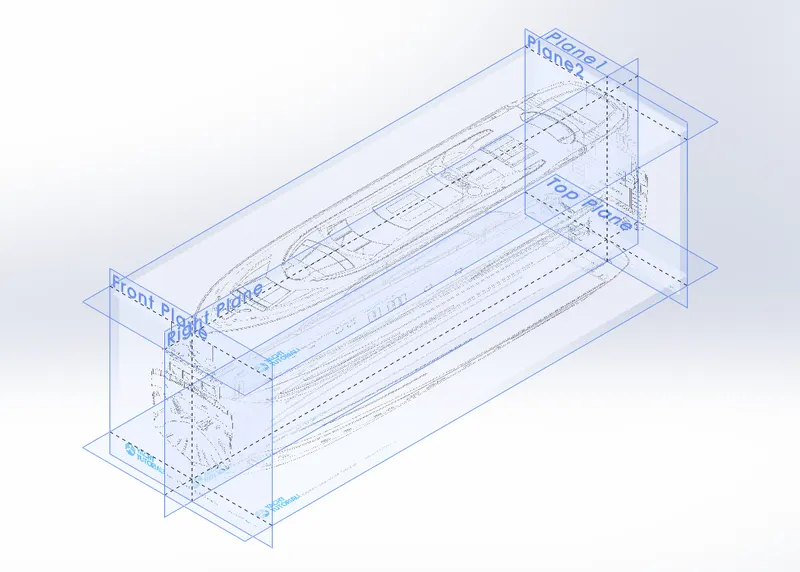
It is done to start the designing of yacht. So, the front side of yacht is pasted in front view plane. The side of yacht is pasted on the mid-plane . The bottom side of the yacht is pasted on the top view plane. To paste the back side of the yacht, the new plane is to be created by offsetting from the front view plane according to the length of the yacht. Also, the new plane is to be created by offsetting from the top view plane in upward direction according to the height of the yacht.
PROPELLER
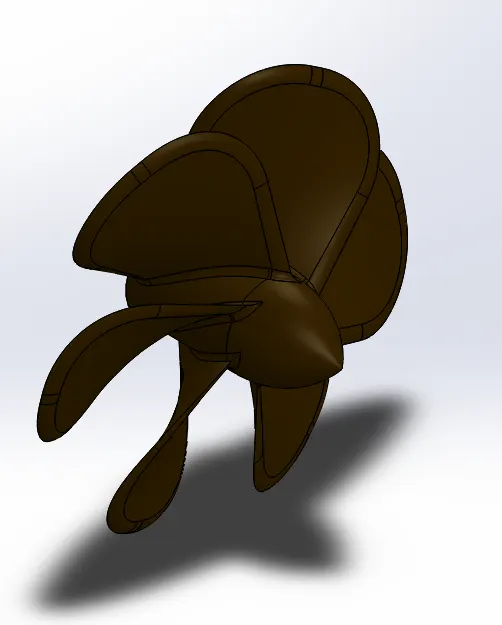
A propeller (colloquially often called a screw if on a ship or an airscrew if on an aircraft) is a device with a rotating hub and radiating blades that are set at a pitch to form a helical spiral which, when rotated, exerts linear thrust upon a working fluid such as water or air. Propellers are used to pump fluid through a pipe or duct, or to create thrust to propel a boat through water or an aircraft through air. The blades are shaped so that their rotational motion through the fluid causes a pressure difference between the two surfaces of the blade by Bernoulli's equation which exerts force on the fluid. Most marine propellers are screw propellers with helical blades rotating on a propeller shaft with an approximately horizontal axis.
RADAR
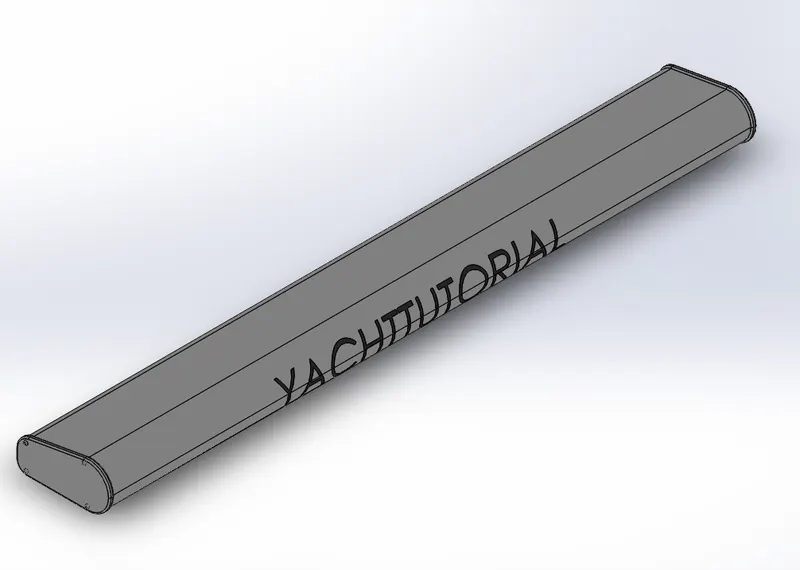
Radar will show what is around the boat, seeing through darkness, precipitation and poor visibility. Whether you're crossing a busy shipping channel in thick fog, looking for squalls offshore, or identifying a harbour entrance in the dark, Radar offers a significant aid to navigation and safety.
YACHT FRONT SEAT
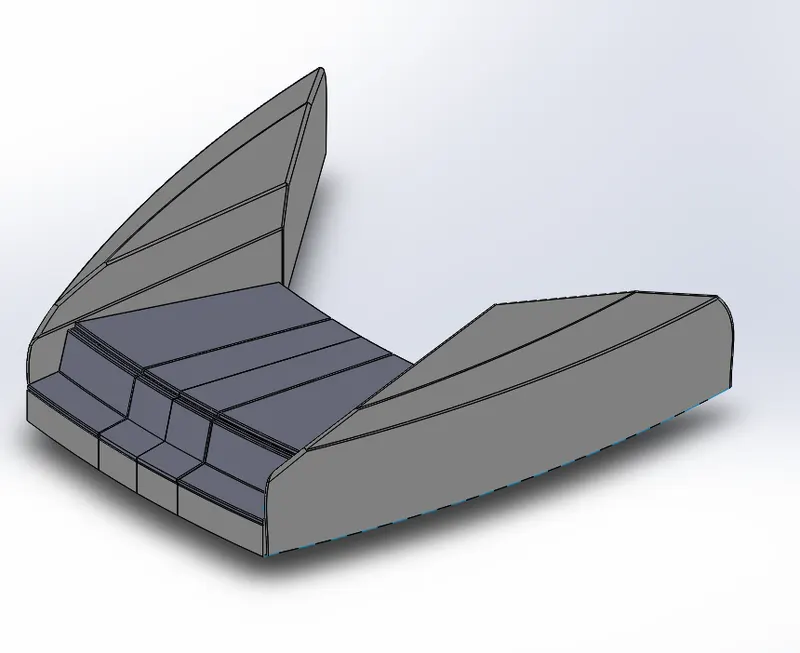
It is placed in front of the yacht.
YACHT MIDDLE SEAT
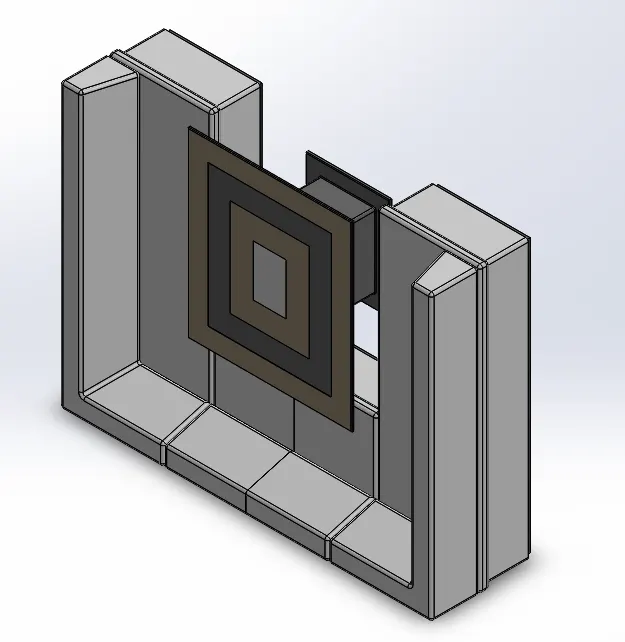
It is placed in the middle of the yacht.
YACHT REAR SEAT
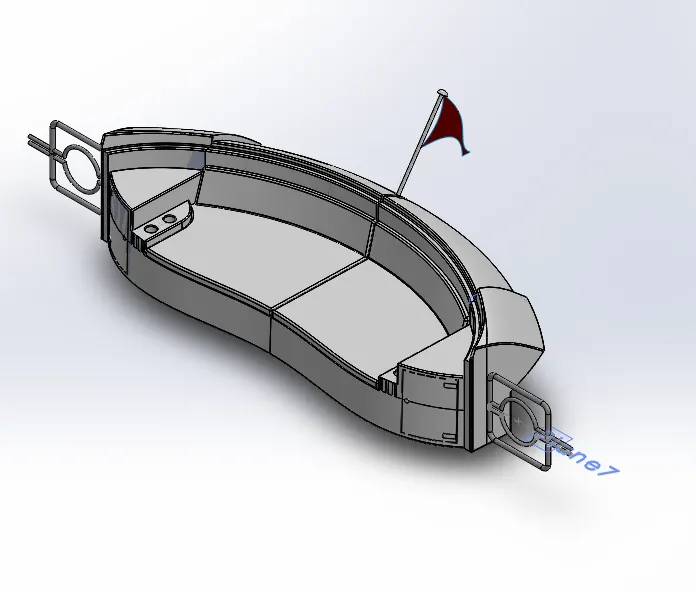
It is placed in the back side of the yacht.
HULL
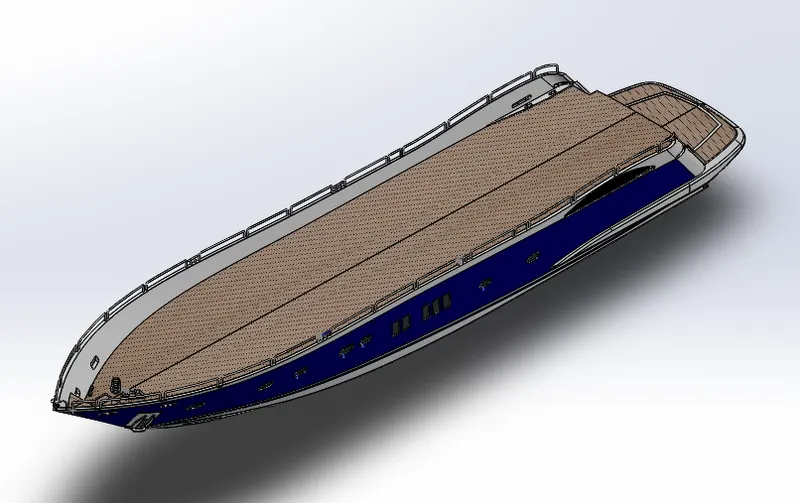
The body of a boat is called its hull . At the upper edges of the boat's hull are the gunwales . The gunwales provide extra rigidity for the hull. The cross-section of the stern, where you attach an outboard motor, is called the transom.The hull is the body of a vessel, without taking into account the rigging (ropes, chains, and tackle used to support and work masts, sails, etc.). The structure of the hull is composed of several different parts that will be discussed next. The hull of a ship is the most notable structural entity of the ship. To define the hull, it can be said that it is the watertight enclosure of the ship, which protects the cargo, machinery, and accommodation spaces of the ship from the weather, flooding, and structural damage. There are five popular yacht hull materials that have been used for decades or even centuries in yacht construction including Ferro-cement, wood, steel, aluminum, and fiberglass.
GARAGE
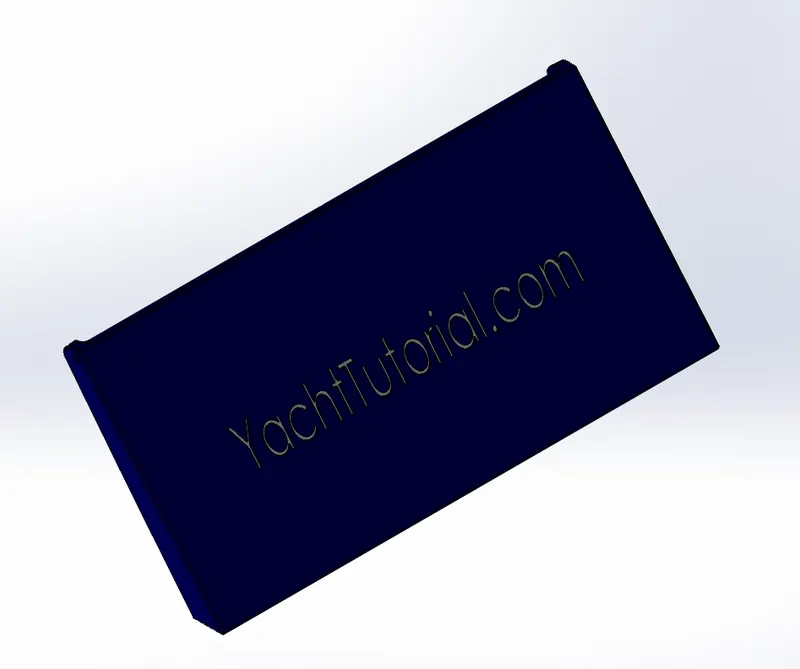
It is located to the backside of the hull where the four-wheel vehicle is placed. Superyacht support vessels feature significant payloads that make it easy to take a 60-foot tenders, submarines, cars, or specialist vehicles that would be hard to fit on all but the largest superyachts.
SUPERSTRUCTURE
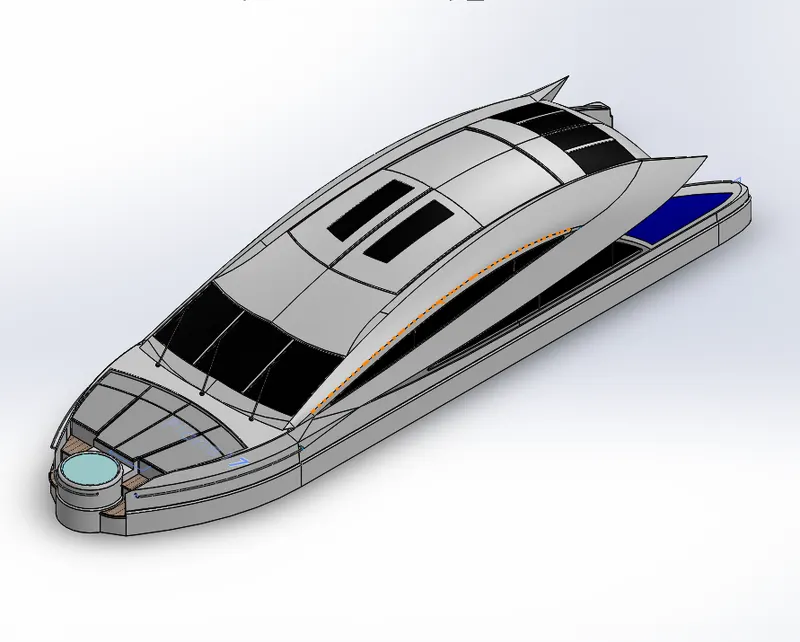
The superstructure consists of the parts of the ship or a boat, including sailboats, fishing boats, passenger ships, and submarines, that project above her main deck. This does not usually include its masts or any armament turrets. The size of a watercraft's superstructure can have many implications in the performance of ships and boats, since these structures can alter their structural rigidity, their displacements, and/or stability. These can be detrimental to any vessel's performance if they are taken into consideration incorrectly. The height and the weight of superstructure on board a ship or a boat also affects the amount of freeboard that such a vessel requires along its sides, down to her waterline. In broad terms, the more and heavier superstructure that a ship possesses (as a fraction of her length), the less the freeboard that is needed.
RADAR MAST
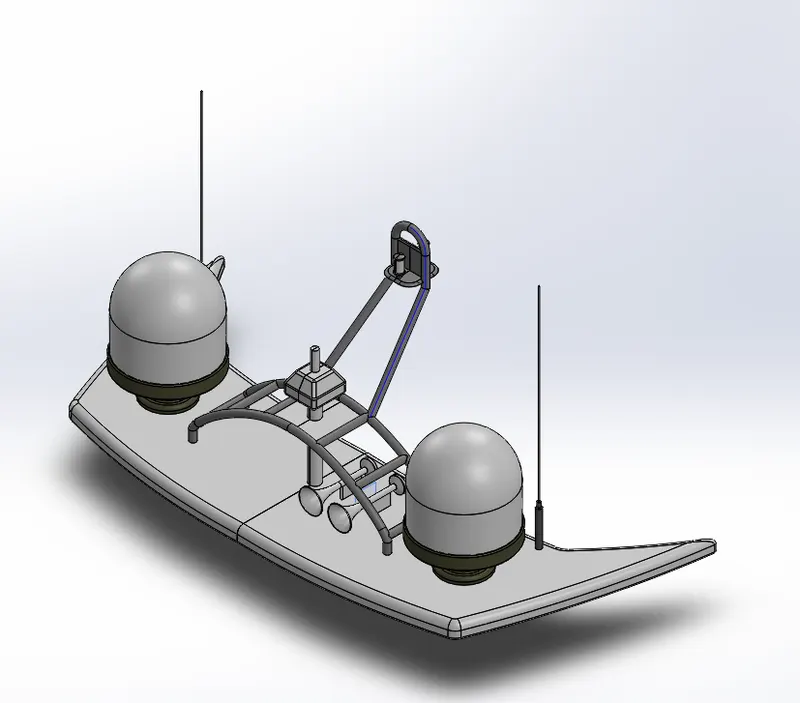
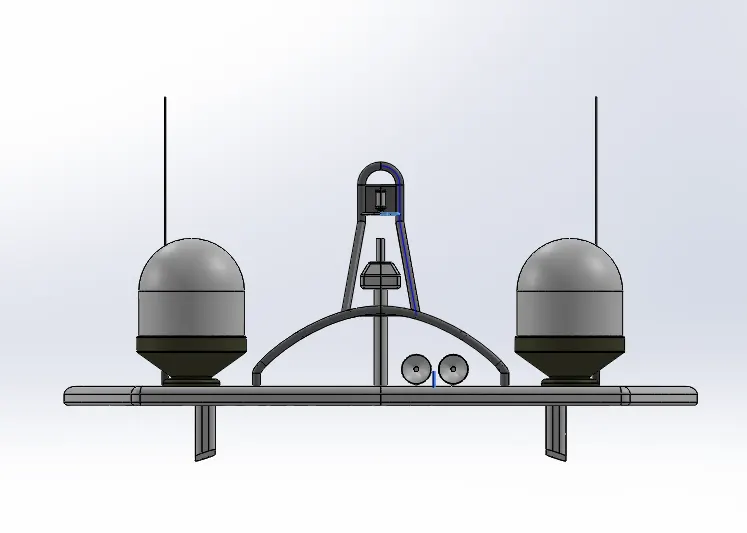
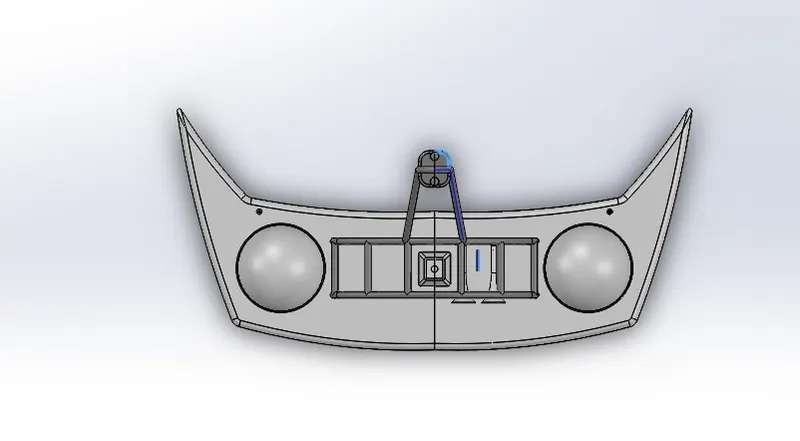
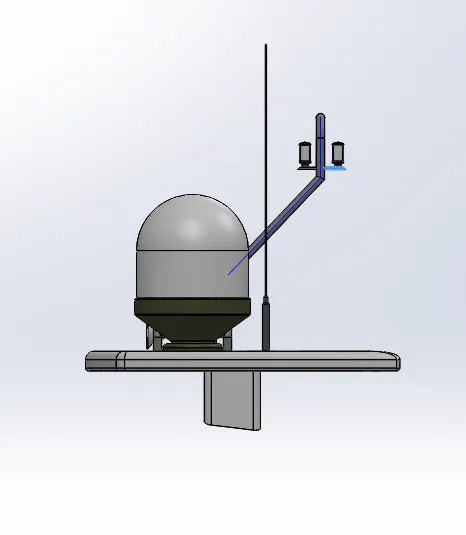
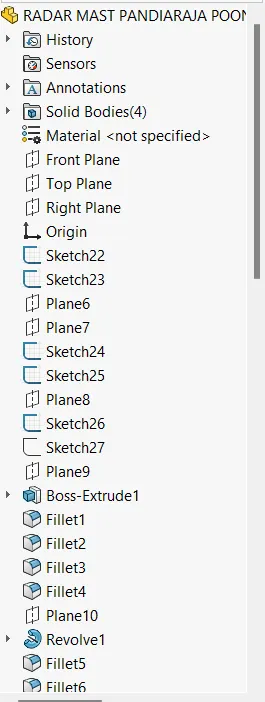
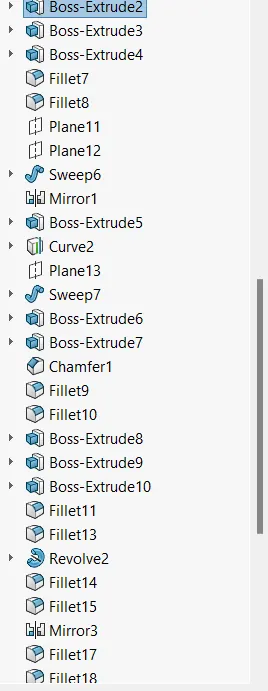
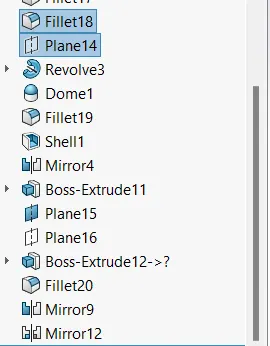
Marine radars are X band or S band radars on ships, used to detect other ships and land obstacles, to provide bearing and distance for collision avoidance and navigation at sea. The radar system on your yacht will alert you to other items in the water that you are not aware of. This system can prevent you from running over a reef or sandbar. Also, this system can help you avoid large schools of marine wildlife.
ASSEMBLY OF YACHT
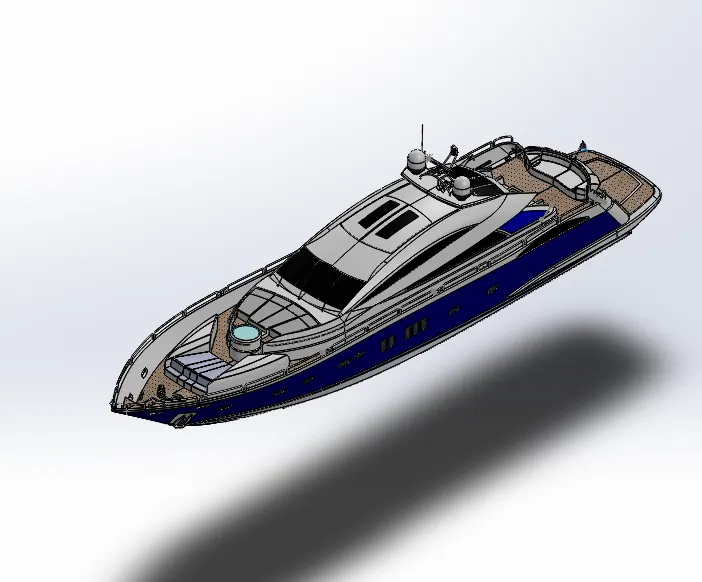
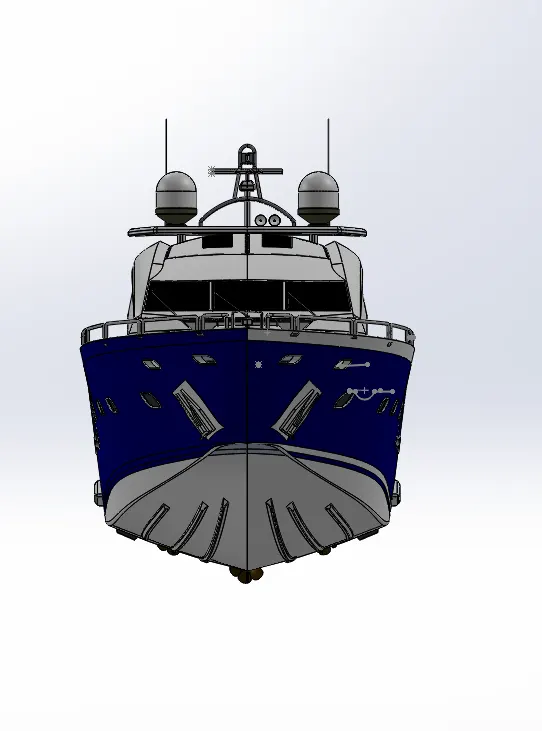
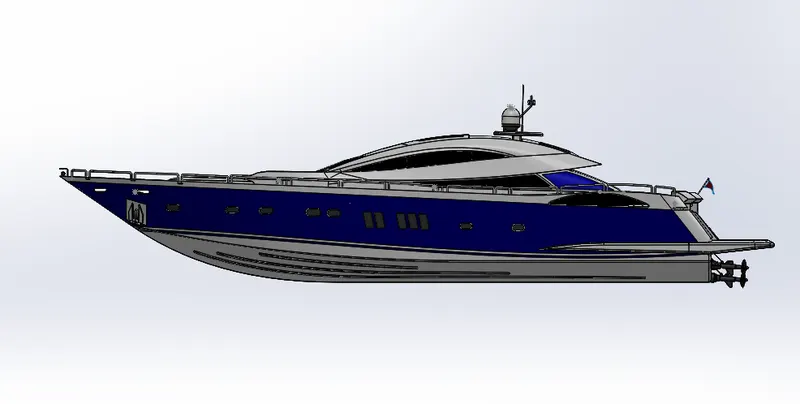
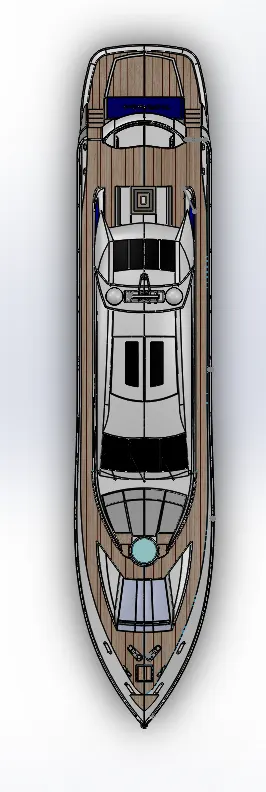
All the components of the yacht are assembled accordingly. All components are assembled using mates command while the hull is at fixed position.
RENDERING
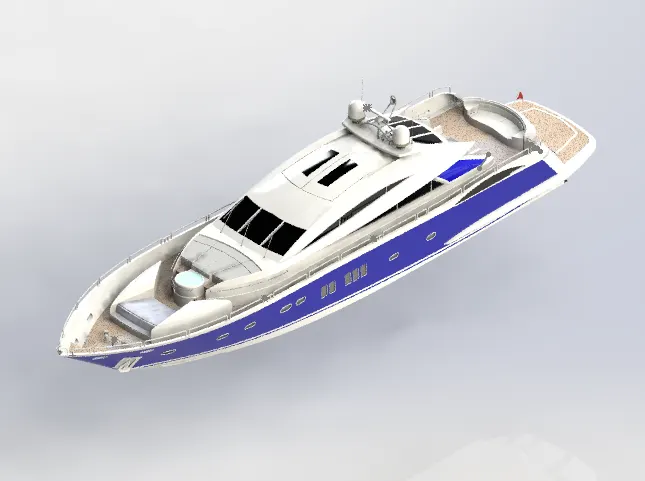
The rendering of the yacht is done by using SOLIDWORKS Photoview 360. To do rendering , click Photoview 360 and go to rendering tool. Use the Integrated Preview to do rendering.
CONLUSION
Hence,the designation of the yacht is completed by using SOLIDWORKS and the rendering of the yacht is done by using SOLIDWORKS Photoview 360