Radar Mast & Final Assembly of Yacht
#RADAR_MAST
S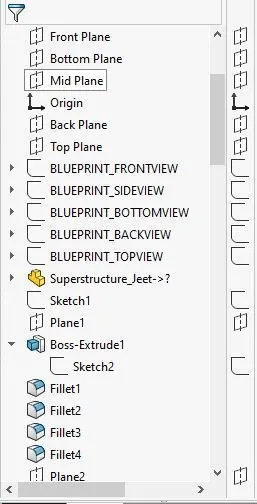
Surface Modeling of Sunseeker Predator yacht
Solidworks
Jeet Gupta | Design Engineer Master's Certification Program
09/13/2021
Objectives
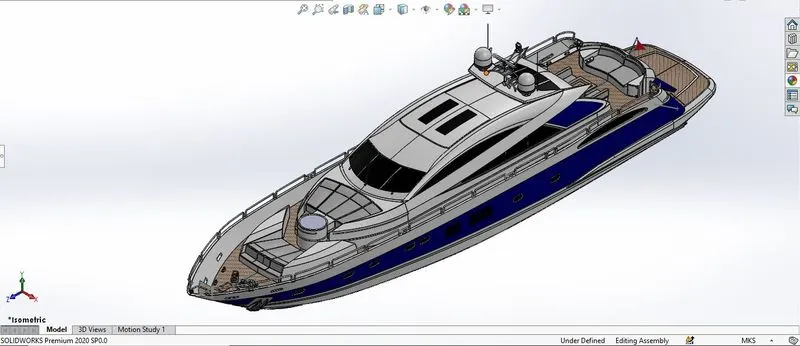
To Design, Assemble and Render a Yacht by using SolidWorks software. The main purpose of this project is to understand all the concepts and surfacing tools/commands and create a realistic yacht from scratch. Realistic components include a Flag, tables, and a Garage door.
Introduction
Yacht, a sail- or power-driven vessel, usually light and comparatively small, used for racing or for recreation. In recreation, the term applies to very large craft, originally powered by sail and later by steam or internal combustion engines. To design yacht, I have used the bottom-up approach which defines that the components are created first and then assembled with proper mates. For design of the yacht, I have used the blueprint setup of the yacht available online.
In Part Modeling, you can create a part from a conceptual sketch through solid features- based modeling as well as build and modify parts through direct and intuitive graphical manipulations.
In Surface Modeling, you can build out a visual representation of an object exterior and its contours. In other words, it’s a surface creation. It plays a major role on modeling yacht as most of the parts require surface modeling. The following are the features used in surface modeling.
Description
The following parts of the Yacht are modeled in SolidWorks and assembled together:
- Propellor
- Radar
- Blueprint
- Hull
- Garage Door
- Front Seat
- Middle Seat
- Rear Seat
- Super Structure
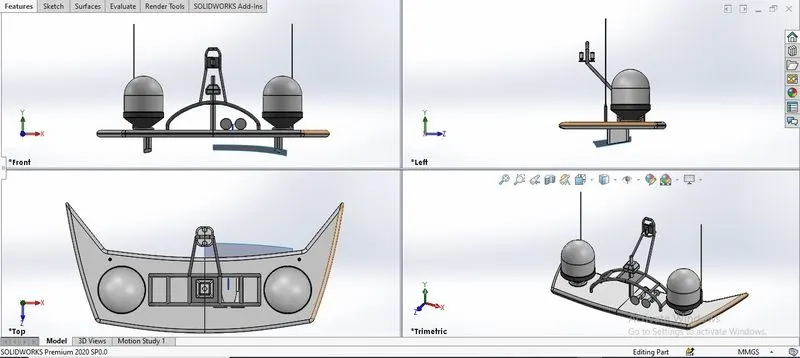
- Radar Mast
Some of the commonly used features across modeling are explained below:
- Loft Surface: Loft surfaces are surfaces generated by multiple 3D curves or existing edges creating a smooth tangency between the selected curves
- Sweep Surface: Sweep surfaces are created from a section curve positioned along a path.
- Filled Surface: The filled surface features allows user to construct a surface patch with any number of sides, within a boundary defined by existing model edges, sketches, or curves including composite curves.
- Surface trim: Primarily used to cut away the material from a surface, and provides two modes, standard or mutual.
- Extended Surface: Extend surface is used to extend the surface which is already created. These are different options available on the extended surface. We can extend our surface as same surface, or we can extend the surface tangent to the surface.
- Surface Knit: This feature is used to knit any open edges or free edges to the surface together. Also, it reduces the gap between the two edges of the surface.
- PROPELER:
A propeller is a fan mechanism that transmits power by converting rotational motion into thrust usually consists of three or more blades.
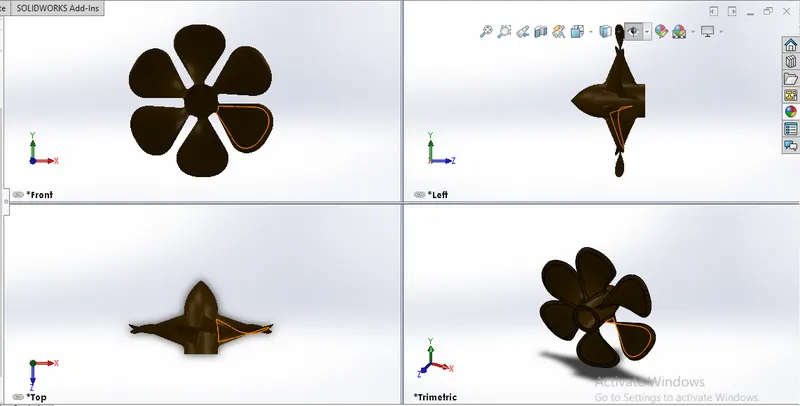
Features used: sketches, revolve, cut extrude, love, fillet, circular pattern.
- RADAR:
Marine radars are X band or S band radars on ships used to detect other ships and land obstacles.
Features used: sketch, extrude, mirror, contextual, fillet, sketch driven pattern.
- HULL:
A hull is a watertight body of a ship or boat. The hull may open at the top or it may be fully or partially covered with the deck.
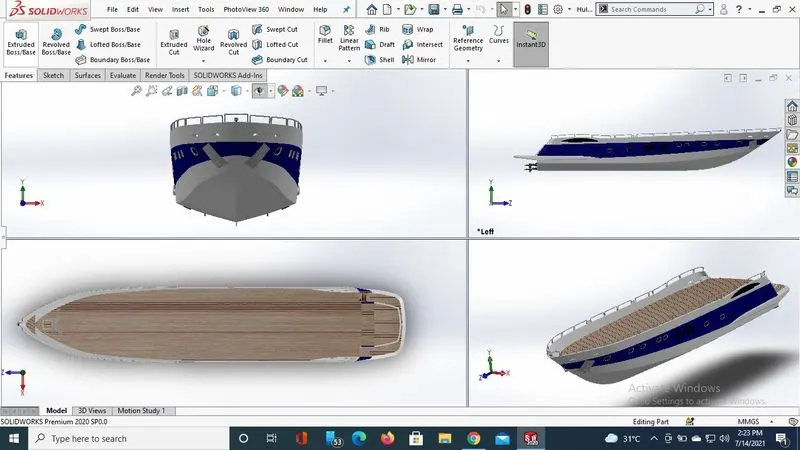
Features used: sketch, project curve, swept surface, loft surface, extrude surface, next and surface, surface knit, extrude, mirror, fillet, pattern, split, shell.
- GARAGE DOOR:
Garage door is used to close the garage part in the hull.
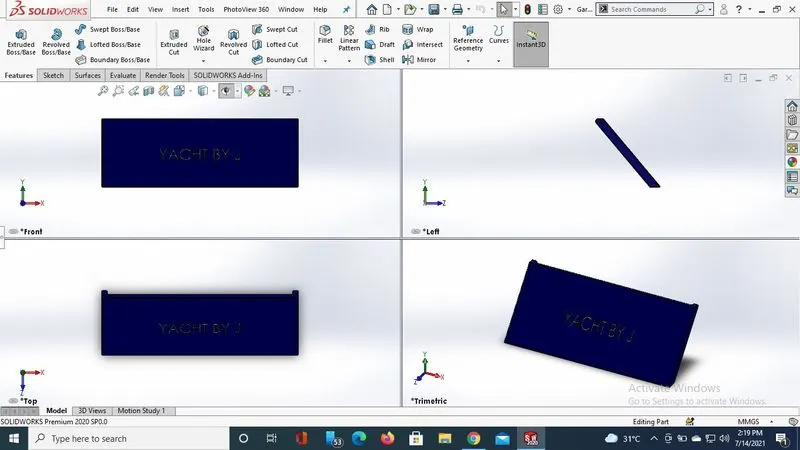
- FRONT SEAT
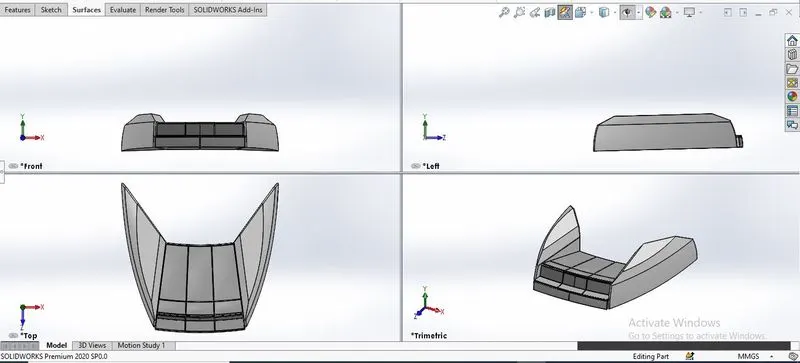
Features used: sketch, project curve, swept surface, loft surface, rule surface, extend surface, surface knit, cut extrude, mirror, fillet, pattern
- MIDDLE SEAT:
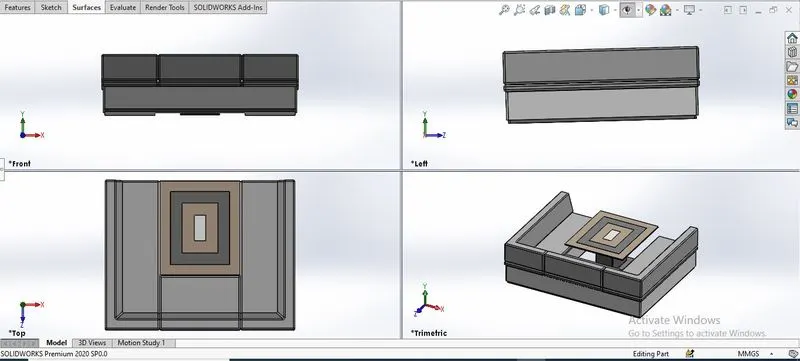
Features used: sketch, extrude, chamfer, fillet.
- REAR SEAT:
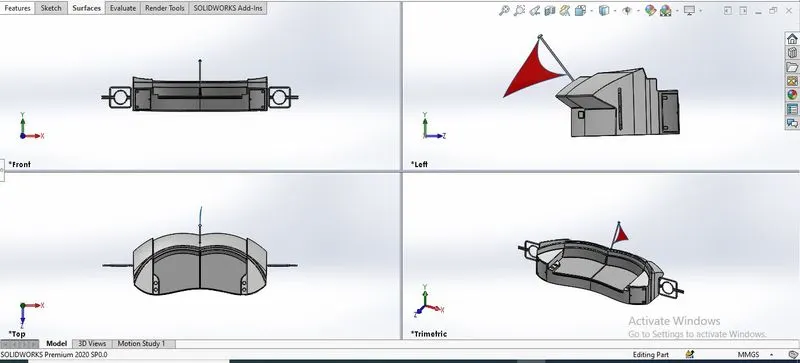
Features used: sketch, project curve, swept surface, loft surface, rule surface, extend surface, surface knit, extrude, mirror, cut extrude, fillet, pattern.
- SUPERSTRUCTURE:
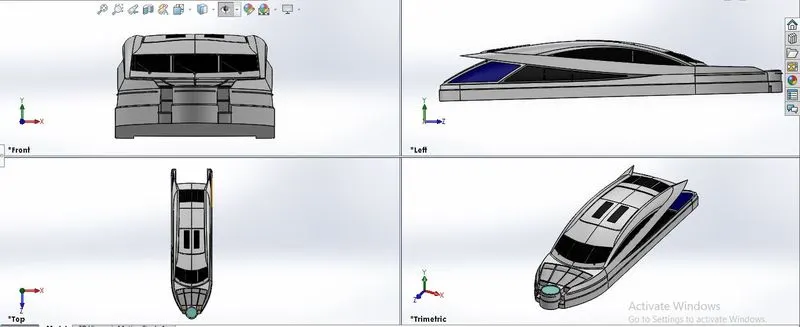
Features used: sketch, project curve, swept surface, loft surface, rule surface, extend surface, surface knit, extrude, mirror, cut extrude, fillet, pattern.
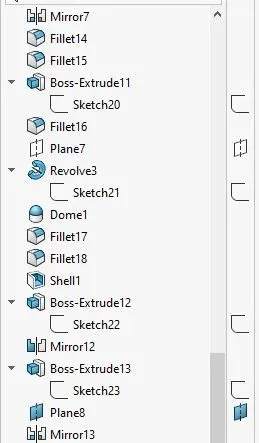
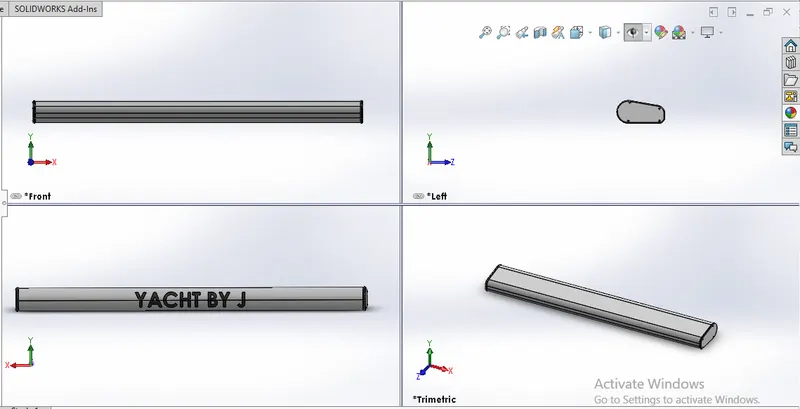
- RADAR MAST:
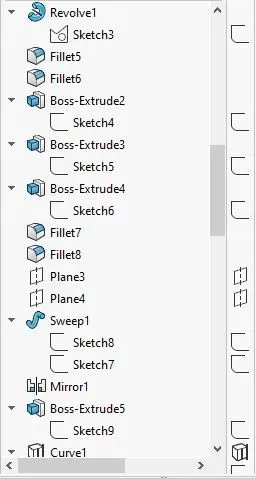
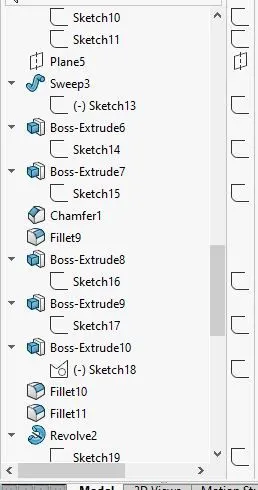
Features used: sketch, extrude, chamfer, fillet.
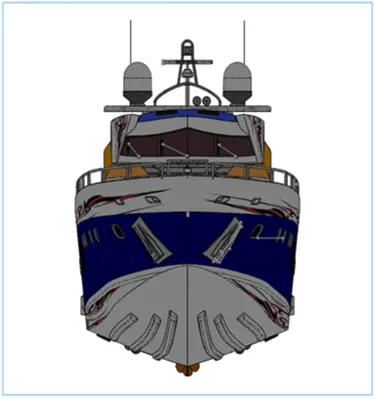
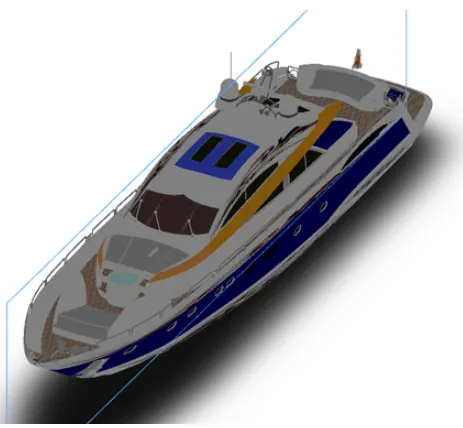
Assembly and rendering of the yacht
- All the modeled parts are inserted one by one in the assembly by top-down approach.
- Since the parts are created based on the reference with the deck surface, the parts are automatically fixed above the deck surface while the part is inserted in the assembly environment.
- So, to start the assembly of the yard the first part being inserted will be hull which has the deck surface.
- The propeller radar the garage door are not fully fixed since they have to rotate and move respectively.
- So these parts are manually defined to allow them to move in particular axis.