Projefct 1_Comparative study of different storey buildings for Seismic forces
Ouestion:
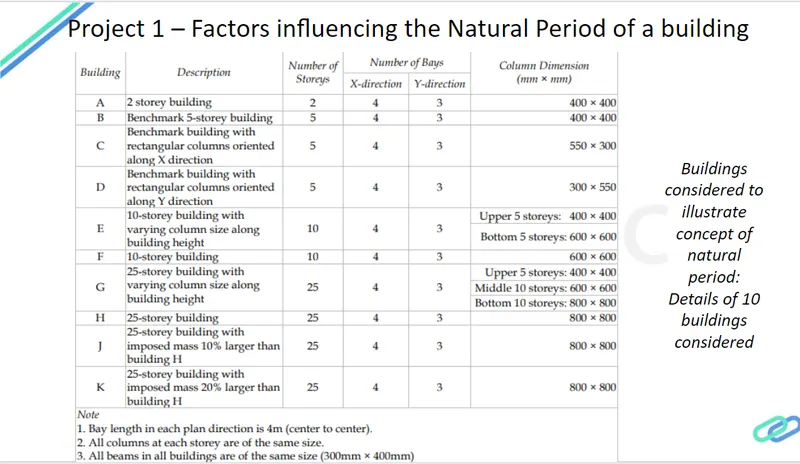
Task:
-
Effect of stiffness on T: Compare fundamental natural periods of buildings E & Fas well as G & H. Why is there a marginal or significant difference in the fundamental natural periods?
-
Effect of mass on T: Compare fundamental natural periods of buildings H, J and K. Have the buildings become more flexible or stiff due to change in mass?
-
Effect of Building Height on T: How does the fundamental natural periods of Buildings A, B, F and H change with change in building height?
-
Effect of Column Orientation on T: How does the fundamental natural periods of Buildings B, C and D change with change in column orientation?
-
Effect of Flexural Stiffness of Structural Elements on mode shapes: Compare fundamental mode shape of Building B in two situations when flexural stiffness of beams relative to that of adjoining columns is very small versus when it is large.
-
Effect of Axial Stiffness of Vertical Members on mode shapes: Compare fundamental mode shape of Building H in two situations when axial cross-sectional area of columns is very small versus when it is large.
-
Effect of Degree of Fixity at column bases on mode shape: Compare fundamental mode shape of Building B in two situations when base of columns is pinned versus when it is fixed.
AIM: TO STUDY AND COMPAIR THE RESULTS ON:
-
Factors influencing the dynamic characteristics of different storey building for seismic force
-
Factors influencing the Natural Period of different storey building for seismic force
-
Factors influencing the Mode shape of oscillations of different storey building for seismic force
INTRODUCTION:
Every building offers a minimum resistance to the forces induced by the external effects like Earthquake. The important dynamic characteristics of a building are the modes of oscillation and damping.Thus it has effect of
- Flexural Stiffness of Structural Elements on mode shapes
- Axial Stiffness of Vertical Members on mode shapes
- Degree of Fixity at column bases on mode shape
Datas assumed are:
o Material Properties
• Grade of Concrete: M30
• Grade of Steel Reinforcement Bars: Fe 415
o Structural Element Sizes
• Beams: 300 x 400 mm
• Columns: (GIVEN IN TABLE)
• Slab: 150 mm thick
o Loading
• Live load on floor: 3 kN/m2
• Brick wall Load on beams: 10 kN/m
o Buildings are assumed to be pinned at base
PROCEDURE:
GENERAL PROCEDURE FOR DESIGNING ALL THE REQUIRED BUILDING
- Go to ETABS software
- start the software
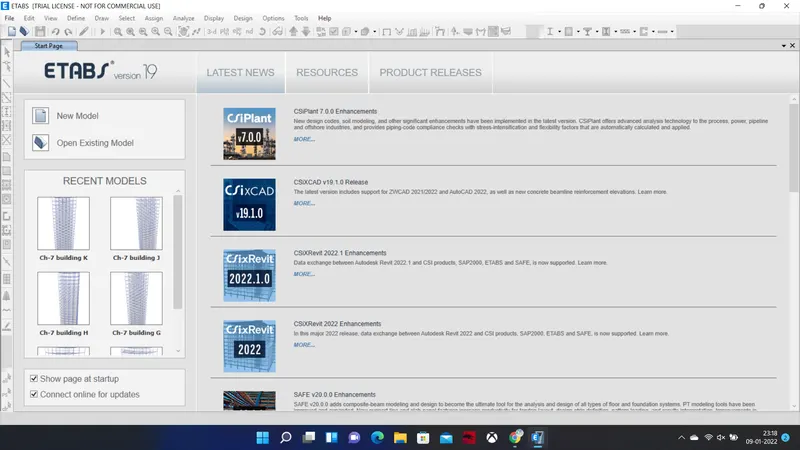
- Select "New Model"
- Select "Use the Built in setting With:"
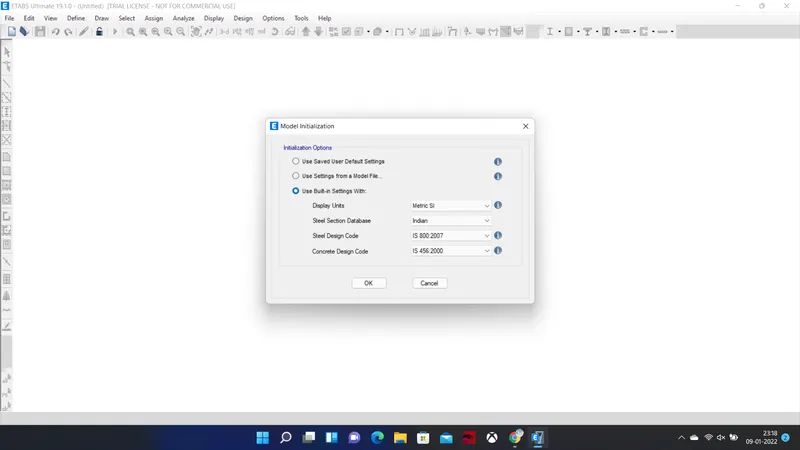
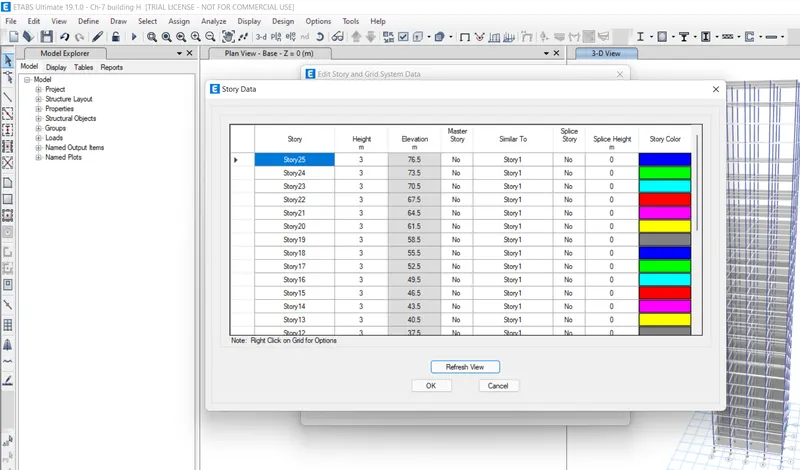
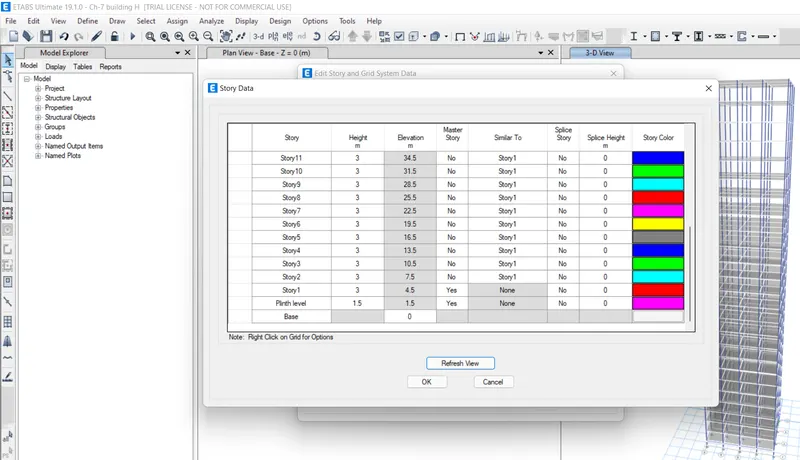
- Now grid and stroy settings to be done as per required
- then click "ok"
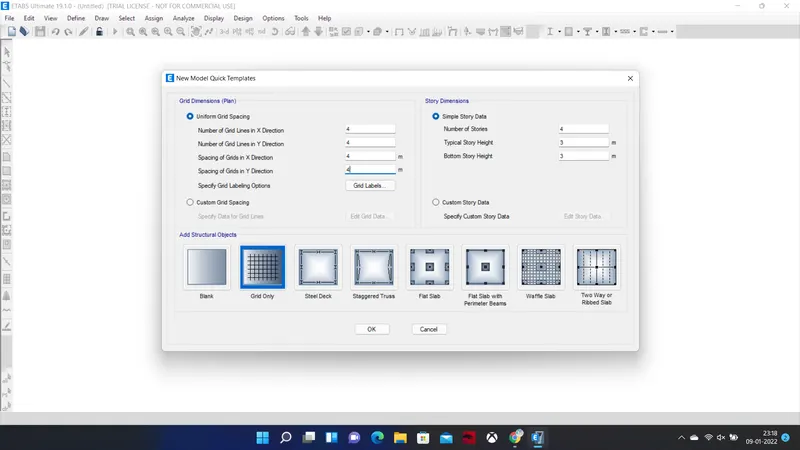
- a new window with the grid and floor will open
- go to: Define
- again < add new material < India < Rebar < Indian < HYSD Grade FE415 < ok
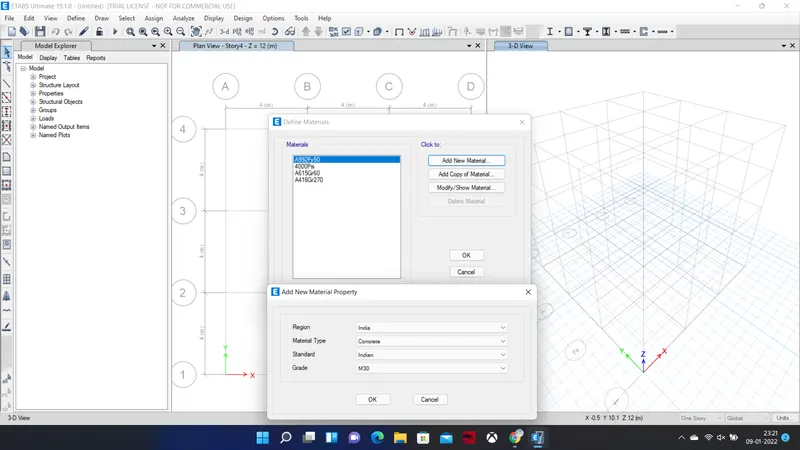
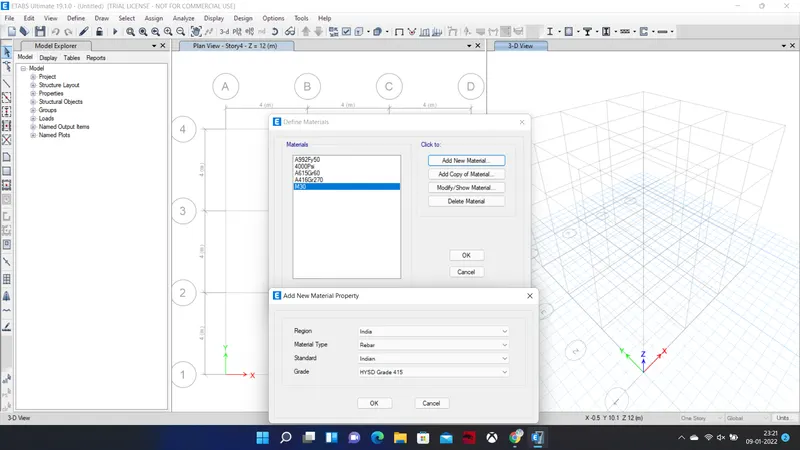
- Go to define tab< section properties < frame section < add new < Column (size)< M30
- the again < add new < Beam (300*400)< M30
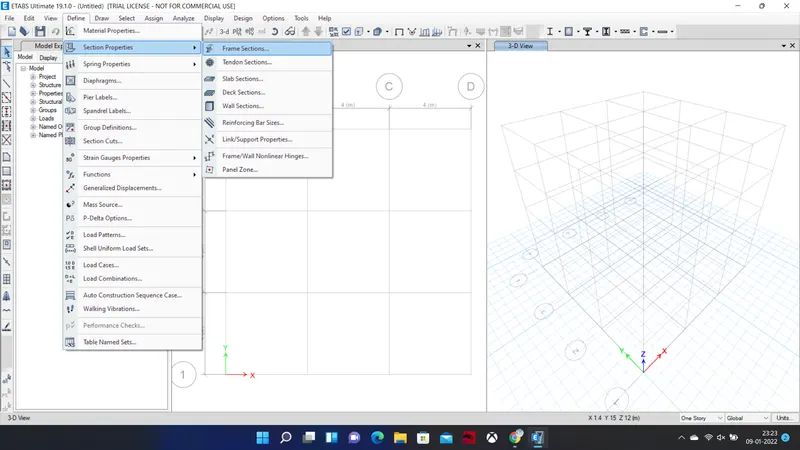
- Go to define tab< section properties < slab section < add new < slab150 < M30< thick = 150< ok
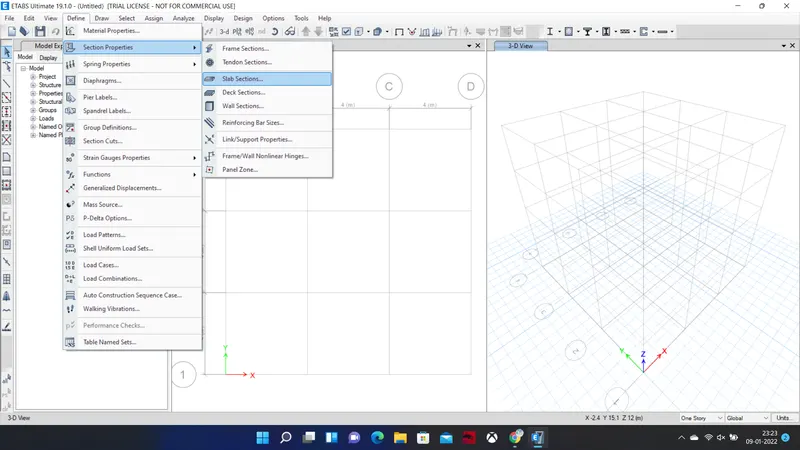
- Now by using quick draw tools add column, beam, and slab to all the floor as required.
- go to base plan select all the base points.
- Go th Assign menu< Joint< Restraints< pinned< ok
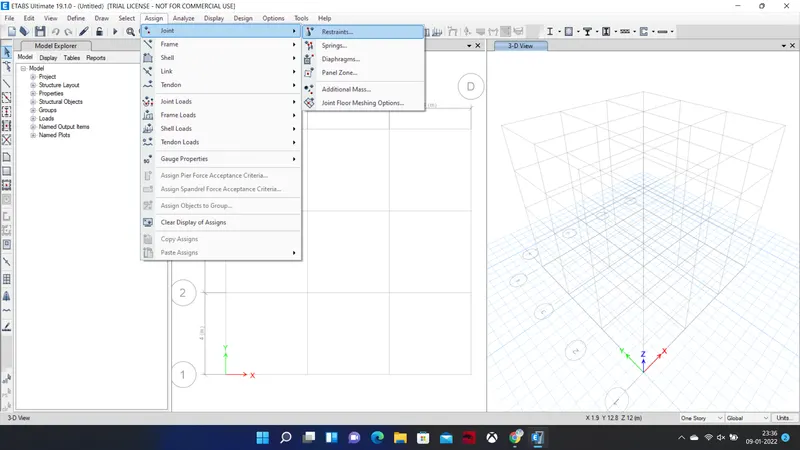
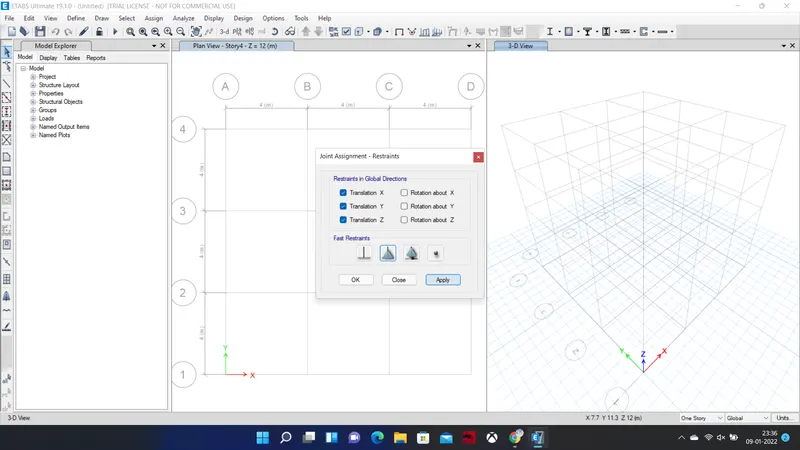
- Go to define tab< Load Pattern< add load< ok (add all the required load like dead, live, brick wall, etc.)
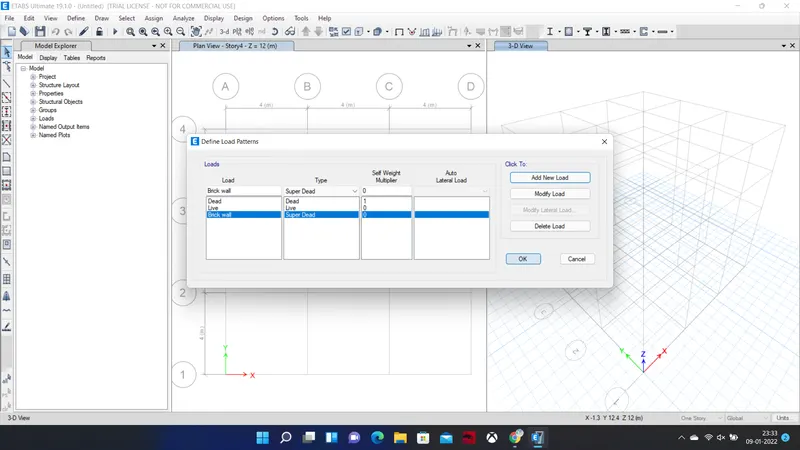
- Go to define tab< Mass source< modify/show mass source< specified load patterns< add loads with multiplier value< ok
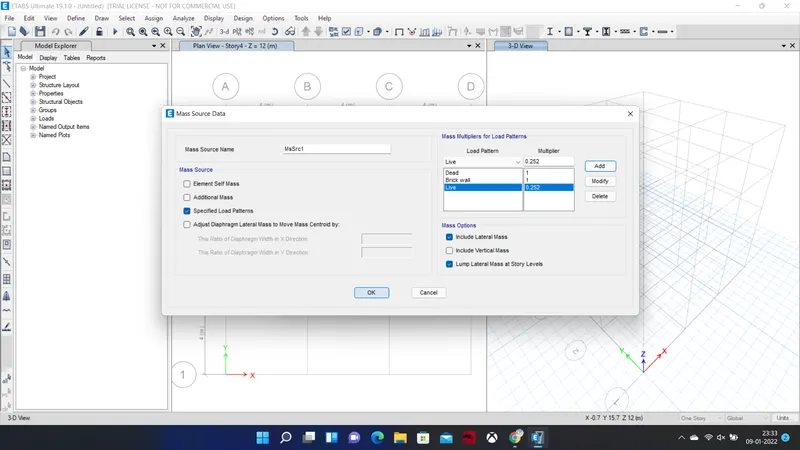
- To add live load and brick wall dead load.
- for all other floors except top, go to Assign< shell loads< uniform< live< 3 kn/m^2 < apply < ok
- for top floor go to Assign< shell loads< uniform< live< 1.5 kn/m^2 < apply < ok
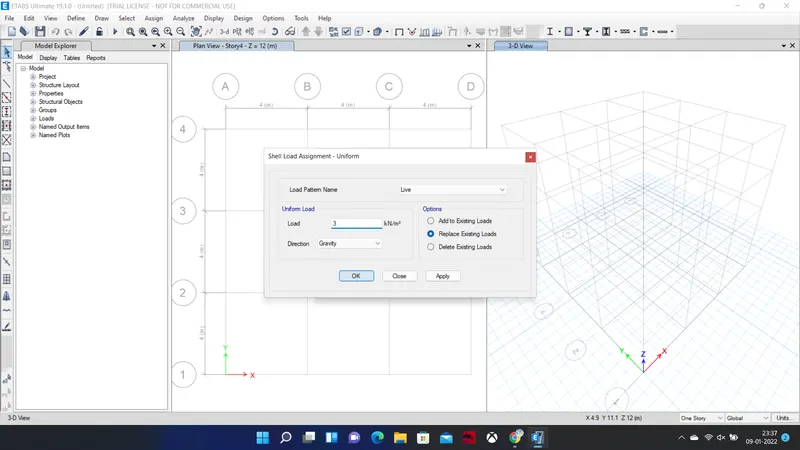
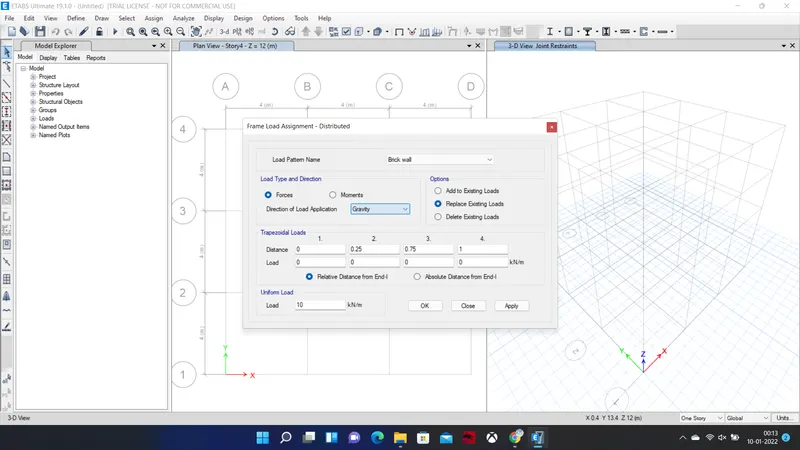
- Now to apply deal load of brick wall go to select tab < object type< beams < ok < close.
- then go to Assign< frame loads< distrubuted < brick wall< 10 kn/m^2 < APPLY < OK
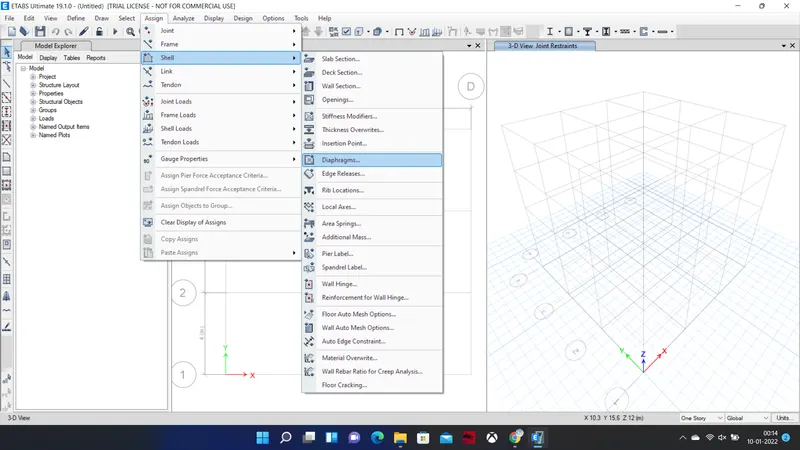
- Then Go to assign < shell< diaphragms< D1< Apply< close.
- Now go to analyze < check model< sellect all< ok .
- qow you will get a warrnig tab.
- go to analyze< run analysis
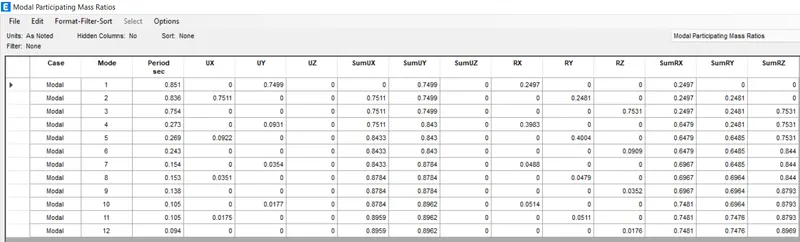
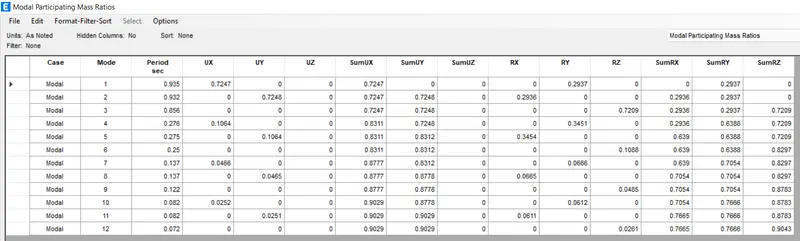
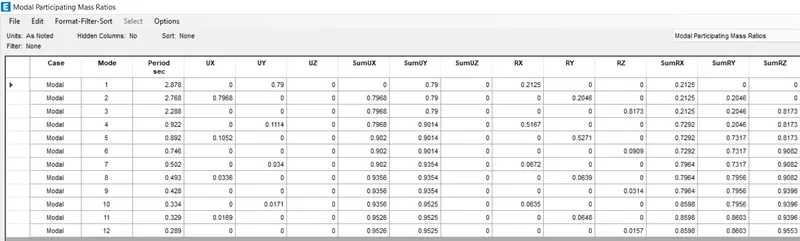
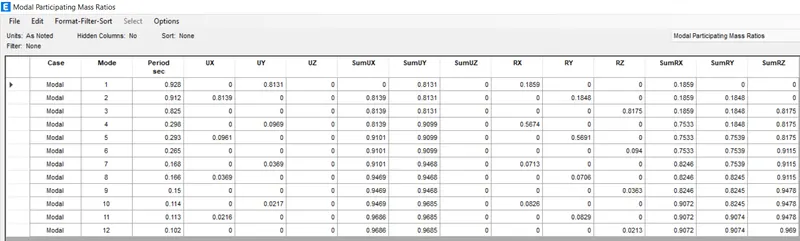
- now to see the results go to : Display< show tabels< structure output< model Participation mass ratios (from top right corner drop down menu).
RESULTs:
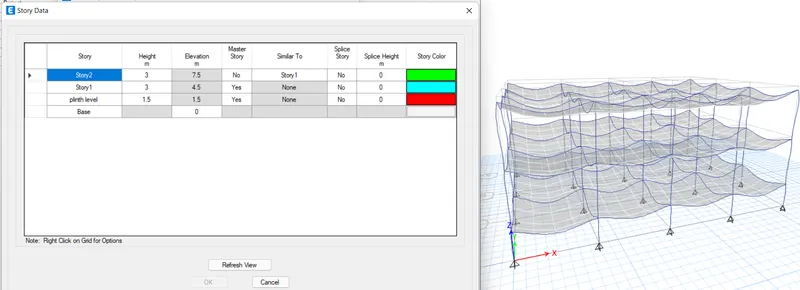
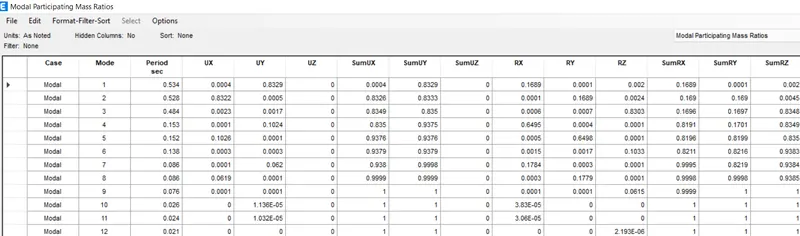
BUILDING: A
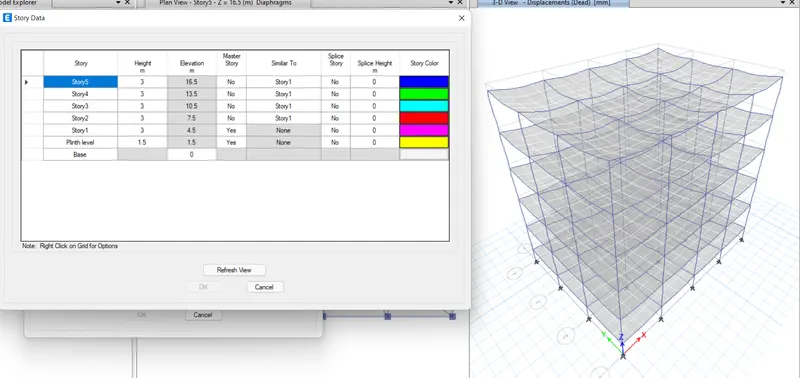
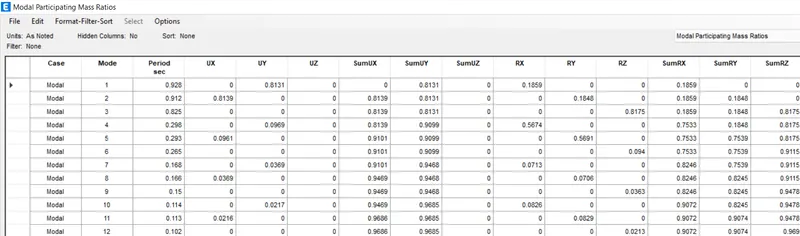
BUILDING: B
BUILDING: C
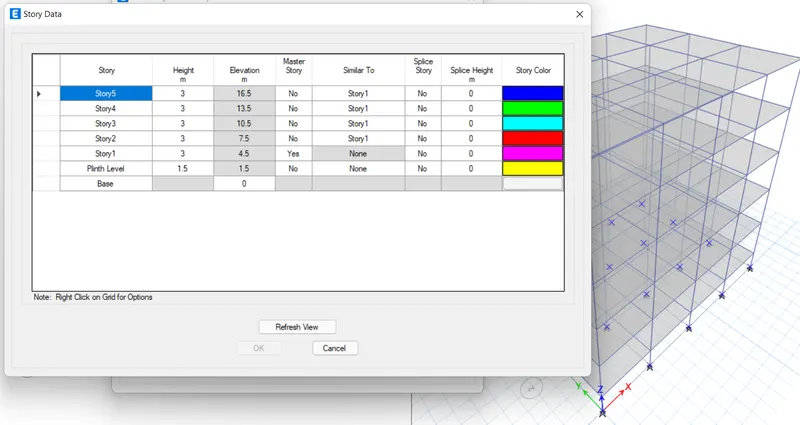
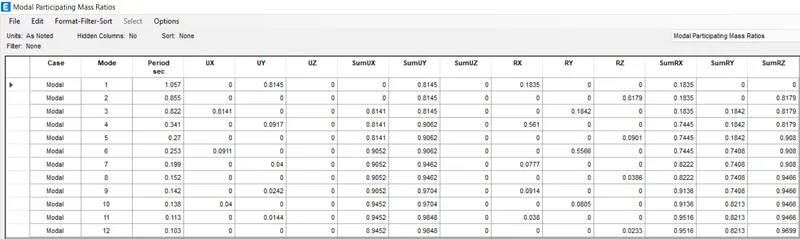
BUILDING: D
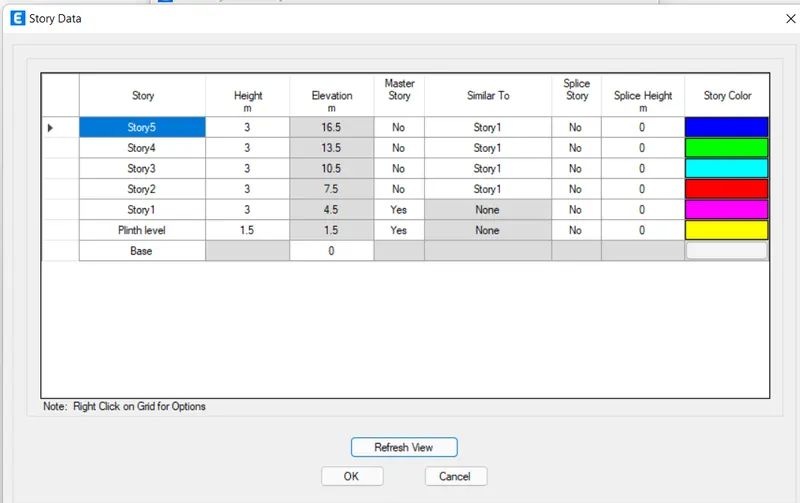
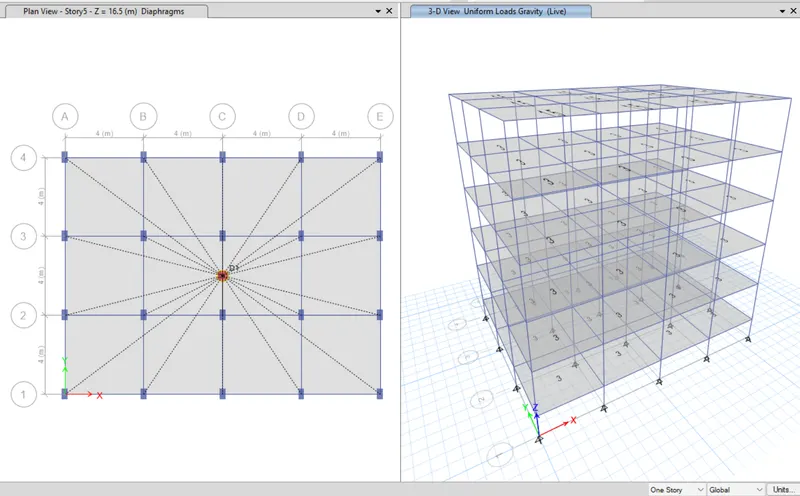
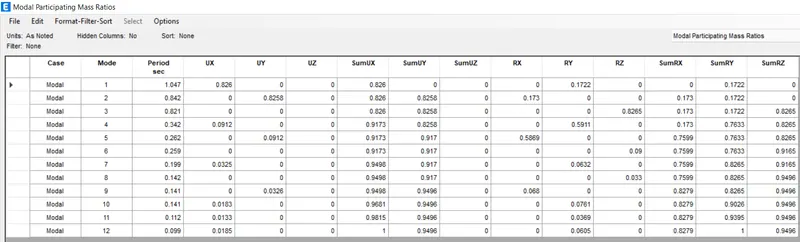
BUILDING: E
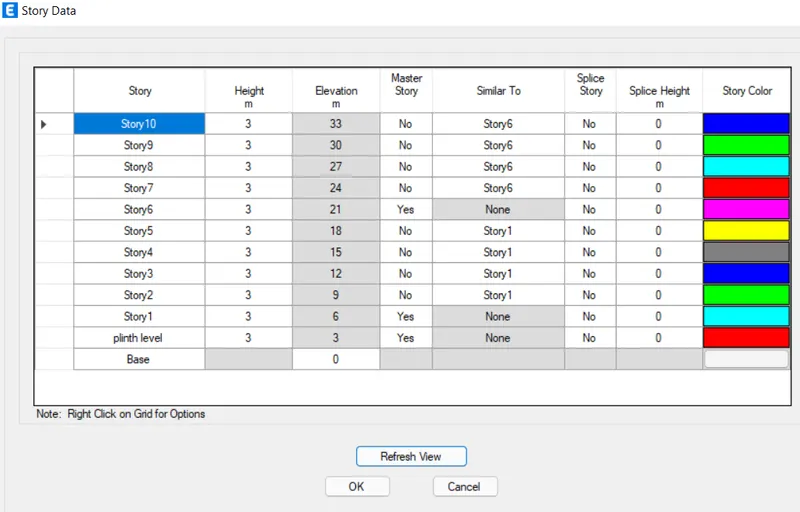
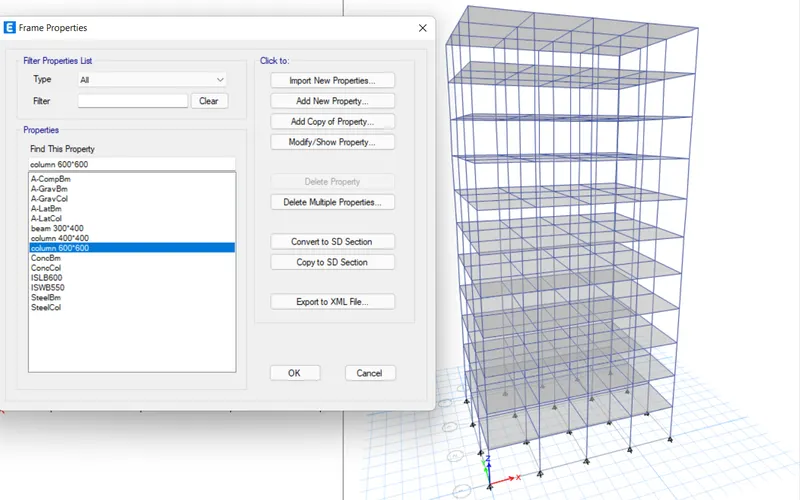
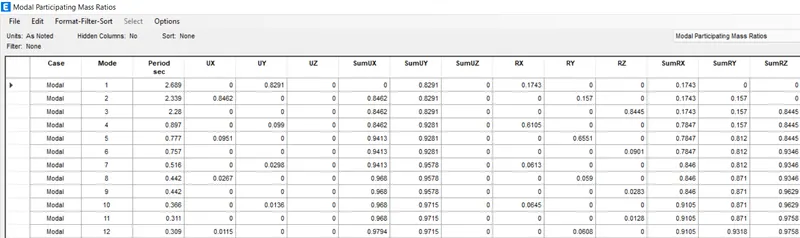
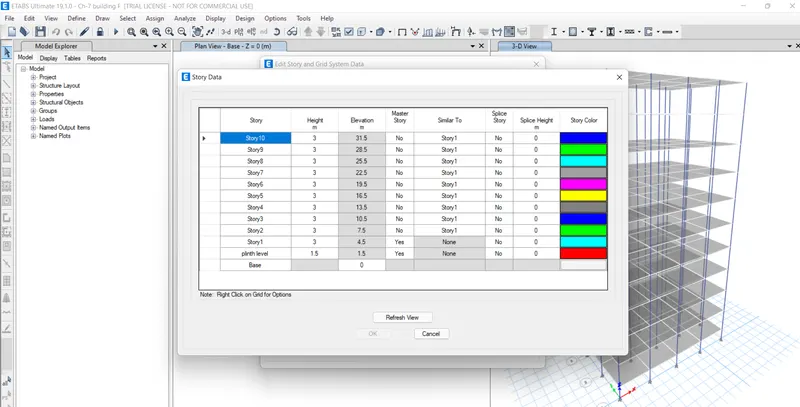
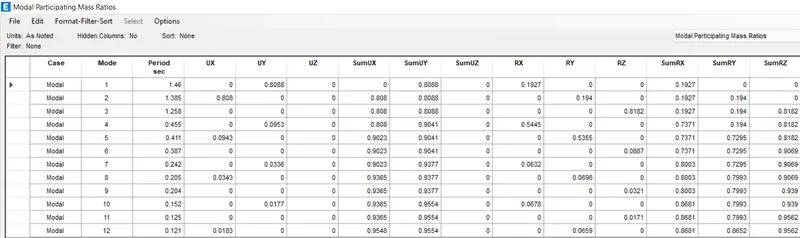
BUILDING: F
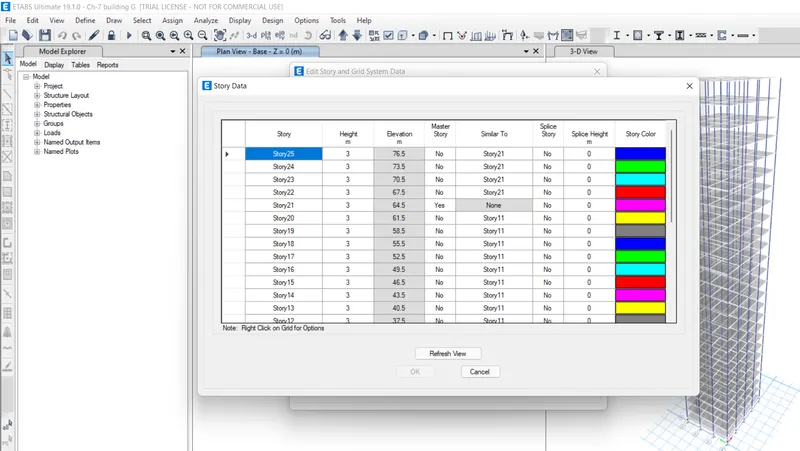
BUILDING: G
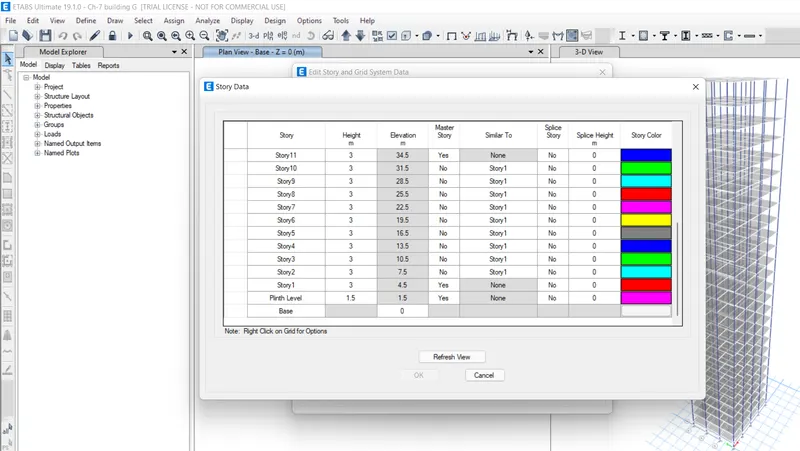
BUILDING: H
BUILDING: J
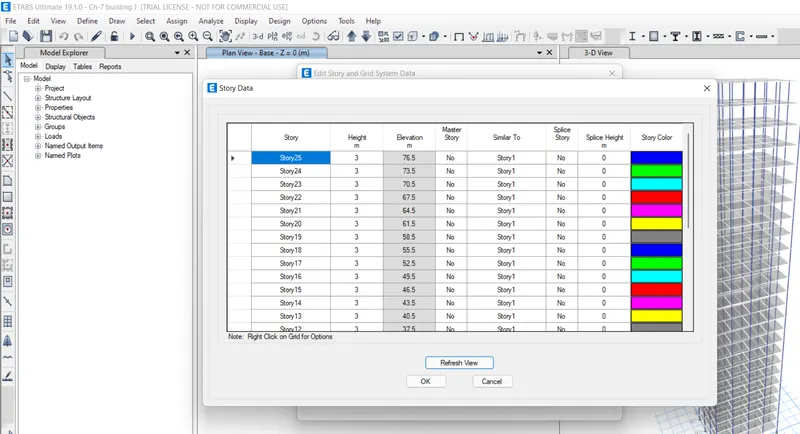
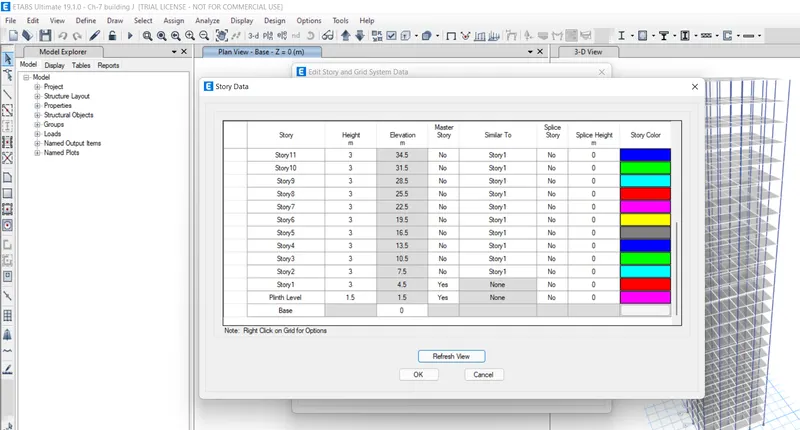
- In this case we need to add imposed load 10% more than that in "building case J" .
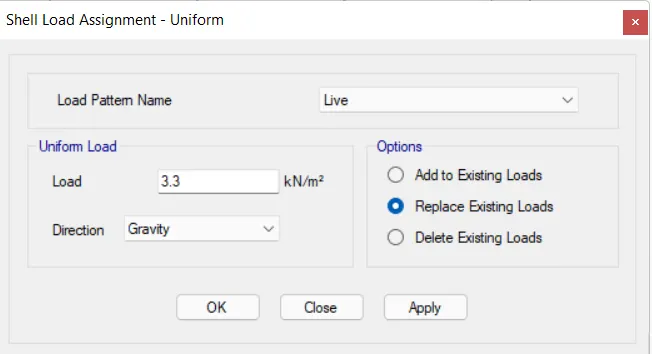
- imposed load in other way is said to be Live load, so the live load added in privious building was 3 Kn/m^2
- Hence, the 10% live load in this case is added to be 3.3 Kn/m^2.
BUILDING: K
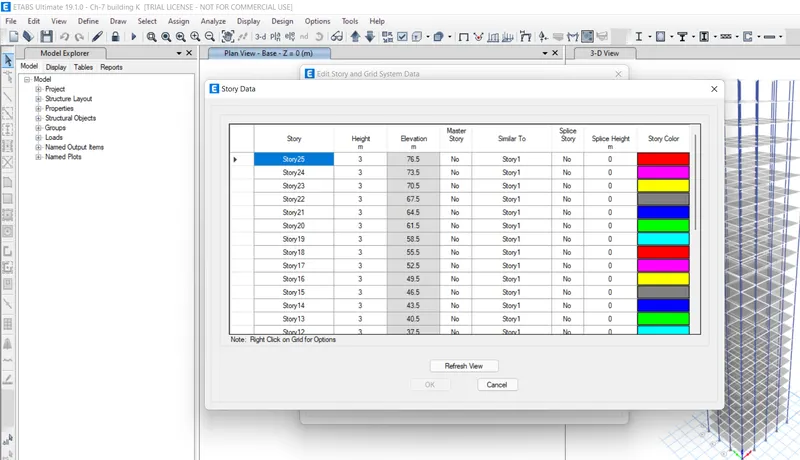
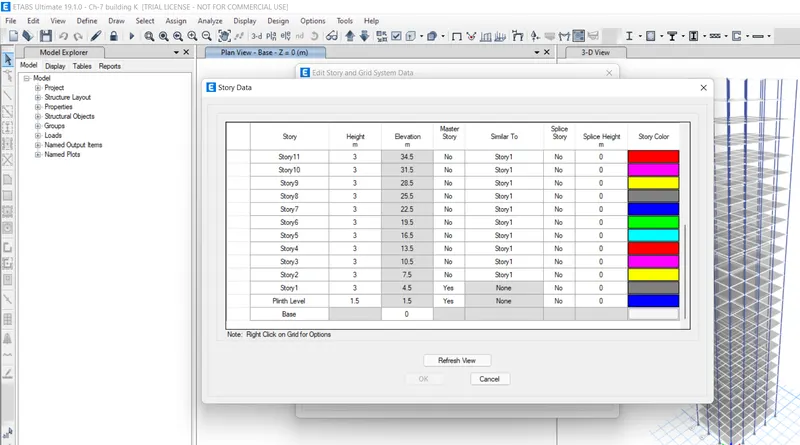
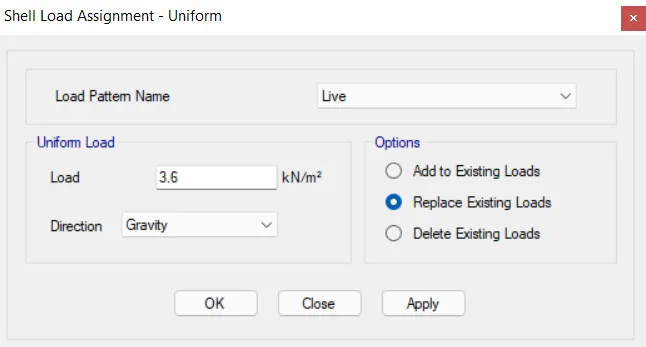
- In this case we need to add imposed load 20% more than that in "building case J" .
- imposed load in other way is said to be Live load, so the live load added in privious building was 3 Kn/m^2
- Hence, the 20% live load in this case is added to be 3.6 Kn/m^2.
COMPAIRING RESULTS ON THE BASIS OF GIVEN TASK :
A. Effect of stiffness on T: Compare fundamental natural periods of buildings E & F as well as G & H. Why is there a marginal or significant difference in the fundamental natural periods?
- The fundamental Natural period of building E is 2.689 sec
- The fundamental Natural period of building F is 1.46 sec
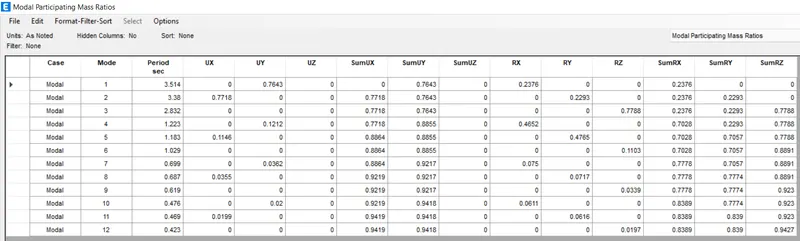
- The fundamental Natural period of building G is 3.514 sec
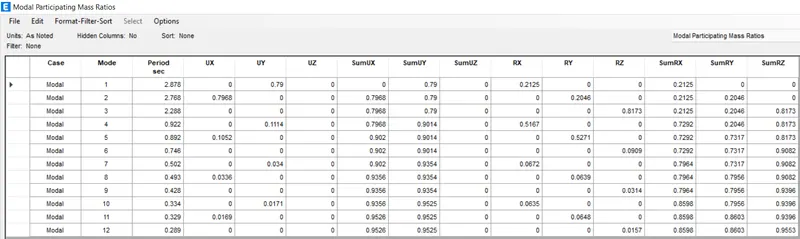
- The fundamental Natural period of building H is 2.878 sec
Reason:
- On compairing E and F, The significant changes in the time period is caused because we used Two diffrent type of column sizes in Building E and only One type of column in F building.
- On compairing G and H, The significant changes in the time period is caused because we used three diffrent type of column sizes in Building G and only One type of column in H building.
B. Effect of mass on T: Compare fundamental natural periods of buildings H, J and K. Have the buildings become more flexible or stiff due to change in mass?
- The fundamental Natural period of building H is 2.8 sec
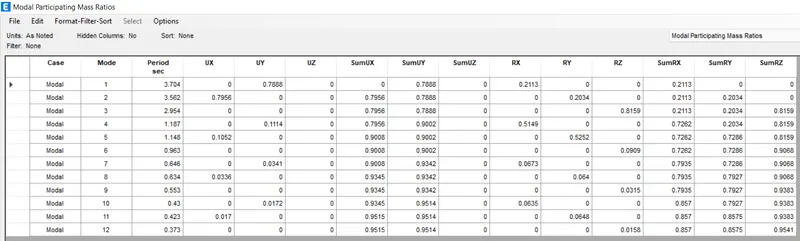
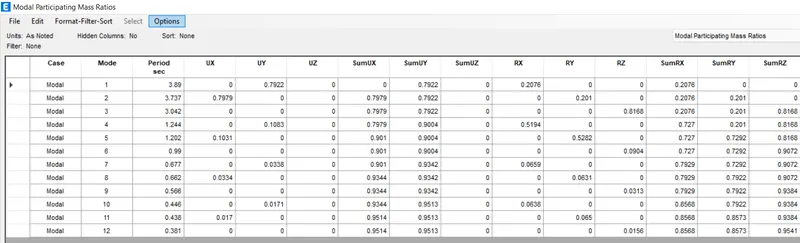
- The fundamental Natural period of building J is 3.7 sec
- The fundamental Natural period of building K is 3.8 sec
Reason:
- On ccompairing the fundamental natural periods of buildings H, J and K we can see a slight chnage in time period of H compairing to J and K, as well as the time period is constant in J and K. this small chnages happened because of bit incriment in live load.
- From this we can say that, as the stiffness, mass, storeys of building increases natural period increases.
- Also the weight of building is directly praportional to the flexibility of the struccture.
C. Effect of Building Height on T: How does the fundamental natural periods of Buildings A, B, F and H change with change in building height?
- The fundamental Natural period of building A is 0.534 sec
- The fundamental Natural period of building B is 0.928 sec
- The fundamental Natural period of building F is 1.46 sec
- The fundamental Natural period of building H is 2.878 sec
Reason:
- On compairing A, B, F, & H: we can say that as the height of the building gets increased, the time perod of the building also increases.
- so, time period is directly proporstional to Height of building.
D. Effect of Column Orientation on T: How does the fundamental natural periods of Buildings B, C and D change with change in column orientation?
- The fundamental Natural period of building B is 0.928 sec
- The fundamental Natural period of building C is 1.057 sec
- The fundamental Natural period of building D is 1.047 sec
Reason:
- On compairing B, C, & D: we can see that the time period of C is more that D which inturn is more than B.
- So, the siffness of building is more if the columns are oriented in longer length direction.
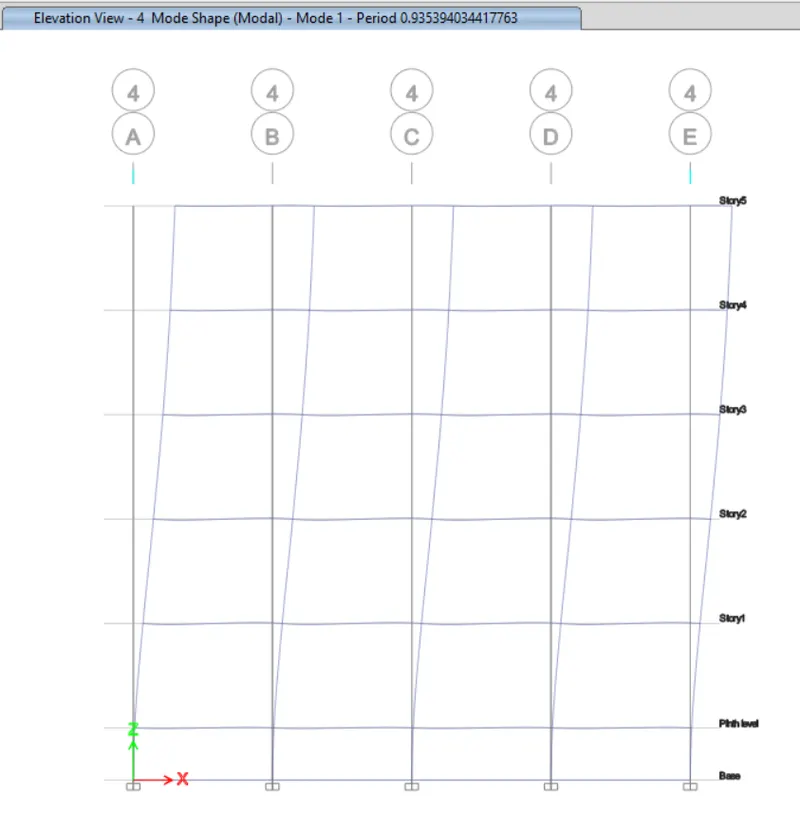
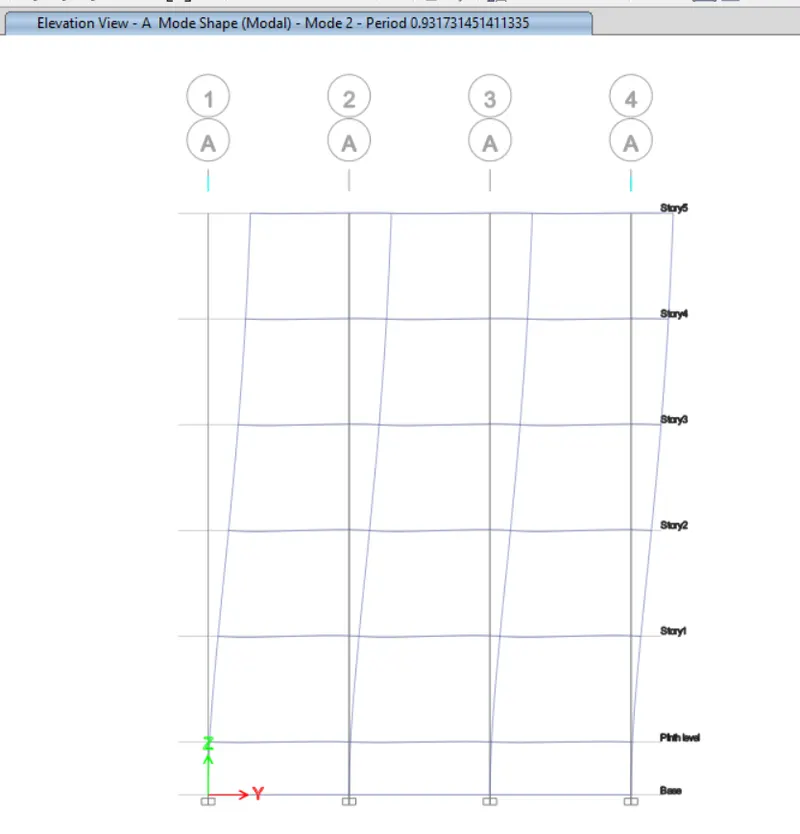
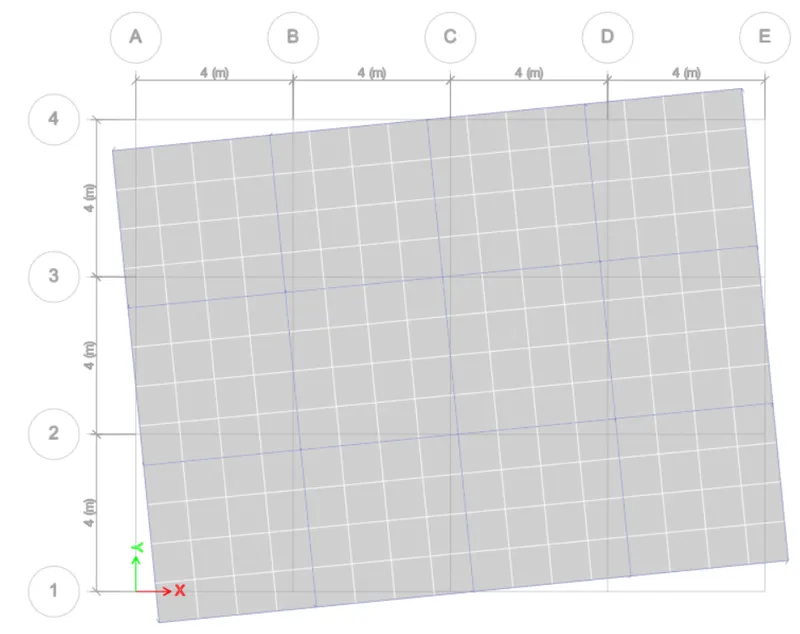
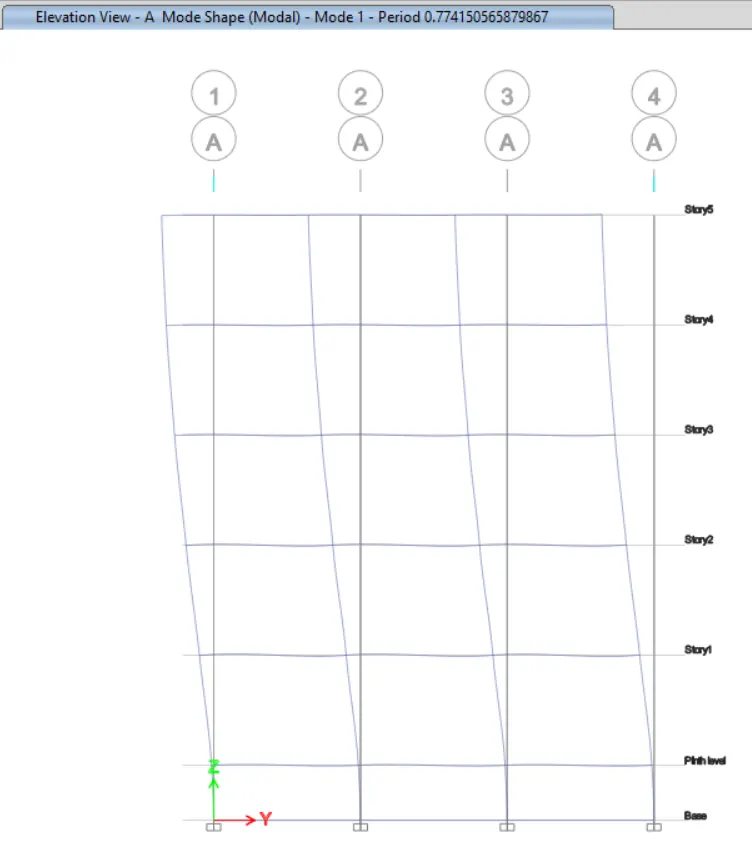
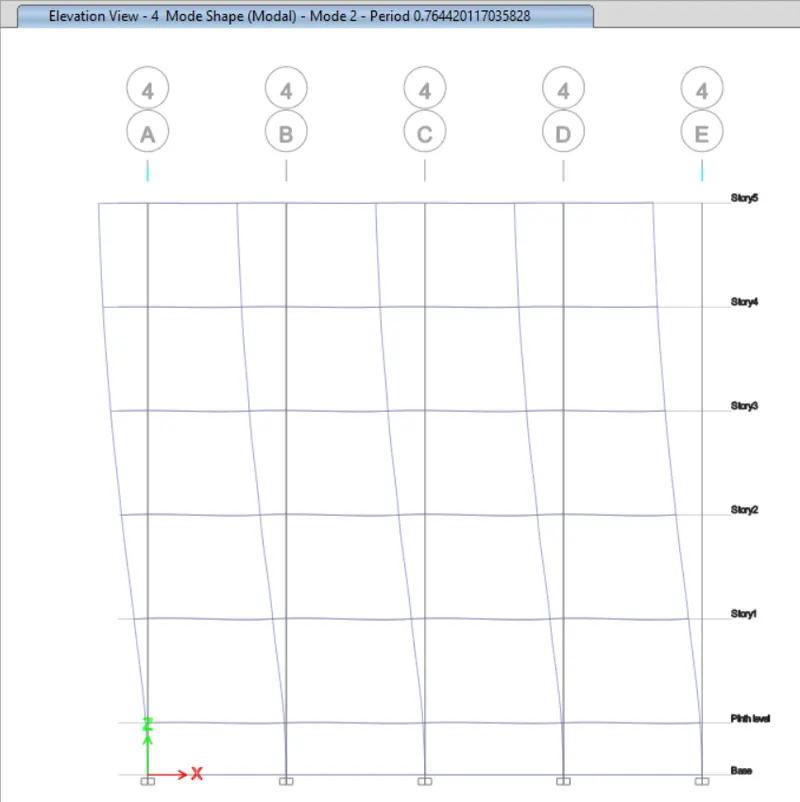
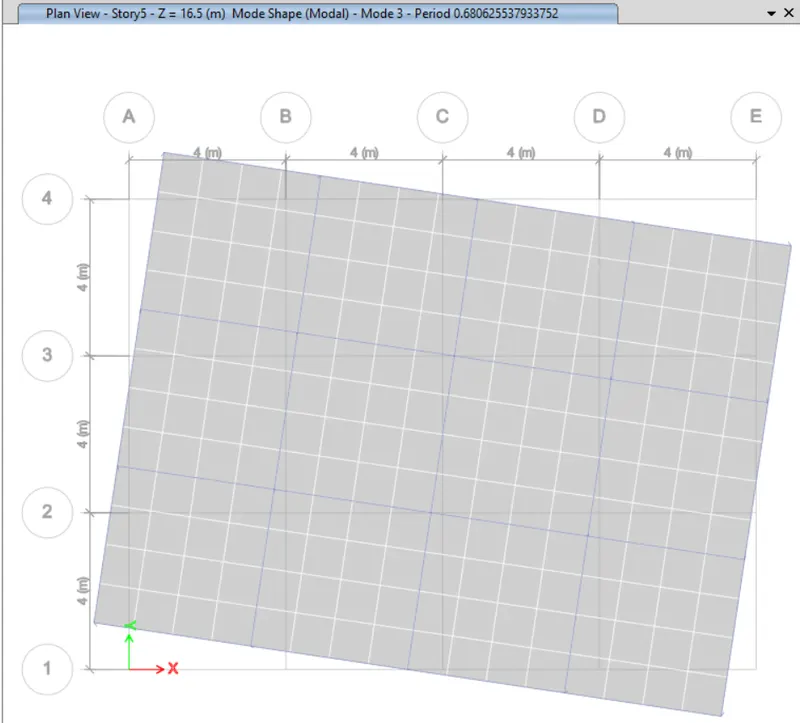
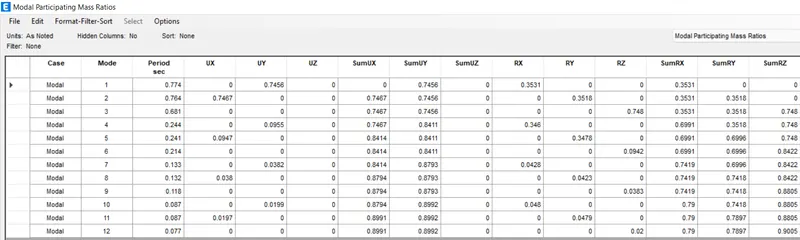
E. Effect of Flexural Stiffness of Structural Elements on mode shapes: Compare fundamental mode shape of Building B in two situations when flexural stiffness of beams relative to that of adjoining columns is very small versus when it is large.
On Comparing fundamental mode shape of Building B in two situations when flexural stiffness of beams relative to that of adjoining columns is very small versus when it is large.
- For situation when flexural stiffness of beams is smaller than adjoining columns:
Mode : 1
Mode : 2
Mode : 3
All Modes
- For situation when flexural stiffness of beams is larger than adjoining columns::
Mode : 1
Mode : 2
Mode : 3
All Modes
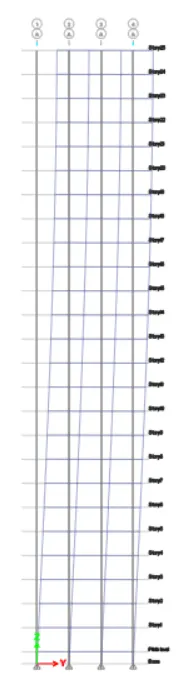
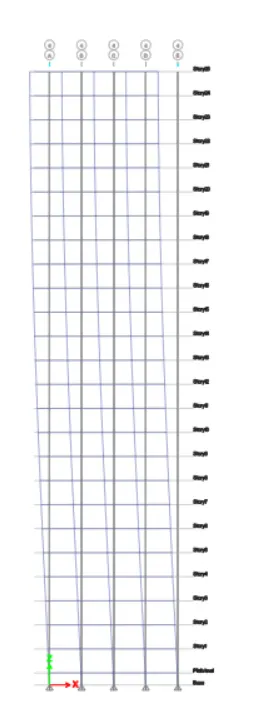
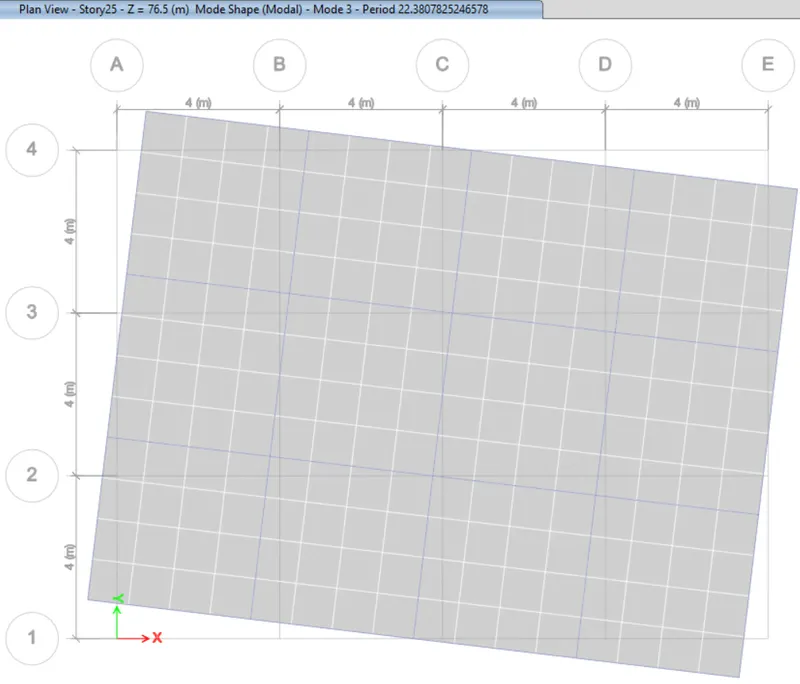
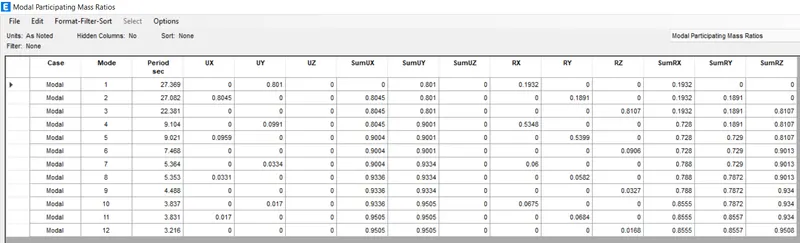
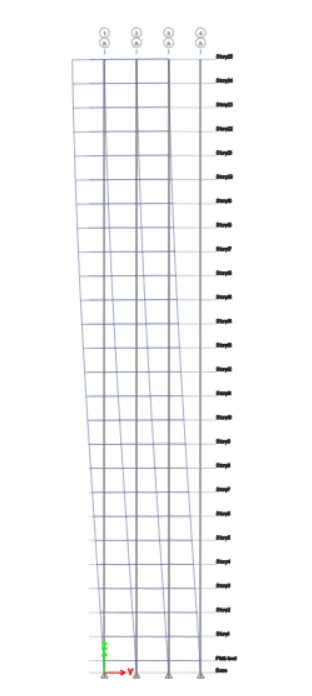
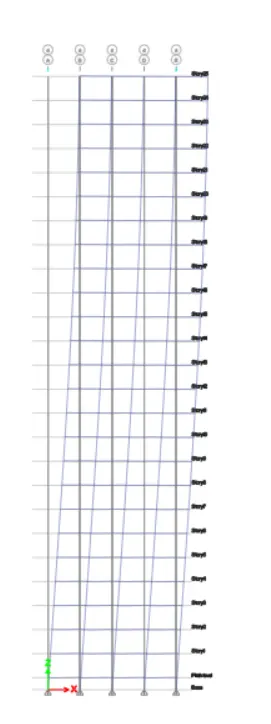
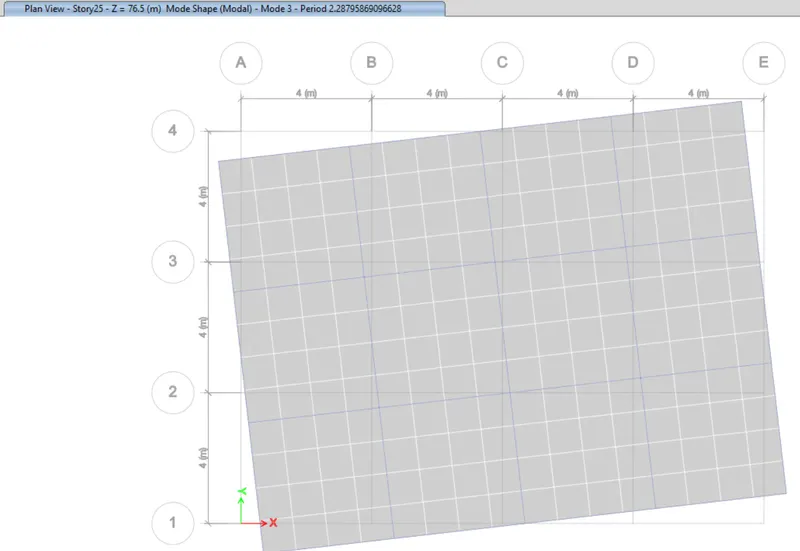
F. Effect of Axial Stiffness of Vertical Members on mode shapes: Compare fundamental mode shape of Building H in two situations when axial cross-sectional area of columns is very small versus when it is large.
On Comparing fundamental mode shape of Building H in two situations when axial cross-sectional area of columns is very small versus when it is large.
- For situation when axial cross-sectional area of columns is very small:
Mode : 1
Mode : 2
Mode : 3
All Modes
- For situation when axial cross-sectional area of columns is very large:
Mode : 1
Mode : 2
Mode : 3
All Modes
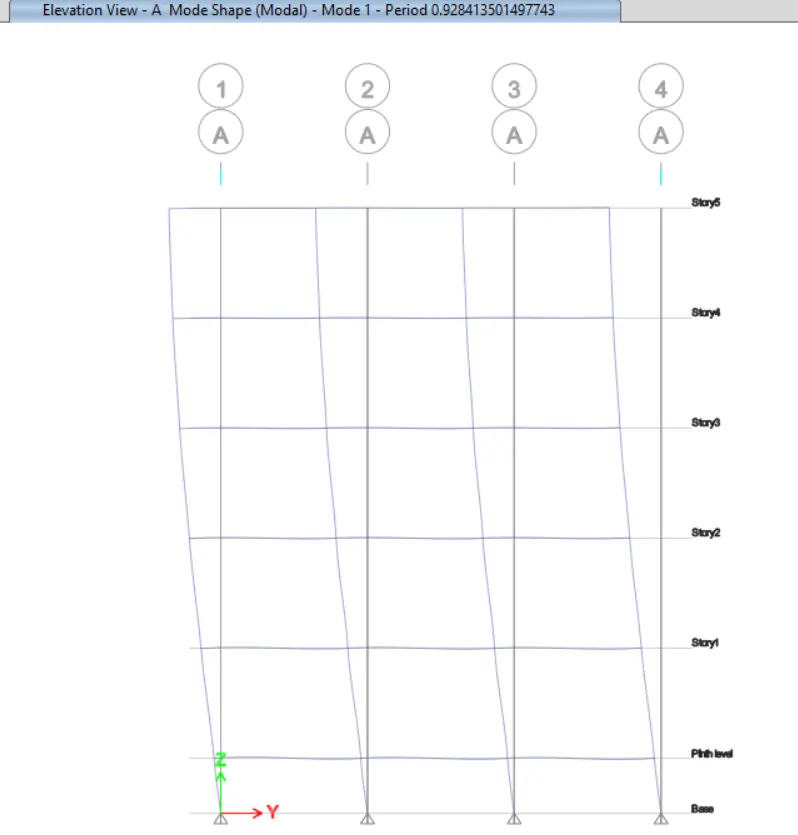
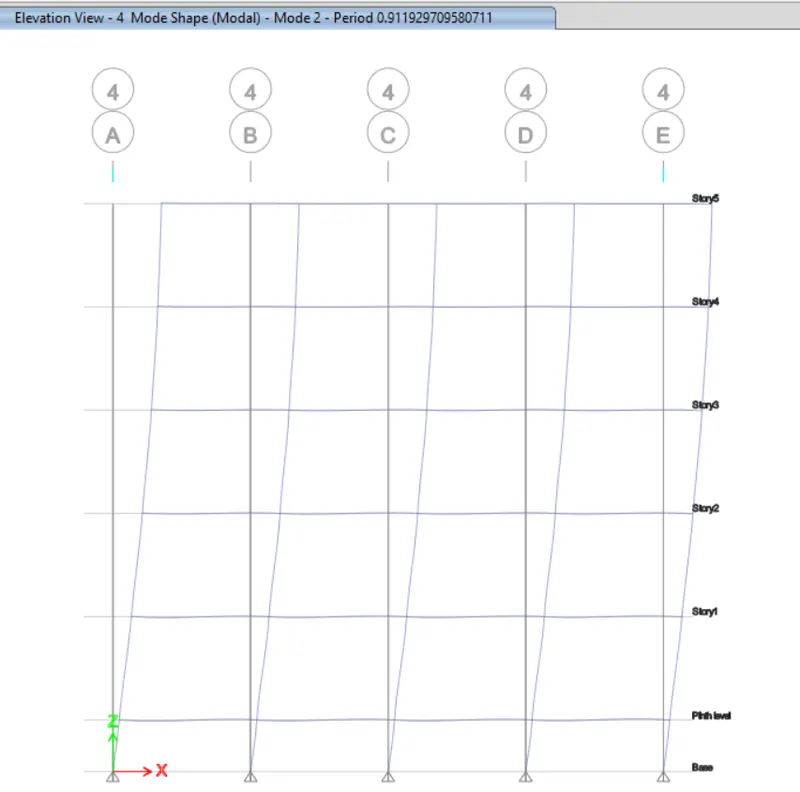
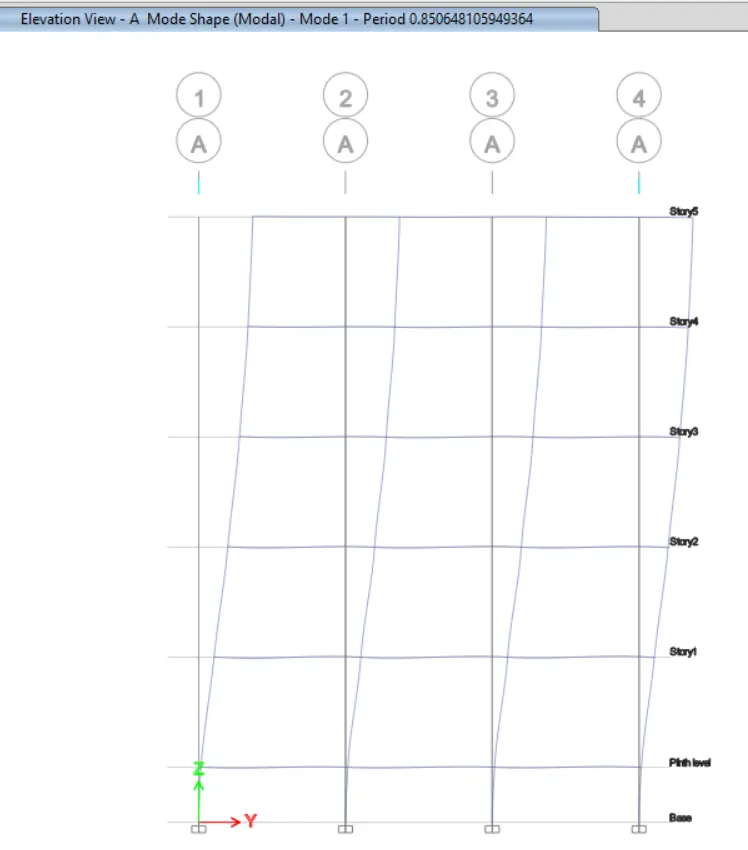
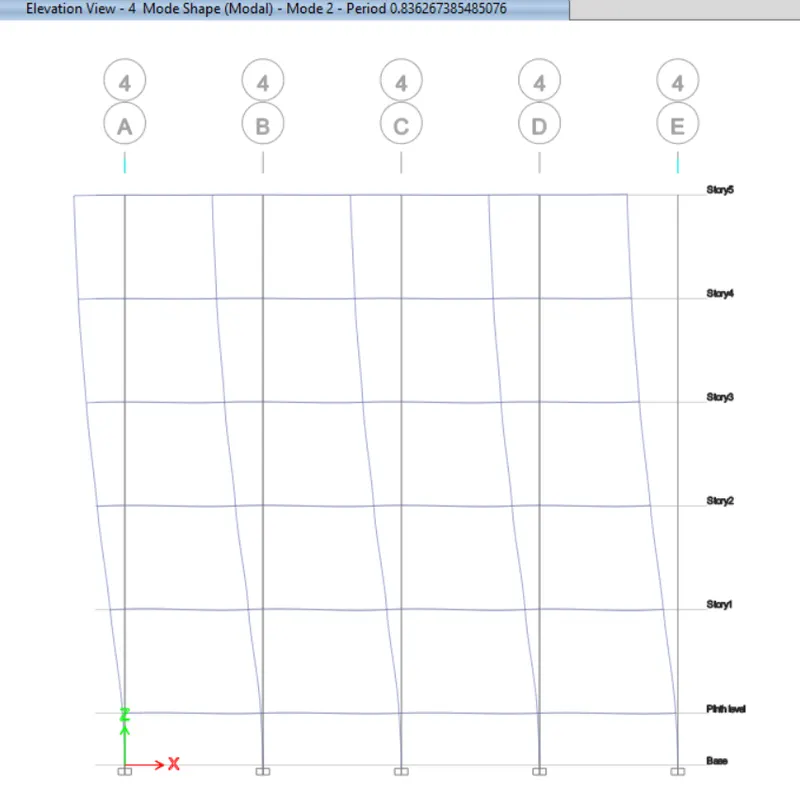
G. Effect of Degree of Fixity at column bases on mode shape: Compare fundamental mode shape of Building B in two situations when base of columns is pinned versus when it is fixed.
On Comparing fundamental mode shape of Building B in two situations when base of columns is pinned versus when it is fixed.
- For situation when base of column is pinned:
Mode 1
Mode 2
Mode 3
All modes
- For situation when base of column is fixed:
Mode 1
Mode 2
Mode 3
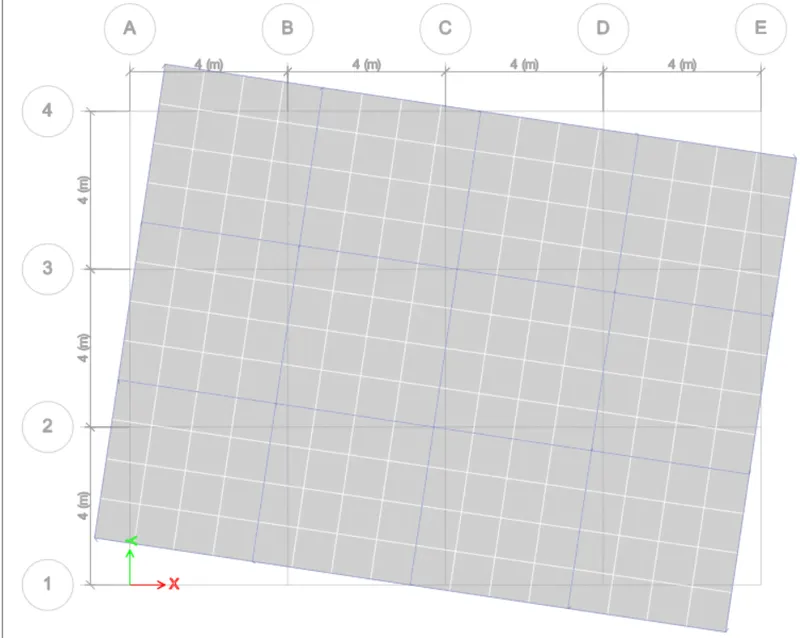
All modes