Project on Concrete Mix Design for various grades of Concrete
PROJECT ON CONCRETE MIX DESIGN OF M35 & M50 GRADES
Design mix for M35 (with fly ash) & M50 grades.
AIM:
To find a design mix for M35 with fly ash & M50 concrete without fly ash.
INTRODUCTION:
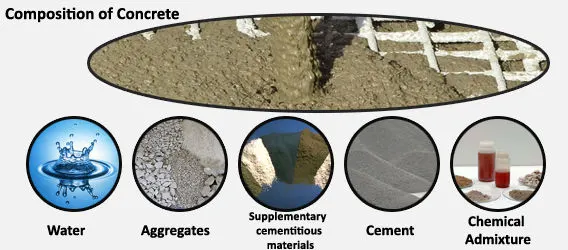
Concrete is one of the most widely used and versatile building materials. It comprises different ingredients that have
various functions, concrete as a building material is made from cement, aggregate that is rock and sand, admixtures
Optional and water in definite proportion. The properties of concrete mainly depend on the mixing of these ingredients,
concrete act as a Binder material that binds the materials together and cement in combination with aggregate acts as a strong
building material all these ingredients help in modifying the properties of the fresh as well as harden concrete, in short, these
materials are like members of the family and they perform their role in such a manner that they contribute to the overall
success of the concrete as a whole family.
MATERIALS:
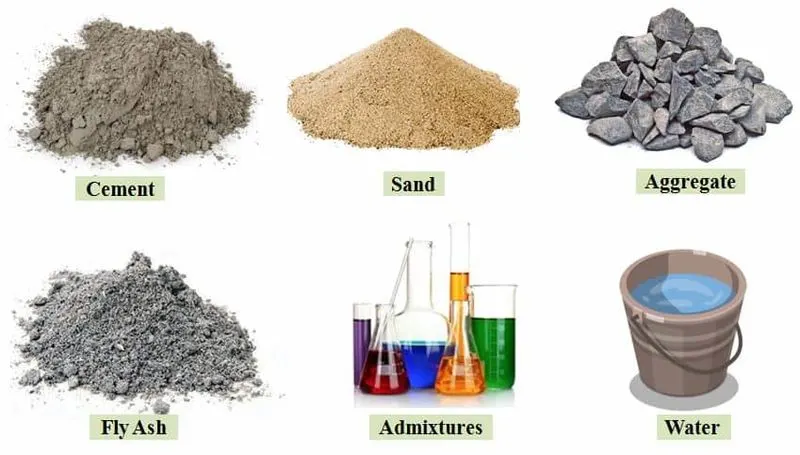
1. Cement
2. Fine aggregate
3. Coarse aggregate z
4. Water
5. Admixture (Superplasticizers)
6. Fly ash.
FOR M35 GRADE CONCRETE:
DATA PROVIDED FOR M35 GRADE CONCRETE with fly ash:
Grade Of Concrete =M35
Type of cement = 43
Maximum nominal size of aggregate = 20mm
Minimum cament content = 320kg/m^3
Maximum water-cement ratio = 0.45
Workability = True slump at 100 mm
Environment exposure = Severe
Method of concrete placing = Pumping
Degree of supervision = Good
Type of aggregate = Crush angular
Maximum cement content = 450kg/m^3
Chemical admidures = Superplasticizers, fly ash
Specific gravity of cement = 3.15
Specific gravity of fly ash = 2.2
Specific gravity of coarse aggregate = 2.74
Specific gravity at fine aggregate = 2.74
Sieve analysis of fine aggregate = Zone 1 (table 4,5 383)
Sieve analysis of course aggregate Table 2 15 383
PROCEDURE FOR M50 DESIGN MIX WITHOUT FLY ASH:
1. The first step in our design mix is to find the target mean strength as target mean strength acts as a benchmark to our
design mix. The Target mean strength of concrete mix is using the following formula from IS 10262-2009,
f'ck fck + 1.65*S
fck-Characteristic compressive strength of concrete at 28 days
S= Standard deviation, (values from table 1)
Step 1:
Target mean strength
From IS 10262-2009, Table l
f'ck fck+1.65*S
f'ck 50+1.65*5
f'ck = 58.25 N/mm²
2. Based on reinforced concrete or plain cement concrete select the water-cement ratio for the given Exposure condition
Step 2:
Find the Water cement ratio based on Environment exposure:
As per IS 456-2000, table-5:
w/c = 0.45, Based on experience take 0.4 Minimum cement content =320 kg/m²
3. Selection of water content is taken from table 2, IS 10262:2009. The maximum water content for 25mm to 50 mm slum
values is given, For additional slump, 3% may be added for every 25mm slump. Also, make sure that the aggregate is dry.
Step 3:
selection of water content:
from table 2, IS 10262:2009
Water content is 186
True slump at 100 mm
= 186+186*0.06
= 197lit
Use of superplasticizers reduces water content by 30%
After observation -29%
=197*0.71
= 140lit
4. Next is a selection of cement content. We can take it from the water-cement ratio, Minimum cement content can be taken
from Table 5 IS 456-2000.
Step 4:
Selection of cement content
Cement content of the concrete mix=W/(w/c)
= 140/0.4
=350 kg/m3
From table 5 of IS 456 minimum cement content for seven exposure condition=320 kg/m3
350kg/m3> 320kg/m3
So hence ok
Now total Cementitious materials (cement + fly ash) = 350
There is an increase of 10% of cementitious materials due to the addition of fly ash = 350*1.1
=385kg/m^3
Water content = 140kg/m^3
So water-cement ratio=140/385
= 0.364
Fly ash at 30% cementaious materials
Fly ash = 385*0.3
= 115kg/m^3
Cement = 385-115
= 270kg/m^3
Cement saved = 80kg/m^3
5. Volume of coarse aggregate and fine aggregate are taken from- table 3,of IS10262-2009.
Step 5:
Volume of Agg(CA&FA)
Table 3 of IS 10262:2009
FA= zone 1; 0.6
Value of w/c =0.4
So Increase in volume of coarse aggregate and decrease in volume of water Content
as the water-cement ratio is decreased by
0.10 so increase by 0.02
Water cement ratio of coarse aggregate= 0.4-0.62
[for pumpable concrete value decreases by10%]
Volume of CA=0.62*0.9
=0.56 m^3
Volume of FA=1-0.56
= 0.44m^3
6. Perform mix calculations for all the materials.
Step 6:
Mix calculation:
a. Volume of concrete = 1m^3
b. The volume of cement = mass of cement/ Specific gravity of cement*(1/ 1000)
= 270/3.15 * 1/1000 =0.0086m^3
c. The volume of fly ash = mass of flyash /Specific gravity of flyash*(1/1000)
= 115/2.2 *1/1000 = 0.052m^3
d. The volume of water = mass of water/Specific gravity of water *(1/1000)
= 140/1 * 1/1000 = 0.140
e. The volume of chemical admixture =mass of admixture/ Specific gravity of admixture *(1/1000)
= 7.6/1.145 * 1/1000 = 0.006m^3
f. Volume of agg (FA&CA)=(a-(b+c+d+e))
=(1-(0.086+0.052+0.140+0.006))
=0.716m^3
g. Mass of CA = 0.716*0.56*2.74*1000
=1098Kg/m^3
h. Mass of FA = 0.716*0.44*2.74*1000
= 863Kg/m^3
7. State all the mix proportions we got after calculating mix calculations of material
Step 7:
Cement = 270kg/m^3
Fly ash= 115kg/m^3
Water = 140 lit
FA = 863kg/m^3
CA =1098kg/m^3
Chemical admixtures = 7kg/m^3
Water cement ratio = 0.36
Trail mix ratio = 1:2.24:2.85
[Using this mix ratio perform an experiments to find if the concrete meets the target mean strength, if yes go ahead with this
design mix, if no alter few values and Calculator new design mix till the target mean strength is reached.]
FOR M50 GRADE CONCRETE:
DATA PROVIDED FOR M50 GRADE CONCRETE:
Grade Of Concrete = M50
Type of cement = 43
Maximum nominal size of aggregate = 20mm
Minimum cament content = 320kg/m^3
Maximum water-cement ratio = 0.45
Workability = True slump at 100 mm
Environment exposure = Severe
Method of concrete placing = Pumping
Degree of supervision = Good
Type of aggregate = Crush angular
Maximum cement content = 450kg/m^3
Chemical admidures = Superplasticizers
Specific gravity of cement = 3.15
Specific gravity of coarse aggregate = 2.74
Specific gravity at fine aggregate = 2.74
Sieve analysis of fine aggregate = Zone 1 (table 4,5 383)
Sieve analysis of course aggregate Table 2 15 383
PROCEDURE FOR M50 DESIGN MIX WITHOUT FLY ASH:
1. The first step in our design mix is to find the target mean strength as target mean strength acts as a benchmark to
our design mix. The Target mean strength of concrete mix is using the following formula from IS 102 2-2009,
f'ck fck + 1.65*S
fck=Characteristic compressive strength of concrete at 28 days
S= Standard deviation, (values from table 1)
Step 1:
Target mean strength
From IS 10262-2009, Table l
f'ck = fck+1.65*S
f'ck = 50+1.65*5
f'ck = 58.25 N/mm²
2. Based on reinforced concrete or plain cement concrete select the water-cement ratio for the given Exposure condition.
Step 2:
Find the Water cement ratio based on Environment exposure:
As per IS 456-2000, table-5:
w/c = 0.45, Based on experience take 0.4 Minimum cement content =320 kg/mm²
3. Selection of water content is taken from table 2, IS 10262:2009. The maximum water content for 25mm to 50 mm slum
values is given, For additional slump, 3% may be added for every 25mm slump. Also, make sure that the aggregate is dry.
Step 3:
selection of water content:
from table 2, IS 10262:2009
Water content is 186
True slump at 100 mm
= 186+186*0.06
=197lit
Use of superplasticizers reduces water content by 30%
After observation = 29%
=197*0.71
= 140lit
4. Next is the selection of cement content. We can take it from the water-cement ratio, Minimum cement content can be taken
from Table 5 IS 456-2000.
C = W/(w/c)
W= Water content
w/c= water-cement ratio
Step 4:
Selection of cement content
Cement content of the concrete mix= W/(w/c)
= 140/0.4
= 350 kg/m^3
From table 5 of IS 456 minimum cement content for seven exposure condition=320 kg/m3
350kg/m3> 320kg/m3
So hence ok
5. Volume of coarse aggregate and fine aggregate are taken from- table 3, of IS10262-2009.
Step 5:
Volume of Agg(CA&FA)
Table 3 of IS 10262:2009
FA= zone 1; 0.6
Value of w/c =0.4
So Increase in volume of coarse aggregate and decrease in volume of water Content
as the water-cement ratio is decreased by 0.10 so increase by 0.02
Water cement ratio of coarse aggregate= 0.4-0.62
[for pumpable concrete value decreases by10%]
Volume of CA=0.62*0.9
=0.56 m^3
Volume of FA=1-0.56
= 0.44m^3
6. Perform mix calculations for all the materials.
Step 6:
Mix calculation:
a. Volume of concrete = 1m^3
b. The volume of cement = mass of cement/ Specific gravity of cement*(1/ 1000)
= 350/3.15 * 1/1000 =0.111m^3
c. The volume of water = mass of water/Specific gravityofwater *(1/1000)
= 140/1 * 1/1000 = 0.140
d. The volume of chemical admixture =mass of admixture/ Specific gravity of admixture *(1/1000)
= 7.6/1.145 * 1/1000 = 0.006m^3
e. Volume of agg (FA&CA)=(a-(b+c+d+e))
=(1-(0.111+0.140+0.140+0.006))
=0.743m^3
g. Mass of CA = 0.743*0.56*2.74*1000
=1140Kg/m^3
h. Mass of FA = 0.743*0.44*2.74*1000
= 896Kg/m^3
7. State all the mix proportions we got after calculating mix calculations of material:
Step 7:
Cement = 350kg/m^3
Water = 140lit
FA = 896kg/m^3
CA =1140kg/m^3
Chemical admixtures = 7kg/m^3
Water cement ratio = 0.4
Trail mix ratio = 1:2.56:3.26
[Using this mix ratio perform an experiments to find if the concrete meets the target mean strength, if yes go ahead with this
design mix, if no alter few values and Calculator new design mix till the target mean strength is reached.]
RESULTS:
This project we have gained the design mix for M35 concrete with fly ash and M50 concrete without fly ash.
1. Trail mix ratio for M35 grade concrete with fly ash = 1:2.24:2.85 [We save 80kg/m^3 of cement]
2. Trail mix ratio for M50 grade concrete without fly ash = 1:2.56:3.26
CONCLUSION:
I would like to conclude my project by stating that every design mix varies depending on the aggregates present, the state of
aggregates and many other factors. Using this mix ratio perform experiments to find if the concrete meets the target mean
strength, if yes go ahead with this design mix if no alter few values and Calculator new design mix till the target mean
strength is reached.
REFERENCES:
• SKILL LYNC COURSE
• IS 10262-2009,2019
• IS 456-2000
• IS 383-1970,2016