Project - Analysis of a practical automotive wiring circuit
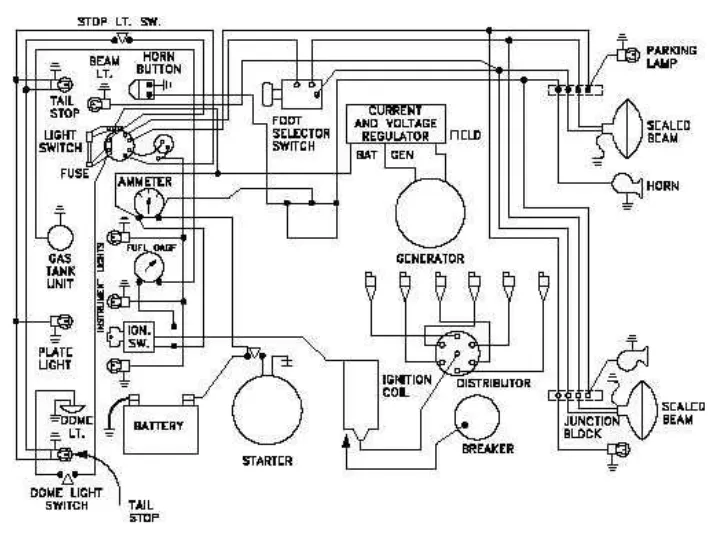
1. Identify each of the major elements in the above automotive wiring diagram.
Answer - The major elements are,
- Battery
- Generator
- Distributor
- Ammeter
- Fuse
- Ground/Earth
- Indicating Light/Beam light
- Starter
- Breaker
- Horn
- Light Switch/Selector Switch
- Junction Block
2.Explain the purpose and working of any three elements briefly
Answer -
1. Battery-Batteries are small essential components to operate many devices. It is one of the key components in our day-to-day life. Some batteries are rechargeable batteries and are used in each and every sector. Below are some of the applications of batteries.
- Automotive
- House
- Health Instruments
- Medical
- Logistics and construction
- Firefighting and Emergency
- Military
Electric Vehicle Battery is commonly used in vehicles. This battery is used to power the electric motors of electric vehicles. The batteries of electric vehicles are usually rechargeable. Generally, lithium-ion batteries are used in electric vehicles.
- Working -
- A battery is a device that stores chemical energy and converts it to electrical energy.
- The chemical reactions in a battery involve the flow of electrons from one material (electrode) to another, through an external circuit.
- The flow of electrons provides an electric current that can be used to do work.
- To balance the flow of electrons, charged ions also flow through an electrolyte solution that is in contact with both electrodes.
- Different electrodes and electrolytes produce different chemical reactions that affect how the battery works, how much energy it can store and its voltage.
2. Generator- it is also called a dynamo, it converts mechanical energy into electricity for transmission and distribution over power lines to domestic, commercial, and industrial customers.ired for
- Types of Generators -The generators are divided into two different and basic classes or categories which are AC (Alternating Current) generator and DC (Direct Current) generator.
- AC Generator - The AC generators or as they are also called the Alternator, are one of the most essential devices of providing electrical power in several conditions in our life. ACs work based on the principle of electromagnetic induction. AC generators are classified into two categories: induction generators and synchronous generators. As there are no brushes in this type of generators, maintenance is almost free. the size of ACs is smaller in comparison to DCs. So, they are more commonly used. And at last, what makes this type more popular is that the losses of ACs are less than DCs.
- DC Generator -This type of generator is commonly found in off-grid applications. The DCs are classified into three main categories according to the way their magnetic field is developed in the stator: permanent-magnet generators, separately-excite generators, and self-excited generators. Some advantages of DCs are: they are designed plainly. They are usually used for operating large motors and electrical devices requiring direct control. DCs diminishes the fluctuations described by smoothing the output voltage through a regular set of coils around the armature for some steady state applications.
Components of Generators-So far, we have got familiar with the working principle and different types of generators and gradually we are getting closer to the answer to the question “what is a generator?” in this section, we are about to make you acquainted with the main parts of a generator. Apart from the mainframe, a generator consists of 6 main components: the engine, the fuel system, alternator, cooling, exhaust, and lubricating systems. We put these 6 parts in 4 main categories. Keep reading to learn more about these components.
- The Engine - Maybe the most important part of every machine is the engine. it is generally the part of the whole system that converts the fuel into usable energy and helps it move or perform its mechanical function. Thus, the engine is sometimes called the machine’s prime mover. In a generator, the engine fuel source can be gasoline, diesel, natural gas, propane, bio-diesel, water, sewage gas, or hydrogen. The engine uses one of these kinds of fuel to create mechanical energy the generator will convert into electricity. Some engines commonly used in the design of generators include reciprocating, steam, turbine engines, and microturbines.
- Fuel System - All the Generators that are running on one of the different types of fuel mentioned before have a system that gathers and pumps the fuel to the engine. The fuel system contains a tank storing enough fuel to power a generator for an equivalent number of hours. There is also a pipe connecting to the tank and then to the engine, and the return pipe connects the engine to the fuel tank for the return of fuel.
- Alternator and Voltage Regulator - Maybe we can say that the main job of a generator is up to the alternator. This component turns the mechanical energy produced by the engine into electrical current. The alternator embodies the stator, a stationary part of a set of coils, and the rotor or the armature which creates a stable turning electromagnetic field around the stator. Overall, the alternator generates an electrical voltage that must be regulated to produce a constant current suitable for a practical use.
- Cooling, Exhaust, and Lubricating Systems - There is a cooling system to prevent overheating and regulate the temperature of the generator components during the use. Some of the generators use a fan, coolant, or both of them to control the temperature of the generator at work. As the combustion chamber of the generator converts fuel, the generator will also create exhaust. The harmful gases emitted by the generator during the use are dispelled by exhaust systems. The last part is the lubricating system. As Generators consists of many moving parts and each of them requires oiling to move smoothly, there should be a lubricating system which keeps the generator well oiled and smooth.
Conclusion - In this article, we tried to show you what exactly a generator does. To answer the question of “what is a generator?” we analyzed the working principle of a generator and how it works. We explained the rules a generator follows to turn the mechanical energy into electrical power. After that, we reached to the different types of generators and talked about two main types of generators.
3. Fuse- Fuses are the protectors, these are the safety devices which are used to protect the home appliances like televisions, refrigerators, computers with damage by high voltage. The fuse is made up of thin strip or strand of metal, whenever the heavy amount of current or an excessive current flow is there in an electrical circuit, the fuse melts and it opens the circuit and disconnects it from the power supply. Also, it works as a circuit breaker or stabilizer which protects the device from damage.In the market, many types, features, and design of fuses are available nowadays. Their strips are made up of aluminum, copper, zinc & it is always connected in series with the circuit to protect from overcurrent in the running cables. Here is the basic circuit diagram & symbol of the fuse.
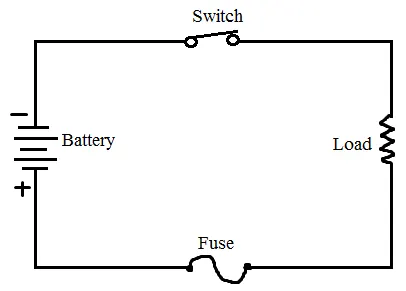
- Why do we Need Fuse? - Fuses are used for the prevention of home appliances from the short circuit and damage by overload or high current etc. If we don’t use fuses, electrical faults occur in the wiring and it burns the wire and electric appliances and may starts fire at home. The lives of television, computers, radios and other home appliances may also put at risk. When the fuse goes, a sudden spark occurs which may lead to turning your home into sudden darkness by disconnecting the power supply which saves any further mishappenings. That’s why we need fuses to protect our home appliances from harm.
- How Does Fuse work? -The fuses work on the principle of the heating effect of the current. It’s made up of thin strip or strand of metallic wire with noncombustible material. This is connected between the ends of the terminals. Fuse is always connected in series with the electrical circuit. When the excessive current or heat is generated due to heavy current flows in the circuit, the fuse melts down due to the low melting point of the element and it opens the circuit. The excessive flow may lead to the breakdown of wire and stops the flow of current. The fuse can be replaced or changed with the new one with suitable ratings. The fuse can be made up of the element like zinc, copper, silver &aluminum. They also act as a circuit breaker which is used to break the circuit when the sudden fault occurs in the circuit. This is not only a protector but it is also used as a safety measure to prevent humans from hazards. So, this is how the fuse operates. Here is the figure is shown fuse operation, fuse barrel(container).
- Classification of Fuses - Now we are discussing about different types of fuses. They are divided into two parts AC Fuses & DC Fuses. Further, they are divided into many categories given in the flowchart below:-
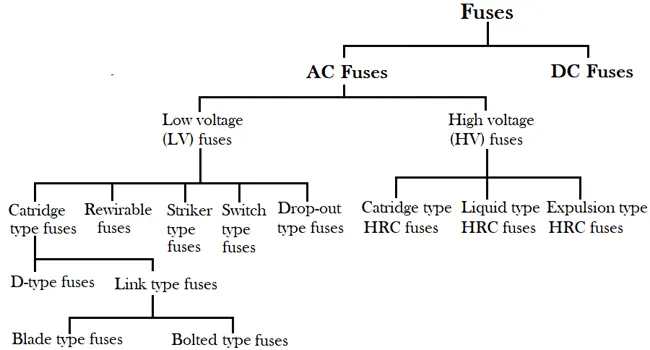
- Different Types of Fuses - Fuses are invented first by “Thomas Alva Edison” but nowadays many types of fuses are available in the market. Generally, there are two types of fuses:-
- DC Fuses: DC fuses have larger in size. DC supply has constant value above 0V so it is hard to neglect and turn off the circuit and there is a chance of an electric arc between melted wires. To overcome this, electrodes placed at larger distances and because of this the size of DC fuses get increased.
- AC Fuses: AC fuses are smaller in size. They oscillated 50-60 times in every second from minimum to maximum. So there is no chance of Arc between the melted wires. Hence they can be packed in small size.
AC fuses are further categorized into two parts, i.e., Low voltage fuses and High voltage fuses.
1. Low Voltage Fuses (LV)
- Cartridge Type Fuses: It is the type of fuses in which they have totally closed containers & has the contact i.e., metal besides.
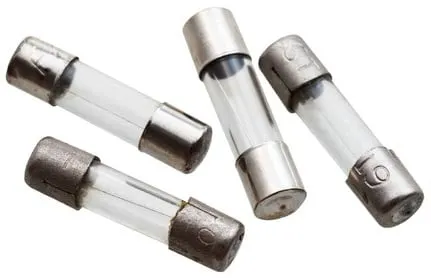
Cartridge Type Fuses are of two types:-
- D-Type Cartridge Fuses:- It is composed of the cartridge, fuse base, cap & adapter ring. The fuse base has the fuse cap, which is fitted with the fuse element with cartridge through adapter ring. The circuit is completed when the tip of the cartridge makes contact with the conductor.
- Link Type Or HRC(High Rupturing Capacity) Fuses:- In this type of fuse, the flow of current by fuse element is given under normal condition. To control the arc which is produced by fuse blown we use the fuse which is made up of porcelain, silver &ceramic. The fuse element container filled with silica sand.
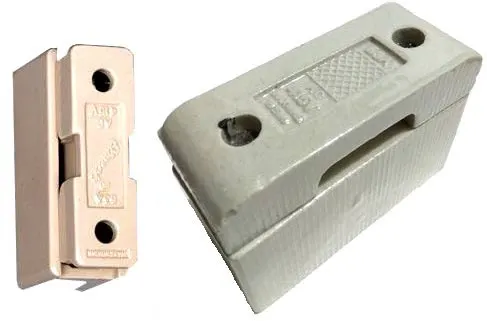
- Rewireable/ Kit-Kat Type:- In this type of fuse, the main advantage is that the fuse carrier is easier to remove without having any electrical shock or injury. The fuse base acts as an incoming and outgoing terminal which is made up of porcelain & fuse carrier is used to hold the fuse element which is made up of tin, copper, aluminum, lead, etc. This is used in domestic wiring, small industries etc.
- Striker Type Fuses:- In this type of fuse, it is used for closing and tripping the circuit. They are having enough force and displacement.
- Switch Type Fuses:- In this type of fuse, basically metal enclosed of a switch and a fuse and is far used for low and medium voltage level.
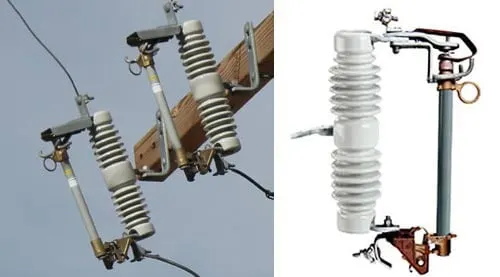
- Drop Out Fuses:- In this type of fuse, the melting of fuse causes the element to drop under gravity about its lower support. They are made for the protection of outdoor transformers.
Q3. If the total load is 10A from battery, what should be the fuse rating?
Answer -The fuse will blow ,Fuses are used to protect wiring. the wires for 5Amps circuit cannot handle 10 amps.therfore the 5 amp fuse will do its job by creating an open circuit and stopping the flow of electricity. If the load is 10A the recommended fuse is 15A .10A is usually not a safe minimum,the potential impulses or even small fluctuations as a fuse is designed to not exceed the restriction on the current,to prevent damage of circuit. the fuse rating mainly depends on its frequency necessary to icluded other factors,including ambient temperature,available energy during fault,inrush current.
Q4. If 500W is the load, what is the voltage and capacity of battery you recommend?
Answer - If the load is 500W, So It totaly depends on how much voltage you have or taken from the electric source. So as of now we took 12V source.
From the power formula,
P = V * I
500 = 12 * I
I = 500 / 12
I = 41.67 amp
So we get the current(I) is 41.67 amperes from the 12V source and 500W power.
Which means if we use that battery for one day
Day = 24 hr
From capacity formula,
capacity = current * time
= 41.67 * 24 Ah
= 1000.08 Ah
Or for a month ( i.e 720 Hr)
capacity = 41.67 * 720 Ah
= 30002.4 Ah
So For load is 500W, 12V battery pack and for use of month, I would recommend approx 30 kAh or 30002.4 Ah.
Q5.Identify any two elements which are connected parallel to each other. Why they are connected in parallel?
Answer - Two element which are connected in parallel are lamp and horn. So these electrical appliences are connected in parallel so that the failure of one element will not affect the other while they recieve same voltage.
Q6. Identify any two elements which are connected in series. Why they are connected in series?
Answer - Two element are in series are ammeter and starter. Ammeter is connected in series becouse of current in series is constant and ammeter is measured current flow through circuit and second one is starter which is connected in series with motor armature winding across the circuit and restricte the current to an acceptable level, it also start the flow of current through a battery.