Project 9
Desk Research Report on Pickup Trucks
1. Introduction:
1.1 Definition:
- A pickup truck is a motor vehicle with an open cargo area at the rear, typically equipped with low sides.
1.2 Purpose:
- To understand the current market trends, features, and innovations in the pickup truck segment through desk research.
2. Market Overview:
2.1 Global Market Size:
- The global pickup truck market has experienced steady growth, driven by demand in North America, Asia-Pacific, and the Middle East.
- Increasing popularity due to versatility and use in both commercial and personal applications.
2.2 Key Players:
- Major manufacturers include Ford, Chevrolet, Toyota, RAM, and Nissan.
- Electric vehicle (EV) manufacturers like Tesla entering the pickup truck market.
3. Popular Models and Features:
3.1 Ford F-Series:
- Best-selling pickup truck in the United States.
- Features advanced towing capabilities, tech-infused interiors, and various engine options.
3.2 RAM 1500:
- Known for its luxurious interior, smooth ride, and innovative features like the RamBox storage system.
- Offers a range of engine options, including a hybrid variant.
3.3 Toyota Hilux:
- Globally popular, known for durability and off-road capabilities.
- Features include a robust chassis, advanced safety systems, and a variety of configurations.
4. Innovations and Trends:
4.1 Electric Pickup Trucks:
- Growing interest in electric pickups for environmental sustainability.
- Tesla Cybertruck and Rivian R1T gaining attention in the EV pickup segment.
4.2 Advanced Safety Features:
- Integration of advanced driver-assistance systems (ADAS) such as adaptive cruise control, lane-keeping assist, and automatic emergency braking.
4.3 Connectivity and Infotainment:
- Increasing focus on in-car technology with large touchscreens, smartphone integration, and advanced infotainment systems.
5. Sustainability:
5.1 Fuel Efficiency:
- Manufacturers working on improving fuel efficiency through engine optimization and lightweight materials.
5.2 Electric and Hybrid Options:
- Several automakers exploring or introducing electric and hybrid variants of pickup trucks.
6. Consumer Preferences:
6.1 Size and Payload Capacity:
- Preferences vary based on region; in the U.S., larger trucks with higher payload capacity are popular.
- Some markets prefer midsize trucks for urban maneuverability.
6.2 Off-Road Capability:
- A growing demand for trucks with off-road capabilities, leading to the introduction of specialized models and trims.
7. Regulatory Environment:
7.1 Emission Standards:
- Stringent emission standards driving manufacturers to invest in cleaner and more fuel-efficient technologies.
7.2 Safety Regulations:
- Increasing emphasis on safety features, contributing to the adoption of ADAS and crash avoidance technologies.
8. Future Outlook:
8.1 Autonomous Driving:
- Ongoing research and development in autonomous driving technologies for pickup trucks.
- Potential for autonomous features in off-road applications.
8.2 Sustainability Initiatives:
- Anticipation of increased focus on sustainable materials, alternative fuels, and circular economy practices.
9. Challenges:
9.1 Emission Reduction:
- Meeting emission standards while maintaining the performance and utility expected from pickup trucks.
9.2 Consumer Acceptance of Electric Trucks:
- Overcoming consumer skepticism and ensuring acceptance of electric pickup trucks in the market.
User research:
User research for pickup trucks involves understanding the needs, preferences, and behaviors of individuals who own or are potential buyers of pickup trucks. This research aims to provide insights into the factors influencing purchase decisions, usage patterns, and areas where improvements or innovations are desired. Here is a breakdown of key aspects to consider in user research for pickup trucks:
1. Demographics and Psychographics:
1.1 Demographics:
- Age, gender, income, and occupation of pickup truck owners.
- Geographic location and urban/rural distribution.
1.2 Psychographics:
- Lifestyles and interests of pickup truck owners.
- Attitudes towards environmental sustainability and technology adoption.
2. Purchase Motivations:
2.1 Functional Needs:
- Reasons for choosing a pickup truck, such as towing capacity, payload, and off-road capabilities.
- Work-related requirements, including construction, farming, or recreational activities.
2.2 Lifestyle and Image:
- Perception of pickup trucks as a lifestyle choice.
- The role of image and brand perception in the purchase decision.
3. Usage Patterns:
3.1 Daily Use:
- How frequently pickup trucks are used on a daily basis.
- The primary activities for which the pickup truck is utilized.
3.2 Seasonal Use:
- Seasonal variations in usage, especially for activities like hauling and off-roading.
- Preferences for certain features during specific seasons.
4. Feature Preferences:
4.1 Towing and Hauling:
- Importance of towing capacity and payload in decision-making.
- Feedback on the ease of use of towing features.
4.2 Off-Road Capabilities:
- Interest in off-road features like four-wheel drive, skid plates, and terrain management systems.
- Frequency of off-road adventures.
4.3 Interior Comfort and Technology:
- Preferences for interior features, including infotainment systems, connectivity, and comfort.
- Use of advanced driver-assistance systems (ADAS).
5. Challenges and Pain Points:
5.1 Fuel Efficiency:
- Concerns about fuel costs and fuel efficiency.
- Willingness to adopt alternative fuel options.
5.2 Parking and Maneuverability:
- Challenges related to parking and maneuvering in urban environments.
- Preferences for parking assist and camera systems.
6. Brand Loyalty and Satisfaction:
6.1 Brand Loyalty:
- Level of loyalty to a specific pickup truck brand.
- Factors influencing brand loyalty or considerations for brand switching.
6.2 Satisfaction Levels:
- Overall satisfaction with the current pickup truck.
- Areas of improvement and features that users are highly satisfied with.
7. Environmental Considerations:
7.1 Sustainability:
- Awareness and importance of environmental sustainability in pickup truck choices.
- Interest in electric or hybrid pickup truck options.
7.2 Emission Concerns:
- Attitudes towards emissions and preferences for eco-friendly technologies.
- Willingness to adopt emission reduction measures.
8. Community and Social Interactions:
8.1 Pickup Truck Community:
- Involvement in pickup truck communities and events.
- Social aspects of owning a pickup truck.
8.2 Online Forums and Reviews:
- Use of online platforms for discussions and reviews related to pickup trucks.
- Influence of online information on purchase decisions.
9. Future Expectations and Innovations:
9.1 Expectations from Future Models:
- Anticipation for upcoming models and features.
- Preferences for future innovations in pickup truck design.
9.2 Technology Adoption:
- Willingness to adopt new technologies, such as autonomous driving features.
- Interest in connectivity and smart features.
10. Feedback Mechanisms:
10.1 Customer Feedback Channels:
- Utilization of customer feedback channels provided by manufacturers.
- Preferences for communication and engagement with pickup truck brands.
10.2 Testimonials and Word of Mouth:
- Influence of testimonials and word-of-mouth recommendations.
- Consideration of recommendations from friends or family.
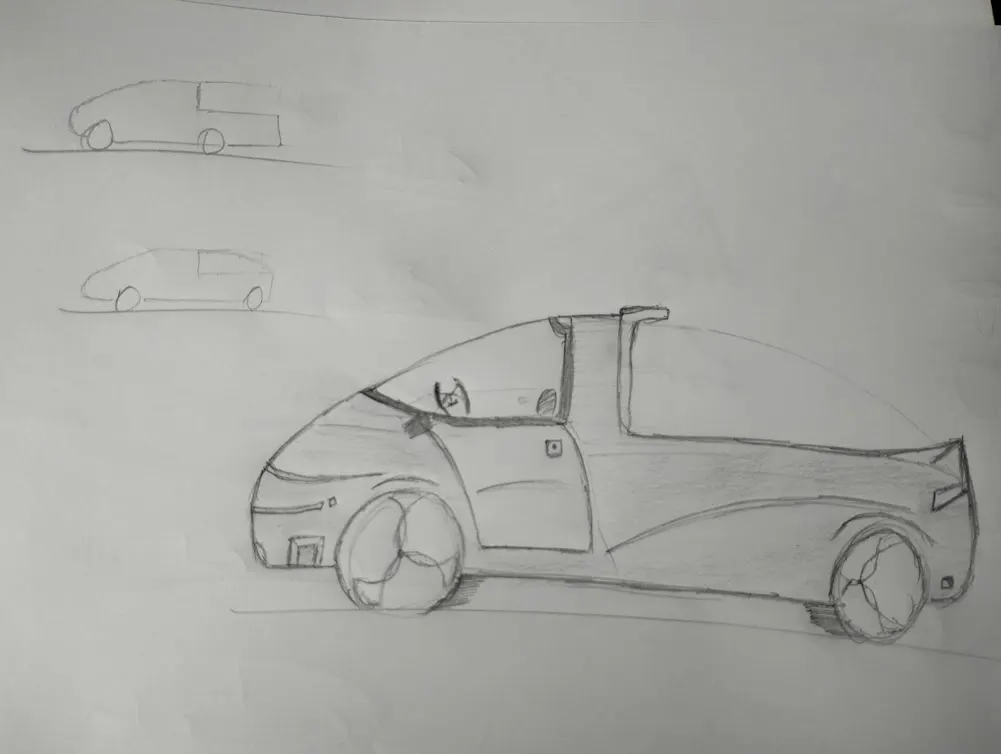
Finalized exterior side view:
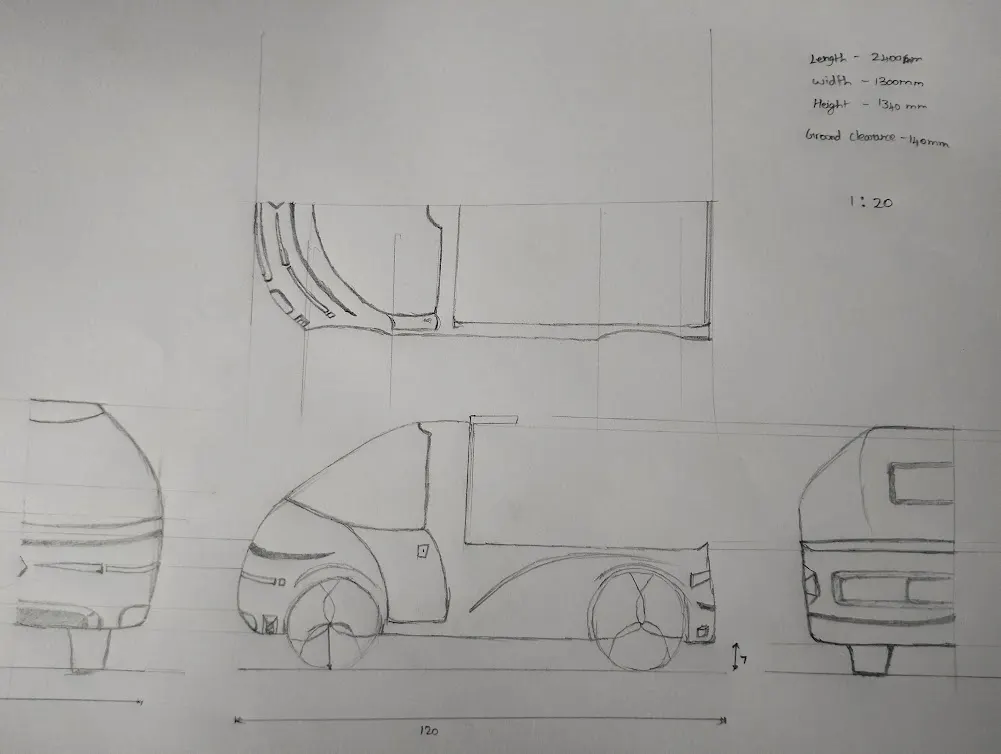
Technical drawing:
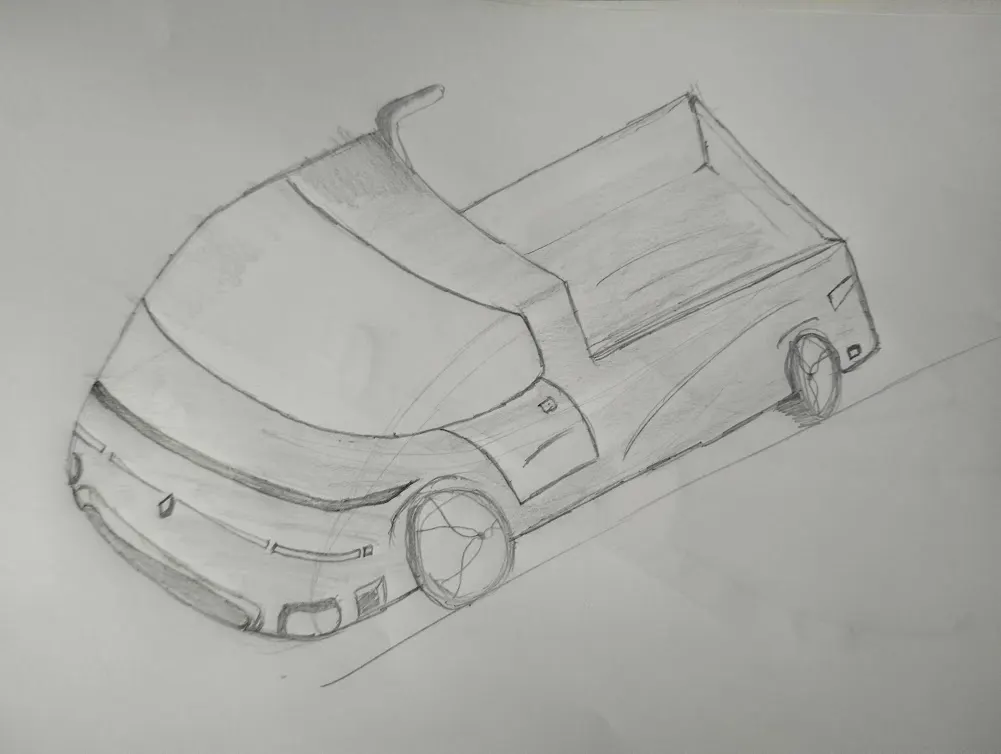
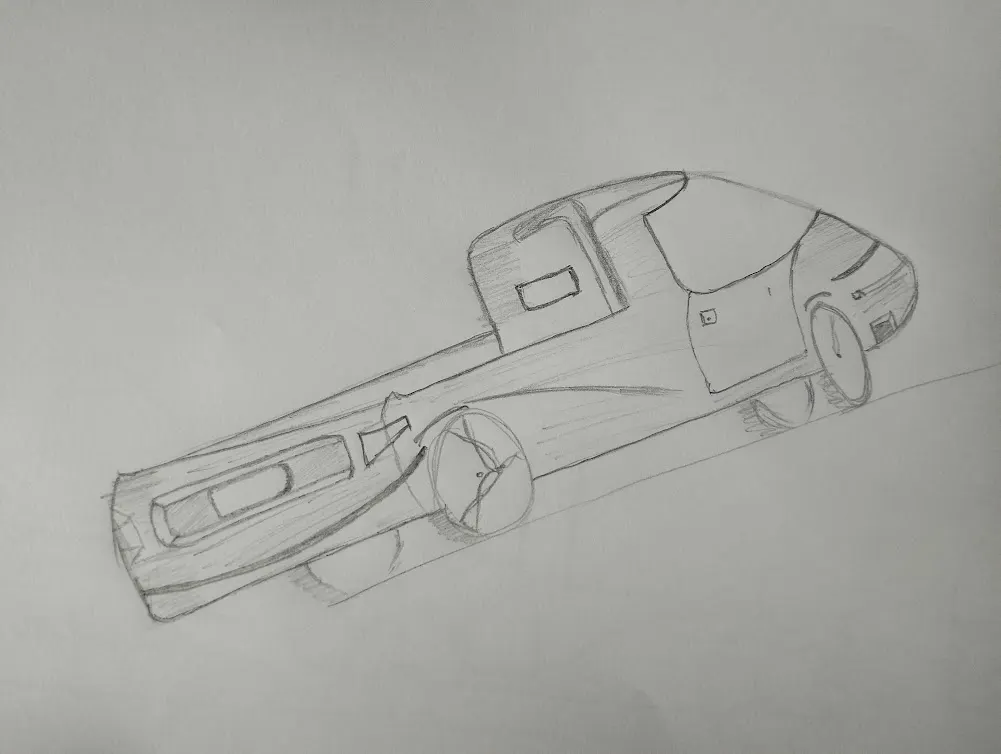
3/4th Front& rear view
Finalized interior: