Project
AIM:
To prepare a technical report explaining the model properties and comments on the results.
Theory:
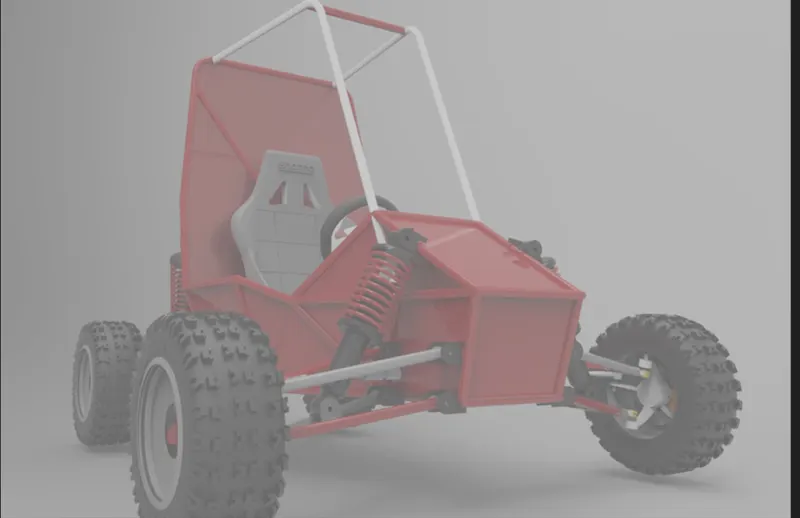
ALL Terrain Vehicle can be called ATV.also known as quad as defined by ANSI. This vehicle has low-pressure tires, with a seat that is stralled by the operator along with a handlebar for steering control. It is designed in a wider range compared to other vehicles. Depending on tyre all-terrain vehicles may travel snow, sand, ice, swampland, or other neutral terrains.
Uses :
They are used in a variety of departments depending on their ability.
Border control, Construction, Medical services, oil explorations, Small scall forestry, Wildland fire control, and so on...
Generic Engine.
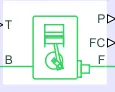
Connection F and B are mechanical rotational conservating ports associated with the engine crankshaft and engine block respectively. Connection P and C are physical signal output ports through which engine power and fuel consumption rate are reported.
Engine Sensor :
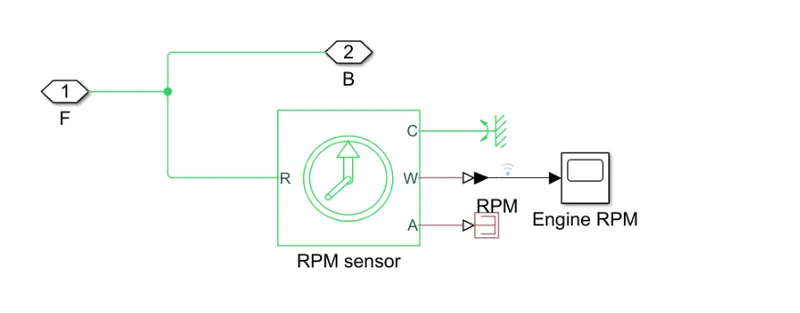
The SI core engine spark implements a spark Ignition engine from intake to exhaust port. It's a larger vehicle model with, Hardware in the loop (HIL) design that gives fuel efficiency and vehicle performance.
Uses the speed density equations to calculate the engine's mass flow. Consider using the air mass flow model in the engines fixed with fixed valvetrain design.
Simple Gear:
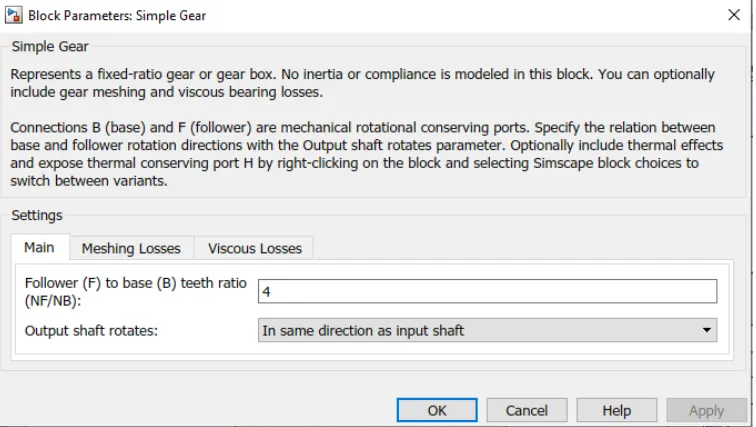
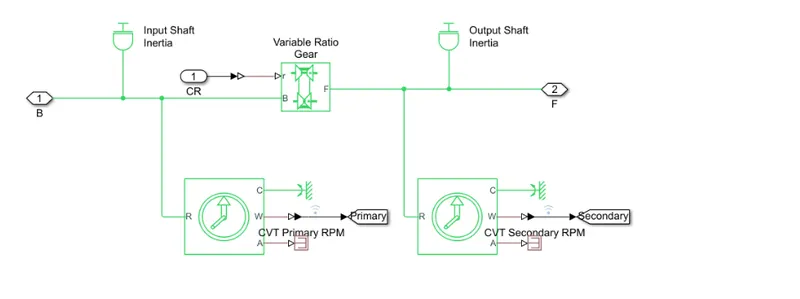
The output from the CVT block is connected to the simple gear which represents a fixed ratio gear or gearbox.No inertia or compliance is modeled in this block.
CVT Ratio (Signal Builder):
CVT ratio is Generated by the signal builder.
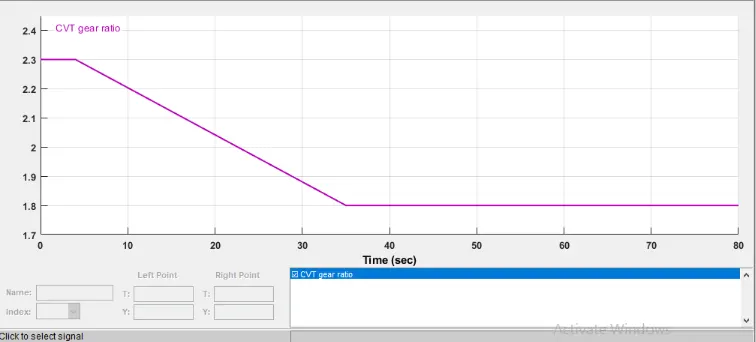
CVT ( Continuously Variable Transmission):
CVT, It's also known for shiftless transmission and pulley transmission. Twist and go is an automatic transmission that gives seamlessly through a continuous range of effective gear ratios. this contrast with other mechanical transmissions that offer a fixed number of gear ratios.
A CVT does not strictly require the presence of a clutch. which is useful for parking and reversing the vehicle.
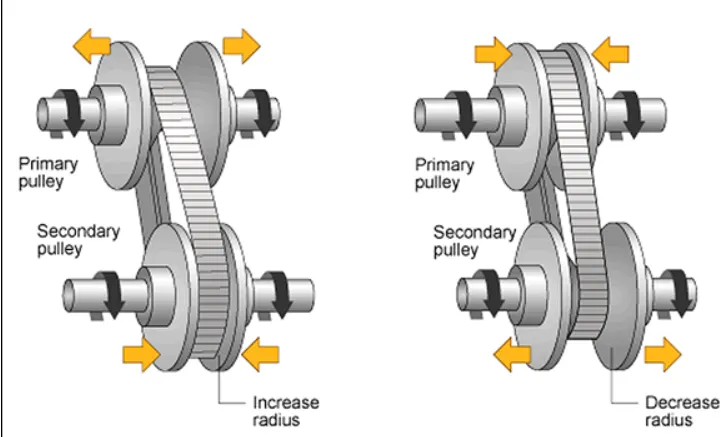
When the variator which is connected to the primary pulley moves outwards then the variation of the secondary pulley will move inwards which leads to speed reduction and when it happens reversely it leads to overdrive.
Vehicle Body:
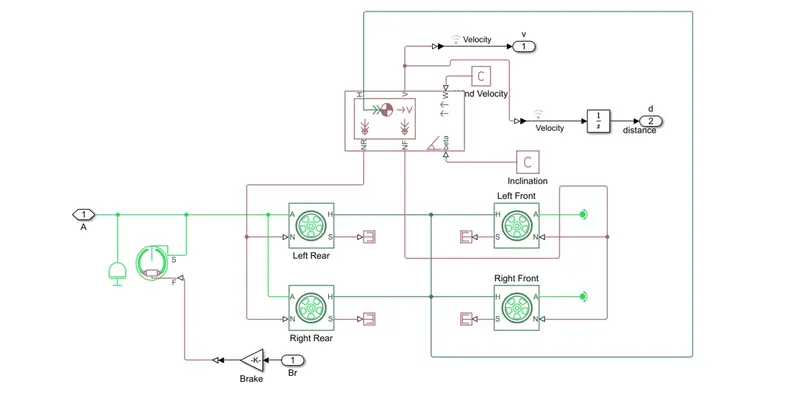
The lightening vehicle of the body generally aggravates the noise vibration and harnesses and harness of the vehicle.
The development and application of the vehicle's advanced computer-aided engineering (CAE) allowed the vehicle designers considerably reduce weight and improve the structure of the body. But the current advanced model can only be available in the late design phase of the vehicle when only minor changes to the structure are feasible. The CAE model can be created without any need for CAD data and it can be created in the concept design phase.
The detailed CAE model of the body in BIW(body in white) of the vehicle is reduced to be a beam elements concept structure. So the concept data is similar to test data.
The developed CEA concept enhances NVH and crashes performance in the early stage of design. the proposed method predicts Body design, light Weight, and Ground clearance ratio. The deduction of BIW mass ultimately reduces fuel consumption and loading to energy efficiency with reduced pollution.
Output:
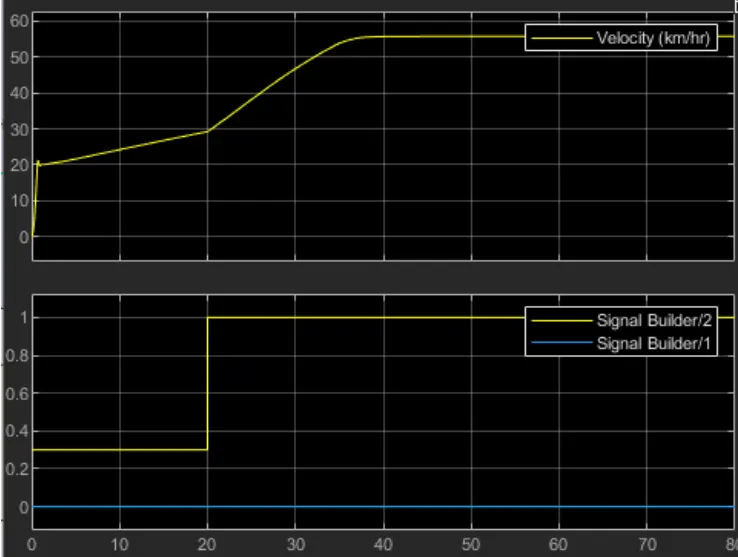
Vlocity Speed:
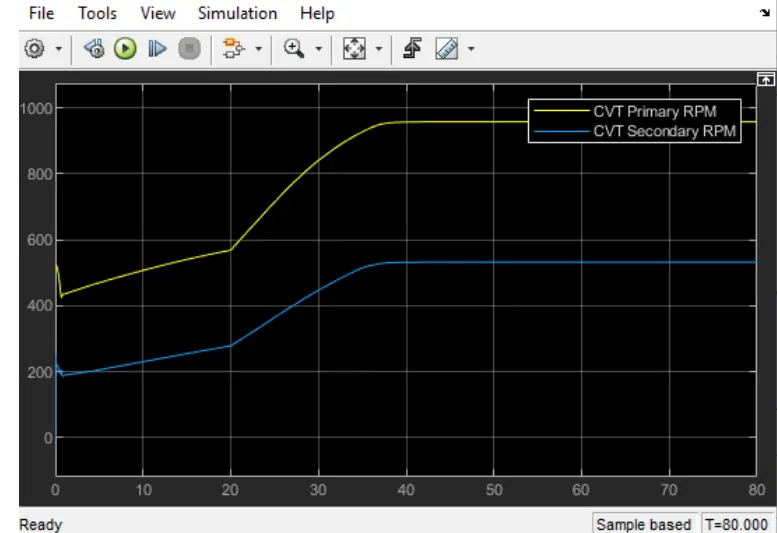
CVT Shaft Speed:
Dashboard:
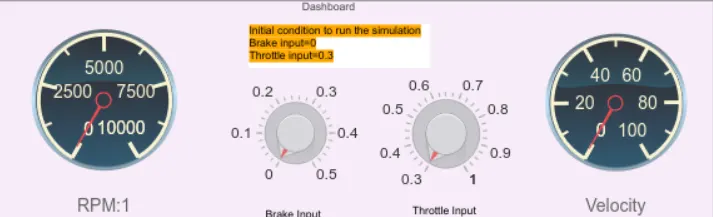
The terrain dashboard shows the throttle input, Break input, RPM, and Velocity digitally. which is used to read variations of input and outputs.
Conclusion:
The vehicle has been performed and the output is plotted, the corresponding model.