Project
Aim of the project & Technical Report: System-Level Simulation of an All-Terrain Vehicle
Introduction
All-terrain vehicles (ATVs) are versatile vehicles capable of traversing a wide range of terrains, including rough roads, dirt paths, and even water. They are commonly used for recreational activities, farming, and industrial applications. Understanding the dynamics of ATVs is crucial for designing and optimizing their performance. This report presents a system-level simulation of an ATV using the BAJA All-Terrain Vehicle (ATV) Model available on MATLAB's File Exchange.
Model Description
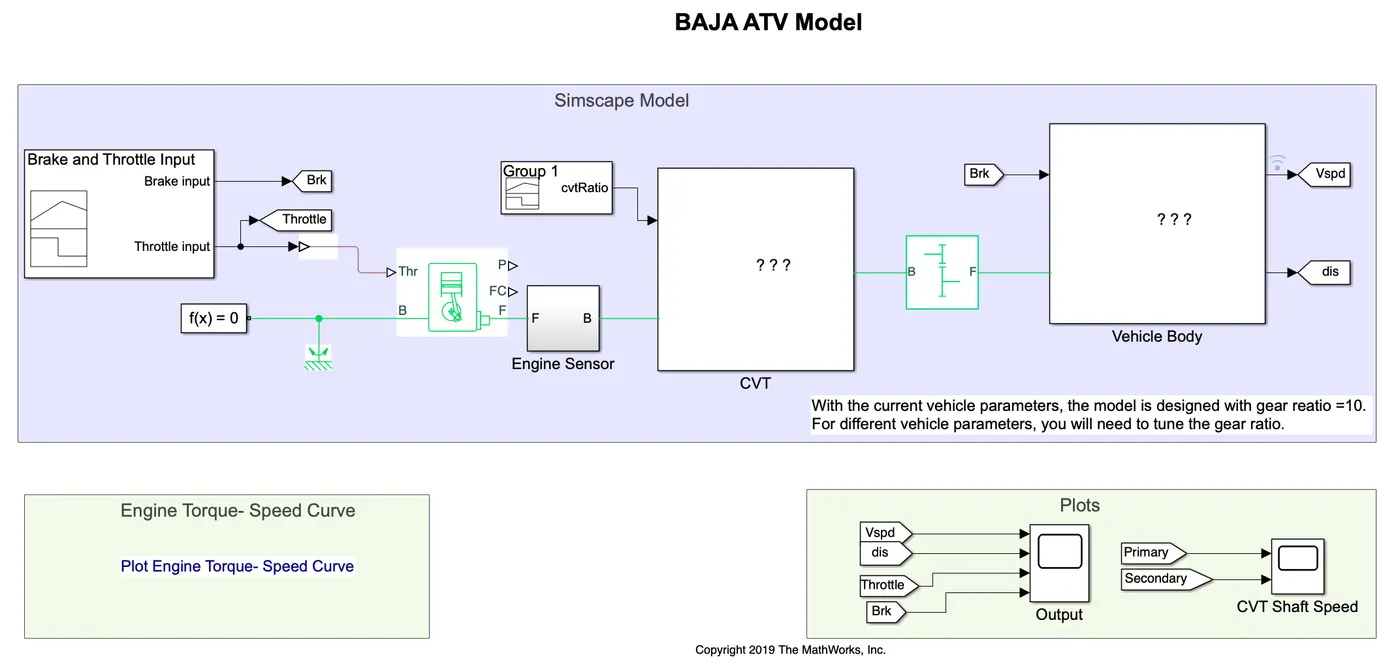
- The BAJA ATV Model is a Simulink-based model that incorporates various components, including an engine, continuously variable transmission (CVT), drivetrain, suspension, and tires. The model accounts for the interactions between these components and simulates the ATV's behavior under various operating conditions.
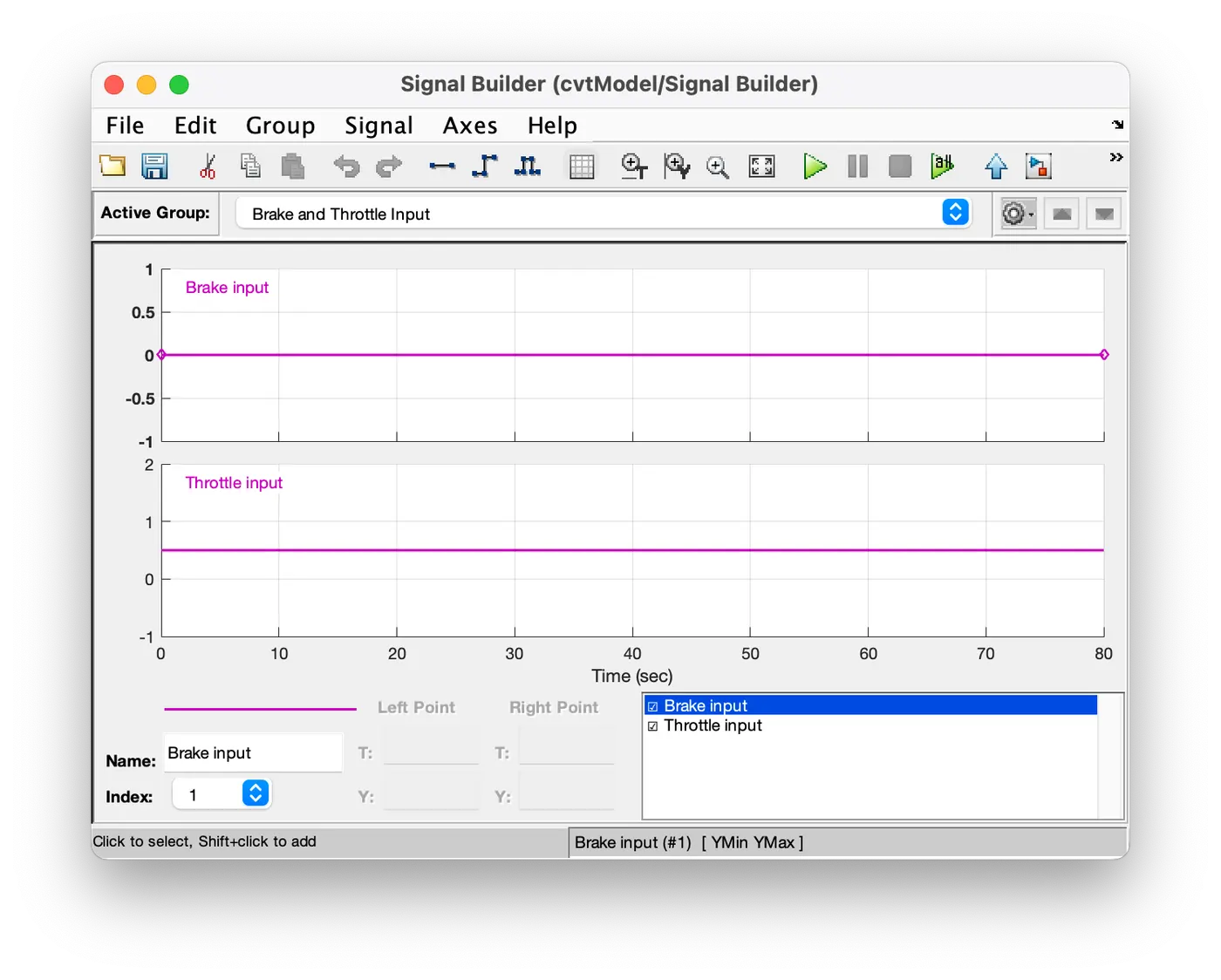
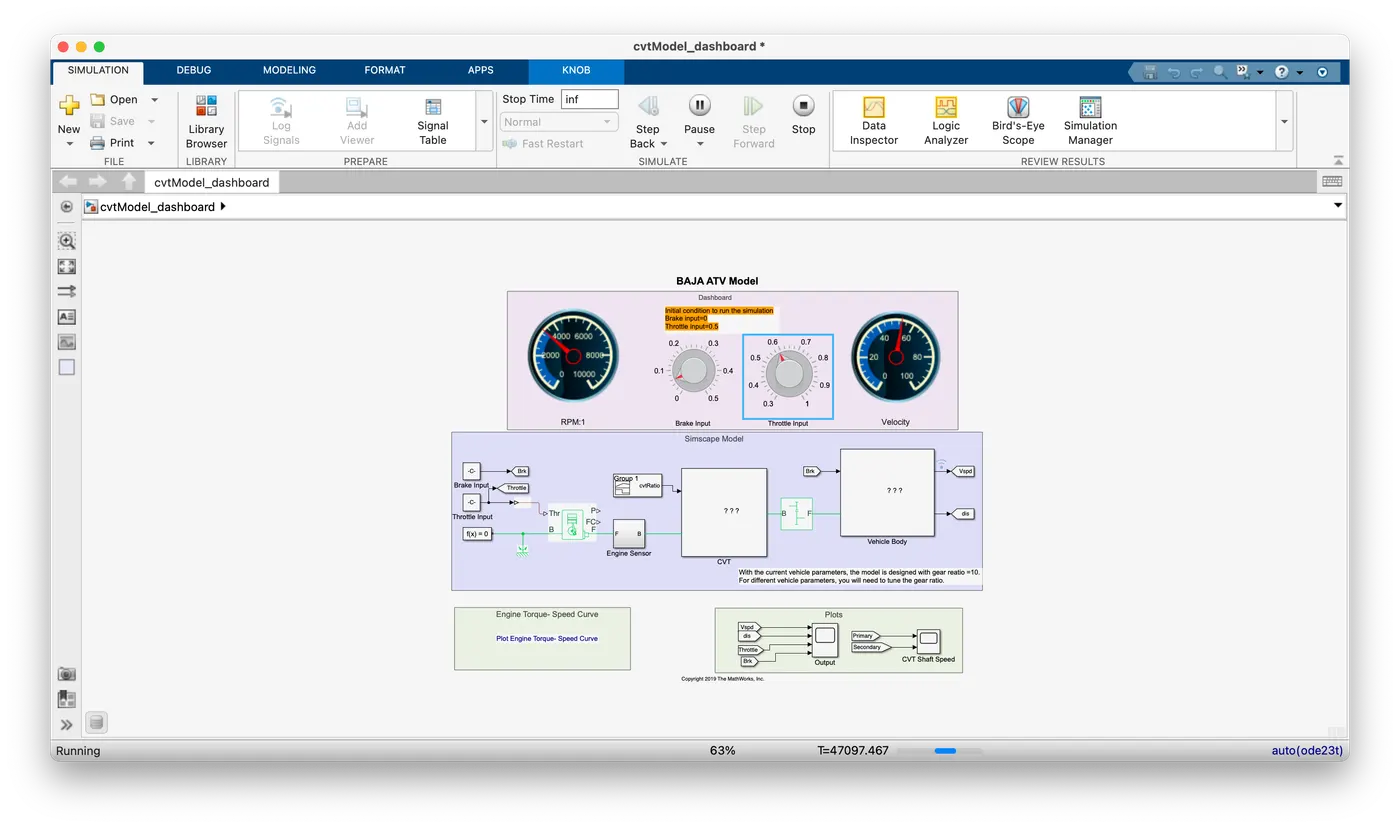
- A signal builder/editor is used to provide predefined values of brake input and throttle to the generic engine.
- An engine sensor is connected to the generic engine to sense the speed of the engine in rpm.
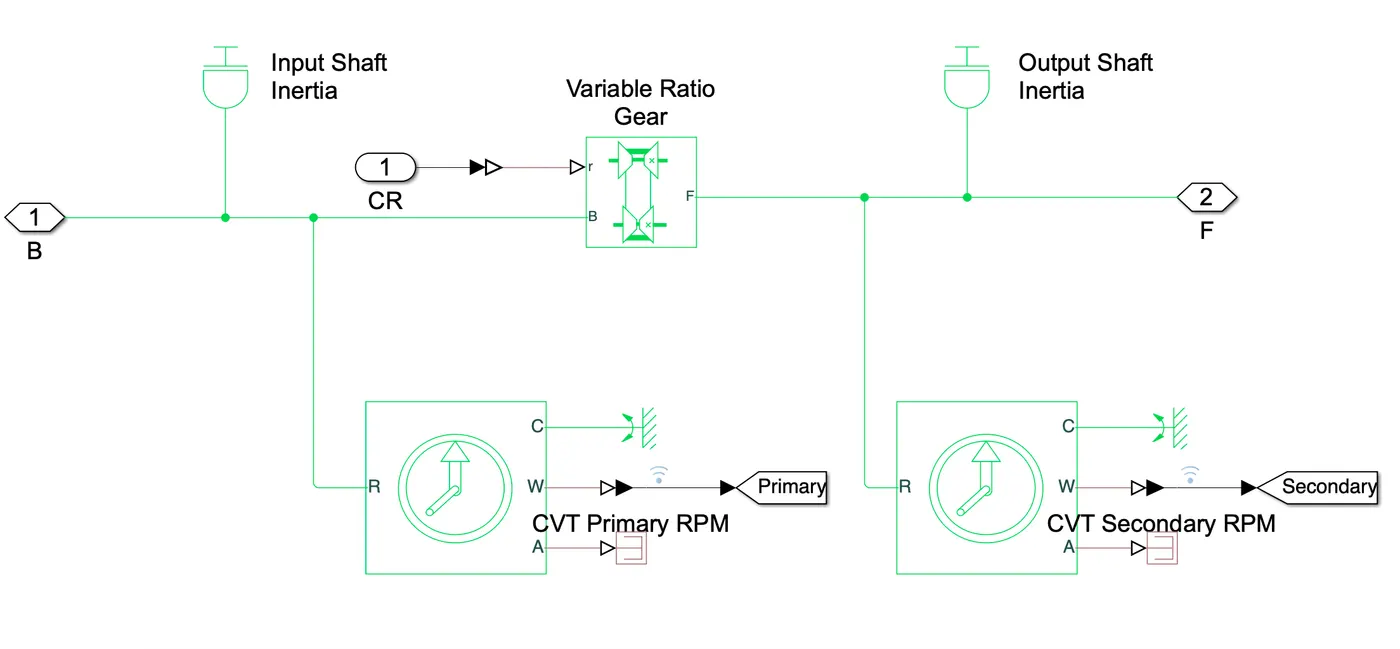
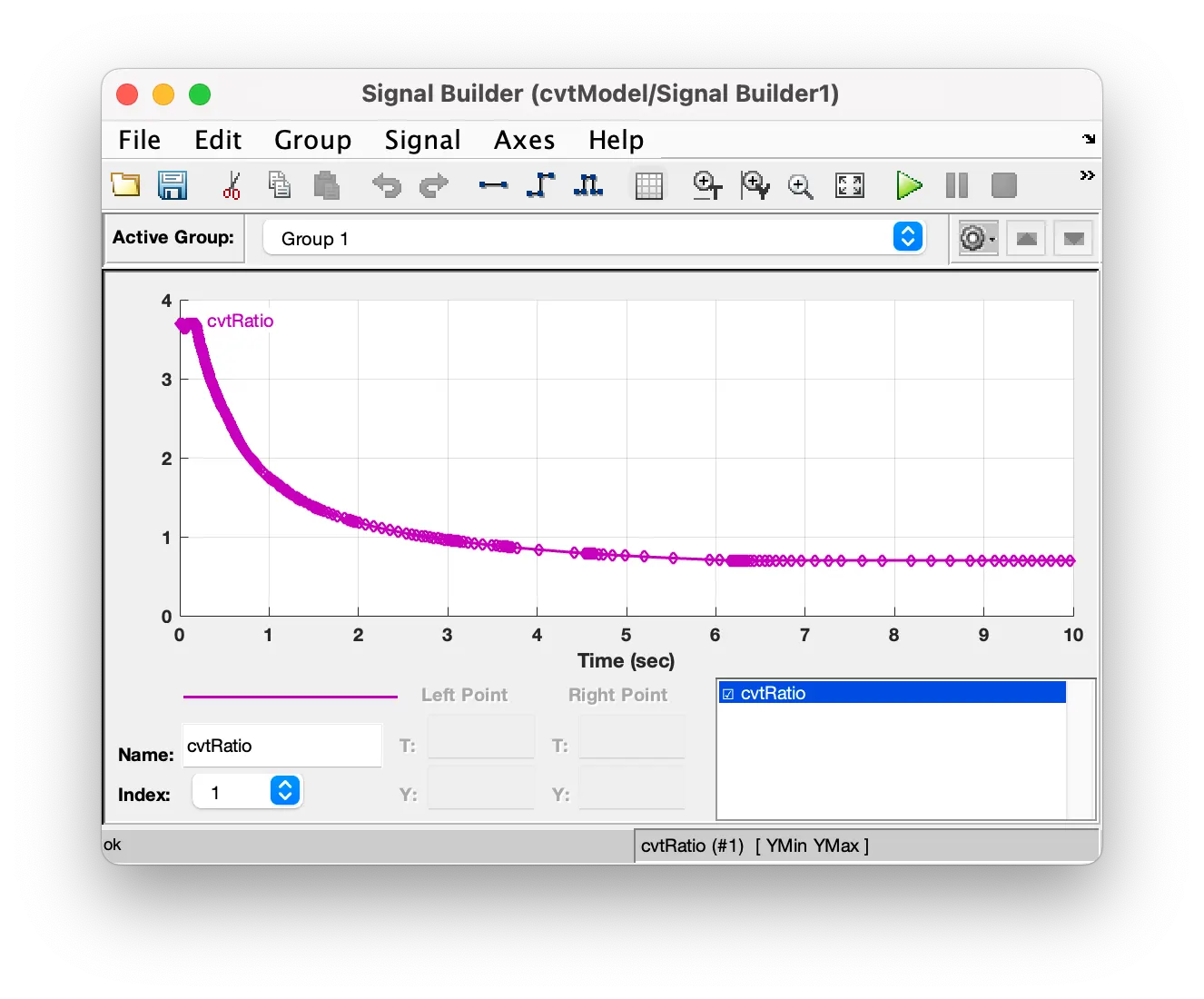
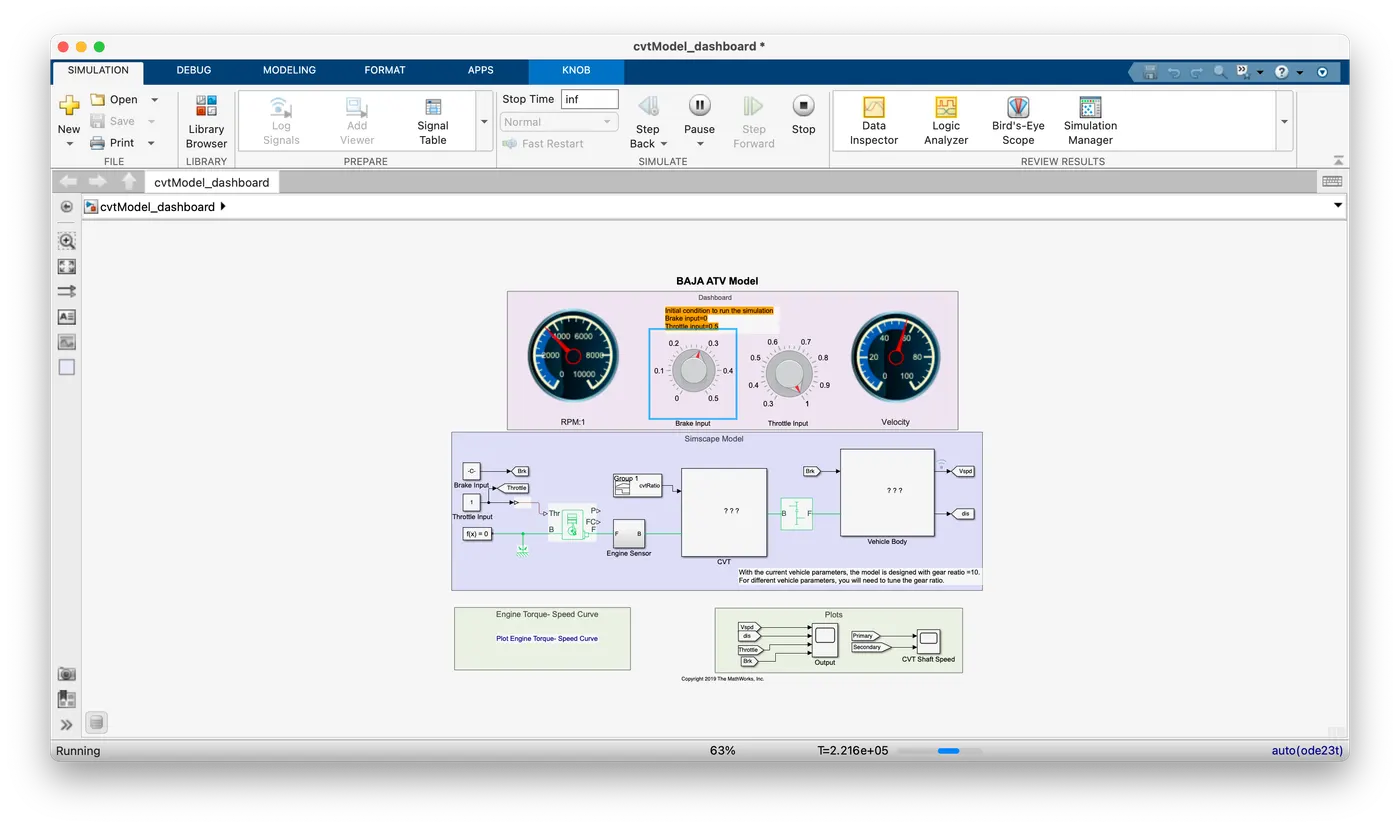
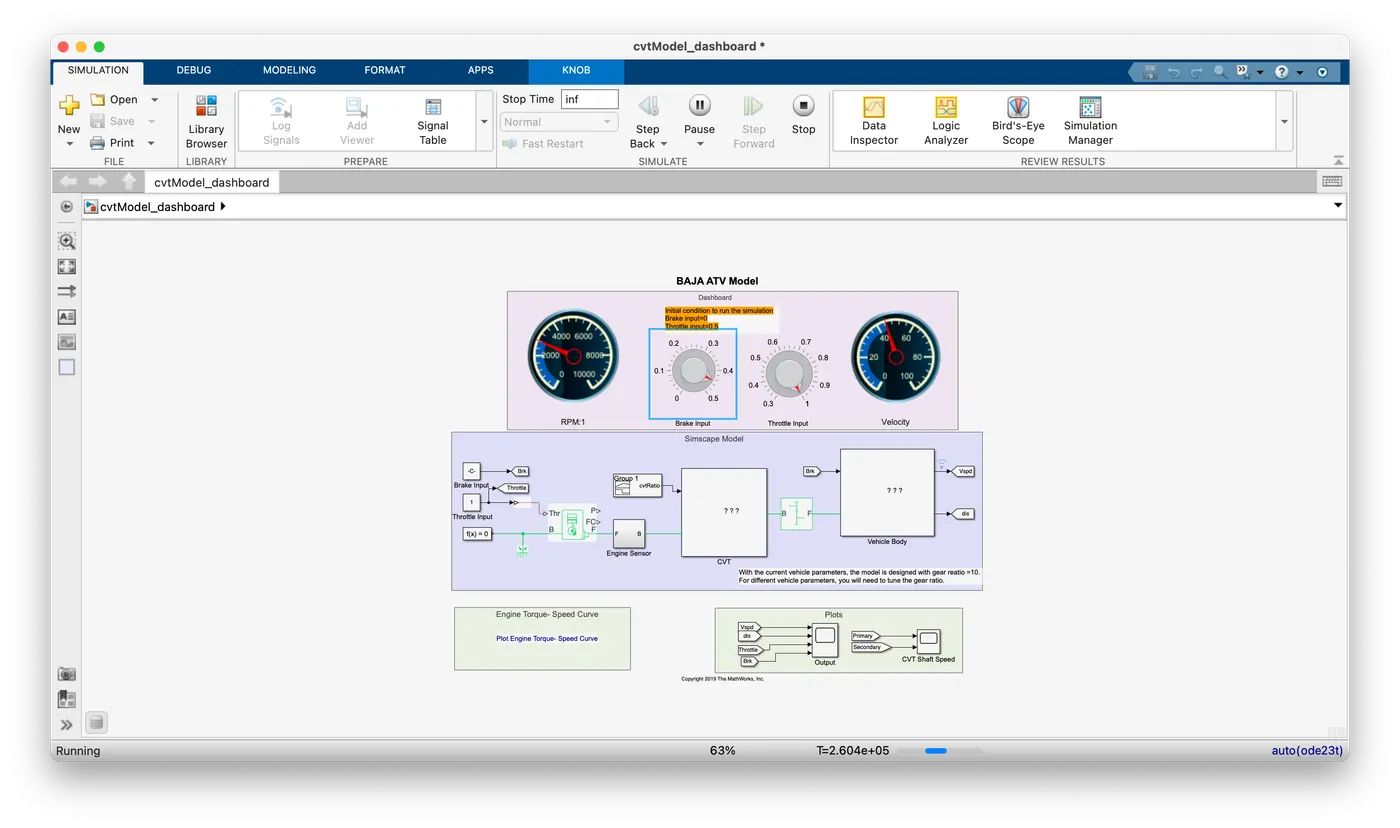
- Inside the CVT block, there is a variable gear ratio that has two inputs, one is coming from the generic engine and the other is coming from the signal builder which is nothing but the range of CVT ratios. Input shaft inertia is also applied at the primary side and a rotational sensor is connected to get the info on the primary shaft speed of the CVT. A similar setup is connected to the secondary side.
- The output of this CVT is given to simple gear (GR=10) and then to the vehicle body.
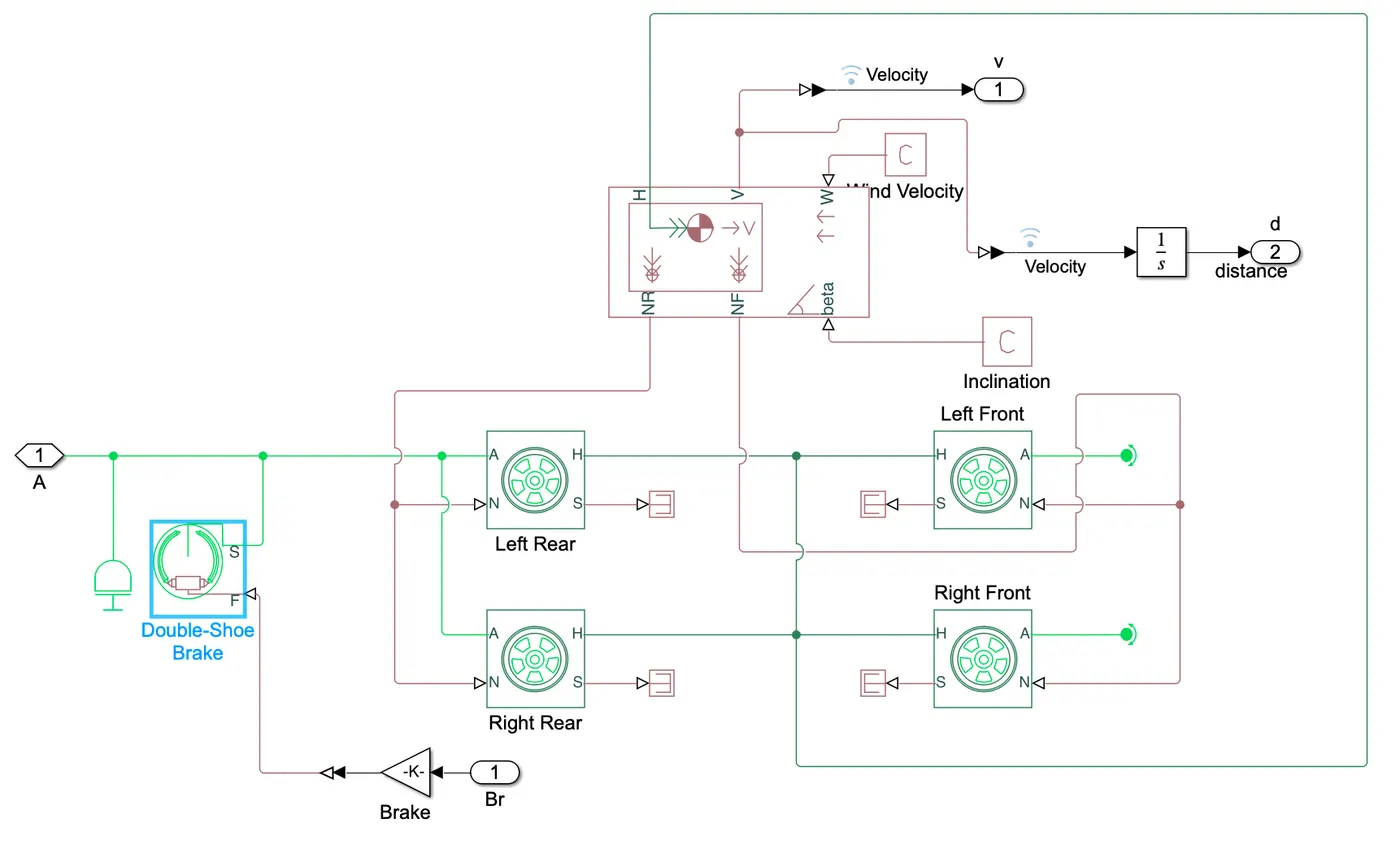
- In the vehicle body, the wind velocity and inclination angle are kept at 0. All the four wheels are connected to the vehicle body. A double-shoe brake is also used at the start. From the vehicle body, we have taken the velocity and distance parameters of the ATV BAJA.
Model Properties
The BAJA ATV Model exhibits several key properties that enhance its usefulness for system-level simulation:
-
Comprehensiveness: The model incorporates a detailed representation of the ATV's powertrain, drivetrain, suspension, and tires, allowing for a thorough analysis of the vehicle's performance.
-
Modular Design: The model is structured in a modular fashion, making it easy to modify and customize for specific applications.
-
Parametric Design: The model's parameters can be readily adjusted to explore the effects of different design configurations and operating conditions.
-
Visualization: The model provides visualization tools for observing the ATV's motion and the behavior of its components.
Simulation Results
To illustrate the model's capabilities, simulations were conducted under various conditions. The results provide insights into the ATV's performance in terms of speed, acceleration, and handling.
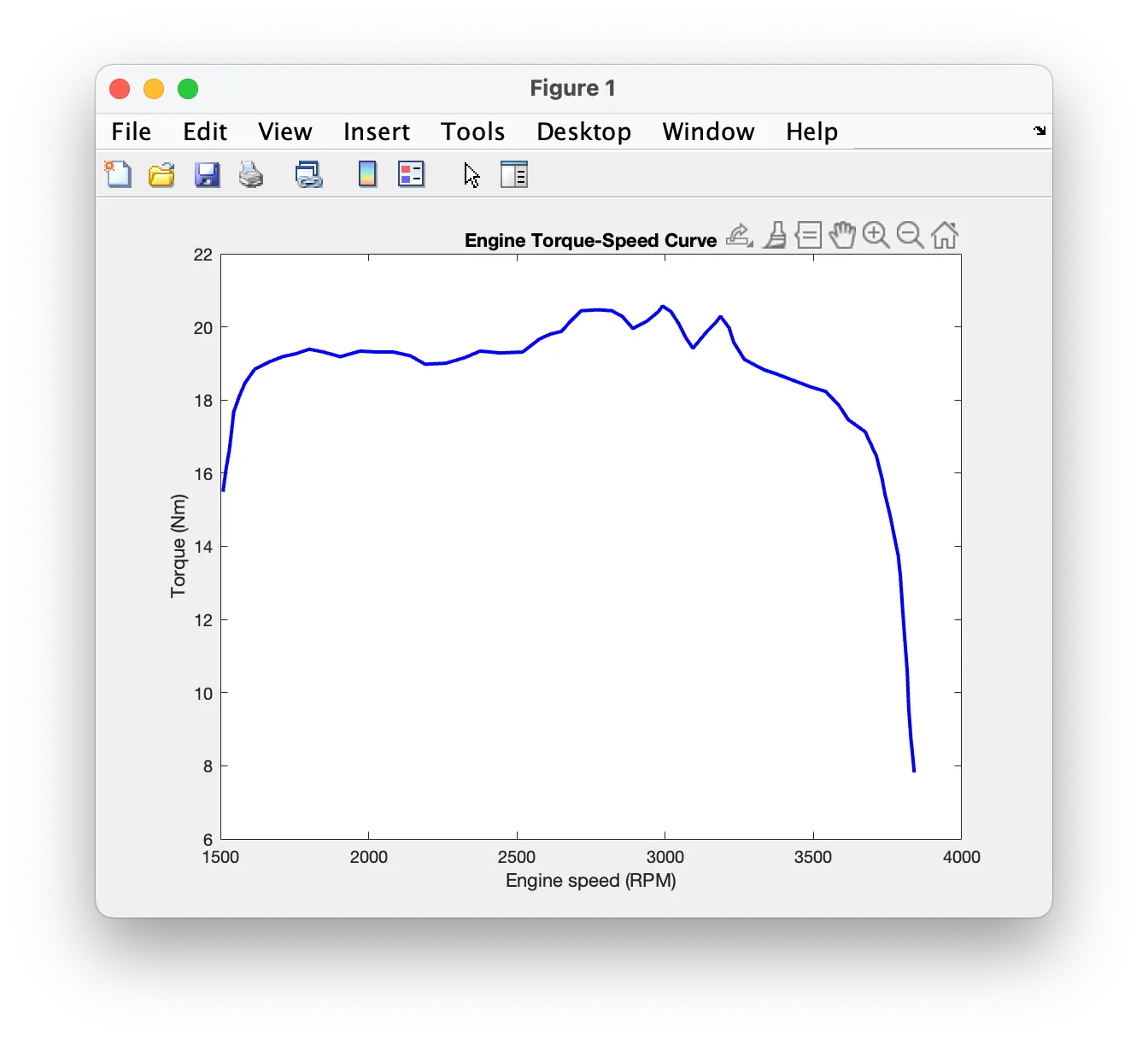
- Engine Torque-Speed Curve: We can observe that, the engine speed torque curve starts at 1500 rpm and has a starting torque of 15.7 Nm. It gradually increases at a quick pace and reaches around 19Nm at 1600 rpm. After that, the torque remains constant till 3600 rpm and then gradually decreases at a quick pace to approx 6 Nm at the maximum speed of 3700 rpm.
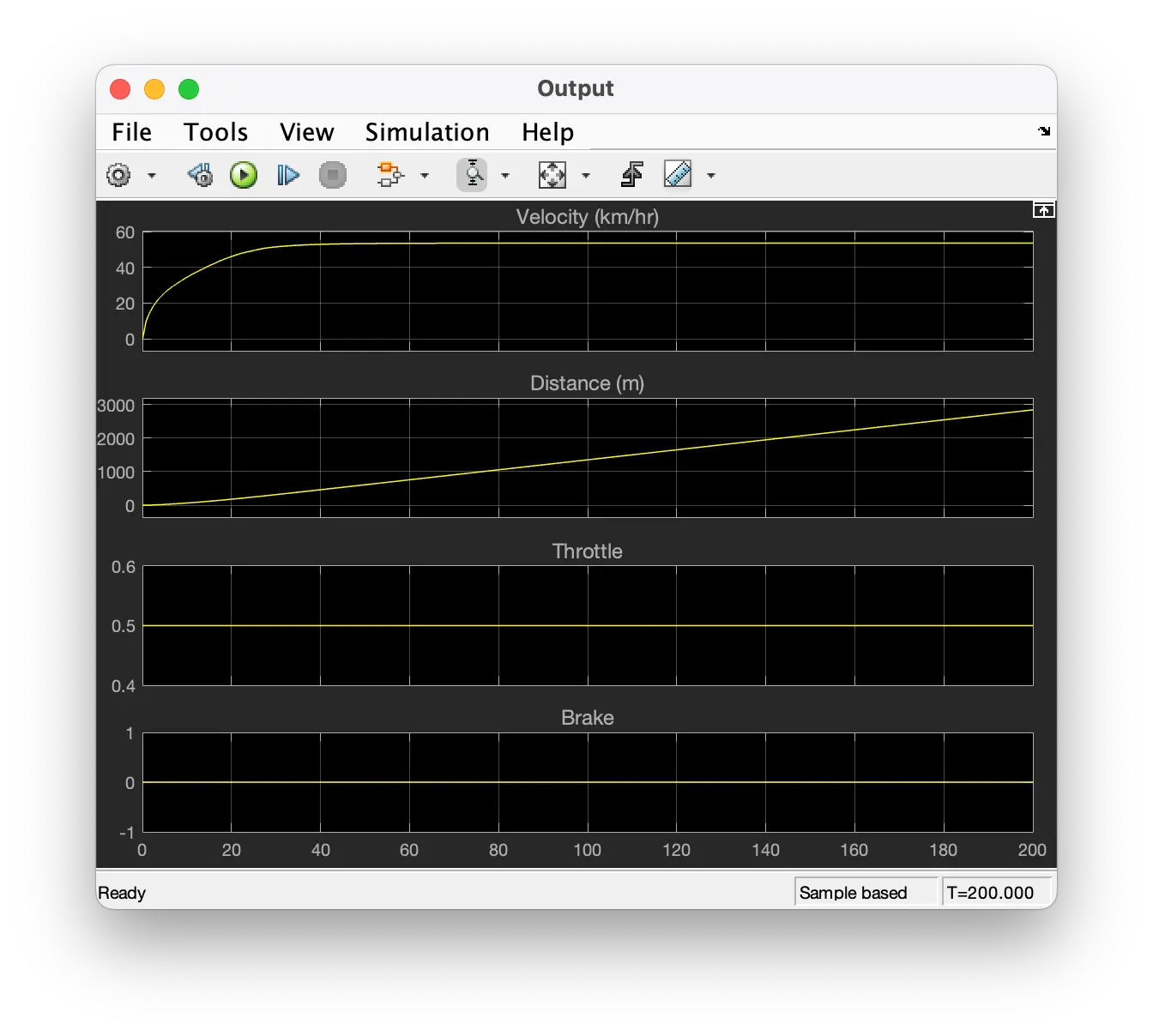
- Velocity: Velocity of the ATV BAJA increased gradually from 0 to 60 kmph from 0 secs to 40 secs and thereafter remained constant throughout.
- Distance: The total distance covered by the BAJA ATV is 2840 Km.
- Throttle: It remained constant at 0.5
- Brake: No brake was applied and hence the value is 0.
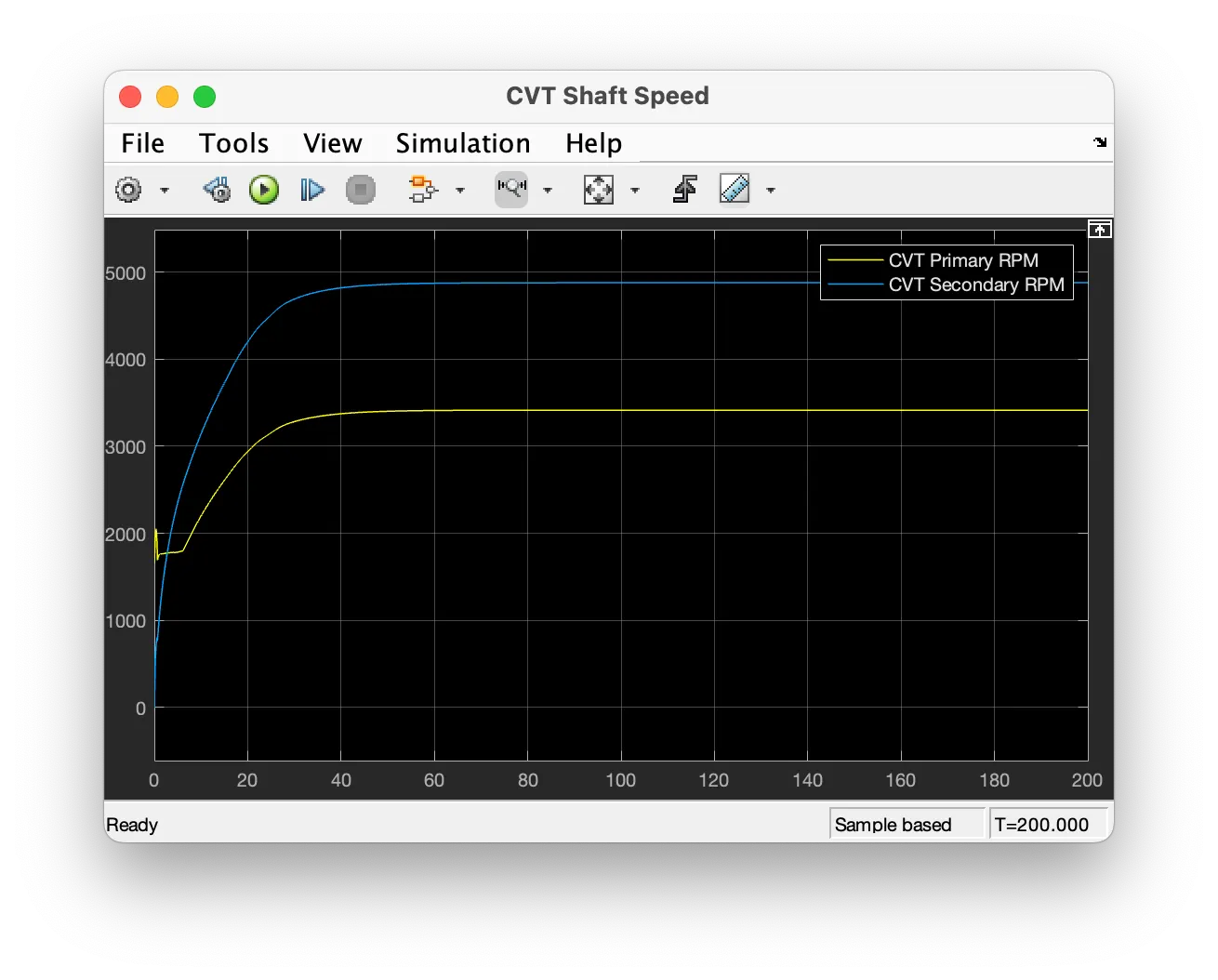
- CVT shaft speed: We can observe that, the primary shaft speed is less than the secondary shaft speed. Primary shaft speed has a high speed at the start compared to secondary shaft speed. Both speeds became constant after 30 seconds and stayed constant thereafter. The primary shaft speed was 3200 rpm and the secondary shaft speed was 4900 rpm.
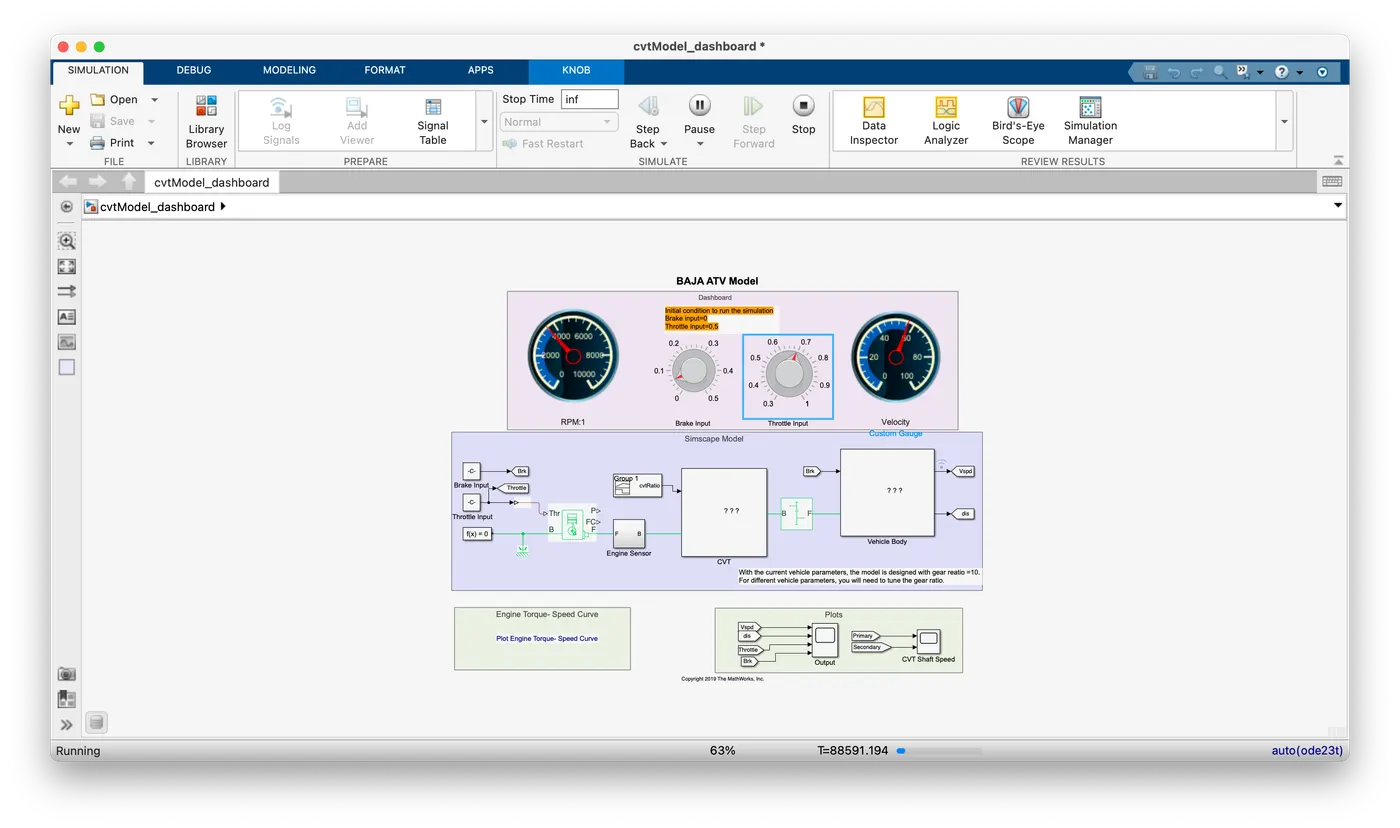
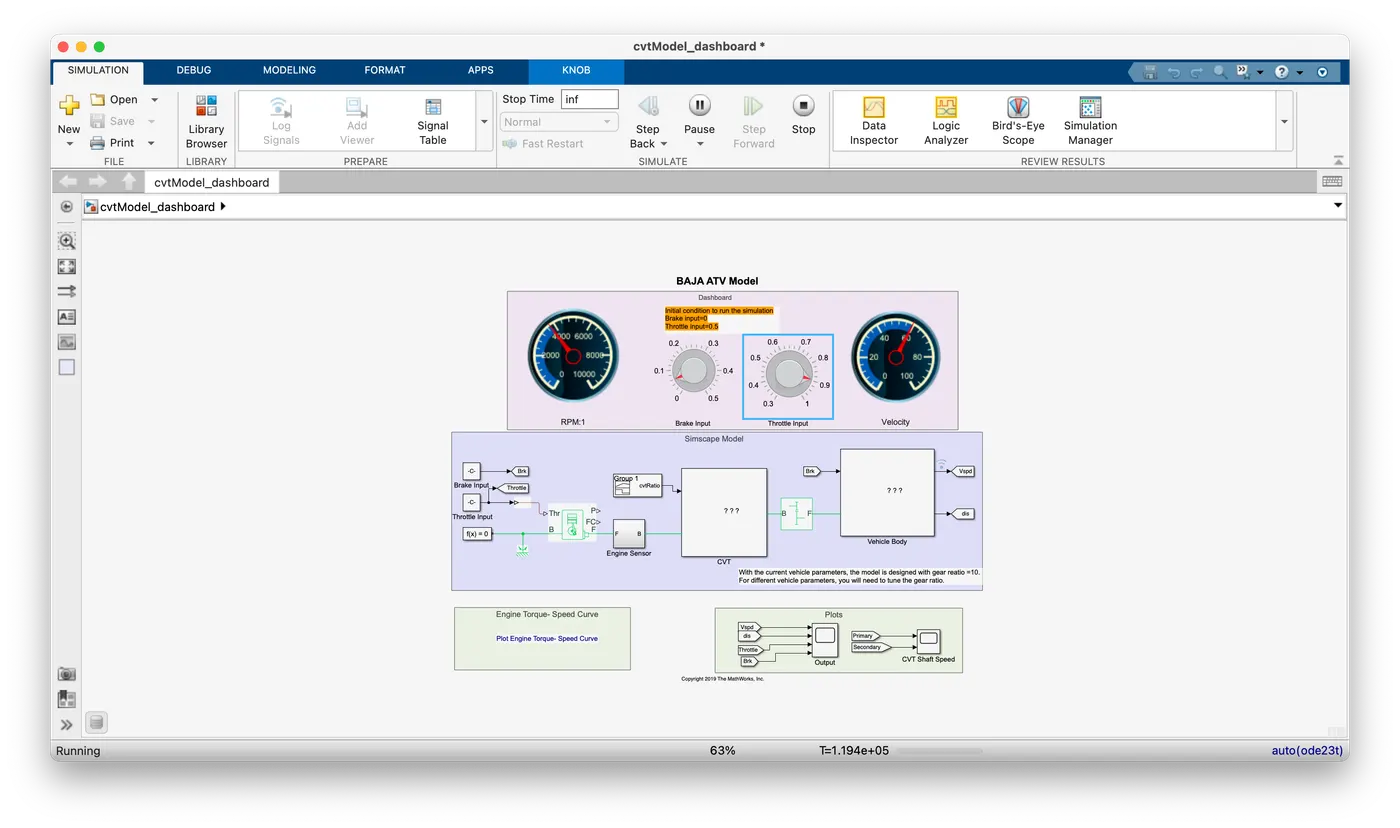
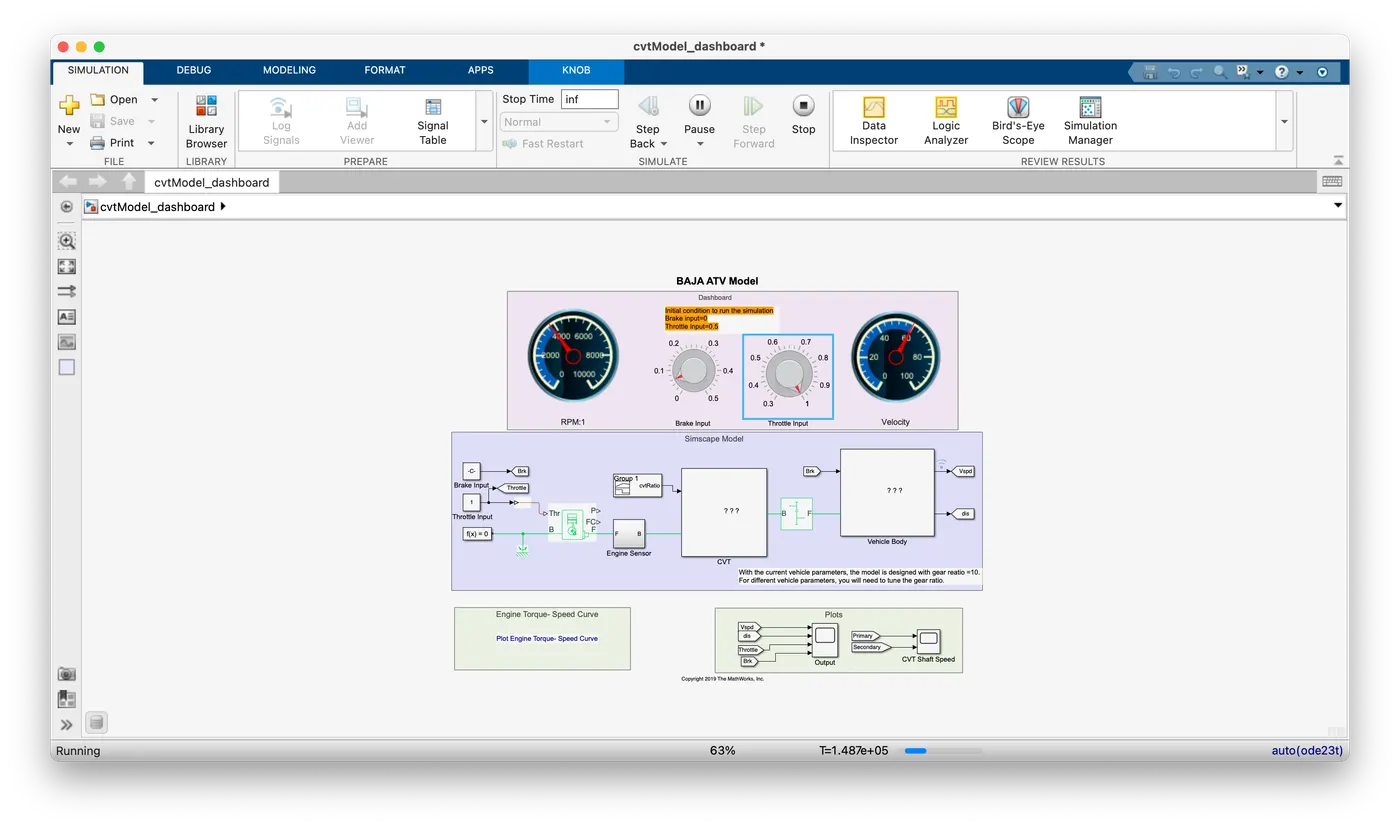
- CVT model dashboard: By toggling the brake input and throttle input we can control the RPM and velocity of the BAJA ATV
Conclusion
The system-level simulation of the BAJA ATV Model demonstrates the model's effectiveness in capturing the dynamics of an ATV and providing insights into its performance. The model's properties and simulation results highlight its potential for various engineering applications.