Project 2
Aim- To mesh the given suspension assembly of a car, adn deploy the necessary connections.
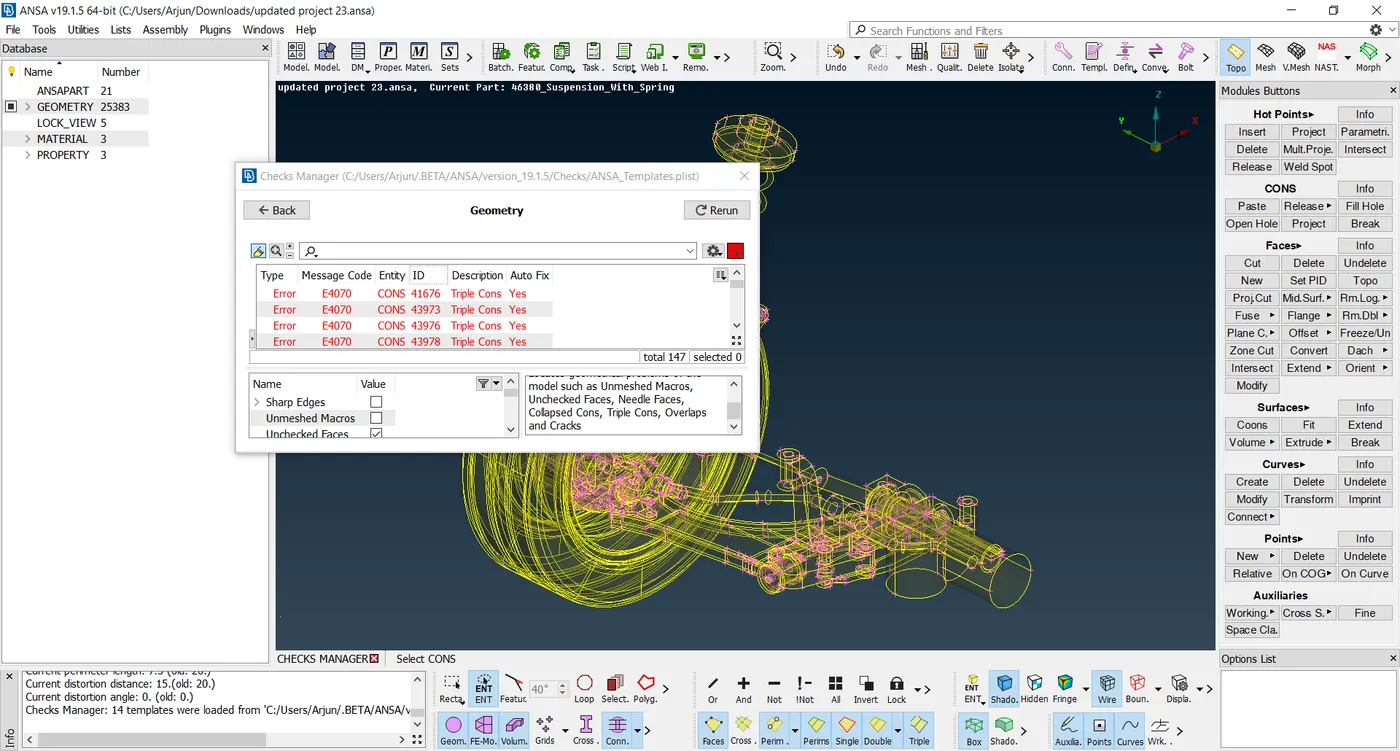
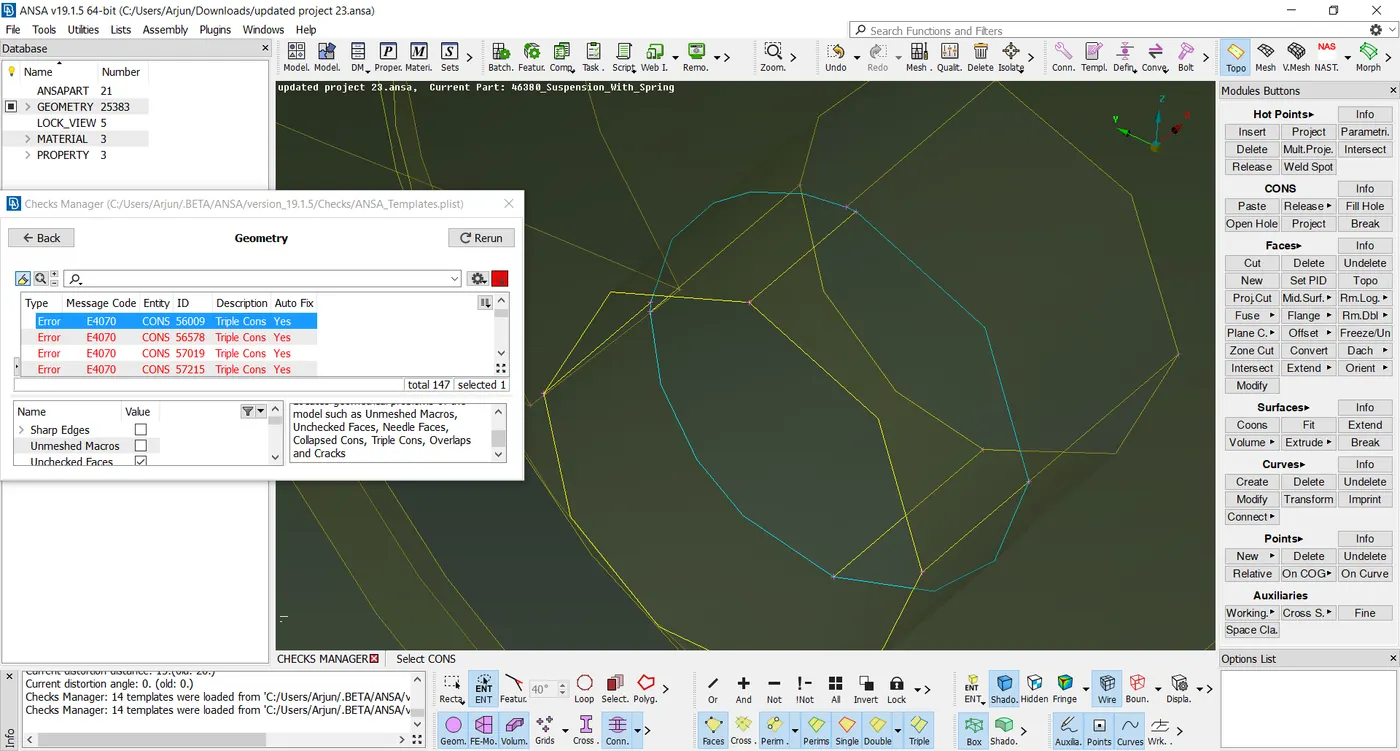
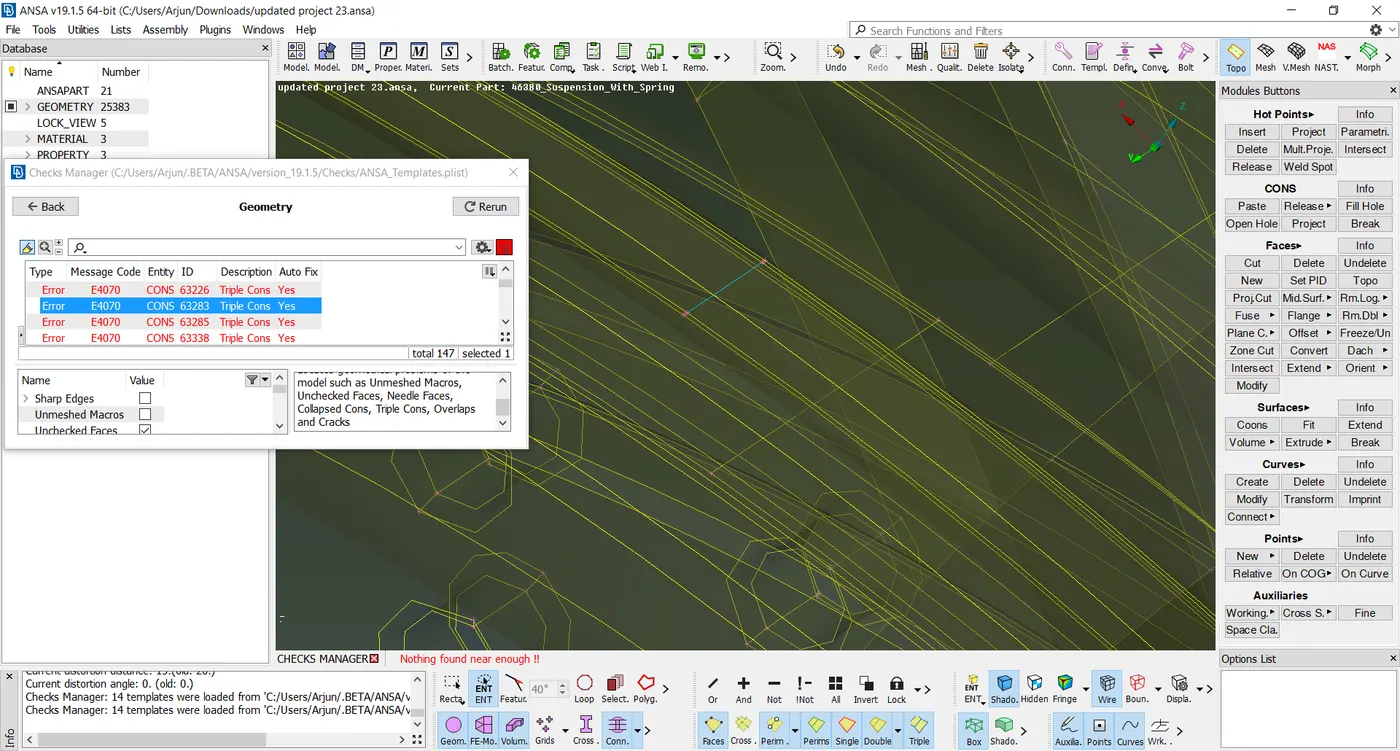
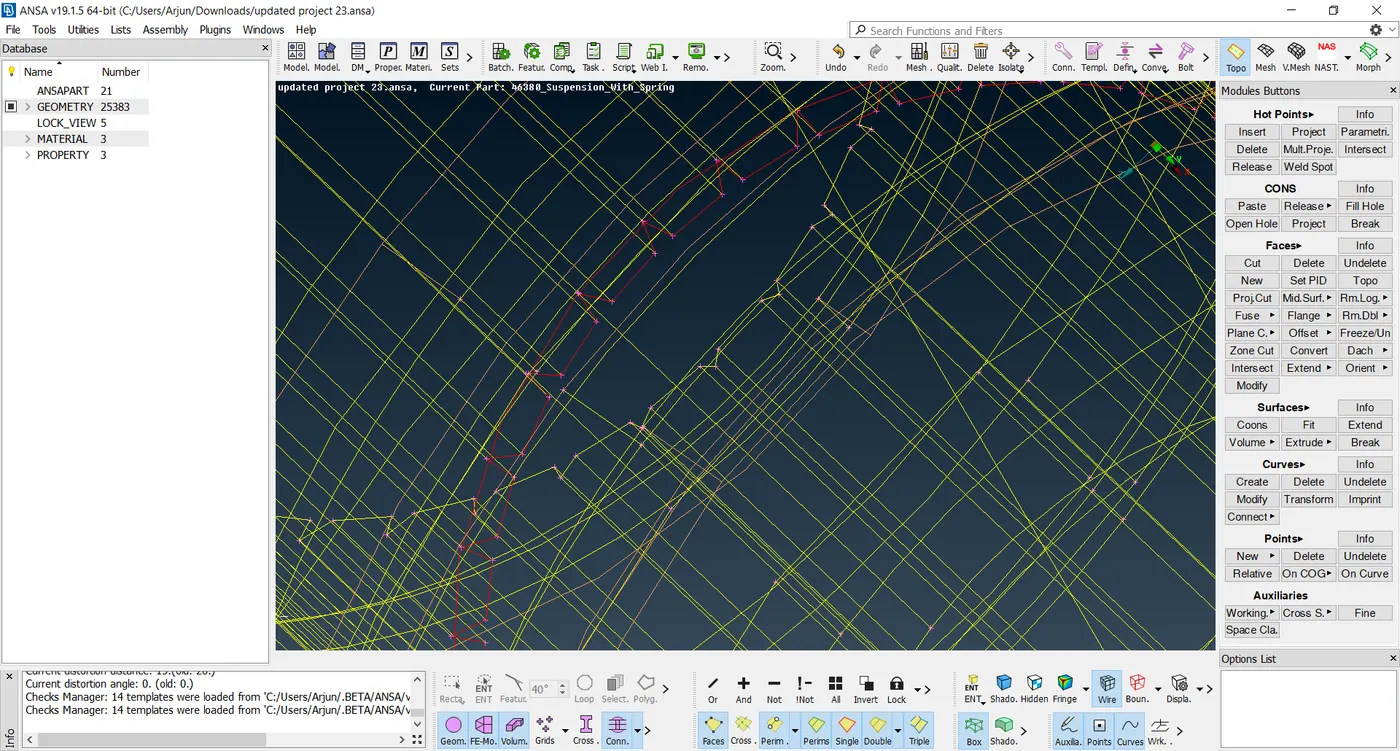
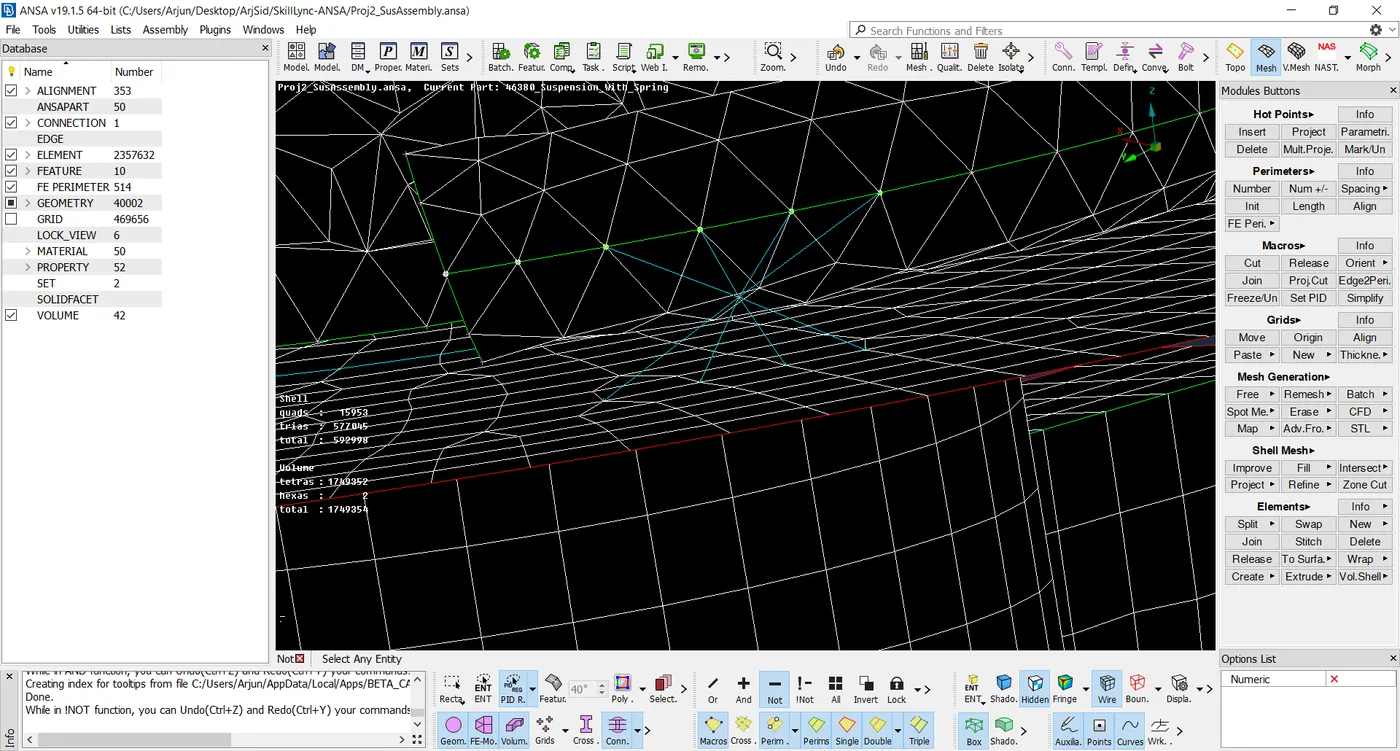
Step1- Given model is imported into ANSA. Topology is done to clean up the model, and the model is refined by changing the length of perimeter elements to 1mm. Then the different parts of the component is checked region by region in order to see if there are any errors. After this a geometry check is done to see the quality of the CAD. Several issues such as triple CONS,cracked CONS, single CONS,needle faces are found. Some of these can be auto fixed by the software, but others have to be manually released individually, and then connected to the required surfaces by using 'Topo' function.
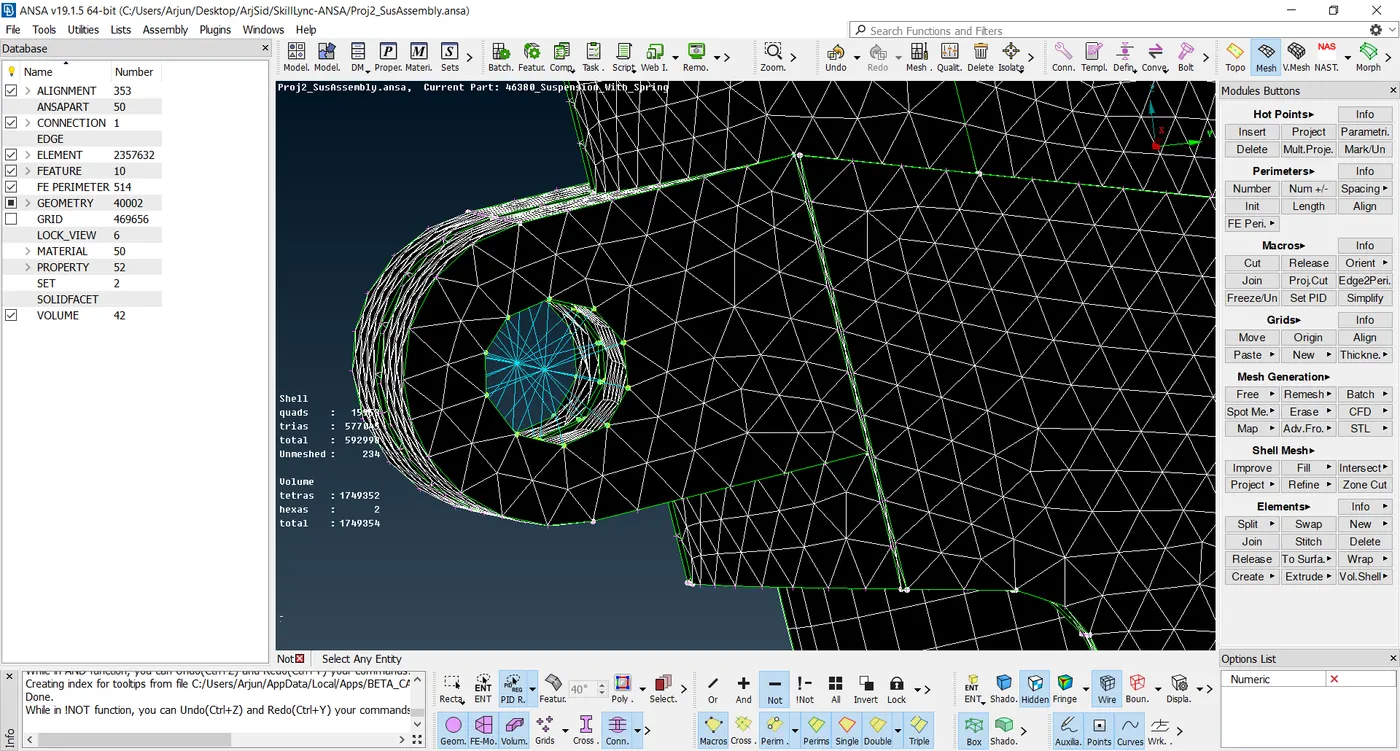
Step2- For the parts of the assembly with a large,variable thickness we generate a volume mesh. For this, we first have to mesh the surface of the component using tria or ortho tria elements. For this, the given quality criteria of min length, max length and skewness are applied. This is done for the tyre and the adjoining regions such as control bar, strut, coil spring and steering knuckle.
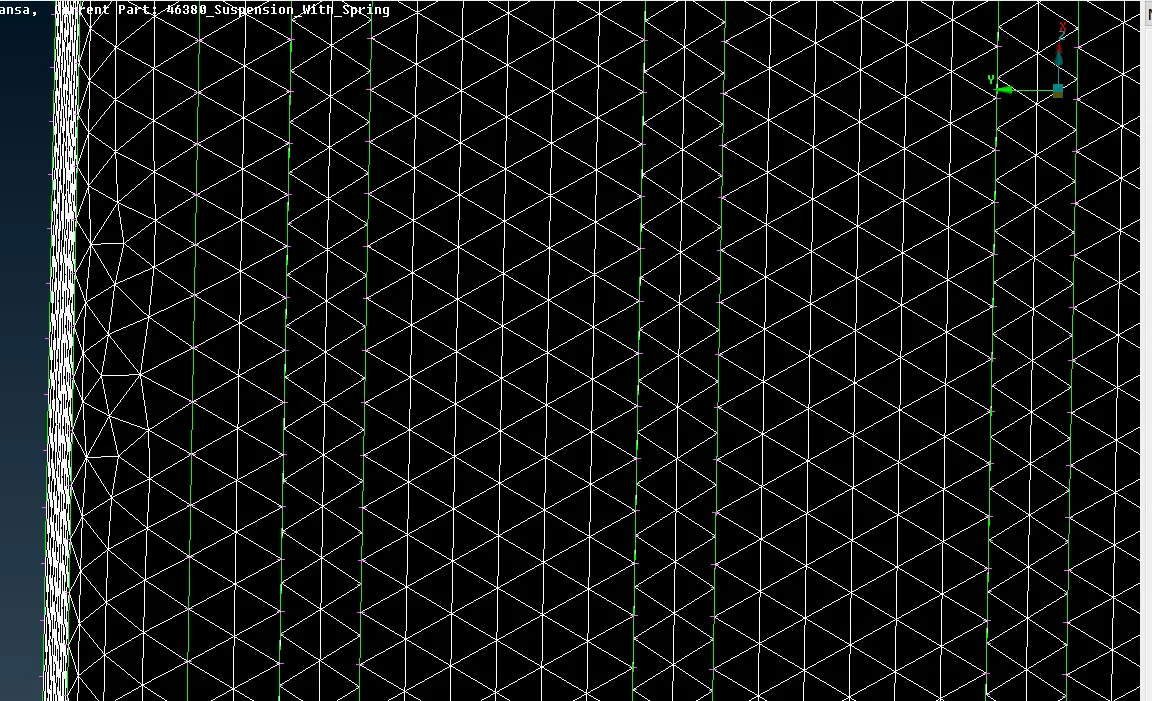
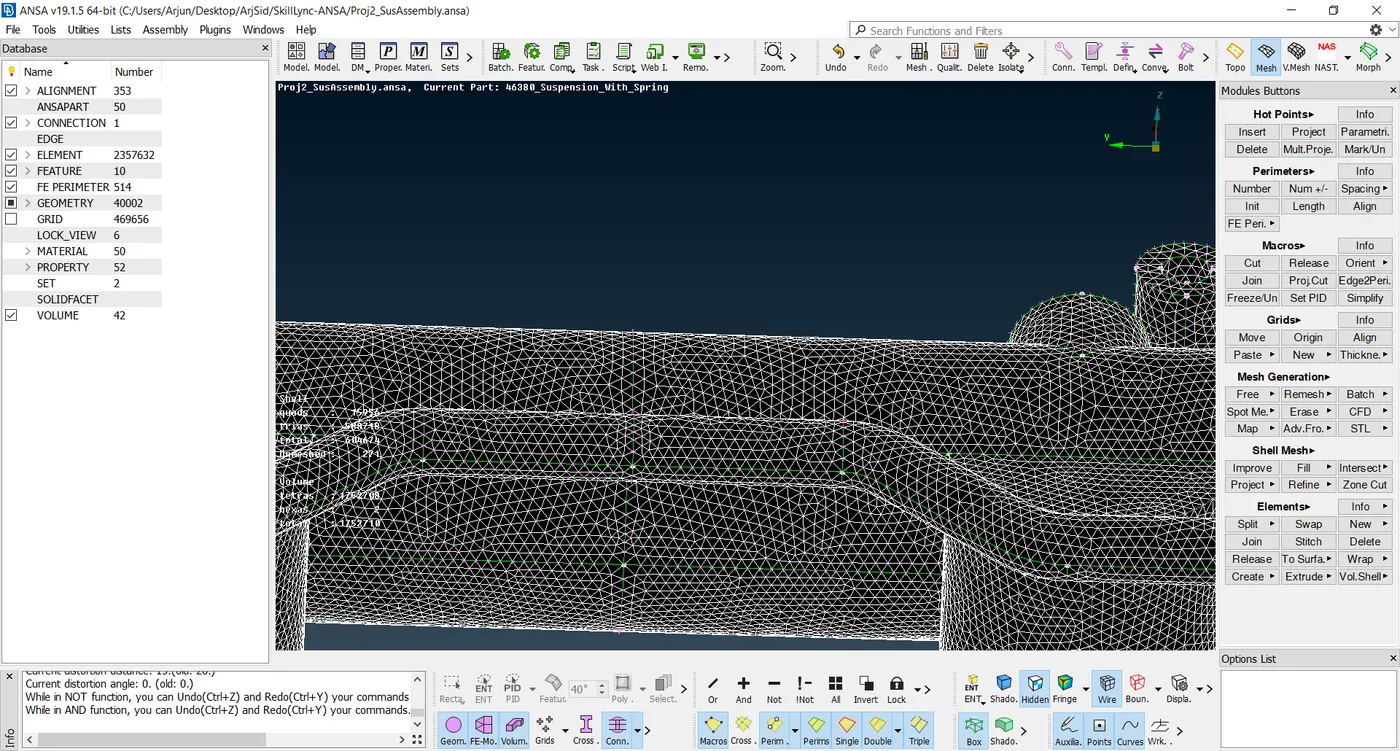
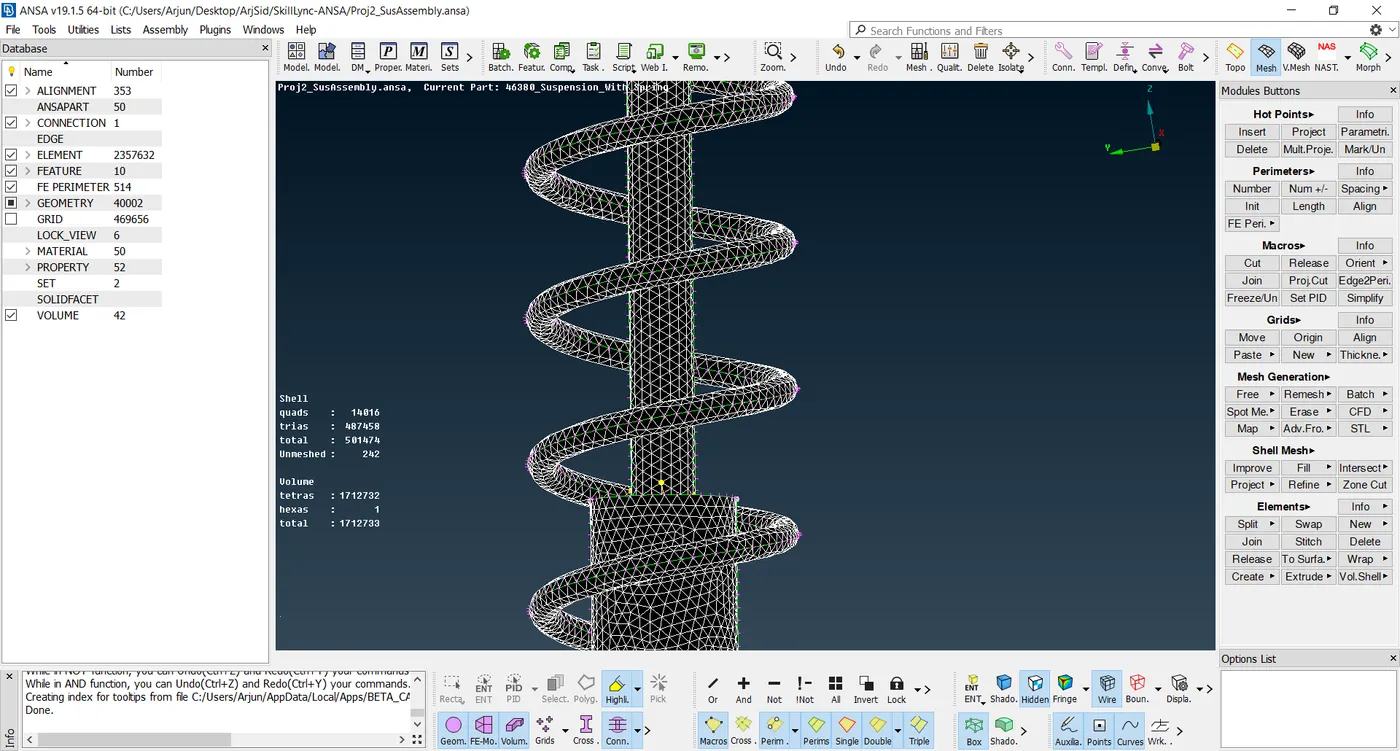
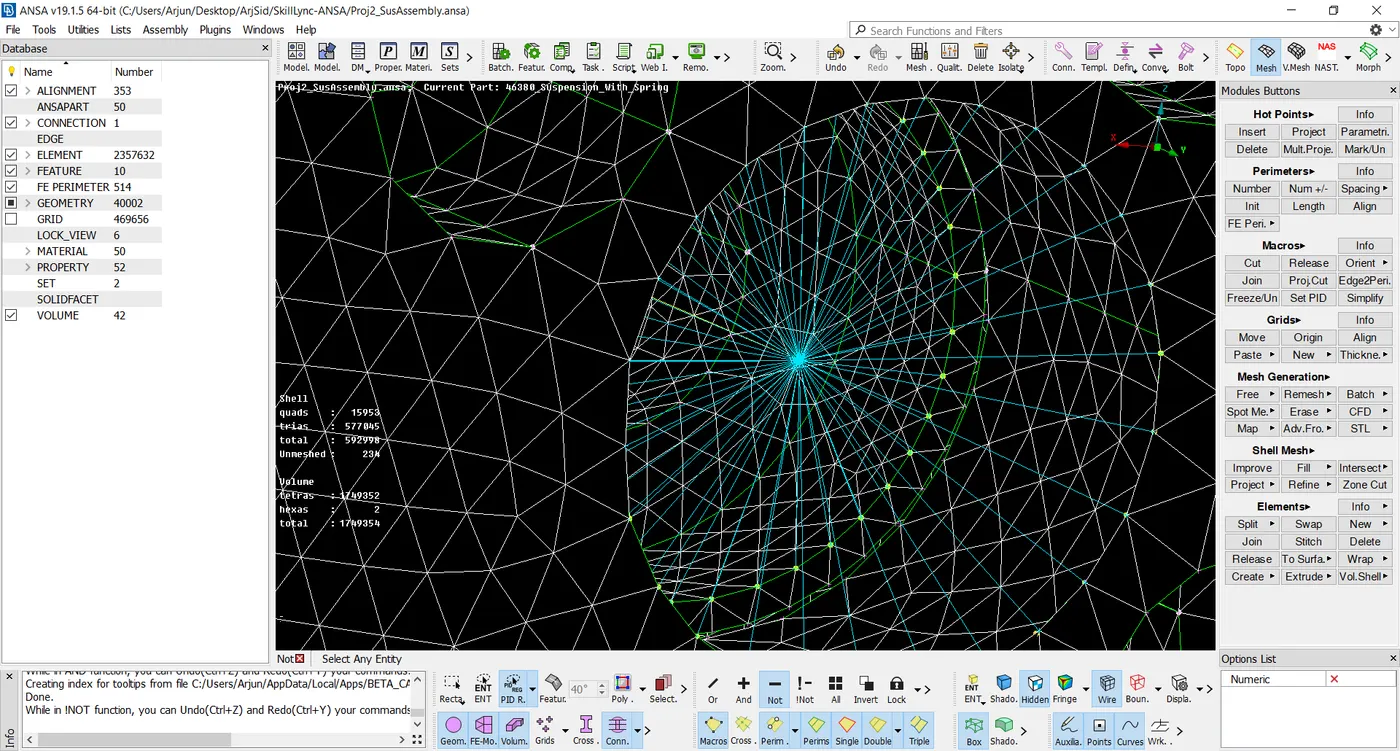
Step3- After making the surface mesh, volume mesh has to be generated. For this, the software has to recognize the component as a closed volume. Individual closed volumes are defined for different parts of the geometry,and then generate volume mesh using the Tetra FEM or Tetra Rapid method.
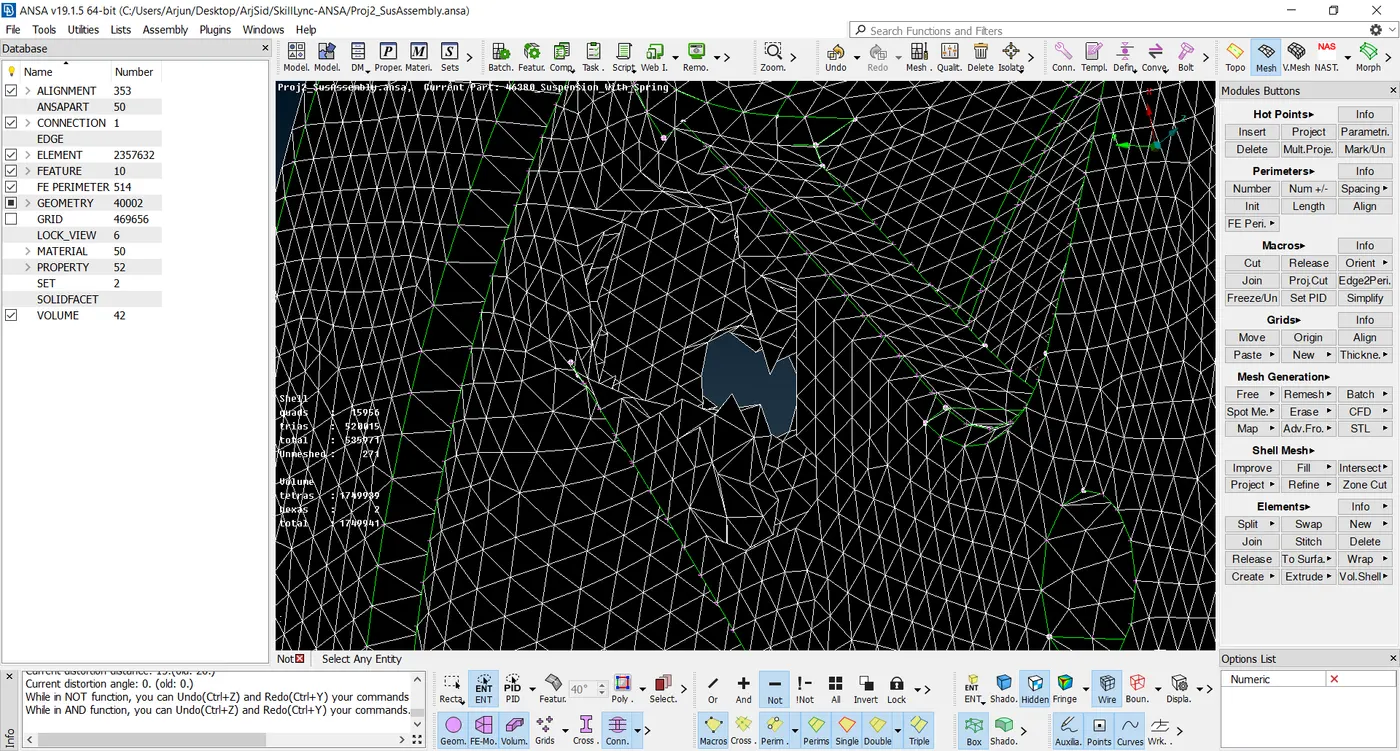
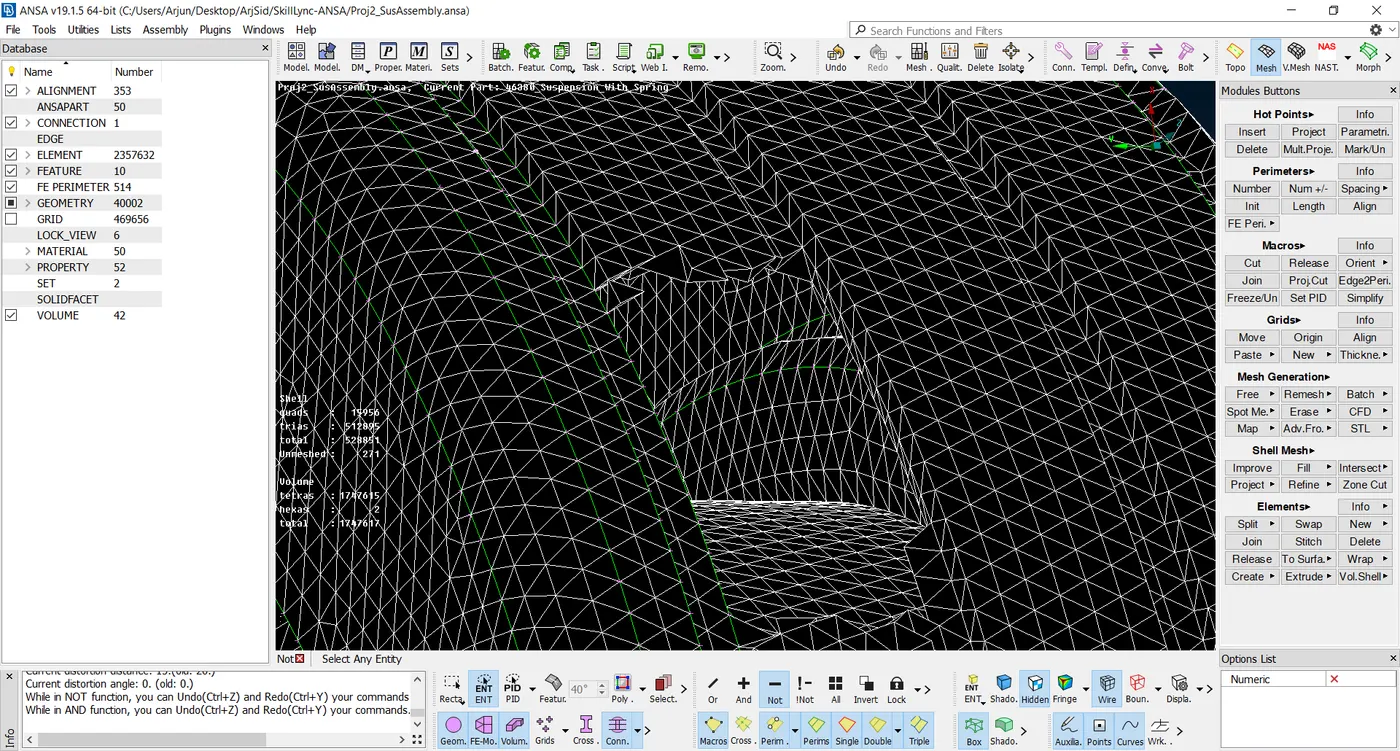
Step4- For certain other parts of the assembly, mid surface generation has to be done, and them meshed separately. Mid Surface--> Casting can be used for this purpose.
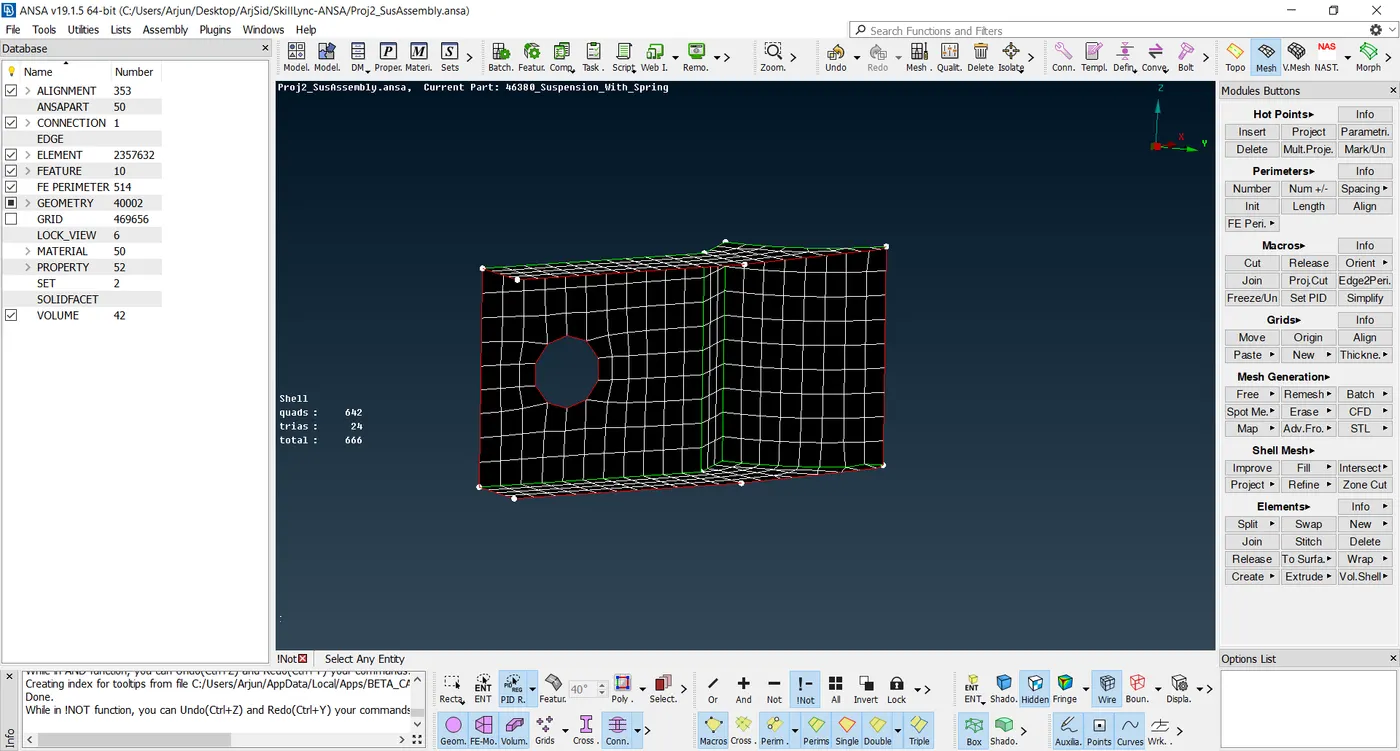
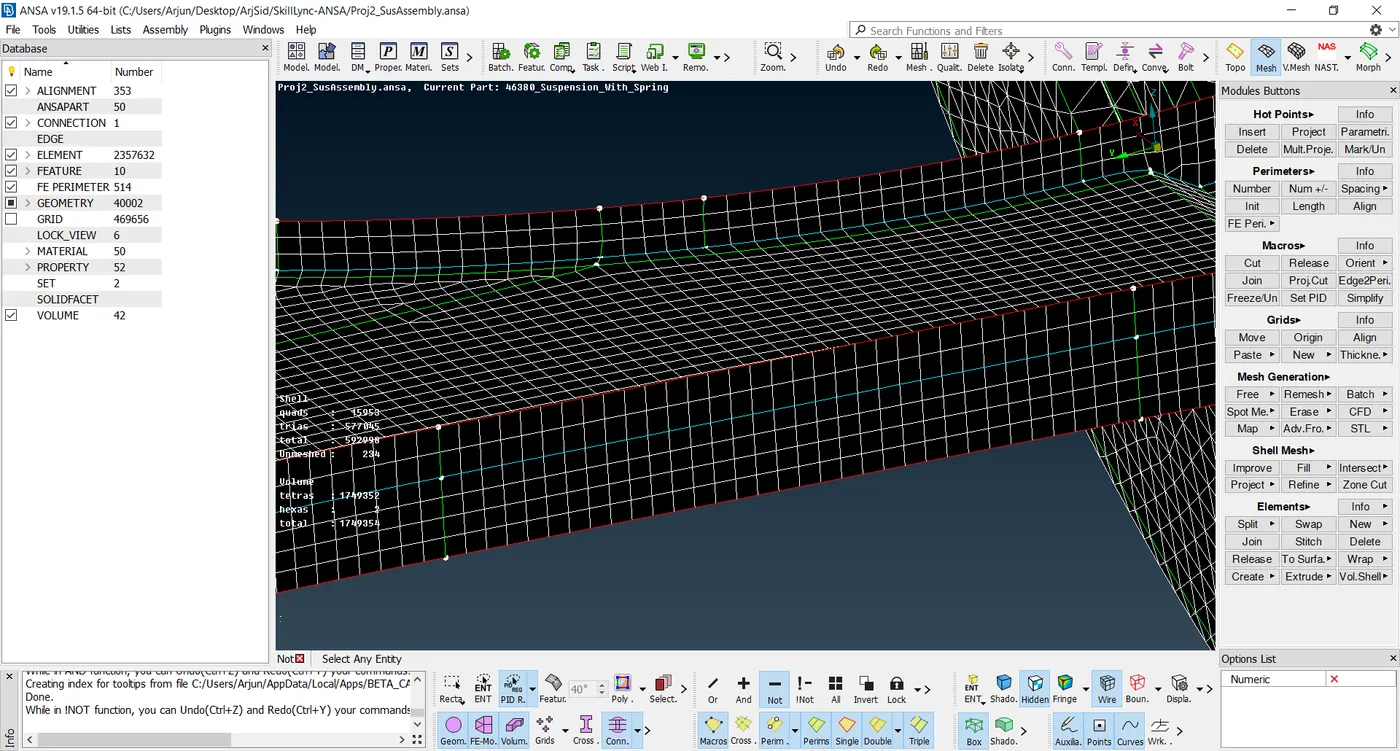
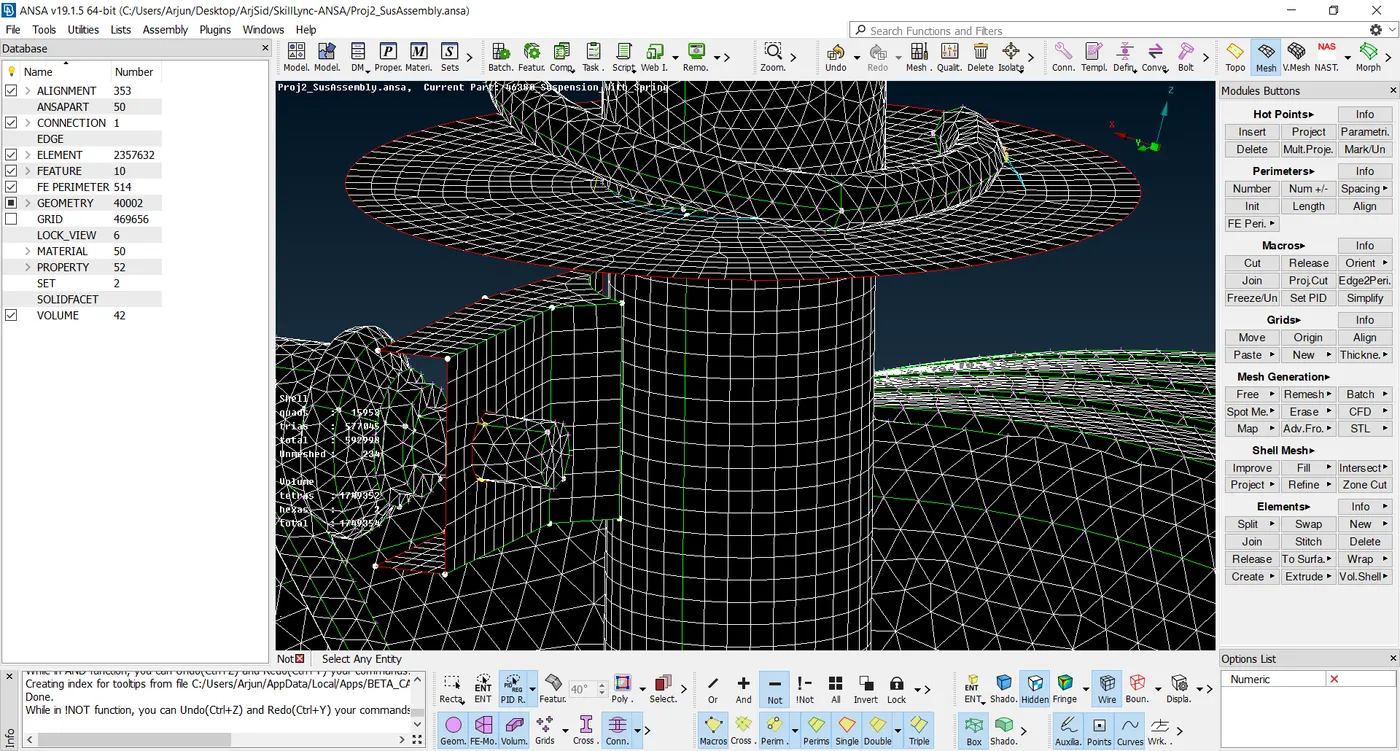
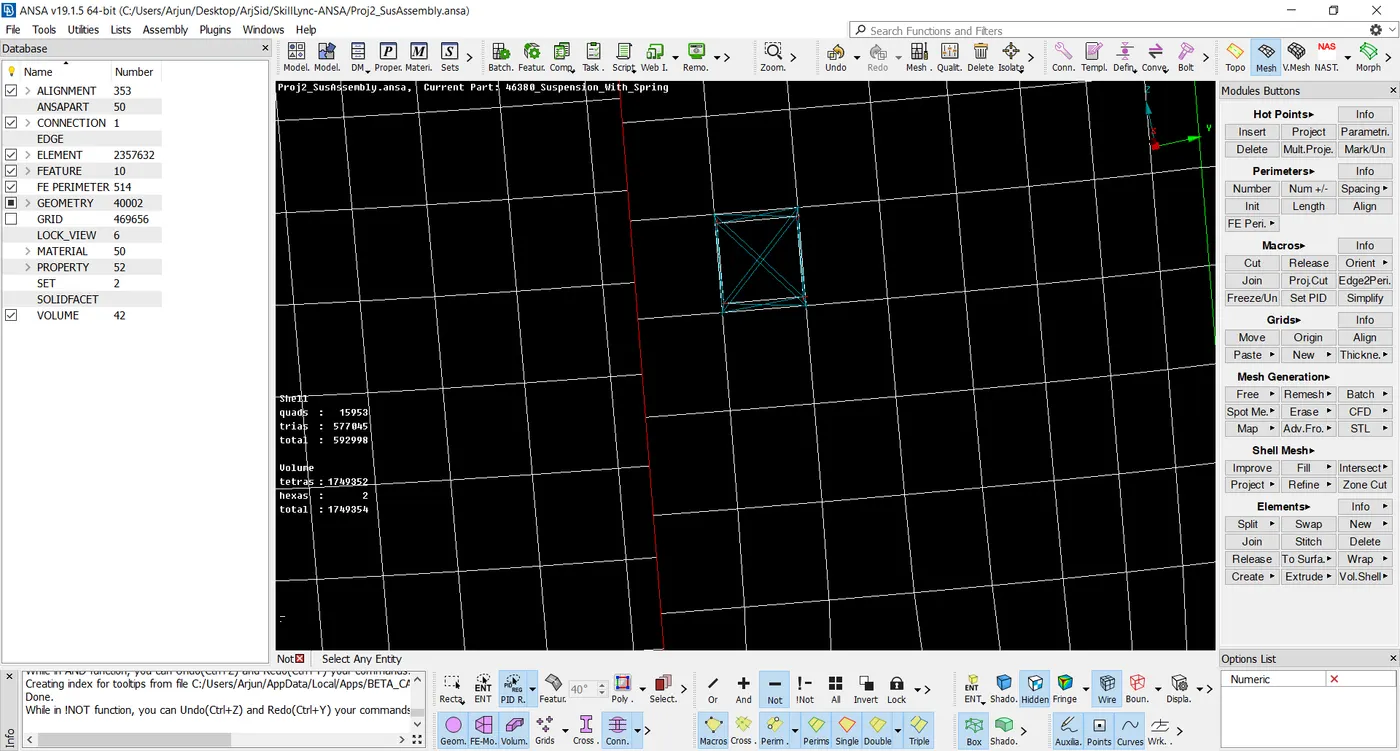
Step5- The next involves deploying the connections for the different areas of the component. There are different types of connections in differnt areas. RBE2/Cluster Rigid Connections, Spot weld connection,represented using RBE3 CBUSH connections.
Learning Outcomes-
- Learnt the complete process of Pre Processing using ANSA for a complex geometry, starting from geometry and topo/CAD cleanup, to meshing and deploying connections
- Practice on mid surface generation followed by shell meshing, as well as volume/3D Meshing
- Recognizing different regions where connections need to be deployed, and then choosing the appropriate connections