Project 2
Objective:
To check the geometrical errors and 2D and 3D mesh the given suspension and tyre model and also make appropriate connections to the model.
Procedure:
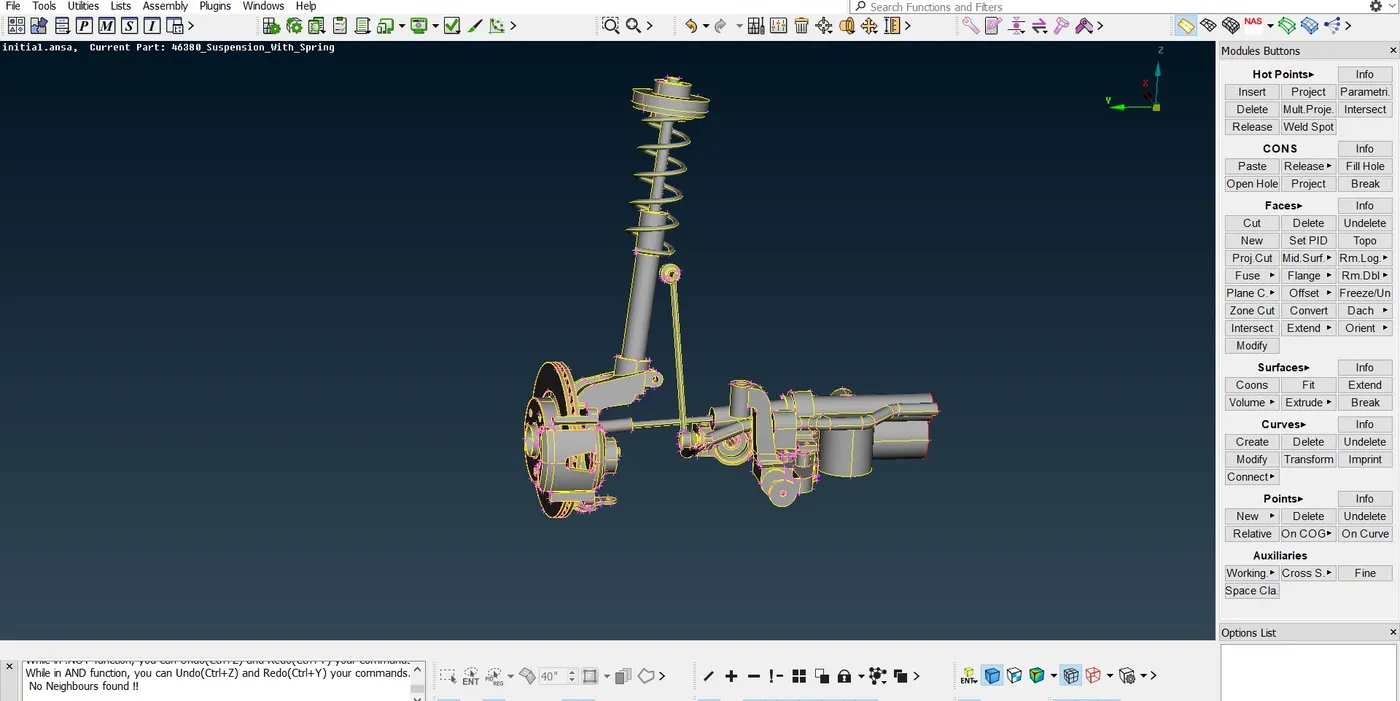
Import the given model which looks like the image shown below
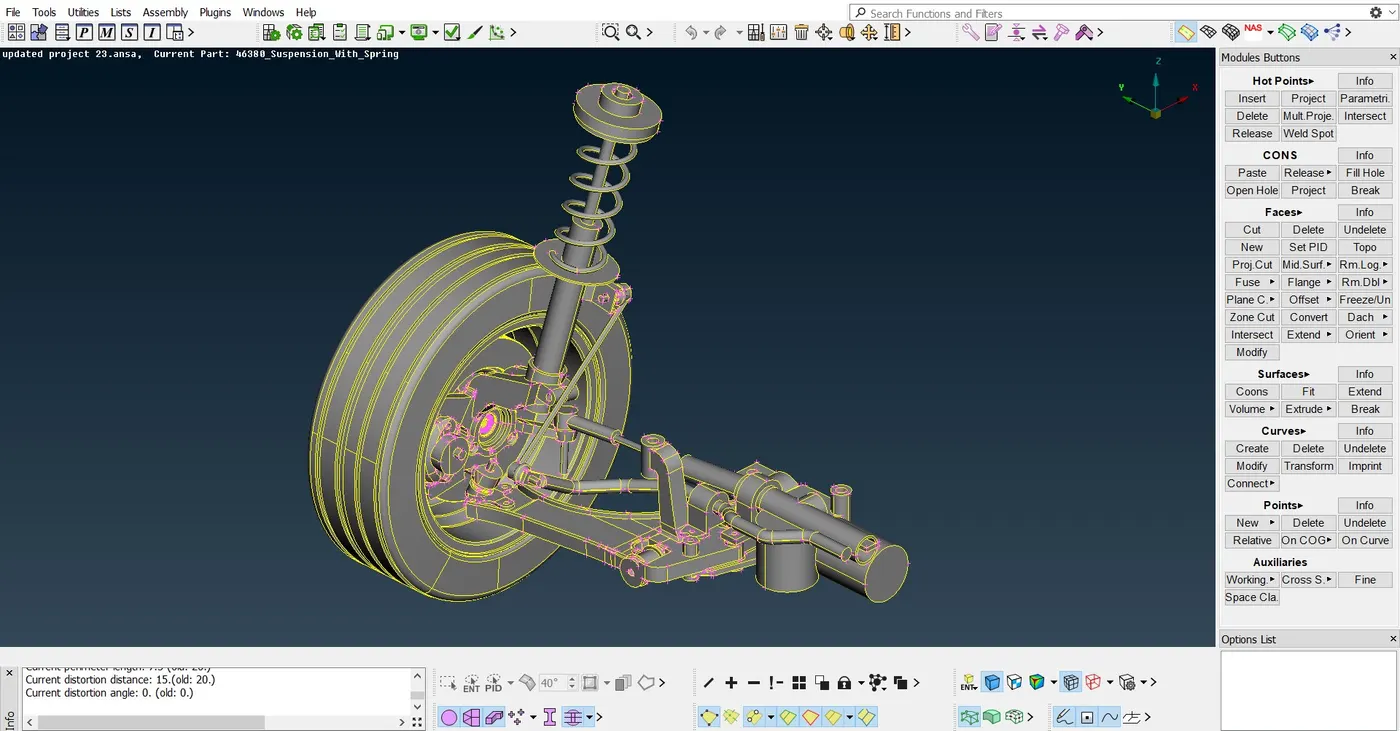
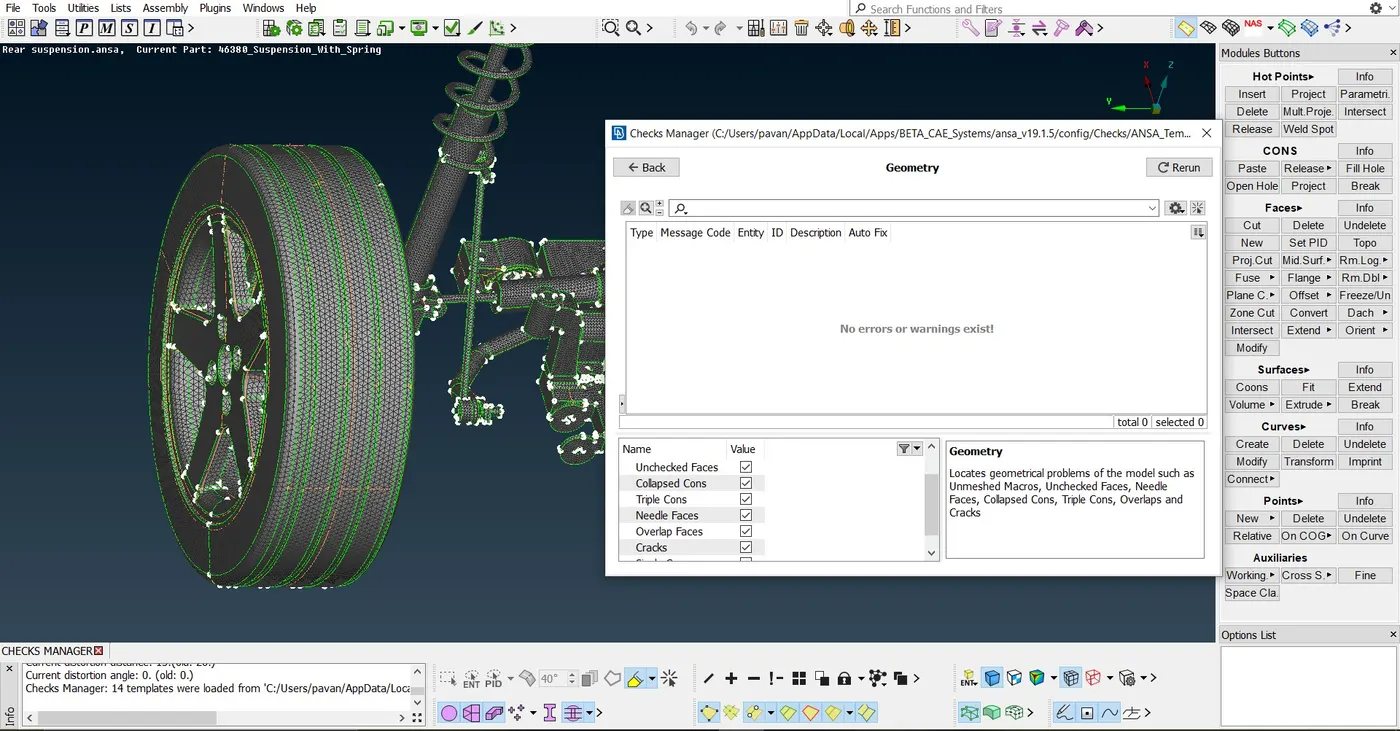
After importing the first job is to check if the model is joined together or not,If not then TOPO the model and go for the geometric check and clear the geometric errors .
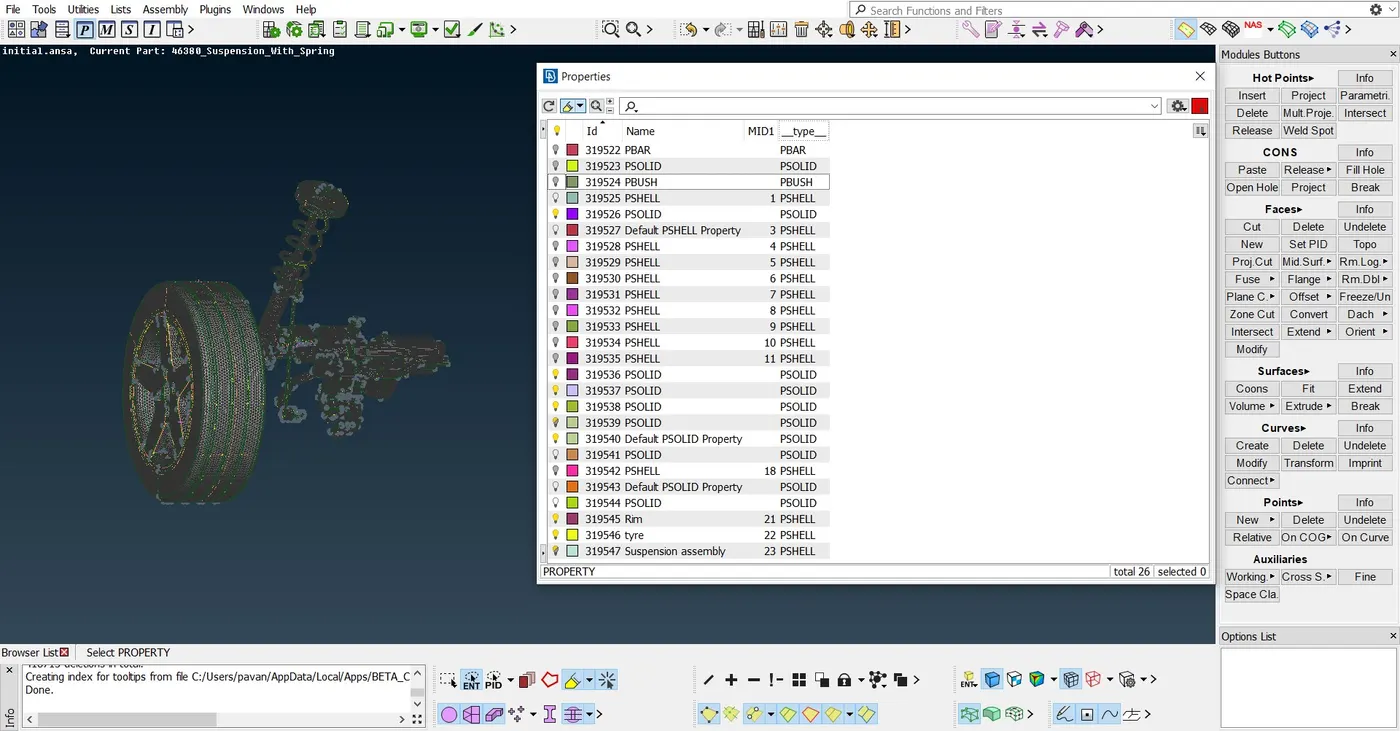
As this is big model and has many parts associated with it Id have to given to the parts;So PId to all the possible parts is to be done so that the meshing becomes easy and efficient.PId have been set as shown in the figure below
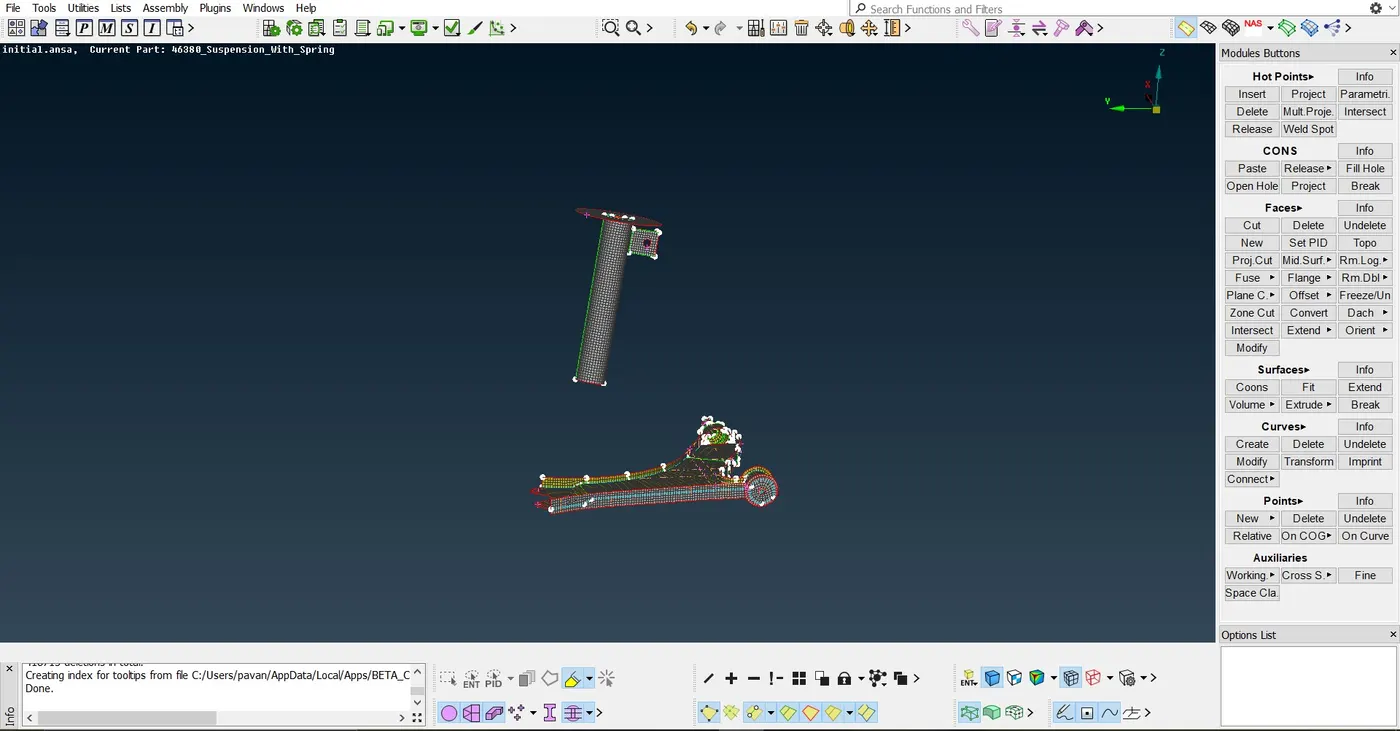
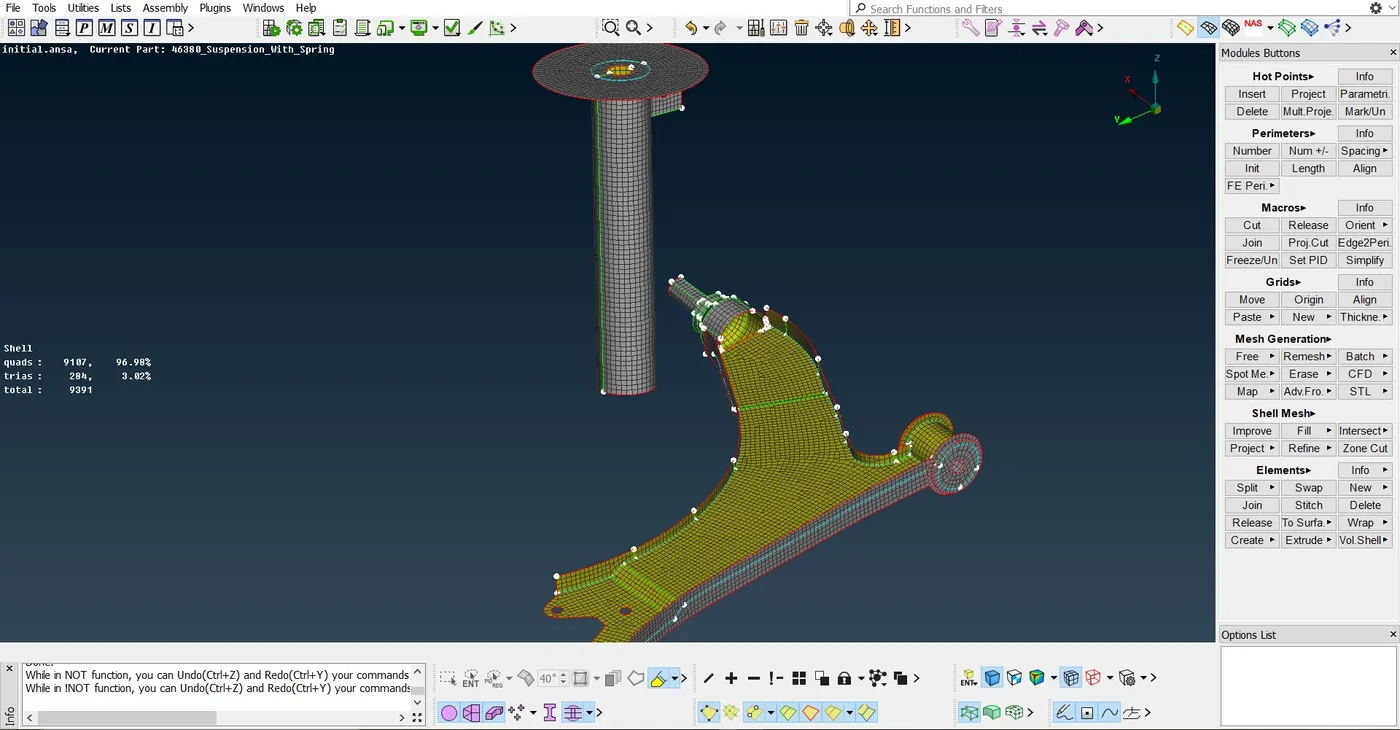
Now for some of the parts (Parts with less than 6mm thickness) have to 2d meshed.To do 2d mesh mid surface has to be done and meshing has to followed up with it.
The quality criteria have to added which are given as follows:
|
S.No |
Quality Criteria |
Value |
|
1 |
Target/Average length |
4 |
|
2 |
Minimum Length |
2 |
|
3 |
Maximum Length |
6 |
|
4 |
Aspect |
3 |
|
5 |
Warpage |
15 |
|
6 |
Skewness |
45 |
|
7 |
Jacobian |
0.7 |
|
8 |
Minimum Quad Angle |
45 |
|
9 |
Maximum Quad Angle |
135 |
|
10 |
Minimum Tria Angle |
30 |
|
11 |
Maximum Tria Angle |
120 |
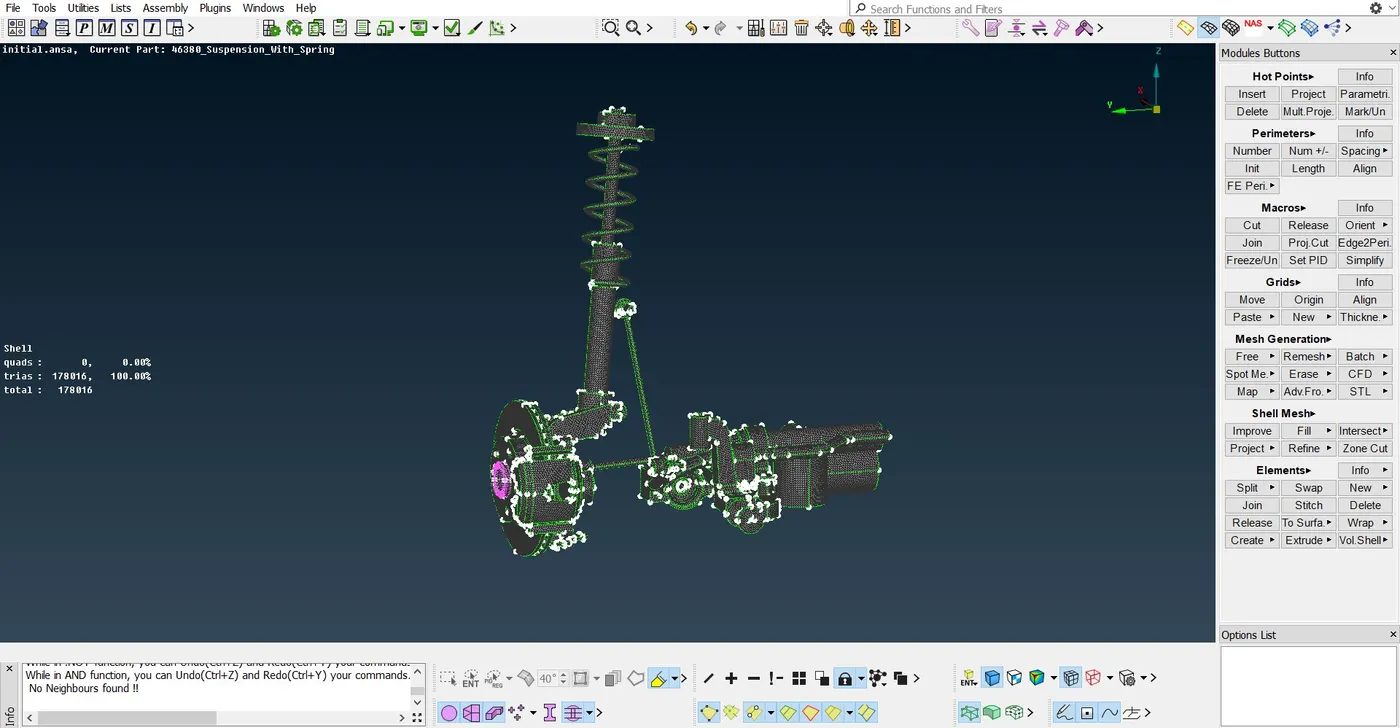
After entering these values errors will surely rise in the model mesh and the errors have to cleared out using the tools provided by the software i.e split,swap, fix quality ,reshape etc. the result obtained from the mesh is below
Now we have to mesh the tyre and rim of the model.The tyre and rim have to volume mesh as per the request. To do volume mesh the parts should be having a constant volume i.e closed surface and then the process has to be started for the 3D mesh.
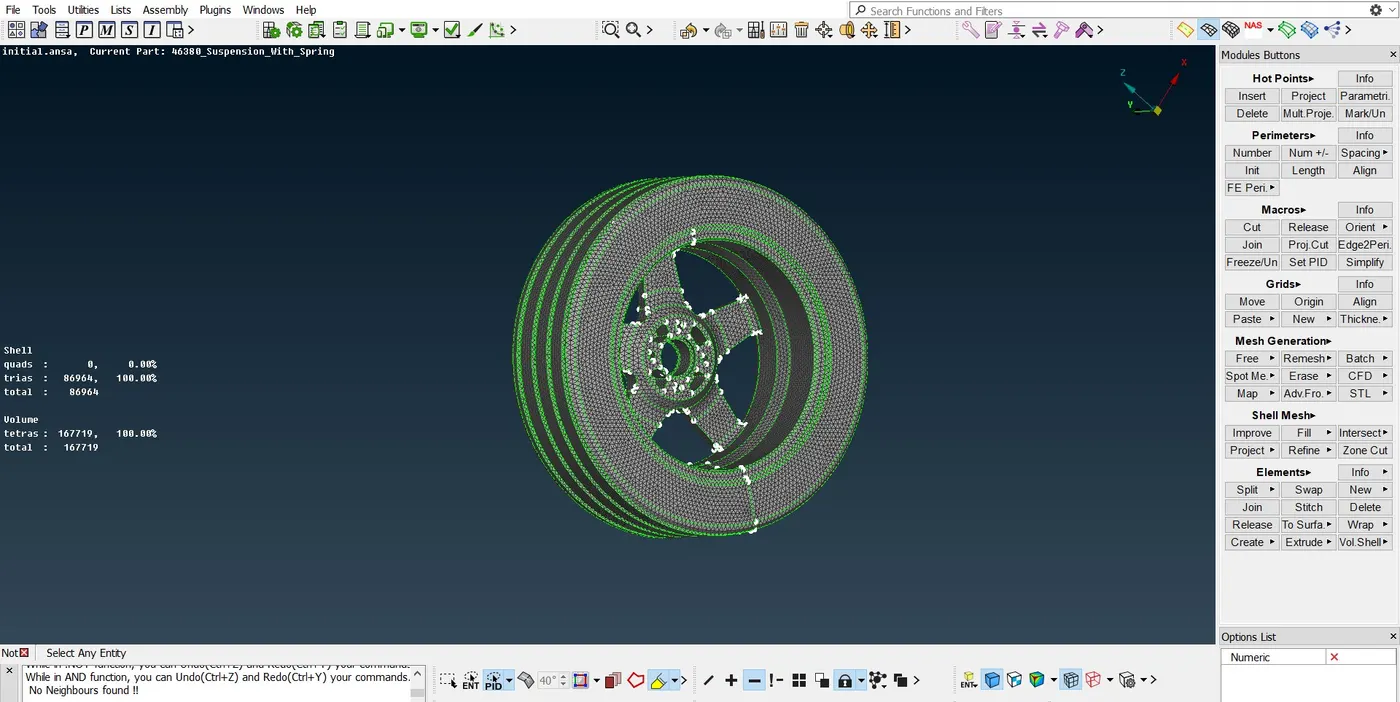
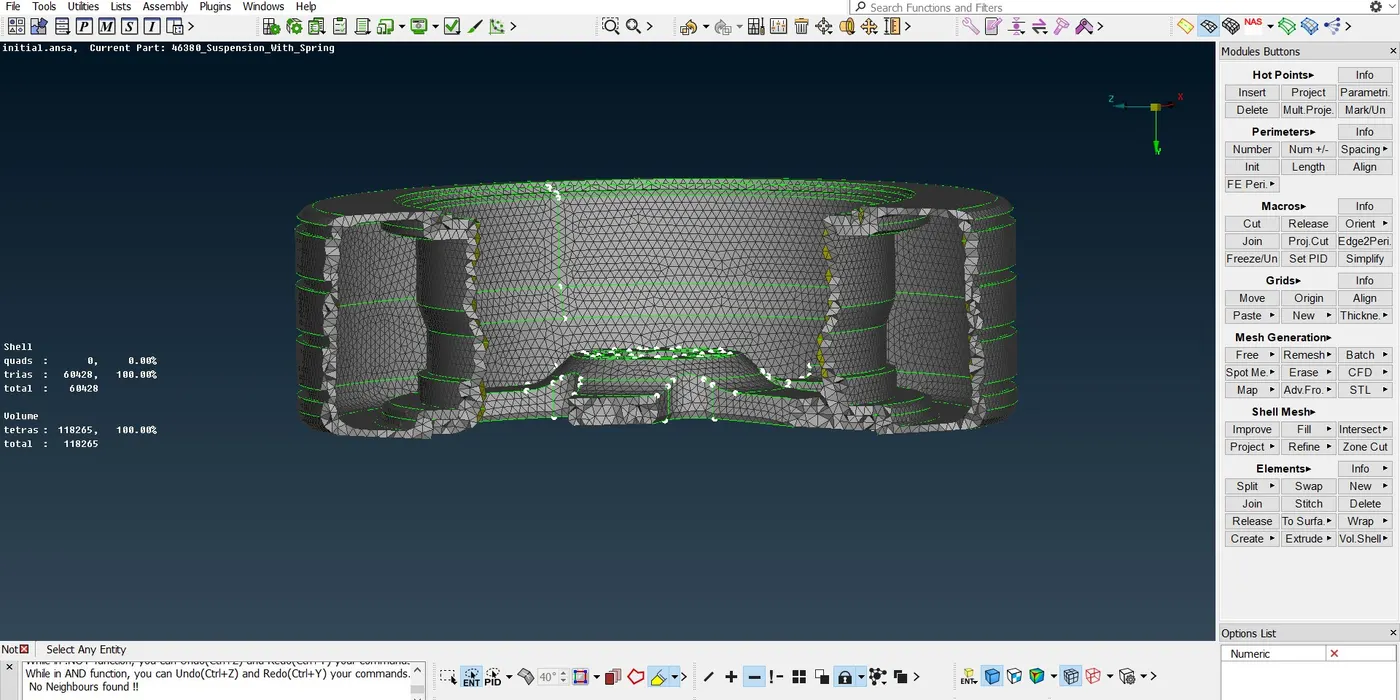
The image above shows the volume mesh of the tyre and rim, the down image shows the cross-section view of the tyre and rim.
The quality criteria has to added for this as well which is as follows
|
S.No |
Quality Criteria |
Value |
|
1 |
Target/Average length |
6.5 |
|
2 |
Minimum Length |
5 |
|
3 |
Maximum Length |
10 |
|
4 |
Skewness |
45 |
|
5 |
Tet-collapse |
0.2 |
Now rest of the model has to be meshed.The model is above 5mm thickness so the mesh should be 3D in nature,hence volume mesh should be done.After this addition of the criteria errors have to removed using the tools provided by the software.
the criteria for the mesh are as follows:
|
S.No |
Quality Criteria |
Value |
|
1 |
Target/Average length |
4 |
|
2 |
Minimum Length |
2 |
|
3 |
Maximum Length |
6 |
|
4 |
Skewness |
45 |
|
5 |
Tet-collapse |
0.2 |
The parts are as follows
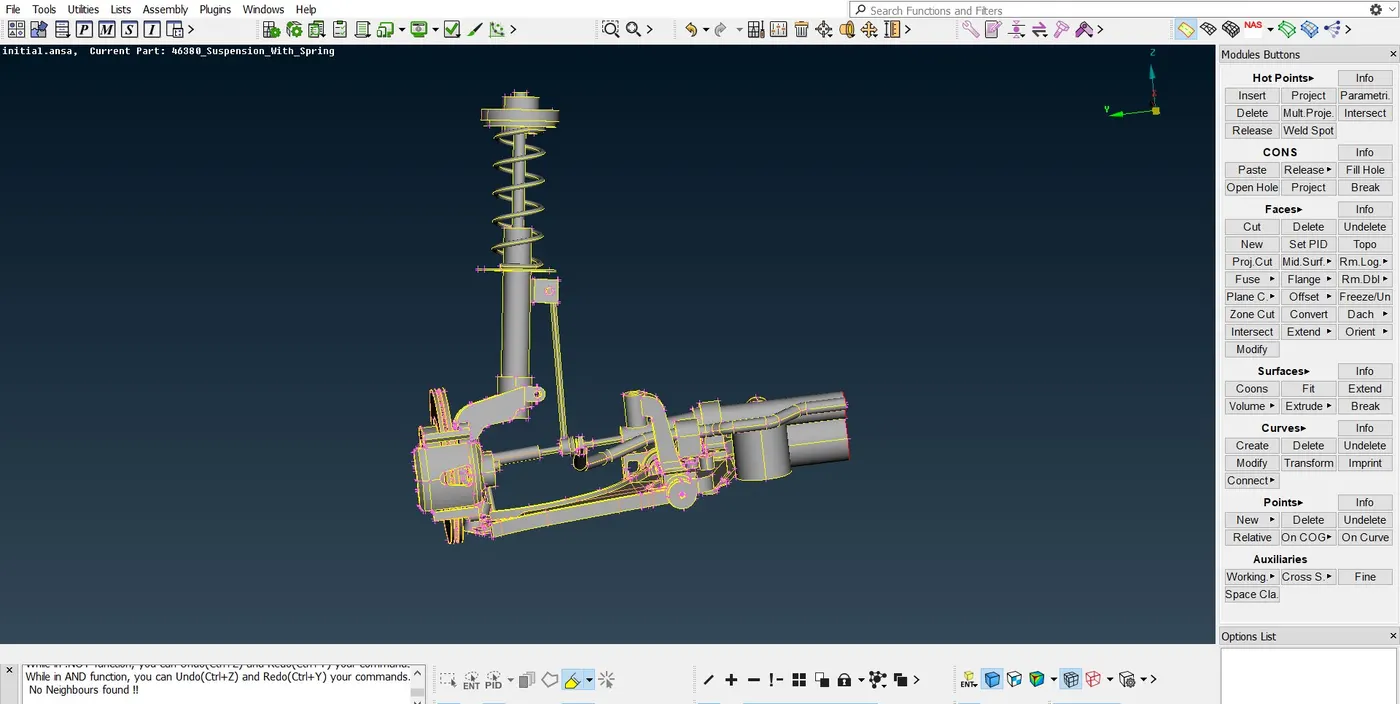
but this includes the parts with 2d mesh also, so remove those parts and close the openings so that volume mesh can be performed.
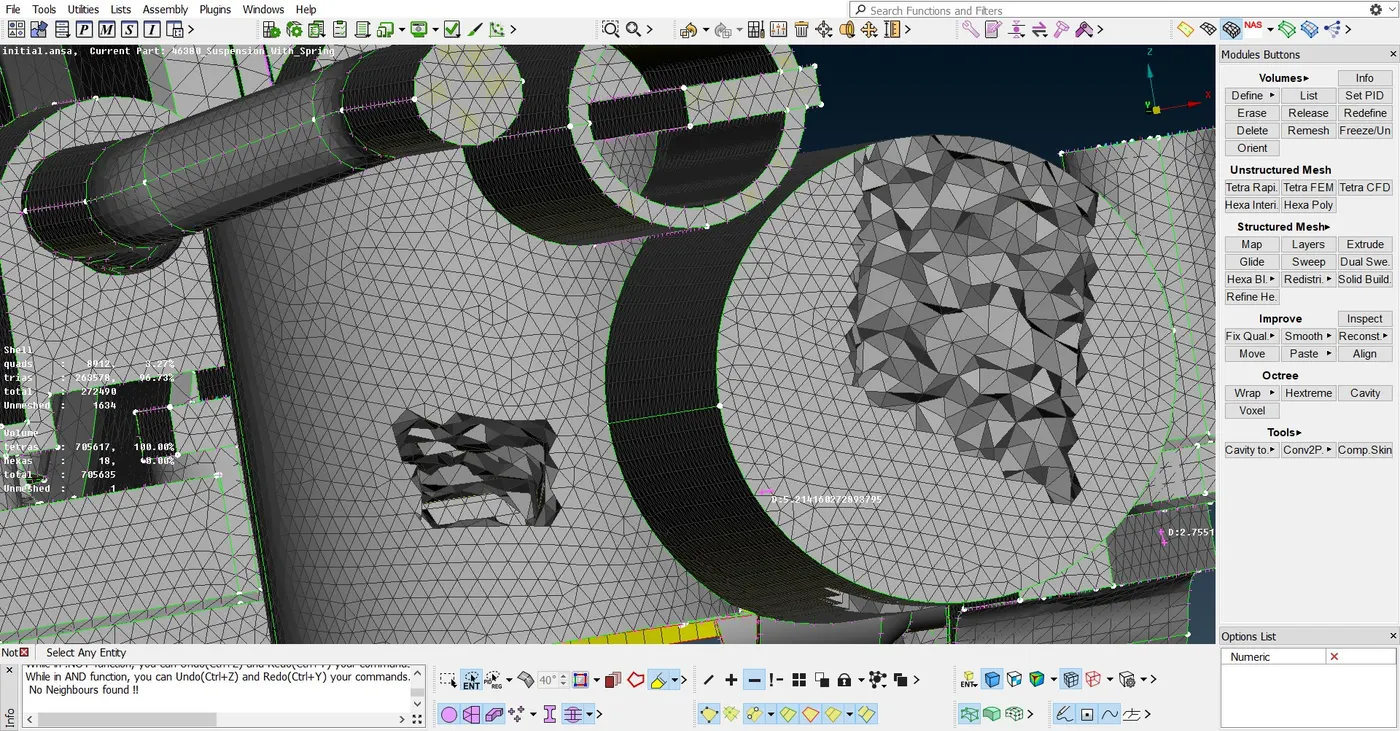
The volume meshing of this part looks similar as shown in the image below
Now when every part is meshed ,connections have to be made between the parts.One important note to be considered is to connect 2d parts with 2d and 3d to 3d;the otherwise connection is difficult to be made.
Here are the images of the connections of different types
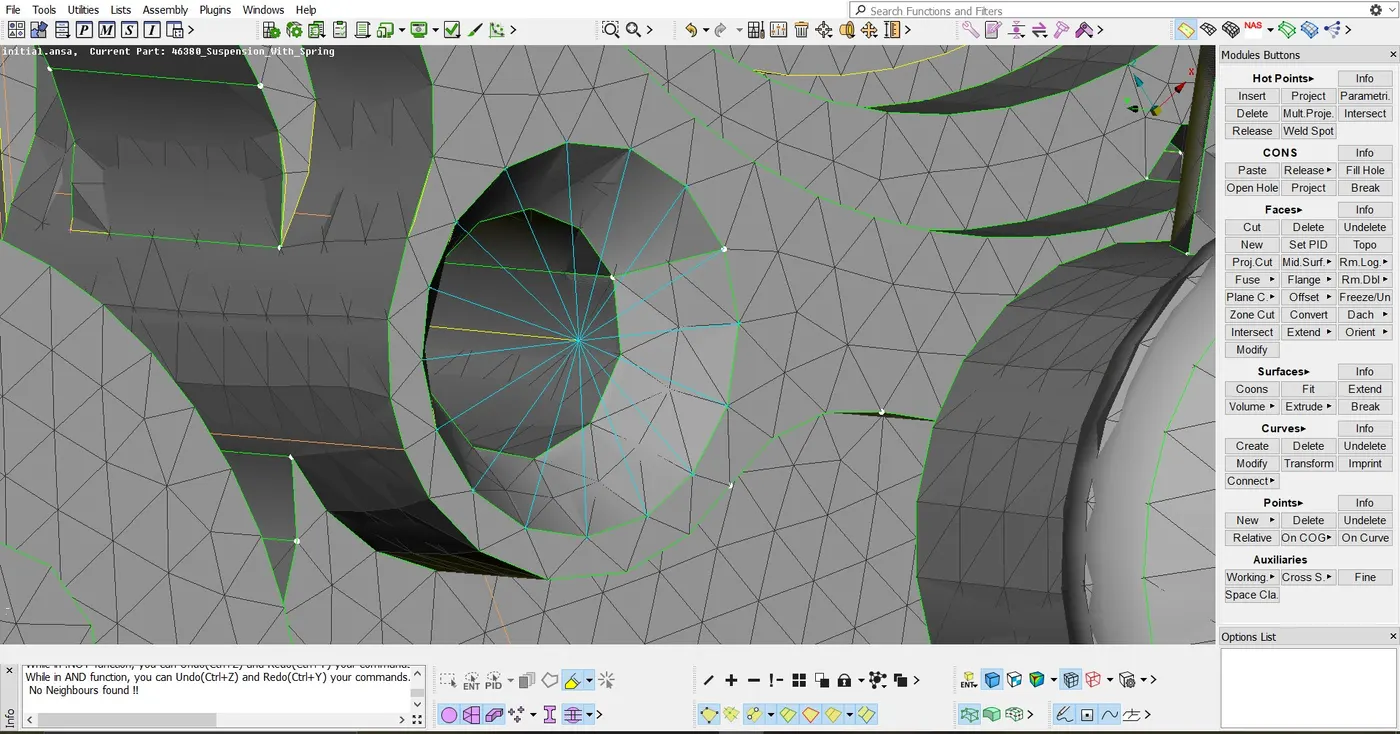
This is a RBE connection.
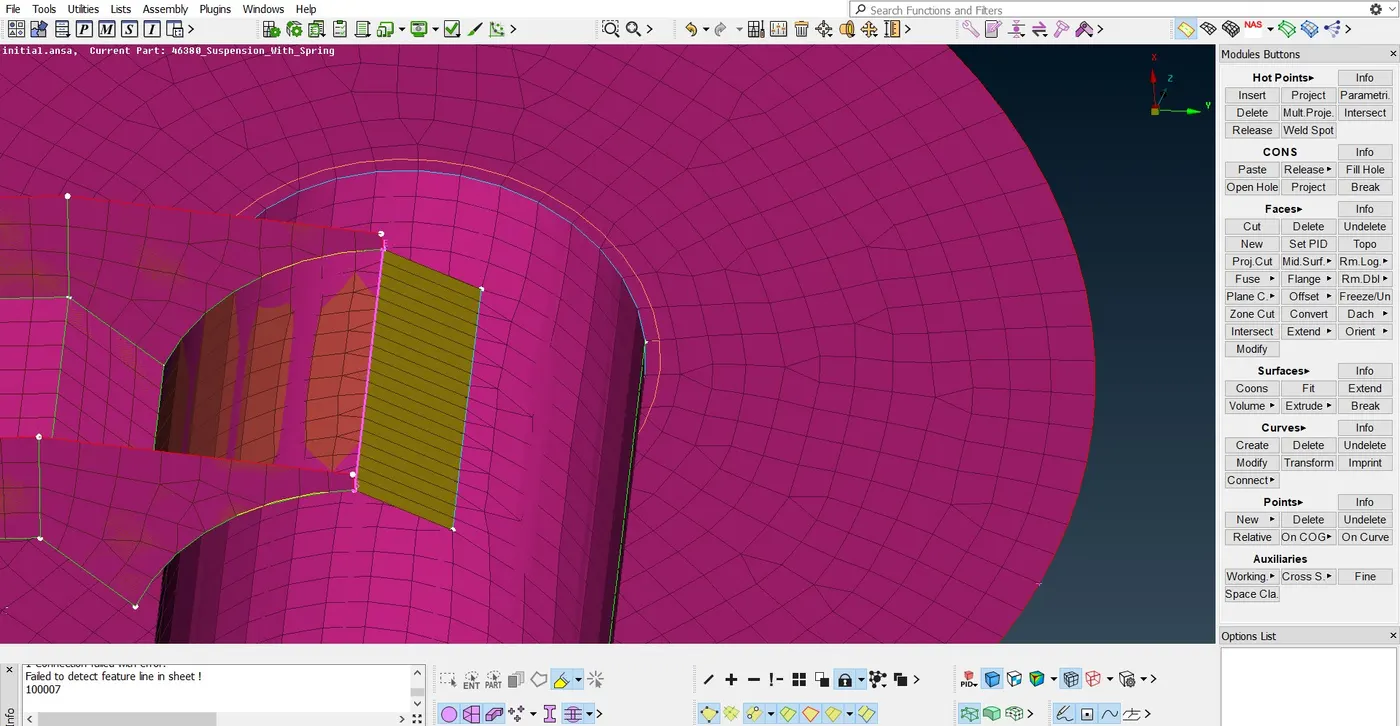
This is seam weld connection (shell type)
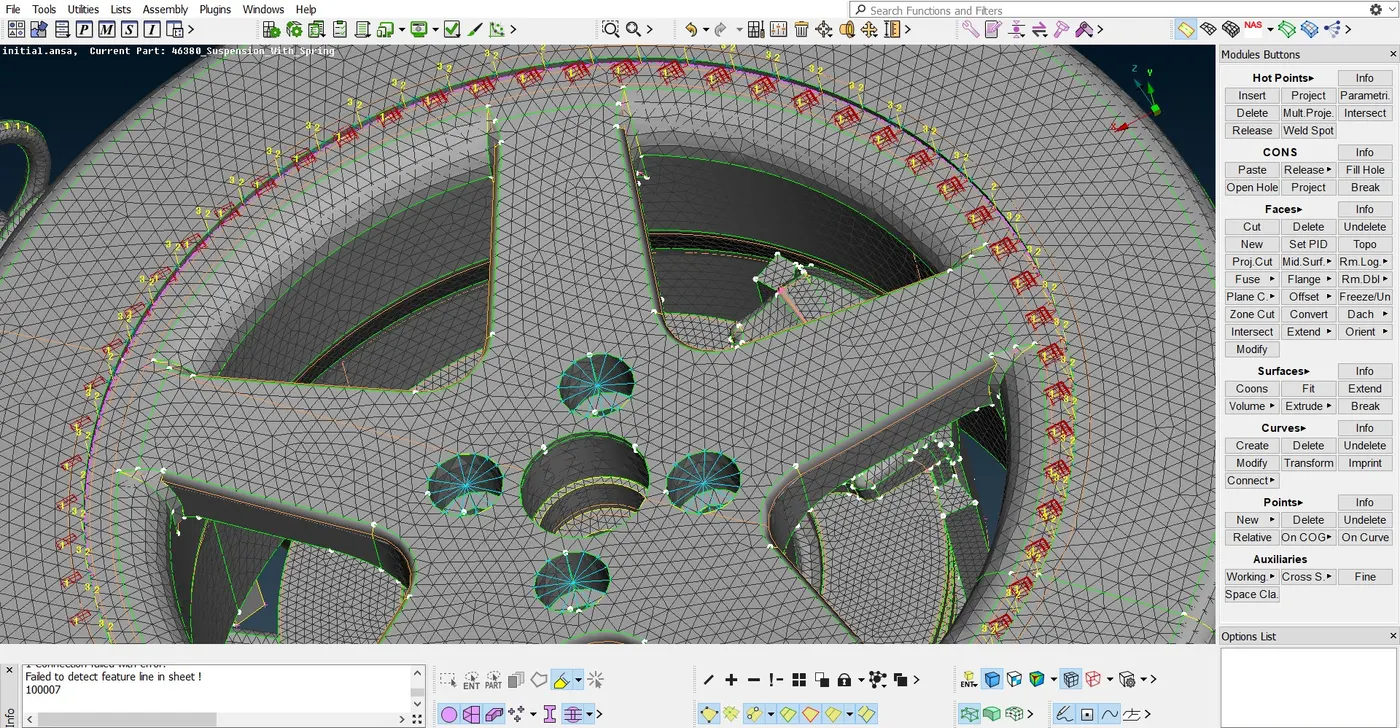
This type connection is called cbush connection.It is between the tyre and rim as there should a constant connection between the two parts.
These type of connections have to be made all throughout the model at appropriate places.
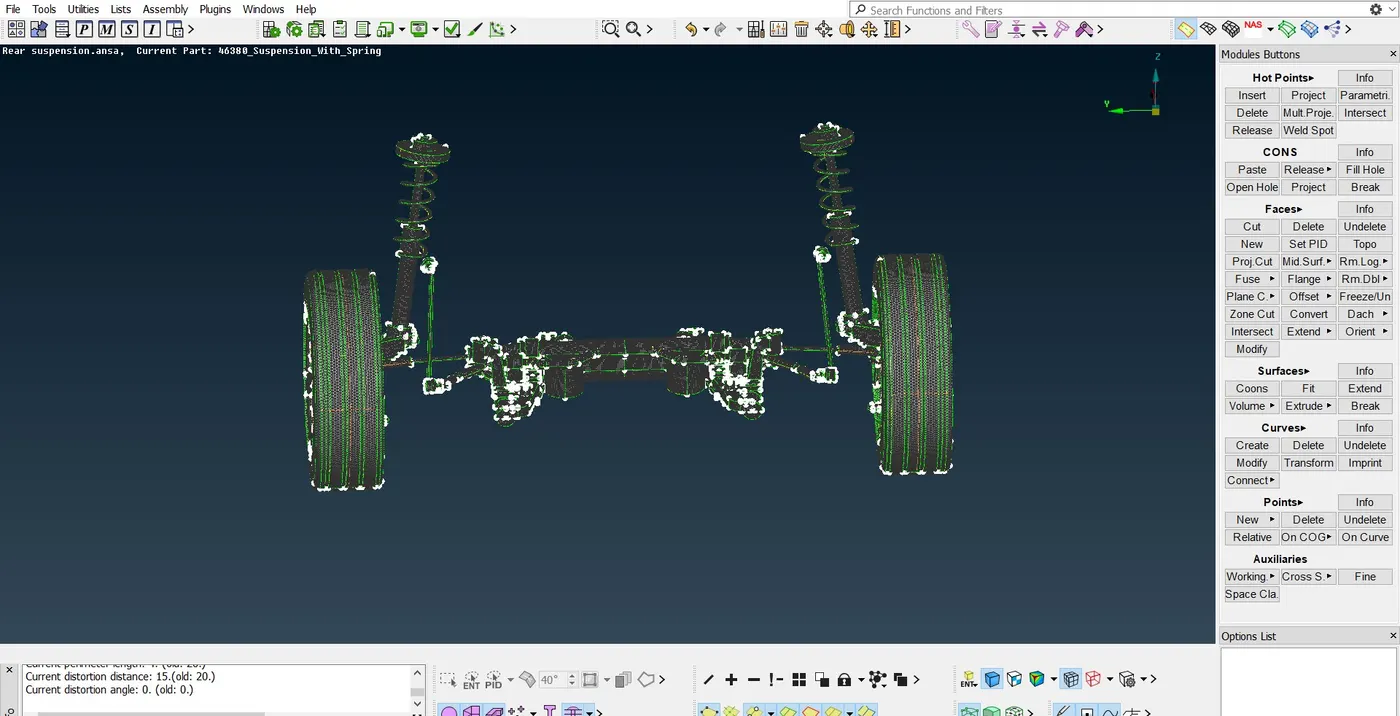
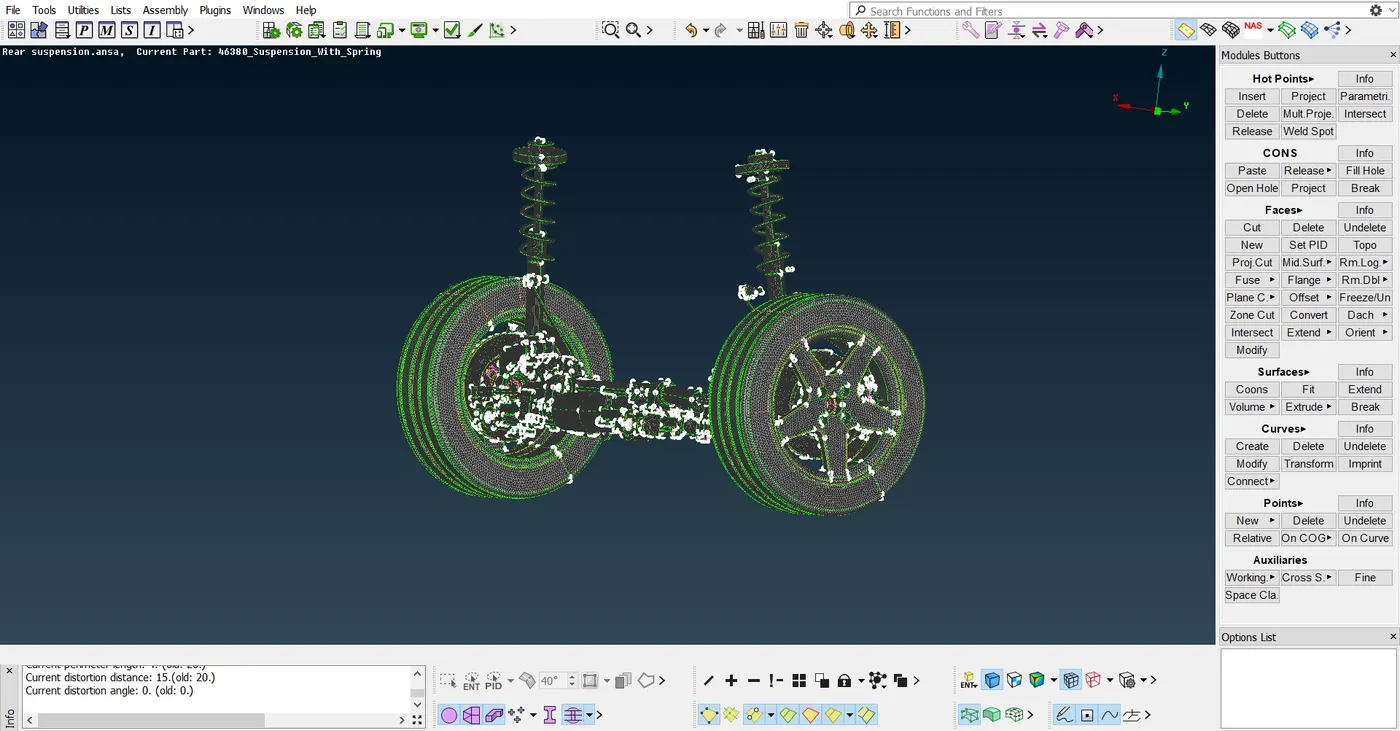
One more additional step canbe taken if this model is mirrored using the transform tool to get both the suspension assemblies.This can make the presentaion more pleasing to the eyes.
The next image is of the complete assembly with mirroring being done.
Learning outcomes:
How to Volume mesh components
Which parts should be Mid-surfaced
Tet-collapse removal
Conclusion:
The model provided is properly meshed according to the requirement i.e 2D where 2D is required and 3D where 3D is required; according to the criteria given and also the appropriate connections are also made to the model.