Project-1: Powertrain for aircraft in runways
AIM:
Part A:
1. Search and list out the total weight of various types of aircrafts.
2. Is there any difference between ground speed and air speed?
3. Why is it not recommended to use aircraft engine power to move it on the ground at Airport?
4. How an aircraft is pushed to runway when its ready to take off?
5. Learn about take off power, tyre design, rolling resistance, tyre pressure, brake forces when landing.
FOR QUESTION 1A:
- Manufacturer's empty weight (MEW) ...
- Zero-fuel weight (ZFW) ...
- Operating empty weight (OEW) (Roughly equivalent to basic empty weight on light aircraft) ...
- Payload. ...
- Maximum takeoff weight (MTOW) ...
- Regulated takeoff weight (RTOW) ...
- Maximum landing weight (MLW) ...
- Maximum ramp weight (MRW)
Types of weight of an aircraft:
- asic Empty Weight (BEW) is the weight of the aircraft "as built" and includes the weight of the structure, power plant, furnishings, installations, systems and other equipment that are considered an integral part of an aircraft before additional operator items are added for operation.
- Dry Operating Wieght (DOW) BEW + Weight of Crew (Pilot + Cabin including their bags) + Pantry
- Operating Weight (OW) DOW + Takeoff fuel (i.e. Ramp Fuel - Taxi fuel)
- Maximum Zero Fuel Weight (MZFW) DOW + Payload (anything put on the aircraft that generates revenue to the company, e.g. passenger, baggage, cargo, mail and fret)
QUESTION 2A:
* Is there any difference between ground speed and air speed
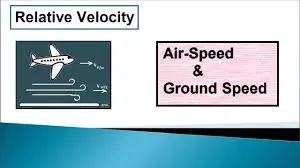
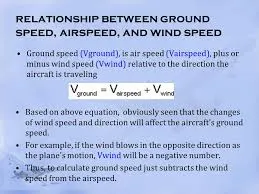
As talked about briefly generally speaking, there are two different types of speed when talking about airplanes – ground speed and airspeed.
While ground speed is the airplane’s speed relative to the surface of the Earth, airspeed – at least true airspeed – is its speed relative to the air it is flying in.
Below, I will explain the two types of speed in more detail, as well as talk about the four types of airspeed that are commonly used.
As mentioned above, true airspeed is simply the speed at which an aircraft is moving relative to the air it is flying in. As such, it’s also the speed at which the air is flowing around the aircraft’s wings.
Ground speed, on the other hand, is the aircraft’s speed relative to the ground. One thing that should be noted here is that it’s its horizontal rather than vertical speed – an aircraft climbing completely vertically would have a ground speed of zero. In other words, while airspeed is what determines whether there is enough airflow around an aircraft to make it fly, ground speed is what determines how fast an aircraft will get to its destination.
if the air isn’t moving over the ground. But usually, the air the plane is flying through is also moving (which we on the ground perceive as wind). Airspeed refers to how fast the plane is moving through that air, ground speed is how fast the plane is moving with respect to the ground below. Headwinds reduce groundspeed, tailwinds increase it.
Interesting Note: overall, for any given flight, groundspeeds are less than airspeeAds, since pilots must turn into the direction of crosswinds enough to keep from being blown left or right of their intended course. So in other than the exceptionally rare tailwind perfectly aligned with your course, some of your plane’s speed is used up to stay on course.
QUESTION 3A:
Why is it not recommended to use aircraft engine power to move it on the ground at Airport:
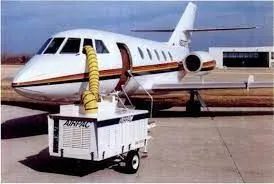
High engine thrust during maintenance activity can cause considerable damage to airplanes and other elements in the airport environment. An example of this problem occurred after an airplane arrived at its final destination with a log entry indicating the flight crew had experienced anomalous engine operation.Although many aircrafts are capable of moving in backward using reverse thrust, as result the jet blast or prop wash might cause damage to the terminal building or equipment. Engine close to ground may also blow sand and debris forward and then suck them into the engine, causing damage to the engine.
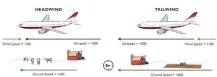
The power of an aircraft engine is expressed in newtons, kilograms or pounds of force. The piston engine delivers the power to a shaft that either drives a car or drives a propeller in light aircraft. This is measured in Watts, or horsepower in the old days. A380 at Take Off, required fan power about 230 Megawatt
QUESTION 4A:
How an aircraft is pushed to runway when its ready to take off:
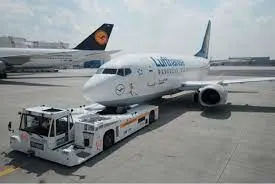
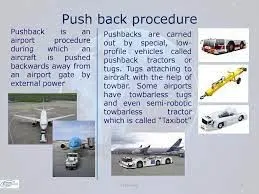
A so-called pushback truck reverses the aircraft into taxiing position, pushing it with a towbar attached to the nose-wheel strut. Or, in the most modern versions, by actually lifting the wheel. That speeds up coupling and decoupling. The aircraft taxis to the runway to depart at the agreed time.
Before takeoff, the engines, particularly piston engines, are routinely run up at high power to check for engine-related problems. The aircraft is permitted to accelerate to rotation speed .

- The pilot parks the aircraft in exactly the right place. Usually with the help of an automatic system, but occasionally guided by a marshaller waving two paddles or wands. Dozens of handling personnel are already standing by to perform a whole range of tasks simultaneously.
- As soon as the aircraft is stationary and the engines are switched off, the first priority is to disembark the passengers as quickly as possible. The apron handler places chocks in front of the wheels and connects the ground power. Meanwhile, the passenger bridge manoeuvres up to the door and a belt loader rolls up to the cargo hold. Luggage is unloaded and transferred to the terminal on baggage carts.
- A specialist team – or sometimes the crew themselves – cleans the cabin so that the new passengers board a pristine aircraft.
- Meanwhile, specialists from the airline conduct a technical check to make sure that the engines, wings, control surfaces, landing gear, instruments, doors and other equipment are in full working order.
- The aircraft is now ready for baggage to be loaded for the next flight. This is a quick process, on average taking only 10-15 minutes. A little later the passengers start boarding. As soon as they are all in their seats, the door is closed and the pilot informs air-traffic control that the flight is ready for departure.
QUESTION 5A:
Learn about take off power, tyre design, rolling resistance, tyre pressure, brake forces when landing:
TAKE OFF POWER:
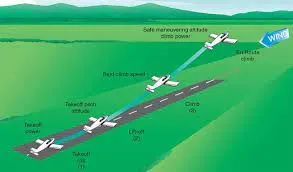
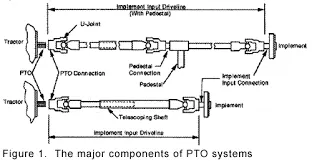
The amount of power that an engine is allowed to produce for a limited period of time for takeoff. The use of takeoff power is usually limited to 5 min for reciprocating engines and up to 2½ min for gas turbine engines.A power take-off or power takeoff (PTO) is one of several methods for taking power from a power source, such as a running engine, and transmitting it to an application such as an attached implement or separate machine.The amount of power that an engine is allowed to produce for a limited period of time for takeoff. The use of takeoff power is usually limited to 5 min for reciprocating engines and up to 2½ min for gas turbine engines. This may not always be the case. Specifically, with respect to reciprocating engines, it is the brake horsepower developed under standard, several conditions and under the maximum conditions of the crankshaft rotational speed and the engine manifold pressure approved for the normal take-off.
TYRE DESIGN:
Powertrain design often takes a systems engineering approach, under which individual teams are responsible for the development of a subsystem (aftertreatment, coolant paths, air system, etc.
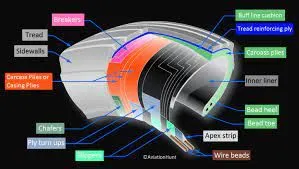
When it comes to safety , tyres are one of the most important components of aircraft. They help to absorb the shock of landing and provide cushioning. It also provides the necessary traction for braking and stopping of an aircraft.
An aircraft tyre is designed to withstand extremely heavy loads while landing, take off, taxing, and parking. The number of wheels required for aircraft increases with the weight of the aircraft, as the weight of the aeroplane needs to be distributed more evenly.
ROLLING RESISTANCE:
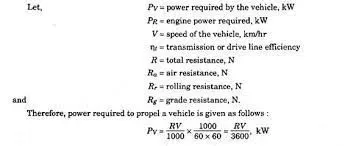
Rolling Resistance Coefficient μR is defined by μR = F/G, where F is the force necessary to pull the axle of a tire horizontally in the direction of travel, and G is the vertical load on the tire which is assumed to roll on a flat horizontal surface.Tire rolling resistance is the energy that your vehicle needs to send to your tires to maintain movement at a consistent speed over a surface. In other words, it is the effort required to keep a tire rolling. The main contributor to rolling resistance is the process known as hysteresis.
The calculated rolling resistancewill increase up the slope and decrease down the slope (F = Fx/cosa).
For example a 10° slope will increase the required force (F = Fx/cos10° = Fx/0.9848 = 1.015Fx).
The "rolling resistance coefficient" is defined by the following equation:
- {\displaystyle \ F=C_{rr}N}

- where
- {\displaystyle F}
 is the rolling resistance force (shown as {\displaystyle R}
 in figure 1),
 - {\displaystyle C_{rr}}
 is the dimensionless rolling resistance coefficient or coefficient of rolling friction (CRF), and
 - {\displaystyle N}
 is the normal force, the force perpendicular to the surface on which the wheel is rolling.
- {\displaystyle F}
{\displaystyle C_{rr}} is the force needed to push (or tow) a wheeled vehicle forward (at constant speed on a level surface, or zero grade, with zero air resistance) per unit force of weight. It is assumed that all wheels are the same and bear identical weight.
TYRE PRESSURE:
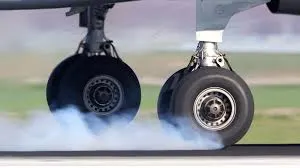
With good reason, aircraft safety concerns are paramount in maintenance operations. No one wants to see loss of life, injuries, or serious property damage as a result of poor aircraft maintenance. Aircraft maintenance manuals have very detailed, step-by-step procedures, tool, and parts lists. Certified inspectors must sign off on work cards, validating that the mechanic completed the job and completed it correctly. These procedures and checks and balances are all designed to insure the aircraft remains safe to operate. Making sure that the aircraft tires are properly inflated is a crucial part of preflight and routine service checks which can go a long way to maximizing tire utilization and minimizing risks to safe operations. At Michelin, we are committed to aircraft safety and we are proud to share our expertise with pilots, A&P mechanics, and the FAA.

Aircraft Tire Aircraft Tire
(Typical) (737 NLG) (F-16 Blk 40 MLG)
Size P205/75 R15 27x7.75 R15 27.75x8.75R14.5
Outside Diameter 27.2 inch 27 inch 27.75 inch
Selection Width 8.1 inch 7.75 inch 8.75 inch
Max Inflation 35 psi 200 psi 320 psi
Max Load 1,598 lbs. 9,650 lbs. 21,500 lbs.
Speed Rating 106 mph 225 mph 259 mph
Operation Continuous Intermittent Intermittent
Temperature Equilibrium No Equilibrium No Equilibrium
BRAKE FORCES WHEN LANDING:
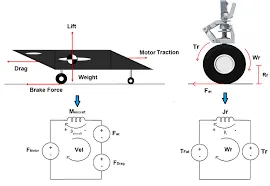
An electrical signal is sent from the flight deck to hydraulic actuators near the main landing gear. Here, hydraulic fluid at 3,000 pound per square inch is used to force the brake unit against the wheel, thus slowing it down.In addition to wing spoilers, airplanes use disc brakes. Airplane disc brakes are similar to the braking system in automobiles. They consist of a pair of calipers that, when engaged, squeeze pads against the rotors of an airplane's landing gear. Disc brakes are designed to remain static at all times.
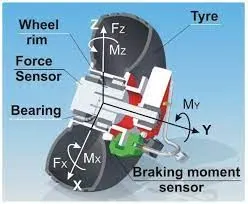
Aircraft brakes stop a moving aircraft by converting its kinetic energy to heat energy by means of friction between rotating and stationary discs located in brake assemblies in the wheels. Brakes provide this critical stopping function during landings to enable airplanes to stop within the length of the runway.
AIM:
PART B:
6. A. With necessary assumptions, calculate the force and power required to push / pull an aircraft by a towing vehicle.
B. Develop the model for the calculated force and power using Simulink.
7. A. Design an electric powertrain with type of motor, it’s power rating, and energy requirement to fulfill aircraft towing application in Simulink. Estimate the duty cycle range to control the aircraft speed from zero to highest. Make all required assumptions. Prepare a table of assumed parameters. Draw a block diagram of powertrain.
(Hint :DC7 Block)
B. Also, Design the parameters in excel sheet.
QUESTION 6A:
*With necessary assumptions, calculate the force and power required to push / pull an aircraft by a towing vehicle.
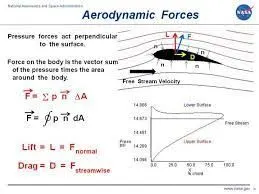
the forces required to push/pull an aircraft by a towering are rolling resistance force and aerodynamic drag force.
1)Rolling resistance force:-


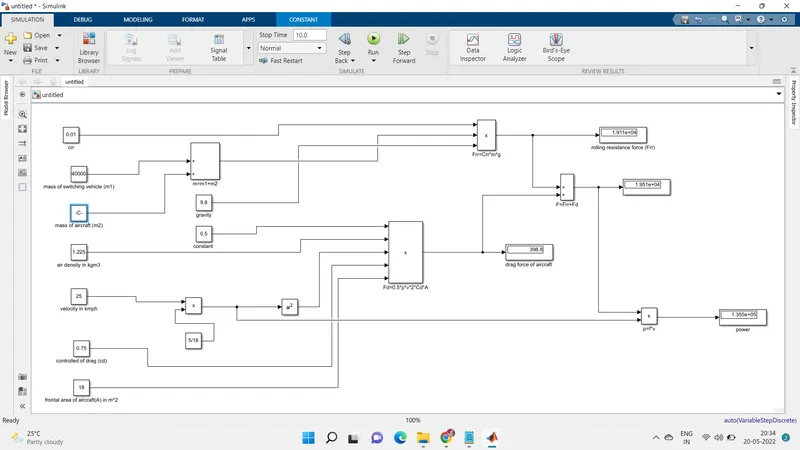
- for calculating power we have to multiply both total force and velocity in m/sec for this we have used 'product' block (p=f*v)
- for calculating the total force we have to add the both Frr &Fd by using sum block as shown in fugure
- to find the value of rollong resistance we used product to multiply the values Crr ,total mass(m), gravity(g),which are to be entered in the 'constant' block
- similarly for calculating the force we have to multiply the velocity in m/sec ,drag co efficient frontal area if aircraft and a constant value 0.5 which are to be entered in constant block.
- in order to convert the velocity in kmph to m/sec we have multiplied it with 5/18
FOR QUESTION 7:
QUESTION 7A:
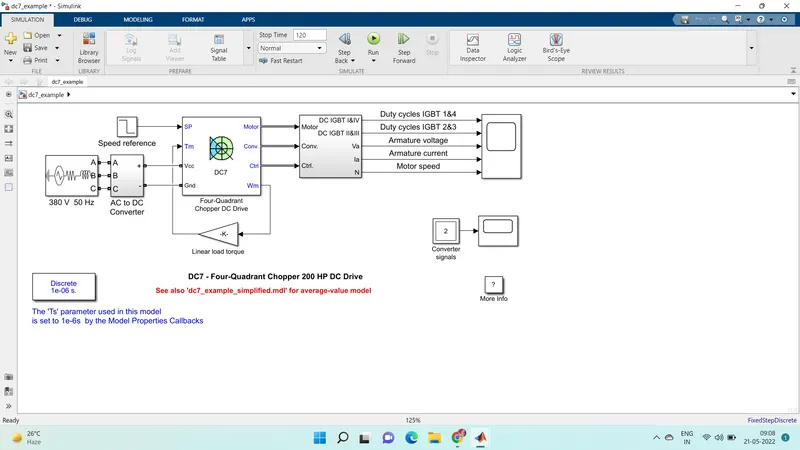
A. Design an electric powertrain with type of motor, it’s power rating, and energy requirement to fulfill aircraft towing application in Simulink. Estimate the duty cycle range to control the aircraft speed from zero to highest. Make all required assumptions. Prepare a table of assumed parameters. Draw a block diagram of powertrain. Blovk(Hint :DC7 Block)
Block diagram of powertrain:
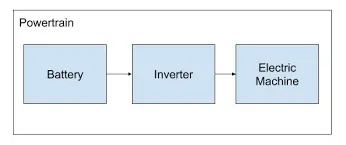
based on the calculation done in 6A.
force required to push/pull the air craft=19.508 KN
Power required=135.478 Kw
let us assume,
The radius of the tyre for the tug=25 inches =0.635 m
gear ratio=8
transmission efficiency =95%
torque required for the wheels:
Tw=total force*radius in meters
=19.508*0.365
=12.387 KNm
the transmission effciency is 95% ,the required motor torque(Tm)=1.778/0.95
=1.871 knm
similarly,the total power requires by the motor considering all the efficiencies(pt)=135.478/(0.87*0.95)
163.917 Kw
let us, asume the following operation was done for a 15 minutes (0.25 hrs) duration.
then,total energy consumed=163.917*0.25
=40.98 kwh
if we cinsider the battery capacity =220kw is used by the towing vehicle then,the duty cycle range to control the speed from 0 to max s[eed (3m/s)is given as
duty cycle (d)= required power/rated power
=163.917/220
0.75
therfore,the controller will be able to provide a duty cycle ranging from 0 to 75% in oreder to control the towing speed.
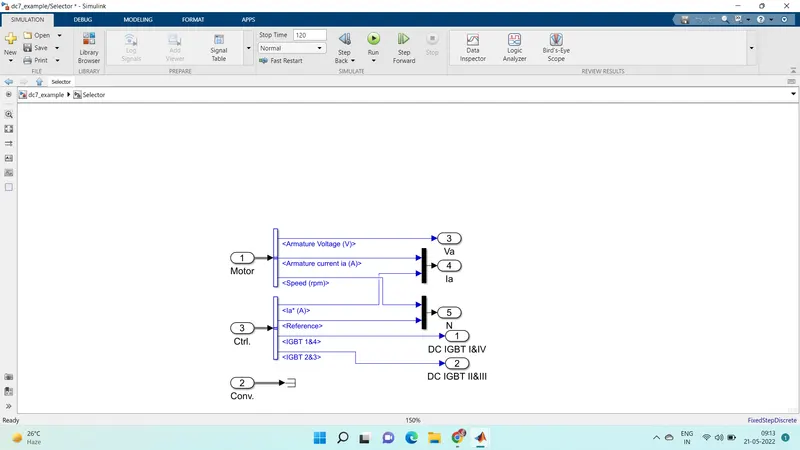
simulink daigram of power train:
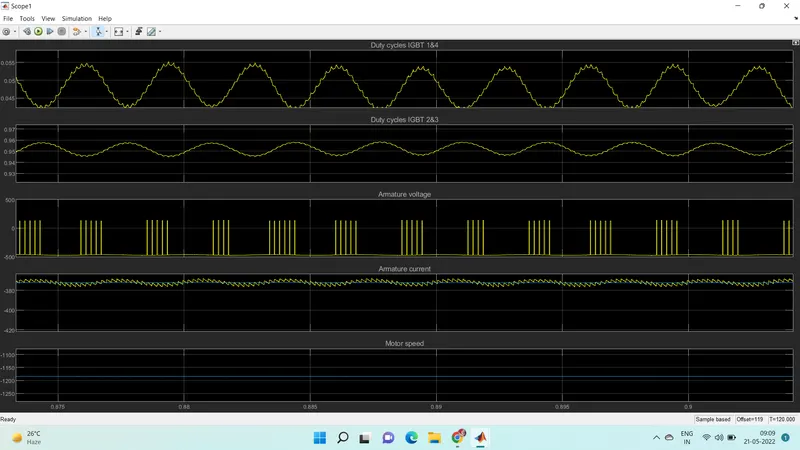
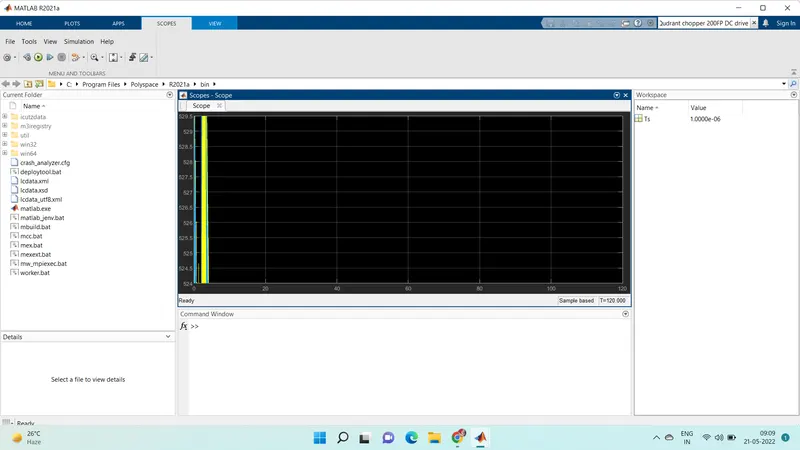
OUTPUT RESULTS:
QUESTION 7B:
*Also, Design the parameters in excel sheet.
excel sheet for the reqiured parameters:-