POWER TRAIN FOR AIRCRAFT IN RUNWAYS.
1)GENERAL TYPES OF AIRCRAFTS:
Commercial Aircraft,
Private Jets,
Propeller Planes.
The weight of an aircraft is having two aspects,they are
Max Take-Off Weight(MTOW),
Pay load.
Max Take-Off Weight(MTOW):
The maximum takeoff mass (MTOM), often referred to as maximum takeoff weight (MTOW), of an aircraft is a value defined by the aircraft manufacturer. It is the maximum mass at which the aircraft is certified for take off due to structural or other limits.
Payload:
Payload is the carrying capacity of an aircraft, usually measured in terms of weight. In a commercial context (i.e., an airline or air freight carrier), payload may refer only to revenue-generating cargo or paying passengers
COMMERCIAL AIRCRAFTS:
Commercial aircraft are used to haul passengers and freight on a scheduled basis between selected airports. They range in size from single-engine freight carriers to the Boeing 747 and in speed from below 200 miles per hour to supersonic.
TYPES OF COMMERCIAL AIRCRAFTS AND THEIR WEIGHTS:
Jumbo passenger jet
Boeing 747 Airplane,
Takeoff weight: 2138.448 tonne,
Payload: 75 tonne.
Mid Size Passenger jet
Airbus A350-1000,
Takeoff weight: 316 tonne,
Payload: 68 tonne.
light passenger jet
Embraer 175,
Takeoff weight: 188.53 tonne,
Payload: 10.08 tonne.
Passenger turbo propeller jet
Bombardier Q400,
Takeoff weight: 142.196 tonne,
Payload: 8.669 tonne.
Dreamlifter is a cargo jet
Boeing 747-400 LCF,
Takeoff weight: 1770.282 tonne,
Payload: 113.40 tonne.
PRIVATE JETS:
A business jet, private jet, or bizjet is a jet aircraft designed for transporting small groups of people. Business jets may be adapted for other roles, such as the evacuation of casualties or express parcel deliveries, and some are used by public bodies, government officials or the armed forces.
TYPES OF PRIVATE JETS AND THEIR WEIGHTS:
very Light Jet
Embraer Phenom 100,
Takeoff weight: 4.55 tonne,
Payload: 0.726 tonne.
Light Business Jet
Bombardier Learjet 60XR,
Takeoff weight: 51.808 tonne,
Payload: 0.826 tonne.
Heavy Business Jet
Boeing BBJ 787-800,
Takeoff weight: 1067.019 tonne,
Payload: 62.960 tonne.
Midsize Business Jet
Dassault Falcon 8X,
Takeoff weight: 33.113 tonne,
Payload: 2.223 tonne.
PROPELLER PLANES:
An airplane that is driven by a propeller. aeroplane, airplane, plane - an aircraft that has a fixed wing and is powered by propellers or jets. This type of aircrafts use propeller blades for movement in air.
TYPES OF PROPELLER PLANES AND THEIR WEIGHTS:
Private Single Engine Aircraft
Cessna 208 Caravan,
Takeoff weight: 17.637 tonne,
Payload: 1.843 tonne.
Military Turbo Propeller Aircraft
Embraer Super Tucano,
Takeoff weight: 5.200 tonne,
Payload: 1.5 tonne.
Twin Turbo Propeller Aircraft
Beechcraft King Air B200gt,
Takeoff weight: 27.557 tonne,
Payload: 1.107 tonne.
Aerobatic Propeller Aircraft
Grob G-120 A ,
Takeoff weight: 3.175 tonne,
Payload: 0.163 tonne.
2)DIFFERENTIATION BETWEEN GROUND SPEED AND AIR SPEED:
GROUND SPEED:
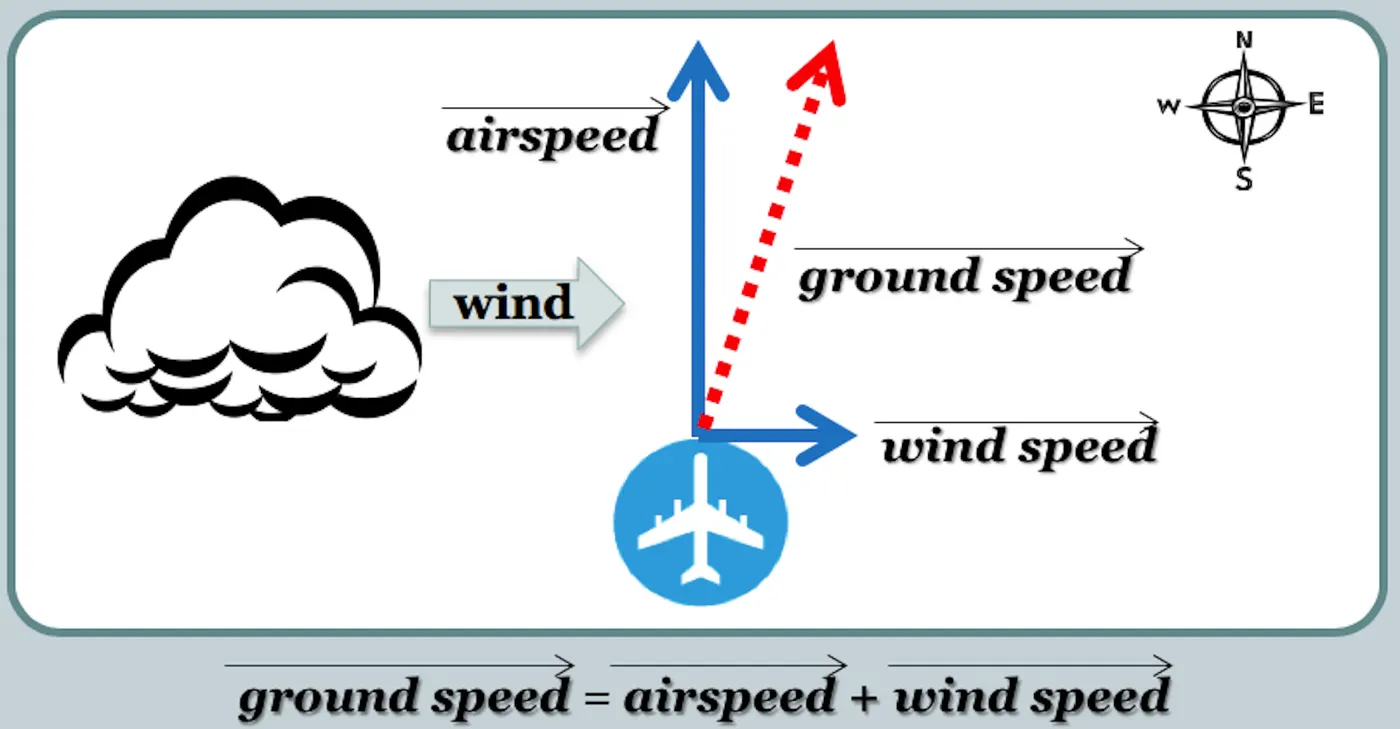
Ground speed is the horizontal speed of an aircraft relative to the ground. An aircraft heading vertically would have a ground speed of zero. Information displayed to passengers through the entertainment system of airlines aircraft often gives the aircraft ground speed rather than airspeed.
AIR SPEED:
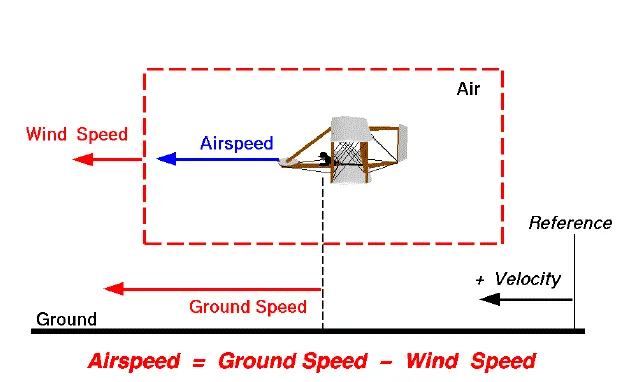
The true airspeed (TAS) also Knots True AirSpeed (KTAS) of an aircraft is the speed of the aircraft relative to the airmass in which it is flying. The true airspeed and heading of an aircraft constitute its velocity relative to the atmosphere.
TYPES OF AIRSPEEDS:
Indicated Airspeed (IAS),
True Airspeed (TAS),
Equivalent Airspeed(EAS),
Calibrated Airspeed (CAS).
DIFFERENCE BETWEEN GROUND SPEED AND AIR SPEED:
The important quantity in the generation of lift is the relative velocity between the object and the air, which is called the airspeed. Airspeed cannot be directly measured from a ground position, but must be computed from the ground speed and the wind speed. Airspeed is the vector difference between the ground speed and the wind speed.
Airspeed = Groundspeed - Windspeed
The airspeed is equal to the ground speed. But if the wind is blowing in the same direction that the aircraft is moving, the airspeed will be less than the ground speed.
The groundspeed is nothing but, for a reference point picked on the ground the aircraft moves relative to the reference point at the ground speed.
Groundspeed = Airspeed + Windspeed
Ground speed is also a vector quantity so a comparison of the ground speed to the wind speed must be done according to rules for vector comparisons.
3)WHY IS IT NOT RECOMMENDED TO USE AIRCRAFT ENGINE POWER TO MOVE IT ON THE GROUND AT AIRPORT
TOWING OF AN AIRCRAFT:
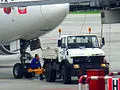
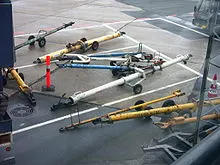
Towing is a method used by maintenance crews to move an aircraft from point A to point B based on needs of the airline without starting the engines but using a tow tractor of sufficient horsepower to move the airplane. Ground control is required before aircraft movement is attempted. In both taxi and towing, starting of the the auxiliary power unit to power up the hydraulic and electrical systems.
At lower power outputs the aircrafts operate at lower efficiency than at higher speeds or cruising speeds which will requires more fuel than in air that will cause the flight to go out fuel in the airborne.
It is also not recommended that the engine will sucks the sand and other unwanted things that will causes some engine malfunctionings.
The sound produced by the engine is higher and it causes some inhearability of the staffs nworking in the terminal building.
The jetblast produced by an aircraft engine while pushback procedure the building had a chance of some damages.
It is easy for the tow tug driver to see the runway than the pilot who is sitting in the cockpit.
4)HOW AN AIRCRAFT IS PUSHED TO RUNWAY WHEN IT'S READY TO TAKE OFF:
TAXING (or) TAXYING:
Before an aircraft can take off, it has to taxi (move on the ground under its own power) from the airport terminal to the runway. Aircraft always take off into a headwind, as this increases airspeed and so reduces the length of the take-off run, so the plane will taxi to the downwind end of the runway.
PUSHBACK OF AN AIRCRAFT:
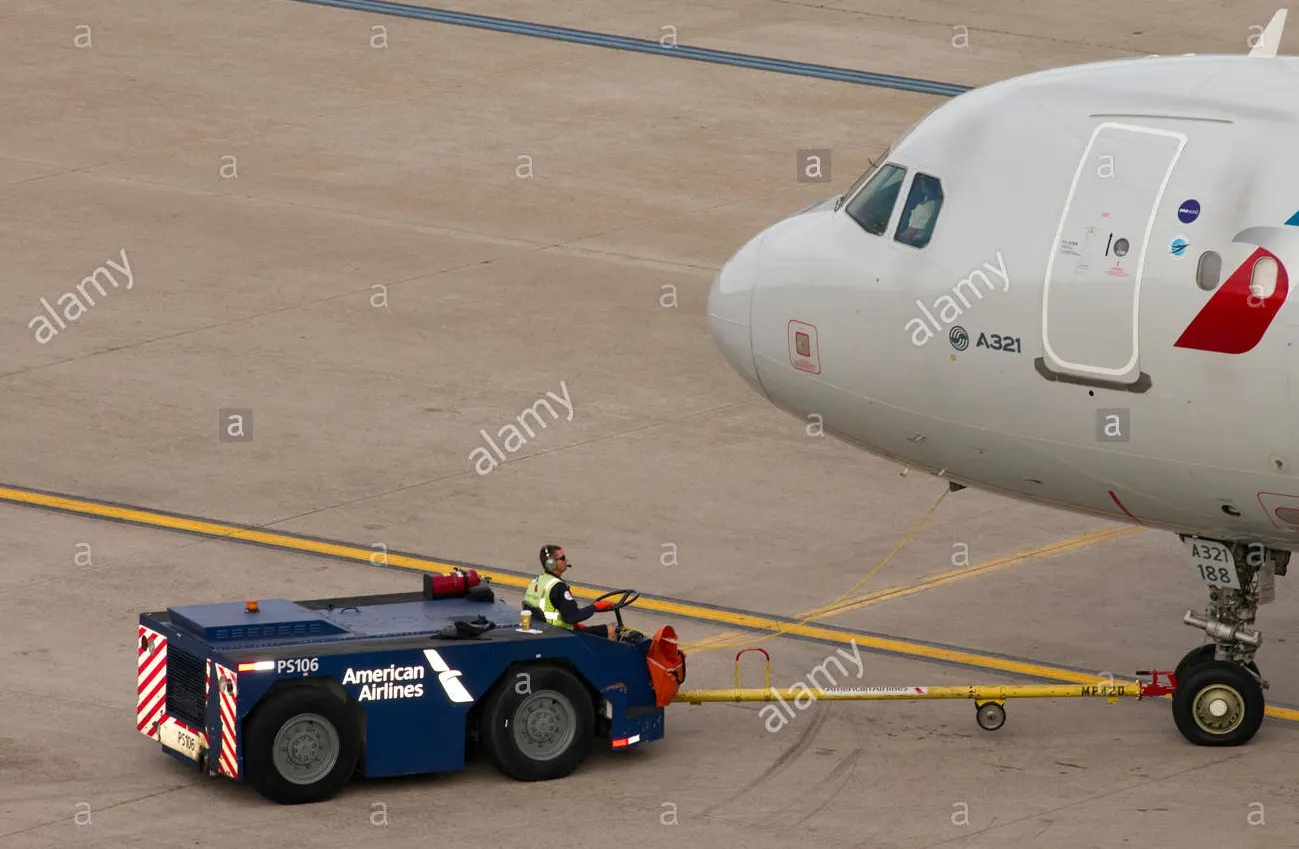
Pushback is when the flight crew is ready to depart (doors closed and jetway removed) and they require to be towed out onto the tarmac to initiate engine startup. Once the aircraft is clear, the engines are started and detachment of the tow bar from the nose gear is attempted.
SPEEDS WHILE TAXIING:
The taxiing is done at speeds of approximately 20 knots (23mph), and below 30 knots (35 mph), unless on the takeoff roll. In low visibility conditions and in congested ramp areas we taxi more slowly, perhaps 10–15 knots. Cornering speeds are lower, generally a maximum speed of 10 knots for tight 90 degree turns.
STEERING WHILE TAXIING:
Steering is achieved by turning a nose wheel or tail wheel/rudder; the pilot controls the direction travelled with their feet. Larger jet aircraft have a tiller wheel on the left side of the cockpit that acts as a steering wheel allowing the nosewheel to be turned hydraulically.
5)TAKE-OFF POWER, TYRE PRESSURE, ROLLING RESISTANCE, TYRE DESIGN AND BRAKING:
LANDING OF AN AIRCRAFT:
Aircraft usually land at an airport on a firm runway generally constructed of asphalt concrete gravel or grass. To land, the airspeed and the rate of descent are reduced such that the object descends at a low enough rate to allow for a gentle touch down. Landing is accomplished by slowing down and descending to the runway. This speed reduction is accomplished by reducing thrust and/or inducing a greater amount of drag using flaps, landing gear or speed brakes.
V-SPEEDS:
In aviation, V-speeds are standard terms used to define airspeeds important or useful to the operation of all aircraft. These speeds are derived from data obtained by aircraft designers and manufacturers during flight testing for aircraft type verification testing. Using them is considered a best practice to maximize safety of an aircraft performance.
There are some regulations used in the Aviations called as v-speeds regulatory.
These are defined by the manufacturer while the design of the aircraft is done with respect to the mass, size and the other factors.
TAKE-OFF POWER:
There are two types of take-off operations occurs, they are
For light aircrafts,
For huge aircrafts.
Before takeoff, the engines, particularly piston engines, are routinely run up at high power to check for engine-related problems. The aircraft is permitted to accelerate to rotation speed (often referred to as Vr). The term rotation is used because the aircraft pivots around the axis of its main landing gear while still on the ground.
take-off for light aircrafts:
For light aircraft, usually full power is used during takeoff. It requires all the power from the engine to take-off an aircraft.
take-off for huge aircrafts:
For huge aircraft may use a reduced power for takeoff, where less than full power is applied in order to prolong engine life, reduce maintenance costs and reduce noise emissions.
In some emergency cases, the power used can then be increased to increase the aircraft's performance.
SIGNIFICANCE OF AN AIRCRAFT TYRES:
When it comes to safety, tyres are one of the most important components of aircraft. They help to absorb the shock of landing and provide cushioning. It also provides the necessary traction for braking and stopping of an aircraft.
It is designed to withstand extremely heavy loads while landing, take off, taxing and parking. The number of wheels required for aircraft increases with the weight of the aircraft, as the weight of the aeroplane needs to be distributed more evenly.
The tyres works under extreme conditions, carrying up to 340 tons and accelerating at over 250 km/hour at takeoff, in addition to enduring varied environmental stress when in flight and taxiing.
TYPES OF AIRCRAFT TYRES:
There are two types of aircraft tyres, they are
Radial tyres,
Bias-ply tyres.
RADIAL TYRE:
A radial tyre has the fibre strands of the ply fabric oriented with and at 90° to the direction of rotation and the tyre sidewall. This restricts flexibility bidirectionally and the flexibility of the sidewall while it strengthens the tyre to carry heavy loads.
BIAS-PLY TYRE:
A bias-ply tyre has the fabric bias oriented with and across the direction of rotation and the sidewall. Since fabric can stretch on the bias, the tyre is flexible and can absorb loads. Tyre strength is obtained by adding plies.
TYRE DESIGN:
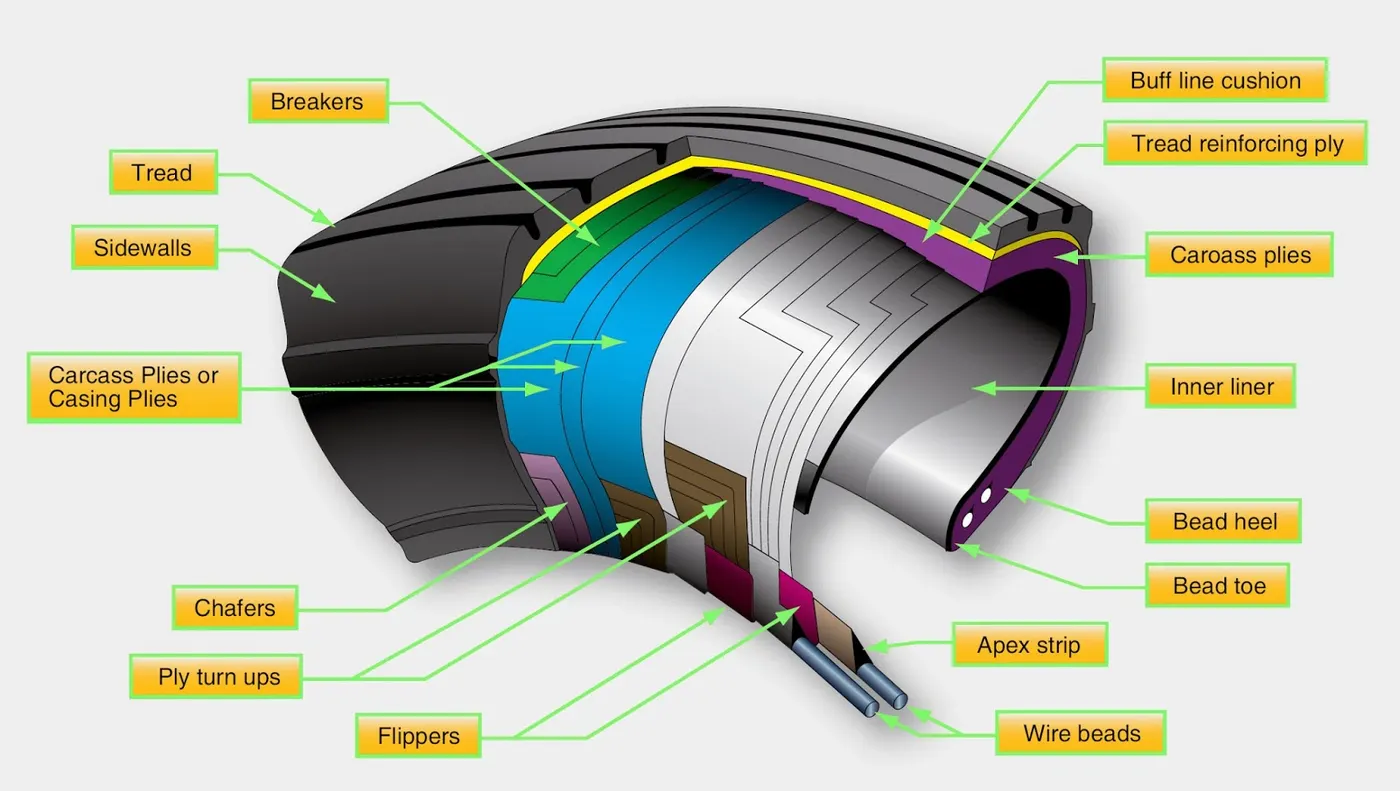
An aircraft tyre is designed to withstand extremely heavy loads for short durations. The number of tires required for aircraft increases with the weight of the aircraft, as the weight of the airplane needs to be distributed more evenly. Aircraft tire tread patterns are designed to facilitate stability in high crosswind conditions, to channel water away to prevent hydroplaning, and for braking effect.
Retreading:
Retreading is methods of restoring a worn tyre by renewing the tread area or by renewing the tread area plus one or both sidewalls. Repairs are included in the tyre retreading process.
Load Rating:
Load rating is the maximum permissible load at a specified inflation pressure.
Ply Rating:
Ply Rating is used to identify the maximum recommended load rating and inflation pressure for a specified tyre. It is an index of tyre strength.
Speed Rating:
The speed rating is the maximum takeoff speed to which the tyre has been tested.
Skid Depth:
Skid depth is the distance between the tread surface and the deepest groove as measured in the mould.
Aircraft tyres must have an approved speed and load rating and have sufficient clearance when retracted through landing gear to allow for tyre growth. Tyre growth is the increase in the size of the tyre due to centrifugal forces at high speed.
Most of the tyres now are radial in nature and they are tubeless.
There are chines used in the tyres. Chines are also called deflectors. Chine tyre used on the nose wheel of aircraft, specially fuselage-mounted jet engines. It diverts runway water away from the engine inlets.
Chines are circumferential protrusions that are moulded into the sidewall of nose tyres that deflect water sideways to help reduce excess water ingestion into the engines. Tyres may have chines on one or both sides, depending on the number of nose tyres on the aircraft.
TYRE PRESSURE:
Aircraft tires generally operate at high pressures, up to 200 psi (14 bar, 1,400 kpa) for airliners, and even higher for business jets. The main landing gear on the concorde was typically inflated to 232 psi (16.0 bar), whilst its tail bumper gear tires were as high as 294 psi (20.3 bar).
Tests of airliner aircraft tires have shown that they are able to sustain pressures of maximum 800 psi (55 bar, 5,500 kPa) before bursting. During the tests the tires have to be filled with water, to prevent the test room being blown apart by the energy that would be released by a gas when the tire bursts.
Aircraft tires are usually inflated with nitrogen to minimize expansion and contraction from extreme changes in ambient temperature and pressure experienced during flight.
The smoke is the result of a wheel which is not turning in flight making contact with a stationary runway. The wheel must accelerate to the landing speed very quickly. During that acceleration, there is a short time when the tire is skidding, which produces the smoke.
ROLLING RESISTANCE:
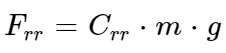
It is a force that resists the motion of a body that rolls on a surface or on ground. In aircrafts the rolling resistance contributes majorly to its fuel economy. When an aircraft travels with full throttle on runway with wet conditions the tyres tend to get the resistance force. This even happens during the landing. This phenomena can be reduced by providing low rolling resistance tyres or radial tyres and it could also improve the fuel economy of the aircraft.
This is expressed in terms of;
 (N)
(N)
Where,
 = Coefficient of rolling resistance,
m = mass of the aircraft(kgs),
g = Accelaration due to gravity(9.81m/s^2).
BRAKE FORCES ACTING ON THE AIRCRAFT:
There are four main forces acting on the aircraft while climb, flight and landing.
Drag:
It is the force which acts opposite to the direction of the thrust.
Weight:
It is force acting on the aircraft due to the gravity.
Lift:
It is the force acting perpendicular to relative motion and opposes weight.
Thrust:
It is forward force created by the engine or the propellers ans also it is the responsible for the movement of the aircraft.
TYPES OF BRAKE SYSTEMS IN AN AIRCRAFT:
Air brakes:
In Aviation air brakes or speed brakes are a type of flight controls used on an aircrafts to increase drag or increase the angle of approach during landing.
Reverse thrusters:
Thrust reverser systems are featured on many jet aircrafts to help slow down just after touch-down, reducing wear on the brakes and enabling shorter landing distances.
Spoilers:
Most often, spoilers are plates on the top surface of a wing that can be extended upward into the airflow to spoil the streamline flow. By so doing, the spoiler creates a controlled stall over the portion of the wing behind it, greatly reducing the lift of that wing section.
Disc brakes:
In the landing gear, used to brake the wheels while touching the ground. These brakes are operated hydraulically or pneumatically. In most modern aircraft they are activated by the top section of the rudder pedals ("toe brakes"). In some older aircraft the bottom section is used. Levers are used in a few aircraft.
6)CALCULATION OF FORCE AND POWER REQUIRED TO PUSH / PULL AN AIRCRAFT BY A TOWING VEHICLE:
To calculate the forces, there are two forces acting on the towing tug or tractor, they are
Rolling resistance force,
Aerodynamic drag force.
The towing vehicle used for the calculation is TLD TMX-550-55.
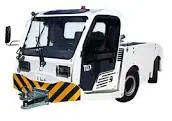
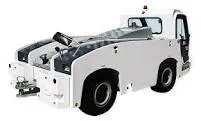
This acts as both pushback and the towing processes.
Gross Weight: 121,254 lbs(55,000 kgs)
Draw Bar Pull(DBP): 88,400 lbs(40,097.57 kgs)
Width: 2,980 mm (2.98 m)
Height: 1,755 mm (1.755 m)
Coefficient of rolling resistance(μrr) =0.02 (Truck tyre in asphalt concrete road)
Velocity of the tug (V in m/sec)= 7.50 m/sec
Tire Size = 16.00R25 = 0.635 m
Aircraft: Boeing 787 10
Typical Operating Empty Weight: 298,700 lbs. (135,500 kg)
Drag coefficient (Cd)= 0.0265
Width: 75.12 m
Height: 23.45 m
1)To find the rolling resistance force:
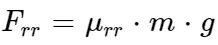
The mass of the aircraft and the tug vehicle is added up because the friction force is same for both the vehicles at the same surface the vehicle is moving.
mass(m)= mass of the tug+mass of the aircraft
mass= 55,000+135,500= 190,500 kg
F_rr = 1,90,500*0.02*9.81
F_rr= 37,376.10 N
To find the Aerodynamic drag force

rho= 1.225 kg/m^3
Area of an aircraft = height * width of an aircraft
A= 75.12*23.45= 1,761.564 m^2
F_ad= 0.5*1.225*1761.564*0.0265*(7.50)^2
F_ad= 1608.321 N
To find the total force:
F_te=F_rr+F_ad
F_te= 37376.10+1608.321
F_te= 38,984.421 N
To find the Torque of the vehicle
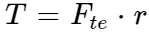
where
r= radius of the tug's wheel(m)
T= 38984.421*0.635
T= 24,755.107 N-m
To find Power required by towing vehicle:
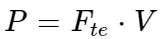
P= 38,984.421*7.50
P= 292,383.1575 W
P= 292.39 KW
Energy can also be calculated here
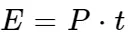
where
P= Power of required by the towing vehicle
t= Time taken for towing
Let us consider time taken for towing as 10mins
E= 292.39*(600/3600)
E= 48.73 KWh
RESULTS:
Total tractive Force of a tug (F_te) = 38,984.421 N,
Torque required to tow an aircraft (T)= 24,755.107 N-m,
Power required to tow an aircraft (P)= 292.39 KW,
Energy required to tow an aircraft W.R.T. time t,(E)=48.73KWh.
7)CALCULATION AND DESIGN OF A POWERTRAIN BLOCK IN A TOWING VEHICLE OF AN AIRCRAFT:
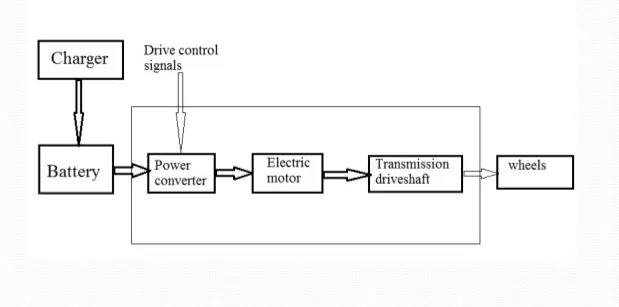
DESIGN OF A POWERTRAIN BLOCK:
Battery source
↓
Power converter
↓
Motor
↓
Speed control of motor
POWER REQUIREMENTS:
From the above problem the power is found to be as following,
Power = 568.86 KW
Torque = 43,364.37 N-m
Energy = 48.73 KWh.
The battery shold have the capacity to store the energy created and sholud able to deliver this power to the towing and pushback process throughout the run time.
All these values are based upon certain assumptions and for TLD's TMX-550-55(m=55,000 kg) assuming its
Towing Velocity = 27Km/h,
Radius of wheel = 0.635 m,
Towing time = 10 mins.
MOTOR SELECTION PARAMETRES:
For our assumption we take simple Brushlees DC motor with power rating of 210kw.
POWER CONVERTER:
In this instance we can assume DC-DC power converter(Boost converter).
In addition Bidirectional DC-DC converter is used for regenrative braking process.
It is selected because of the coverter step up the voltage level from the input voltage. So only the motor is able to run at required power output level.
SPEED CONTROL OF A MOTOR:
To control the speed of a motor duty cycle is varied from lower to higher values and vice versa.
This is done because when the power from the battery flows directly to the motor there is no any control is available. To ensure this the control drives are used.
DUTY CYCLE:
The values we got after considering these values are the least value to tow this airliner. Now to find the maximum value of duty cycle we need to find the input power supplied to airliner to get this values of parameters required to tow the airliner.
As, vehicle speed needs to be varied for better control so it is done using different values of duty cycle which is actually done by varying voltage supply to motor. And as we know by studying speed control stratageies for EV power is varied using different voltage values.
So, Duty Cycle can be written as
Duty Cycle = Power Output / Power Input
As, we already have power output value now we only need to find power input value which now has to be again assumed for this model.
As,
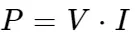
Assuming
Input Voltage supply ( Battery Specification ) = 10000v
Input current value = 45A
So,
Power Input = 10000*45=450,000W
Power input = 450KW
So, duty cycle will be
Duty cycle = 450/568.86
Terminal voltage = 1000*0.8
Duty cycle = 0.791
Duty cycle = 79%
Block Diagram Of Electric Towing Tug:
RESULTS:
From the above calculation the duty cycle is calculated by variaying the voltage source and we get a duty cycle of 79% that is 700v in the motor terminal gives power to tow the aircraft W.R.T time taken.
The DC-DC power converter unit is used to achieve the full power required to rotate the motor.
The speed control of the motor is achieved by switching the data from minimum to maximum the duty cycle is varied.
With the help of the Bidirectional DC-DC power converter the energy is stored back to the battery when the brakes are applied(Regen.Braking).