Project 1_Comparative study of different storey buildings for Seismic forces
Objectives of this projects are
- Know how to extract different seismic responses for a structure
- How easily alter certain properties in an ETABS model
- Know the factors influencing the dynamic chareteristics of a building
- Know the factors influencing timw period of a building
- Know the factors influencing mode shapes of a building
Given is the details of structural and architectural configurations of 10 different buildings. Details of the 10 different buildings are shown beliw
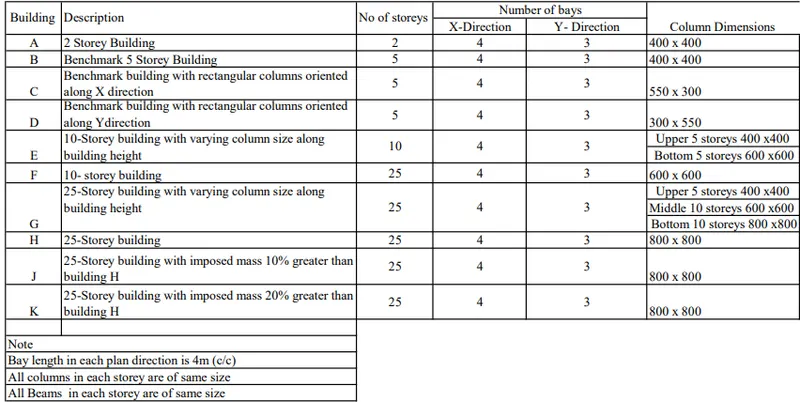
Modelling of building A - 2 storey building with column dimensions 400 mm x 400 mm
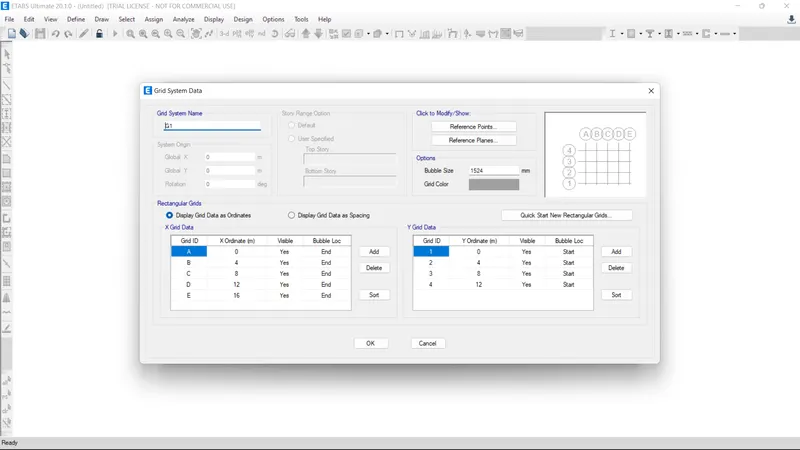
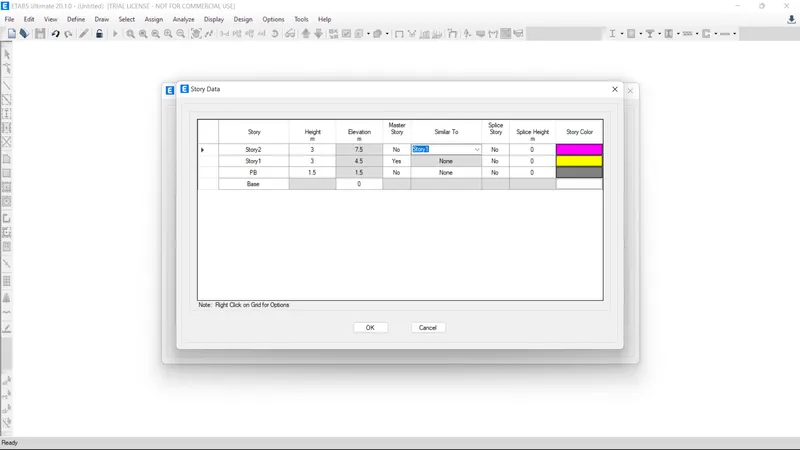
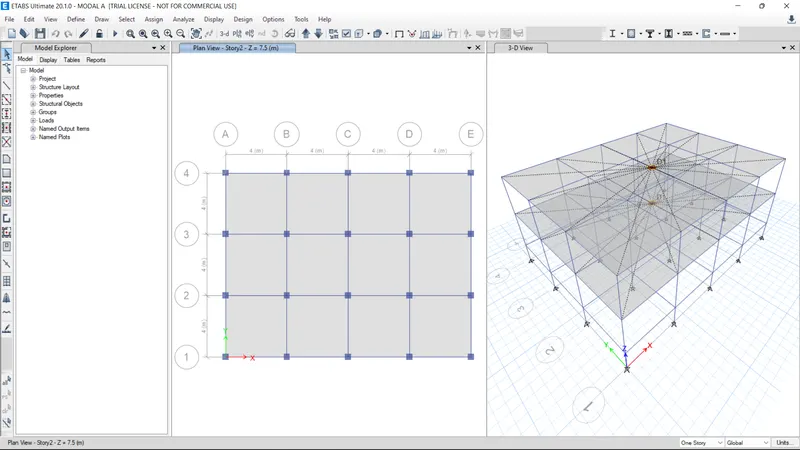
Grid and storey data of building A
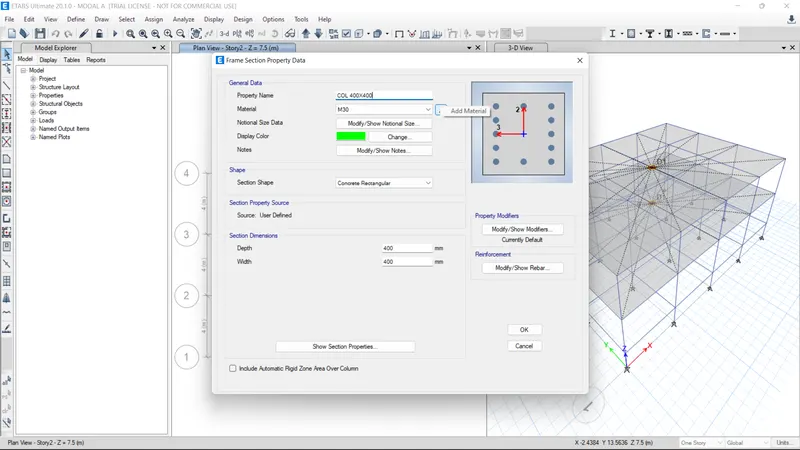
Material properties for concrete and steel for all the floors are M30 grade and Fe 415 grade respectively.
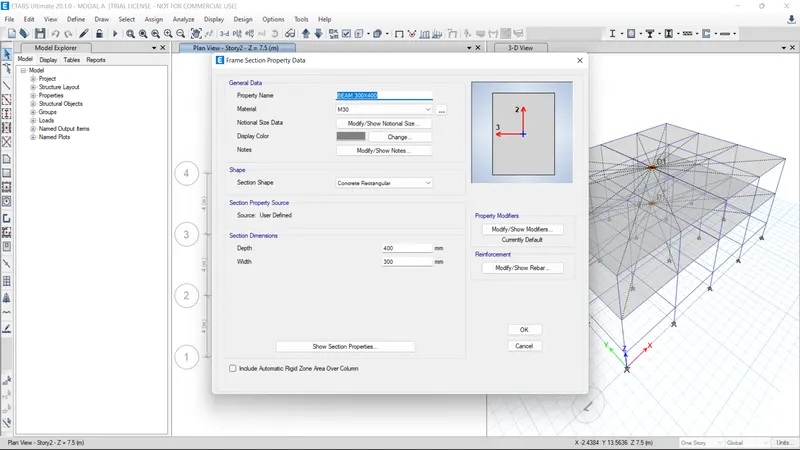
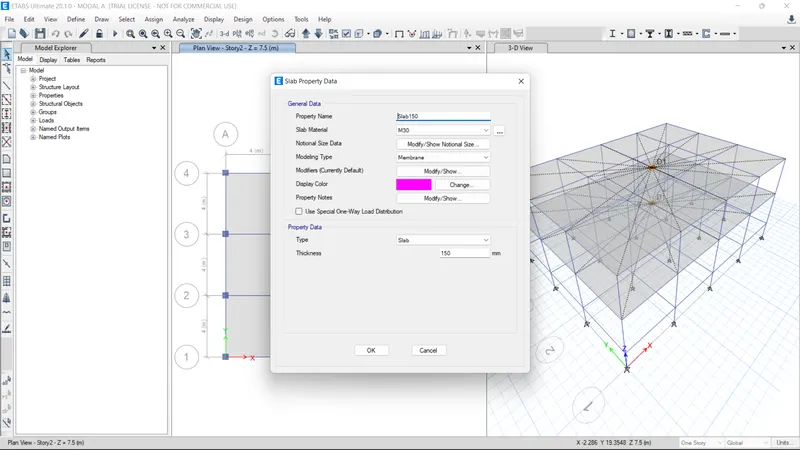
Sectional properties of Beams Columns and Slab
model of Building A completed with structural elements and diaphrams. columns are pinned at base as per given in the problem.
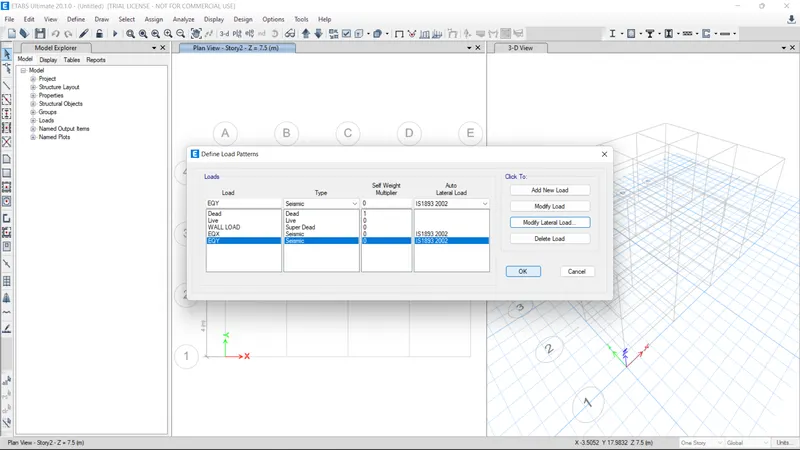
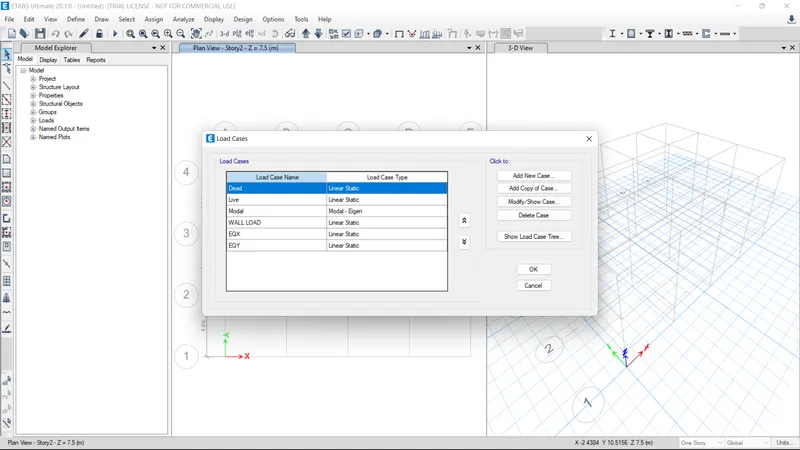
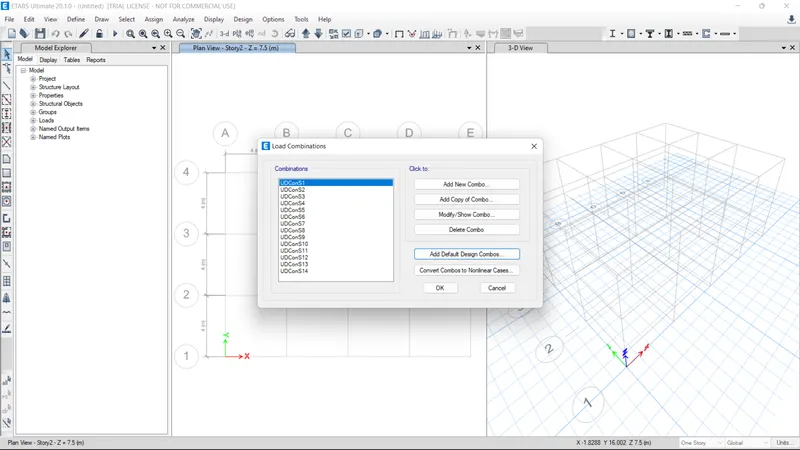
Seismic loads are provided without eccentricity (EQX and EQY only). Wall loads are applied as super dead load. Load cases and default load patterns provided as shown below.
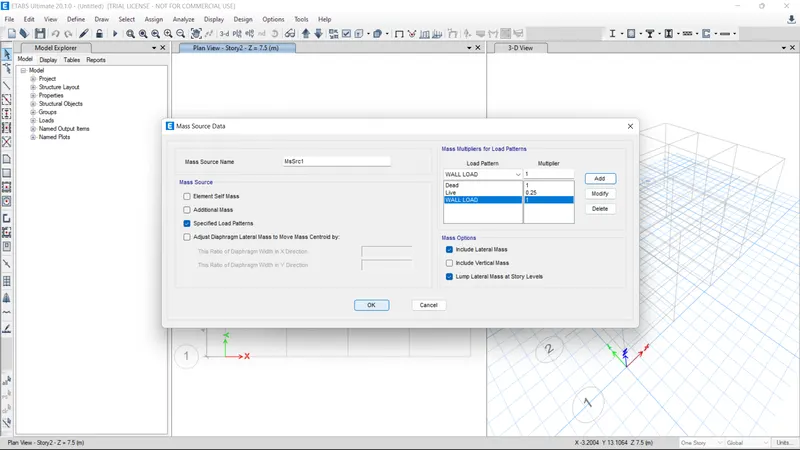
mass sources are defined with multipliers provided as per is codes. (Dead load=1, Live load = 0.25, Super dead=1)
Load patterns, Load combinations, mass sources, Load cases provided same for all the buildings except the increment in live load in the last two buildings.
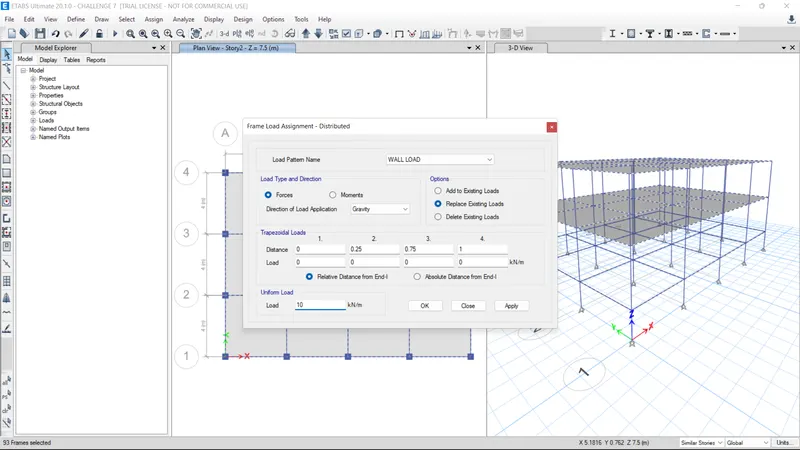
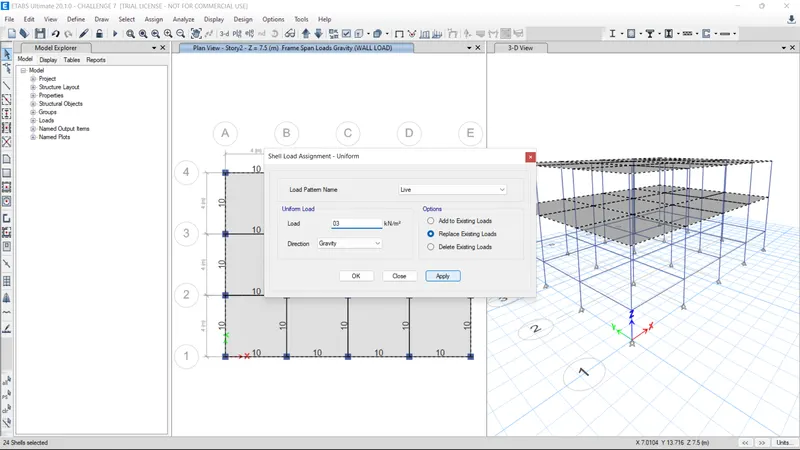
Loads are super dead load for uniform wall loads and live loads are applied for imposed loads in slabs.
All models are completed and analyis was complated. All beams having size 300mm x 400mm
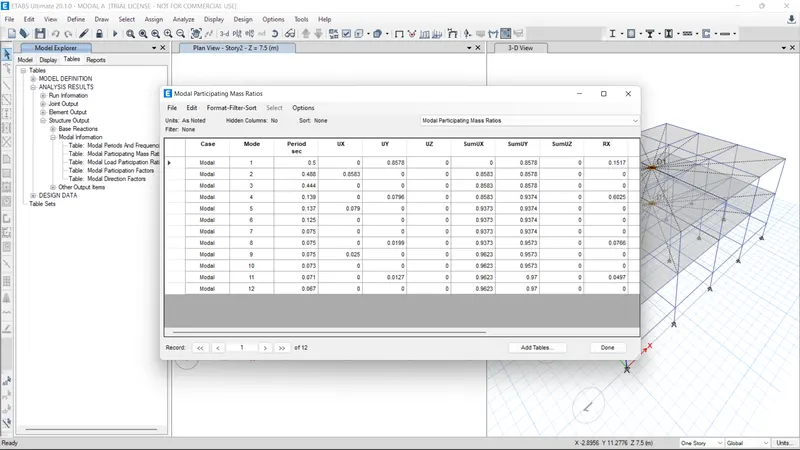
Model A - Two Storey building with 400x400 mm column size . Modal results are also shown below.
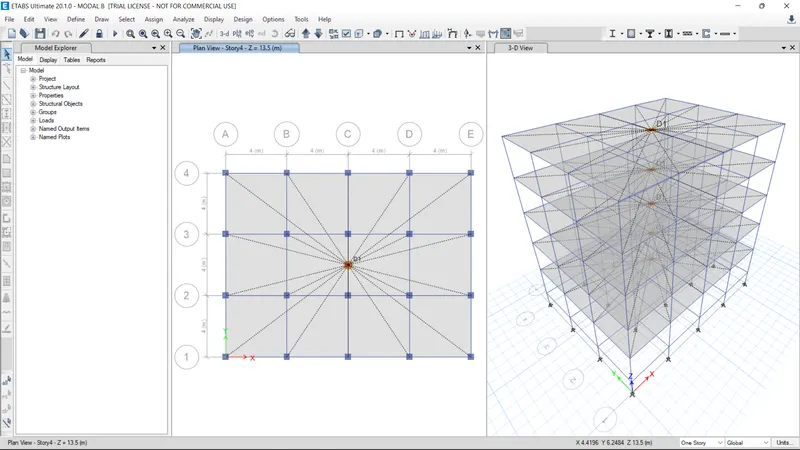
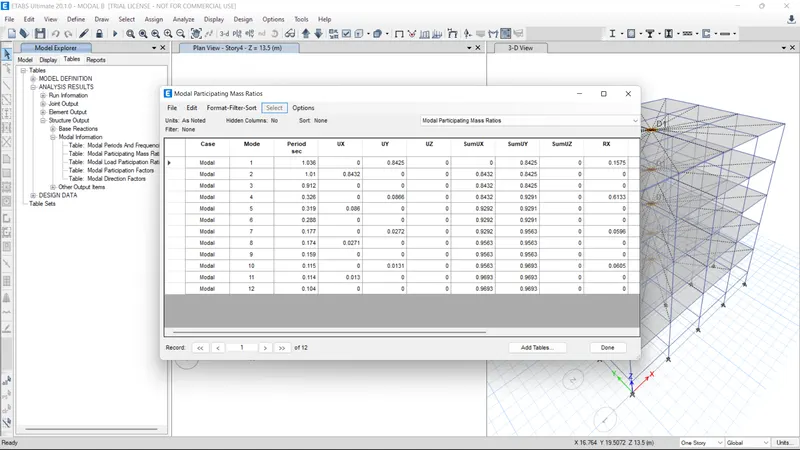
model B - Benchmark 5 storey building with 400 mm x 400 mm column size.
Model C - Benchmark 5 storey building with columns of size 550mm x 300mm aligned along X direction
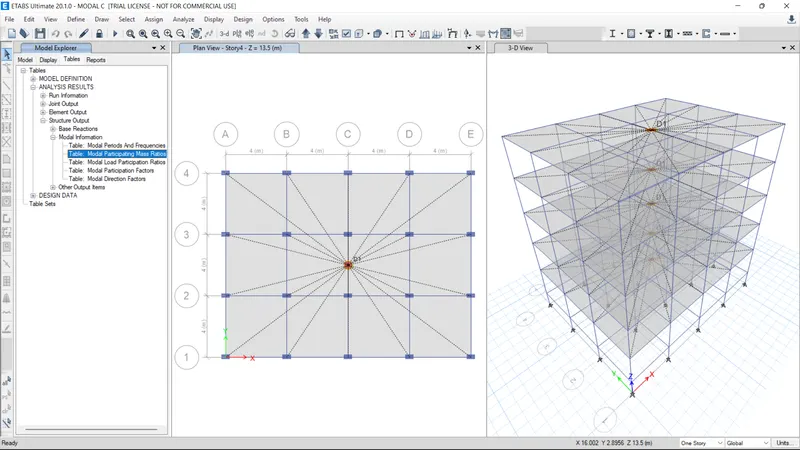
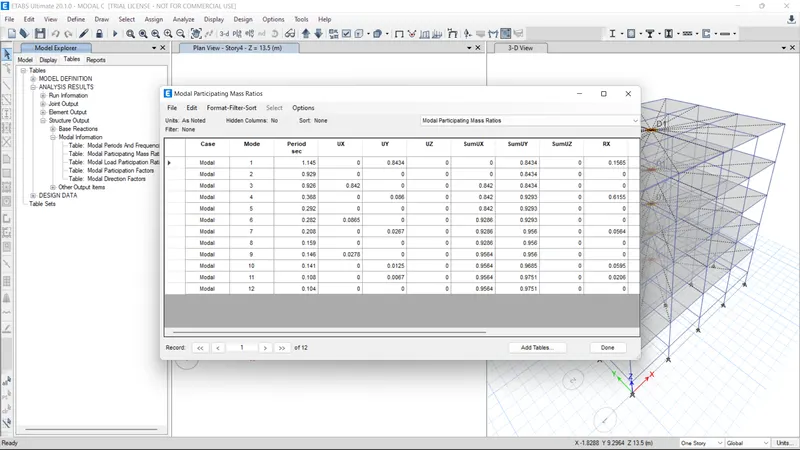
Model D - Benchmark 5 storey building with columns of size 550mm x 300mm aligned along Y direction
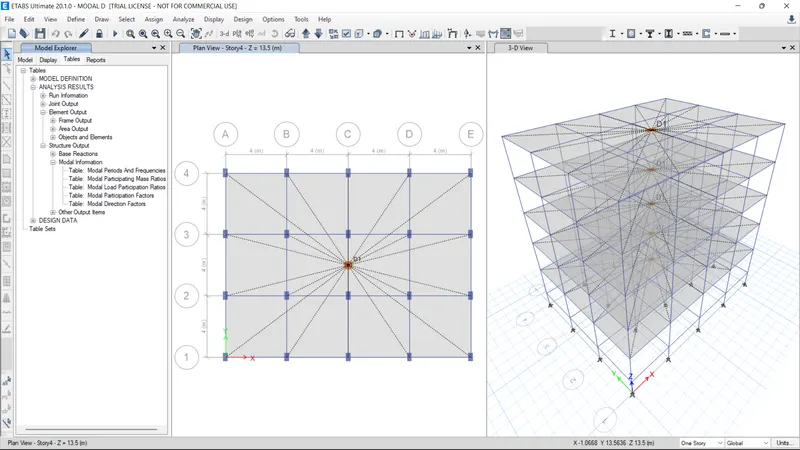
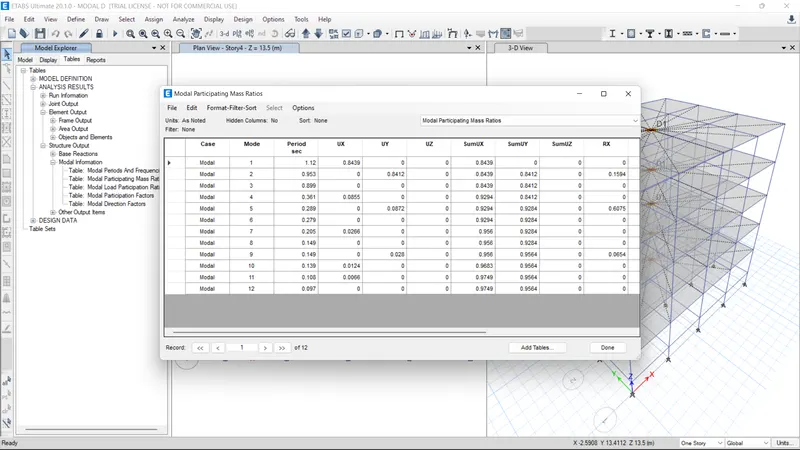
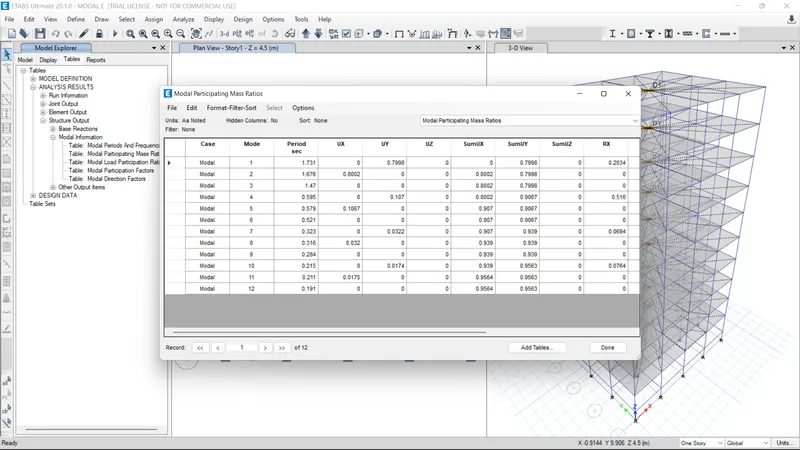
Model E - 10 Storey building with varying column sizes along height . Upper 5 storys 400mmx x400mm and lower 5 stories 600mm x 600mm
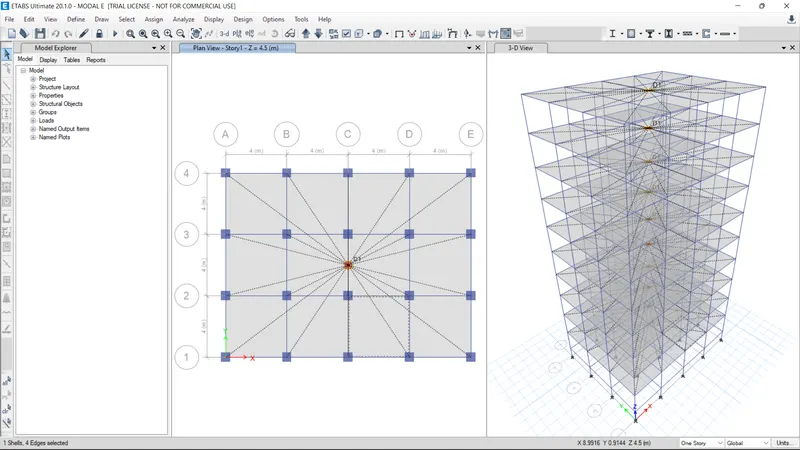
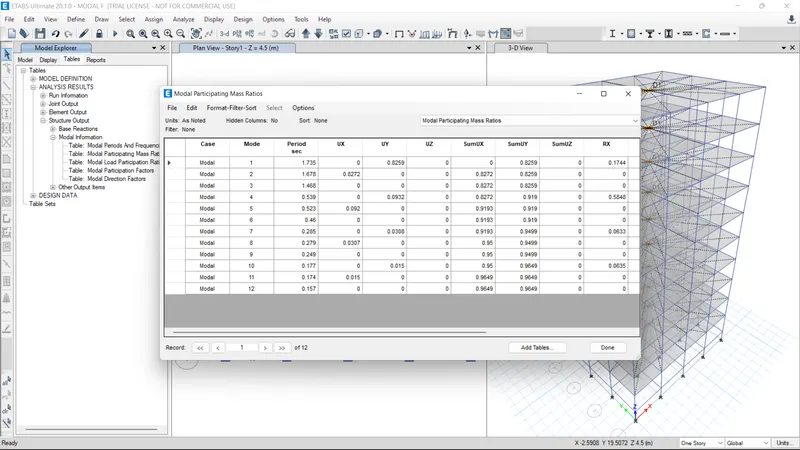
Model F - 10 story building with column size 600mm x600mm
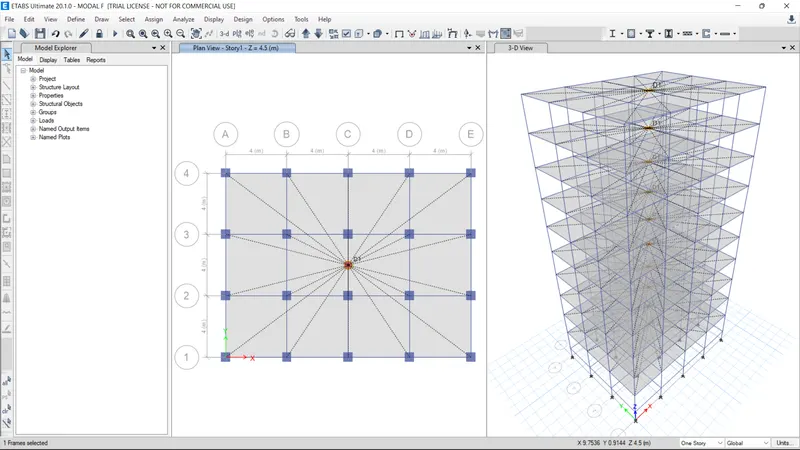
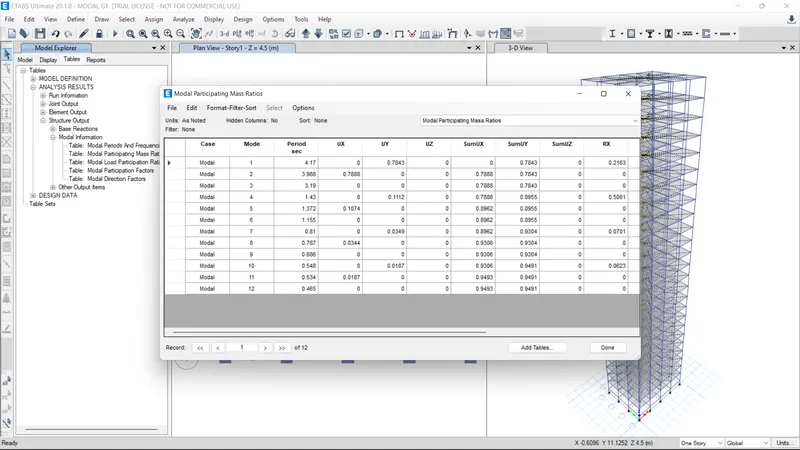
Model G - 25 Storey building with varying column sizes along height . Upper 5 storys 400mmx x400mm and middle 10 stories 600mm x 600mm and bottom 10 storeys 800mm x 800mm
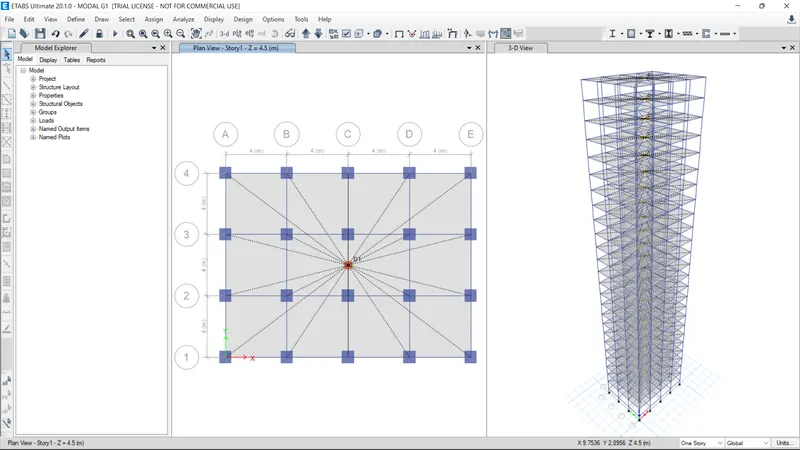
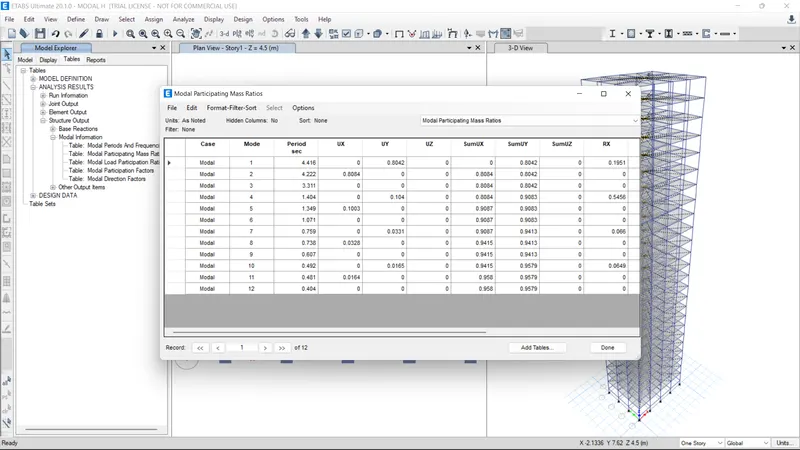
Model H - 25 story building with column size 800mm x800mm
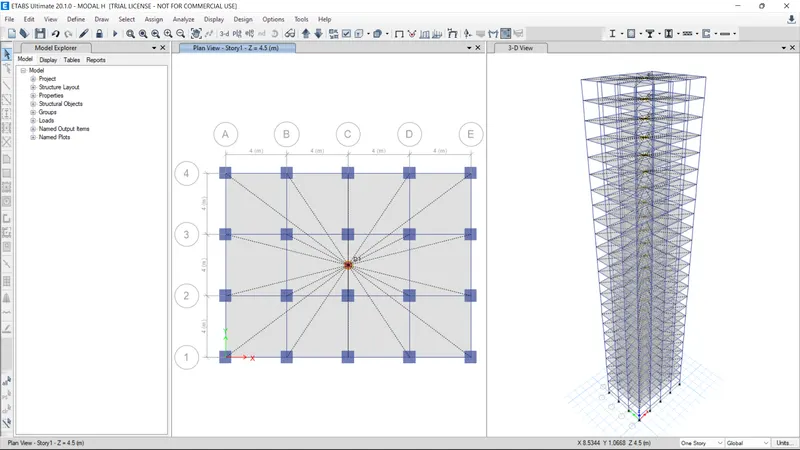
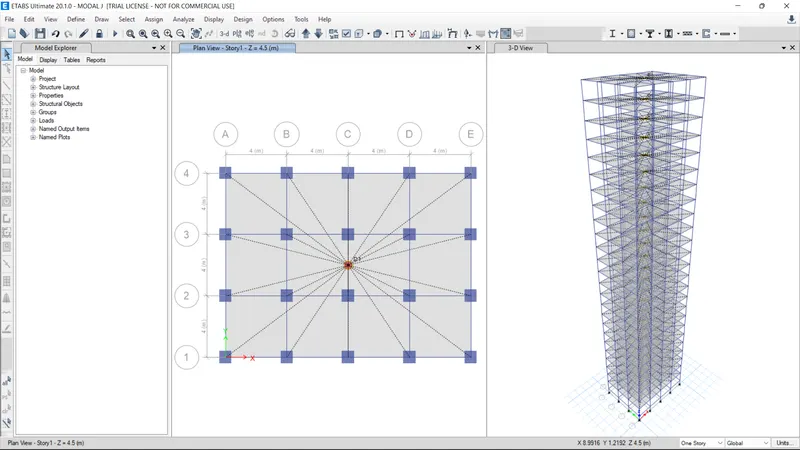
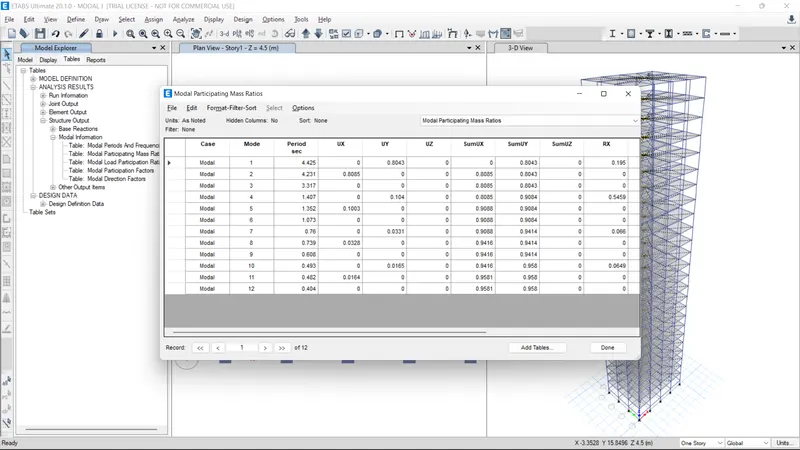
Model J - 25 Storey building with column size 800mm x 800mm with imposed load 10% morethan building H
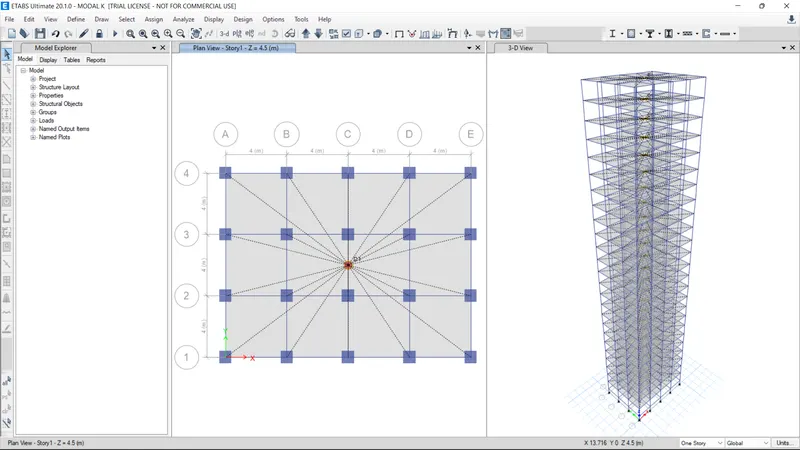
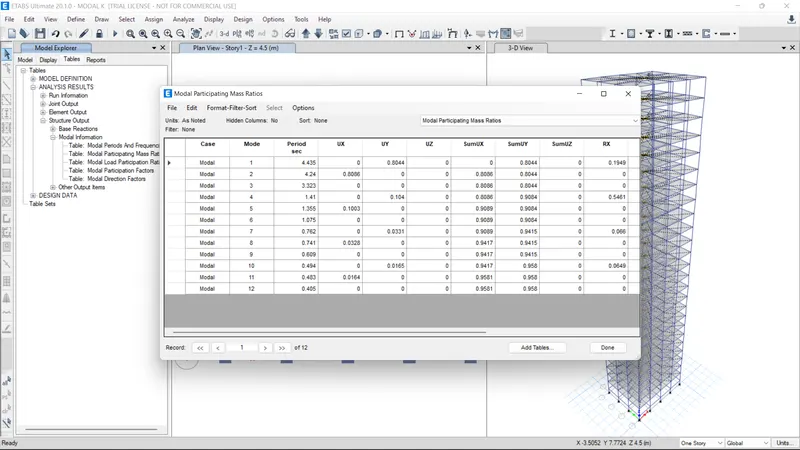
Model K - 25 Storey building with column size 800mm x 800mm with imposed load 20% morethan building H
ANALYSIS RESULTS
1) EFFECT OF STIFFNESS ON TIME PERIOD
a) Between building E and building F - Building with same storey heihgt (10 storeys) with same and varying column sizes along the height.
b) Between building building G and building H - 25 Storey building with varying column sizes along height . Upper 5 storys 400mmx x400mm and middle 10 stories 600mm x 600mm and bottom 10 storeys 800mm x 800mm and 25 story building with column size 800mm x800mm
Case a
Building E is a 10 Storey building with varying column sizes along height . Upper 5 storys 400mmx x400mm and lower 5 stories 600mm x 600mm. Building F is 10 story building with column size 600mm x600mm.
Mode 1 time period of building E is 1.731 sec
Mode 1 time period of building F is 1.735 sec
From the analysis of Mode 1 time period of these two buildings we can understand that for buildings with less storey heights time period have not much significant effect in the time period of the building even for building with varying column sizes along height (size decreases along height). There can be a chance of lesses time period with varying column size along height due to smaller masses lumped at upper floor levels causing smaller lateral loads and smaller deflection. But from the analysis for smaller heights it has no significant effect.
Case b
Mode 1 time period of building G is 4.17 sec
Mode 1 time period of building H is 4.416 sec
from the result we can see that time period changes for high rise buildings with varying column sizes along height. This is because for uniform column sized buildings lumped mass at each floor levels is more compared to decreasing column sizes along height. more mass at floor levels causes large lateral force to attract causes larger time periods and more lateral deflection. Thats why for building G have lesser time period compared to building H.
INFERENCE
In general as the height of the building increases, its mass increases but its overall stiffness decreases. Hence natural period of the building increases with height. for building with decreasing column size along the height means less mass lumped at top causes smaller time period. But this effect is less significant for low rise buildings.
2) EFFECT OF MASS ON TIME PERIOD
Between building H,J,K - mass increment is provided as increase in live load on each floor. All the three buildings have same 25 storeys and same column size of 800mm x 800mm. For building H live load applies as 3 kN/M2 for building J -3.3 kN/m2 (10% increment in live load from building H) and for building K it is 3.6 kN/m2 (20% increment in live load from building H).
Mode 1 time period of building H is 4.416 sec
Mode 1 time period of building J is 4.425 sec
Mode 1 time period of building K is 4.435 sec
from the results it is evident that as the mass of the structure increases time period is also increases. this is becuase the seismic mass of a building is directly proportional to the lateral load acting on the structure. Seismic mass is sum of the effective mass of a building at each floor level under lateral loading which is calculated as the full dead load plus a fraction of a live load accordning to the codes of different countries/regions.
INFERENCE
In general as the mass of the building increases its natural period of vibration also increases. All the three buildings having same 25 storeys, same column size and each floor is loaded with same imposed load with increments provided in problem. So the building with lower mass have lesser time period and stiffer than the same with larger masses.
3) EFFECT ON BUILDING HEIGHT ON TIME PERIOD
Three buildings under consideration
Building A - 2 Storey building with 400x400 mm column size
Building B- 5 storey building with 400 mm x 400 mm column size.
Building F- 10 story building with column size 600mm x600mm
Building H - 25 story building with column size 800mm x800mm
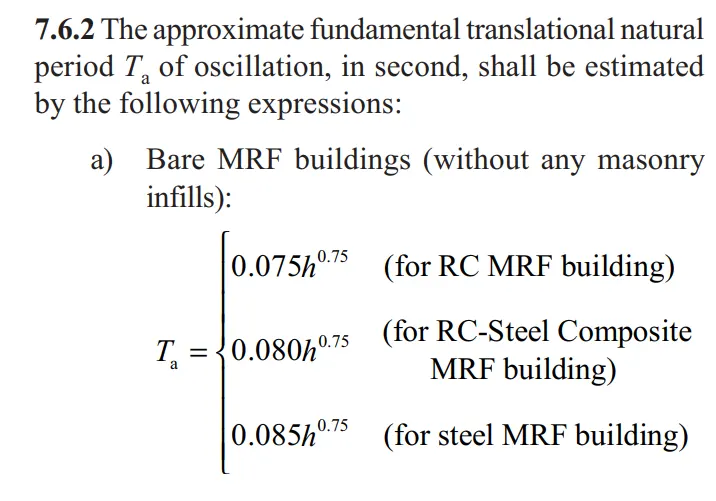
Mode 1 time period of Building A is 0.5 sec
Mode 1 time period of Building B is 1.036 sec
Mode 1 time period of Building F is 1.735 sec
Mode 1 time period of Building H is 4.416 sec
from the mode 1 time period of these buildings it is clear that height of the building id directly proportional to time period as per is 1893:2016 cl 7.6.2
INFERENCE
As the height of the building increases its mass increases timeperiod increases hence overall stifness of the building decreases.
4) EFFECT OF COLUMN ORIENTATION IN TIME
Building B,C and D are compared.
Building B- 5 storey building with 400 mm x 400 mm column size.
Building C - 5 storey building with columns of size 550mm x 300mm aligned along X direction
Building D - 5 storey building with columns of size 550mm x 300mm aligned along Y direction
From the analysis fundamental mode of vibration time periods of these buildings are provided below.
Mode 1 time period of Building B is 1.036 sec
Mode 1 time period of Building C is 1.145 sec
Mode 1 time period of Building D is 1.12 sec
For building B with equal dimensional columns, response will also be same in both X and Y directions. lateral dispalcement at the floor level of building D will be more than building C in the X direction since for building C the columns are arranged in a way that longer dimensuion is aligned along x direction which will increases the stiffness in X direction. Similarly in case of Y direction.
From the storey displacement of building B is shown below
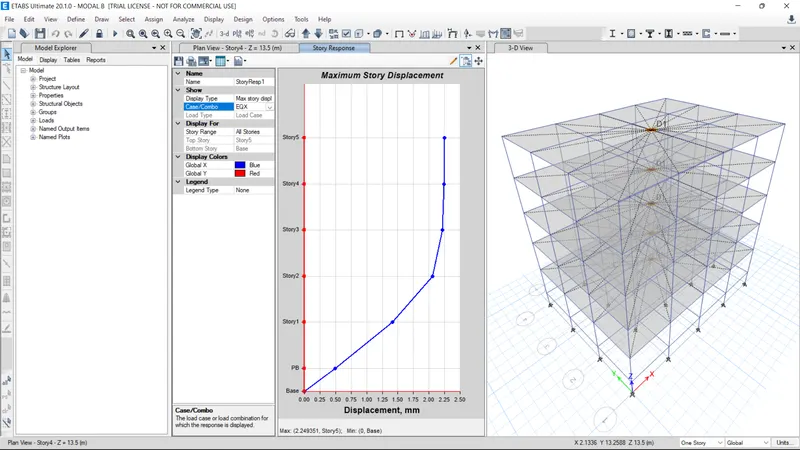
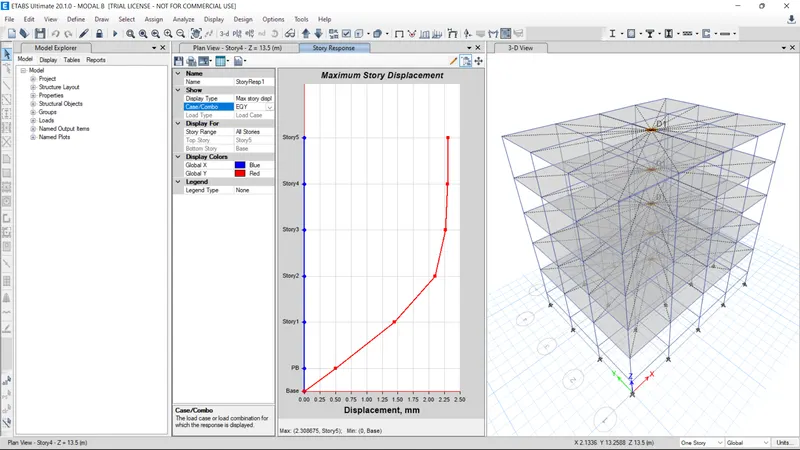
It is clear that in both x and Y directions Storey displacements are almost same since this building have same column sizes
Displacement in x direction of Building C and D under lateral loading (EQX) are shown below
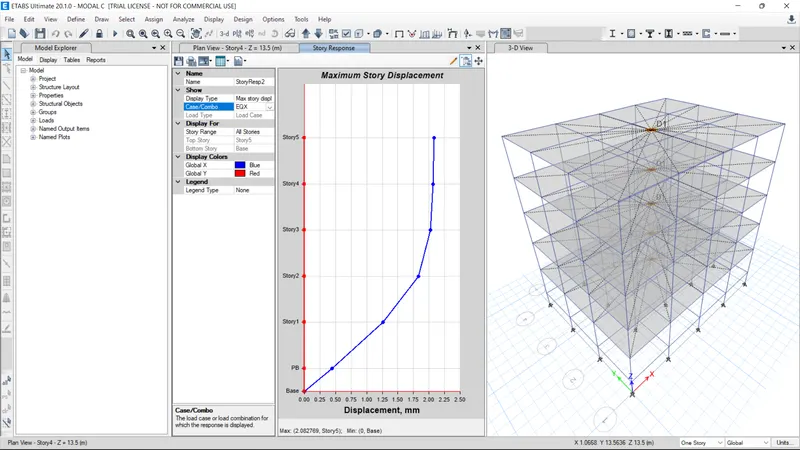
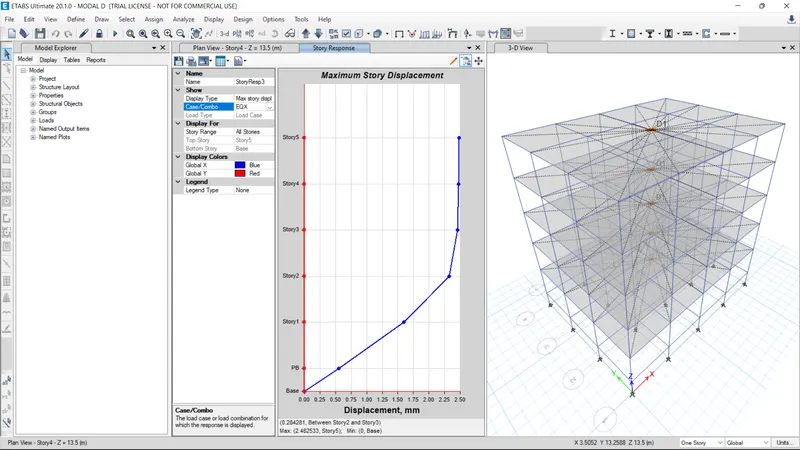
Like mentioned brfore lateral displacement of building D is more than building C in X direction under lateral loading (EQX) since more stiffness for the building in X direction. Columns are placed along X direction in building C where as for building D storey dispalcement is more in X direction.
Displacement in Y direction of Building C and D under lateral loading (EQY) are shown below
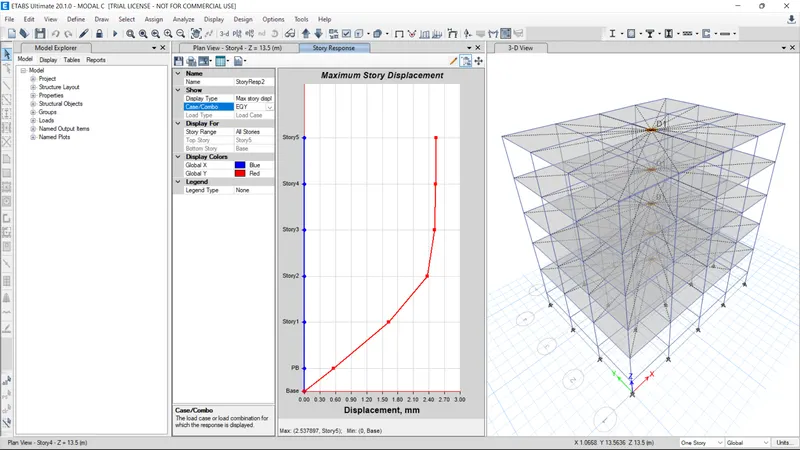
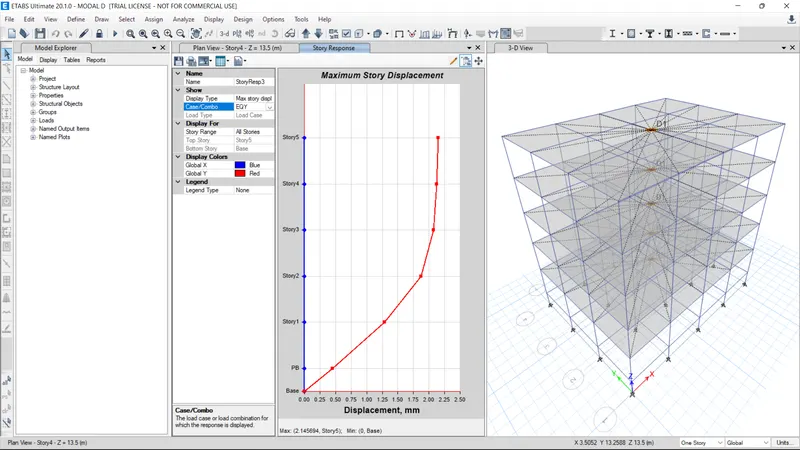
Like mentioned brfore lateral displacement of building D is more than building C in Y direction under lateral loading (EQY) since more stiffness for the building D in Y direction. Columns are placed along Y direction in building D where as for building C storey dispalcement is more in Y direction.
INFERENCE
Orientation of rectangular columns affects the lateral stiffness of the building under lateral loading in two horizontal dimensions. Lateral stiffness of the building with columns arranged in longer dimension is more than the same arranged in smaller dimension. As stiffness of the building increases time period decreases. Buildings with larger column dimention oriented in its direction reduces the translational natural period of vibration in that direction.
4) EFFECT OF FLEXURAL STIFFNESS OF STRUCTURASL ELEMENTS ON MODE SHAPES.
Under consideration is building B - 5 storey building with 400 mm x 400 mm column size.
Here we assume that horizontal elements causing stiffness is reduced to 10% by changing the flexural rigidity (as moment of inertia since modulus of elassticity remains same) to 0.1 in property modifiers of the beam section 300mm x 400mm.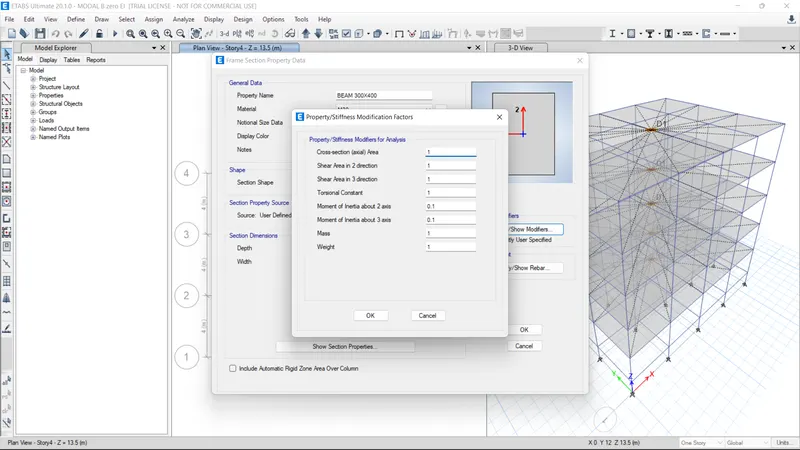
Analyis results of time period shown below
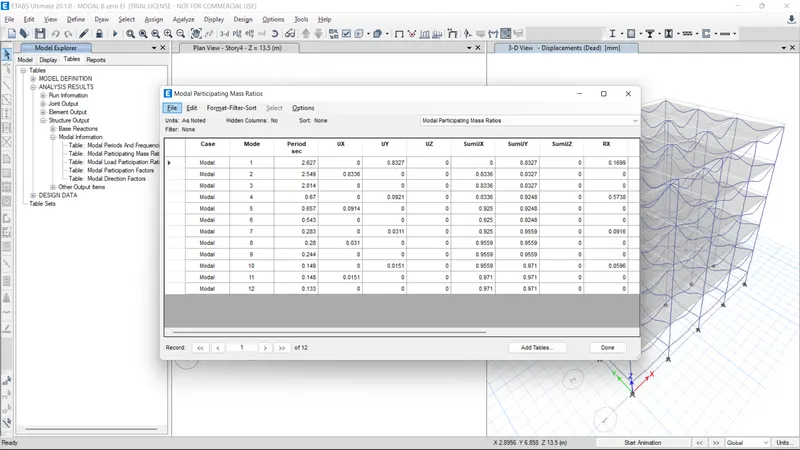
Time period of fundamental mode of vibration when full flexural stiffness considered is 1.036 sec.
Time period of fundamental mode of vibration when 10% flexural stiffness considered is 2.627 sec.
From the result it is clear that lateral stiffness of the building is contributed a large fraction by the horizontal beams.
5) EFFECT OF AXIAL STIFFNESS OF VERTICAL MEMBERS ON MODE SHAPES.
Building H is under consideration- 25 story building with column size 800mm x800mm
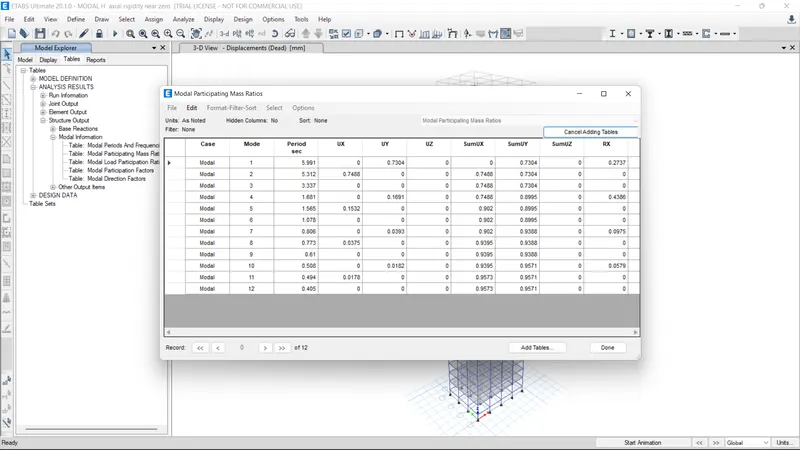
Here we assume that axia elements causing stiffness is reduced to 10% by changing the axial rigidity to 0.1 (E remains same area of cross section changes) in property modifiers of the column section 800mm x 800mm.
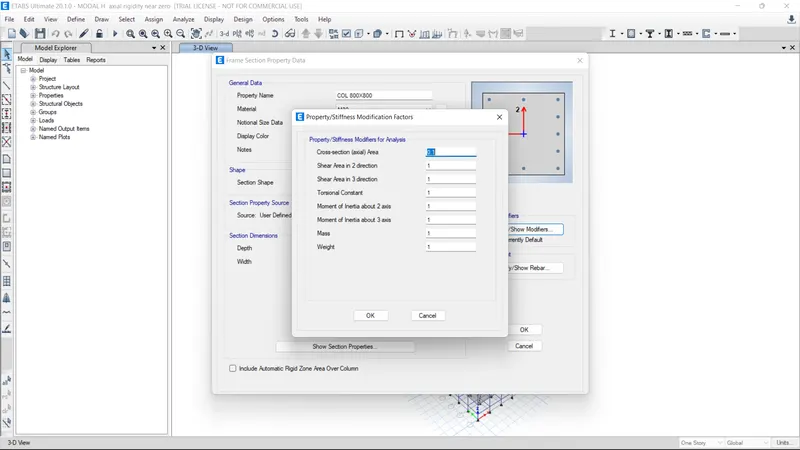
Time period of fundamental mode of vibration when full axial stiffness considered is 4.41 sec.
Time period of fundamental mode of vibration when 10% axial stiffness considered is 5.99sec.
INFERENCE
From the results we can conclude thataxial stiffness of vertical members plays a vital role in overall stiffness of the building as time period increases when we neglet the axila stiffness of columns both in seismic and static analysis.
7) EFFECT OF DEGREE OF FIXITY AT COLUMN BASE ON MODE SHAPES
Building under consideration is Building B- Benchmark 5 storey building with 400 mm x 400 mm column size.
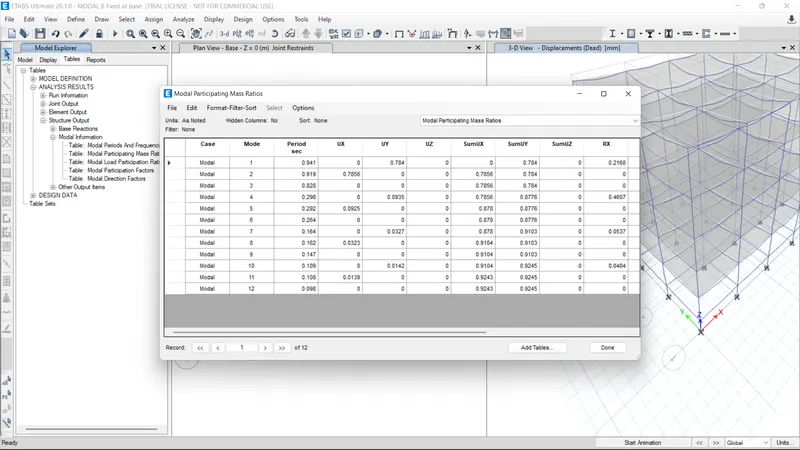
All the building were analysed by considering they all pinned at base. Here it changed to fixed support and ran the analysis.
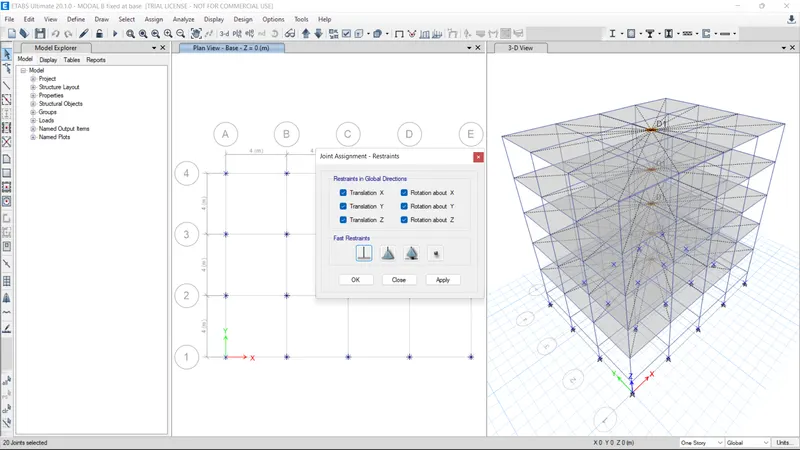
Time period of fundamental mode of vibration when pinned at base is 1.036 sec.
Time period of fundamental mode of vibration when fixed at base is 0.941 sec.
INFERENCE
As the number of restrains at base increases it is abvious that building becomes more stiffer and time period reduces which is clear from the analysis.
As per Table 6 of is 1893:2016 for building vertical irregularities
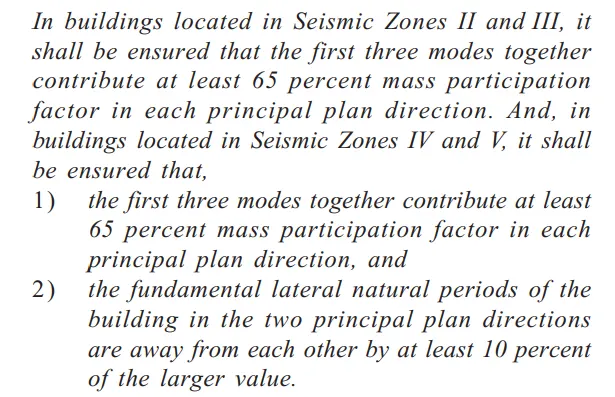
Condition 1 is satisfied for all the buildings and condition 2 is not satisfied.